2027 Master's in Data Science vs. Master's in Actuarial Science: Choosing Your Graduate Path

Co-Founder and Chief Data Scientist
A master's in data science and a master's in actuarial science can both build quantitative skills, but they lead toward different kinds of work. Data science offers a broader range of analytical roles; actuarial science is more directly tied to insurance, pensions, and financial risk—and to a professional exam pathway. If you are choosing between them, the decisive questions are what problems you want to solve, whether you want to pursue actuarial credentials, and what each program will cost you to complete.
Key Things You Should Know
- Choose data science for broader role flexibility: The U.S. Bureau of Labor Statistics (BLS) projects 35% employment growth for data scientists from 2025 to 2035, but that projection does not guarantee a job for any graduate.
- Choose actuarial science for a defined risk profession: A master's can help you prepare, but employers commonly value progress toward professional actuarial credentials; the degree does not replace the exams.
- Compare total cost and career fit, not degree titles: Check required courses, exam support, project opportunities, fees, and whether the program has evidence of outcomes for students with backgrounds like yours.
What is the difference between a master's in data science and actuarial science?
The central difference is scope. Data science programs generally train students to build and evaluate analytical models across industries. Actuarial science programs concentrate on measuring financial uncertainty, particularly for insurance and related risk decisions. Both can involve probability, statistics, and programming, but they apply those tools to different professional goals.
The comparison below shows what each degree typically optimizes. Individual curricula vary, so use it to identify the features you need to verify in a specific program.
| Decision factor | Data science master's | Actuarial science master's |
| Primary focus | Finding patterns, predicting outcomes, and building data-driven systems | Quantifying uncertain financial outcomes and managing long-term risk |
| Common technical emphasis | Programming, statistical learning, data engineering, and model evaluation | Probability, financial mathematics, insurance models, and risk analysis |
| Career signal | Evidence of technical skills and applied projects | Relevant coursework plus progress toward actuarial credentials |
| Main trade-off | More flexibility, but applicants must show why their skills fit a particular role | A clearer professional pathway, but greater specialization and an ongoing exam commitment |
If you enjoy building analytical tools for varied problems, data science may fit better. If you want to assess the financial consequences of uncertain events and are willing to pursue professional exams, actuarial science is the more direct route.
Which degree has better career opportunities: data science or actuarial science?
Neither has universally better opportunities. Data science can lead to roles across technology, healthcare, finance, retail, and other sectors. Actuarial science is a closer match for actuarial analyst roles and other work centered on insurance, benefits, pensions, and financial risk. That narrower focus can be an advantage when you are certain about the profession but a constraint if your interests change.
BLS projects about 24,800 openings for data scientists per year, on average, from 2025 to 2035. That indicates a substantial national market, not the number of entry-level openings or positions available to new master's graduates. An actuarial applicant should likewise distinguish demand for credentialed professionals from opportunities available before completing exams.
Job descriptions are a useful reality check. Compare positions you would actually apply for: note whether they ask for production coding, model deployment, insurance knowledge, or actuarial exam progress. If your interest is developing healthcare AI products rather than pricing or managing insurance risk, AI master's programs for healthcare technology careers may be a more relevant comparison than either degree alone.
How do data science and actuarial science salaries compare?
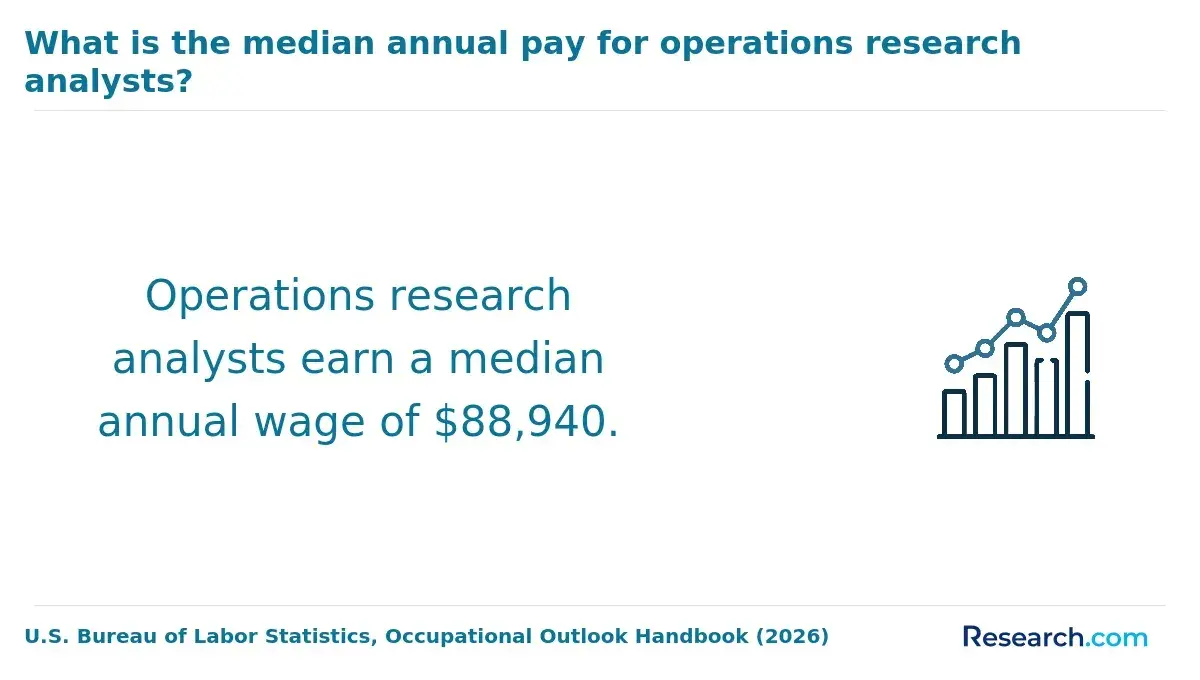
BLS reports that the median annual wage for U.S. data scientists was $120,230 in May 2025. This is the median for people employed in that occupation—not an expected starting salary, a master's-graduate outcome, or a measure of what the degree adds to pay.
Do not use that figure by itself to conclude that data science pays more or less than actuarial science. A sound comparison requires actuarial and data scientist wages from the same year and, ideally, the same metropolitan area and career stage. Actuarial compensation may also change as a worker passes exams and gains experience. Before borrowing for either degree, compare local job postings and any program-reported outcomes with your current earnings, while checking how those outcomes were collected.
What do you study in a data science or actuarial science master's program?
Expect overlap in probability and statistics, followed by a difference in application. A data science curriculum may emphasize machine learning, databases, data pipelines, programming, visualization, and responsible model use. An actuarial curriculum may emphasize financial mathematics, insurance contingencies, loss modeling, and the interpretation of risk for financial decisions. Course titles alone cannot establish how deeply a program teaches any topic.
Look at required courses—not just electives—and inspect syllabi or project descriptions where available. A prospective data scientist should seek substantial work with real datasets and model evaluation. A prospective actuary should check how coursework relates to the professional exam pathway without assuming that exam preparation is the same as passing an exam. If the work you want to do is specifically AI development, compare that curriculum with low-cost online AI master's programs rather than assuming every data science degree provides the same depth.
What are the admission requirements for each master's degree?
Requirements vary by institution. Both paths can call for preparation in calculus, linear algebra, probability, or statistics. Data science applicants may also need evidence of programming ability; actuarial science applicants may benefit from mathematics, economics, or finance preparation. An unrelated bachelor's major does not automatically rule out either path, but a program may require specific courses before enrollment.
Read each school's published prerequisite and admissions policies separately. If you have a gap, ask whether a proposed course will formally satisfy the requirement; self-study may help you succeed without satisfying an admissions rule. Applicants considering actuarial science can also ask how prior exam passes are treated, while data science applicants can ask whether professional coding or project work may demonstrate readiness.
How long do these master's programs take, and what do they cost?
There is no reliable degree-wide price or completion time: credit requirements, tuition rates, enrollment pace, and fees differ by school. Compare programs on the same basis—preferably the full published degree requirements at your applicable tuition rate—rather than comparing one school's per-credit price with another's estimated total.
For either path, build a budget that separates tuition and mandatory fees from books, technology, travel, and income you might forgo while studying. For actuarial science, also budget separately for any professional exams and preparation you expect to pursue; confirm whether an employer would cover them. Scholarships and employer assistance can change your net cost, but they should not be assumed until confirmed.
If price is a major constraint, compare affordable data science master's programs, then verify each school's current tuition schedule, fees, and credit requirements directly. Apply the same total-cost method to actuarial programs. A higher-priced degree is worth considering only if its relevant training or support justifies the extra cost for your goal.
Are online master's programs in data science or actuarial science worthwhile?
They can be worthwhile when the curriculum, support, and schedule fit your target career. Online delivery does not, by itself, establish weaker or stronger academic preparation. Check whether classes are live or self-paced, when assessments occur, how group projects work, and whether advising or career services are available to online students.
For data science, ask how you will get feedback on code and build substantial projects. For actuarial science, ask how the schedule accommodates exam study and whether the program supports connections to employers in your target market. If machine learning is your specific priority, cost-conscious online ML master's study offers another comparison point; verify current costs rather than relying on a program's advertised price alone.
What certifications and exams are required after each degree?
Data science has no single, universally required professional certification. Employers may value particular tools or certificates, but they can also assess coding, statistical reasoning, projects, and work experience directly.
Actuarial work has a formal professional credential pathway. In the United States, candidates commonly pursue credentials through the Society of Actuaries or Casualty Actuarial Society, depending on the work they intend to do. A master's does not confer those credentials. Exam, education, and experience requirements can change, so check the relevant society's current pathway before deciding which courses or exams to prioritize. Particular actuarial responsibilities can also have additional qualification standards; do not assume a degree or exam pass alone authorizes every type of work.
How do accreditation and professional standards differ between these programs?
For either degree, first verify the institution's recognized accreditation and confirm that the program is authorized to enroll students in your state if you plan to study online. Institutional accreditation and state authorization answer different questions: one concerns institutional oversight, while the other concerns where the school may offer education. Neither guarantees employment or professional eligibility.
Then examine career-specific standards. For actuarial science, ask how the curriculum relates to the credentialing society relevant to your intended practice; do not mistake a university degree for society certification. For data science, where there is no single profession-wide licensing route, give particular weight to demonstrable technical depth, responsible data practices, and the quality of applied work. A vague claim that a program is "industry aligned" is less useful than a published curriculum and specific examples of student projects.
How can you choose the right graduate program for your goals?
Start with a target job, then test each degree against the work that job actually involves. This avoids a common mistake: choosing a broad-sounding degree for an actuarial role without planning for exams, or choosing a specialized actuarial degree when you want to build data products across industries.
Use the following checks to turn that preference into a program decision:
- Collect target job descriptions: Separate required skills from preferred credentials and note whether actuarial exam progress appears repeatedly.
- Map the curriculum: Identify the required courses and substantial projects that build those skills; do not count an elective you may be unable to take as guaranteed preparation.
- Verify the pathway: For actuarial programs, confirm exam relevance and support; for data science programs, confirm opportunities to demonstrate programming and applied modeling.
- Compare net cost and time: Include mandatory fees, your likely study pace, potential lost earnings, and any confirmed employer assistance.
- Question outcome claims: Ask which students were surveyed, when, how many responded, and whether reported salaries reflect experienced workers rather than new entrants.
Choose data science if you want flexibility across analytical roles and a program that lets you prove technical ability through applied work. Choose actuarial science if you want to build a career in financial risk and are ready for the credential process beyond graduation. In either case, relevant mentoring and professional contacts may matter; you can review AI master's programs by alumni community as a comparison if your goals lean toward AI, while asking any school what access its own online and in-person students actually receive.
Other Things You Should Know About Data Science
Yes, if the program permits the topic and you can define a project that meets its academic requirements. For example, a risk-prediction project could demonstrate modeling while addressing an insurance question. Confirm the project's scope with a prospective supervisor before enrolling.
Only with the necessary employer and university approvals. Ask about data-use agreements, privacy rules, publication restrictions, and whether an approved public or synthetic dataset would be safer.
Not necessarily, but substantial research experience and strong academic references can help demonstrate readiness. Compare the research opportunities available in thesis and non-thesis programs rather than judging them by the degree title alone.
No. Admission to an online degree and permission to work in the United States are separate matters. If work authorization affects your plans, confirm your circumstances with the institution's international-student office and appropriate official guidance before committing.
References
- Fast Facts: Tuition costs of colleges and universities (76) | ed.gov https://nces.ed.gov/fastfacts/display.asp
- Credential Pathways for Actuaries - College of Science | Purdue University https://www.science.purdue.edu/actuarial-science/academics/credential-pathways.html
- MS Data Science & Statistics: FAQ | Binghamton University https://www.binghamton.edu/math/graduate/statistics/faq.html
- What Can I Do With a Degree in Data Science? Career Paths & Skills | Harvard SEAS https://seas.harvard.edu/news/what-can-i-do-degree-data-science-career-paths-skills
- Data Science vs. Applied Data Science: Main Differences | Syracuse University https://ischool.syracuse.edu/applied-data-science-vs-data-science/
- Actuary vs. Data Scientist: Career Similarities and Differences | Bryant University https://www.bryant.edu/graduate/blog/actuary-vs-data-scientist-career-similarities-and-differences
- Actuarial Science | Mount Mercy University Course Catalog http://catalog.mtmercy.edu/curriculum/actuarialscience/
- Global demand for data science professionals: What's going on? | Uncover IE https://www.ie.edu/uncover-ie/demand-for-data-science-professionals-master-in-business-analytics-and-data-science/
- Tuition - UT Dallas https://www.utdallas.edu/costs-scholarships-aid/costs/tuition/
- Fluidity between Data Science and Actuarial Careers | Actuarial Review Magazine https://ar.casact.org/fluidity-between-data-science-and-actuarial-careers/