2027 Is an Online BS in Business Administration the Right Next Step for Warehouse Team Leaders?
Audited and Verified:
Our Editorial and Data Verification Process
Research.com uses government datasets, official education statistics and primary institutional information to support its career and degree guides. Our review process checks factual accuracy, occupational definitions, source dates and the requirements associated with the credentials discussed.
How This Article Was Fact-Checked
Our editorial team verifies salary estimates, employment projections, education requirements and program information against original data providers and official organizations. Salary figures are checked against the relevant occupational definitions and reporting periods. Information about licensure, accreditation and required in-person training is reviewed separately.
Fact-checked and verified on:

Co-Founder and Chief Data Scientist
Warehouse team leaders often know how to keep a shift moving but need broader business skills - or a bachelor's degree - to compete for their next role. An online BS in Business Administration may help, provided its coursework fits the job you want and its schedule fits the one you have.
This guide connects warehouse experience to realistic career paths, explains what the degree adds, and shows how to check completion time, cost, and program requirements before enrolling.
Key Things You Should Know
- An online BS in Business Administration is most useful when your target employer values a bachelor's degree and you need broader budgeting, analytics, and management preparation - not simply another warehouse credential.
- Online does not necessarily mean self-paced: confirm live meetings, group work, deadlines, and exam arrangements against your shift schedule before applying.
- The U.S. Bureau of Labor Statistics projects 18% employment growth for logisticians from 2025 to 2035, but that occupation's outlook does not predict promotions or hiring for warehouse supervisors.
Is an online BS in Business Administration right for warehouse team leaders?
It can be a strong next step if you want responsibility beyond running a shift and the roles you seek call for a bachelor's degree. A BS in Business Administration is a broad undergraduate business degree. It can add financial, analytical, and organizational knowledge to experience you already have in staffing, safety, inventory, and meeting service targets.
Start with actual job postings and your employer's promotion criteria. If the next role requires stronger budgeting or cross-department planning, a business degree may address a meaningful gap. If it chiefly requires expertise in warehouse systems, transportation, or inventory control, targeted training or a supply chain program may be more direct. Your decision should also account for credits you already hold and the cost of finishing; business administration degree return and completion planning can help frame that comparison.
A degree does not replace a record of reliable operations or guarantee a management position. Before committing, identify a specific target job, the qualifications employers request, and the work results you could show in an interview.
What careers can warehouse team leaders pursue with a business administration degree?
Your closest opportunities are usually roles that build on your knowledge of people, inventory, and workflow. The table distinguishes plausible moves from roles that commonly require additional functional experience; titles and requirements vary by employer.
| Possible direction | Relevant warehouse experience | Additional evidence to develop |
| Warehouse or distribution supervisor | Coaching staff, resolving shift problems, meeting operating targets | Documented responsibility for staffing, safety, and performance decisions |
| Inventory or operations coordinator | Tracking stock discrepancies and coordinating work across shifts | Spreadsheet analysis, reporting, and systems proficiency |
| Logistics or supply chain role | Understanding fulfillment, receiving, and shipment handoffs | Planning, supplier or carrier coordination, and analytical experience |
| Operations manager | Leading teams and improving processes | Broader budget, personnel, and multi-team accountability |
A general business degree preserves options across functions. If you are set on logistics planning or procurement, compare its operations coursework with a specialized program; supply chain degree duration and salary considerations are useful, but should not outweigh the actual curriculum or your transfer-credit evaluation.
How does an online business administration degree support warehouse management advancement?
The degree can help you explain why an operational decision makes business sense. A team leader might already track missed picks; accounting and analytics coursework can help them distinguish labor cost from overall cost, examine the quality of the data, and present a proposed change to a manager. Management courses can add context for coaching, conflict, and organizational decisions.
Turn that learning into evidence of readiness. With employer permission, a course project might analyze a de-identified workflow, define a measure such as errors per order, and recommend a feasible change. A proposal is not proof of savings, and access to employee, customer, or proprietary data must be approved. Ask whether a program permits a workplace-based project; do not assume your current job automatically earns internship or academic credit.
If your immediate goal is to coordinate improvement projects rather than earn a broad business degree, compare targeted training and employer assignments first. A specialized degree is a larger commitment; when weighing that route, review financial aid at low-cost project management schools alongside the skills the position actually requires.
Programs differ, but the relevant core commonly includes accounting, finance, management, economics, statistics, business communication, and operations. For a warehouse leader, the most useful question is not whether a catalog mentions "supply chain," but whether you can take substantial courses in inventory, procurement, process improvement, analytics, or information systems - and apply them in assessed work.
Check whether an operations or supply chain concentration is formally offered, which courses are required, and whether they run online when you need them. A few electives do not constitute an official concentration. A specialized supply chain bachelor's may offer greater functional depth, but its credit requirements and sequence could differ; compare accelerated supply chain bachelor's degrees only after checking what prior coursework would apply.
Human resources may be relevant if your intended move centers on staffing and employee development rather than fulfillment. Compare the actual HR curriculum with human resources degree costs and options before treating a general management course as equivalent preparation.
Schools typically distinguish first-time applicants from students with previous college work. Expect to provide the transcripts relevant to your application and to check the institution's academic eligibility rules. A business major may have additional entry requirements; admission to the university does not itself establish admission to every concentration or award credit for workplace experience.
If you have prior college credits, request an official evaluation showing which credits satisfy general education, business core, electives, and any residency requirement. Ask separately about credit for prior learning, including whether documented training is eligible and how it is assessed. Accepted transfer credit does not necessarily replace a required accounting or statistics course.
Application charges are a smaller cost than tuition, but they matter if you plan to apply to several schools. You can compare accredited schools with no application charge, then confirm each school's current policy and program fit.
Completion time depends on credits that apply to the degree, enrollment pace, prerequisites, and when required courses are offered. A returning student with applicable credits may have a shorter path than someone starting without college coursework. Part-time enrollment may be more sustainable around rotating shifts, even if it extends the calendar timeline.
Do not equate an advertised accelerated format with fewer assignments or an easier schedule. Check course length, weekly deadlines, the sequence of accounting and quantitative classes, and whether a missed term delays access to a required course. When you compare American fast-paced business bachelor's degrees, use your own degree audit rather than the shortest advertised completion time.
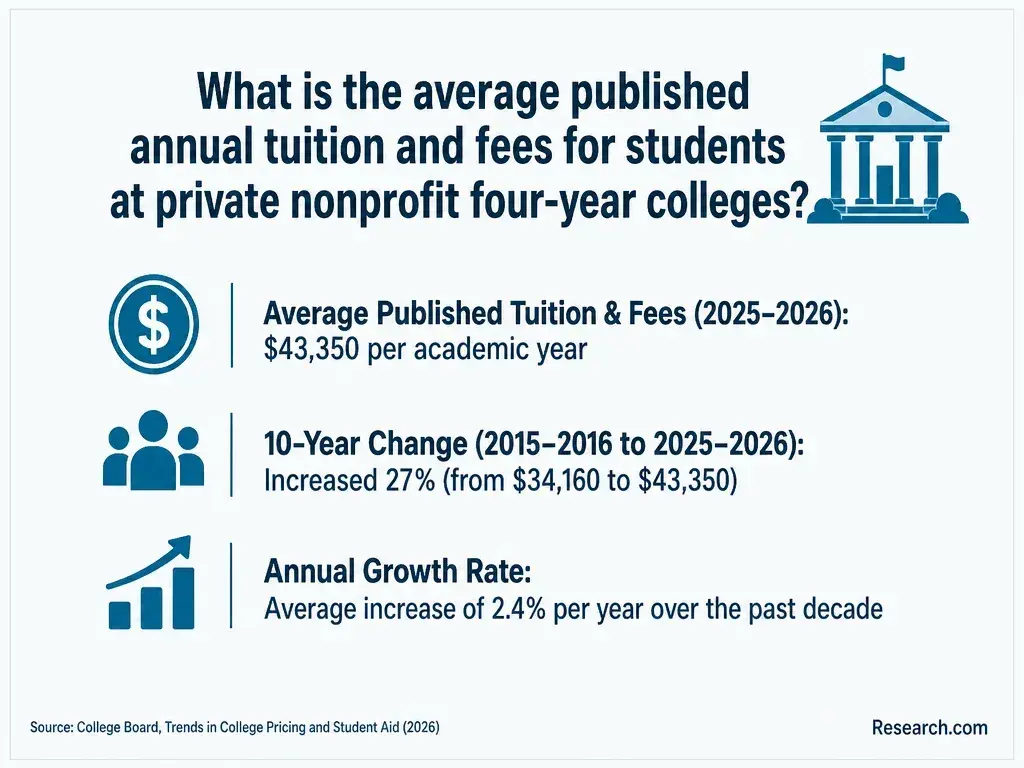
The meaningful figure is the cost of your remaining degree requirements, not tuition alone. Compare each school's per-credit or per-term charges, required fees, books and software, the number of credits still needed, and any added expense from an extended enrollment period. An employer benefit may reduce your final cost while still requiring you to pay upfront and meet grade or continued-employment conditions.
Ask for a written degree audit and a program-specific cost estimate before borrowing. Then check financial-aid eligibility, employer reimbursement timing, and what happens financially if shift changes force you to withdraw. You can find inexpensive online business administration colleges, but a lower posted rate will not necessarily produce a lower completion cost if fewer of your credits apply.
Online study can eliminate a commute, but it does not eliminate scheduled obligations. Courses may have live discussions, fixed exam windows, group presentations, or weekly deadlines. Campus classes provide face-to-face contact at set times; for someone on a stable shift, that predictability may be an advantage rather than a drawback.Ask each program how much work is asynchronous, whether exams require proctoring, how group projects are arranged, and what support is available outside your working hours.
Confirm any campus visits or internship requirements. If the choice is also between broad online business study—including options featured in national online business program rankings—and a focused supply chain pathway, compare delivery demands alongside curriculum - not just the promise of speed. Review supply chain degree duration and salary considerations in that broader decision.
First, verify that the institution holds recognized accreditation and that its status covers the school awarding the degree. Then check whether it claims separate business accreditation from AACSB, ACBSP, or IACBE and whether the particular business program is within that accreditor's scope. Institutional and business accreditation are different; neither is a promise of a job or promotion.
For a practical shortlist, pair accreditation checks with the current catalog, an official transfer evaluation, online course availability, and aid eligibility. If borrowing or grants are central to your decision, compare low-tuition business administration schools accepting FAFSA, then confirm each institution's current participation and your own eligibility with its financial-aid office.
What salaries and job outlook can warehouse leaders expect after graduation?
There is no single salary for warehouse leaders who earn this degree. Pay depends on the occupation you enter, location, employer, and responsibility you actually hold. The U.S. Bureau of Labor Statistics reports a May 2025 median annual wage of $82,320 for logisticians and projects 18% employment growth in that occupation from 2025 to 2035. Those figures describe employed logisticians nationally - not starting pay for graduates or wages for warehouse supervisors.
Use occupation data as context, then examine local postings for your specific next role—especially if you are also weighing human resources degree costs and options to pivot toward people management or labor relations. Compare their required systems, planning experience, supervisory scope, and degree preferences with your record. An internal promotion may depend more on demonstrated performance and available openings than on graduation alone.
Other Things You Should Know About Business Administration
Only if the program formally approves your role, learning objectives, supervision, and assessment. Employment by itself does not award internship credit.
An MBA is a graduate degree and generally requires a bachelor's degree for admission. If you have not completed a bachelor's, compare undergraduate completion routes first.
Yes, it can give you useful examples for operations and data assignments. You may still need to develop spreadsheet, accounting, and statistical skills that your current system does not require.
Check your employer's confidentiality and intellectual-property rules first. Use an approved, redacted version that reveals no restricted operational or personal data.
- Consequences of Shift Work and Night Work: A Literature Review - PMC https://pmc.ncbi.nlm.nih.gov/articles/PMC10218650/
- Qualified Ed expenses | Internal Revenue Service https://www.irs.gov/credits-deductions/individuals/qualified-ed-expenses
- Accreditation in the U.S. | ed.gov http://www.ed.gov/laws-and-policy/higher-education-laws-and-policy/college-accreditation/accreditation-in-the-us
- Improving Work Schedules | cdc.gov https://www.cdc.gov/niosh/work-hour-training-for-nurses/longhours/mod5/04.html
- Business Administration with a Concentration in Logistics Management - Point University https://point.edu/academics/online/business-administration-in-logistics-management/
- Tuition and Financial Aid - Undergraduate Online Programs | Bay Path University https://www.baypath.edu/admissions-aid/undergraduate-online-programs/tuition-and-financial-aid/
- 8 Types of Business Degrees & Specializations | Bellevue University https://www.bellevue.edu/articles/types-of-business-degrees/
- Transferring Credits - Admissions | Cornerstone University https://www.cornerstone.edu/admissions/transferring-credits/
- Tuition & Fees | University College Online Degree Programs https://basbls.uc.uiowa.edu/future-students/tuition-fees
- Learn About Tuition | Georgia State Online https://online.gsu.edu/learn-about-tuition/