2027 Entry-Level Jobs With an Art History Master's Degree

Co-Founder and Chief Data Scientist
Navigating the initial job market with a master's in art history requires understanding how hiring structures and workforce demands intersect uniquely in this sector. Entry-level positions often emerge within institutions balancing educational missions and budget constraints, which shape candidate expectations toward versatility and project management skills. Reports from the Bureau of Labor Statistics in 2024 highlight modest growth in curator and museum technician roles, emphasizing the value of internships and networking in securing these roles. Graduates must also consider the increasing demand for digital curation and community engagement competencies.
This article unpacks the typical entry points for art history graduates amid these evolving professional frameworks.
Key Benefits of Entry-Level Jobs With a Art History Master's Degree
- Entry-level roles often demand practical curatorial or archival skills beyond academic knowledge, reflecting employer preferences; this tradeoff means graduates must supplement theory with hands-on experience to remain competitive.
- Recent workforce analyses show 65% of institutions prefer candidates familiar with digital cataloging systems, signaling a shift where art history graduates must adapt to evolving technical demands for sustained employability.
- The extended duration and cost of completing an art history master's can delay initial workforce entry compared to alternative humanities fields, affecting early-career earnings and requiring strategic financial planning.
What Entry-Level Jobs Can You Get With a Art History Master's Degree?
Entry-level roles for graduates holding a master's degree in art history are not mere clerical positions but involve substantive responsibilities that leverage advanced analytical and research skills. These initial career opportunities often require specialized knowledge in areas such as provenance research, cataloging, and exhibition support, reflecting the depth of a graduate-level education. The scope and complexity of these roles can vary significantly based on institutional focus, geographic location, and prior experience, meaning that "entry-level" does not equate to minimal responsibility. Understanding how these roles function within broader organizational missions helps clarify their position as foundational steps toward specialization or leadership in the cultural sector.
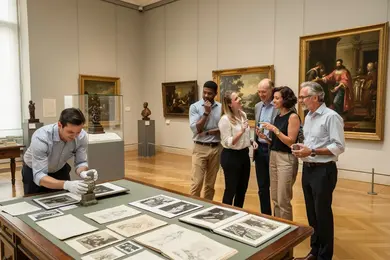
- Museum Technician: This role involves hands-on management of museum collections, including physical care, installation, and condition reporting. While entry-level, it demands technical familiarity with conservation practices and offers exposure to institutional processes that underpin curatorial and preservation work, laying groundwork for career growth in collection stewardship.
- Gallery Assistant: Assisting with exhibition setup, visitor engagement, and administrative duties, gallery assistants bridge public-facing functions with behind-the-scenes logistics. The position fosters skills in communication and event coordination, serving as an important platform for developing expertise in gallery operations and arts administration.
- Curatorial Assistant: Supporting curators with research, cataloging, and organizing exhibitions, this role requires applying advanced art historical knowledge to interpret works and manage data. It is a critical entry point for developing curatorial judgment and networking within cultural institutions, which can facilitate future advancement to curator roles.
- Archival Specialist: Focused on organizing and preserving historical documents and artifacts, archival specialists utilize research competencies and digital asset management tools. This position aligns with the projected job growth of approximately 4% through 2032 for curators and archivists, indicating a steady demand for skilled graduates in this specialized function.
These entry-level career options for art history graduates demonstrate the practical translation of graduate education into roles that demand both interpretive insight and operational competence. While salary ranges typically start between $40,000 and $55,000, variation occurs depending on institutional size and location. Entrants who supplement their degree with internships or specialize in niches such as digital humanities or conservation may navigate more swiftly toward senior positions. Engaging in these roles trains graduates not only in subject matter expertise but also in project management and cross-disciplinary collaboration essential for long-term professional development.
Graduates exploring adjacent sectors frequently encounter opportunities in academic publishing, nonprofits focused on culture, or auction houses, where skills in historical analysis, writing, and research coordination add value. Balancing scholarly rigor with practical experience thus forms a core strategy for effectively entering fields where a master's degree creates access to specialized entry points rather than generic administrative jobs. Decision-making about career direction should consider both immediate role responsibilities and how each position functions as a stepping stone within the wider arts and cultural heritage ecosystem.
For those investigating further educational pathways or flexible options that complement early career efforts, accelerated degree programs offer potential for rapid credential advancement, which some graduates pursue to strengthen competitive positioning or pivot toward intersecting disciplines. Understanding the dynamics of entry-level roles within the art history job market aids in setting realistic expectations and identifying tactical opportunities for career progression in a field marked by both tradition and evolving technological demands.
What Sectors Have the Strongest Demand for Graduate-Level Talent?
Demand for graduate-level talent with a master's degree in art history is influenced by broader labor market dynamics beyond degree popularity alone. Sectors that consistently seek art historians tend to have structural requirements for specialized cultural knowledge, analytical rigor, and regulatory familiarity that align with graduate education. These fields also reflect evolving economic, technological, and policy pressures sustaining the need for advanced expertise in managing cultural assets and interpreting art's role in society.
- Museum and Gallery Management: This sector maintains steady demand as institutions prioritize professional stewardship of collections amid increasing public engagement expectations. Workforce data from 2024 highlight roles such as curatorial assistants and registrar coordinators requiring both research skills and operational competencies to support exhibitions and educational programming.
- Heritage and Preservation: Government agencies and private firms focused on historic site conservation continue to hire master's graduates due to ongoing regulatory mandates and funding tied to cultural resource management. The complexity of conservation methods and documentation creates demand for candidates who combine art historical knowledge with technical certifications.
- Higher Education and Academia: Universities and specialized institutions employ art history graduates primarily in adjunct or research support roles, reflecting budget constraints and the sector's competitive nature. These positions often provide valuable experience but come with limited job security and require strategic planning for those committed to long-term academic careers.
- Commercial Art Market and Auction Houses: Growing emphasis on provenance research, valuation, and authenticity verification fuels demand for graduates who can navigate art's marketplace complexities. Despite high competition and reliance on informal networks, these roles tend to offer higher entry salaries and access to lucrative advisory pathways.
- Nonprofit Arts Organizations: Foundations and grant agencies seek art history experts to drive program coordination and community outreach, balancing artistic and administrative skills. While salaries may be modest, these roles align with broader cultural advocacy and funding landscapes requiring versatile expertise.
One recent graduate recalled hesitating to commit to a program during a rolling admissions cycle, feeling uncertain about the competitive landscape across these sectors. They delayed applications while assessing which specialization aligned best with job market trends discussed in professional forums. This decision introduced stress but ultimately allowed for a clearer focus on preservation-related pathways, where demand appeared stable and manageable despite mixed timelines in admissions notifications.
Which Entry-Level Art History Careers Have the Highest Starting Salaries?
Entry-level salaries for master's graduates in art history are shaped by more than academic credentials alone. Compensation often reflects factors such as specialized technical expertise, market demand, organizational complexity, and the economic impact of the role within an institution or commercial setting. Positions commanding higher pay typically involve greater responsibility, sophisticated analytical skills, or niche knowledge valued in competitive labor markets.
- Museum Registrar ($50,000-$60,000): This role requires precision in managing collections logistics, provenance documentation, and compliance with regulatory standards. The meticulous organizational demands and legal accountability contribute to the relatively high entry-level salary, reflecting the critical nature of preserving institutional assets. Starting as a registrar often positions professionals for advancement into senior curatorial or collections management roles.
- Art Appraiser ($48,000-$58,000): Entry-level appraisers bring expertise in assessing authenticity, condition, and market value under strict deadlines. Because these positions have direct influence on commercial transactions, insurance valuations, and legal processes, employers place a premium on technical knowledge and strong judgment, which supports the upper end of salary ranges in galleries or auction houses.
- Cultural Heritage Consultant ($45,000-$55,000): These consultants combine cultural insight with project management and preservation strategies, often advising public agencies or private clients on compliance and sustainable site management. The interdisciplinary skill set and advisory capacity justify the compensation, which is competitive within the broader heritage and planning sectors.
- Grant Coordinator ($45,000-$55,000): Focused on funding acquisition and program administration, entry-level grant coordinators develop critical administrative and communication skills necessary for institutional sustainability. The role's impact on revenue streams and stakeholder relations aligns with its moderate starting salary, marking it as a practical entry point for building nonprofit career expertise.
Which Industries Pay the Most for Entry-Level Art History Master's Graduates?
Entry-level compensation for master's graduates in art history largely reflects broader economic and structural conditions within specific industries rather than individual qualifications alone. Sectors that offer higher starting salaries typically operate within high-margin markets, face significant regulatory scrutiny, or rely heavily on innovation where specialized art historical expertise directly supports revenue generation, risk management, or strategic asset stewardship. Understanding which industries pay the most for entry-level art history graduates requires examining the financial incentives, labor market scarcity, and operational demands that elevate the value of these skills at the outset of a career.
- Auction Houses: Auction firms handling multimillion-dollar artworks pay relatively high entry-level salaries due to the direct influence of art historical knowledge on accurate valuation and sales outcomes. These companies operate within fine art markets characterized by fluctuating asset values and intense regulatory oversight, necessitating precise provenance research and expertise to mitigate financial risk. According to 2024 salary data, junior specialists at large auction houses often start above $55,000, reflecting how critical credibility and technical insight are to maintaining market confidence.
- Cultural Institutions and Major Museums: Well-funded museums in global metropolitan centers tend to offer better entry salaries than smaller or regional institutions, aligning compensations with larger operating budgets and public accountability standards. These organizations emphasize preservation, curation, and public programming, requiring entry-level professionals to apply art history skills to collection management, exhibition design, and compliance with conservation ethics, which supports institutional reputation and grant acquisition.
- Private Sector Arts Consultancy and Asset Management: Firms specializing in art investment, collection advisory, and cultural heritage preservation provide higher entry salaries as art historical insight is integral to managing client portfolios and advising on acquisitions. The scarcity of professionals who combine deep domain expertise with financial acumen leads to premium pay starting near or above $50,000, driven also by increasing corporate interest in cultural asset diversification and risk mitigation strategies.
- Art Appraisal and Insurance Companies: These firms rely heavily on art history experts to assess artwork value accurately for underwriting and claims processing. Because errors can result in substantial financial exposure, entry-level roles demand both detailed knowledge and acute analytical ability, often reflected in competitive salary offers to attract qualified candidates who can navigate these responsibilities.
- Publishing and Educational Content Creation: Companies producing specialized art books, catalogs, or digital learning materials offer moderate starting compensation influenced by product niche and market reach. While typically lower paid than auction or consultancy sectors, these roles leverage research, writing, and digital skills, with some growth tied to increasing demand for accessible art history education and online content development.
While typical entry-level salaries for art history master's degree holders often range between $40,000 and $60,000 depending on sector and location, identifying entry-level art history jobs with top salaries requires understanding how industry profitability, regulatory frameworks, and talent supply shape remuneration. Advancement in these sectors is closely linked to accumulating complementary skills such as digital archiving, grant writing, or financial literacy.
Prospective students should also consider alternative academic routes, including conditional admission programs that may broaden eligibility and offer tailored preparation aligned with employer expectations. For those comparing educational pathways, researching the cheapest masters online can also offer financial flexibility while pursuing practical, market-aligned qualifications.
Which Skills Are Most Valuable in Entry-Level Positions?
Entry-level hiring in art history increasingly hinges on demonstrable skills rather than solely on academic credentials. Employers prioritize candidates who can translate their knowledge into practical outcomes, addressing real operational needs of museums, galleries, or cultural institutions even at the outset of their careers. The capacity to apply analytical, communicative, and technical abilities to support organizational goals often determines both initial job offers and future progression.
- Analytical Thinking: Early-career roles demand the ability to contextualize artworks within historical and cultural frameworks, not just as theoretical exercises but for tangible applications such as curating exhibitions or aiding research projects. This skill also signals to employers that candidates can handle complex datasets and synthesize diverse information, improving decision-making-a factor reflected in 2024 labor market data emphasizing analytical skill as a top hiring criterion.
- Effective Communication: Clarity in writing and oral presentation is crucial for preparing exhibition catalogs, educational content, and funding proposals. Candidates who tailor messages to varied audiences enhance institutional outreach and funding potential, which employers directly correlate with sustained organizational success and personal career momentum.
- Technical Proficiency: Familiarity with digital cataloging, database management, and presentation technologies streamlines workflows and supports cross-department collaboration. In some roles, knowledge of digital imaging or social media management further expands institutional visibility, offering a competitive edge and often accelerating salary growth during early employment phases.
- Interpersonal and Organizational Skills: Coordinating among curators, educators, donors, and other stakeholders requires diplomacy, adaptability, and project management. Candidates who demonstrate these skills are seen as reliable collaborators capable of navigating complex institutional dynamics, which can heavily influence hiring decisions and professional stability.
- Research Acumen: Beyond collecting information, the capacity to critically evaluate sources and generate original insights underpins scholarship and practical tasks like grant writing. Employers value this because it directly impacts funding outcomes and the institution's scholarly reputation.
One recent graduate shared that during a rolling admission period, uncertainty about admission timelines forced quick recalibration. Feeling hesitant after initial delays, the candidate sharpened their analytical and communication skills by volunteering on a museum project, which in turn improved their confidence and competitiveness upon eventual matriculation. This practical engagement proved decisive, illustrating how early skill application can mitigate the risk of admissions-related disruptions and build a foundation for early career success.
Do Employers Hire Art History Master's Graduates Without Professional Experience?
Many employers do in fact hire art history master's graduates without professional experience, particularly for entry-level roles that function as structured early-career pipelines. Positions such as curatorial assistants, archival technicians, and research associates are often designed to onboard recent graduates, balancing the need for advanced academic knowledge with the expectation of on-the-job training. While these roles typically expect candidates to show potential rather than a full skill set, hiring trends for art history master's graduates without experience still underscore the value of demonstrated academic commitment and foundational understanding of museum or gallery workflows.
The labor market conditions that enable this hiring approach revolve largely around candidates' ability to substitute practical experience with other signals of competence. Strong academic performance combined with internships, capstone projects, or certifications in collections management or grant writing can help bridge gaps in professional exposure. Employers assess how well candidates adapt to collections software, exhibit planning, and public engagement through these proxy indicators. Given competitive applicant pools, especially in metropolitan centers, those who accumulate evidence of transferable skills-even through volunteering or project work-improve their chances in entry-level job prospects for art history master's degree holders.
Industry variations further influence employer openness to hiring those without experience. Government and nonprofit sectors often weigh academic credentials more heavily but still prefer documented internships or relevant technical skills. Conversely, fields with evolving data or technology components may exhibit relatively higher flexibility but remain specialized. This nuanced reality requires recent graduates to strategically build competencies that offset inexperience and meet the specific demands of curated roles. According to data from the National Center for Education Statistics, entry-level salaries commonly range between $35,000 and $45,000 annually, reflecting employer risk assessments and anticipated learning curves.
For those interested in broader educational pathways with attention to affordability, one might explore programs like the cheapest masters in data science, where skill verification and practical knowledge also heavily influence hiring outcomes.
Which Certifications Help Entry-Level Art History Master's Graduates Get Hired?
Employers hiring entry-level candidates with a master's degree in art history frequently use certifications as evidence of practical skills that academic programs alone may not fully convey. While advanced degrees demonstrate theoretical knowledge and research ability, certifications help validate readiness for hands-on tasks and specialized job functions that museums, galleries, archives, and cultural institutions prioritize. These credentials function as clear indicators of applied competencies, narrowing the gap between scholarly understanding and operational expectations in a competitive labor market.
- Museum Studies Certification: This credential is valuable because it covers key practical areas such as exhibit design, conservation basics, and public programming. For entry-level roles, having a museum studies certificate signals familiarity with daily museum workflows and public engagement efforts, directly addressing employer demands for candidates who can contribute beyond academic analysis.
- Archival Certification: Offered by organizations like the Academy of Certified Archivists, this certification bolsters skills in document preservation and records management. In an environment where cultural institutions increasingly emphasize proper archival care and digital recordkeeping, such certification enhances a candidate's ability to meet technical standards and procedural rigor that employers require at the outset.
- Digital Curation Certification: Reflecting a growing focus on managing digital assets and online exhibits, this certification validates competence with digital collection workflows and emerging technologies. The increasing digitization of cultural heritage collections means candidates with this credential are better positioned to fulfill evolving institutional needs, often giving them an edge in roles requiring tech-savvy curatorial skills.
- Grant Writing Certification: Although less domain-specific, this credential is relevant for those pursuing arts administration or funding-related roles. Grant writing expertise signals an ability to secure financial resources, a key organizational priority, and demonstrates practical project support skills that employers find valuable in multifaceted job descriptions.
Recent workforce data suggest that combining a master's degree with targeted certifications improves hireability by roughly 15-20%, as employers interpret these credentials as reliable proxies for practical readiness. However, these benefits are most pronounced when certifications align closely with the specific job's functional demands rather than serving as generic add-ons. Given the relatively modest starting salaries typical in art history fields, candidates should weigh the time and expense of certification against demonstrable skill gains and direct relevance to desired positions.
What Remote Jobs Can You Get With a Art History Master's Degree?
Remote opportunities for graduates with a master's degree in art history have notably expanded due to the digital transformation of cultural institutions, adoption of cloud-based content management systems, and a shift toward global talent sourcing. The suitability of remote roles hinges not only on traditional job functions but also on whether work outputs are digital, measurable, and require limited real-time collaboration. Roles aligned with remote work emphasize asynchronous workflows, written deliverables, and independent project management, which mesh with core graduate-level art history skills such as critical research, interpretation, and content synthesis.
- Digital Curator or Online Collections Specialist: These roles involve managing virtual exhibits and digital archives using cloud platforms, requiring expertise in organizing, describing, and contextualizing art collections. Remote performance centers on the quality of digital asset metadata, interpretive content, and adherence to project timelines, which are easily tracked through content management systems.
- Art Content Creator or Editor: Producing educational materials, articles, or podcast scripts for art-focused online platforms demands strong research and writing skills. The deliverable-driven nature of content creation suits remote work since output is tangible, easily reviewed, and often managed through editorial workflows that support asynchronous collaboration.
- Research Assistant in Academic or Commercial Settings: Remote research assistants support provenance studies, cataloging, or market analysis using digital databases and communication tools. Accuracy and depth of research are measurable outcomes, making distributed work feasible without compromising quality. Regular check-ins via cloud-based project management ensure alignment with supervisors.
- Educational Program Coordinator for Virtual Art Workshops: Orchestrating online educational events requires organizational and communication abilities. Remote coordination leverages digital registration platforms and video conferencing while expecting metrics like participant engagement and feedback collection to validate effectiveness.
These roles reflect labor market trends where employers increasingly prioritize candidates who combine specialized art historical knowledge with digital literacy and self-directed productivity. Graduate-level skills translate well when work output is defined, reviewable, and technology-enabled, though advancement may depend on acquiring complementary competencies such as data analysis or grant writing to meet evolving institutional needs.
How Competitive Is the Entry-Level Job Market for Art History Master's Graduates?
The entry-level job market for art history master's graduates varies significantly based on geographic labor markets, industry demand, and the level of specialization within art-related fields. Positions closely aligned with art history expertise, such as museum curators, archivists, and art conservators, experience slow employment growth-projected at only 3% over the next decade according to the U.S. Bureau of Labor Statistics and National Endowment for the Humanities data.
This limited expansion results in a high supply of qualified graduates competing for relatively few specialized roles, intensifying hiring bottlenecks especially in major cultural hubs where demand is more concentrated. As a consequence, candidates need to be aware that competition is not uniform and is heavily influenced by the niche area of art history they target and the local job market conditions.
Employers increasingly expect entry-level applicants to demonstrate more than academic credentials. Technical skills including digital archiving, grant writing, and public engagement proficiency have become prerequisites that elevate candidate competition. Internships, certifications, and applied project experience serve as critical signals of practical readiness, setting candidates apart in a crowded job pool.
These expectations create additional barriers for new graduates who have primarily theoretical backgrounds, making early practical experience vital to navigating the market. This dynamic is part of the broader challenge faced by many graduates in similar specialized fields, underlining the importance of interdisciplinary competencies to strengthen employability in art history graduate employment opportunities.
Strategically positioning oneself in saturated markets may involve focusing on subfields or institutions where talent shortages exist, such as smaller galleries or emerging community preservation initiatives. Practical experience and skill diversification can offset the signaling effect where advanced degrees alone do not guarantee entry. Graduates who proactively seek roles combining art history with allied fields or who pursue interdisciplinary education, similar to how some may diversify into areas like a clinical psychology online masters, may improve their relative competitiveness. Recognizing these labor market dynamics early enables more informed decision-making and realistic expectation-setting for career pathways post-graduation.
Which Entry-Level Roles Have the Strongest Long-Term Growth Potential?
Long-term job growth for art history graduates is often shaped less by their entry-level job title and more by the specific skills, responsibilities, and professional exposure those roles provide. Entry-level positions that cultivate transferable expertise, offer visibility into institutional strategy, and enable specialization tend to support stronger career advancement. Roles that encourage building networks within museums, academia, or cultural heritage organizations also tend to create broader opportunities for leadership development and salary growth.
- Museum Assistant: This role often provides foundational experience in collections management, exhibit planning, and public engagement. Those who gain proficiency in curatorial databases and interpretive programming can progress into curatorship or museum management, roles with increasing strategic influence and funding responsibility.
- Research Coordinator: Serving in this capacity deepens critical skills in scholarly research and data organization, which are essential for academic or archival careers. Advancement can lead to specialization in preservation or digital humanities, both of which have growing industry relevance.
- Gallery Coordinator: Early exposure to arts marketing, sales strategies, and client relations in galleries builds competencies valuable for roles in nonprofit leadership or art consultancy, where negotiation and outreach skills expand earning potential and leadership roles.
- Academic Program Assistant: Supporting faculty and managing educational initiatives offers insight into curriculum development and grant applications. This pathway often leads to administrative leadership in higher education or program development roles with significant budgetary oversight.
Students should weigh how the structured skill-building and advancement pathways in these entry-level art history careers with high advancement compare against roles with limited growth visibility. This perspective is crucial for making informed choices aligned with stronger employability and career resilience.
Students assessing whether to accept a conditional admission offer to a master's program in art history should carefully evaluate the specific requirements and implications of the condition. Conditional admission often hinges on completing prerequisite coursework, maintaining a minimum GPA, or providing additional documentation. It is crucial to consider how realistic and manageable these conditions are alongside one's current academic and personal circumstances.
Another important factor is the reputation and resources of the institution offering conditional admission. Does the school provide adequate academic support, mentorship opportunities, and networking channels that align with your career goals? If the conditional admission limits access to funding, assistantships, or key seminars compared to standard admission, this might impact both educational quality and professional readiness.
Prospective students should also analyze the timeframe and flexibility involved. Some conditions require rapid fulfillment before fully matriculating, which may add pressure or disrupt plans. Understanding consequences of not meeting conditions-such as dismissal or deferment-is crucial to risk management.
Considering long-term employability factors is essential. Students should research the school's graduate outcomes specific to art history careers, including job placement rates and alumni success in roles like museum work, curatorial positions, academia, or cultural heritage management. A conditional offer from a program with strong industry connections and robust career services can help mitigate uncertainty.
Financial implications cannot be ignored. Assess whether tuition costs increase post-conditional admission or if financial aid eligibility is affected. Calculating return on investment based on realistic career advancement scenarios following graduation supports informed decision-making. For related educational options that reduce dissertation requirements, consider exploring programs like EDD without dissertation.
What Graduates Say About Entry-Level Jobs With a Art History Master's Degree
- Derek: "After completing my master's in art history, I quickly realized that having a strong portfolio and relevant internships mattered more than formal licensure in the hiring process. Many entry-level roles required hands-on experience with collections or curatorial work, so I focused on cultivating those opportunities during my studies. Flexibility with part-time and remote contract work was critical for me to build credibility and break into the field. Though the starting salary was lower than I hoped, gaining industry connections felt like a strategic investment in my growth."
- Emily: "One challenge I faced post-graduation was competing against candidates with more specialized certifications or conservation experience, even for entry-level positions. The art history degree gave me a broad academic background, but employers often prioritized those who had practical lab skills or digital documentation expertise. I pivoted by taking additional short courses, which opened some doors for me to work in museum education and outreach. The job is rewarding in unexpected ways, but I'm aware of the trade-offs in terms of longer-term career advancement without licensure."
- Eli: "I approached my art history career pragmatically, knowing full well that licensure is not always essential in museum or gallery roles. Instead, I targeted smaller institutions that value flexibility and creative programming skills, which helped me land a position shortly after graduation. The remote working possibilities also allowed me to balance field research with administrative tasks. While salary growth can be slow, I appreciated being able to enter the workforce quickly and carve out a niche without the hurdles of extended credentialing."
Other Things You Should Know About Art History Degrees
Programs that integrate hands-on experience, such as internships or curatorial projects, offer a measurable advantage for graduates targeting entry-level museum, gallery, or archival roles. Employers often expect familiarity with collection management software, exhibit planning, or archival cataloging processes that are rarely covered in purely theoretical programs. Prioritizing a master's with built-in applied learning opportunities can significantly reduce the gap between academic qualifications and workplace readiness, thereby boosting initial employability and easing professional adjustment.
Many entry-level jobs for art history master's graduates exist beyond museums and galleries, including positions in publishing, education, and cultural nonprofits. However, stepping into these roles may require flexibility and additional skills like educational program development or grant writing. Recognizing this, graduates might prioritize broadening their expertise during their studies or through supplementary training to avoid bottlenecking their career progression when traditional roles are scarce.
Entry-level roles in this field often demand considerable unpaid or low-paid internships as a de facto standard, contributing to an uneven work-life balance. New graduates should weigh the financial and personal costs of such commitments against the potential for career advancement. Strategically choosing positions that offer clear pathways to paid roles, even if less prestigious, can be more sustainable and lead to steadier growth than accepting unpaid roles without firm progression plans.
In 2027, entry-level jobs for those with a Master’s in Art History include roles such as gallery assistant, museum technician, art consultant, and research assistant. These positions often serve as stepping stones toward careers in curation, conservation, and arts administration.
References
- Career Prospects https://www.uni-bamberg.de/en/ma-art-history/career-prospects/
- The Art Institute https://www.theartinstitute.co.uk/us/en/blog-art-history-graduates-1
- Remote Art History Jobs https://www.virtualvocations.com/q-remote-art-history-jobs.html
- Careers in Art History - For Art History https://forarthistory.org.uk/careers-in-art-history/
- The Job Search (Outside Academia) I | Canadian Historical Association | Société historique du Canada https://cha-shc.ca/publications/employing-history-a-guide-to-graduate-school-and-navigating-the-job-market/the-job-search-outside-academia-i/
- Graduate Certificate in Art History and Visual Culture | UT San Antonio | Get Your Certificate in Art History | Art History Certificate Program https://future.utsa.edu/programs/certificate/art-history-and-visual-culture/