2027 Educational & Teacher Leadership Master's Degree vs Graduate Certificate: Which Is Better?

Co-Founder and Chief Data Scientist
Choosing between an Educational & teacher leadership master's degree and a graduate certificate poses a significant dilemma for professionals aiming to boost their credentials efficiently. The decision often hinges on factors such as cost, time-to-completion, admission criteria, employer recognition, salary growth, and practical career benefits.
For example, a 2024 report shows that individuals with a master's in this field earn on average 20% more than those holding only a graduate certificate, reflecting its stronger impact on salary and advancement. This article analyzes these contrasts in detail to guide readers toward the credential best aligned with their goals and circumstances.
Key Things to Know About Which Is Better: A Educational & Teacher Leadership Master's Degree or a Educational & Teacher Leadership Graduate Certificate
- Educational & Teacher Leadership master's degrees typically require 2 years-offering deeper career utility and higher salary impact, with graduates earning 15% more on average than certificate holders in recent 2024 data.
- Graduate certificates cost significantly less and have shorter time-to-completion-often under 1 year-making them ideal for working professionals seeking targeted skills without extensive admission hurdles.
- Employers recognize master's degrees broadly for leadership roles, whereas certificates are valued mainly for specialized tasks-affecting advancement opportunities within educational institutions and administration.
What Is the Difference Between a Educational & Teacher Leadership Master's Degree and a Educational & Teacher Leadership Graduate Certificate?
An educational & teacher leadership master's degree typically requires 30 to 36 credit hours covering a wide-ranging curriculum that includes foundational theories, advanced leadership strategies, policy analysis, and research methods. This degree aims to develop comprehensive expertise for higher-level leadership roles in education settings, such as school administration or district-level positions, often culminating in a thesis or capstone project showcasing scholarly competence. In contrast, an educational & teacher leadership graduate certificate is designed to be more focused and shorter-usually 12 to 18 credit hours-and emphasizes a specialized skill set or leadership area. Certificate programs are tailored for working professionals seeking targeted knowledge without the commitment of a full degree and can typically be completed in under a year.
The comparison of educational and teacher leadership graduate certificate and master's degree outcomes reveals several key distinctions:
- Academic Standing: Master's degrees are full graduate programs recognized as advanced academic credentials, while certificates are supplementary credentials that complement existing degrees.
- Curriculum Scope: Master's programs address extensive leadership topics and research, whereas certificates focus on niche subjects or practical teacher leadership applications.
- Duration and Credit Hours: Master's programs demand two to three times the credit hours and time investment compared to certificates.
- Admission Requirements: Master's admissions generally require a bachelor's degree and sometimes relevant experience; certificates often have more flexible criteria.
- Intended Audience: Master's degrees attract those pursuing comprehensive leadership careers or doctoral study, while certificates appeal to professionals upgrading skills or exploring leadership without full degree commitment.
- Stackability: Many institutions allow certificates to be stacked or applied toward a master's degree, complicating direct comparisons.
Common misconceptions-such as viewing certificates as merely shorter master's degrees-overlook their distinct academic weight and purpose. Certificates provide focused, practical credentials rather than full academic degrees, influencing employer recognition, career impact, and salary potential. Prospective students weighing these options should consider findings drawn from data-driven sources, including pathways and cost comparisons found in resources about the AI masters degree. This guide continues with a thorough exploration of how both credentials differ across cost, time-to-completion, admission requirements, and career utility to support informed decisions regarding educational & teacher leadership master's degree vs graduate certificate differences.
What Are the Typical Admission Requirements for a Educational & Teacher Leadership Master's Program Compared to a Educational & Teacher Leadership Graduate Certificate?
Admission requirements for educational and teacher leadership master's programs tend to be more rigorous and structured compared to those for graduate certificates in the same field. Master's programs typically seek to ensure candidates are academically prepared and motivated for advanced study-resulting in a higher barrier to entry. This is reflected in the typical admission requirements for educational and teacher leadership master's programs, which often include several specific criteria.
- Undergraduate GPA: Master's programs often require a minimum GPA-commonly around 3.0 on a 4.0 scale-to demonstrate consistent academic performance at the bachelor's level.
- Prerequisite Coursework: Applicants usually need to have completed specific undergraduate coursework relevant to education or leadership to establish foundational knowledge and context.
- Standardized Test Scores: Some master's programs may request GRE or other graduate-level exam scores, though this requirement has become less universal in recent years.
- Letters of Recommendation: Typically, two or three letters are requested from academic or professional references who can attest to the applicant's qualifications and leadership potential.
- Personal Statement: A thoughtfully written essay outlining goals, experience, and motivation for pursuing the master's is commonly required to assess fit and commitment.
In contrast, admission criteria for educational and teacher leadership graduate certificate programs generally provide more flexibility, recognizing the certificate's role as both a developmental opportunity and a credential for focused skill-building.
- GPA Requirements: Certificates commonly have lower or no minimum GPA requirements, making admission accessible to a broader range of candidates.
- Prerequisite Courses: Many programs do not require specific prior coursework, accepting students with diverse academic or professional backgrounds.
- Standardized Tests: Tests are rarely required for certificate admission, further reducing barriers to entry.
- Letters of Recommendation: These are often optional or not required, simplifying the application process for working professionals.
- Personal Statements: While some programs request a brief statement of interest, expectations are generally less strict than those for master's admissions.
This distinction matters because graduate certificates can serve as an academic on-ramp-allowing individuals to build credentials and skills before committing to a full master's program. For students who do not yet meet master's criteria, certificates provide a practical entry point to advance knowledge and strengthen their application profiles over time. Many working professionals use certificate programs to position themselves for career advancement or to meet specific licensure requirements without the full commitment of a master's degree. Additionally, exploring options like online accounting classes can offer parallels for how flexible credentialing pathways operate in other fields.
What Is the Minimum GPA Requirement for a Educational & Teacher Leadership Master's Program?
The minimum GPA needed for an educational & teacher leadership master's program usually ranges between 2.75 and 3.0 at most regionally accredited universities. This baseline filters candidates' readiness for graduate-level study but varies based on program selectivity and focus.
More competitive programs-especially those at research-intensive institutions or with a strong leadership emphasis-often expect GPAs above 3.3, reflecting academic rigor beyond stated minimums. These institutions see GPA as a critical measure of persistence and intellectual capability.
Conversely, professionally oriented or open-enrollment programs take a broader view, weighing work experience and leadership potential alongside academic records. For these programs, minimum GPA thresholds serve more as guidelines than strict barriers.
Some schools offer provisional admission to applicants whose GPAs fall slightly below requirements. These conditional admits typically must meet criteria such as completing remedial courses, maintaining a set GPA during initial semesters, or engaging in additional academic support to ensure success.
- Variation: GPA benchmarks fluctuate by program prestige and mission, generally from 2.75 to 3.0.
- Competitive Programs: Admitters look for GPAs often higher than published minimums.
- Flexible Admission: Non-selective programs consider broader qualifications beyond GPA.
- Conditional Offers: May include academic performance stipulations for borderline candidates.
- Strategic Advice: Treat minimum GPA scores as admission floors, not targets.
A professional who completed an educational & teacher leadership master's shared that despite having a GPA slightly below some programs' published minimums, he was granted conditional admission. He recalled the challenge of balancing coursework with remedial assignments required to boost his academic standing. "It wasn't just about numbers," he explained, "but about showing dedication and growth. The extra support made a big difference in my confidence and success moving forward."
How Long Does It Take to Complete a Educational & Teacher Leadership Master's Degree Versus a Educational & Teacher Leadership Graduate Certificate?
Completion time for an educational and teacher leadership master's degree typically ranges from 1.5 to 3 years full-time, with part-time students often taking 3 to 5 years due to lighter course loads. Some accelerated options can reduce this timeframe to 12 to 18 months, though these programs demand rigorous commitment. In contrast, graduate certificates require far less time-usually 6 to 12 months full-time and up to 1.5 to 2 years part-time-reflecting their limited credit requirements of about 12-18 credits versus the 30-36 credits common to master's programs.
- Program Structure: Master's degrees carry heavier academic responsibilities such as thesis work, capstone projects, and comprehensive exams, all extending completion time. Graduate certificates focus on targeted coursework without original research demands, enabling faster graduation.
- Time Required for Educational and Teacher Leadership Graduate Certificate: Designed for rapid credentialing, certificates appeal to those needing quick skills enhancement or role changes without extended academic interruption.
- Professional Considerations: Working adults must balance study with job and family priorities. While master's degrees offer in-depth professional development and broader career advancement-including potential salary benefits and doctoral eligibility-they entail a larger time investment many cannot accommodate. Certificates provide a more practical, shorter pathway for career progression.
- Life Circumstances: Financial constraints, urgency to upskill, and scheduling flexibility often guide candidates toward certificates, whereas those seeking extensive academic preparation or wider career options tend to invest in master's programs. Accurately assessing personal commitments and goals helps align expectations with the realistic educational and teacher leadership master's degree completion time.
Prospective students exploring efficient graduate education options may also benefit from researching online MBA programs no GMAT, which exemplify accelerated pathways balancing career demands and academic rigor.
How Much Does a Educational & Teacher Leadership Master's Degree Cost Compared to a Educational & Teacher Leadership Graduate Certificate?
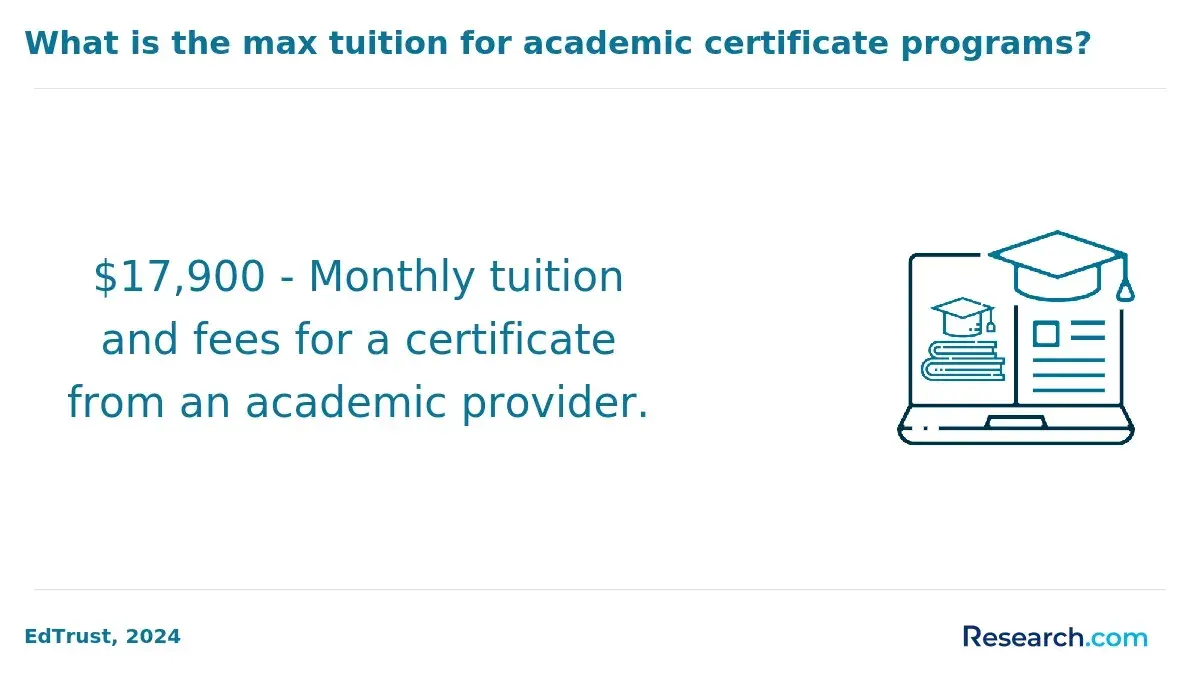
Fees for an educational & teacher leadership master's degree vary notably based on institution type. Public in-state students typically pay between $15,000 and $30,000, while public out-of-state students face costs from $25,000 to $50,000. Private schools generally have the highest charges, ranging from $35,000 to beyond $60,000. By contrast, graduate certificates are more budget-friendly, with public in-state programs costing about $5,000 to $10,000, public out-of-state between $8,000 and $15,000, and private programs usually falling in the $10,000 to $20,000 range.
Credit Hours and Length: Master's programs require roughly 30 to 40 credit hours, significantly more than certificates, which demand 12 to 18 credits. The longer duration and greater coursework of master's degrees increase tuition and overall expenses.
Institutional Overhead: Universities dedicate more resources to master's students-including advising, research, and faculty interaction-raising operational costs. Certificates often involve streamlined administration and fewer campus resources, lowering their price point.
Financial Aid Opportunities: Master's candidates frequently benefit from assistantships, fellowships, and employer tuition support, which can dramatically reduce out-of-pocket costs. Certificate students have less access to these financial aid options due to the program's shorter length and scope.
Hidden Costs: Pursuing a master's degree may lead to foregone income or delayed career advancements because of the longer commitment-often one to three years. On the other hand, certificates require less time, minimizing opportunity costs but may also limit salary growth or professional mobility in comparison.
Return on Investment: Evaluating affordability means looking beyond sticker prices. Net costs-after aid and salary increments-provide a clearer financial picture. Prospective students can use free online calculators to estimate these variables tailored to their circumstances.
A professional who built her career post-master's shared that funding and time management were major hurdles. "Balancing work, family, and graduate school was challenging," she said, "but the advanced leadership skills I gained made it worthwhile." She noted that while the upfront cost and time investment were substantial, the longer-term benefits in job opportunities and salary increases made the master's degree a strategic move for her career growth.
How Does Earning a Educational & Teacher Leadership Master's Degree Affect Salary Compared to a Educational & Teacher Leadership Graduate Certificate?
Professionals with an Educational & Teacher Leadership master's degree tend to earn 15% to 25% more than those holding a graduate certificate, according to recent data from the Bureau of Labor Statistics and Georgetown University. This wage advantage is especially evident in public school districts, higher education, and large nonprofit sectors, where advanced credentials are favored for leadership roles.
Industry and Employer Type: The most significant salary benefits of a master's degree appear in upper-level administrative positions-such as principals, curriculum directors, and district coordinators-that often require a master's as a minimum qualification. In contrast, graduate certificates are generally valued for specialist roles like instructional coaching or staff development, which emphasize specific skills without extensive leadership responsibilities.
Career Tracks with Comparable Earnings: Certain pathways-particularly those emphasizing curriculum design, assessment, or instructional technology-offer certificate holders salaries competitive with or even surpassing entry-level master's degree earners. This trend is more common in smaller districts or private education providers, where targeted certifications combined with relevant experience can translate into strong earnings.
Return on Investment: When assessing financial returns alongside time and cost, graduate certificates provide a quicker, more affordable way to boost earnings initially. Conversely, a master's degree, despite higher upfront costs and longer study commitments, tends to deliver greater salary growth and access to leadership opportunities over time. Recent reports indicate a steady increase in demand for credentialed leaders, suggesting long-term benefits for those investing in a master's credential.
Which Educational & Teacher Leadership Career Paths Favor a Master's Degree Over a Graduate Certificate?
Many career tracks in educational & teacher leadership prioritize a master's degree over a graduate certificate because of the degree's comprehensive curriculum and academic rigor. Such depth is crucial for roles demanding advanced theoretical knowledge, research skills, or formal licensure.
- Administrative Leadership: Positions like school principals, district administrators, and curriculum directors often require a master's for eligibility or promotion. Licensure boards commonly mandate it to ensure candidates have extensive leadership and educational theory expertise.
- Licensed Educational Specialists: Roles such as instructional coordinators and education policy analysts typically insist on a master's due to licensure rules and hiring standards emphasizing rigorous academic preparation and research capability.
- Research and Policy Roles: Employment in educational research or policymaking favors master's holders who demonstrate skill with complex methodologies and theoretical frameworks beyond what certificates generally offer.
- Promotion and Career Advancement: Many school districts treat the master's degree as a formal benchmark for salary increases and leadership advancement, making it essential for climbing the career ladder.
The master's degree encompasses leadership theories, pedagogy, and data-driven decision-making-qualities vital for sustained impact in education settings-whereas certificates focus primarily on targeted skills. According to recent data from the U.S. Bureau of Labor Statistics, employment for education administrators with master's credentials is projected to grow 5% over the decade, highlighting the sustained demand for this advanced credential in leadership roles.
Which Educational & Teacher Leadership Career Paths Favor a Graduate Certificate Over a Master's Degree?
In educational and teacher leadership career paths where employers emphasize demonstrated technical skills or applied competencies, a graduate certificate can often provide greater immediate value than a full master's degree. This is especially true in roles demanding practical expertise rather than academic breadth.
- Skill-Focused Roles: Positions such as instructional coordinators, curriculum specialists, and technology integration coaches typically prioritize targeted skills. Certificates focusing on curriculum design, assessment methods, or educational technology enable candidates to quickly prove readiness for these positions.
- Rapid Skill Upgrades: Working professionals seeking a swift, targeted skills upgrade-such as leadership in digital learning or data-driven decision-making-find graduate certificates more efficient than pursuing another master's degree.
- Career Changers and Specialists: Those transitioning into educational leadership from related areas like counseling or administration may prefer certificates to close essential competency gaps without the time and cost of a full degree.
- Employer Preferences: Surveys and job posting data from Lightcast and LinkedIn Workforce Insights show many educational organizations consider graduate certificates sufficient for mid-level leadership roles when combined with existing bachelor's or master's credentials.
- Cost and Time Efficiency: For many, graduate certificates present a practical compromise-delivering relevant skills aligned with job demands while requiring significantly less time and expense.
Professionals holding a bachelor's or master's degree in related fields often maximize return on investment by choosing certificates for addressing specific competency gaps instead of enrolling in a full degree program. This makes graduate certificates an effective pathway for career advancement or skill acquisition in educational and teacher leadership.
Those interested in additional credential options might compare these pathways with other accelerated online opportunities, for example, an online computer science degree, to align their professional goals with evolving industry demands.
Is a Educational & Teacher Leadership Graduate Certificate Stackable Toward a Master's Degree?
Stackable credentials enable students to earn a graduate certificate and then apply those credits toward a master's degree in the same or a related educational & teacher leadership field. This option is offered by many accredited universities but remains a matter of individual institutional policy rather than a universal standard. Policies vary on whether graduate certificate credit transfer is permitted for stacking graduate certificate toward educational and teacher leadership master's degree programs.
- Institutional Policy: Graduate certificate credits usually must come from the same university or a partner institution to be eligible for transfer into a master's program.
- Grade Requirements: Students are generally required to have earned a minimum grade-often a B or higher-in courses counted toward stacking.
- Time Limits: Certificate completion and application toward the master's often must occur within 3 to 7 years to maintain relevancy and acceptance.
- Credit Matching: Coursework and credit hours must closely align with the master's curriculum; certificates outside educational & teacher leadership typically do not transfer.
- Lower-Risk Entry: Earning a graduate certificate serves as an affordable, lower-commitment way to explore graduate studies before committing fully-helping students assess academic fit and financial readiness.
- Verification: Because stacking policies differ widely, prospective students should confirm credit transfer eligibility with the graduate admissions office before enrolling.
Individuals exploring this pathway may also consider related options-for example, veterans interested in advancing their credentials can find tailored programs like the online cyber security degree for veterans, illustrating the value of stacking credentials across disciplines while leveraging specific institutional policies.
How Do Employers in the Educational & Teacher Leadership Field Perceive a Master's Degree Versus a Graduate Certificate?
Employer perspectives on master's degrees versus graduate certificates in educational & teacher leadership vary widely based on context and role. Academic institutions and K-12 leadership often prioritize the master's degree, viewing it as the essential credential due to its comprehensive curriculum, while graduate certificates are typically seen as supplementary credentials within these regulated fields.
For specialized positions or roles requiring targeted professional development, certificates may be favored-particularly for candidates seeking quicker skill acquisition or career transitions. Yet, positions focused on policy, administration, or broader leadership generally prefer a master's degree.
The standing of the institution awarding the credential plays a significant role. A graduate certificate from a prestigious, accredited university might carry more weight than a master's from a less recognized school, emphasizing program quality over credential type.
Early-career professionals with certificates may access entry-level opportunities, though a master's degree usually offers better prospects for advancement and leadership roles. Although certificates gain traction in some industries, educational & teacher leadership's regulatory environment still largely regards the master's as the professional standard.
Industry Variation: Hiring preferences shift based on sector, with tech and consulting displaying greater openness to certificates compared to the traditional educational system.
Credential Reputation: The issuing university's prestige impacts employer evaluation more than the credential type alone.
Career Progression: Master's degrees tend to support longer-term growth and leadership pathways more than certificates.
Role Specificity: Certificates serve well for niche skills and rapid upskilling but usually do not replace a master's for core educational leadership roles.
Can a Educational & Teacher Leadership Graduate Certificate Help Someone Transition Into the Field From a Different Background?
Graduate certificates in educational & teacher leadership provide a practical, expedited way for professionals from unrelated fields to establish credibility without the time and expense of a master's degree. Workforce development research highlights that these certificates increasingly target career changers by offering accelerated, cost-efficient programs tailored to foundational skills in this field.
Speed: Certificates demand fewer credits, often completed within a year, enabling swift skill acquisition and entry into the workforce.
Cost-Effectiveness: With lower tuition than master's degrees, certificates reduce financial hurdles for those pivoting careers.
Applied Curriculum: Programs focus on relevant competencies and typically include practical projects, helping students create a portfolio that demonstrates their expertise.
Stackability: Many certificates can be integrated into a full master's degree later, offering flexibility rather than acting as a final credential.
Despite these advantages, certificates may not suffice for leadership or specialized roles that require comprehensive graduate-level study and formal recognition. Experts recommend pairing a certificate with concrete experience-such as volunteer roles or project work-to strengthen employability. This combination helps the credential serve as a strategic entry point, supporting both immediate career shifts and potential academic advancement.
What Graduates Say About Which Is Better: A Educational & Teacher Leadership Master's Degree or a Educational & Teacher Leadership Graduate Certificate
- Kaysen: "Choosing between a Educational & teacher leadership master's and certificate was tough-but from my experience, the master's program's salary impact was undeniable. Employers clearly value the depth of knowledge a master's provides, which translated into better pay and more leadership opportunities for me. Plus, while it required a larger time commitment, the long-term career utility made it totally worth it."
- Jalen: "Reflecting on my journey, I appreciated how the certificate's quicker time-to-completion allowed me to upskill rapidly without the heavy commitment. However, the master's degree demands more rigorous admission requirements-something I personally valued for the structure and academic challenge it provided. For professionals balancing work and study, the certificate is cost-effective but the master's holds more clout with employers in the long run."
- Beau: "Professionally, I found the cost difference between the two options quite significant, with the certificate being much more affordable upfront. That said, the master's program offered broader career utility by opening doors to roles that require advanced credentials. Employers tend to recognize the master's degree as a mark of advanced expertise, which has helped enhance my leadership credibility in educational settings."
Other Things You Should Know About Educational & Teacher Leadership Degrees
Online educational & teacher leadership master's programs generally offer a more comprehensive curriculum with greater depth and rigor, leading to broader career opportunities and higher recognition by employers. Graduate certificates focus on specific skills and can be completed faster but are viewed as complementary qualifications rather than standalone credentials. Quality varies by institution, so accreditation and program reputation remain crucial for both.
Accreditation ensures that a program meets established academic standards and affects both credential recognition and eligibility for professional certifications. Master's programs typically require regional or national accreditation, which influences graduate school options and employer trust. Graduate certificates may also be accredited, but thorough verification is essential, especially if planning to use the certificate as a stepping-stone to advanced degrees or leadership roles.
Completing an Educational & Teacher Leadership Master's Degree typically takes 1.5 to 2 years of full-time study, offering comprehensive knowledge and skills. A Graduate Certificate is generally shorter, requiring around 6 months to a year, ideal for targeted learning on specific topics or professional enhancement in less time.
Those seeking comprehensive knowledge, leadership roles, or doctoral study in educational & teacher leadership will benefit most from a master's degree due to its depth and credential weight. Professionals wanting targeted skill enhancement or a quicker credential to improve their current position might prefer a graduate certificate. Additionally, career-changers looking for an expedited entry into the field often choose certificates, while those committed to long-term advancement invest in the master's.
References
- Cost of Master's Degree in Education for Teachers 2025 https://creditsforteachers.com/how-much-does-a-masters-degree-of-education-cost/
- Teacher Leadership Graduate Certificate | SUNY Plattsburgh https://www.plattsburgh.edu/programs/teacher-leadership-graduate-certificate.html
- Common Corporate Jobs for Former Teachers | DLI https://www.digitallearninginstitute.com/blog/corporate-jobs-for-teachers
- Stackable Certificate and Degree Pathways https://www.rider.edu/academics/colleges-schools/college-education-human-services/stackable-graduate-programs
- How a Master's Degree in Teacher Leadership Can Affect a Career - Graduate Programs for Educators https://www.graduateprogram.org/blog/how-a-masters-degree-in-teacher-leadership-can-affect-a-career/
- Difference Between Graduate Certificate and Master's Degree - Rosemont College https://rosemont.edu/whats-the-difference-between-graduate-certificate-and-masters-degree/
- Educational Leadership/Principalship, M.E. https://www.park.edu/academics/explore-programs/educational-leadership-principalship-m-e/
- Master of Education in Teacher Leadership and Educational Leadership https://www.kennesaw.edu/degrees-programs/master-degrees/teacher-leadership.php
- Educational Leadership Degree: Master’s vs. Doctorate https://www.educationalleadershipdegree.com/blog/educational-leadership-degree-masters-vs-doctorate/
- M.Ed. in Educational Leadership | ACE https://ace.edu/degree-programs/masters-degrees/masters-education/master-of-education-in-educational-leadership/