
2027 Deep Learning in an Online Data Science Master's: Courses, Projects, and Program Selection

Co-Founder and Chief Data Scientist
An online data science master's may mention deep learning without giving students much opportunity to build, evaluate, and explain neural networks. For prospective students interested in applied AI, the distinction matters more than the degree's title.
This guide shows what to look for in course descriptions, project requirements, and program policies so you can choose a program with the right technical depth for your goals and budget.
Key Things You Should Know
- A dedicated deep learning course is stronger evidence of coverage than a brief mention in a machine learning syllabus; a substantial project offers better evidence that students apply the methods.
- Check prerequisites, electives, computing access, and capstone rules together: an attractive course is less useful if you cannot take it or use it in a meaningful project.
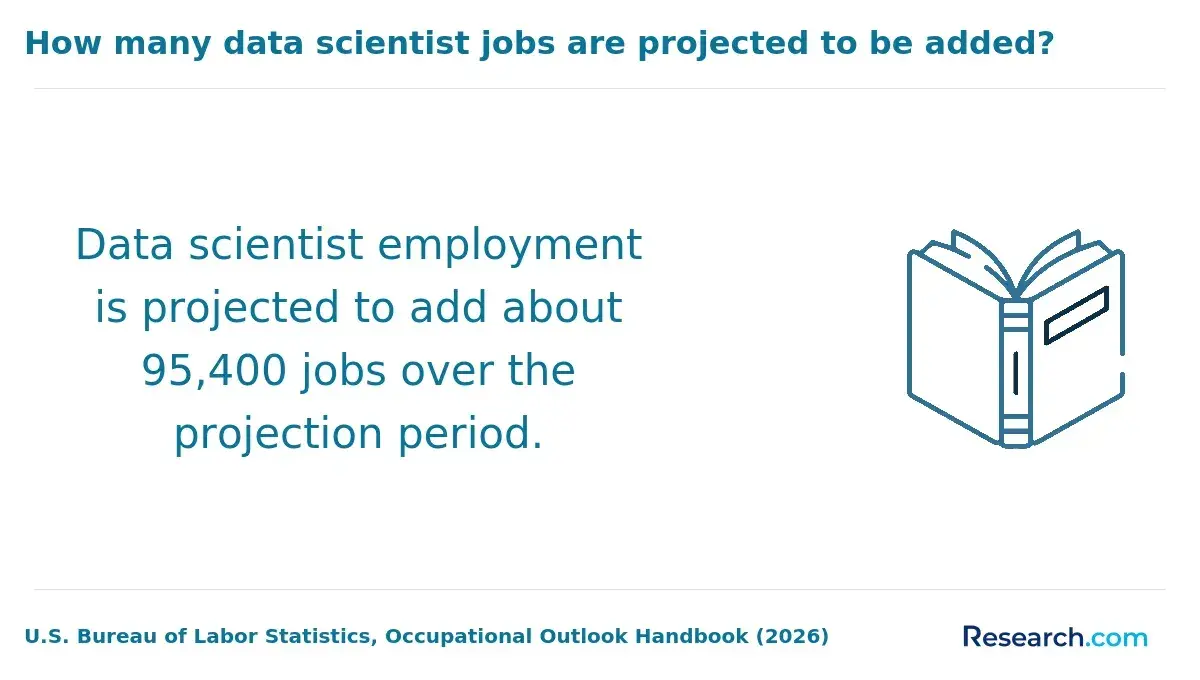
- The U.S. Bureau of Labor Statistics projects 35% growth in data scientist employment from 2025 to 2035, but that occupation-wide forecast does not establish demand for any particular degree or specialization.
What is an online data science master's degree?
It is a graduate degree completed primarily through online instruction that combines statistical reasoning, computing, and the use of data to answer questions or build predictive systems. Deep learning is one possible area of study within that broader curriculum; it is not necessarily a required course or concentration.
If neural networks are your main goal, compare the data science curriculum with artificial intelligence degree options. A data science degree may better suit someone who also wants substantial training in statistics, data preparation, and analysis. An AI-focused degree may offer more specialized model coursework, but the catalog - not the degree label - determines the actual depth.
What courses are included in an online data science master's?
Courses vary by institution, but deep learning builds on programming, linear algebra, probability, statistics, and machine learning. A relevant sequence might move from data management and statistical modeling to machine learning, then to a dedicated neural networks course or advanced electives in areas such as computer vision or language processing. Students should check which courses are required, which are optional, and whether electives run often enough to fit their timeline.
The table distinguishes common levels of coverage. These are ways to interpret a curriculum, not claims about any particular school.
| Level of coverage | What it may include | What it does not establish on its own |
| Passing mention or unit | An introduction to neural networks within a broader course | Ability to train and evaluate models independently |
| Dedicated course | Model architecture, training, validation, and practical assignments | Access to advanced electives or a substantial independent project |
| Advanced electives and project work | Specialized methods applied to a defined problem and dataset | That every student can enroll in those electives or choose that project topic |
A course title alone cannot show whether students study optimization, overfitting, evaluation, computational trade-offs, and limitations in enough depth to use the methods responsibly. Request a recent syllabus and look for assignments that require students to justify a model choice against a simpler baseline. If responsible AI is a priority, compare that coverage with artificial intelligence graduate programs in ethics and governance rather than assuming a technical elective addresses those issues fully.
What projects do students complete in an online data science master's?
Projects may be embedded in courses or completed through a capstone or thesis, depending on the program. For deep learning, a meaningful project does more than run a pretrained model: it defines a problem, establishes an appropriate baseline, explains the data and evaluation method, and examines errors and limitations. Work involving sensitive data also needs a feasible privacy and permission plan.
Before enrolling, test whether the program can support the kind of portfolio evidence you want. Ask these questions about its actual project policies and resources:
- Can students propose a deep learning topic, or must they choose from assigned projects?
- Is faculty feedback available on problem formulation, evaluation, and technical decisions?
- What computing resources are available, and who pays for usage beyond any included allowance?
- Can students retain and share a code repository or project summary, subject to data and intellectual-property restrictions?
A smaller, carefully evaluated project can demonstrate more judgment than an ambitious model without a credible comparison or explanation. For a target role, prioritize projects resembling its data and constraints rather than choosing a topic solely because it uses a fashionable architecture.
How do online and campus-based data science master's programs compare?
Delivery format does not, by itself, determine deep learning rigor. Compare the same evidence in each option: syllabi, assessed projects, instructor access, computing resources, and the availability of advanced courses. An online program is a better fit when its schedule and remote collaboration arrangements let you complete that work consistently. A campus-based option may be preferable if its particular research group, facilities, or in-person supervision are central to your plans.
For online programs, confirm whether lectures are asynchronous, whether live sessions or exams have fixed times, and how group projects accommodate working students. Do not assume that "online" means self-paced or that a remotely taught course provides the same access to lab resources as its campus counterpart.
What are the admission requirements for an online data science master's?
Requirements differ by program. Schools may ask for a bachelor's degree, transcripts, evidence of quantitative and programming preparation, recommendations, or a statement of purpose. Deep learning readiness is a separate question from formal eligibility: an applicant might meet admission requirements yet benefit from strengthening Python, linear algebra, probability, or introductory machine learning before an advanced elective.
If your prior degree is outside computing, review the stated prerequisites rather than assuming you are ineligible. AI master's degrees for students from other academic fields provide a useful adjacent comparison. Ask admissions staff whether coursework or professional projects can demonstrate preparation, and whether self-study helps with readiness without formally satisfying a required prerequisite.
How long does an online data science master's take and cost?
Completion time depends on required credits, course availability, enrollment pace, and whether a capstone has prerequisites or a fixed sequence. For a prospective deep learning student, the important scheduling question is not just the advertised duration: it is when the relevant elective runs and whether you can complete its prerequisites beforehand.
No single price accurately represents online data science master's programs. Build a comparable estimate from each school's current tuition schedule and required fees, then add any applicable software, computing, materials, or travel costs. Confirm whether published tuition assumes a particular residency status or enrollment load, and ask whether an employer will reimburse the courses you intend to take. If price is your main constraint and an AI degree also fits your goals, low-cost online AI master's programs offer another category to compare.
A common mistake is comparing one program's tuition-only figure with another's estimated total. Request a cost estimate for your expected pace, including what happens if a needed elective is unavailable and you must stay enrolled longer.
How can you verify accreditation for an online data science master's?
Verify the institution's accreditation through the accreditor's directory and the U.S. Department of Education's accreditation database; check that the status applies to the institution offering the degree. Then confirm the degree and online delivery details in the university's catalog. Institutional accreditation and the strength of a particular deep learning curriculum answer different questions: neither substitutes for checking the other.
If you will study from another state, ask the school to confirm that it can enroll students where you live. Do not infer eligibility from a program being advertised nationally. You can also ask whether the school makes any separate accreditation claim for the program and verify that claim directly rather than assuming every data science degree needs program-specific accreditation.
What careers can you pursue with an online data science master's?
The degree can support preparation for data scientist, machine learning, and other analytics roles, but titles and hiring requirements vary by employer. Deep learning is especially relevant when a role involves image, text, audio, or other complex data and the employer has a reason to use neural networks. Many data science problems are better served by simpler statistical or machine learning approaches; being able to recognize that is a valuable professional skill.
Choose a program around the work you want to show employers. For research-oriented roles, look closely at advanced coursework and opportunities for supervised investigation. For applied roles, prioritize projects that demonstrate data preparation, baseline comparisons, evaluation, and communication to stakeholders. A degree alone does not replace evidence that you can do those tasks.
What salary and job outlook can data science graduates expect?
The U.S. Bureau of Labor Statistics reports a median annual wage of $120,230 for data scientists in May 2025. That is a wage for workers in the occupation, not a starting salary or a measured outcome for online master's graduates. Prior experience, employer, role, and location all affect an individual offer; data science career earnings by industry can help frame those differences without treating an industry average as a personal forecast.
BLS projects 35% employment growth for data scientists from 2025 to 2035. This indicates a growing occupation, not that every opening calls for deep learning or a master's degree. When assessing a program's return on investment, weigh its full cost against your current experience and realistic target roles; do not attribute an occupation-wide salary to the degree itself.
Which certifications or professional standards benefit data science graduates?
There is no single certification that establishes mastery of deep learning or replaces a graduate degree. A relevant cloud or machine learning platform certification may help if employers you are targeting use that platform, but its value depends on the role and how much practical work you can demonstrate.
Professional practice matters more broadly: document data provenance, protect confidential information, make experiments reproducible, compare against suitable baselines, and communicate model limitations. When comparing programs, look for these habits in assignment requirements and assessment criteria - not only in course descriptions. A certificate is a useful complement when it fills a specific tooling gap, not a substitute for a sound project portfolio.
Other Things You Should Know About Data Science
Not necessarily. Some programs provide remote computing resources, while others expect students to arrange access. Ask for the course's hardware requirements and any usage limits before purchasing equipment.
Only if your employer permits it and the project meets the school's data-use rules. Obtain approval before sharing data with classmates, instructors, or outside computing services; a public or approved synthetic dataset may be safer.
Often that depends on the dataset license, employer agreements, collaborators, and program policies. Confirm what you own and may share, then remove restricted data and credentials before publishing.
It can help, particularly if you can take rigorous theory courses and conduct supervised research. If a PhD is your goal, ask whether online students can complete a thesis, work with research faculty, and obtain detailed academic recommendations.
References
- Cost of Attendance (Budget) | 2025-2026 Federal Student Aid Handbook https://fsapartners.ed.gov/knowledge-center/fsa-handbook/2025-2026/vol3/ch2-cost-attendance-budget
- Optimizing collaborative learning in online courses - PMC - NIH https://pmc.ncbi.nlm.nih.gov/articles/PMC7891413/
- Master's in Data Science - University of Notre Dame https://datascience.nd.edu/masters/
- Online Master's in Data Science (MSDS) | Northwestern University https://sps.northwestern.edu/masters/data-science/
- AI and Machine Learning Certificate Program - CCNY - CUNY https://www.ccny.cuny.edu/cps/ai-and-machine-learning
- Tuition in Detail - One Stop Student Services https://onestop.utk.edu/billing-payments/tuition-detail/
- M.S. in Data Science, Online | virginia.edu https://datascience.virginia.edu/degrees/msds-online
- In-Person Program - UChicago Data Science Institute https://datascience.uchicago.edu/education/masters-programs/in-person-program/
- Data Science and AI Courses | du.edu https://ritchieschool.du.edu/data-science/courses
- Master's in Data Science - Pace University Online https://online.pace.edu/graduate-programs/ms-in-data-science/


