2027 Data Product Design in an Online Data Science Master's: Courses, Projects, and Program Selection

Co-Founder and Chief Data Scientist
Choosing an online data science master's for data product design means looking beyond model-building courses. If you want to turn analysis into tools people can use, you need evidence that a program teaches problem definition, data engineering, user needs, deployment, and evaluation. This guide shows prospective students what to look for in courses and projects, and how to weigh those opportunities against format, cost, and career goals.
Key Things You Should Know
- Look for a connected sequence of data engineering, modeling, human-centered design, and deployment, not just a course title that mentions products.
- Prioritize projects that identify a user, deliver a usable output, and test whether it works; a model's accuracy alone is not enough.
- Career demand is relevant but not a promise: the U.S. Bureau of Labor Statistics projects 35% employment growth for data scientists from 2025 to 2035.
What Is Data Product Design in an Online Data Science Master's?
Data product design is the process of turning data and analytical methods into a repeatable service, application, dashboard, or decision tool for specific users. A useful product must answer a real question, work with available data, fit a user's workflow, and remain reliable after its first demonstration.
In a master's program, that work may span statistics, machine learning, data engineering, visualization, software development, and human-centered design.
The distinction is important: a predictive model is one component; a data product also needs an interface or delivery mechanism, appropriate safeguards, and a way to assess whether people can use its output responsibly. Graduate-level work should require students to justify these choices and test the resulting product, not merely train a model.
What Courses Teach Data Product Design in Data Science Master's Programs?
No single course name establishes that a program teaches data product design well. The following course areas show how the necessary skills can fit together; published syllabi and assignments are more informative than catalog titles alone:
| Course area | Contribution to a data product | Evidence of substantive coverage |
| Data engineering and databases | Creates dependable inputs and repeatable pipelines | Students build, document, and test a pipeline |
| Statistics and machine learning | Produces and evaluates analytical outputs | Assignments address uncertainty, validation, and model limitations |
| Visualization or human-centered design | Makes outputs interpretable and usable | Students investigate user needs and revise a prototype |
| Software engineering or deployment | Makes the product available beyond a notebook | Students implement an application, API, or maintained workflow |
| Ethics, privacy, and governance | Addresses risks created by data use and decisions | Projects assess access, bias, privacy, or appropriate use |
A passing mention of deployment or user research is not equivalent to a dedicated course, and a dedicated course is not equivalent to applying the skill in a substantial project. Ask for recent syllabi and examples of assessed work.
If your intended product depends on production data pipelines, comparing AI master's curricula that include data engineering can also help clarify whether a data science or AI curriculum better covers that requirement.
What Projects Build Data Product Design Skills Online?
The strongest project is not necessarily the one with the most complicated algorithm. It is one in which a student can explain who needs the product, why the available data are suitable, what was built, how it was tested, and what would need to change before real-world use.
For example, a demand-planning tool could combine a documented data pipeline, forecasts, an interface for reviewing uncertainty, and feedback from intended users. A public-health dashboard might instead emphasize data quality, accessible explanations, privacy, and the risk of misleading comparisons. Both can demonstrate product judgment if the evaluation matches the users' decisions.
Online students should establish project feasibility before enrolling. The following questions distinguish an implementable project opportunity from a capstone that exists mainly on paper:
- Can students propose their own problem or work with an external stakeholder, and who approves the scope?
- Are suitable datasets, computing resources, and technical support available remotely?
- Does assessment include usability or stakeholder feedback alongside technical performance?
- Can students publish a sanitized portfolio version, subject to data rights and confidentiality rules?
Ask to see the capstone rubric, not just a project gallery. A polished screenshot cannot show whether the student handled missing data, tested assumptions, or documented limitations.
How Do Online Data Science Master's Programs Compare With Campus Programs?
Delivery mode does not, by itself, determine curriculum depth. For data product design, the more consequential difference may be how students meet users, collaborate, get feedback, and access project resources:
| Factor | Online program: verify | Campus program: verify |
| Collaboration | Scheduled team meetings, time-zone expectations, and remote tools | In-person meeting and lab expectations |
| Project feedback | Remote access to faculty, peers, and stakeholders | Access to faculty, peers, and local partners |
| Technical access | Remote computing, software, and data permissions | On-campus lab and computing access |
| Schedule | Recorded versus live sessions and fixed deadlines | Class times and travel requirements |
Choose an online option when its project supervision and remote resources meet your needs and its schedule fits your commitments. A campus option may be preferable if you need frequent in-person collaboration or access to facilities unavailable remotely.
Working applicants can use an online master's in data science for busy professionals comparison to investigate pacing, but should still confirm the specific program's live-session and group-project demands.
What Are the Admission Requirements for an Online Data Science Master's?
Requirements vary by institution. Programs may ask for a bachelor's degree, academic transcripts, evidence of quantitative preparation, programming experience, recommendations, or a statement of purpose.
Some specify prerequisites; others assess readiness through prior coursework or professional work. Self-study can help you succeed, but it does not automatically satisfy a formal prerequisite.
For data product design, applicants should be prepared to explain both technical readiness and the decisions they hope to support with data. If your background is stronger in product or domain work than in coding or statistics, compare your record with each program's published prerequisites and ask admissions staff how any gap can be addressed.
If your goal is specifically to build AI-centered products, guidance on a master's in AI after a non-CS bachelor's offers a useful comparison; do not assume its entry requirements match those of a data science program.
How Long Does an Online Data Science Master's Take and Cost?
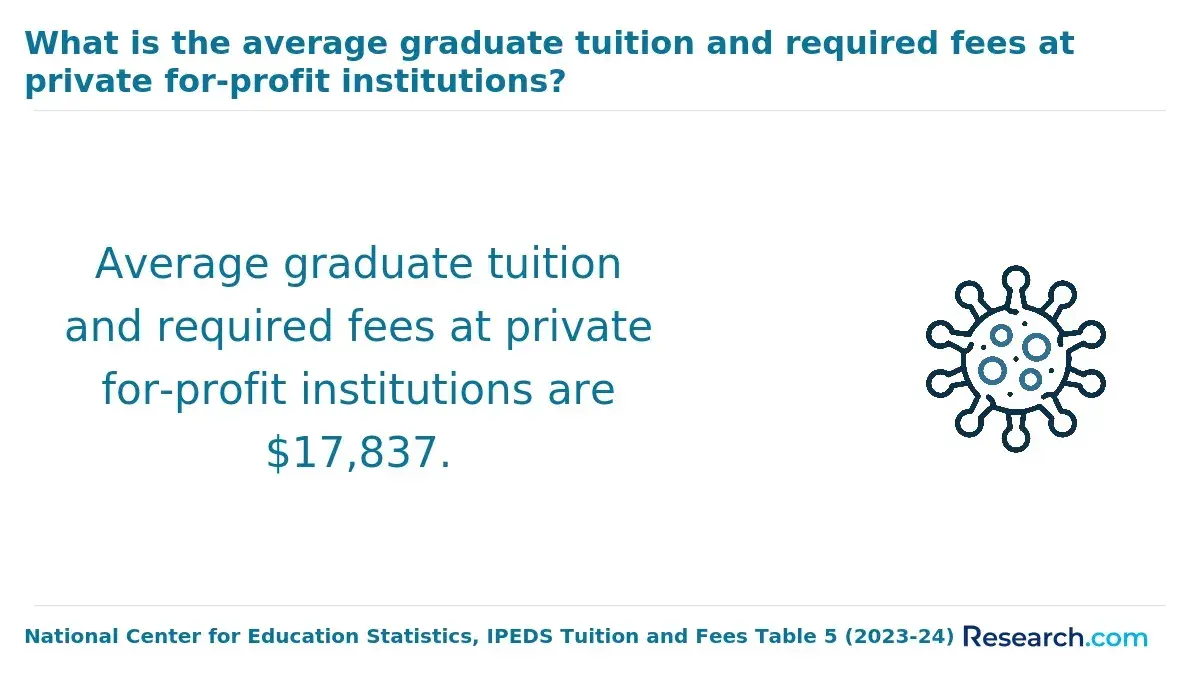
Duration depends on required credits, course availability, enrollment pace, and capstone scheduling. Tuition also varies enough that a generic price would be misleading.
To compare programs, calculate required credits multiplied by the applicable per-credit tuition, then add mandatory fees and any required software, materials, travel, or project expenses. Ask whether tuition differs by residency or enrollment status and whether rates can change before graduation.
A lower advertised tuition figure is not necessarily the lower-cost route if courses are offered infrequently or the program requires travel. Conversely, a faster schedule may reduce time to completion while increasing the workload you must manage alongside employment.
Ask each school for a current, program-specific cost estimate and a feasible course sequence. For financing options and questions to raise with a financial aid office, see funding an online data science master's degree.
How Can You Verify Online Data Science Program Accreditation?
Verify the institution's accreditation through its official website and the accreditor's current directory; do not rely solely on a program advertisement or a ranking.
Check that the degree is awarded by the institution named in the accreditation record. Institutional accreditation and approval to enroll students where you live are separate questions, so confirm the program's state authorization information as well.
Accreditation is a baseline credibility check, not proof that the curriculum includes data product design. Once it is confirmed, inspect course requirements, project rules, and access to faculty feedback. Be cautious if a provider makes it difficult to identify the degree-awarding institution or describe what online students can actually take.
What Careers Can Data Product Design Skills Lead To?
Relevant roles can include data scientist, analytics engineer, machine learning engineer, product analyst, and data-focused product manager. Titles are not interchangeable: a data scientist may concentrate on modeling and evaluation, while a product analyst may focus on metrics and experiments.
Engineering roles generally demand stronger software and pipeline skills; product management places more weight on prioritization and stakeholder decisions. Employer requirements vary.
Match the program to the work you want to show employers. If your goal is to improve decisions through measurement and reporting rather than build deployed models or applications, it may be worth taking time to compare data analytics master's degrees.
If you want to own a data product from problem definition through implementation, seek coursework and a project that cover that full path.
How Much Can Data Science and Data Product Professionals Earn?
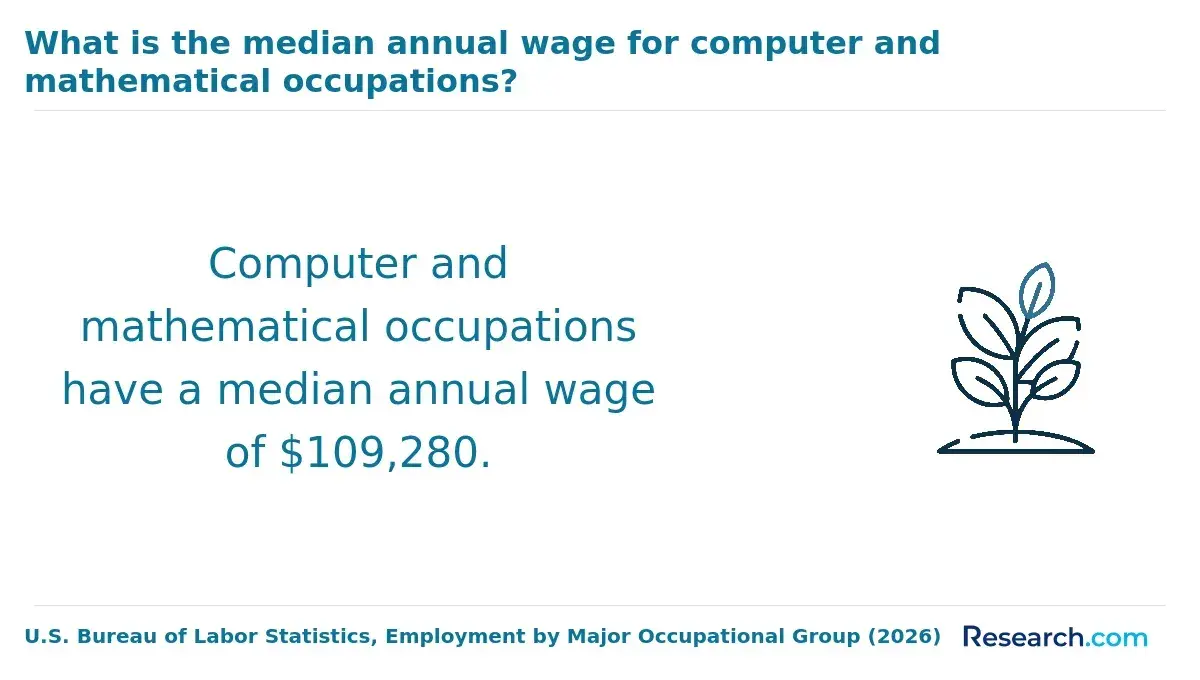
The U.S. Bureau of Labor Statistics reports a median annual wage of $120,230 for data scientists in May 2025. That is an occupational figure, not an expected starting salary or a measured outcome for graduates of online programs.
Pay for other data product roles depends on the job's responsibilities, location, employer, and a candidate's prior experience.
BLS also projects about 24,800 data scientist openings annually, on average, from 2025 to 2035. The figure indicates opportunities across the occupation, not that a particular degree will secure one.
When a school publishes graduate salary figures, check who responded, whether they were already employed, and whether the figure measures salary level or an increase after enrollment.
How Do You Choose a Reputable Online Data Science Master's Program?
Start with your intended product and target role, then compare programs against the same evidence. This prevents an appealing course title, ranking, or low tuition quote from outweighing the work you would actually be able to complete.
Use this sequence to narrow your options and identify questions that require a direct answer from each school:
- Define the product you want to build and the technical and user-facing skills it requires.
- Map required courses and electives to those skills using current catalogs and syllabi.
- Check capstone rubrics, project supervision, data access, and whether remote students can complete the work.
- Verify accreditation, authorization for your location, admissions requirements, schedule, and total estimated cost.
- Ask for clearly defined graduate outcomes, if available, and avoid treating an undisclosed metric as a positive result.
Choose the program with the strongest feasible path to your intended work, not simply the longest list of tools. A useful final test is whether you can describe the project you would pursue, the courses that prepare you for it, and the feedback you would receive before committing to enroll.
Other Things You Should Know About Data Science
Only with the necessary employer permission and the program's approval. If permission is uncertain, propose a public, synthetic, or properly de-identified dataset instead.
Not necessarily. A portfolio can explain your contribution, methods, evaluation, and limitations without releasing restricted data or proprietary code. Check your school's and any project partner's rules first.
It may be enough if you need one specific skill, such as dashboard design. A master's is more relevant when you need sustained graduate-level study and an assessed project spanning several disciplines.
No. A reliable data pipeline, well-designed dashboard, or decision workflow may solve the user's problem without a predictive model. Select methods based on the problem rather than their complexity.
References
- Usability | Digital.gov https://digital.gov/topics/usability
- Deployment as a Critical Business Data Science Discipline | Harvard Data Science Review https://hdsr.mitpress.mit.edu/pub/2fu65ujf
- User Testing - Usability & Digital Accessibility - Yale University https://usability.yale.edu/ux/validate/review-the-user-experience/user-testing
- Why Choose a Master's in Applied Data Science? | Bay Path University https://www.baypath.edu/news/bay-path-university-blogs/post/why-choose-a-master-s-in-applied-data-science/
- M.S. in Data Science, Online | virginia.edu https://datascience.virginia.edu/degrees/msds-online
- Data Science and Analytics Online Master's Program | ODUGlobal https://online.odu.edu/academics/programs/data-science-analytics-masters
- Data Science and Software Engineering Process Models | github.io https://mlip-cmu.github.io/book/20-data-science-and-software-engineering-process-models.html