2027 Cost per Credit for Online Engineering Management Master's Programs: Tuition Comparison Guide

Co-Founder and Chief Data Scientist
Comparing the cost per credit of online engineering management master's programs can uncover unexpected financial hurdles that influence long-term value. Tuition alone rarely captures fees like technology surcharges, residency requirements, or accreditation-driven expenses affecting licensure eligibility.
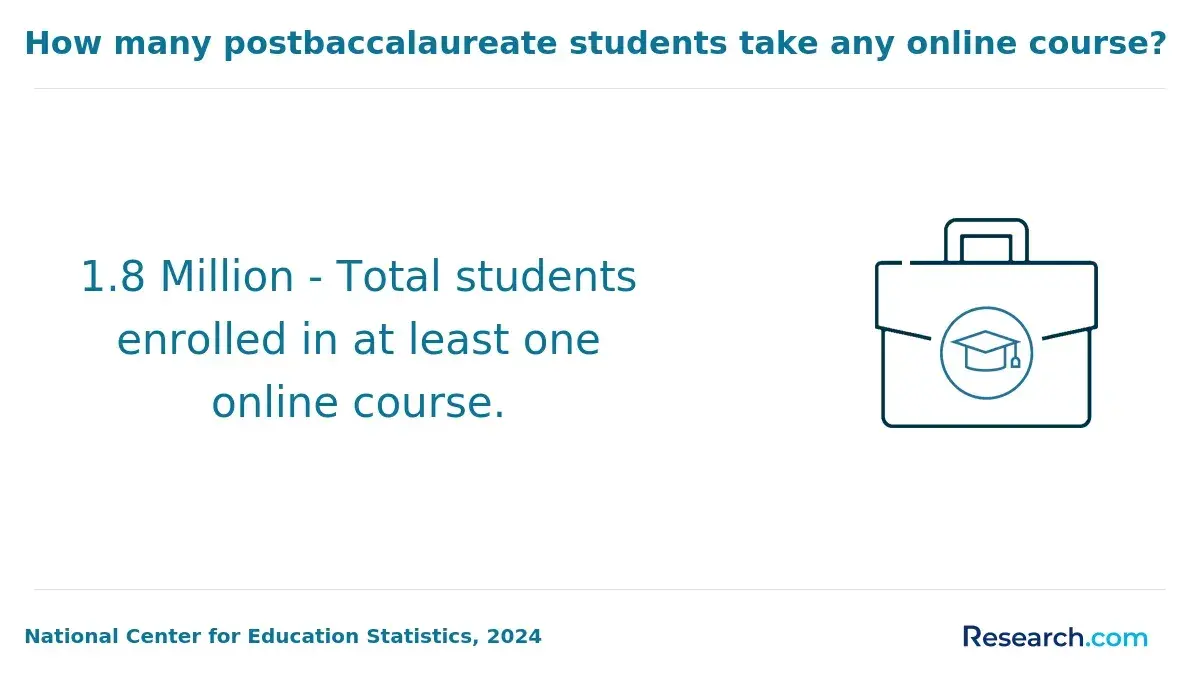
With online graduate enrollment rising 6.5% in 2024 according to the National Center for Education Statistics, accessibility has expanded, yet disparities in institution types and delivery formats complicate cost comparisons. Understanding these nuances aids self-funded professionals and place-bound learners in estimating true program costs and assessing whether each degree aligns with career mobility goals and employer expectations in engineering management fields.
Key Things to Know About the Cost per Credit for Online Engineering Management Master's Programs
- Per-credit costs vary widely between public and private institutions, creating tradeoffs where lower tuition may come with stricter residency requirements that limit flexible access for working professionals.
- Hidden fees such as technology and lab charges complicate true cost comparisons, emphasizing the need for an all-in financial estimate to avoid unexpected debt impacting career mobility post-graduation.
- Accreditation shapes employer acceptance and licensure eligibility, with non-regional or specialized accreditations risking diminished workforce value despite lower per-credit pricing-important for long-term credential viability.
What Is the Average Cost per Credit Hour for Online Engineering Management Master's Programs, and How Does It Compare Across Institution Types?
Evaluating online engineering management master's programs by average cost per credit hour offers a sharper lens on financial commitment than total program tuition, which can obscure differences due to varying credit requirements and program lengths. For a working professional balancing job retention with graduate study, knowing the per-credit charge reveals how adjustments in course load or transfer credits affect out-of-pocket expenses directly.
The cost comparison of engineering management master's programs by institution type underscores consistent patterns but also significant nuances. Public universities typically provide the most affordable per-credit rates for in-state students, often falling between $400 and $700, but this advantage can rapidly diminish for out-of-state enrollees, who may face fees well above $1,000 per credit, shifting long-term cost projections.
Private nonprofit schools generally charge more, charging between $800 and $1,200 per credit, frequently embedding program fees into per-credit prices, which, although higher upfront, might reduce unexpected expenses later in the program. For-profit private providers show the most variability; their accelerated formats and less transparent fee structures can complicate comparisons, potentially masking costs that only emerge mid-program.
Sticker price per credit rarely tells the whole story due to several institutional factors:
- Residency Status: Residents at public universities often benefit from substantial tuition discounts, cutting costs by up to 50% relative to out-of-state rates, a critical factor for students weighing state residency rules or considering relocation to optimize affordability.
- Program Fees: Separate charges for technology access, course materials, or administrative services frequently add hundreds of dollars beyond per-credit tuition, increasing the total financial commitment and affecting cash flow management.
- Institutional Pricing Models: Diverse models such as flat-rate tuition per semester, bundled credit pricing, or cohort-based fees disrupt straightforward per-credit cost comparisons, calling for a thorough review of contract terms and payment schedules.
This guide systematically disentangles these variables, focusing first on institution type and residency impact before addressing hidden fees, accreditation implications, and financial aid availability. Students thus gain a realistic view not only of per-credit cost disparities but also aggregated tuition, fees, and non-tuition expenses.
This multi-layered approach enables prospective enrollees to project all-in program costs accurately and align their enrollment choices with career goals, financial constraints, and credential validation requirements. For those exploring condensed options, resources like 1-year master's programs online may offer additional context for evaluating accelerated timelines alongside cost considerations.
How Many Credit Hours Are Typically Required to Complete an Online Engineering Management Master's Program, and How Does That Affect Total Tuition?
Choosing an online engineering management master's program based solely on per-credit price can be misleading, as total credit requirements often cause significant tuition variance. For example, a working professional comparing two programs-a lean 30-credit option versus a 60-credit track-may find the ostensibly cheaper per-credit rate more expensive overall due to doubled credit load.
- Credit Hour Range: Typical program lengths vary widely, from about 30 credits for accelerated or focused coursework to over 60 credits when thesis options, extensive electives, or specialized research are required. Accreditation mandates and program format (thesis vs. non-thesis) strongly influence this variation, introducing a wide spectrum of tuition commitments beyond the sticker per-credit cost.
- Practicum and Internship Credits: Many programs require fieldwork or internship credits that frequently carry separate fees or elevated per-credit charges. These experiential components, essential for practical competence, often inflate total cost unexpectedly and must be factored into any comparative tuition analysis.
- Tuition Multiplication: Students should avoid simplistic comparisons by multiplying the per-credit expense by the total credit hours needed to graduate. This calculation reveals the true base tuition, clarifying that a lower per-credit price on a longer program may not yield savings.
- Hidden Fees and Additional Costs: Besides credit charges, mandatory fees for technology access, internships, or administrative services can differentiate programs that appear similarly priced on a per-credit basis, impacting the net financial burden.
- Cost Comparison Strategy: Apply this formula to any candidate program: Total Tuition = Total Credit Hours × Per-Credit Cost + Additional Mandatory Fees. This practical approach equips prospective students-particularly self-funded professionals and place-bound learners-to align tuition investments with realistic educational and workforce outcomes.
Which Online Engineering Management Master's Programs Offer the Lowest Cost per Credit Hour Among Accredited Institutions?
The most affordable accredited online engineering management master's programs often balance low per-credit costs with additional fees and enrollment restrictions that shape true expense and accessibility. For example, Missouri University of Science and Technology sets a competitive $275 per credit rate for its 30-credit master's, totaling approximately $8,250 before technology and course fees that inflate semester costs.
University of Texas at Tyler charges about $300 per credit for a 36-credit curriculum, estimating $10,800 tuition. Students must anticipate enrollment and online service fees, but out-of-state learners benefit from no price differentiation. Conversely, University of Central Florida's 30-credit program features a higher $331 rate, with additional online delivery and registration fees, and enrollment minimums that may limit flexible pacing.
Kennesaw State University maintains a $345 per credit rate over 30 credits, summing near $10,350 plus mandatory semester fees. The program's cohort-based model restricts start dates, affecting eligibility timing. New Jersey Institute of Technology presents the steepest cost here at $375 per credit, roughly $11,250 total tuition with fees, but requires proof of STEM undergraduate preparation, potentially narrowing candidate pools.
While these figures represent the lowest cost per credit hour for accredited online engineering management master's programs, students should assess mandatory fees, program structures, and admission criteria that influence overall affordability and access. Tuition rates evolve annually, so verification with institutions is essential.
These considerations are vital for self-funded learners seeking long-term value and professional viability. For prospective students comparing graduate options, also consider the cheapest online master's in psychology as a parallel in cost-conscious graduate education.
How Do In-State vs. Out-of-State Tuition Rates Apply to Online Engineering Management Master's Programs, and Which Schools Offer Flat Tuition Regardless of Residency?
Public universities traditionally charged lower tuition for in-state students in online engineering management master's programs, reflecting state funding priorities and conventional campus residency rules. This created a substantial cost gap for out-of-state online learners, often doubling per-credit expenses.
However, the growing competitiveness and broader reach of online education have prompted many institutions to adopt flat tuition models, eliminating the in-state/out-of-state distinction and offering a consistent per-credit price regardless of a student's location. This transition responds both to the reduced marginal cost of remote instruction and market dynamics prioritizing enrollment growth and affordability.
Despite this trend, several public universities still enforce differential tuition, posing significant financial barriers to out-of-state students. Regional tuition reciprocity agreements, such as those governed by WICHE and SREB compacts, can moderate these costs by extending reduced tuition rates to students from member states, but these protections are uneven and require careful verification.
Students must incorporate these residency nuances and potential hidden fees into their total cost calculations to assess the true return on investment before committing to a program.
- Colorado State University: Applies a uniform tuition rate for its online engineering management master's program, removing residency-based cost variation.
- University of Arizona: Charges equal tuition per credit to all online enrollees, supporting equitable access regardless of geography.
- North Carolina State University: Offers one in-state equivalent tuition rate for all online engineering management students.
- Arizona State University: Provides residency-neutral per-credit tuition to encourage broader participation.
- University of Utah: Maintains a flat tuition fee across all online master's candidates in engineering management, independent of residency.
Conversely, institutions like the University of Florida and Georgia Tech continue to impose higher rates on out-of-state students, markedly increasing the financial burden. For prospective students balancing career transitions or geographic constraints, these distinctions influence not only affordability but also long-term career planning.
Confirming current tuition policies directly with bursar or financial aid offices is essential, as marketing materials may not promptly reflect updates in residency pricing or reciprocity arrangements. An alumnus who completed an online master's in engineering management recalled applying during a rolling admissions cycle when out-of-state tuition presented a costly dilemma.
Initially hesitant to commit due to waiting on residency verification and internal approval of in-state equivalent status, they strategically delayed enrollment until receiving clear confirmation of flat tuition availability at a comparable institution. This decision, although stressful, ultimately prevented unexpected expenses and aligned with their financial constraints, underscoring the importance of proactive tuition clarity in online graduate education.
What Mandatory Fees Are Added to Per-Credit Tuition for Online Engineering Management Master's Programs, and How Much Do They Increase the Real Cost?
Per-credit tuition rates alone rarely capture the full financial impact of pursuing an online engineering management master's degree. Mandatory fees, which institutions often disclose separately, can inflate the total cost by 5% to over 15% beyond advertised tuition. Overlooking these charges risks underestimating true expenses, misleading comparisons, and flawed budgeting for working professionals funding their own education.
- Technology Fees: These cover virtual learning platforms, specialized software, and IT support, frequently adding $15 to $50 or more per credit, contributing several hundred dollars across a full program.
- Program or Course Activity Fees: Applied learning components, such as project supervision and industry webinars, may generate flat or per-credit fees essential to engineering management curricula but often omitted from initial cost briefs.
- Student Services Fees: Varying between $100 and $500 per semester, these fees finance career counseling, library access, and advising-services directly linked to student success but that vary significantly across programs.
- Graduation and Commencement Fees: Charged once, these cover diploma processing and ceremony participation, adding a few hundred dollars without clear links to tuition rates.
- Practicum or Capstone Surcharges: Less common in fully online settings, yet some programs levy additional fees for applied residencies or project mentorship, impacting final costs.
Because fee disclosures are often scattered or buried in fine print, students should demand a complete fee schedule to avoid surprises. For example, programs with higher technology or student service fees may increase the all-in price by thousands for a typical 30-36 credit master's degree, shifting cost-effectiveness comparisons.
Assessing programs by combining tuition with prorated mandatory fees yields a more accurate per-credit cost metric, assisting in sound financial decisions that reflect real investment rather than misleading sticker prices. This clarity is vital for candidates balancing career transitions, location constraints, and long-term return on educational spending within engineering management fields.
How Do Online Engineering Management Master's Program Costs Compare Between Public and Private Universities?
Choosing between public and private universities for online engineering management master's programs often comes down to weighing tangible tradeoffs in cost structures and educational value. Public universities typically charge lower per-credit tuition because of state subsidies, caps on in-state tuition increases, and economies of scale from serving larger student populations.
This can be a decisive factor for working professionals or recent graduates managing limited budgets. However, non-resident tuition at public institutions frequently approaches private pricing, complicating straightforward comparisons.
- Public University Pricing: These institutions often provide lower per-credit tuition due to legislative controls and broader state funding, making them more accessible financially for residents. Their ability to enroll larger cohorts also spreads fixed costs, reducing individual rates.
- Private University Pricing: Private nonprofit and for-profit schools generally set higher per-credit rates, reflecting smaller class sizes, higher faculty-to-student ratios, and investment in personalized support. Increasingly, some private nonprofits price their online engineering management master's programs competitively to attract distant learners balancing quality with cost.
- Value Considerations: Higher tuition at private institutions may grant enhanced career services, stronger employer brand recognition, and closer networking opportunities-benefits that can influence hiring outcomes in competitive engineering management markets.
- Hidden Costs and Aid: Additional fees, technology costs, and financial aid options materially affect total program expenses. In some cases, aid packages can significantly reduce net costs, potentially narrowing the gap between public and private tuition.
- Accreditation and Outcomes: Beyond price, accreditation status and licensure eligibility critically shape employability and professional credibility, underscoring the importance of assessing program quality along with tuition.
- Residency and Enrollment Policies: Non-resident students at public universities may encounter rates comparable to private schools, which necessitates a thorough review of enrollment policies to develop an accurate cost comparison.
For those comparing the cost differences between public and private online engineering management master's programs, developing a true all-in cost estimate means factoring in these nuanced variables alongside tuition. This complexity parallels considerations found in other graduate programs, such as the MFT degree, where program delivery format, financial aid, and institutional reputation collectively influence ROI.
This approach enables prospective students, from place-bound learners to first-generation and working professionals, to align their graduate education investments effectively with long-term career goals, ensuring tuition comparison for online engineering management master's degrees at public vs private universities accounts for more than sticker price alone.
Are There Online Engineering Management Master's Programs With Tuition Locked In at Enrollment, and How Does Tuition Lock Affect Long-Term Cost Planning?
Tuition lock policies in online engineering management master's programs offer a critical financial safeguard by fixing per-credit rates for the duration of a student's enrollment. This protection is especially relevant for part-time learners, who often extend their studies over several years and are vulnerable to tuition hikes that can inflate overall costs beyond original budgets.
However, the structure of tuition locks varies widely: some institutions freeze rates per admission cohort, meaning all students starting together pay the same rate regardless of completion speed. Others reset rates annually or limit the lock to a set number of semesters. Maintaining eligibility generally requires continuous enrollment, as breaks can void the guarantee and force students to pay current, potentially higher, tuition prices.
Considering these nuances is essential for accurate long-term cost forecasting.
- Availability: Tuition locks are not standard across all engineering management programs; students must confirm this feature with each school.
- Conditions: Most policies demand uninterrupted enrollment and compliance with program timelines to retain the locked rate.
- Documentation: Obtaining written confirmation of the rate guarantee is vital to understand specific terms and forfeiture risks.
- Financial Planning: For self-funded students, especially those balancing work and study, locked tuition supports more reliable budgeting over multi-year program durations.
Prospective students should actively inquire about tuition lock policies before enrollment decisions and clarify how interruptions or delayed progress might affect their cost commitments, thereby avoiding unforeseen financial strain during degree completion.
One graduate recalled applying through a rolling admission process that extended over several months. They hesitated to commit early, wanting to prepare thoroughly while unsure if the tuition rate would remain stable.
After confirming the institution's cohort-based tuition lock and securing this fact in writing just before registering, they gained peace of mind that future rate increases wouldn't jeopardize their budget-even as the program's start date shifted. This foresight proved instrumental in their decision to proceed without rushing financial aid or admissions steps.
What Financial Aid, Scholarships, and Employer Tuition Benefits Are Available to Reduce the Net Cost of an Online Engineering Management Master's Degree?
Reducing the net cost of an online engineering management master's degree requires navigating a complex financial aid landscape that often favors traditional, on-campus students. Many working professionals pursuing these programs must rely primarily on federal unsubsidized loans, which supply necessary tuition funds but accumulate interest during study, delaying real cost relief until repayment.
Graduate assistantships, while highly beneficial in theory, tend to exclude online students due to eligibility constraints linked to campus-based responsibilities. Institutional scholarships at the master's level are scarce and heavily merit-based, offering limited financial cushioning, especially for those without outstanding academic or research credentials.
- Federal Loans: Provide essential but interest-accruing funding to cover tuition without reducing sticker prices; useful for maintaining cash flow with extended repayment options.
- Graduate Assistantships: Rarely accessible for remote learners, these offer tuition remission and stipends mainly to on-campus cohorts.
- Institutional Scholarships: Merit-focused and fewer at the graduate level, these awards often apply selectively and may not cover full tuition.
- Professional Association Awards: Some engineering and management associations grant scholarships or fellowships tied to industry engagement, requiring proactive membership and application.
- Employer Tuition Reimbursement: Frequently the most impactful aid for working students, with tax-free reimbursements up to $5,250 annually under IRS rules; negotiating these benefits can significantly ease net costs in sectors hiring engineering management graduates aggressively.
For online learners, financial aid options designed for traditional students often come with limitations. Evaluating available aid in light of the scarcity of master's scholarships and assistantships is vital, as is thoroughly assessing employer tuition benefits before enrollment. Contacting financial aid offices is crucial for individualized net cost estimates rather than relying on published tuition.
Emerging enrollment data show an increasing number of prospective students applying late in the admissions cycle due to dealer negotiation of financial aid offers, underscoring the need for timely and direct financial conversations with schools. This behavior reflects the practical realities of funding decisions faced by working professionals and place-bound students trying to balance online education affordability with career aspirations.
One should also consider accreditation and program reputation when evaluating financial aid options, as these factors affect long-term employability and licensing outcomes. Understanding these practical tradeoffs, as well as potential hidden costs like mandatory fees, adds essential context to any environmental engineer degree online financial aid strategy and tuition comparison.
How Does the Cost per Credit for Online Engineering Management Master's Programs Differ by Delivery Format-Synchronous, Asynchronous, or Hybrid?
Delivery format in online engineering management master's programs-whether synchronous, asynchronous, or hybrid-does not uniformly dictate tuition per credit, but it significantly shapes the total financial burden through institutional costs and student time investment. Synchronous programs generally entail higher per-credit tuition due to the need for live-session technologies, real-time faculty engagement, and dedicated scheduling systems. This infrastructure expense raises the baseline institutional investment compared to asynchronous programs, which leverage pre-recorded lectures and automated assessments that scale efficiently with minimal marginal costs.
Hybrid programs blend online coursework with in-person components, introducing an additional tier of hidden expenses. Even when per-credit tuition rivals purely online formats, hybrid students face travel, accommodation, and childcare costs that magnify total expenses beyond tuition listing.
For working professionals balancing multiple commitments, synchronous delivery's fixed session times can constrain scheduling flexibility, delaying degree completion and thus increasing overall cost. Conversely, asynchronous formats may enable faster progress but require strong self-discipline, a consideration critical to the total return on tuition investment.
- Institutional Investment: Synchronous formats demand live technology and faculty availability, raising operational costs and per-credit tuition.
- Scalability: Asynchronous delivery supports large cohorts with minimal incremental cost, often translating into lower per-credit fees.
- Hidden Expenses: Hybrid models introduce ancillary costs related to campus visits that inflate total attendance cost beyond tuition.
- Scheduling Flexibility: Fixed synchronous sessions can extend time-to-degree for working adults, increasing total education costs.
- Completion Efficiency: The format best aligned with a student's work-life balance and learning style typically leads to faster completion and lower overall investment.
Students considering cost per credit online engineering management programs by delivery format should weigh these direct tuition differences alongside indirect costs and personal circumstances. Balancing these factors with accreditation, financial aid opportunities, and employer expectations allows for a more accurate total cost of enrollment estimate.
This approach is essential especially for place-bound or first-generation graduate students uncertain how credentials-such as those for 'Is library science a good degree?', translate into long-term employability and professional recognition across different program types.
What Is the Minimum GPA Requirement for Engineering Management Master's Program Admission, and How Does Selectivity Relate to Per-Credit Cost?
Minimum GPA requirements for admission to online engineering management master's programs generally serve as eligibility thresholds rather than predictors of actual enrollment. Most universities set a baseline of a 3.0 undergraduate GPA, though programs with less restrictive criteria may accept students with GPAs as low as 2.75, particularly if these candidates supplement their applications with significant professional experience.
Conversely, highly competitive programs often require a 3.5 GPA, reflecting selective applicant pools where admitted candidates typically exceed these minimums. This dynamic highlights the practical challenge for applicants near the lower end of eligibility: meeting the minimum does not secure admission, especially in selective programs where average accepted GPAs are substantially higher.
- Threshold versus Reality: Minimum GPA requirements represent a floor, not a guarantee; applicants with GPAs just at the cutoff face steep competition, and actual admitted cohorts usually cluster at higher levels.
- Selectivity and Cost: The common assumption that greater selectivity, measured by GPA standards, acceptance rates, or cohort size, translates to higher per-credit tuition is generally valid but not absolute; some moderately selective programs charge rates comparable to or exceeding those at more selective institutions.
- Competitive Positioning: Applicants should prioritize programs where their academic records clearly exceed minimums, enabling more reliable admission chances and realistic tuition budgeting based on likely acceptances rather than aspirational applications.
- Strategic Admissions Planning: Weighing program selectivity alongside tuition per credit encourages practical investment in education, mitigating financial risks from applying only to highly selective, expensive programs with slim admission odds.
What Graduates Say About the Cost per Credit for Online Engineering Management Master's Programs
- Azai: "Balancing a full-time job with family commitments meant I needed a flexible master's program, so I chose an online engineering management degree that allowed me to study evenings and weekends. The workload was intense, but it gave me a practical toolkit I immediately applied to improve project workflows at my current job. While I didn't pursue licensure, the real boost came from developing a portfolio of process improvements that helped me land a remote project coordinator role."
- Russell: "After deciding to pivot from a purely technical position, I invested in an online engineering management master's program despite my budget constraints, focusing on a curriculum that emphasized leadership and strategy. The decision paid off when I secured an internship with a mid-sized manufacturing firm that valued my combined technical and managerial skills. Employers still prioritized hands-on experience, so the internship was critical, though I learned that salary growth can plateau without professional licensure."
- Christian: "I enrolled in an online engineering management master's program to advance while continuing full-time employment, but the workload required rigorous time management. Choosing this route was about career longevity; however, I found many roles prioritized certifications or direct industry experience over the degree alone. Networking through the program led me to a consulting position, where the program's emphasis on problem-solving and portfolio development proved more valuable than I initially expected."
Other Things You Should Know About Engineering Management Degrees
For-profit programs frequently advertise lower per-credit rates but tend to include additional fees that increase overall cost, such as technology or administrative surcharges. More critically, these programs may lack rigorous accreditation or employer recognition, which can impact the graduate's credibility in competitive engineering management roles. Candidates should prioritize nonprofit programs with transparent pricing and proven employer acceptance to avoid paying for a degree that may not yield expected career returns.
Beyond tuition, students face fees for textbooks, software licenses, proctored exams, and mandatory technology requirements, which can add several thousand dollars to total expenses. Additionally, programs with synchronous components impose scheduling constraints that might necessitate time off work, affecting income. Accurately estimating these hidden costs is crucial for constructing an all-in budget and avoiding financial surprises that undermine the supposed affordability of the per-credit rate.
Per-credit cost is a useful starting metric but should be integrated with factors like total credit requirements, accreditation quality, delivery format, and available financial aid to develop a realistic total cost picture. Students prioritizing career advancement should lean toward programs that balance costs with strong industry connections and employer reputation rather than simply chasing lowest rates. A nuanced approach that contextualizes per-credit pricing within overall program outcomes will yield the best investment decision.
References
- Financial Aid for Master's Degrees https://online.norwich.edu/online/paying/financial-aid-masters-degrees
- Best Online Master’s Programs in Engineering Management https://www.onlinemastersdegrees.org/best-programs/engineering/engineering-management/
- Study Engineering Management - Is it Great for Your Career? - AECC https://www.aeccglobal.com.ph/blog/study-engineering-management-top-jobs-and-benefits
- Everything You Need to Know about Master’s in Engineering Management Rankings https://engineeringmanagement.org/masters-in-engineering-management-rankings/
- Average Cost of a Master's Degree: 2025 Analysis https://educationdata.org/average-cost-of-a-masters-degree
- Masters in Engineering Management Requirements: Everything You Need to Know https://authory.com/ErinCates/a/Masters-in-Engineering-Management-Requirements-Everything-You-Need-to-Know-a042e88d7bca1448f933a87eb4d386d43
- Best Online Master's in Software Engineering https://www.computerscience.org/degrees/best-online-masters-software-engineering/
- In-State vs. Out-of-State Tuition: What Students Need to Know - GradLime https://gradlime.com/in-state-vs-out-of-state-tuition/