2027 Cheapest Online Systems Engineering Management Doctorate Programs That Pay Well: Tuition, Duration, and Career Outcomes

Co-Founder and Chief Data Scientist
Affordable online Systems Engineering Management doctorate programs are attracting more working engineers who want executive mobility without leaving full-time roles. Tuition varies widely, but lower-cost public and specialized online programs can keep tuition-only costs near the mid-five figures, while BLS data shows architectural and engineering managers had a May 2024 median wage of $167,740. This guide is for master's-level engineers, technical managers, and systems leaders comparing tuition, completion time, accredited low-cost options, aid, stipends, and salary outcomes so they can minimize debt and choose a doctorate with stronger long-term ROI.
Key Things About the Cheapest Online Systems Engineering Management Doctorate Programs That Pay Well
- Many affordable online Systems Engineering Management doctoral paths require about 45 to 72 credits, so tuition-only costs often range from roughly $40,000 to more than $90,000 before fees, travel, books, and dissertation continuation charges.
- The strongest cost reducers are employer tuition assistance, transfer credits, military education benefits, institutional doctoral scholarships, and research or teaching support tied to systems engineering, engineering management, analytics, defense, or infrastructure projects.
- High-ROI outcomes are most realistic for candidates already moving toward engineering director, chief engineer, systems architect, R&D leader, program executive, or technical consulting roles, where May 2024 BLS wage benchmarks for engineering management roles reached a median of $167,740.
What is the estimated cost of completing an online doctorate in Systems Engineering Management?
The estimated cost of an online doctorate in Systems Engineering Management usually depends on whether the program is a Ph.D. in systems engineering, a Ph.D. in engineering management, a Doctor of Engineering, or an applied technical management doctorate. For budget planning, most students should separate tuition from total cost of attendance because doctoral fees, dissertation enrollment, software, and residency travel can change the real price substantially.
In practical terms, the cheapest accredited online and low-residency options are often public universities with distance-learning engineering tuition, transfer-friendly credit policies, or employer-aligned tuition structures. Students comparing an online engineering degree at the graduate level should look beyond the advertised per-credit rate and calculate the full number of credits required after transfer review.
The table below summarizes common cost bands for U.S. online doctoral pathways related to Systems Engineering Management. These are planning ranges, not guaranteed prices, because universities update tuition annually and may charge different rates for residents, nonresidents, military students, or online cohorts.
| Program type | Typical credit range | Common tuition-only range | Best fit | Cost caution |
| Online Ph.D. in Systems Engineering | 60 to 72 credits | $55,000 to $95,000+ | Students targeting research, advanced systems architecture, defense, aerospace, or faculty roles | Longer dissertation timelines can add continuation costs |
| Online Ph.D. in Engineering Management or Engineering Management and Systems Engineering | 45 to 60 credits | $40,000 to $85,000+ | Technical managers seeking senior leadership, consulting, or applied research roles | Some programs require residencies or synchronous attendance |
| Online Doctor of Engineering or applied technical doctorate | 45 to 60 credits | $50,000 to $100,000+ | Working professionals focused on executive practice rather than academic research | Private tuition can be higher even when completion time is shorter |
| Hybrid or low-residency doctorate | 45 to 72 credits | $45,000 to $100,000+ | Students who want online flexibility but can attend short campus sessions | Travel and lodging can add thousands over the program |
A useful budgeting rule is to estimate tuition first, then add a separate annual reserve for fees and dissertation costs. If two programs have similar tuition, the cheaper option is usually the one that accepts more approved transfer credits, has fewer residency requirements, and does not require repeated dissertation-continuation enrollment after coursework is finished.
How long does it take to complete the cheapest online Systems Engineering Management doctorate program?
Most online Systems Engineering Management doctorate students finish in about three to seven years, with the fastest timelines going to students who enter with a closely related master's degree, a clear research topic, and steady employer support. The cheapest program is not always the shortest; low tuition can lose value if the dissertation stage stretches across extra terms.
Completion time is shaped by credit requirements, transfer policy, dissertation model, and whether the student enrolls full time or part time. The table below shows how common pacing models affect cost and career planning.
| Enrollment pace | Typical completion time | Who it suits | ROI implication |
| Accelerated full time | About 3 to 4 years | Students with flexible work schedules, employer sponsorship, or strong prior research preparation | Can shorten payback time but may reduce working income temporarily |
| Part time while working | About 4 to 6 years | Engineering managers, program managers, and systems leads balancing employment and study | Often strongest for ROI because salary continues during study |
| Extended dissertation path | 6 to 7+ years | Students with changing research topics, job disruptions, or limited advisor access | Can weaken ROI because continuation fees accumulate |
Applicants can improve their odds of finishing on time by asking very specific academic questions before enrolling. These questions matter because doctoral timelines are often delayed by dissertation scope, committee availability, and unclear milestone rules.
- Ask how many master's-level credits can transfer into the doctoral plan and whether transfer credits reduce both tuition and time.
- Request the median time-to-completion for online doctoral students in the same department, not just the official minimum timeline.
- Ask whether the dissertation, applied project, or research portfolio can begin before all coursework is complete.
- Confirm how often required doctoral courses are offered online, especially specialized systems engineering, optimization, modeling, risk, and engineering management courses.
- Ask what happens financially if the dissertation is not finished after coursework, including continuation credit costs and enrollment minimums.
An online Ph.D. usually makes sense for students who want research credibility, faculty pathways, or technical authority in complex systems. An applied doctorate may be a better budget fit for working professionals who need executive-level problem-solving credentials but do not plan to become academic researchers.
Which accredited universities offer the lowest tuition for an online Systems Engineering Management doctorate?
Tuition changes frequently, so the figures below should be treated as tuition-planning estimates based on publicly listed graduate rates and program structures. Always verify the current catalog, required credits, and fees directly with the university before applying.
| University | Relevant online or low-residency doctorate | Accreditation context | Why it may be cost-competitive | Best-fit student |
| Old Dominion University | Ph.D. in Engineering Management and Systems Engineering, online options available for many students | Regionally accredited public university | Public-university structure and a degree title closely aligned with Systems Engineering Management | Students seeking a research doctorate connected to technical management, systems analysis, and complex engineering organizations |
| Colorado State University | Online Ph.D. in Systems Engineering | Regionally accredited public university | Transparent online engineering tuition and strong fit for systems-focused doctoral research | Students targeting advanced systems engineering, aerospace, defense, energy, or infrastructure leadership |
| Capitol Technology University | Online Ph.D. in Engineering Management | Regionally accredited private nonprofit university | Online doctoral format designed for working technical professionals | Professionals seeking applied engineering management research with flexible delivery |
| Missouri University of Science and Technology | Online graduate engineering and systems-related doctoral study may be available depending on department approval | Regionally accredited public STEM-focused university | Strong engineering reputation and distance-learning options in systems-related fields | Students who want a research-heavy technical environment and can confirm online dissertation feasibility |
Cost is only one part of the decision. Students who previously compared a cheapest online computer science degree may recognize the same trade-off at the doctoral level: the lowest sticker price matters less than accreditation, faculty fit, transfer credit, employer recognition, and whether the degree title supports your target role.
Before you apply, use a consistent screening process so you do not compare programs on incomplete information. This is especially important when one school lists a per-credit rate and another lists a semester, cohort, or program rate.
- Confirm regional accreditation through the school and the U.S. Department of Education-recognized accreditor.
- Check whether the doctorate is fully online, mostly online, or low-residency with required campus visits.
- Ask whether the program accepts students outside the university's home state and whether state authorization restrictions apply.
- Compare total required credits after master's transfer review, not just the catalog's maximum credit count.
- Review faculty research areas in systems engineering, engineering management, modeling, optimization, risk, reliability, analytics, and technology strategy.
Students should avoid unaccredited or poorly recognized doctoral programs, even if the tuition appears unusually low. For executive, federal contractor, defense, higher education, and licensed engineering environments, institutional credibility can affect whether the doctorate is respected in promotion, hiring, or consulting decisions.
What hidden fees should you expect in an online Systems Engineering Management doctorate program?
Hidden fees can turn a low-tuition doctorate into a much more expensive commitment. This is common in online doctoral programs because students may pay separate charges for technology, proctoring, dissertation enrollment, research tools, graduation processing, or short in-person residencies.
The table below highlights common non-tuition costs and why they matter when comparing affordable programs. These costs vary by university, but they should be part of every pre-application budget.
| Potential fee or cost | Why it matters | Budget impact |
| Online technology fee | Supports learning platforms, digital services, or online course delivery | May be charged per credit or per term |
| Dissertation or continuation credits | Required after coursework while completing research or final defense | Can become expensive if the dissertation takes extra terms |
| Residency travel | Some programs require campus intensives, orientations, defenses, or seminars | Includes airfare, lodging, meals, and missed work time |
| Software and technical tools | Systems modeling, simulation, analytics, statistics, or project management platforms may be required | Costs depend on whether student licenses are included |
| Graduation and administrative fees | Charged near the end of the program for processing, records, or commencement | Usually smaller but easy to overlook |
Students coming from adjacent fields, such as those who explored an environmental engineering degree online, should be especially careful about prerequisite costs. If your master's degree is not in systems engineering, industrial engineering, engineering management, computer science, operations research, or a closely related field, the school may require leveling coursework.
The biggest budgeting mistakes are preventable if you ask the right questions before committing. Use the following checklist when speaking with admissions and financial aid staff.
- Ask for a written total-cost estimate that includes tuition, mandatory fees, dissertation credits, graduation fees, and any required travel.
- Confirm whether tuition is locked for the cohort or can increase each academic year.
- Ask whether dissertation continuation is charged at the same tuition rate as regular coursework.
- Check whether proctored exams, research software, cloud computing, or simulation tools create separate expenses.
- Ask whether part-time students pay additional per-term fees that full-time students avoid.
- Verify whether employer reimbursement can be applied term by term instead of reimbursed only after grades are posted.
A low-cost program is strongest when its fee structure is transparent. If a school cannot provide a clear estimate for the full doctoral path, compare it cautiously against programs that publish detailed tuition and fee schedules.
What financial aid options and federal grants are available for online Systems Engineering Management doctoral candidates?
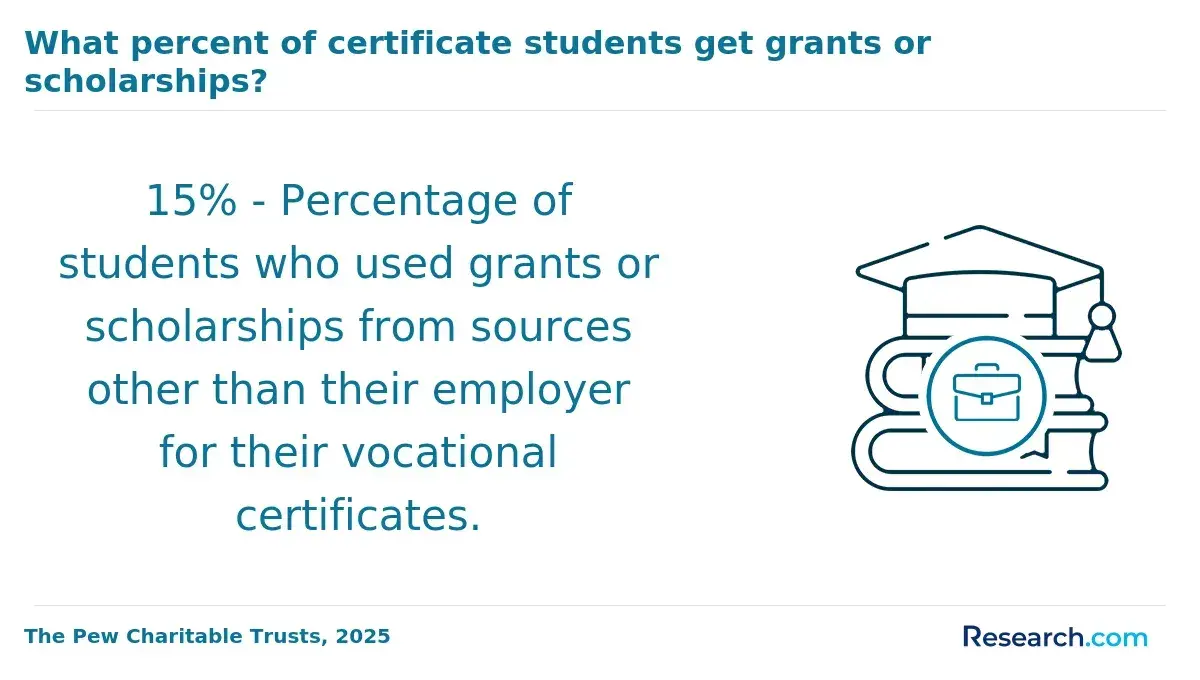
Online doctoral students at accredited U.S. institutions may be eligible for federal student aid, institutional scholarships, employer tuition assistance, military benefits, private scholarships, and payment plans. Federal grant funding is limited at the doctoral level, so most candidates rely on a mix of unsubsidized federal loans, Grad PLUS loans, employer support, and school-based aid.
The table below summarizes common funding sources and how they typically apply to online Systems Engineering Management doctoral students. It is meant to help you identify which options to ask about, not to replace school-specific financial aid advice.
| Funding option | Typical availability for doctoral students | Best use | Important limitation |
| FAFSA-based federal aid | Available to eligible students at participating accredited institutions | Determining loan eligibility and institutional aid consideration | Doctoral students generally do not receive Pell Grants |
| Federal Direct Unsubsidized Loans | Common for graduate and professional students | Covering tuition and required education costs | Interest accrues while enrolled |
| Federal Grad PLUS Loans | Available to eligible graduate students after credit review | Filling remaining cost-of-attendance gaps | Can increase total debt if used without a repayment plan |
| Employer tuition assistance | Common in engineering, defense, technology, utilities, and manufacturing employers | Reducing out-of-pocket tuition while staying employed | May require grade minimums, annual caps, or a service commitment |
| Military and veteran benefits | May apply for eligible service members, veterans, and dependents | Reducing tuition, fees, and sometimes housing-related costs | Rules vary by benefit type and remaining eligibility |
| Institutional doctoral scholarships | Varies widely by university and department | Lowering tuition without employer restrictions | May be competitive or tied to enrollment pace |
Students who are comparing doctoral-level engineering management options after researching a cheapest online mechanical engineering degree should know that undergraduate and master's aid patterns do not always carry over. Doctoral aid is often more individualized, especially when research funding or employer sponsorship is involved.
To reduce out-of-pocket cost, complete the funding search before your first tuition bill arrives. The sequence below helps avoid one of the most common mistakes: paying cash or borrowing privately before checking lower-cost aid channels.
- Submit the FAFSA for every academic year you expect to enroll, even if you believe you will not qualify for need-based grants.
- Ask the university whether the department has doctoral scholarships, assistantships, tuition discounts, or graduate research roles for online students.
- Request your employer's written tuition assistance policy, including annual caps, eligible programs, grade requirements, and repayment obligations if you leave the company.
- Compare federal loan terms with any private loan offer before borrowing, paying attention to interest accrual, deferment, and repayment protections.
- Ask whether your program allows slower part-time pacing without losing scholarship eligibility or triggering extra term fees.
Federal aid can make enrollment possible, but loans still affect ROI. Borrow only after estimating your post-degree salary scenario, current income, repayment timeline, and whether the doctorate is likely to support promotion, consulting revenue, or a transition into a higher-paying technical leadership role.
How can fellowships and research stipends offset the cost of an online Systems Engineering Management doctorate?
Fellowships, assistantships, and research stipends are less common for fully online doctoral students than for residential Ph.D. students, but they can still exist in grant-funded engineering departments, defense-related research centers, and employer-university partnerships. The key is to ask early because these awards are often tied to faculty projects and may not appear in the general financial aid portal.
For Systems Engineering Management candidates, funding opportunities are most likely when the student's professional experience aligns with a funded research area such as model-based systems engineering, reliability, cyber-physical systems, infrastructure resilience, operations research, human systems integration, acquisition, or engineering workforce strategy.
Use this outreach process before enrollment if you want stipend support or partial tuition coverage. It works best when you can clearly connect your research interests to a faculty member's funded work.
- Identify three to five faculty members whose research connects to your industry experience and proposed doctoral topic.
- Email a concise research statement that explains your background, problem area, methods you hope to use, and why the faculty member's work is a fit.
- Ask whether online doctoral students can participate in funded research, hourly research appointments, grant work, or tuition-supported assistantships.
- Contact the graduate program director to ask whether assistantships require physical campus presence or can be completed remotely.
- Ask your employer whether internal research, process improvement, or systems modernization projects can become a sponsored dissertation topic.
Students should be realistic: many online professional doctorates are designed for working adults and do not automatically include stipends. However, even a small research appointment, tuition waiver, or employer-sponsored dissertation project can reduce borrowing and improve ROI.
The strongest candidates for this type of funding usually bring technical depth, data access, and a research problem that benefits the university or employer. If you are still early in your management career, it may be better to build project leadership experience before starting the doctorate.
What is the average starting salary and long-term earnings potential for Systems Engineering Management doctorate graduates?
Salary outcomes for Systems Engineering Management doctorate graduates vary because the degree can lead to engineering leadership, systems architecture, technology strategy, operations research, consulting, defense acquisition, R&D management, or academic roles. The doctorate usually delivers the best earnings value when combined with substantial engineering experience, project leadership, security clearance, patents, publications, or industry-recognized technical expertise.
BLS May 2024 data reported a median annual wage of $167,740 for architectural and engineering managers, a relevant benchmark for many experienced Systems Engineering Management professionals. This does not mean a doctorate automatically produces that salary; rather, it shows the compensation level of a common target occupation for candidates who already have leadership responsibility and advanced technical capability.
The table below summarizes common salary reference points for roles that may value doctoral-level systems engineering and management expertise. Use these figures as labor-market context, not as a promise of individual earnings.
| Career direction | Relevant salary benchmark | How the doctorate may help | Best ROI conditions |
| Engineering management | BLS median for architectural and engineering managers: $167,740 | Supports credibility for complex technical leadership, R&D management, and enterprise systems roles | Candidate already manages teams, budgets, products, or mission-critical systems |
| Computer and information systems leadership | BLS median for computer and information systems managers is also in a high-paying management category | Useful when systems engineering overlaps with software, cyber-physical systems, AI infrastructure, or digital transformation | Candidate has strong technology, security, cloud, data, or software delivery experience |
| Operations research and analytics leadership | BLS wage data places quantitative optimization roles above many general business roles | Can strengthen qualifications for modeling, simulation, logistics, decision science, and optimization leadership | Candidate can demonstrate advanced quantitative methods and measurable business impact |
| Postsecondary engineering teaching | Pay varies widely by institution, rank, contract type, and research productivity | A research doctorate is often preferred or required for tenure-track engineering faculty roles | Candidate wants academic research or teaching and accepts that salary may be lower than executive industry roles |
Long-term earnings potential is highest when the doctorate is used strategically. A student who stays in the same role with no promotion path may see limited financial upside, while a candidate who uses the degree to move into director-level engineering, chief systems engineer, technical fellow, or consulting leadership work may recover the cost more quickly.
What high-paying career paths justify the cost of an online doctorate in Systems Engineering Management?
The cost of an online doctorate is easiest to justify when the credential helps you compete for roles where advanced systems thinking, technical leadership, and cross-functional decision-making are central to the job. It is less likely to pay off quickly if your target roles only require a master's degree and reward years of experience more than doctoral credentials.
The table below compares career paths where a Systems Engineering Management doctorate can be financially meaningful. The best path depends on your current experience, industry, clearance status, technical depth, and willingness to move into leadership or consulting.
| Career path | Why it can pay well | Doctorate value | When it may not be worth it |
| Director of systems engineering | Responsible for technical strategy, architecture, lifecycle risk, and engineering teams | Signals advanced expertise in complex systems and organizational decision-making | If your employer promotes primarily by internal tenure and does not reward advanced degrees |
| Chief systems engineer or technical fellow | Owns high-stakes architecture decisions for aerospace, defense, infrastructure, energy, or technology systems | Strengthens authority in modeling, risk, reliability, requirements, and systems integration | If the role values patents, products, or clearance more than academic credentials |
| Engineering program executive | Manages large budgets, schedules, technical trade-offs, and stakeholder risk | Helps connect engineering rigor with executive decision-making | If an MBA, PMP, or acquisition credential would better fill the gap |
| R&D or innovation leader | Leads applied research portfolios, emerging technology programs, or product platforms | Supports research credibility and technical evaluation skills | If the doctorate topic is disconnected from your company's innovation priorities |
| Specialized technical consultant | Consulting rates can rise with rare expertise in safety-critical, regulated, or mission-critical systems | Provides credibility with clients, expert panels, and technical reviews | If you do not already have a client network or niche expertise |
Experience can sometimes replace the doctorate for executive roles, especially in companies that promote proven leaders with strong delivery records. The doctorate makes the most sense when it closes a specific gap: research authority, advanced analytical capability, credibility with technical teams, or qualification for roles requiring a terminal degree.
Applicants should define the target role before choosing the degree type. A Ph.D. is usually stronger for research-intensive positions, while an applied doctorate may fit senior practitioners who want to solve organizational engineering problems without pursuing an academic career.
Which high-paying industries actively recruit professionals with an online doctorate in Systems Engineering Management?
Industries that manage complex, expensive, regulated, or safety-critical systems are the most likely to value doctoral-level Systems Engineering Management expertise. These employers may not require an online doctorate for every leadership role, but they often reward candidates who can combine engineering judgment, quantitative analysis, lifecycle thinking, and executive communication.
The table below shows industries where Systems Engineering Management doctoral training can align with high-value work. Compensation varies by employer, location, clearance, technical specialty, and leadership scope.
| Industry | Why doctoral systems expertise is valued | Common target roles | ROI signal to look for |
| Aerospace and defense | Large-scale systems integration, safety, reliability, acquisition, and mission assurance | Chief systems engineer, program technical director, systems architect, engineering director | Employer sponsorship, clearance premium, or promotion path into technical leadership |
| Technology and software-intensive systems | Complex platforms increasingly combine software, hardware, data, AI, cloud, and security requirements | Principal systems architect, technical strategy director, platform engineering leader | Degree topic aligns with AI infrastructure, cyber-physical systems, cloud reliability, or enterprise architecture |
| Energy, utilities, and infrastructure | Modernization projects require resilience, risk analysis, regulatory compliance, and lifecycle planning | Systems modernization lead, reliability director, infrastructure program executive | Employer supports research tied to operational improvement or capital projects |
| Healthcare technology and medical devices | Systems engineering supports safety, compliance, human factors, quality, and complex device integration | R&D systems leader, quality systems executive, product lifecycle director | Doctoral research connects to regulated product development or process improvement |
| Advanced manufacturing and robotics | Smart factories require integration of automation, analytics, supply chains, and quality systems | Manufacturing systems director, digital transformation leader, robotics program manager | Candidate can connect doctoral work to measurable productivity or reliability gains |
Recruiter preferences are shifting toward candidates who can translate technical complexity into business decisions. For doctoral students, that means the dissertation should not be treated as a purely academic exercise; it should become evidence of leadership capability, analytical rigor, and practical impact.
If your current industry does not reward doctoral credentials, consider whether the degree can support a move into consulting, defense contracting, infrastructure modernization, technology strategy, or higher education. ROI improves when the doctorate opens a new labor market rather than simply adding a credential to your existing role.
How quickly can you achieve a positive ROI on an online Systems Engineering Management doctorate?
A positive ROI depends on total program cost, borrowed amount, interest, time to completion, current salary, post-degree salary change, and whether the doctorate leads to promotion, consulting revenue, or a higher-paying industry. For many working professionals, the fastest ROI comes from staying employed while studying and using employer tuition assistance to reduce borrowing.
A simple payback estimate compares your unreimbursed cost with the annual income increase reasonably tied to the doctorate. For example, a student with $45,000 in net out-of-pocket cost who receives a $15,000 annual promotion-related increase would have a rough three-year payback period before taxes and loan interest; the same program would take much longer if no salary increase follows.
Use the following steps to make a realistic ROI estimate before enrolling. This process helps you avoid overvaluing the credential without a clear career plan.
- Calculate tuition after transfer credits, scholarships, employer reimbursement, and military or veteran benefits.
- Add non-tuition costs, including fees, software, travel, books, dissertation continuation, and loan interest if you plan to borrow.
- Identify the specific roles you will pursue after the doctorate and compare them with your current compensation.
- Ask your employer whether the doctorate qualifies you for promotion, salary adjustment, technical fellow status, or leadership-track consideration.
- Estimate conservative, moderate, and optimistic payback timelines instead of assuming the highest salary scenario.
- Decide whether a lower-cost certificate, MBA, second master's, PMP, INCOSE certification, or employer leadership program could achieve the same career goal for less money.
The doctorate is most likely to produce strong ROI when it is part of a deliberate career move into high-responsibility technical leadership. It is less financially compelling if you are paying full tuition, borrowing heavily, choosing a weakly aligned dissertation topic, or entering a program mainly for prestige without a promotion strategy.
The safest decision is to choose the accredited program that offers the best combination of low net cost, strong faculty fit, manageable timeline, respected degree title, and access to the industries or roles you want. A cheaper doctorate that delays completion or lacks employer recognition may be more expensive in the long run than a moderately priced program with better career alignment.
Other Things You Should Know About Systems Engineering Management
Many online engineering and engineering management doctorates have reduced or eliminated GRE requirements, especially for applicants with a relevant master's degree and professional experience. However, policies vary by university, so applicants should verify whether the GRE is required, optional, or waived based on GPA, credentials, or work history.
Yes, but the type of role matters. A research Ph.D. is typically more competitive for tenure-track engineering faculty positions, while an applied doctorate may be better suited for adjunct, professional, or practice-focused teaching roles.
ABET accreditation is most commonly associated with undergraduate engineering programs, not doctoral programs. For an online doctorate, regional institutional accreditation, faculty expertise, research fit, and employer recognition are usually more important.
The strongest applicants usually have a master's degree in engineering, systems engineering, engineering management, industrial engineering, computer science, operations research, or a related technical field. Programs may also value professional engineering leadership, quantitative coursework, research readiness, and a clear doctoral topic.
References
- Top 6 Low-Cost Online Doctorates in Engineering Management https://www.greatvaluecolleges.net/affordable/doctorate-engineering-management-online/
- System Engineer - Salary, degree and career opportunities https://www.steinbeis-smt.com/en/news-events/blog/system-engineer-salary-degree-and-career-opportunities/
- Discover Scholarships for Computer Science Majors https://www.computerscience.org/scholarships-overview/
- Online Doctorate in Engineering Management: 2026 Guide to Programs and Careers https://engineeringmanagement.org/phd-in-engineering-management-online/
- Best Online Systems Engineering Master’s Programs https://www.onlinemastersdegrees.org/best-programs/engineering/systems-engineering/
- Explore Top Scholarships for Online DBA Programs https://www.phds.me/financial-aid/scholarships-and-grants/doctorate-business-administration-dba/