2027 Cheapest Accredited Online Political Communication Master's Programs With No Out-of-State Tuition Surcharge

Co-Founder and Chief Data Scientist
An online political communication master's can help campaign professionals, public affairs staff, journalists, nonprofit advocates, and government communicators build advanced research, messaging, media, and strategy skills without relocating. Cost matters because residency-based public-university pricing can substantially increase tuition for distance learners.
The Federal Student Aid annual borrowing limit for most graduate students is $20,500 in Direct Unsubsidized Loans, making total program cost - not just a low per-credit rate - an essential comparison point. This guide explains how to identify accredited, residency-neutral programs and judge their value for your career.
Key Things You Should Know
- A true no-out-of-state-surcharge online program charges the same published tuition to eligible online students regardless of where they live, but it may still include mandatory fees, course costs, and travel expenses.
- Political communication is commonly offered as an MA or MS in communication, strategic communication, public affairs, political management, or media studies rather than under one identical degree title; verify that the curriculum actually includes politics, public opinion, campaigns, advocacy, and media.
- The lowest advertised tuition is not automatically the lowest total cost: compare required credits, institutional accreditation, transfer policies, delivery format, employer support, and career relevance before enrolling.
What Does No Out-Of-State Tuition Surcharge Mean for an Online Political Communication Master's Program?
A no-out-of-state-tuition-surcharge policy means an institution does not add a higher nonresident tuition rate solely because an eligible student lives outside the university's home state. The school may call this "online tuition," "distance-learning tuition," "e-rate tuition," or a "flat rate for all students." It does not mean tuition is free, that every online degree uses the rate, or that the rate equals the campus in-state rate.
For political communication students, this model is especially useful when the strongest curriculum is offered by a public university outside their state. A residency-neutral rate can remove the usual public-university price penalty, but a private nonprofit university may still be less expensive overall if it requires fewer credits or provides institutional aid.
Use this comparison to distinguish common pricing models before requesting an application.
| Tuition model | What an out-of-state online student pays | Best fit | Key caution |
| Flat online tuition | The same listed rate regardless of residency | Students comparing schools nationwide | Confirm the rate applies to the exact degree and entry term |
| In-state and out-of-state rates | A higher rate unless the student qualifies for a waiver | Residents or students with a documented waiver | A general online waiver may exclude graduate programs |
| Private university tuition | Usually one institutional rate for all students | Students seeking predictable pricing or specialized curricula | Compare fees and the number of required credits |
| Flat-term tuition | One price for a defined enrollment load or term | Students able to take a full course load | Taking fewer courses can reduce the value of the model |
Ask admissions for a written confirmation that states the tuition rate, whether residency affects that rate, the required credit total, and every mandatory fee. Do not rely on an undergraduate online-tuition page or assume that all online programs at the same institution follow the same policy.
How Can Students Verify Accreditation for an Affordable Online Political Communication Master's Program?
For an online political communication master's degree, the most important credential is typically institutional accreditation. Institutional accreditation evaluates the university as a whole, including its academic oversight, finances, student services, and degree-granting authority. Communication and political communication programs generally do not require a universal programmatic accreditor for graduates to work in campaigns, public affairs, media, or advocacy.
Verify the university through the U.S. Department of Education's Database of Accredited Postsecondary Institutions and Programs and confirm the accreditor recognized by the institution. Then check the university catalog to ensure that the online degree is awarded by that accredited institution, not merely delivered through a third-party platform.
Programmatic accreditation can matter in other fields, which is why students should not assume every graduate discipline follows the same rules. For example, students pursuing clinical counseling should specifically compare CACREP-accredited online counseling programs, because counseling licensure pathways can depend on specialized accreditation and state requirements.
Before enrolling, complete these checks to avoid mistaking marketing language for accreditation.
- Find the institution in the federal accreditation database and record the accreditor's name and current status.
- Open the graduate catalog for the intended term and verify the exact degree title, delivery method, and required credits.
- Ask whether online and campus students receive the same degree, transcript designation, and access to academic support.
- Review faculty biographies and course descriptions for political, civic, campaign, public-affairs, media-law, polling, or advocacy expertise.
- Confirm whether internships, residencies, thesis defenses, or capstones have location-specific requirements.
Red flags include claims of "recognized" or "licensed" status without naming an accreditor, tuition pages that omit the degree's credit requirement, and a school that will not provide its catalog or fee schedule in writing.
How Much Does the Cheapest Online Political Communication Master's Program Cost in Total?
The cheapest program is the one with the lowest net total cost for the degree requirements you must complete, not necessarily the lowest advertised tuition per credit. Political communication programs may be 30, 33, 36, or more credits depending on whether they include a thesis, research methods sequence, internship, or specialization. A lower per-credit rate can cost more if the degree requires substantially more credits or charges recurring online fees.
Calculate the estimate using this formula: (required credits × applicable per-credit tuition) + mandatory program fees + required travel and materials − confirmed grants, scholarships, and employer benefits. Use only aid you have been awarded or reasonably expect to receive under a written employer policy.
The following worksheet identifies the costs that should be included in a side-by-side comparison.
| Cost category | How to calculate it | Why it changes the decision |
| Base tuition | Published online rate multiplied by required credits | Shows the main academic charge |
| Mandatory fees | Per-credit, per-course, per-term, or one-time charges | Can make a low tuition rate less competitive |
| Books and course materials | Estimate from syllabus or bookstore information | Research, analytics, and media courses may require software or texts |
| Travel and lodging | Required campus visit, residency, conference, or presentation costs | Determines whether a program is genuinely fully online |
| Lost income or schedule cost | Work-hour reductions or missed reimbursement deadlines | Part-time flexibility can have financial value beyond tuition |
| Gift aid and employer support | Subtract only confirmed nonrepayable funds or reimbursement | Produces a more realistic out-of-pocket estimate |
Request a term-by-term billing estimate from each school. Tuition may change annually, so treat a published rate as a current planning figure rather than a guarantee for every future term. Also ask whether students who take a leave, repeat a course, or extend a capstone pay additional fees.
Do Online Political Communication Master's Students Have to Establish Residency to Receive the Lowest Tuition Rate?
Usually, no - if the program truly publishes one online rate for all eligible students. In that case, residency is not needed to avoid an out-of-state surcharge. However, students should separate a residency-neutral tuition policy from a residency waiver. A waiver can require a particular employer, military affiliation, regional agreement, academic load, or application deadline.
Students in a traditional public-university tuition model may need to establish legal residency to receive the in-state rate, but the requirements are often stricter than simply moving to the state. Schools can consider domicile, tax filing, voter registration, employment, financial independence, and the reason for relocation. Enrolling primarily for education may not establish residency under a state's policy.
Ask the bursar or graduate admissions office the following questions before assuming you qualify for a lower rate.
- Does the published online rate apply to this exact master's program and my state of residence?
- Is the rate available to part-time students and students beginning in any term?
- Are there separate fees for online learners, nonresidents, or students outside the state?
- Does a waiver need annual renewal or depend on continuous enrollment?
- Will moving during the program change my tuition classification or financial-aid eligibility?
For working professionals who do not plan to relocate, a flat online rate is often simpler and more predictable than attempting to establish residency. For current residents attending a local public university, a conventional in-state rate may still be the lower-cost option.
How Do Public and Private Universities Compare on the Cost of an Online Political Communication Master's Degree?
Public universities can offer strong value when their online rate is residency-neutral or when you already qualify for in-state tuition. Private nonprofit universities usually charge one published rate to all students, which can make budgeting easier, but their base rate is not automatically lower or higher than a public option. Compare the specific degree rather than treating institution type as a quality or affordability shortcut.
Political communication also overlaps with public administration, public policy, government relations, and nonprofit leadership. Students whose target role is more focused on public-sector management than messaging or media strategy may want to compare a best online MPA option alongside communication programs.
This table shows the trade-offs that most often affect total cost and career fit.
| Institution type | Potential cost advantage | Potential limitation | Best comparison question |
| Public university | May offer low in-state or flat online tuition | Some programs retain nonresident pricing or charge distance fees | Does the online rate apply regardless of my residency? |
| Private nonprofit university | Usually has one tuition rate and may offer institutional scholarships | Sticker tuition can be higher | What is my net price after confirmed institutional aid? |
| University with accelerated terms | May reduce the time spent paying recurring fees | Higher course intensity can limit work flexibility | Can I complete the required courses at the advertised pace? |
| University with a specialized political curriculum | May offer stronger alignment with campaigns, public affairs, or advocacy | Could cost more than a general communication degree | Does the specialization justify the added cost for my target role? |
A higher-priced program can be reasonable when it offers curriculum, faculty networks, practical campaign work, employer relationships, or scheduling that clearly support your goals. It is harder to justify when the extra cost buys only a broader brand claim without relevant courses, career services, or demonstrable flexibility.
Can Financial Aid Reduce the Cost of a Cheap Online Political Communication Master's Program?
Yes. Eligible online graduate students may generally use federal Direct Unsubsidized Loans, Graduate PLUS Loans, scholarships, employer tuition assistance, veterans' education benefits, and some state or institutional awards. Complete the FAFSA even if you expect to use employer assistance, because it can establish eligibility for federal loans and certain school-based aid.
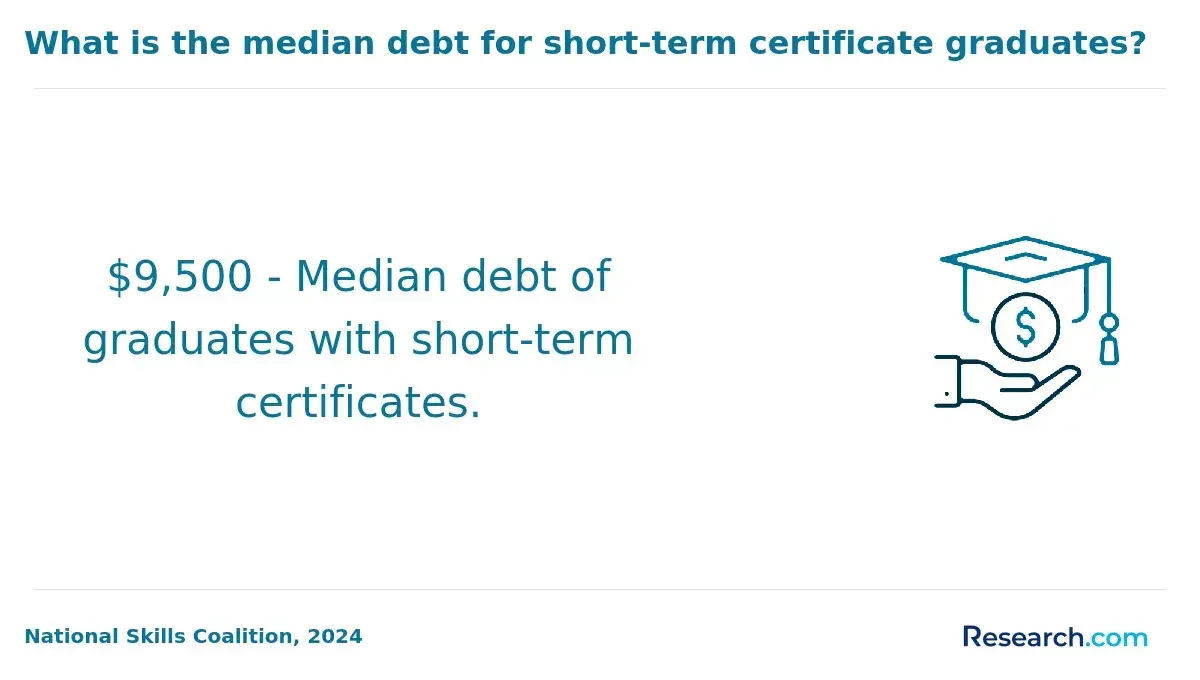
Federal Student Aid lists a $20,500 annual limit for Direct Unsubsidized Loans for graduate and professional students. That limit can help finance a degree, but it does not make borrowing inexpensive; students should compare the amount borrowed with likely repayment obligations and avoid using loan eligibility as a reason to overlook a lower net-cost program.
For workers changing fields, compare funding rules as carefully as tuition. Someone considering a people-helping profession may also evaluate affordable online master's counseling programs, but counseling programs often involve practicum, licensure, and scheduling costs that differ from political communication degrees.
Build a funding plan in this order so that the least costly resources are considered first.
- Ask the employer whether tuition assistance covers online graduate courses, fees, books, and courses outside a job classification.
- Apply for university scholarships and department awards by their stated deadlines.
- Check whether veterans' benefits, union benefits, or professional-association awards apply.
- Use savings and confirmed gift aid before borrowing when practical.
- Borrow only the amount needed after calculating tuition, fees, and realistic living expenses.
A common mistake is comparing a school's tuition after "up to" a scholarship without confirming eligibility, renewal conditions, enrollment requirements, and whether the award applies to online graduate students. Ask for the award's terms in writing.
How Do Program Format and Completion Time Affect the Cost of an Online Political Communication Master's Degree?
Format affects cost because it changes both direct expenses and the practical ability to stay employed. A fully online asynchronous program may reduce commuting and relocation costs and work well for professionals managing campaign cycles, government schedules, or media deadlines. A hybrid program can offer networking and live practice, but required campus visits may add airfare, lodging, meals, and missed work.
Accelerated programs can lower total cost when they reduce the number of terms carrying student-service or technology fees and allow earlier completion. They are not automatically cheaper, however. An accelerated pace can make it difficult to maintain full-time work, use employer reimbursement limits, or absorb a missed course without delaying graduation.
Online delivery varies considerably, so use this format comparison when reviewing the academic calendar and budget.
| Format | Typical cost effect | Scheduling effect | Who it may suit |
| Fully online asynchronous | Often limits travel and commuting costs | Flexible weekly deadlines | Working professionals and students in other states |
| Fully online synchronous | Usually limits travel but may include technology needs | Fixed live meeting times | Students who value real-time discussion and can attend scheduled sessions |
| Hybrid or low-residency | May add travel, lodging, and local transportation | Combines online work with required sessions | Students who want some in-person networking and can travel |
| Accelerated online | May reduce recurring term fees and time to completion | Compressed, intensive courses | Students with strong time availability and clear completion plans |
| Traditional part-time online | May spread payments across more terms | Lower course load per term | Students balancing employment or caregiving |
Ask whether courses are offered in a predictable sequence. A program advertised as completable in a short period may require full-time enrollment, summer study, or courses that are unavailable after a leave of absence. Technical and analytical alternatives can have different pacing models, so readers exploring communications technology roles can also compare a data science degree online before committing to a communications-focused curriculum.
How Much Can Transfer Credits Reduce the Cost of an Online Political Communication Master's Degree?
Transfer credits can reduce tuition only when a program accepts relevant prior graduate work and applies it to required degree credits. The potential savings equal the number of accepted credits multiplied by the receiving school's applicable tuition rate, but schools often set limits and may require a minimum number of credits to be completed in residence.
Transfer policies vary widely. Some programs accept only graduate-level courses completed within a certain time period, require a minimum grade, or exclude applied courses, internships, thesis credits, and capstones. Professional certificates may help satisfy admissions preparation requirements but do not automatically transfer as graduate credit.
Request a preliminary evaluation before making a final enrollment decision. Provide official transcripts, course descriptions, syllabi, credit hours, and evidence of grades where requested. Do not assume a verbal estimate is binding; the registrar or graduate school typically makes the formal determination.
Students should also avoid choosing an unrelated program just because it has a generous transfer policy. For instance, coursework intended for behavioral intervention is better evaluated through programs such as BCBA online master's programs than by attempting to apply it to a political communication degree.
The most useful questions to ask are whether transfer credit changes the required capstone, whether transferred courses affect financial-aid enrollment status, and whether accepting the credit limits access to a concentration or elective sequence you value.
Is a Cheap Online Political Communication Master's Degree Worth the Cost for Career Advancement?
A low-cost accredited degree can be worthwhile when it builds skills directly connected to the work you want to do and does not require unsustainable borrowing.
Political communication graduates may pursue roles in campaign communications, press relations, public affairs, government communications, advocacy, community engagement, media analysis, speechwriting, digital strategy, and nonprofit messaging. Job titles and hiring standards vary by employer, and many positions evaluate portfolios, writing samples, campaign experience, and networks alongside graduate education.
The U.S. Bureau of Labor Statistics projects 6% employment growth for public relations specialists from 2023 to 2033, a pace faster than the average for all occupations. This occupation is not identical to political communication, but the projection is relevant because public relations, stakeholder messaging, media relations, and reputation management are common adjacent career paths. It should be used as broad labor-market context rather than a guarantee of job availability or salary.
An MA may emphasize theory, research, rhetoric, political discourse, and preparation for doctoral study. An MS or professionally oriented strategic communication degree may emphasize analytics, digital messaging, audience research, crisis communication, and applied campaigns. A thesis route can fit students considering research or doctoral education; a capstone or practicum route often fits professionals seeking a portfolio-ready project.
Before deciding that the degree is a good investment, compare these career-value signals.
- Curriculum alignment with the roles you want, including public opinion, political media, persuasive writing, campaign strategy, policy communication, and digital analytics.
- Opportunities to produce work samples, such as messaging plans, research briefs, media analyses, polling projects, or public-affairs campaigns.
- Faculty experience and access to alumni, internships, political organizations, agencies, government offices, or nonprofit partners.
- Career services that support resume review, portfolio development, networking, and job-search strategy for online students.
- Total borrowing relative to your current earnings, expected career transition, and employer tuition support.
A master's may have less financial value for applicants who already have extensive campaign or communications experience and need only a targeted certificate, stronger portfolio, or professional network. It may have more value for professionals moving from journalism, public administration, nonprofit work, or general communications into political and public-affairs messaging.
How Should Students Compare the Cheapest Accredited Online Political Communication Master's Programs?
Start by identifying programs that match your academic and career target, then compare their verified net total costs. Because degrees may be labeled communication, strategic communication, public affairs, political management, media studies, or public relations, a degree title alone is not enough. Review the curriculum for a meaningful political communication component.
Create one comparison sheet for every finalist. The following categories help prevent a low advertised rate from overshadowing important differences.
| Comparison factor | What to verify | Why it matters |
| Accreditation | Current institutional accreditation and degree-awarding institution | Supports degree legitimacy and eligibility expectations |
| Residency policy | Whether the exact online program has one rate for all eligible students | Prevents unexpected nonresident tuition |
| Total required credits | Credits for core courses, electives, thesis, capstone, and internship | Determines base tuition and time commitment |
| Mandatory charges | Online, technology, application, graduation, course, and residency fees | Reveals the full billed cost |
| Curriculum | Political media, public opinion, campaigns, advocacy, research, digital strategy, and ethics | Shows whether the degree fits your target work |
| Format | Asynchronous, live online, hybrid, required travel, and course sequence | Determines practical affordability and completion risk |
| Transfer policy | Maximum accepted credits, grade rules, and evaluation process | May reduce time and tuition |
| Career support | Portfolio, internship, networking, and employer connections for online students | Helps assess return on investment beyond price |
After narrowing the list, contact each school with the same written questions: "What is my tuition rate as an online student living in my state? How many credits must I complete? Which mandatory fees apply? Are there campus visits? What aid can online graduate students receive? Can you evaluate my transfer credits before I enroll?" Save the responses with the date and staff member's name.
The best low-cost choice is usually the accredited program that delivers the necessary curriculum and support at the lowest realistic net cost while fitting your schedule. A program is not a bargain if its course sequence delays graduation, its specialization misses your goals, or required travel and fees erase its tuition advantage.
Other Things You Should Know About Political Communication
Political communication examines how candidates, governments, advocacy groups, news organizations, and citizens create, distribute, interpret, and respond to public messages. Graduate study may cover political rhetoric, campaigns, public opinion, media systems, digital platforms, policy messaging, persuasion, and research methods.
Usually not. Many communication-related master's programs accept applicants from journalism, English, marketing, public administration, sociology, history, business, and other fields. Schools may request prerequisite coursework, a statement of purpose, writing samples, or evidence of relevant professional experience.
That depends on the institution, but many universities issue the same degree and transcript designation to online and campus students. Ask the registrar or admissions office directly and request the answer in writing if this is important to you.
Not always. Some programs use a capstone, thesis, research project, or portfolio instead of an internship. If experiential work is required, confirm whether you can complete it with an approved organization near you and whether you are responsible for arranging the placement.
References
- One Year Online Master's in Communication Programs (12 to 16 months) https://www.mastersincommunications.com/faqs/one-year-online-programs
- Tuition & cost of attendance https://admission.universityofcalifornia.edu/tuition-financial-aid/tuition-cost-of-attendance/
- Political Communication Major: What to Study, Career Paths, and How to Build Your Profile - CIS University https://www.cis-spain.com/en/blog/political-communication-major-what-to-study-career-paths-and-how-to-build-your-profile/
- How much does college in California cost? https://www.scholarshare529.com/learn/how-much-does-college-cost
- Higher Education in California: Student Costs - Public Policy Institute of California https://www.ppic.org/publication/higher-education-in-california-student-costs/
- 11 tuition-free universities in the US for master's degrees https://studyinternational.com/news/tuition-free-universities-in-the-us/
- Online Master's in Political Communication Programs in 2025 https://www.mastersincommunications.org/online-political-communication/
- How Long is an Online Master's in Communication Program? https://www.onlineeducation.com/communication/faqs/how-long-to-earn-a-communications-masters-degree-online
- 2025 Most Affordable Online Master's Degrees in Public Relations https://www.onlineu.com/most-affordable-colleges/public-relations-masters-degrees
- 2025's Best Online Master's Programs in Political Science https://www.onlinemastersdegrees.org/best-programs/political-science/