2027 Cheapest Accredited Online Mechanical Engineering Degree Programs That Accept FAFSA

Co-Founder and Chief Data Scientist
Choosing an online mechanical engineering degree is a high-stakes cost decision because the cheapest tuition is not always the lowest net price. Federal data from the Bureau of Labor Statistics places the May 2024 median pay for mechanical engineers at $102,320, making debt control especially important for long-term return on investment. This guide is for undergraduates, transfer students, working adults, and engineering graduates comparing FAFSA-eligible online options. You will learn how to verify accreditation, estimate out-of-pocket cost, compare aid, and decide whether a low-cost program is truly worth it.
Key Things You Should Know
- Fully online, FAFSA-eligible mechanical engineering bachelor's programs are limited; the strongest low-cost options usually come from public universities with institutional accreditation and, for bachelor's engineering programs, ABET Engineering Accreditation Commission accreditation.
- The federal Pell Grant maximum is $7,395 for the 2025-2026 award year, but FAFSA submission does not guarantee grant aid, full tuition coverage, or the same aid package at every school.
- Career ROI depends on total net cost, transfer credit acceptance, borrowing, and completion time; BLS data reports a May 2024 median wage of $102,320 for mechanical engineers, but individual outcomes vary by role, location, industry, experience, and licensure path.
Which Are the Cheapest Accredited Online Mechanical Engineering Degree Programs That Accept FAFSA?
The cheapest FAFSA-eligible online mechanical engineering options are usually public, nonprofit universities that participate in federal student aid programs and charge a predictable online tuition rate. However, students need to distinguish between a traditional mechanical engineering degree, a mechanical engineering technology degree, and a graduate mechanical engineering degree because they serve different career goals.
The table below summarizes affordable U.S. online options that are commonly relevant to mechanical engineering students. Tuition changes often, so use the figures as a starting point and confirm the current cost, fees, residency rules, and aid eligibility directly with the school before enrolling.
| School | Online degree option | Best fit | Accreditation considerations | FAFSA status to verify | Cost note |
| University of Alabama | BS in Mechanical Engineering, online format through distance learning | Students seeking a traditional engineering bachelor's pathway with strong licensure alignment | Institutionally accredited; bachelor's mechanical engineering program is ABET EAC-accredited | Institution participates in federal student aid; confirm program-level eligibility and enrollment status | Published online undergraduate tuition is often among the lower rates for a full online ABET engineering bachelor's program |
| University of North Dakota | BS in Mechanical Engineering, online or distance format with required labs or campus components | Students who can manage online engineering coursework plus any required in-person or scheduled components | Institutionally accredited; bachelor's mechanical engineering program is ABET EAC-accredited | Institution participates in federal student aid; confirm aid eligibility for the exact delivery format | Total cost may be higher than the lowest-tuition option, but transfer credits can materially reduce the final bill |
| Old Dominion University | BS in Mechanical Engineering Technology or related engineering technology online completion pathway | Transfer students with technical credits who want an applied engineering technology route | Institutionally accredited; verify whether the specific technology program carries ABET ETAC accreditation | Institution participates in federal student aid; confirm whether the online completion plan is degree-seeking and aid-eligible | Can be cost-effective for students entering with substantial approved transfer credit |
| Indiana State University | Online mechanical engineering technology-related bachelor's pathway, depending on current catalog availability | Students comparing applied engineering technology programs instead of traditional mechanical engineering | Institutionally accredited; verify current programmatic accreditation for the exact major | Institution participates in federal student aid; confirm current online program aid status | Value depends heavily on accepted transfer credits and whether the technology credential fits the target job |
| Mississippi State University | Online MS in Mechanical Engineering | Engineering bachelor's graduates who want an affordable graduate credential | Institutionally accredited; ABET usually applies to bachelor's engineering programs, not most master's programs | Graduate students may use federal loans through FAFSA if otherwise eligible; Pell Grants generally do not apply | Lower total credit requirements can make a master's degree cheaper in total tuition than a full bachelor's degree |
For first-time bachelor's students, the most important comparison is not simply "which school has the lowest per-credit tuition?" It is "which school will let me complete an accredited, aid-eligible degree with the fewest unnecessary credits, the least borrowing, and the best match for my intended engineering role?"
A traditional Bachelor of Science in Mechanical Engineering is usually the better fit for students who want design engineering roles, graduate engineering study, or a future professional engineer path. A mechanical engineering technology degree may be more practical for students interested in manufacturing, testing, maintenance, CAD, technical operations, or applied engineering support roles, but it may not be treated the same by every employer or licensing board.
How Does FAFSA Eligibility Work for Online Mechanical Engineering Degree Programs?
FAFSA eligibility means the school participates in federal student aid and the student is enrolled in an eligible program, usually as a degree-seeking student. It does not mean the program is free, that every student receives grants, or that an online format automatically qualifies for the same aid as every campus program.
The FAFSA now uses the Student Aid Index rather than the older Expected Family Contribution calculation. That change matters because students comparing online programs may see different aid offers even when the tuition looks similar, especially if one school packages more institutional scholarships or requires more credits to graduate.
Before choosing a program, confirm the following directly with the financial aid office and the academic department. These checks help prevent the common mistake of assuming that a school's general FAFSA participation covers every online option in the catalog.
- Ask whether the exact online mechanical engineering or mechanical engineering technology degree is Title IV-eligible for federal student aid.
- Confirm whether you must enroll at least half time to receive federal loans or maintain grant eligibility.
- Ask whether any required labs, summer terms, proctored exams, residencies, or campus visits affect cost of attendance.
- Request a written cost-of-attendance estimate that includes tuition, mandatory fees, books, software, equipment, travel, and loan fees.
- Ask whether institutional scholarships are available to online students or only to campus students.
If you are still comparing broad undergraduate options, a guide to the cheapest online college can help you understand how net price, transfer credits, and federal aid interact outside engineering-specific programs.
The main red flag is vague language. If a school says it "accepts FAFSA" but cannot confirm the aid eligibility of the exact online degree, enrollment level, and start term, pause before submitting a deposit.
How Much Does an Online Mechanical Engineering Degree Cost After Financial Aid?
The cost after financial aid depends on published tuition, required credits, transfer credits, grants, scholarships, employer assistance, and how much the student borrows. Online engineering degrees can also carry costs that general online programs may not, such as lab kits, engineering software, testing equipment, proctoring, and occasional travel.
The table below shows how different aid situations can change the real price of the same degree. These are decision examples, not promises, because each student's FAFSA result and institutional aid package will be different.
| Student situation | What lowers the cost | What can raise the cost | Decision takeaway |
| First-time undergraduate with high financial need | Pell Grant, state grants, institutional need-based scholarships, subsidized federal loans | Full four-year credit load, lab fees, lower transfer credit, reduced aid if enrollment drops | Compare net price letters, not sticker tuition |
| Community college transfer student | Accepted math, physics, general education, and introductory engineering credits | Rejected technical credits, extra prerequisite courses, sequence delays | The cheapest option may be the school that accepts the most usable credits |
| Working adult with employer tuition assistance | Employer reimbursement, part-time study, online flexibility, federal loans if needed | Reimbursement caps, required grades, delayed reimbursement, tax treatment of benefits | Ask whether tuition must be paid upfront before employer reimbursement arrives |
| Graduate mechanical engineering student | Shorter credit requirement, employer support, assistantships where available | No Pell Grant for most graduate students, higher federal loan interest rates | A master's can have a lower tuition total but may rely more heavily on loans |
For federal grants, the key undergraduate figure is the $7,395 maximum Pell Grant for the 2025-2026 award year. This is meaningful help, but it may cover only part of a mechanical engineering program's annual cost, so students should still calculate remaining tuition, fees, living costs, and borrowing.
Students should separate direct school charges from total cost of attendance. Direct charges usually include tuition and required fees, while total cost of attendance can also include books, supplies, transportation, living expenses, and personal costs used for aid calculations.
- Published tuition is the advertised academic price before aid.
- Net price is the amount left after grants and scholarships are subtracted.
- Out-of-pocket cost is what you must pay from savings, income, payment plans, employer benefits, or loans.
- Total borrowing is the amount that must be repaid with interest after leaving school.
The cheapest program on paper is not always the cheapest to finish. A lower tuition rate can lose its advantage if the school rejects transfer credits, requires extra prerequisites, or offers little institutional aid to online students.
The best value is usually the program with the strongest combination of recognized accreditation, manageable net price, strong transfer policies, flexible scheduling, engineering-relevant coursework, and realistic career alignment. For mechanical engineering, program quality matters because employers often expect rigorous math, physics, mechanics, materials, thermodynamics, design, and lab experience.
Use this value framework when comparing low-cost programs. It helps you avoid choosing a school based only on tuition while ignoring the factors that determine whether you can graduate and use the credential.
- Choose an ABET EAC-accredited bachelor's mechanical engineering program if you want the broadest engineering recognition and may pursue professional engineering licensure later.
- Consider a mechanical engineering technology program if your goal is applied technical work, manufacturing operations, product testing, CAD, or engineering support and the employer requirements match that credential.
- Consider an online MS in Mechanical Engineering only if you already have the required engineering background and need advanced knowledge for design, analysis, research, leadership, or specialization.
- Prioritize schools that provide a degree audit before enrollment so you know exactly how many credits remain.
- Compare aid letters by total net cost to completion rather than by first-term tuition alone.
Current workforce trends strengthen the case for choosing value over the lowest sticker price. BLS projects employment for mechanical engineers to grow 11% from 2023 to 2033, which suggests healthy demand, but the best opportunities often require strong technical preparation in areas such as robotics, automation, energy systems, advanced manufacturing, simulation, and product design.
Some students comparing engineering with computing-oriented graduate pathways also look at the cheapest online masters in artificial intelligence, especially when their career goal involves automation, robotics, machine learning applications, or smart manufacturing rather than traditional mechanical design alone.
A more expensive program may be worth choosing when it accepts significantly more transfer credits, has stronger accreditation alignment, offers better online student support, or reduces the risk of delayed graduation. A cheaper program may be the better choice when it is properly accredited, transparent about costs, and aligned with your career goal without requiring unnecessary credits.
Accreditation is one of the most important safeguards when evaluating a cheap online engineering degree. At a minimum, the institution should be accredited by an agency recognized by the U.S. Department of Education or the Council for Higher Education Accreditation, and students pursuing a traditional engineering bachelor's degree should pay close attention to ABET programmatic accreditation.
For mechanical engineering, ABET accreditation is especially important at the bachelor's level because it is widely recognized by employers, graduate schools, and state engineering licensure boards. Licensure rules vary by state, but an ABET EAC-accredited engineering bachelor's degree is often the cleanest path for students who may eventually pursue the Fundamentals of Engineering exam and professional engineer credential.
Here is how to verify accreditation before enrolling. Follow these steps yourself rather than relying only on marketing language from an admissions page.
- Search the school in the U.S. Department of Education's recognized accreditation database to confirm institutional accreditation.
- Check the ABET public program search for the exact degree name, campus or delivery location, and accreditation commission.
- Confirm whether the degree is Mechanical Engineering, Mechanical Engineering Technology, Engineering Technology, or another related major.
- Ask the program director whether online students graduate with the same diploma wording as campus students.
- If licensure matters, contact the state engineering board where you plan to work and ask whether the degree meets education requirements.
The biggest red flag is a school that advertises "engineering" broadly but does not clearly identify the degree title, accreditation status, and licensing relevance. Another warning sign is a program that is only nationally marketed as fast or cheap but cannot document institutional accreditation or federal aid eligibility.
Students should also understand the difference between ABET EAC and ABET ETAC. EAC accreditation applies to engineering programs, while ETAC accreditation applies to engineering technology programs. Both can be legitimate, but they are not interchangeable for every employer, graduate school, or licensing path.
FAFSA is the gateway to federal student aid, and many states and schools also use FAFSA information to award their own grants and scholarships. For online mechanical engineering students, federal aid can help cover tuition, fees, books, supplies, technology, and other education-related costs included in the school's cost of attendance.
The main FAFSA-linked aid types work differently, so students should not treat them as equal. Grants and scholarships reduce cost without standard repayment, while loans lower the upfront bill but increase long-term debt.
- Federal Pell Grants may be available to eligible undergraduate students who have not already earned a bachelor's degree, up to the annual maximum set by the federal government.
- Federal Supplemental Educational Opportunity Grants may be available at participating schools for undergraduates with exceptional financial need, but funds are limited by institution.
- Direct Subsidized Loans may be available to eligible undergraduate students with financial need, with the government covering interest during certain periods.
- Direct Unsubsidized Loans may be available to undergraduate and graduate students, but interest begins accruing after disbursement.
- Direct PLUS Loans may be available to graduate students or parents of dependent undergraduates, but they carry higher borrowing costs and require extra caution.
- Federal Work-Study may be available at some institutions, but online engineering students should confirm whether remote or relevant positions are realistic.
Loan interest is an important current cost factor. For federal Direct Loans first disbursed during the 2025-2026 period, undergraduate direct loans carry a lower fixed rate than graduate direct loans, which means graduate students should be especially careful about borrowing more than they need.
Common mistakes include assuming that FAFSA means free tuition, borrowing the full offered loan amount without a budget, and ignoring renewal requirements. Students should file the FAFSA early, monitor satisfactory academic progress rules, and ask whether engineering course sequencing could affect aid if they must drop below half-time enrollment.
Transfer credits can be the largest cost-saving tool for online mechanical engineering students, especially those who completed general education, calculus, chemistry, physics, drafting, programming, or introductory engineering courses at a community college. The savings are strongest when transferred courses apply directly to degree requirements rather than only counting as electives.
Mechanical engineering curricula are highly sequenced, so not all credits save time equally. A transferred humanities course may reduce total credits, but a transferred calculus or physics sequence can also help you enter advanced engineering courses sooner.
Before enrolling, request a formal transfer evaluation and ask these questions. This is essential because a school that accepts 60 credits generally may still apply far fewer credits toward the mechanical engineering major.
- Which credits apply to the major, general education, prerequisites, and free electives?
- Will my calculus, physics, chemistry, statics, dynamics, or materials courses satisfy engineering requirements?
- Is there a maximum number of community college or lower-division credits the program will accept?
- Do transferred technical courses expire after a certain number of years?
- Will I need to repeat labs because of ABET, department, or state requirements?
- Can I receive credit for military training, professional certifications, AP, CLEP, or prior learning?
The same transfer-credit logic applies across online degree planning, but engineering is less flexible than many completion-focused majors. Students comparing fields can see this contrast in programs such as an online bachelor in human services, where major sequencing and lab requirements may be different from mechanical engineering.
The most common transfer mistake is choosing the school with the lowest per-credit tuition before seeing how many credits remain. A higher-tuition university that accepts more major-applicable credits can cost less overall than a cheaper school that forces you to retake technical prerequisites.
A low-cost, FAFSA-eligible online mechanical engineering degree is most beneficial for students who need a recognized credential but cannot relocate, stop working, or pay full tuition upfront. The format can be especially valuable for disciplined learners who are comfortable with math-heavy coursework, scheduled labs, remote collaboration, and long-term planning.
These student profiles tend to benefit most. Each group should still compare accreditation, net price, scheduling, and career fit before committing.
- Community college transfer students who completed calculus, physics, chemistry, and general education courses with strong grades.
- Working technicians, drafters, machinists, military personnel, or manufacturing employees seeking an engineering or engineering technology credential.
- Students in rural areas or regions without nearby ABET-accredited mechanical engineering programs.
- Parents and caregivers who need flexible scheduling but can still commit to demanding weekly study hours.
- Engineering bachelor's graduates seeking an affordable online master's degree while remaining employed.
Students who primarily want management, training, operations leadership, or organizational change roles may not need a mechanical engineering degree at all. In those cases, comparing alternatives such as the best organizational leadership master's programs online can clarify whether a technical engineering curriculum is necessary for the intended career move.
This path may not be ideal for students who dislike advanced math, need extensive in-person lab support, want the fastest possible bachelor's completion, or are choosing mechanical engineering only because of salary data. Online engineering requires persistence, time management, and comfort with difficult quantitative courses.
Career ROI is the relationship between what you pay for the degree and the professional value the credential may help you access. For mechanical engineering, ROI is influenced by total net cost, debt, completion time, job market, location, experience, internships, licensure, and whether the degree matches employer expectations.
The table below shows how cost variables affect ROI. Use it to think beyond tuition and compare the financial trade-offs that can change your long-term outcome.
| ROI factor | Why it matters | How to evaluate it |
| Total net cost | Lower grant-adjusted cost reduces the amount you must pay or borrow | Compare full degree cost after grants, scholarships, and accepted transfer credits |
| Borrowing level | Loans can make enrollment possible but reduce future cash flow through repayment | Estimate monthly payments before accepting the full loan offer |
| Accreditation fit | ABET alignment can affect licensure, graduate study, and employer screening | Verify institutional accreditation and programmatic accreditation where relevant |
| Completion time | Delayed graduation can add tuition, fees, and opportunity cost | Ask for a term-by-term plan based on your transfer credits and work schedule |
| Career alignment | Mechanical engineering, engineering technology, and graduate engineering credentials lead to different opportunities | Compare job postings in your target industry and region before enrolling |
The BLS May 2024 median annual wage of $102,320 for mechanical engineers provides useful salary context, but it should not be treated as a personal earnings forecast. Entry-level roles, engineering technology roles, government jobs, manufacturing positions, and high-cost metropolitan markets can produce very different pay outcomes.
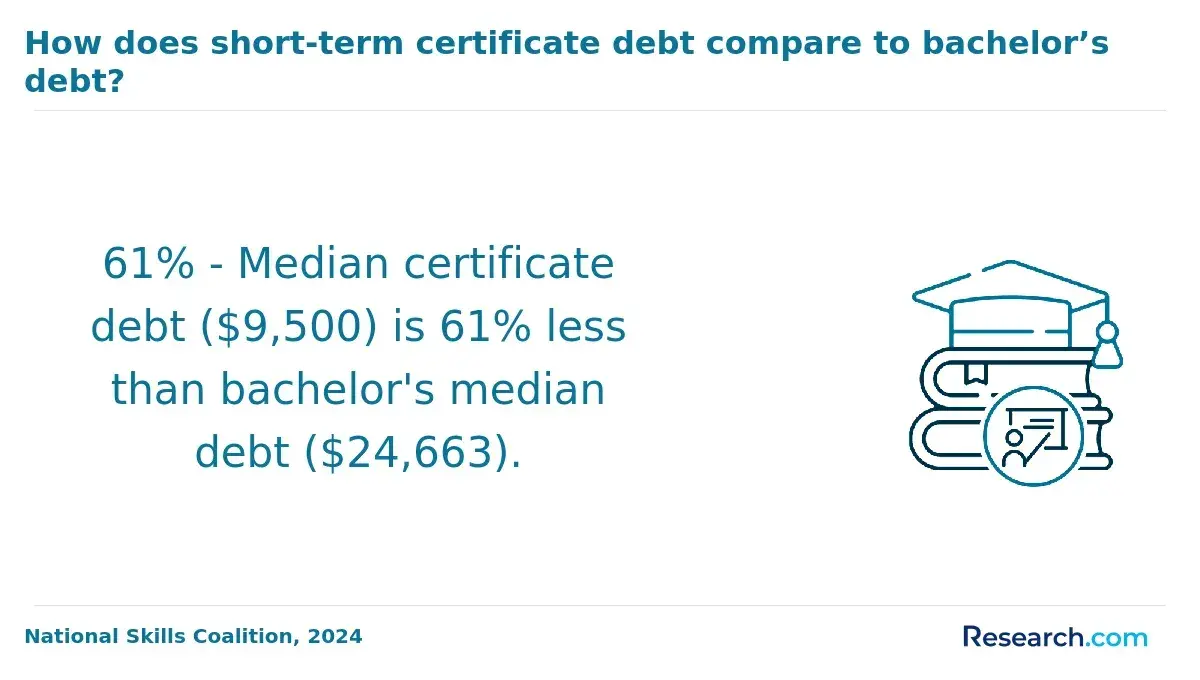
A practical debt test is to estimate your total borrowing before enrollment and compare it with conservative early-career salary expectations in your target location. If a program's net price forces heavy borrowing and does not provide the accreditation or technical preparation your target jobs require, the low advertised tuition may not translate into good ROI.
How Should Students Choose the Cheapest FAFSA-Eligible Online Mechanical Engineering Degree?
The best choice is the cheapest program that still meets your accreditation needs, career goals, learning preferences, financial aid requirements, and completion timeline. Do not start with tuition alone; start with the outcome you need and work backward to the lowest-risk, lowest-net-cost path.
Use this step-by-step process before applying or depositing. It keeps the decision focused on verifiable cost and career fit.
- Define the credential you need: traditional mechanical engineering, mechanical engineering technology, or graduate mechanical engineering.
- Verify institutional accreditation and, for bachelor's engineering programs, ABET status for the exact degree.
- Confirm that the exact online program is eligible for federal student aid through FAFSA.
- Submit the FAFSA and compare official aid offers from multiple schools.
- Request a transfer-credit evaluation before calculating total cost.
- Ask for a full cost-of-attendance estimate, including fees, software, books, labs, travel, and equipment.
- Estimate total borrowing and monthly repayment under conservative income assumptions.
- Compare course delivery, lab requirements, internship access, advising, tutoring, and career support.
- Check job postings and licensure rules for your target state and industry.
- Choose the lowest net-cost program that satisfies the requirements you cannot compromise on.
If you expect to pursue education leadership or doctoral study later, it can also help to compare how tuition and federal aid work in other online graduate pathways, including the cheapest online EdD options. This gives you a broader sense of how borrowing, employer support, and online program structure change at higher degree levels.
Ask each school direct questions before enrolling: Is the degree ABET-accredited? Are online students eligible for the same scholarships as campus students? How many credits will I still need? What happens if I take only one course in a term? Are labs fully online, local, hybrid, or campus-based? What is the average debt of graduates in this program, if available?
The final decision should balance affordability with credibility. The right program should be low-cost enough to keep debt manageable, but rigorous and recognized enough to support the mechanical engineering career path you actually want.
Other Things You Should Know About Mechanical Engineering
Some programs offer most or all coursework online, but mechanical engineering often includes labs, proctored exams, design projects, or occasional campus requirements. Always ask whether any in-person components are required before enrolling.
The academic content is typically demanding in either format. Online students need strong time management because calculus, physics, thermodynamics, fluid mechanics, and design courses require consistent weekly study without the structure of daily campus attendance.
Many universities issue the same diploma for online and campus students, but policies vary. Ask the registrar or program office what will appear on the diploma and transcript.
FAFSA is generally limited to eligible U.S. citizens and eligible noncitizens. International students should ask schools about institutional scholarships, private funding, employer sponsorship, or payment plans instead.
- Other Types of Aid - Finaid https://finaid.org/otheraid/
- 9 Online Schools That Accept FAFSA (and How to Get Financial Aid) https://www.studentloanplanner.com/financial-aid-online-colleges/
- Online Mechanical Engineering Degrees 2025 https://www.affordablecollegesonline.org/degrees/engineering-programs/mechanical-engineering/
- Graduate Engineering Schools That Award Financial Aid to International Students | WorldTrips Travel Insurance https://www.worldtrips.com/resources/graduate-engineering-financial-aid-to-international-students
- Online Mechanical Engineering Degrees 2026: Costs & Salary Compared https://www.fernstudi.net/en/onlinestudies/technology/mechanical-engineering
- 2025 Most Affordable Bachelor's in Engineering Online https://www.onlineu.com/most-affordable-colleges/engineering-degrees
- The 4 Best Online Colleges that Accept FAFSA https://joinjuno.com/financial-literacy/financial-aid/online-colleges-accept-fafsa
- Types of Financial Aid: Loans, Grants, and Work-Study Programs https://angelo.campusesp.com/posts/1141