2027 BS in Business Administration Transfer Planning: A Prior Learning Portfolio Based on Supervisory Experience
Audited and Verified:
Our Editorial and Data Verification Process
Research.com uses government datasets, official education statistics and primary institutional information to support its career and degree guides. Our review process checks factual accuracy, occupational definitions, source dates and the requirements associated with the credentials discussed.
How This Article Was Fact-Checked
Our editorial team verifies salary estimates, employment projections, education requirements and program information against original data providers and official organizations. Salary figures are checked against the relevant occupational definitions and reporting periods. Information about licensure, accreditation and required in-person training is reviewed separately.
Fact-checked and verified on:

Co-Founder and Chief Data Scientist
Supervising staff may have taught you scheduling, budgeting, coaching, and process improvement - but those responsibilities do not automatically become college credit. If you are returning to finish a BS in Business Administration, the key decision is whether a school will assess what you learned, award credit for it, and apply that credit to requirements you still need.
This guide shows you how to test that possibility, build a defensible prior learning portfolio, and compare completion plans before paying for an assessment or enrolling.
Key Things You Should Know
- Supervisory experience can support a prior learning portfolio, but schools award credit for demonstrated college-level learning - not a job title or years worked.
- Keep three decisions separate: whether the school accepts the credit, which degree requirement it satisfies, and whether you can still meet residency and graduation rules.
- Request a written degree audit and portfolio assessment rules before estimating time or savings; evidence, credit limits, fees, and eligible courses vary by institution.
What Is a Prior Learning Portfolio for a Business Administration Degree?
A prior learning portfolio is an assessed collection of evidence and analysis showing that learning acquired outside a college course meets specified academic outcomes. For a supervisor, it might connect experience with staffing decisions, performance measures, and process changes to the outcomes of an undergraduate management course. The learning - not merely the work performed - is what an evaluator judges.
Portfolio assessment is one form of prior learning assessment, often called PLA. Other forms can include approved exams or evaluated training. A résumé or employer letter alone usually cannot establish course-level learning because neither necessarily explains the concepts you used, the decisions you made, or how your work meets the school's rubric.
Check whether the proposed award would be credit toward the BS in Business Administration, a different degree, or only free electives. For example, online leadership bachelor's programs with compressed schedules may be worth comparing if your strongest evidence concerns leadership, but a shorter advertised schedule does not show that your portfolio will satisfy a business core requirement.
How Can Supervisory Experience Earn Transfer Credit Toward a Business Degree?
First, ask the receiving institution whether it assesses supervisory learning through portfolios and which courses are eligible. An academic department or designated PLA evaluator may assess the work; the registrar or transfer office records approved credit; an adviser determines how it fits the degree audit. Credit earned through PLA at one school may not be accepted as equivalent credit by another.
The following distinctions determine whether an award actually shortens your route to graduation. Ask for the proposed placement in writing, not just an estimated number of credits.
| Possible audit placement | Effect on a BS completion plan |
| Business core equivalent | May replace a required course if the department approves the match. |
| Concentration requirement | Helps only if the concentration accepts that assessed learning for the specified requirement. |
| General education or unrestricted elective | May count toward total credits without replacing a remaining business requirement. |
| Credit beyond a transfer or PLA limit | May provide no additional progress toward graduation. |
Before choosing an assessment, verify any grade, upper-division, course-repetition, and in-residence requirements. If your target is project coordination rather than general management, a project management bachelor's transfer planning guide can help frame the alternative - but its programs must still evaluate your credits individually.
What Accreditation Should You Check When Choosing a Transfer-Friendly Business Program?
Verify the institution's current accreditation through its accreditor and the U.S. Department of Education's recognized-accreditor information. Then ask whether the business school or specific program has separate AACSB, ACBSP, or IACBE accreditation, if that distinction matters to your goals. Institutional accreditation and business-program accreditation have different scopes; neither establishes that a school awards portfolio credit or accepts another school's PLA award.
For this decision, published PLA policy is as important as an accreditation label. Check who evaluates portfolios, which business courses are excluded, whether awards carry a grade, whether there is an assessment fee, and whether a denial can be appealed. When you compare the least expensive business administration schools, compare these policies alongside tuition: an inexpensive credit that applies only as an unneeded elective does not reduce your completion cost.
Start with the school's course outcomes and assessment instructions. A portfolio should make a narrow, supportable claim - for example, that you can analyze staffing needs and evaluate a scheduling decision - rather than claiming equivalence to every management course because you supervised a team.
Use this sequence to create a portfolio an evaluator can check:
- Choose an eligible course and copy its published learning outcomes into a working outline.
- Identify specific supervisory decisions you personally made or helped make, including the constraints and people affected.
- Match each outcome to a work example and an artifact you are permitted to submit.
- Explain the business concepts behind your decisions, your reasoning, the evidence available at the time, and what you would change.
- Check confidentiality and intellectual-property permissions, redact records, and submit the portfolio in the school's required format.
A reviewer may expect more than a description of successful work: a sound account also identifies trade-offs and limitations. If your experience is chiefly in hiring support, onboarding, or staff development, compare the eligible outcomes with online HR bachelor's programs accepting transfer credits before assuming a general business portfolio is the best fit.
Supervisory experience most plausibly aligns with introductory management, organizational behavior, operations, or human resource practices - but eligibility and equivalence are school decisions. Course titles alone are unreliable: a course in finance, for instance, may require financial-statement analysis that managing a departmental spending limit did not teach.
This comparison helps you select a course claim to investigate. It shows potential matches, not guaranteed awards.
| Course area | Relevant supervisory learning | Likely gap to check |
| Principles of management | Planning work, delegating, monitoring results, and adjusting decisions | Application of formal management frameworks |
| Organizational behavior | Team communication, conflict resolution, and motivation | Analysis using organizational theories |
| Operations management | Scheduling, workflow, capacity, and quality measures | Quantitative methods and process analysis |
| Human resource management | Onboarding, training, and documented performance processes | Employment-law and policy content beyond the supervisor's authority |
If your evidence is concentrated in inventory, purchasing, or logistics, a specialized pathway may provide a closer academic match. You can compare supply chain degrees by cost and length, but confirm whether their required technical courses will accept your prior learning before switching degrees.
Choose artifacts that establish both your contribution and the learning you claim. Employer-created documents can corroborate responsibility, but your accompanying analysis should explain what the artifact shows and how it meets a course outcome. A verifier can confirm your role without being asked to endorse an academic equivalency.
Useful evidence may include the following, subject to employer permission and the evaluator's rules:
- A role description and supervisor verification identifying your actual decision-making responsibilities.
- Redacted schedules, workflow diagrams, training materials, or performance-measure definitions you helped develop.
- A concise decision narrative explaining alternatives considered, constraints, results you can substantiate, and limitations.
- Relevant training records or certificates, clearly distinguished from college credit already awarded elsewhere.
Do not submit employee evaluations, customer records, confidential budgets, or proprietary documents without authorization. If records cannot leave your workplace, ask whether a redacted sample, recreated blank template, or supervisor attestation is acceptable. Official transcripts and course descriptions serve a different purpose: they document previous academic study and help advisers check business administration degree prerequisite planning; they do not replace evidence of workplace learning.
Delivery format does not determine transfer-credit policy. An online and a campus version of the same BS may share an academic catalog and audit rules, or they may serve different student populations under different calendars and PLA procedures. Compare the actual program, enrollment location, and catalog - not an assumption that online study is more transfer-friendly.
For a working supervisor, ask whether portfolio advising is available remotely, whether assessments have submission windows, and whether remaining courses require live sessions, group meetings, proctored exams, or campus visits. An accelerated calendar can shorten elapsed time while leaving little room to gather permissions and revise a portfolio. A national comparison of accelerated business bachelor's schools is a starting point for identifying options, not a substitute for a school-specific audit and schedule.
Work experience may strengthen an application, but it generally does not replace the institution's transfer-admission process. Schools may request official college transcripts, a minimum academic standing, and specified prerequisite coursework. Entry into the university, declaration or admission to the business major, and approval for PLA are separate decisions.
Ask admissions which prior institutions must send transcripts and whether you can apply before a portfolio is assessed. Ask the business adviser about accounting, economics, math, statistics, and writing prerequisites; an earlier course may transfer as an elective without meeting a specific prerequisite. If you are considering quick online bachelor's pathways, confirm whether missing prerequisites delay entry into upper-level business courses even when you qualify for admission.
The defensible estimate begins with a degree audit: remaining general education, business core, concentration, elective, and in-residence requirements. Then account for course availability, prerequisite sequences, the number of courses you can manage alongside work, and the time needed for portfolio assessment. Do not subtract proposed portfolio credits from the graduation total until the school confirms their placement.
For cost, compare the tuition and mandatory fees for remaining required enrollment, then add PLA assessment charges, books, technology, travel, and financing costs where applicable. A portfolio may be worthwhile even if its fee is substantial when it replaces an otherwise required course; it may offer little financial value if it supplies only unused electives. Ask the financial-aid office how assessed credit and your planned course load affect aid eligibility before changing enrollment. A FAFSA planning guide for project management bachelor's students can help identify aid questions to raise, but your business program's aid office must determine how its own enrollment and PLA rules apply.
What Careers and Salaries Can a Business Administration Degree Support?
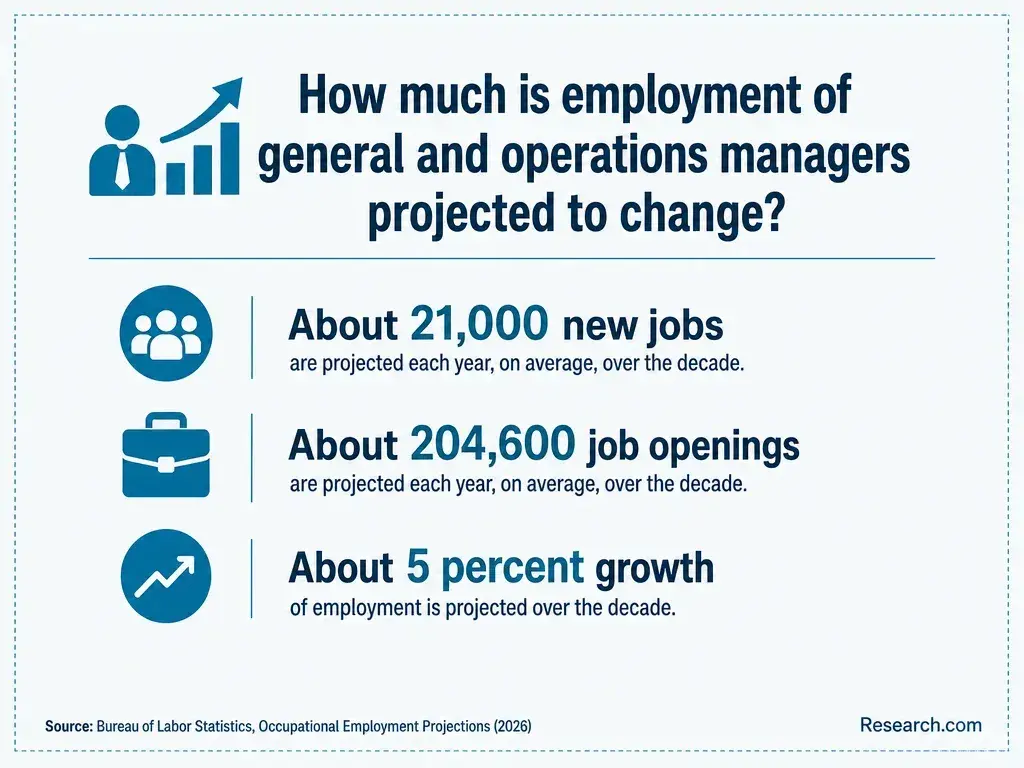
For an experienced supervisor, the strongest use of a completed BS may be meeting a bachelor's requirement for advancement while presenting documented operational results. Depending on your duties and industry, relevant paths might include operations coordination, training and development, HR support, project coordination, or a management opening for which you also meet the employer's experience requirements. A portfolio credit award documents academic learning; it is not an employer credential or a promise of promotion.
As one labor-market reference, the U.S. Bureau of Labor Statistics reports a May 2025 median annual wage of $75,940 for human resources specialists. That is an occupation-wide median, not an expected starting salary for a business administration graduate or a supervisor moving into HR. If HR is your target, examine your experience with policies, records, and employee support as well as the degree requirement. If you are deciding whether completion is financially worthwhile, business administration degrees compared by cost duration and outlook can inform your shortlist; judge the eventual return against your own remaining costs and plausible job opportunities.
Other Things You Should Know About Business Administration
Possibly. Ownership and confidentiality obligations may continue after employment ends. Use materials you have a right to share, or ask the school whether a redacted account and an authorized verifier would suffice.
That depends on the institution. Ask how approved credit appears on the transcript and whether it counts toward GPA, major-grade requirements, or prerequisites.
Request the evaluator's feedback and check the school's revision or appeal policy. Keep a completion plan that includes taking the course if another assessment is not available or worthwhile.
Gather permitted evidence, but wait for the receiving school's eligible-course list and rubric before writing a full submission. Otherwise, you may build a portfolio for a course that cannot satisfy your degree requirements.
- Rule 3358:5-7-12 | Prior learning assessment policy. https://codes.ohio.gov/ohio-administrative-code/rule-3358:5-7-12
- Definitions | Transfer Credit Ohio https://transfercredit.ohio.gov/educational-partners/educational-partner-initiatives/articulation-transfer-policy-policy/articulation-transfer-policy-definitions
- Eligibility Requirements | Federal Student Aid https://studentaid.gov/understand-aid/eligibility/requirements
- Will My Credit Transfer? | Registrar | University of Nebraska Omaha https://www.unomaha.edu/registrar/students/before-you-enroll/transfer-credit/credit-evaluation.php
- Portfolio Assessment Guidelines - Prior Learning Assessment https://priorlearning.psu.edu/portfolio-assessment-guidelines
- Credit for Prior Learning (CPL) Glossary | NCCCS https://www.nccommunitycolleges.edu/credit-for-prior-learning-glossary/
- Portfolio Review Assessment - Student Affairs Administration | UW-La Crosse https://www.uwlax.edu/academics/grad/student-affairs-administration/practical-experience/portfolio-review-assessment/
- Portfolio Assessment | Cleveland State Community College https://www.clevelandstatecc.edu/getting-started/prior-learning-assessment-pla/portfolio-assessment/
- College Credit Opportunities at City Colleges of Chicago - CCC https://colleges.ccc.edu/cpl/
- Undergraduate Transfer Credit and Credit for Prior Learning | charlotte.edu https://provost.charlotte.edu/policies-procedures/academic-policies-and-procedures/undergraduate-transfer-credit-credit-for-prior-learning/