2027 BS in Business Administration Decision Guide: A Weekly Start Option or a Predictable Semester Calendar
Audited and Verified:
Our Editorial and Data Verification Process
Research.com uses government datasets, official education statistics and primary institutional information to support its career and degree guides. Our review process checks factual accuracy, occupational definitions, source dates and the requirements associated with the credentials discussed.
How This Article Was Fact-Checked
Our editorial team verifies salary estimates, employment projections, education requirements and program information against original data providers and official organizations. Salary figures are checked against the relevant occupational definitions and reporting periods. Information about licensure, accreditation and required in-person training is reviewed separately.
Fact-checked and verified on:

Co-Founder and Chief Data Scientist
A weekly start can let you begin a BS in Business Administration sooner, while a semester calendar makes upcoming terms easier to plan around work and family commitments. Neither schedule tells you how flexible the classes themselves will be.
This guide is for prospective and returning students comparing those options. It explains what to verify about course availability, deadlines, credit transfer, cost, and support so you can choose a calendar you can sustain through graduation, not just one with an appealing first day.
Key Things You Should Know
- Choose a weekly start for an earlier entry point only if required courses, advising, and financial aid are available when you need them; frequent admissions dates do not guarantee frequent course openings.
- Choose a semester calendar when advance notice of classes, breaks, and group-work periods matters more than the earliest possible start.
- Compare each school's written degree audit and term-by-term course plan: the number of credits still required matters more to completion time than the first available start date.
What Is a BS in Business Administration?
A Bachelor of Science in Business Administration is an undergraduate degree covering how organizations manage money, people, customers, information, and operations. Its exact curriculum varies by school. A BS, Bachelor of Business Administration (BBA), or BA in Business may have overlapping courses, but the degree title alone does not establish quantitative depth, specialization, or transfer rules.
The calendar is a delivery decision, not a separate qualification. If your goal is specifically to develop leadership skills, compare the actual coursework and applied assignments with leadership bachelor's degrees with accelerated pacing. A narrower degree may fit that goal better; a general business degree may preserve more room to explore functions.
Is a Weekly Start Option Better Than a Semester Calendar?
Not necessarily. A weekly start usually refers to how often a school admits students or opens an initial course. It does not mean every required class starts weekly, assignments have no deadlines, or you can finish at your own pace. A semester calendar offers fewer entry points but often gives students a published schedule further in advance.
The comparison below separates the first day of enrollment from the recurring schedule that will shape most of your degree.
| Decision factor | Weekly-start option | Semester calendar |
| Starting after admission | May reduce the wait for an available first course | May require waiting for the next term |
| Planning ahead | May use shorter, sequential course blocks; future offerings still need confirmation | Published term dates can help with work and caregiving plans |
| Coursework rhythm | Frequent starts do not remove weekly deadlines or scheduled assessments | Several courses may run at once, with overlapping deadlines |
| Best potential fit | Someone ready to begin soon who can sustain the course-block pace | Someone who needs predictable terms, breaks, and advance scheduling |
Ask for the next available start dates for required business courses, not just the first introductory class. Then request sample syllabi showing live sessions, group meetings, exam windows, and weekly work. If you are considering faster undergraduate completion pathways, compare the full sequence as well: an earlier start or shorter course block cannot overcome an unavailable prerequisite or an unsustainable workload.
How Do You Choose an Accredited Business Administration Program?
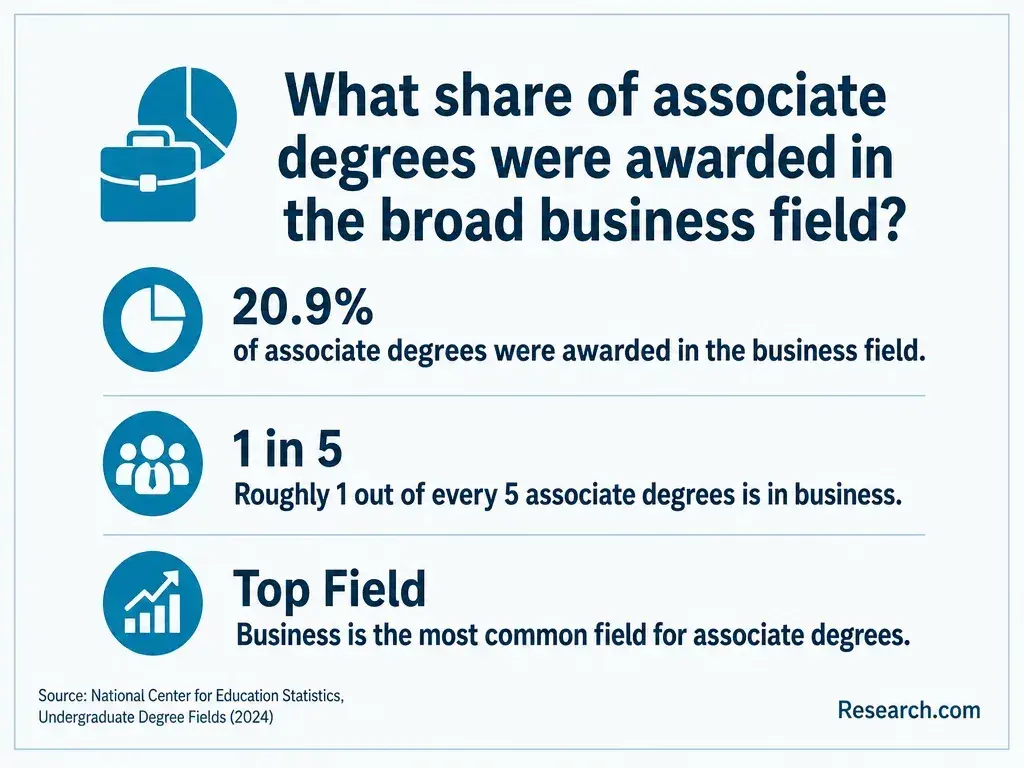
First, confirm that the institution holds recognized institutional accreditation and that the BS in Business Administration is offered in the format you intend to enter. Then check whether any advertised AACSB, ACBSP, or IACBE accreditation actually covers the relevant business unit or program. These are different claims; neither accreditation type proves that a particular student will graduate or find a job.
Calendar policies deserve the same scrutiny. Ask an adviser for the current catalog, a projected required-course schedule, leave and reentry rules, and access to tutoring and career services across start dates. Request a written explanation of how transfer credits apply to general education, business core, electives, and the school's residency requirement. Residency means credits that must be completed through the awarding institution, not necessarily time spent on campus. Comparing human resources bachelor's residency and transfer rules can illustrate why policies must be checked for the exact degree you choose rather than assumed across business-related programs.
Most programs combine general education with a business core that may include accounting, economics, finance, marketing, management, operations, statistics, information systems, and business law. Some add a capstone, internship, or concentration. The school's catalog, not the degree title, determines which courses are required and in what order.
Sequencing is especially important in a weekly-start program: an introductory accounting course may open frequently while an advanced elective opens less often. Ask for a course map showing prerequisites and the next planned offering of each required class. If you are considering HR, compare that map with HR degree coursework and entry requirements; a general business elective is not necessarily an official HR concentration or a substitute for deeper preparation.
Requirements depend on the school and whether you apply as a first-year, transfer, or returning student. Schools commonly request prior academic transcripts and may have separate rules for entry into the business major. Admission, acceptance of transfer credits, and application of those credits toward graduation are distinct decisions.
Before selecting the earliest start date, obtain official transcripts and ask when the school can complete its credit evaluation. Check its policies on mathematics preparation, GPA, prior college work, and any required application documents. The business administration applicant eligibility checklist can help you organize questions, but the admitting institution has authority over its requirements and exceptions. Starting before a transfer audit is complete may leave you enrolling in a course you did not need.
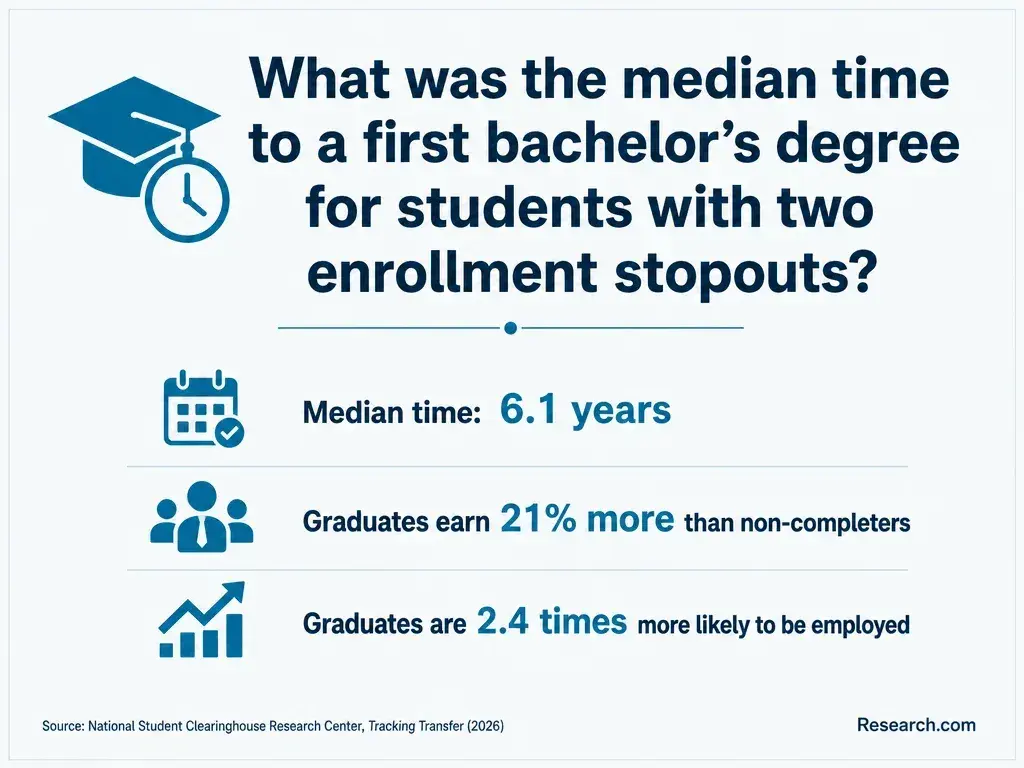
For a student starting without college credit and studying full time, a bachelor's degree generally takes about four academic years. Your path may be shorter or longer depending on applicable transfer credit, enrollment intensity, prerequisites, course availability, and interruptions. A weekly start changes the waiting time before enrollment; it does not automatically reduce the coursework required.
Ask each school to map your remaining courses by term or block, including any capstone and credits that must be earned there. Compare projected graduation dates rather than advertised first-course dates. If you have a defined operations career goal, compare shorter online supply chain bachelor's pathways against the general business degree - but only after checking whether your prior credits satisfy each program's requirements.
There is no reliable universal price for either calendar. Schools may charge by credit, course, or enrollment period; fees, books, software, and proctoring can add to tuition. A quicker start might reduce time spent waiting, but an intense schedule can increase the risk of withdrawing or repeating a course.
Request an individualized estimate based on your evaluated remaining credits and planned pace. Compare tuition and mandatory fees, likely course materials, aid eligibility at that pace, payment dates, and the cost of an additional term if a required course is missed. If borrowing is necessary, compare total borrowing rather than the first payment. Cheaper business administration study with FAFSA-based aid is worth investigating, but financial aid eligibility and any net-price estimate must be confirmed with the school for your circumstances.
Choose based on how you can reliably participate, not on the assumption that online means self-paced. Online business courses can still require live presentations, group projects, proctored exams, and fixed weekly deadlines. Campus courses add commuting and scheduled attendance but may make in-person collaboration and local recruiting easier to access.
Ask both programs for a sample week in a required upper-level course. Include technology needs, any campus visits, and the hours when advising and technical help are available. Compare those practical demands alongside online business degrees with lower tuition; a lower advertised rate may not be the lower completion cost once fees and your remaining requirements are known.
The degree can support applications for roles such as operations coordinator, marketing coordinator, HR assistant, procurement specialist, or project coordinator. Fit depends on the role's tasks and your evidence of relevant skills. A course in management, for example, does not by itself qualify a new graduate to supervise a team.
Use your intended role to choose assignments and experience: an operations applicant might document spreadsheet analysis and process mapping, while a project coordinator might show scheduling and stakeholder communication. Internships or approved workplace projects can help, but the school must decide whether they earn academic credit. If you already have transfer credits and want a more focused route, compare project management undergraduate transfer pathways with the business administration curriculum before committing to a start date.
What Salary and Job Outlook Can Business Graduates Expect?
A BS in Business Administration has no single salary or job-growth rate. Occupational data describes people employed in a role, not the pay or hiring prospects of new graduates. For context, the U.S. Bureau of Labor Statistics reports a May 2025 median annual wage of $75,940 for human resources specialists and projects 6% employment growth for that occupation from 2025 to 2035. That median includes experienced workers and should not be used as an expected starting offer.
Evaluate return on education against a target job, your existing experience, local openings, and the full cost of finishing. Someone pursuing supply chain work, for instance, may want to weigh a broad business degree against economical study options for supply chain careers. The better financial choice is the viable path that develops the skills employers seek without requiring unnecessary credits or an unmanageable schedule.
Other Things You Should Know About Business Administration
Possibly. Ask admissions whether deferring changes your catalog year, scholarship terms, or deadline for submitting transcripts before you accept a new date.
Do not assume so. Request its academic calendar and assignment schedule; a course block may cross a holiday even when campus offices are closed.
You can apply to another program, but the receiving school decides which credits apply. Get a transfer evaluation before withdrawing from your current program.
Diploma wording is set by the institution. Ask the registrar how the degree title appears on the diploma and transcript if that distinction matters to you.
- Cost of Attendance (Budget) | 2025-2026 Federal Student Aid Handbook https://fsapartners.ed.gov/knowledge-center/fsa-handbook/2025-2026/vol3/ch2-cost-attendance-budget
- Recommended Course Sequence | Texas Higher Education Coordinating Board https://www.highered.texas.gov/data-submission-reporting/recommended-course-sequence/
- Credit for Prior Learning | Transfer Credit Ohio https://transfercredit.ohio.gov/students/student-programs/Prior-Learning-Assessments
- Staying Eligible | Federal Student Aid https://studentaid.gov/understand-aid/eligibility/staying-eligible
- Registration Policies - Section 4: Academic Calendar, Admission, and Enrollment - Academics at Walden University https://academics.waldenu.edu/handbook/registration-admission-enrollment/registration
- Degree Planning | Information School | University of Washington https://ischool.uw.edu/programs/informatics/curriculum/degree-planning
- Withdrawal and Dropping Courses | gatech.edu https://registrar.gatech.edu/registration/withdrawal-and-dropping-courses
- Undergraduate Tuition & Fees | umd.edu https://billpay.umd.edu/UndergraduateTuition
- Undergraduate Students - Student Services Center https://studentservices.ncsu.edu/finances/tuition-and-fees/tuition-and-fee-rates/undergraduate-students/
- Guides and FAQs | CSU Summer | Colorado State University https://summer.colostate.edu/courses-registration/guides-faqs/