
2027 Best Online Two-Year Degrees With Student Success Coaching

Co-Founder and Chief Data Scientist
Choosing an online associate degree is hard enough without having to figure out whether anyone will help you stay on track. Student success coaching can make a program easier to navigate, but access, availability, and the coach's role vary by college. Cost matters, too: the College Board reported average published tuition and fees of $4,050 for full-time, in-district students at public two-year colleges in 2024-25, before living expenses.
This guide compares six degree fields and shows you how to check whether a program's coaching, format, cost, and outcomes fit your goals.
Key Things You Should Know
- The best fit pairs a degree aligned with your career or transfer goal with a coach who offers scheduled, ongoing help - not merely an optional orientation.
- Many associate degrees require about 60 semester credits, but prerequisites, part-time enrollment, and clinical placements can extend the timeline.
- Published public two-year college tuition and fees averaged $4,050 for in-district, full-time students in 2024-25; your total cost depends on residency, fees, aid, and time to completion.
Top 10 Best Online Two-Year Degrees With Student Success Coaching
Business Programs
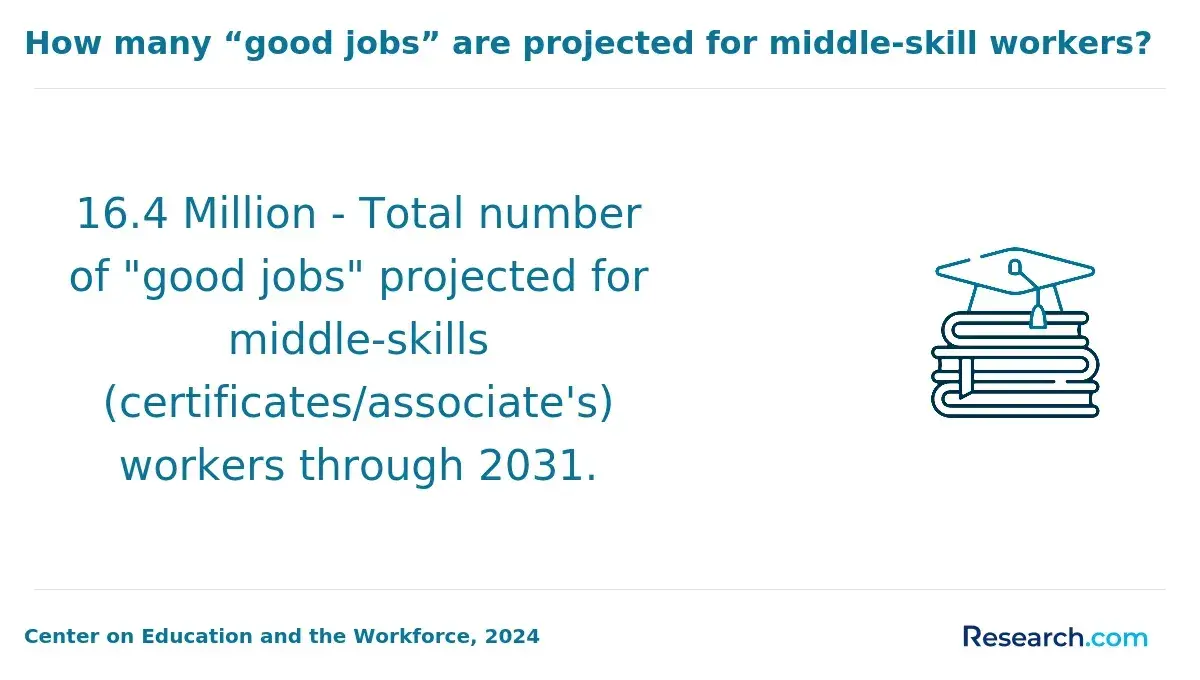
An online AA or AS in business often suits students planning to transfer into a bachelor's program. An AAS in business administration or accounting may emphasize workplace applications, though its credits may transfer differently. Ask whether your coach helps map required courses to a destination school or monitors progress toward an employment goal. Business is a flexible choice if you have not settled on one occupation; a more specialized credential may be better if you need technical training for a specific role.
Healthcare Programs
Online associate options may include health information technology, medical billing, or healthcare administration support. Compare them by intended role: an administrative curriculum is not clinical training. Some programs require an internship, and eligibility for a professional certification may depend on programmatic accreditation or additional requirements. A useful coach can help you plan placement deadlines and connect with career services. Verify where experiential work happens before assuming you can complete every requirement from home.
Information Technology Programs
IT associate degrees may focus on support, networking, cybersecurity foundations, or software development. Hands-on labs can be virtual, scheduled online, or occasionally campus-based. Compare the actual tools and projects in the curriculum with job postings - not just the degree title. Coaching is particularly useful when it includes course sequencing, tutoring referrals, and help planning certification preparation. Entry-level support roles may be accessible with varied credentials; more specialized security roles often require experience beyond an associate degree.
Nursing / Pre-Nursing Programs
A pre-nursing AA or AS generally prepares students to apply to a nursing program; it does not qualify them to practice as registered nurses. An associate degree in nursing includes supervised clinical training and must meet applicable approval requirements, so "online" typically describes coursework, not the entire program. Nursing admission is often separate and more selective than college admission. Choose coaching that helps track prerequisites, application dates, clinical scheduling, and licensure steps - but confirm each responsibility with the school.
Criminal Justice Programs
An online criminal justice AA or AS may serve a transfer goal, while an AAS may place more emphasis on applied coursework. Neither degree automatically meets police, corrections, or other agency hiring standards, which vary by employer and jurisdiction. Ask whether coaching includes transfer planning or career exploration relevant to your intended role. If your target employer requires an academy, background screening, or bachelor's degree, account for that pathway before enrolling.
Psychology / Counseling Programs
An AA or AS in psychology is usually a foundation for bachelor's study, not a route to independent counseling practice. Counseling and clinical roles generally require further education and state licensure. Coaching is most valuable here when it helps you select transferable courses and plan the next degree. If you want to enter the workforce after two years, ask what support roles local employers accept with an associate degree and compare those options with a more directly career-focused program.
What Are Online Two-Year Degrees With Student Success Coaching?
An online two-year degree with student success coaching is an associate program that offers individualized help with staying enrolled and progressing toward completion. A coach might help set a term-by-term plan, identify obstacles, refer you to tutoring or financial aid staff, and prompt you before key deadlines. The title "coach" alone does not establish how often meetings occur or whether the service continues through graduation.
Degree purpose matters as much as support. AA and AS programs often emphasize transfer, while AAS programs often emphasize workforce preparation, but you should check each school's curriculum and agreements. If your goal already requires a bachelor's degree, compare a transfer-oriented associate pathway with going directly into a four-year program; an easiest bachelors degree list cannot tell you which courses will count toward your particular major.
Which Accredited Online Two-Year Degrees Offer Student Success Coaching?
Accredited colleges offer online associate degrees across these fields, but coaching arrangements differ by institution and sometimes by program. Without confirming a school's current degree delivery and coaching service, it would be misleading to call its program one of the "best." Use the comparison below to identify the degree type to investigate, then ask each college to document the support available to online students.
This table compares common program orientations rather than ranking colleges. It helps you narrow your search before comparing individual schools.
| Degree field | Typical fit | Coaching priority to verify |
| Business | Transfer or broad workplace preparation | Course mapping to a bachelor's major or career goal |
| Healthcare | Administrative or specialized technical roles | Internship planning and credential requirements |
| Information technology | Technical entry roles or further study | Lab support, project planning, and course sequencing |
| Nursing or pre-nursing | Selective nursing pathway or prerequisites | Application milestones, clinical requirements, and licensure planning |
| Criminal justice | Transfer or public-service career exploration | Alignment with employer or transfer requirements |
| Psychology or counseling | Primarily further education | Transfer planning for later degrees |
Check institutional accreditation, the exact online degree listing, and how coaching appointments work before comparing prices. A directory of most affordable online colleges can help start a cost search, but a low-cost college is not automatically the best-supported one.
How Does Student Success Coaching Support Online Degree Completion?
Coaching may support completion by making problems visible early. A coach who checks in during the term can help a student revise a course load, locate tutoring, or contact the appropriate office before a missed prerequisite delays graduation. That is different from promising that coaching will cause a student to graduate.
Ask who initiates contact, whether meetings are available outside work hours, and whether the same person follows you across terms. Also distinguish a success coach from an academic advisor: one may focus on habits and referrals while the other approves a degree plan. The strongest arrangement for your needs is the one that makes both responsibilities clear.
Meanwhile, parents and caregivers may also want to compare advising hours, tutoring access, and leave or reentry policies. Guides to degrees for stay at home moms can help frame those questions, but the actual weekly course schedule should decide whether a program fits.
What Admission Requirements Apply to Online Two-Year Degree Programs?
Many associate programs ask for a high school diploma or equivalent, an application, and prior college transcripts if applicable. Placement measures or prerequisite courses may affect your starting schedule even when admission to the college is straightforward. A selective nursing or allied-health major can have a separate application, required science courses, minimum grades, and clinical eligibility conditions.
If you have previous college credit, request an evaluation showing which courses satisfy general education and major requirements - not just how many credits the school accepts. Ask about grade and course-age rules, the maximum transferable credits, and credits you must earn at the new college. These details determine whether transferring saves time and money.
What Coursework Do Online Two-Year Degree Programs Typically Include?
Most associate degrees combine general education with courses in a major or concentration. Business students might take accounting and management; IT students might study networking and programming; psychology students commonly take introductory psychology and research-related coursework. Requirements depend on the catalog, so a familiar degree title does not guarantee an identical curriculum.
Career-focused programs can add labs, supervised practice, internships, or clinical rotations. Ask whether these are asynchronous, scheduled online, or in person, and whether you must arrange a local site. Also check how often required courses run: an online elective offered every term cannot compensate for a prerequisite offered only once a year.
How Much Do Online Two-Year Degrees Cost and How Long Do They Take?
A full-time student may complete a roughly 60-credit associate degree in about two academic years, but that is a planning benchmark, not a promise. Part-time enrollment, prerequisite sequences, unavailable courses, and clinical requirements can add time. Accepted transfer credits may shorten the remaining coursework only when they fulfill specific degree requirements.
The College Board's $4,050 average published tuition and fees for in-district, full-time public two-year students in 2024-25 is a useful reference point, not a quote for a complete degree. Compare your own tuition classification, mandatory online fees, books, equipment, travel to required sites, and likely semesters enrolled. Request an aid estimate and ask about grants, scholarships, employer assistance, and payment plans. If transfer is your goal, comparing most affordable online colleges for the next degree can reveal whether an inexpensive associate program leads to a costly or inefficient bachelor's pathway.
Which Careers Can Online Two-Year Degrees Prepare You For?
Career fit depends on the curriculum and the employer's requirements, not simply on having an associate degree. The examples below show why it is important to separate a possible entry point from a role requiring further qualifications.
| Degree field | Potential direction | Important limitation |
| Business | Administrative or bookkeeping work | Employers may prioritize software skills and experience. |
| Healthcare | Medical records or administrative work | Some roles prefer certification or specialized training. |
| Information technology | Computer support | Security and advanced roles often require experience. |
| Nursing | Registered nursing after an approved nursing pathway | Graduates must also meet examination and state licensure requirements. |
| Criminal justice | Public-service or justice-system support | Agency hiring and training standards vary. |
| Psychology | Further study or qualifying support work | Independent counseling requires additional education and licensure. |
If counseling or psychological research is your long-term goal, plan the bachelor's and graduate requirements before choosing associate courses. You can explore cheap doctoral programs later if a doctorate fits that goal; it is not a substitute for checking the professional requirements of your intended role now.
What Salaries and Job Outlook Can Graduates Expect?
Occupational wages describe workers in a role, not the expected earnings of everyone who completes a related associate degree. For example, the U.S. Bureau of Labor Statistics reported a May 2024 median annual wage of $93,600 for registered nurses and projected 5% employment growth from 2024 to 2034. Those figures cover registered nurses with varied education and experience; an online pre-nursing degree alone does not qualify someone for the occupation.
For any field, compare local job postings with the program's courses and the qualifications employers request. Give more weight to a college's clearly defined, program-specific outcomes than to broad salary claims, and ask how its employment figures were collected.
How Can You Choose a Reputable Online Two-Year Degree Program?
Start with your intended outcome: transfer, entry-level work, or admission to a selective professional program. Then compare colleges against that outcome and the support you will actually use. A program with excellent coaching may still be the wrong choice if its credits do not apply to your target bachelor's degree or its clinical schedule is unworkable.
Before enrolling, use these checks to uncover costly mismatches:
- Confirm the institution's accreditation and, for a regulated field, any applicable program approval or accreditation and state eligibility.
- Request a degree audit or sample course plan showing required credits, course frequency, transfer application, and any in-person activities.
- Ask who provides coaching, how often you can meet, whether online students have equal access, and how the coach coordinates with advising.
- Compare an individualized total-cost estimate and realistic completion schedule, including fees and any placements or travel.
Be cautious if a school cannot explain its coaching service, describes a clinical program as entirely remote without accounting for placements, or treats accepted transfer credits as automatically satisfying major requirements. Get answers in writing before paying an enrollment deposit.
Other Things You Should Know About
Not necessarily. Coaching often focuses on planning, check-ins, and connecting students with resources; advising usually addresses course and degree requirements. Ask the college which office handles each task.
No. Labs, clinical rotations, internships, orientations, or proctored activities may require scheduled attendance or a local site. Check the requirements for your specific program.
Some may, but acceptance does not mean they will fulfill your intended major's requirements. Request a course-by-course comparison or review an applicable transfer agreement.
No. Coaching can help you address obstacles and use college services, but completion and employment also depend on academic progress, program fit, qualifications, and the labor market.
References
- Student support in higher education: campus service... - PMC https://pmc.ncbi.nlm.nih.gov/articles/PMC9834745/
- Fast Facts: Tuition costs of colleges and universities (76) | ed.gov https://nces.ed.gov/fastfacts/display.asp
- Nursing Admissions | New York School of Career and Applied Studies | Touro University https://nyscas.touro.edu/academics/nursing/admissions/
- Undergraduate and Graduate Tuition and Fees | Purdue Global https://www.purdueglobal.edu/tuition-financial-aid/undergraduate-graduate-tuition-and-fees/
- Online Degrees | lowercolumbia.edu https://lowercolumbia.edu/online/
- Online Associate's Degrees - MDC Online - Miami Dade College https://online.mdc.edu/online-programs/online-associates/
- Full-time vs. Part-time: Which is Best for You? | Home of Syracuse University's part-time students https://professionalstudies.syracuse.edu/2016/12/15/full-time-vs-part-time-best/
- FSCJ Online https://www.fscj.edu/academics/online-learning
- Academic Coaching: Advising's Growing Little Sister - NACADA https://nacada.ksu.edu/Resources/Academic-Advising-Today/View-Articles/Academic-Coaching-Advisings-Growing-Little-Sister
- Student Accessibility and Support Services (SASS) | WSU Tech https://wsutech.edu/admissions/studentaccessibilitysupportservices/


