2027 Best Online Project Management Doctorate Programs for Research Careers

Co-Founder and Chief Data Scientist
Choosing an online project management doctorate is really a research-career decision: the wrong program may offer convenience but weak faculty mentorship, limited methods training, or poor dissertation support. The U. S. Bureau of Labor Statistics reported a May 2024 median annual wage of $100,750 for project management specialists, showing why advanced expertise remains valuable in complex organizations.
This guide is for professionals considering doctoral study for academic, consulting, policy, or industry research roles. You will learn how to compare programs by research design, faculty expertise, accreditation, cost, online format, and career alignment.
Key Things You Should Know
- The strongest online project management doctorate for a research career is usually a dissertation-based PhD or research-intensive DBA/DM with institutional accreditation, advanced methods coursework, active faculty scholars, and clear dissertation milestones.
- Use cost and funding carefully: many online doctorates are self-funded, and graduate/professional students may borrow up to $20,500 per academic year in Direct Unsubsidized Loans before considering PLUS loans or employer aid.
- Salary outcomes depend on role: BLS May 2024 data places project management specialists at a $100,750 median annual wage, while postsecondary teaching and research-oriented roles vary by discipline, institution type, publication record, and prior professional experience.
What Are the Best Online Project Management Doctorate Programs for Research Careers?
The best online project management doctorate for a research career is not simply the cheapest, fastest, or most recognizable program. It is the program whose faculty, research methods sequence, dissertation process, academic expectations, and online learning model match the type of research you want to conduct.
Project management is usually housed in business, technology management, organizational leadership, or systems programs rather than as a stand-alone doctoral discipline at every university. That means prospective students should compare both program title and research substance. A PhD in Project Management may be the most direct fit for academic research, while a DBA or Doctor of Management with a project management concentration may be a better fit for applied organizational research.
The table below summarizes online and low-residency doctorate options commonly considered by U.S. students interested in project management research. Program availability, concentrations, residency rules, and tuition can change, so use this as a decision framework and verify details directly with each university before applying.
| Program type or example pathway | Best fit for research careers | Research strengths to verify | Possible limitations |
| Online PhD in Project Management, such as programs offered through technology- or management-focused universities | Students seeking dissertation-driven research, academic publishing, teaching, or research consulting | Faculty publications in project governance, risk, agile methods, systems, scheduling, or technology projects; quantitative and qualitative methods depth | May be more independent and less structured than professional doctorates; funding may be limited for online students |
| Online DBA with project management concentration | Experienced managers who want to study applied problems in organizations, portfolios, PMOs, or strategy execution | Applied research design, access to practitioner datasets, dissertation or doctoral project rigor, faculty-practitioner expertise | May be less competitive for tenure-track research roles than a PhD, depending on institution and publication record |
| Online Doctor of Management with project management or process concentration | Professionals researching organizational systems, operational performance, change, or complex project environments | Systems thinking, organizational research, process improvement, leadership analytics, mixed methods training | May frame research more broadly than project management, requiring careful dissertation-topic alignment |
| Online PhD in Business Administration with project management specialization | Students who want project management research connected to strategy, operations, supply chain, innovation, or organizational behavior | Business research methods, theory-building, peer-reviewed publication expectations, faculty supervision capacity | Specialization may depend heavily on available faculty; not every business PhD is designed for project management research |
| Hybrid or low-residency doctoral program in engineering management, technology management, or organizational leadership | Students whose project management research is technical, infrastructure-focused, policy-oriented, or leadership-centered | Lab, industry, or applied research networks; residency-based dissertation workshops; interdisciplinary faculty | Travel may be required, and the degree title may not explicitly say project management |
A strong short list should include no more than five programs at first. For each one, identify the exact degree title, whether a dissertation is required, whether faculty publish in your intended topic area, how dissertation chairs are assigned, and whether online students receive the same library, software, methods, and research-support access as campus students.
Students coming from undergraduate or master's pathways should also understand where doctoral study fits within the broader project management degree ladder. Doctoral programs expect more than project scheduling knowledge; they expect you to frame researchable questions, evaluate evidence, and contribute new insight to the field.
Should You Choose a PhD or Professional Doctorate in Project Management for a Research Career?
For research careers, the PhD versus professional doctorate decision matters more than many applicants realize. A PhD is typically built around original research, theory development, research methods, and a dissertation that can support academic publications. A DBA, Doctor of Management, or similar professional doctorate usually emphasizes applied inquiry, leadership practice, and evidence-based solutions to organizational problems.
The distinction is not always absolute. Some DBA programs require rigorous dissertations, and some PhD programs are designed for working professionals. The right choice depends on whether you want to produce generalizable scholarship, solve applied organizational problems, teach, consult, or move into executive research and strategy roles.
| Decision point | PhD in project management or related field | Professional doctorate in project management or management |
| Primary purpose | Develop new research, theory, and scholarly evidence | Apply research to complex organizational and leadership problems |
| Best career fit | University research, academic publishing, research faculty roles, think tanks, doctoral-level research consulting | Executive consulting, PMO leadership, applied organizational research, teaching-focused higher education roles |
| Typical final project | Dissertation based on original research | Dissertation, applied dissertation, or doctoral project depending on program |
| Research expectations | Usually stronger emphasis on methods, theory, literature contribution, and publication potential | Usually stronger emphasis on practice-based problems, implementation, and organizational decision-making |
| When to be cautious | If you need maximum schedule flexibility and cannot commit to deep independent research | If your goal is a research-intensive tenure-track role at a university that strongly prefers PhD preparation |
If your goal is to become a professor at a research university, a PhD or a highly research-intensive doctorate is usually the safer choice. If your goal is to study project delivery problems inside organizations, build evidence-based consulting frameworks, or lead research in a PMO, a professional doctorate may be more practical.
Before choosing, ask each program how many students publish from their dissertations, whether faculty co-author with doctoral students, and whether the curriculum includes advanced quantitative, qualitative, or mixed methods training. These answers reveal more about research fit than the degree acronym alone.
What Accreditation and Quality Indicators Should You Look for in an Online Project Management Doctorate Program?
Accreditation is the first quality filter for any online doctorate. In the U.S., you should start by confirming institutional accreditation from an accreditor recognized by the U.S. Department of Education or the Council for Higher Education Accreditation. Without recognized institutional accreditation, your degree may be less useful for federal financial aid, employer reimbursement, transfer recognition, faculty hiring, and some professional opportunities.
Programmatic accreditation can also matter, though project management doctoral programs may sit across different academic units. Business schools may hold AACSB, ACBSP, or IACBE accreditation; technology or engineering management programs may have different quality markers. Programmatic accreditation is not always required for research careers, but it can signal stronger governance, faculty qualification standards, and assessment processes.
Use the following indicators to separate a credible online doctoral program from one that is merely convenient. These are especially important for students aiming at research, publication, or academic credibility.
- Recognized institutional accreditation and a clear listing in official accreditation databases.
- A dissertation or doctoral research project with transparent proposal, ethics review, data collection, defense, and completion requirements.
- Faculty members whose publications, grants, industry research, or methodological expertise match your intended project management topic.
- Advanced research methods coursework beyond basic statistics, including qualitative, quantitative, mixed methods, or analytics training.
- Access to doctoral-level library databases, statistical software, research workshops, writing support, and dissertation coaching.
- Clear policies for online students, including residency requirements, committee formation, academic progress, and dissertation-chair changes.
- Publicly available tuition, fees, time-to-completion expectations, and transfer-credit rules.
A common mistake is choosing a program because it is "100% online" without checking whether its research infrastructure is strong enough. For a research career, convenience should not outrank dissertation support, faculty fit, and academic credibility.
Admission requirements vary by university, but online project management doctorates generally expect graduate-level preparation, professional experience, and evidence that you can complete independent research. Some programs admit students with a master's degree in project management, business, engineering management, information systems, leadership, public administration, or a related field. Others may consider applicants with different academic backgrounds if their work experience and research interests are strong.
Most programs review the full application rather than relying on one metric. Expect the admissions committee to evaluate academic readiness, research fit, writing ability, professional background, and whether the program has faculty who can supervise your topic.
- Completed master's degree from an accredited institution, often with a minimum graduate GPA set by the university.
- Official transcripts from previous colleges and universities.
- Professional resume showing project, program, portfolio, operations, technology, construction, healthcare, government, or consulting experience.
- Statement of purpose explaining research interests, career goals, and why the program's faculty and curriculum fit those goals.
- Writing sample, research paper, or scholarly essay demonstrating doctoral-level communication and evidence use.
- Letters of recommendation from academic, professional, or research supervisors.
- Interview with faculty or admissions staff in some programs.
- Proof of English proficiency for applicants whose prior education does not meet the school's language policy.
Standardized tests are less common in many online professional doctorates than they once were, but some research-oriented PhD programs may still request GRE or GMAT scores. If scores are optional, submit them only when they strengthen your application or help offset a weaker transcript.
Applicants without a graduate business or project management background may need prerequisite coursework. If you are still earlier in your education path, comparing a project manager bachelor degree can help you understand the foundational topics that later support doctoral-level study, including budgeting, scheduling, risk, procurement, leadership, and organizational strategy.
Research training is the feature that most clearly separates a doctorate for research careers from an advanced professional credential. A strong online doctoral program should teach you how to move from a practical project management problem to a defensible research question, then to a design that can produce trustworthy evidence.
In project management, dissertation topics often examine why projects fail, how teams coordinate under uncertainty, how governance affects outcomes, how agile and hybrid approaches perform, how AI changes planning and risk management, or how organizations manage portfolios. Strong programs do not simply let students "write about experience"; they require theory, methods, data, ethics approval, and a structured defense.
| Research component | What it should include | Why it matters for research careers |
| Research design coursework | Training in problem framing, theory, literature reviews, hypotheses or research questions, and study design | Helps you produce work that is credible beyond your own workplace |
| Quantitative methods | Statistics, survey design, modeling, analytics, or data interpretation | Supports studies of performance, risk, cost, scheduling, productivity, and organizational outcomes |
| Qualitative methods | Interviews, case studies, coding, document analysis, ethnography, or grounded theory | Useful for studying leadership, stakeholder behavior, governance, and complex organizational context |
| Mixed methods | Combining numerical and narrative evidence in one study | Often fits project management problems where outcomes and human behavior interact |
| Ethics and IRB preparation | Human-subjects protection, consent, confidentiality, and data security | Essential when researching employees, clients, teams, or organizations |
| Dissertation seminars | Proposal development, committee feedback, milestones, defense preparation, and revision support | Reduces isolation and helps online students maintain progress |
Ask whether students complete a traditional five-chapter dissertation, a manuscript-style dissertation, or an applied doctoral project. For academic research careers, a traditional or publication-oriented dissertation may be stronger. For applied research careers, a rigorous doctoral project may be useful if it includes a clear methodology, data analysis, and transferable findings.
One red flag is a program that emphasizes speed but says little about methods, dissertation-chair availability, or research ethics review. Fast completion may sound attractive, but weak research preparation can limit future publication, teaching, or research credibility.
Faculty mentorship is one of the most important predictors of whether an online doctorate will actually support a research career. Because project management is interdisciplinary, you should not look only for a professor with "project management" in their title. Look for faculty whose research overlaps with your intended topic, method, industry, or theoretical lens.
Common research specializations include project governance, agile and hybrid project methods, digital transformation, construction project management, healthcare project delivery, technology implementation, defense and government projects, sustainability, megaprojects, risk management, portfolio management, organizational change, and AI-enabled project analytics.
The table below shows how to match a specialization to the kind of mentor and evidence base you may need. This can help you avoid choosing a program whose curriculum sounds relevant but whose faculty cannot support your dissertation.
| Research interest | Faculty expertise to seek | Useful dissertation evidence | Best-fit career direction |
| AI, automation, and project planning | Technology management, analytics, information systems, operations research | Project datasets, tool-use studies, interviews with PMO leaders, performance metrics | Industry research, technology consulting, PMO analytics, applied faculty roles |
| Agile and hybrid project delivery | Organizational behavior, software project management, team science, change management | Case studies, surveys, sprint or delivery metrics, team interviews | Consulting, product organizations, teaching, organizational research |
| Risk, resilience, and uncertainty | Risk management, systems engineering, supply chain, infrastructure, governance | Risk registers, project outcomes, scenario analysis, expert panels | Government, infrastructure, defense, policy research, enterprise risk roles |
| Portfolio and PMO performance | Strategy execution, finance, organizational design, performance measurement | Portfolio data, executive interviews, maturity assessments, governance documents | Executive consulting, PMO leadership, applied organizational research |
| Public-sector or nonprofit projects | Public administration, policy implementation, evaluation research, stakeholder governance | Program evaluations, public records, interviews, implementation data | Policy research, public administration faculty roles, evaluation consulting |
When reviewing faculty, read recent publications rather than only biographies. A faculty member who published in your topic area several years ago may no longer be taking doctoral advisees in that area. You should also ask whether online students can join research groups, attend virtual colloquia, present at conferences, or co-author with faculty.
Current trends make mentorship even more important. AI-assisted project planning, remote collaboration, data-rich PMO dashboards, and growing employer interest in evidence-based delivery are changing the kinds of questions project management researchers ask. A mentor who understands these shifts can help you design a dissertation that is current without being speculative.
Most online project management doctorates take about three to seven years depending on transfer credits, enrollment intensity, dissertation progress, and whether the program follows a cohort or self-paced model. Coursework may be predictable, but the dissertation phase is often the largest source of variation because it depends on topic approval, data access, ethics review, analysis, writing, and committee feedback.
Fully online programs are common in professional doctorates, while research-intensive programs may include virtual residencies, synchronous seminars, or short in-person sessions. A program described as online may still require campus visits for orientation, research workshops, comprehensive exams, proposal defense, or final defense, so confirm the format in writing.
| Format | Best for | Research advantage | Trade-off |
| Fully online asynchronous | Working professionals with demanding schedules or frequent travel | Maximum flexibility for independent reading, writing, and data collection | Can feel isolating if dissertation support is weak |
| Fully online with synchronous sessions | Students who want structure without travel | Regular faculty interaction, cohort discussion, and live methods support | Less flexible across time zones and work schedules |
| Hybrid or low-residency | Students who benefit from intensive research workshops and face-to-face networking | Stronger community-building and concentrated dissertation feedback | Travel costs, time away from work, and residency scheduling |
| Cohort-based | Students who want deadlines and peer accountability | Shared milestones can support persistence | Less ability to accelerate or slow down |
| Self-paced or individually paced | Experienced researchers and highly independent learners | May allow faster progress through familiar material | Requires exceptional self-management during dissertation work |
If speed is your main priority, be cautious. An accelerated project management degree can be valuable at earlier degree levels, but doctoral acceleration has limits because original research cannot be compressed the same way as standard coursework. Programs that advertise very rapid completion should still provide transparent dissertation expectations.
For research careers, hybrid formats can sometimes be worth the inconvenience if they provide stronger mentorship, conference-style feedback, or access to research networks. Fully online formats can also work well when faculty advising, dissertation seminars, and research resources are intentionally designed for distance learners.
The cost of an online project management doctorate depends on tuition per credit, total credits, fees, residency travel, books, software, dissertation continuation fees, and the number of terms spent in the dissertation phase. Because many online doctoral students study part time while working, the total cost is often shaped as much by time-to-completion as by tuition rate.
Federal student aid rules are important for planning. For graduate and professional students, the Direct Unsubsidized Loan annual limit is $20,500, and students may use Direct PLUS Loans for additional eligible costs if approved. This matters because many online project management doctorates do not offer the same assistantship funding that full-time campus PhD students may receive.
When comparing costs, look beyond the advertised per-credit rate. The following cost items commonly affect the true price of doctoral study.
- Tuition per credit and total required credits.
- University technology, doctoral, graduation, library, or student-service fees.
- Dissertation continuation or research-course fees after coursework ends.
- Residency travel, lodging, meals, and time away from work if the program is hybrid.
- Statistical software, transcription, survey tools, data access, editing, or conference presentation expenses.
- Opportunity cost if the program requires reducing work hours.
- Interest costs if you use loans over several years.
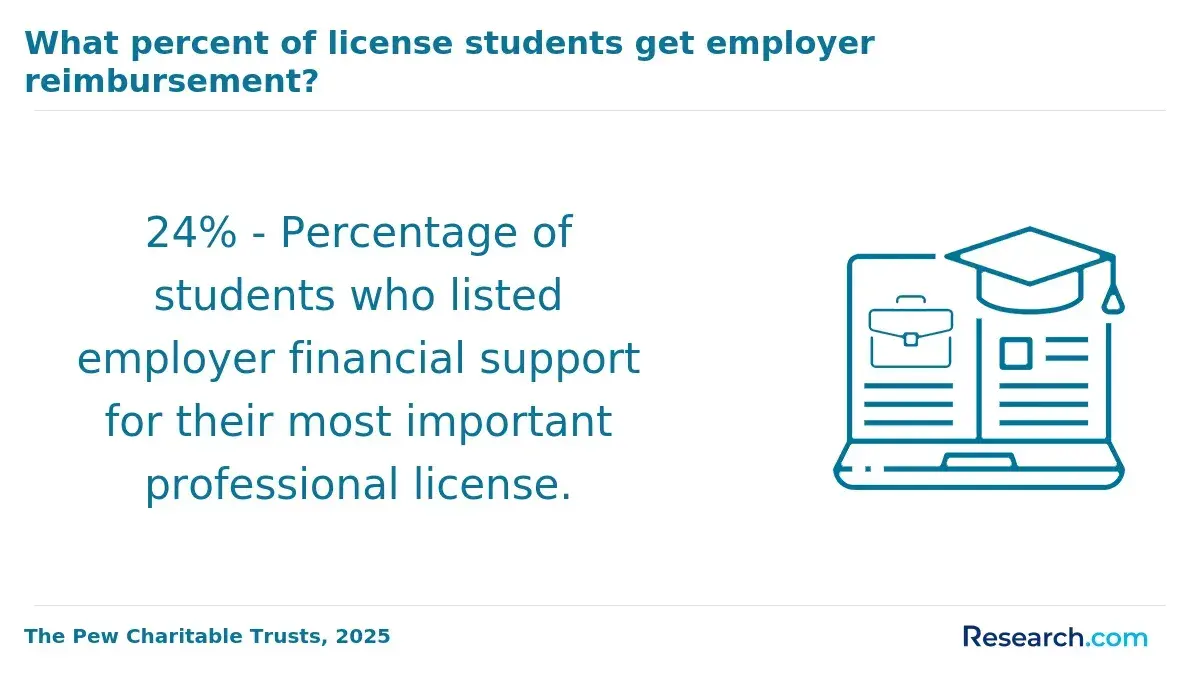
Funding options for online doctoral students are usually more individualized than funding for full-time residential PhD students. Ask each school whether online students qualify for scholarships, doctoral fellowships, teaching assistantships, research assistantships, tuition discounts, military benefits, alumni discounts, or employer tuition reimbursement.
If affordability is the main concern, compare doctoral costs with broader business and management education options, including an online business degree pathway. A doctorate may be worth considering when your goals require original research, university teaching, senior consulting credibility, or specialized expertise that a master's degree cannot provide.
- Employer tuition assistance: useful for working professionals, but check service commitments and annual reimbursement caps.
- University scholarships: often competitive and may not cover the full program, but can reduce borrowing.
- Research or teaching assistantships: more common in campus PhD programs than online professional doctorates, but worth asking about.
- Military and veteran benefits: may significantly affect net cost for eligible students.
- Professional development budgets: sometimes available when the dissertation aligns with organizational strategy or workforce development.
- Self-funding with part-time study: can reduce borrowing but may extend the completion timeline.
A doctorate in project management can support several research-oriented career paths, but it does not guarantee academic employment or a specific salary. Outcomes depend on your dissertation quality, publications, teaching experience, industry credibility, methodological skills, professional network, and the type of institution or employer you pursue.
For salary context, the BLS reported a May 2024 median annual wage of $100,750 for project management specialists. This is not a doctoral salary benchmark; it is a labor-market reference point showing that project management expertise is valued across U.S. employers. Doctoral-level roles may pay more or less depending on sector, rank, geography, and whether the role is academic, consulting, executive, or research-focused.
| Career path | Typical responsibilities | Doctorate value | What employers or universities may expect |
| University faculty member | Teach project management, business, technology management, operations, or leadership; conduct research; publish; advise students | Supports scholarly credibility and qualification for faculty roles | Research agenda, publications, teaching experience, dissertation fit, and often a PhD preference for research-intensive institutions |
| Applied research consultant | Design studies, evaluate project performance, advise organizations, translate evidence into recommendations | Signals advanced research and subject-matter expertise | Methods skills, industry experience, portfolio of reports or publications, client-facing ability |
| PMO research or analytics leader | Study portfolio outcomes, build measurement systems, evaluate delivery methods, support executive decisions | Useful for evidence-based governance and organizational learning | Analytics, communication, change management, and access to organizational data |
| Policy or program evaluation researcher | Evaluate public, nonprofit, infrastructure, healthcare, or technology programs | Helps connect project delivery with outcomes, accountability, and implementation evidence | Evaluation methods, stakeholder engagement, grant or contract research experience |
| Corporate learning or executive education specialist | Develop research-informed project management training, leadership programs, and capability models | Strengthens credibility for designing advanced curricula and frameworks | Teaching skill, curriculum design, professional certification familiarity, industry authority |
| Independent scholar-practitioner | Publish, speak, consult, and develop frameworks for specialized project environments | Provides a platform for niche expertise | Strong personal brand, publications, conference activity, and marketable specialization |
Academic roles are especially competitive. If your goal is a tenure-track position, prioritize programs with rigorous research training, faculty publication activity, opportunities to teach, and support for conference presentations. If your goal is industry research, prioritize applied methods, data access, executive relevance, and dissertation topics that solve real organizational problems without sacrificing methodological rigor.
AI and automation are also reshaping research opportunities. Project management researchers increasingly examine predictive scheduling, risk analytics, human-AI decision-making, and governance of complex digital programs. Students who combine project expertise with data literacy and research methods may be better positioned for emerging research questions than those who focus only on traditional scheduling tools.
How Should You Choose the Best Online Project Management Doctorate Program for Your Research Goals?
To choose the best online project management doctorate for your research goals, start with the research outcome you want and work backward. A program that is excellent for executive leadership may be a poor fit for academic research, while a rigorous PhD may be unnecessarily theoretical for a practitioner whose goal is applied consulting.
Use a structured comparison process before speaking with admissions. Admissions advisors can explain requirements, but you should independently evaluate accreditation, faculty fit, research resources, cost, and dissertation expectations.
- Define your target research career: university faculty, applied consultant, PMO analytics leader, policy evaluator, executive educator, or independent scholar-practitioner.
- Write a one-paragraph research interest statement that names your topic, population or industry, possible methods, and why the problem matters.
- Identify faculty members at each program whose current scholarship aligns with that topic or method.
- Confirm institutional accreditation and, where relevant, business or management programmatic accreditation.
- Compare the research curriculum, including quantitative, qualitative, mixed methods, and ethics training.
- Ask for dissertation milestones, average completion expectations, committee policies, and online-student research support.
- Calculate total cost using credits, fees, residency travel, dissertation continuation, software, and financing costs.
- Request information on student publications, conference participation, faculty collaboration, and graduate career outcomes.
- Compare online format requirements, including synchronous meetings, residencies, defenses, and cohort pacing.
- Choose the program that best balances research rigor, faculty mentorship, affordability, and realistic completion conditions.
Several red flags should make you pause before enrolling. They do not always mean a program is poor, but they do mean you need clearer answers.
- The school cannot clearly explain accreditation status or the accreditor is not recognized for U.S. higher education purposes.
- The program markets speed more heavily than research training, faculty supervision, or dissertation quality.
- No faculty member appears to publish or supervise in your intended project management research area.
- Dissertation expectations are vague, or students are left to find chairs with little institutional support.
- The program does not disclose total credits, tuition, fees, residency requirements, or continuation costs.
- Admissions staff promise career outcomes, faculty jobs, or salary increases that no program can guarantee.
- The curriculum has limited methods training even though the program claims to prepare researchers.
- Online students have weaker access to library databases, software, writing support, or research workshops than campus students.
Finally, think honestly about whether a doctorate is the right next step. If you mainly need promotion eligibility, a certification or master's degree may be more efficient. If you want to generate original evidence, teach at the doctoral or graduate level, publish research, or become a recognized authority on project management practice, a research-focused doctorate may be a strong fit.
Other Things You Should Know About Project Management
Yes, many online project management doctorates are designed for working professionals. The harder question is whether you can protect enough time for reading, methods coursework, data collection, and dissertation writing. Full-time work is possible, but dissertation progress usually requires a consistent weekly research schedule.
Usually no. PMP certification may strengthen your professional profile, but doctoral admissions committees typically focus on graduate academic readiness, research fit, writing ability, professional experience, and faculty-supervision alignment. Some applicants pursue certification separately because it supports practitioner credibility.
It can, if the program has strong faculty mentorship, rigorous methods training, and support for turning dissertation work into conference papers or journal manuscripts. Before enrolling, ask whether faculty co-author with doctoral students and whether recent students have presented or published research.
Yes, AI is creating new research questions in project planning, risk forecasting, resource allocation, team coordination, ethics, and governance. The best dissertation topics will not simply describe AI tools; they will study how those tools affect decisions, outcomes, accountability, and human project work.
- The Power of Research in Project Management | Next Gates https://nextgates.com/the-power-of-research-in-project-management/
- Online PhD in Project Management – UK Accredited Doctorate | AIMS https://aims.education/phd-in-project-management/
- PhD in Project Management | Alma Mater Europaea University https://www.almamater.si/en/project-management-phd
- 7 Project Management Trends of 2025: What to Prepare For? - Epicflow https://www.epicflow.com/blog/current-trends-in-project-management-what-to-prepare-for/
- Online Doctorate (DBA) in Project Management - IMET https://imetworldwide.com/online-doctorate-dba-project-management/
- Data Sources for Post-Graduation Outcomes https://www.airweb.org/article/2021/09/30/data-sources-for-post-graduation-outcomes