2027 Best Online Information Security Doctorate Programs for Career Advancement Beyond a Master's Degree

Co-Founder and Chief Data Scientist
Moving beyond a master's degree in information security is a high-stakes decision because doctoral study requires years of work, tuition investment, and a clear career payoff. The U. S. Bureau of Labor Statistics reported a $124,910 median salary for information security analysts in May 2024, reflecting strong demand for advanced cyber expertise.
This guide is for experienced cybersecurity, IT, risk, and technology professionals deciding whether an online doctorate can support leadership, research, consulting, teaching, or executive advancement.
Key Things You Should Know
- The strongest online information security doctorate options for career advancement are usually applied professional doctorates for security leaders, research-focused PhD programs for academic or R&D roles, and interdisciplinary programs that combine cybersecurity, governance, AI, and risk.
- A doctorate is most valuable when it supports a specific next role; BLS data shows information security analyst roles had a $124,910 median wage in May 2024, while computer and information systems managers had a higher $171,200 median wage.
- The degree's ROI depends heavily on employer recognition, tuition, time to completion, dissertation or capstone requirements, and whether the program helps you move into senior leadership, consulting, policy, research, or faculty work.
Which Online Information Security Doctorate Programs Best Support Career Advancement Beyond a Master's Degree?
The best online information security doctorate program is not simply the highest-ranked or most expensive option. For professionals who already hold a master's degree, the best fit is the program that connects directly to the next career move: executive leadership, security architecture, cyber policy, academic research, applied consulting, or technology governance.
An information security doctorate is an advanced degree focused on protecting systems, data, networks, organizations, and critical infrastructure from digital threats. Many applicants enter after completing a master's in cybersecurity, computer science, information technology, homeland security, data analytics, or a related field. Professionals still comparing earlier pathways may benefit from reviewing a cybersecurity degree online before committing to doctoral study.
The table below compares the main doctoral formats that working professionals usually encounter. Use it to match degree type with career intent rather than assuming every doctorate serves the same purpose.
| Doctorate type | Best fit after a master's degree | Typical career advancement use | Potential drawback |
| Doctor of Information Technology with cybersecurity concentration | IT managers, security engineers, architects, and technology directors | Prepares professionals for senior technical leadership, enterprise security strategy, and applied technology governance | May be less ideal for candidates seeking tenure-track academic research roles |
| Doctor of Cybersecurity or Doctor of Information Assurance | Cybersecurity managers, incident response leaders, compliance professionals, and consultants | Supports advancement into CISO-track roles, cyber risk leadership, security consulting, and policy-focused positions | Program quality varies, so accreditation, faculty expertise, and employer recognition matter greatly |
| PhD in Cybersecurity, Information Security, or Information Systems Security | Professionals interested in research, university teaching, think tanks, or advanced R&D | Develops independent research ability and may support faculty, laboratory, or high-level policy careers | Often requires a longer research commitment and may be less directly applied to corporate promotion timelines |
| Doctor of Business Administration with cybersecurity, risk, or technology management focus | Security leaders moving toward executive management, consulting, or board-level risk oversight | Connects cyber risk to enterprise strategy, finance, governance, and organizational leadership | May not offer deep technical specialization compared with a cybersecurity-specific doctorate |
| Interdisciplinary doctorate in technology, AI, data security, or digital transformation | Professionals working at the intersection of cybersecurity, automation, analytics, privacy, and governance | Supports roles in AI security, cyber resilience, emerging technology risk, and digital policy | Requires careful review to ensure the curriculum has enough information security depth |
For career advancement, prioritize program design over labels. A strong online doctorate for working professionals should provide evidence of advanced applied learning, faculty with current cyber expertise, and a culminating project that can become a promotion portfolio, consulting asset, publication, or leadership case study.
Before shortlisting programs, look for features that directly affect career mobility and professional credibility:
- Regional accreditation from an institution recognized by the U.S. Department of Education or the Council for Higher Education Accreditation.
- A curriculum that includes cyber risk management, secure systems, security architecture, governance, privacy, incident response, and emerging technology risk.
- Faculty whose research or professional background aligns with your target area, such as cloud security, critical infrastructure, digital forensics, AI security, or cyber policy.
- Doctoral projects that allow workplace-based research, applied security problem solving, or publishable scholarship.
- Online delivery designed for full-time professionals, including asynchronous coursework, limited residencies, and predictable dissertation or capstone milestones.
A common mistake is choosing a doctorate because it sounds prestigious without checking whether the curriculum extends beyond your master's degree. If the courses repeat material you already studied, the degree may add cost without adding enough new leadership, research, or specialization value.
Which Career Paths Become More Accessible With an Online Information Security Doctorate?
An online information security doctorate can help experienced professionals compete for roles where advanced judgment, research ability, strategic leadership, or institutional credibility matters. It rarely replaces hands-on experience, but it can strengthen a candidate's profile for senior positions that involve enterprise risk, policy, teaching, consulting, or executive decision-making.
The table below summarizes career paths where a doctorate may create additional value beyond a master's degree. The degree is usually optional in private-sector technical roles but more valuable in research, faculty, consulting, and executive-advisory contexts.
| Career path | How a doctorate may help | Doctorate requirement level | Typical responsibilities |
| Chief information security officer or security executive | Strengthens credibility in enterprise governance, board communication, and risk strategy | Preferred or differentiating, not usually required | Set security strategy, manage risk, lead teams, brief executives, oversee compliance and incident response |
| Cybersecurity director or senior security manager | Supports advancement from technical management to organizational leadership | Optional but useful for competitive leadership roles | Manage security programs, budgets, staff, vendor risk, audits, and security operations |
| Security architect or principal cybersecurity engineer | Builds advanced systems-thinking and research-based problem-solving skills | Usually optional | Design secure architectures, evaluate controls, guide engineering teams, and align technical controls with business risk |
| Cybersecurity consultant or advisory practice leader | Provides authority when advising clients on risk, compliance, architecture, or incident readiness | Often differentiating | Assess client environments, recommend strategy, lead engagements, and translate cyber risk for executives |
| Cyber policy, research, or think tank analyst | Develops research methods, policy analysis, and publication skills | Preferred or strongly preferred in some settings | Study cyber threats, evaluate policy, write reports, brief stakeholders, and analyze national or sector-level risk |
| University faculty or doctoral-level instructor | Meets common expectations for teaching graduate or doctoral students | Often required, especially for tenure-track roles | Teach, conduct research, advise students, publish scholarship, and contribute to curriculum development |
According to the latest BLS Occupational Outlook Handbook, employment for information security analysts is projected to grow 29% from 2024 to 2034. That growth does not mean every doctoral graduate will receive a promotion, but it signals sustained demand for professionals who can manage increasingly complex cyber risk across organizations.
Professionals should also compare doctoral value by sector. Government contractors, research institutions, universities, policy organizations, and consulting firms may value doctoral credentials more visibly than employers hiring for purely operational security engineering positions.
How Does an Online Information Security Doctorate Increase Earning Potential After a Master's Degree?
An online information security doctorate can increase earning potential indirectly by helping professionals qualify for higher-responsibility roles, not by automatically raising salary. The most realistic salary benefit comes when the degree supports movement from analyst, engineer, or manager roles into executive leadership, consulting, architecture, policy, research, or faculty positions.
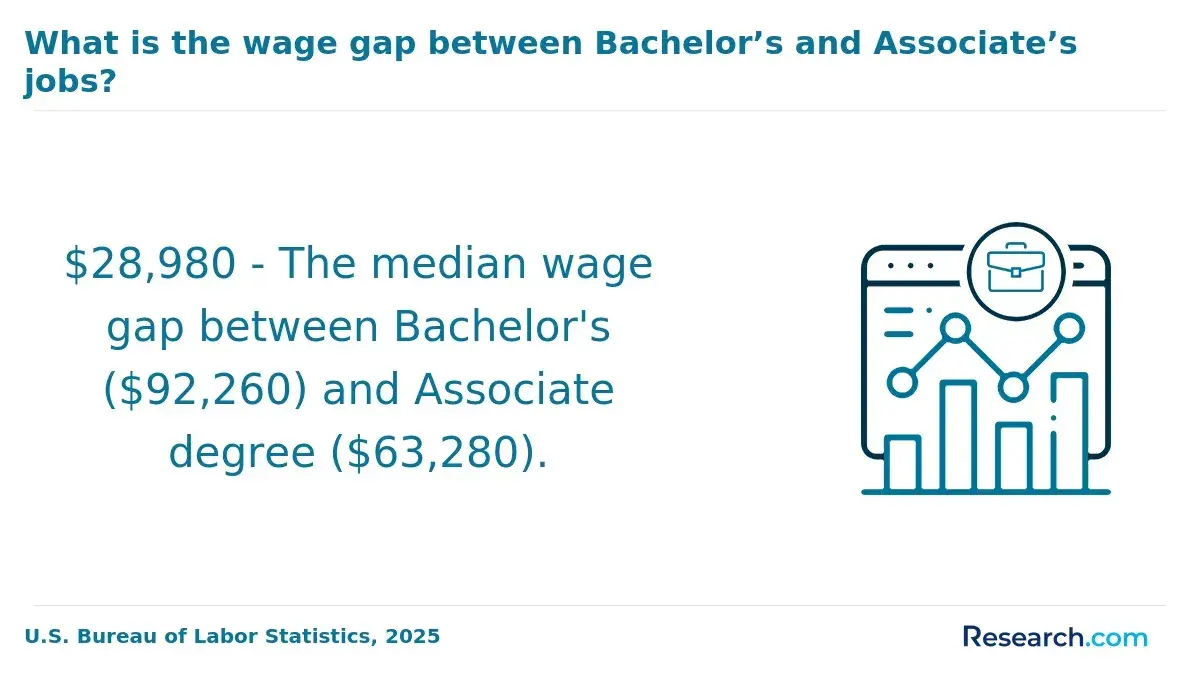
BLS wage data shows why role transition matters. In May 2024, the median wage for information security analysts was $124,910, while computer and information systems managers had a median wage of $171,200. The gap illustrates that advancement into management and executive tracks can matter more than the credential alone.
The table below shows how earning potential may differ depending on how the doctorate is used. These are occupational wage contexts, not guaranteed outcomes for degree holders.
| Post-master's direction | How the doctorate may affect earning potential | Best evidence to review before enrolling |
| Promotion within current employer | May strengthen eligibility for director, senior manager, or executive-track roles if the employer values doctoral preparation | Internal promotion requirements, salary bands, tuition reimbursement policy, and examples of leaders with doctorates |
| Move into consulting | May support higher credibility for advisory, expert witness, risk assessment, or executive briefing work | Client expectations, billable rate structure, professional network, and specialization demand |
| Transition into academia | May open teaching or research roles that are unavailable with only a master's degree | Faculty job postings, publication expectations, residency requirements, and preferred doctoral disciplines |
| Shift into cyber policy or research | May improve competitiveness for roles requiring research design, publication, policy analysis, or grant-funded work | Employer credential preferences, writing samples, research agenda fit, and security clearance requirements where relevant |
| Remain in hands-on technical roles | May provide less salary impact unless paired with scarce expertise such as cloud security, AI security, or critical infrastructure protection | Technical job postings, certification requirements, compensation surveys, and demand for the specialization |
The biggest salary mistake is assuming the doctorate itself produces a raise. A stronger approach is to identify target job postings first, compare their education preferences, and ask whether the doctorate addresses a real barrier to advancement or simply adds another credential to an already strong profile.
Senior information security leadership requires more than technical expertise. Security executives must translate cyber threats into business risk, lead cross-functional teams, justify budgets, respond to incidents, manage compliance, and brief executives who may not have technical backgrounds.
A strong doctoral program helps by developing advanced competencies that are difficult to build through certifications alone. This is especially true as AI, automation, cloud adoption, and supply-chain risk force security leaders to make decisions under uncertainty. Professionals interested in the AI side of cyber leadership may also explore how an artificial intelligence major connects to security governance and emerging technology risk.
For leadership advancement, the most valuable doctoral outcomes are practical and strategic. Look for programs that help you demonstrate these capabilities:
- Enterprise risk thinking, including the ability to connect technical controls with financial, operational, legal, and reputational risk.
- Executive communication, including board briefings, policy memos, incident reports, and strategic roadmaps.
- Evidence-based decision-making, including research methods, data analysis, and evaluation of security program effectiveness.
- Organizational leadership, including change management, ethics, team development, vendor oversight, and crisis coordination.
- Technology foresight, including the ability to assess AI, cloud, identity, automation, and critical infrastructure risks before they become enterprise failures.
A doctorate can be especially useful for professionals who have deep technical experience but need a stronger executive narrative. The degree can help show that you are prepared to lead security as an organizational function, not just solve isolated technical problems.
The strongest specialization is the one that aligns with a high-value problem your target employers are trying to solve. For doctoral study, specialization should narrow your professional identity enough to make you credible while keeping you broad enough to qualify for senior roles.
The table below compares common information security doctorate specializations by advancement potential. Use it to identify areas where doctoral-level research or applied expertise may be more valuable than another general cybersecurity credential.
| Specialization | Career advancement potential | Best fit for | Career caution |
| Cyber risk governance and compliance | Strong for CISO-track, risk management, audit leadership, and board advisory roles | Managers, compliance professionals, consultants, and security leaders | Should include technical context, not only policy language |
| Cloud and infrastructure security | Strong for architecture, enterprise transformation, and security engineering leadership | Architects, cloud engineers, infrastructure leaders, and principal security professionals | Fast-changing tools require continuous learning beyond the degree |
| AI security and emerging technology risk | Strong for organizations adopting automation, machine learning, and AI-enabled security tools | Professionals working in cyber analytics, governance, secure AI systems, or digital transformation | Programs should include both AI concepts and security risk, not just broad technology management |
| Digital forensics and incident response | Strong for investigative leadership, breach response, law enforcement support, and consulting | Incident responders, forensic analysts, government professionals, and litigation-support consultants | Some roles may require specific tools, certifications, or clearance in addition to the doctorate |
| Critical infrastructure and national security | Strong for government, defense, energy, transportation, healthcare, and public-sector cyber resilience roles | Professionals in regulated or mission-critical environments | Career value may depend on clearance, sector experience, and employer-specific requirements |
| Security education and workforce development | Strong for faculty, training leadership, curriculum design, and cyber workforce strategy | Educators, training managers, and professionals transitioning into academia | Teaching roles may also require publications, teaching experience, or discipline-specific credentials |
AI security deserves special attention because employers increasingly need professionals who understand both cyber risk and intelligent systems. If your goal is research or advanced technology leadership beyond cybersecurity alone, comparing an online PhD in artificial intelligence USA pathway with an information security doctorate can clarify which credential better fits your long-term direction.
A common red flag is choosing a specialization because it sounds current without confirming that employers in your region or target industry hire for it. Review job postings, advisory board members, faculty publications, and dissertation topics before committing.
Employers usually value an online information security doctorate when it adds evidence of leadership, research ability, strategic judgment, or specialized expertise. They are less likely to value it if the candidate lacks experience, cannot explain how the degree applies to the job, or chooses a program with weak institutional credibility.
Online delivery itself is typically not the main issue. Employers are more likely to evaluate accreditation, school reputation, curriculum rigor, faculty relevance, professional experience, certifications, portfolio quality, and the candidate's ability to solve business problems.
In many cybersecurity hiring processes, certifications still matter because they signal current technical or managerial competence. A doctorate can complement credentials such as CISSP, CISM, CISA, GIAC certifications, cloud security credentials, or vendor-specific training. Professionals needing targeted upskilling before or during doctoral study may compare a shorter cyber security course with a full degree requirement.
Employer perception is strongest when you can connect the doctorate to measurable workplace outcomes. Examples include a dissertation on reducing incident response time, a capstone on zero-trust implementation, a governance framework for AI risk, or a research project on security awareness effectiveness.
To understand how your target employers may value the credential, take these steps before enrolling:
- Review job postings for your desired titles and note whether a doctorate is required, preferred, or absent.
- Search leadership profiles in your target organizations to see which degrees, certifications, and career paths are common.
- Ask hiring managers or mentors whether doctoral preparation would affect promotion, salary banding, or consulting credibility.
- Confirm whether the school is regionally accredited and whether the program's name is understandable to employers.
- Evaluate whether the dissertation or capstone can become a professional artifact you can discuss in interviews.
The biggest employer-value mistake is expecting the degree to compensate for limited experience. For most senior security roles, the doctorate works best as an amplifier of a strong professional record, not a substitute for operational credibility.
Most professionals should expect an online information security doctorate to take several years after a master's degree. The timeline depends on transfer credit, enrollment intensity, research requirements, dissertation progress, residency expectations, and how well the student's work schedule supports sustained writing and research.
The table below outlines common completion patterns. Exact timelines vary by school, and doctoral completion often depends more on the dissertation or capstone phase than on coursework alone.
| Study format | Typical timeline after a master's degree | Best fit | Main risk |
| Full-time online doctorate | About 3 to 4 years in many structured programs | Professionals with employer support, flexible schedules, or a planned career transition | High workload may conflict with leadership roles, travel, incident response, or family responsibilities |
| Part-time online doctorate | About 4 to 6 years in many programs | Working professionals who need schedule flexibility and stable pacing | Long timelines can reduce motivation and increase total cost if fees continue each term |
| Accelerated or executive-style doctorate | Potentially shorter if the program accepts prior graduate credits and uses a cohort model | Experienced professionals with a clear research topic and strong writing discipline | Acceleration may be difficult if the dissertation, capstone, or institutional review process takes longer than expected |
| Research-intensive PhD | Often longer than applied professional doctorates | Future faculty, researchers, or policy analysts who need deep scholarship preparation | Publication expectations, methods training, and advisor availability can extend completion time |
Applicants who already hold a master's degree should ask whether prior graduate coursework can reduce credits. Some programs accept transfer credits or waive foundational courses, but many still require a minimum number of doctoral credits completed at the institution.
Professionals can reduce timeline risk by choosing a research topic early. A strong topic should connect to your current work, target industry, available data, and faculty expertise; a weak topic can stall progress even after coursework is complete.
The ROI of an online information security doctorate depends on whether the degree helps you reach roles that would otherwise be difficult to access. ROI should include tuition, fees, loan interest, time, opportunity cost, stress, and the career value of the dissertation or capstone.
Financing matters because graduate debt can become expensive. For federal loans first disbursed from July 1, 2024 through June 30, 2025, the Direct Unsubsidized Loan interest rate for graduate and professional students was 8.08%, while the Grad PLUS rate was 9.08%. Those rates make it important to avoid borrowing for a doctorate unless the career case is clear.
The table below shows how to think about ROI by career objective. It does not predict individual salary outcomes, but it helps identify when the degree is more likely to have practical value.
| Career goal | ROI potential | Why | What to verify |
| Move into CISO or executive security leadership | Moderate to strong if paired with management experience | The doctorate may reinforce strategic credibility, governance expertise, and executive communication | Whether employers in your target market reward doctoral credentials for security leadership |
| Become a university faculty member | Strong if the program matches academic hiring expectations | Many faculty roles require or strongly prefer a doctorate | Whether the degree type, research output, and institution fit faculty job postings |
| Build a consulting or advisory practice | Potentially strong for specialized experts | The degree can support authority, thought leadership, and client trust | Whether you already have a network, niche, and marketable advisory service |
| Remain in the same technical role | Often limited unless the specialization is scarce | Employers may reward certifications, architecture experience, or product expertise more directly | Whether the doctorate is needed for promotion or whether targeted credentials would be faster |
| Change careers without cybersecurity experience | Usually weak as a first step | Doctoral study does not replace the need for hands-on security experience | Whether a master's, certificate, lab portfolio, or entry-level experience would be more appropriate first |
To evaluate ROI, compare the doctorate with alternatives such as executive education, advanced certifications, a second master's, employer-sponsored training, or a targeted certificate. A doctorate makes the most sense when it removes a real ceiling in leadership, research, teaching, or specialized advisory work.
It may be better to stay at the master's level if your target roles do not mention doctoral education, your employer will not recognize it in promotion decisions, or the program requires debt that would limit your financial flexibility.
An online information security doctorate is best suited for experienced professionals who already have a strong foundation and need advanced credibility for a specific next step. It is usually not the most efficient path for beginners or for professionals who only need a technical skill refresh.
The professionals most likely to benefit share one trait: they can connect doctoral work to a concrete career outcome. These groups often see the strongest fit:
- Cybersecurity managers, directors, and senior engineers pursuing executive or enterprise security leadership.
- Security consultants who want deeper authority in governance, architecture, cyber risk, digital forensics, or critical infrastructure.
- Government, defense, or public-sector professionals working on cyber policy, resilience, national security, or regulated infrastructure.
- Educators and trainers seeking university teaching, curriculum leadership, or workforce development roles.
- Researchers, analysts, and policy professionals who need advanced research methods and publication-ready expertise.
- Technology leaders whose work increasingly overlaps with AI security, privacy, automation risk, and digital transformation governance.
The degree may be a poor fit for professionals who are still building core experience, unsure of their target role, or primarily seeking immediate technical skills. In those cases, certifications, portfolio projects, leadership assignments, or employer-sponsored training may provide faster returns.
Applicants should also consider lifestyle fit. Doctoral study requires sustained reading, writing, research, and revision over multiple years. Professionals in high-pressure incident response or executive travel roles should confirm that the program's schedule can realistically coexist with their workload.
How Should Professionals Choose an Online Information Security Doctorate for Career Advancement?
Choosing an online information security doctorate should begin with your target role, not the program brochure. The right program should help you demonstrate advanced expertise that your current master's degree and experience do not already prove.
Use the following process to compare programs in a practical, career-focused way:
- Define the exact role you want after the doctorate, such as CISO, security director, faculty member, principal architect, consultant, policy researcher, or cyber workforce leader.
- Collect 10 to 15 job postings for that role and identify common education, certification, experience, clearance, and technical requirements.
- Choose the doctorate type that fits the role: professional doctorate for applied leadership, PhD for research and academia, or interdisciplinary doctorate for technology governance roles.
- Confirm institutional accreditation and review whether employers, licensing bodies, or academic institutions recognize the credential for your intended use.
- Compare curriculum depth against your master's degree to avoid paying for duplicate coursework.
- Review faculty expertise, dissertation topics, research centers, advisory boards, and industry partnerships.
- Ask whether prior master's credits can transfer and whether the program has a clear dissertation or capstone support structure.
- Calculate total cost, including tuition, fees, books, residencies, travel, technology, loan interest, and reduced work capacity.
- Ask admissions staff for completion data, career support details, and examples of graduate outcomes, while remembering that individual outcomes vary.
- Choose the program that gives you the strongest combination of credibility, specialization, flexibility, affordability, and career relevance.
Several red flags deserve attention before you apply. Be cautious if a program makes unrealistic salary claims, lacks transparent accreditation information, has vague dissertation support, offers little faculty alignment with your research interests, or does not explain how online students access advising and career resources.
The smartest decision is not always "earn the doctorate." The smartest decision is to choose the lowest-cost, highest-credibility path that removes the specific barrier between your current master's-level career and the advanced role you want next.
Other Things You Should Know About Information Security
They overlap, but they are not identical. Cybersecurity focuses on protecting digital systems, networks, and data from cyber threats, while information security is broader and includes policies, governance, physical safeguards, privacy, and risk management for information in any form.
Most information security roles in the U.S. do not require a state license. Requirements can vary for specialized work involving law enforcement, government contracts, legal evidence, or regulated industries, so professionals should check employer and sector-specific expectations.
Certifications can be a better fit for technical validation, hands-on tools, audit roles, or management frameworks. A doctorate is more appropriate when the goal involves research, executive credibility, university teaching, policy analysis, or advanced applied leadership.
Advanced roles usually require risk analysis, security architecture, governance, incident leadership, communication, ethics, data interpretation, and the ability to connect technical threats to business decisions. Technical depth remains important, but senior professionals also need strategy and leadership skills.
- Exploring Current Cybersecurity PhD Options: A Comprehensive Guide https://www.cm-alliance.com/cybersecurity-blog/exploring-current-cybersecurity-phd-options-a-comprehensive-guide
- Careers in IT: Lucrative Fields for Recent Grads https://www.onlinemastersdegrees.org/careers/information-technology-it/
- Accredited Online Doctorate in Cybersecurity Programs https://zoclearnings.com/blogs/accredited-online-doctorate-in-cybersecurity-programs/
- 10 Reasons Why a Cyber Security Degree is Worth It https://umsafoundation.org/10-reasons-why-a-cyber-security-degree-is-worth-it/
- Top 25 Cybersecurity PhD Programs In 2026 - Programs.com https://programs.com/programs/cybersecurity-phd-programs/
- Best Online Cybersecurity PhD and Doctorate Programs for 2026 https://cybersecurityguide.org/online/phd-in-cybersecurity/
- Getting a Ph.D. in Cyber Security – Everything You Need to Know | Cyber Security Jobs https://www.cybersecurityjobs.com/phd-cyber-security/
- Doctoral Degrees in Cybersecurity | CyberDegrees.org https://www.cyberdegrees.org/listings/doctoral-degrees/
- Online Doctorate in Cybersecurity | IMET worldwide https://imetworldwide.com/online-doctorate-cybersecurity-certificate-program-usa/
- PhD in Technology - Cybersecurity Specialization | Walsh - Graduate & Undergraduate Business Degrees https://walshcollege.edu/programs/phd-technology-cybersecurity/