2027 Best Online Health Services Doctorate Programs for Nonprofit, Policy, and Community Leadership Careers

Co-Founder and Chief Data Scientist
Choosing an online health services doctorate is a high-stakes decision if your goal is to lead nonprofits, influence health policy, or improve community systems. The need is real: the U. S. Bureau of Labor Statistics reports that medical and health services manager jobs are projected to grow 29% from 2023 to 2033, far faster than average. This guide helps working professionals compare doctorate types, leadership specializations, curriculum quality, cost, accreditation, online format, faculty networks, and career alignment so they can choose a program that fits their mission and return-on-investment goals.
Key Things You Should Know
- The best online health services doctorate for nonprofit, policy, or community leadership is usually an applied DHA, DrPH, or leadership-focused PhD with accredited institutional standing, sector-relevant faculty, and a capstone or dissertation tied to real organizational problems.
- Federal graduate loan costs matter: for loans first disbursed from July 1, 2024, to June 30, 2025, Direct Unsubsidized Loans carry an 8.08% fixed rate and Grad PLUS Loans carry a 9.08% fixed rate, so total program cost should be evaluated before enrollment.
- Career fit differs by pathway: policy-oriented doctorates suit advocacy and government roles, community health concentrations fit population-level initiatives, and nonprofit leadership tracks are strongest when they include finance, governance, fundraising, evaluation, and cross-sector partnership training.
Which Online Health Services Doctorate Programs Are Best for Nonprofit, Policy, and Community Leadership?
The "best" online health services doctorate is not simply the most recognizable school or the lowest tuition. For nonprofit, policy, and community leadership careers, the strongest program is the one that connects advanced health systems knowledge with the kind of leadership problem you want to solve.
Use the comparison below to narrow your search by degree type before comparing individual universities. This matters because a DHA, DrPH, PhD, and interdisciplinary doctorate can lead to different research expectations, applied projects, faculty networks, and employer signals.
| Program type | Best fit | Typical leadership use | Potential limitation |
| Doctor of Health Administration or Doctor of Healthcare Administration | Experienced administrators seeking executive or system-level roles | Nonprofit hospital leadership, healthcare operations, quality improvement, strategic planning | May be less policy-heavy unless electives or faculty expertise support advocacy and public affairs |
| Doctor of Public Health | Public health, community health, and policy professionals | Community health leadership, government agencies, population health initiatives, health equity programs | May require public health prerequisites or practice experience |
| PhD in Health Services, Health Policy, or Health Systems | Professionals interested in research, evaluation, academia, or policy analysis | Policy research, think tanks, higher education, evidence-based program evaluation | Often more research-intensive and may be less flexible for purely practice-focused leaders |
| Interdisciplinary doctorate with healthcare leadership concentration | Leaders working across nonprofit, education, social services, and healthcare sectors | Cross-sector collaboration, community partnerships, organizational transformation | May lack depth in health services unless the concentration and faculty are clearly health-focused |
A practical shortlist should include programs that match your current experience and target role. Applicants who still need broader management preparation may benefit from comparing a masters in healthcare administration before committing to doctoral study, especially if they do not yet supervise budgets, teams, or programs.
As you compare programs, prioritize evidence over branding. A strong online doctorate should show how students complete applied research, who mentors them, what leadership sectors graduates enter, and whether the degree structure supports working professionals.
- Choose a DHA when your goal is executive leadership in healthcare delivery, nonprofit health systems, quality, compliance, or operations.
- Choose a DrPH when your goal is population health, public agencies, community coalitions, advocacy, or health equity leadership.
- Choose a PhD when your goal is research leadership, policy analysis, teaching, or evaluation-intensive work.
- Avoid programs that advertise "leadership" broadly but provide little evidence of health policy, nonprofit governance, community health, or applied fieldwork depth.
Which Health Services Doctorate Specializations Best Align With Nonprofit, Policy, and Community Leadership?
Specialization choice is one of the most important decisions in an online health services doctorate because it shapes your courses, faculty mentors, dissertation or capstone topic, and professional network. For mission-driven careers, the best concentration is the one that matches the setting where you want to create change.
The table below summarizes common specialization matches. Use it to avoid the common mistake of choosing a broad healthcare leadership track when your real goal requires policy, nonprofit finance, public health, or community-engagement expertise.
| Specialization or concentration | Strongest career alignment | Skills to look for in the curriculum | Best for |
| Health policy and advocacy | Government, advocacy organizations, policy institutes, associations | Policy analysis, regulatory systems, legislative strategy, health economics, evidence translation | Professionals who want to influence rules, funding, access, and public programs |
| Community health or population health | Community-based nonprofits, public health departments, coalitions | Needs assessment, epidemiology, health equity, community-based evaluation, partnership design | Leaders focused on prevention, access, disparities, and local health outcomes |
| Nonprofit leadership and governance | Health nonprofits, foundations, mission-driven systems, charities | Board governance, fundraising strategy, grant management, program evaluation, nonprofit finance | Professionals seeking CEO, executive director, chief program officer, or foundation roles |
| Healthcare quality and safety | Hospitals, clinics, nonprofit health systems, accountable care organizations | Quality improvement, patient safety, implementation science, data dashboards, change management | Leaders improving service delivery and measurable outcomes |
| Health informatics or analytics | Data-driven nonprofits, public agencies, health systems, evaluation teams | Data governance, analytics, population health data, privacy, reporting, decision support | Professionals who want to lead evidence-based programs and digital transformation |
A policy-focused concentration is best when you want to shape decisions beyond one organization. A community leadership concentration is best when your work depends on trust, coalition-building, social determinants of health, and practical implementation. A nonprofit leadership concentration is best when you expect to manage boards, donors, grants, programs, staff, and mission accountability.
Before enrolling, ask each program how many recent doctoral projects or dissertations addressed nonprofit management, health policy, public health equity, rural health, Medicaid access, behavioral health systems, or community partnerships. If the school cannot show examples that resemble your goals, the specialization may be weaker than its title suggests.
What Curriculum Should a Health Services Doctorate Offer for Mission-Driven Leadership?
A mission-driven health services doctorate should teach more than general leadership theory. It should prepare you to make evidence-based decisions in complex health, nonprofit, public, and community environments where budgets, regulations, equity concerns, and stakeholder trust all matter.
The strongest curricula usually combine advanced health systems knowledge with applied leadership practice. When reviewing degree plans, look for courses and experiences that connect directly to executive decision-making.
- Health systems strategy, including payer models, delivery systems, access barriers, and cross-sector partnerships.
- Health policy analysis, including regulatory structures, public financing, advocacy, and the use of evidence in policy decisions.
- Nonprofit finance and governance, including board relations, restricted funding, grants, fundraising, and mission-based accountability.
- Community health assessment, including social determinants of health, equity, participatory methods, and culturally responsive engagement.
- Program evaluation and implementation science, including logic models, outcome measures, continuous improvement, and scaling interventions.
- Research methods, including qualitative, quantitative, mixed-methods, and applied evaluation designs suitable for real organizations.
- Ethics and health equity, including resource allocation, privacy, public accountability, and power dynamics in community partnerships.
- Leadership communication, including crisis messaging, coalition facilitation, board presentations, and policy briefs.
Curriculum depth matters because nonprofit and community leaders are often judged by their ability to turn limited resources into measurable impact. A program that includes only generic leadership courses may be less useful than one requiring students to evaluate a real program, analyze policy alternatives, or design a community implementation plan.
One current trend to watch is the growth of analytics-supported leadership. AI tools, predictive dashboards, and automated reporting are becoming more common in healthcare and public-sector management, but leaders still need training in bias, privacy, data governance, and ethical interpretation. A strong doctorate should help you use technology responsibly rather than simply name-checking innovation.
Applied and research-focused doctorates can both support leadership careers, but they serve different professional goals. The right choice depends on whether you want to solve practice problems inside organizations or produce original research that influences scholarship, policy, and evaluation.
The comparison below clarifies how the two models usually differ. Use it to decide whether a capstone-style doctorate or dissertation-intensive doctorate better fits your time, interests, and career plan.
| Factor | Applied doctorate | Research-focused doctorate |
| Common degrees | DHA, DrPH, professional doctorate, applied leadership doctorate | PhD in Health Services, Health Policy, Public Health, or related field |
| Main purpose | Improve practice, programs, systems, or leadership decisions | Generate original research and contribute to scholarly knowledge |
| Final project | Applied doctoral project, capstone, practice-based dissertation, or organizational improvement study | Traditional dissertation with stronger emphasis on theory, methodology, and original contribution |
| Best for nonprofit leaders | Strong fit when the goal is executive leadership, program improvement, or organizational change | Strong fit when the goal is research director, policy analyst, faculty role, or evaluation leadership |
| Risk if mismatched | May not provide enough research depth for tenure-track academic goals | May be unnecessarily theoretical for professionals seeking immediate operational leadership tools |
Choose an applied doctorate if you want your doctoral work to improve a service line, evaluate a community program, redesign care coordination, or strengthen a nonprofit's impact model. Choose a research-focused doctorate if you want to publish, teach, lead rigorous policy studies, or build expertise in methods-heavy evaluation.
Before deciding, compare the final-project requirements closely. A program can sound practice-oriented but still require a traditional dissertation, while another can offer a capstone that demands substantial data collection, evaluation, and stakeholder engagement.
- Identify the job title or leadership level you want within five years of graduation.
- Review whether that role rewards applied problem-solving, research credentials, or both.
- Ask programs for recent dissertation or capstone titles from students with similar career goals.
- Confirm whether faculty have expertise in nonprofit, policy, or community health topics rather than only clinical administration.
Accreditation is a baseline quality check, not a bonus feature. At minimum, an online health services doctorate should be offered by an institution accredited by an agency recognized by the U.S. Department of Education or the Council for Higher Education Accreditation.
Programmatic accreditation is more variable at the doctoral level. Some public health doctorates may be connected to schools or programs accredited by the Council on Education for Public Health, while healthcare management programmatic accreditation is more common at the master's level than the doctoral level. That means applicants should evaluate both institutional legitimacy and discipline-specific credibility.
Use the following checks before applying. They can help you distinguish credible online doctoral options from programs that may create problems for employment, transfer, financial aid, or professional recognition.
- Verify institutional accreditation directly through the U.S. Department of Education's accreditation database or the accreditor's own directory.
- Ask whether the doctorate is housed in a school of public health, health administration, public policy, business, nursing, or interdisciplinary studies, because the academic home affects faculty and curriculum depth.
- Confirm whether the program qualifies for federal financial aid if you plan to use loans.
- Check whether any residency, practicum, or applied project requirements are supervised by qualified faculty.
- Be cautious of schools that promise unusually fast completion, guaranteed promotions, or vague "international accreditation" without recognized U.S. institutional accreditation.
Licensure is usually not the main issue for health services leadership doctorates, because these degrees typically prepare administrators, researchers, policy leaders, and community executives rather than clinicians. However, if you already hold a clinical license or want to move into a licensed role, confirm state-specific rules separately because doctoral admission and professional licensure are different processes.
Online doctorate formats vary widely, and the format can affect cost, completion time, networking, and your ability to keep working. Some programs are fully online, while others require campus residencies, synchronous sessions, field placements, or in-person dissertation defenses.
The table below explains the most common format differences. This is important because a program that looks convenient on the homepage may still require travel, daytime meetings, or a local field site.
| Format feature | What it means | Best for | What to verify |
| Asynchronous online courses | Students complete weekly work without fixed class meetings | Working professionals with unpredictable schedules | Deadlines, group work expectations, faculty response time |
| Synchronous online courses | Students attend live virtual sessions | Students who want discussion, accountability, and real-time networking | Meeting times, time zones, attendance rules |
| Short residencies | Students travel to campus or another site for intensive sessions | Professionals who value in-person mentoring and cohort relationships | Travel cost, frequency, duration, and whether residencies are mandatory |
| Applied fieldwork or practicum | Students complete supervised work in an organization or community setting | Nonprofit, public health, and community leadership candidates | Whether you can use your workplace and what approvals are required |
| Cohort model | Students progress with the same peer group | Students who want structured pacing and stronger peer networks | Flexibility if you need to stop out or slow down |
Students who are balancing full-time jobs, caregiving, and leadership responsibilities should be especially careful with accelerated formats. Shorter timelines can be appealing, but accelerated healthcare programs often require heavier course loads, faster research milestones, or less schedule flexibility.
A strong experiential model should help you build evidence of leadership impact while enrolled. For example, a community-focused student might design an evaluation plan for a mobile health program, while a nonprofit leader might analyze donor-funded program outcomes or redesign a partnership strategy.
- Ask whether your current workplace can serve as a practicum or project site.
- Confirm whether the program helps students secure community or policy placements if they do not already work in the field.
- Review whether residencies include meaningful faculty mentoring, research workshops, or networking rather than only orientation sessions.
- Calculate travel, lodging, technology, and lost-work costs before comparing tuition.
Admissions requirements vary, but online health services doctorate programs usually expect applicants to show graduate-level readiness, professional maturity, and a clear leadership purpose. Competitive applicants often have a master's degree, relevant work experience, and a proposed area of interest connected to health systems, policy, nonprofit management, or community health.
Most programs evaluate more than grades. They want evidence that you can complete doctoral-level research or applied inquiry while contributing to a professional learning community.
- Master's degree from an accredited institution, often in health administration, public health, public policy, nursing, business, social work, or a related field.
- Official transcripts showing graduate academic performance; some programs set a minimum GPA, while others review applicants holistically.
- Professional resume documenting leadership, management, clinical, public health, nonprofit, policy, or community experience.
- Statement of purpose explaining why the doctorate fits your career goals and what problem you want to study.
- Letters of recommendation from supervisors, faculty, executives, or community partners who can assess leadership and doctoral readiness.
- Writing sample, interview, or research concept paper, especially for PhD, DrPH, and dissertation-heavy programs.
- English proficiency documentation for applicants whose prior education does not meet the school's language policy.
Some programs require applicants to have several years of professional experience, especially executive-style DHA and DrPH pathways. Others may admit strong applicants earlier in their careers if they show research readiness and a clear fit with faculty expertise.
A common mistake is applying with a generic personal statement. For mission-driven leadership programs, your statement should identify a real problem, such as behavioral health access, rural service delivery, maternal health inequity, nonprofit sustainability, Medicaid policy, or community-based chronic disease prevention. The more clearly your goal matches the program's faculty and curriculum, the stronger your application will usually be.
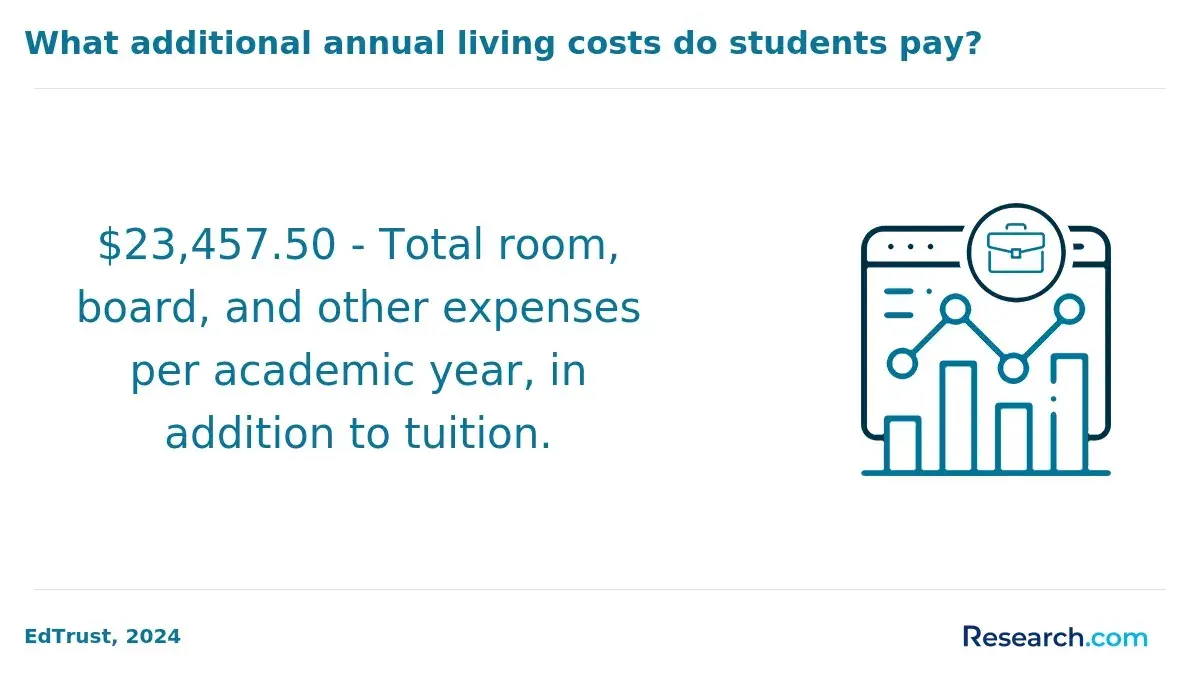
Online health services doctorate costs can differ substantially because schools use different tuition models, credit requirements, residency fees, technology fees, and dissertation-continuation charges. The lowest advertised per-credit rate is not always the lowest total cost.
Federal borrowing terms also affect affordability. For graduate and professional students, current federal loan rates make it especially important to estimate total debt before enrolling rather than assuming a doctorate will pay for itself quickly.
- Direct Unsubsidized Loans for graduate students: annual borrowing limit up to $20,500, with a 8.08% fixed interest rate for loans first disbursed from July 1, 2024, to June 30, 2025.
- Direct PLUS Loans for graduate students: may cover remaining approved cost of attendance, with a 9.08% fixed interest rate for loans first disbursed from July 1, 2024, to June 30, 2025.
When comparing tuition, calculate the full program price instead of relying on the homepage. Applicants comparing affordable pathways may also want to review a cheapest online healthcare administration degree if they are still deciding whether they need a doctorate or a less expensive graduate credential.
Use this cost checklist to avoid underestimating the real investment. Each item can change the final price even when two programs have similar tuition rates.
- Total required credits multiplied by per-credit tuition.
- Mandatory university fees, technology fees, graduation fees, and dissertation or doctoral project fees.
- Residency travel, lodging, meals, parking, and time away from work.
- Books, research software, data collection costs, transcription, survey tools, and professional memberships.
- Tuition increases during multi-year enrollment.
- Continuation fees if the dissertation or capstone takes longer than planned.
- Employer tuition assistance rules, including repayment obligations if you leave your job.
Funding may come from employer tuition benefits, veterans benefits, federal loans, scholarships, assistantships, professional association awards, or foundation support. Assistantships are more common in full-time research doctorates than in online professional doctorates, so working professionals should ask direct questions about realistic funding availability before assuming aid will reduce the bill.
Faculty strength and professional connections can be just as important as course titles. For nonprofit, policy, and community leadership careers, you want mentors who understand real-world systems, not only academic theory.
Strong programs make faculty expertise visible. Look for professors with current or recent work in health policy, nonprofit management, community-based research, public health leadership, Medicaid, health equity, rural health, evaluation, implementation science, healthcare finance, or executive administration.
Professional networks also matter because many mission-driven leadership roles are relationship-based. A program connected to public agencies, hospital associations, community coalitions, foundations, advocacy organizations, or applied research centers may provide stronger opportunities for projects, mentorship, and career visibility.
Ask admissions teams and faculty these questions before enrolling. Their answers can reveal whether the program's network fits your leadership goals.
- Which faculty currently supervise doctoral projects related to nonprofit health leadership, public policy, or community health?
- Can students collaborate with faculty on applied research, publications, policy briefs, or evaluation projects?
- What kinds of organizations have hosted student capstones, practicums, or dissertation studies?
- Does the program offer structured networking through residencies, alumni panels, executive seminars, or professional association partnerships?
- Are online students included in research groups, leadership institutes, career services, and alumni communities?
- Can the program share examples of recent student project topics without disclosing private student information?
Be cautious if a program cannot identify faculty who match your area of interest. A doctorate is a long mentorship relationship, and weak faculty fit can slow your project, reduce the usefulness of feedback, and limit your professional network.
How Should You Evaluate Career Outcomes and ROI When Choosing an Online Health Services Doctorate?
ROI for an online health services doctorate should be evaluated through career fit, total cost, time commitment, opportunity cost, and the credibility of the credential. A doctorate can be valuable for leadership advancement, but it is not the right investment for every professional or every role.
Salary data can provide context, but it should not be treated as a promise. The U.S. Bureau of Labor Statistics reports a May 2024 median annual wage of $78,240 for social and community service managers, which means community leadership roles may offer meaningful mission impact but may not always produce the same financial return as executive healthcare administration roles.
Use the table below to connect career goals with ROI considerations. It helps separate mission value, advancement potential, and financial trade-offs instead of judging every doctorate by salary alone.
| Target pathway | Relevant doctorate features | ROI signals to review | When the investment may be harder to justify |
| Nonprofit executive leadership | Governance, finance, fundraising, evaluation, strategic leadership | Promotion requirements, executive director salary ranges, employer tuition support, board-facing skills | If the role values experience more than a doctorate and the program lacks nonprofit depth |
| Health policy leadership | Policy analysis, economics, advocacy, methods, public finance | Access to policy faculty, research outputs, government or think tank connections | If the program is mostly operational healthcare management with few policy courses |
| Community health leadership | Population health, equity, community engagement, implementation science | Applied project relevance, public health partnerships, grant and evaluation skills | If total debt is high relative to local nonprofit or public-sector salaries |
| Healthcare administration executive roles | Operations, quality, strategy, finance, compliance, analytics | Employer recognition, leadership scope, advancement history, executive mentorship | If a master's degree plus experience would meet the same career requirement |
| Research, evaluation, or faculty roles | Advanced methods, dissertation depth, publications, research mentorship | Faculty productivity, methodological training, graduate placement patterns | If the program is applied but the target job expects a research-intensive PhD |
ROI also depends on whether the doctorate helps you build a portfolio. A strong candidate may graduate with a policy brief, evaluation report, community needs assessment, board presentation, publication, or implementation plan that demonstrates leadership capacity beyond the credential itself.
Professionals considering data-heavy leadership roles should compare salary context carefully across related careers. For example, reviewing health information management salary information can help applicants decide whether informatics, analytics, or administration is the better path for their financial and mission goals.
Before enrolling, complete a simple ROI review. This process will not predict outcomes, but it can prevent expensive mismatches.
- Write down the specific roles you want after graduation and whether they commonly require or prefer a doctorate.
- Estimate total program cost, including fees, residencies, loan interest, and time away from paid work.
- Compare the program's specialization, faculty, and final project model with your target sector.
- Ask whether your employer, professional association, or public-service setting offers tuition support or loan forgiveness options.
- Look for alumni examples in similar roles, but avoid treating individual success stories as guaranteed outcomes.
- Choose the program only if the credential, skills, network, and project experience clearly support your next leadership move.
Other Things You Should Know About Health Services
Many online doctorates are designed for working professionals, but the workload can still be demanding. Ask about weekly time expectations, live class requirements, residency dates, and dissertation or capstone pacing before enrolling.
Not always. Many programs admit applicants from healthcare administration, public health, nonprofit management, policy, business, social work, and related fields. Clinical experience may help in some settings, but leadership and sector fit often matter more.
Employer acceptance depends on accreditation, school reputation, program rigor, faculty credibility, and relevance to the role. A well-designed online doctorate from an accredited institution can be credible, especially when it includes applied research and leadership experience.
It can help if the program includes policy analysis, public finance, evaluation, and government-facing projects. The transition is stronger when your doctoral work produces evidence of policy writing, stakeholder analysis, or public program evaluation.
- Healthcare Management, Administration & Policy Degree Programs https://www.healthcaremanagement.org/degree/
- Careers https://www.publichealthdegrees.org/careers/
- Ogólnopolski system monitorowania Ekonomicznych Losów Absolwentów szkół wyższych https://ela.nauka.gov.pl/en/labor-market
- Doctor of Public Health (DrPH) | Claremont Graduate University https://www.cgu.edu/academics/program/doctor-public-health/
- 25 Best Doctor of Public Health Programs - MPH Online https://www.mphonline.org/top-public-health-phd-programs/
- Health and Human Services: Campus & Online Degrees and Careers https://www.publichealthonline.org/human-services/online-degree-programs/
- Client Challenge https://www.springermedizin.de/analysis-of-the-doctor-of-public-health-drph-training-and-identi/26274958
- Health Management Careers https://www.ache.org/Career-Resources/Start-Your-Career/Health-Management-Careers
- PhD, Organization Development - Benedictine University https://ben.edu/degree_programs/goodwin-college-of-business-doctoral-program/