2027 Best Online Crime Analysis Degree Programs at Nonprofit Universities

Co-Founder and Chief Data Scientist
Choosing an online crime analysis degree means sorting through programs that may be labeled criminal justice, criminology, intelligence analysis, or geographic information systems rather than "crime analysis." That distinction matters because crime analysts need evidence-based research, statistics, mapping, and communication skills. The U.S. Bureau of Labor Statistics reports a $91,290 median annual wage for operations research analysts in 2024, a useful benchmark for the analytical skills used across public-sector data roles. This guide helps prospective students compare nonprofit online options, costs, formats, and career fit before applying.
Key Things You Should Know
- The strongest online crime analysis pathway is usually an institutionally accredited nonprofit program that combines criminology or criminal justice with statistics, GIS mapping, research methods, and practical data-analysis work.
- Public four-year institutions charged average in-state tuition and fees of $11,610 for 2024-25, compared with $43,350 at private nonprofit four-year institutions; compare the complete program price, not institutional averages.
- A bachelor's degree can support entry-level analyst-adjacent roles, while a specialized master's may better suit applicants seeking crime-analysis, intelligence, policy, or supervisory positions; neither degree guarantees employment.
What Makes an Online Crime Analysis Degree Program at a Nonprofit University Different?
An online crime analysis degree program teaches students to interpret crime patterns and turn data into information that law enforcement agencies, public-safety organizations, researchers, and policy teams can use. Because relatively few institutions use "crime analysis" in the exact degree title, students should also evaluate online criminal justice, criminology, intelligence, public administration, data analytics, and GIS programs with relevant coursework.
Nonprofit universities include public universities and private nonprofit institutions. Their nonprofit status means that the institution does not distribute profits to owners or shareholders, but it does not independently establish academic quality, affordability, transferability, or career outcomes. The better comparison is between specific programs and the resources behind them.
A career-relevant program should make room for the following elements, because crime analysis is more than a survey of policing or criminal law:
- Criminological theory and crime-pattern interpretation
- Research design, quantitative methods, and statistics
- Crime mapping, spatial analysis, GIS, or visualization tools
- Database literacy, data cleaning, and ethical data handling
- Writing and briefing skills for nontechnical public-safety decision-makers
- Applied projects using realistic case, incident, or open-data scenarios
Students deciding between a general criminal justice degree and a specialized analytical pathway should start with the job they want. A generalist bachelor's can be appropriate for broad public-safety, corrections, community-program, or law-enforcement preparation. A specialization in analytics, intelligence, GIS, or research methods is usually the more direct fit for someone who wants to analyze calls for service, identify hot spots, evaluate interventions, or produce crime bulletins.
Students interested in digital investigations may also compare crime analysis curricula with cyber security degrees. Cybersecurity focuses primarily on protecting systems, networks, and digital assets; crime analysis focuses on interpreting criminal incidents, geographic patterns, and public-safety data. There is overlap in data literacy, but the occupational settings and core methods differ.
Online study is most useful for working adults, transfer students, military-connected learners, and people who need access to a program outside commuting distance. On-campus study may be preferable when a student needs frequent access to a crime lab, GIS laboratory, local agency internships, or face-to-face faculty mentoring. Neither format is automatically more rigorous; the curriculum, assessment design, and experiential opportunities matter more.
How Can Students Verify Accreditation for an Online Crime Analysis Degree at a Nonprofit University?
Institutional accreditation is the first legitimacy check for any online degree. It indicates that an accrediting agency recognized by the U.S. Department of Education or the Council for Higher Education Accreditation has reviewed the institution. Accreditation can affect federal aid eligibility, transfer-credit acceptance, employer confidence, and graduate-school admission, although each receiving school sets its own transfer rules.
Crime analysis does not have one universal programmatic accreditor comparable to those used in some licensed health professions. Criminal justice programs may hold specialized recognition or accreditation, but students should not confuse that optional program-level review with institutional accreditation. A school can be institutionally accredited even if its criminal justice department has no specialized accreditation.
Use this verification sequence before paying an application fee. It reduces the risk of relying on outdated marketing pages or confusing a university name with the status of a specific online program:
- Find the university in the U.S. Department of Education's Database of Accredited Postsecondary Institutions and Programs.
- Confirm that the listed accreditor covers the institution and that the accreditation status is current.
- Read the online program's official catalog page to confirm the credential, major, concentration, delivery format, and graduation requirements.
- Ask admissions whether the online and campus credentials appear the same on the transcript and diploma.
- For a transfer or graduate-school plan, obtain written confirmation from the receiving institution about how it will evaluate credits.
Red flags include a school that does not clearly identify its accreditor, vague claims such as "internationally accredited" without a recognized U.S. accreditor, pressure to enroll immediately, or a program page that will not state total credit requirements. Nonprofit status does not remove the need for these checks.
Also verify whether a program has requirements that cannot be completed entirely online. An internship, field observation, practicum, proctored exam, or short residency may be educationally valuable, but it should be clear before enrollment. Students planning work in a particular agency should ask that employer whether it prefers a specific degree level, software experience, background-investigation standard, or local certification.
How Rigorous Are Online Crime Analysis Degree Programs at Nonprofit Universities?
Rigorous online programs require students to apply concepts rather than simply complete discussion posts or memorize criminal justice terminology. A strong crime analysis curriculum asks students to work with data, defend an interpretation, recognize limitations, and communicate findings responsibly. The level of rigor should be visible in course descriptions, assignment examples, faculty credentials, and capstone requirements.
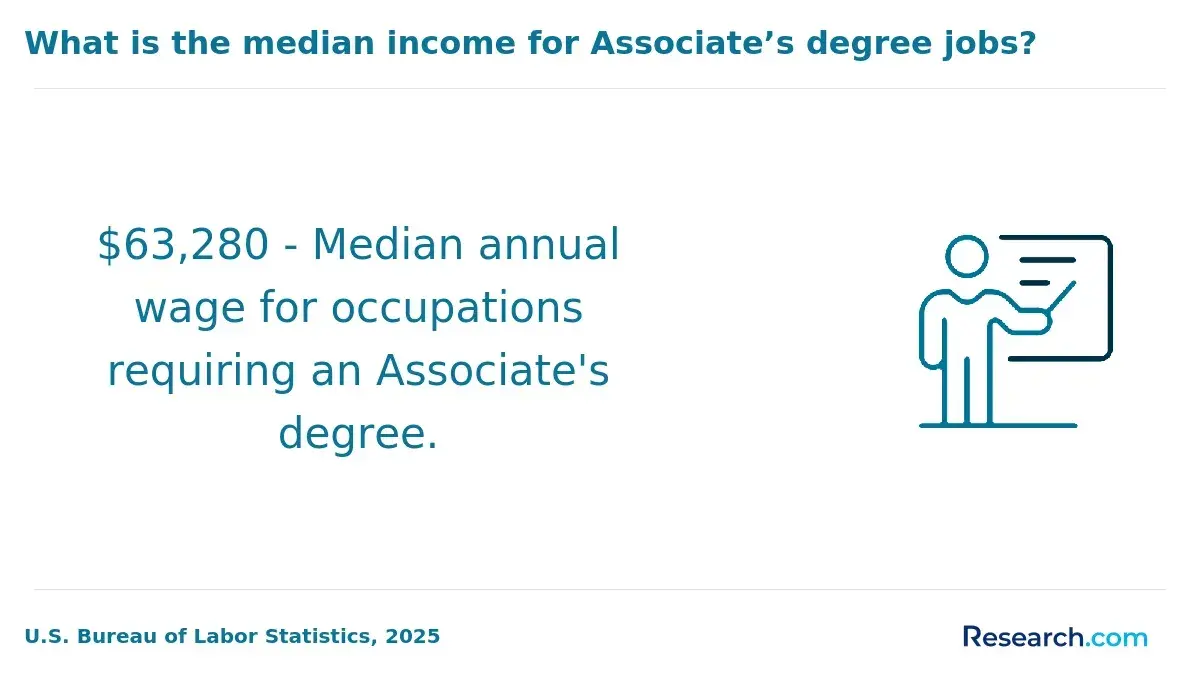
At the undergraduate level, students commonly complete general education alongside major courses. A traditional bachelor's degree usually requires about 120 credits; students with transferable college credit may finish sooner, while part-time learners may take longer. Associate degrees can provide a lower-cost entry point or transfer pathway, but they are less likely to provide the advanced research and technical preparation expected for dedicated analyst roles.
The table below shows how degree levels generally align with crime-analysis preparation. Actual job requirements vary by agency, employer, location, civil-service rules, and an applicant's prior experience.
| Degree level | Typical academic focus | Best fit | Important limitation |
| Associate degree | Foundations in criminal justice, communication, and general education | Students seeking entry-level public-safety support work or a transfer route | Usually limited depth in statistics, GIS, and advanced research |
| Bachelor's degree | Criminology, research methods, data interpretation, electives, and often a capstone | Students building broad eligibility for analyst-adjacent and public-sector roles | Technical skill depth varies greatly by program |
| Master's degree | Advanced research, evaluation, policy, intelligence, analytics, or specialization | Career changers, experienced professionals, and students targeting advanced analytical work | Higher cost does not substitute for portfolio-quality applied work |
| Doctoral degree | Original research, theory, advanced methods, and dissertation work | Future researchers, faculty members, and senior policy specialists | Usually unnecessary for operational crime-analysis positions |
Look for assessment methods that resemble the work itself: analyzing incident data, creating maps or dashboards, writing an executive brief, evaluating a program, or presenting findings. Programs that teach Excel, statistical software, GIS, SQL, Python, R, Tableau, or similar tools can be useful, but students should confirm which tools are actually taught and whether software access is included.
Artificial intelligence is increasing the importance of data verification and ethical judgment. Analysts may use automated tools to summarize information or identify patterns, but they still need to test assumptions, document methods, protect sensitive information, and avoid treating correlations as proof of causation. A rigorous program addresses privacy, bias, data governance, and responsible use of analytical technology.
The advertised per-credit tuition rate is only one part of cost. Students should calculate tuition for all required credits, then add mandatory university fees, technology fees, books, software, proctoring, residency travel, and any cost of reducing work hours for an internship. Transfer credit can substantially change the final price, but only after the institution completes an official evaluation.
College Board reported average published tuition and fees of $11,610 for in-state students at public four-year institutions in 2024-25, compared with $43,350 at private nonprofit four-year institutions. These are broad institutional averages, not the price of a particular online crime-analysis program, and they do not show net price after grants. They are useful mainly as a reminder to compare public in-state options with private nonprofit programs carefully.
The cost patterns below help students interpret a quote from an admissions office. Request the school's calculation in writing before deciding that a program is low-cost.
| Cost factor | Why it changes the total | What to ask |
| Required credits | Programs may require different numbers of major, elective, and prerequisite credits | How many credits remain after my transfer evaluation? |
| Residency status | Public universities may charge different rates for in-state, out-of-state, and online students | Does the online rate apply regardless of residence? |
| Program fees | Online learning, technology, graduation, and course fees may not appear in headline tuition | What mandatory fees apply every term? |
| Course materials | GIS, statistics, and software courses can require specialized materials or subscriptions | Which software, books, and equipment are included? |
| Time to completion | Extra terms can add fees and delay advancement to a desired role | What is the realistic part-time completion plan? |
Public nonprofit universities often provide the best published tuition value for eligible in-state students, especially at the bachelor's level. Private nonprofit universities may offer predictable online tuition, smaller cohorts, or more frequent start dates, but their sticker price can be higher. The best value is the accredited program that delivers the needed technical coursework and support at a manageable net cost, not necessarily the one with the lowest rate per credit.
Students considering a graduate credential should compare the program with their actual advancement need. A focused master's can be worthwhile when it supplies advanced methods, a recognized specialization, or a credential required for a target role. For students whose employer mainly needs a bachelor's degree plus GIS and data skills, a lower-cost undergraduate completion program and targeted technical training may have a stronger financial case. Those weighing accelerated graduate study can also review options for a quickest cheapest masters degree while confirming that the curriculum still fits a public-safety analytics goal.
Students enrolled in eligible online programs at accredited nonprofit institutions may qualify for federal financial aid. Complete the Free Application for Federal Student Aid each year, even if you expect to receive employer support or believe your income is too high for need-based grants. The application can also be used for federal loans and many state or institutional aid decisions.
For the 2024-25 award year, the maximum Federal Pell Grant was $7,395. Eligibility and actual awards depend on financial circumstances, enrollment intensity, program eligibility, and federal rules, so students should use the university's financial aid office for an individualized estimate rather than assuming they will receive the maximum.
Students should explore aid in a sequence that limits borrowing where possible. The following sources can be combined when eligibility rules allow:
- Federal Pell Grants and other federal grants for eligible undergraduate students
- State grants and tuition-assistance programs, which may have residency and enrollment requirements
- University scholarships for online, transfer, adult, military-connected, or criminal justice students
- Employer tuition assistance from public agencies, private security firms, nonprofits, or technology employers
- Veterans education benefits and military tuition programs for eligible students
- Federal Direct Loans after grants, scholarships, and employer assistance have been considered
Ask whether scholarships apply to online students, whether they require full-time enrollment, and whether a reduced course load changes aid. Students should also ask whether an accelerated format changes the financial-aid calendar. A program that looks inexpensive per term can become difficult to finance if its term structure limits how aid is disbursed.
Private loans should generally be considered only after reviewing federal options, because federal loans may offer borrower protections and repayment features not available through private lending. Compare total borrowing against a realistic early-career salary range and keep documentation of all aid offers, tuition estimates, and renewal conditions.
"Online" does not always mean self-paced. Most nonprofit university programs use scheduled terms, instructor deadlines, group assignments, and examinations. The key choice is whether the program is asynchronous, synchronous, hybrid, or a mix of formats.
Asynchronous courses let students review lectures and complete work within weekly deadlines, which can suit shift workers and caregivers. Synchronous courses require attendance at live online sessions, which can improve interaction but may conflict with rotating law-enforcement, military, emergency-services, or full-time work schedules. Hybrid programs may require periodic campus visits, while some programs include local internships or practicums.
This comparison clarifies the scheduling trade-offs students should evaluate before committing to a program.
| Format | Primary advantage | Primary trade-off | Good fit |
| Asynchronous online | Greater control over when coursework is completed | Requires strong time management and may offer less live interaction | Working adults with unpredictable schedules |
| Synchronous online | Regular real-time discussion and instructor contact | Attendance occurs at fixed times | Students who value routine and live collaboration |
| Hybrid or low-residency | Combines online access with in-person applied learning | Travel and scheduling obligations may add cost | Students who can plan for campus sessions |
| Accelerated online | Potentially faster progress through short terms | Weekly workload can be intense and aid timing may differ | Students with sufficient time and strong academic readiness |
Before enrolling, request a sample course schedule and ask how often live attendance is required. Confirm the time zone for virtual meetings, the maximum time allowed for completing the degree, whether courses are offered every term, and whether group projects require daytime availability. Students often make the mistake of choosing a program based on "100% online" language without checking these operational details.
Part-time enrollment is often the most sustainable route for professionals, even though it extends completion time. Full-time or accelerated study can make sense for students with substantial transfer credit, employer sponsorship, or the ability to reduce outside commitments. The right pace is one that allows meaningful learning, not simply the shortest advertised timeline.
Student support can determine whether an online program is manageable and professionally useful. The minimum expectation is access to advising, financial aid counseling, library services, technical support, disability accommodations, and faculty office hours. Stronger programs also provide career coaching, tutoring in quantitative subjects, writing support, internship assistance, and access to software training.
For crime analysis students, support should extend beyond general online orientation. Students may need help locating public datasets, using research databases, understanding statistics, building a portfolio, and finding local experiential opportunities. Career services should be able to explain how to present coursework without overstating it as professional agency experience.
Ask each program about the services below because they reveal whether online learners receive meaningful access rather than a separate, limited version of campus resources:
- Dedicated online academic advising and degree-planning appointments
- Live and on-demand tutoring for statistics, writing, and research methods
- Remote access to library databases, citation support, and research librarians
- Technology help available during evenings or weekends if needed
- Career advising, résumé reviews, mock interviews, and job-search guidance
- Internship or practicum coordination, including support for students outside the university's region
- Disability accommodations and accessible course materials
- Alumni, professional-networking, and public-safety employer events
Support quality is especially important for students changing careers. Someone with criminal justice experience may need more technical training in GIS or statistics; a student with analytics experience may need coaching on criminal justice terminology, public records, ethics, and agency culture. A program that can identify these gaps early is more useful than one that offers a generic orientation alone.
Students interested in behavioral and victim-focused work should distinguish crime analysis from clinical practice. A marriage and family therapy programs online pathway prepares for a very different professional and licensure route, often including supervised clinical requirements. Crime analysis programs do not ordinarily prepare graduates for therapist licensure.
They can prepare graduates for relevant careers when the program develops demonstrable analytical skills and the student builds a credible portfolio. Crime analysts commonly examine incident reports, calls for service, arrest data, geographic patterns, repeat locations, temporal trends, and the results of public-safety strategies. They may work for police departments, sheriff's offices, state agencies, fusion centers, prosecutors' offices, research organizations, universities, nonprofits, or private-sector security teams.
There is no single Bureau of Labor Statistics occupation titled "crime analyst," so salary and growth figures should not be presented as if they describe every crime-analysis job. Closely related analytical occupations can provide context. The Bureau of Labor Statistics projects employment of operations research analysts to grow 23% from 2023 to 2033, much faster than the average for all occupations. That outlook reflects broader demand for analytical decision-making, but public-safety agency hiring depends on local budgets, civil-service rules, background checks, and job-specific qualifications.
The table below connects common roles with the preparation employers may seek. It is a planning tool, not a guarantee that a degree alone meets every hiring requirement.
| Potential role | Typical responsibilities | Useful preparation | Common additional consideration |
| Crime analyst | Identifies patterns, prepares bulletins, maps incidents, and briefs decision-makers | Criminology, statistics, GIS, report writing, and applied projects | Agency software knowledge and local public-safety experience can help |
| Intelligence analyst | Organizes information, assesses threats, and supports investigations or operations | Research, critical thinking, intelligence studies, ethics, and communication | Background screening and clearance eligibility may apply |
| Research or policy analyst | Evaluates programs, analyzes data, and develops evidence-based recommendations | Research design, quantitative analysis, policy, and technical writing | A master's degree may be preferred for some roles |
| GIS or public-safety data specialist | Builds maps, manages spatial data, and produces visual analysis | GIS, databases, spatial analysis, and visualization | Employers may expect a technical portfolio |
| Private-sector security analyst | Assesses incidents, risks, trends, and protective strategies | Data analysis, investigations, risk assessment, and communication | Industry knowledge may be as important as major title |
For the best career preparation, choose courses that produce artifacts you can discuss in an interview: a de-identified crime map, a research memo, a dashboard, a program-evaluation report, or a clear explanation of a statistical finding. Do not use restricted agency data in a public portfolio. Instead, use open data, simulated datasets, or coursework authorized by the institution.
A degree is most likely to pay off when it aligns with a realistic target occupation and a plan for gaining experience. Students seeking broader earning comparisons can review highest paying online degrees, but should remember that high salary rankings do not replace the specialized public-safety, analytical, and ethical preparation required for crime-analysis work.
Yes. An institutionally accredited online bachelor's degree can prepare students to apply to graduate school when it includes a solid academic record, appropriate prerequisites, research methods, writing-intensive coursework, and faculty who can provide informed recommendations. Graduate admissions offices typically evaluate the whole application rather than treating online delivery as a disqualifier.
Students considering a master's degree should preserve evidence of academic and analytical readiness. Useful preparation includes quantitative methods, statistics, research design, criminological theory, data visualization, and a capstone or substantial research paper. Some graduate programs may request a statement of purpose, résumé, writing sample, official transcripts, and letters of recommendation; requirements vary by university.
Choose the undergraduate program's electives strategically if a graduate degree is likely. The most helpful academic building blocks are often:
- Statistics or quantitative social-science methods
- Research design and program evaluation
- Criminology, criminal justice policy, or sociology
- GIS, spatial analysis, or data visualization
- Ethics, privacy, civil liberties, and public administration
- Technical writing and oral presentation
A master's degree is most appropriate when it advances a defined goal: deeper analytical expertise, eligibility for a target job, preparation for research or policy work, or a bridge to doctoral study. A doctoral degree generally makes sense for people aiming at university teaching, original research, high-level policy analysis, or specialized leadership - not simply because a bachelor's degree feels insufficient.
Students interested in behavioral research may find that a psychology degree online offers complementary preparation in human behavior and research methods. It is not a substitute for crime-analysis training, but psychology electives can strengthen a student's understanding of victimization, decision-making, interviews, or behavioral research when paired with quantitative and criminal justice coursework.
How Should Students Compare the Best Online Crime Analysis Degree Programs at Nonprofit Universities?
The best program is the one that meets a student's specific academic, financial, scheduling, and career needs. Because exact crime-analysis degree titles are uncommon, begin with a shortlist of accredited nonprofit universities offering online criminal justice, criminology, intelligence, public administration, GIS, or analytics programs. Then compare the actual course sequence rather than relying on the major name.
These program types illustrate the choices students may encounter. Availability, tuition, admission standards, concentrations, and online requirements can change, so applicants should confirm details directly with each university before applying.
| Program pathway at a nonprofit university | Typical strength | Best for | Question to verify |
| Public university online criminal justice or criminology bachelor's | Broad foundation and potential in-state tuition value | First-time or transfer students seeking entry-level preparation | Are statistics, GIS, and research-methods courses required or available online? |
| Private nonprofit online criminal justice bachelor's completion program | May offer frequent starts and adult-learner support | Students transferring substantial prior college credit | What is the final net cost after all transfer credits and fees? |
| Online criminal justice or criminology master's | Advanced policy, research, leadership, or intelligence coursework | Professionals seeking specialization or advancement | Does the curriculum include applied analytics rather than only administration? |
| Online GIS, data analytics, or public administration program with justice electives | Deeper technical or policy skill development | Students targeting mapping, data, or research-heavy roles | How will the program connect technical training to crime and public-safety applications? |
Create a final shortlist of three to five programs and compare them using the same criteria. This process is more reliable than choosing based solely on rankings, nonprofit status, a short completion claim, or a low advertised tuition figure:
- Define a target role and identify whether it normally calls for an associate, bachelor's, or master's degree.
- Verify institutional accreditation and confirm that the exact online degree or concentration is currently available.
- Map required courses against needed skills in statistics, GIS, research, ethics, databases, and communication.
- Request a transfer-credit evaluation and a written estimate of tuition, fees, materials, and expected completion time.
- Check whether classes are asynchronous, whether live meetings occur, and whether internships, residencies, or proctored exams are required.
- Ask about online advising, technical support, tutoring, career services, and local internship assistance.
- Review published retention, graduation, and student-outcome information with the understanding that institutional data may not represent one online major.
- Compare aid offers and borrowing needs against a realistic career plan, not a guaranteed salary expectation.
Common mistakes include assuming every criminal justice program teaches crime mapping, overlooking a required in-person experience, comparing tuition without fees, and treating a low price as proof of value. Another mistake is selecting a master's degree before confirming that it is needed for the desired role. If a program cannot clearly explain its curriculum, total cost, online structure, and career support, keep it off the final shortlist.
For many students, the strongest overall value will be an accredited public nonprofit program with affordable net cost, transfer-friendly policies, asynchronous access, and verified analytics coursework. For others, a private nonprofit program with stronger support or scheduling may justify a higher price. The deciding factor should be evidence that the program helps you develop the skills and portfolio your target employer values.
Other Things You Should Know About Crime Analysis
No. Crime analysis focuses on patterns, trends, locations, timing, and data that inform prevention and deployment decisions. Forensic science focuses on collecting and analyzing physical evidence, such as DNA, fingerprints, toxicology, or trace evidence. The education and laboratory requirements can be very different.
Not always. Many agencies hire civilian analysts, although requirements vary. Prior law-enforcement experience can be helpful in some settings, but analytical skills, writing ability, GIS knowledge, research experience, and the ability to pass applicable background screening may be more directly relevant.
Most nonprofit online crime analysis programs require statistics, research methods, and quantitative reasoning. Many also expect college algebra or pre-calculus before upper-division coursework. Some schools require 120 total credits for graduation, with a set number of major credits in data analysis, criminal justice, and applied research.
Some research, data, mapping, and reporting tasks can be performed remotely, but many public-safety employers set their own security and access rules. Roles involving protected law-enforcement data may require on-site work, secure networks, or restricted access. Ask prospective employers about remote-work policies rather than assuming an online degree leads to remote employment.
- Masters in Crime Analysis | Tiffin University https://go.tiffin.edu/masters-programs/master-science-criminal-justice/crime-analysis/
- Online Classes https://www.iaca.net/online-classes
- Top Online Criminal Justice Degree and Other FBI Degree Programs https://www.fbiagentedu.org/online-degrees/
- CICA https://www.ialeia.org/cica.php
- Schools With Crime Analysis Degrees - AnalyticsDegrees.org https://www.analyticsdegrees.org/specialties/crime-analysis/
- Crime & Intelligence Analysis Programs - Degrees & Certification https://www.forensicscolleges.com/programs/crime-intelligence-analysis