
2027 Best Online Associate Degrees for In-Demand Careers

Co-Founder and Chief Data Scientist
Choosing an online associate degree is easier when you start with the job you want - not a list of popular majors. The U.S. Bureau of Labor Statistics (BLS) reports a 2024 median wage of $93,600 for registered nurses, but an associate degree alone does not confer a nursing license. That distinction matters across career-focused programs: coursework, hands-on requirements, and entry-level opportunities vary widely.
This guide compares six fields, explains their career and transfer trade-offs, and shows you what to verify before paying for a program.
Key Things You Should Know
- For direct career preparation, compare healthcare, IT, and career-focused business programs against the actual qualifications in local job postings; psychology and pre-nursing often work better as steps toward further education.
- "Online" may still mean local clinical hours, labs, internships, scheduled classes, or proctored exams. Ask for the complete attendance requirements before enrolling.
- College Board reports average published in-district tuition and fees of $4,050 at public two-year colleges for 2024-25. Compare your own total price - including fees and required in-person work - not just the advertised tuition rate.
Top 10 Best Online Associate Degrees for In-Demand Careers
Business Programs
Online associate degrees in accounting, business administration, and supply chain operations can support entry-level office, billing, purchasing, and customer-operations work. Look for spreadsheet, accounting-software, and communication coursework that matches local openings. An Associate of Applied Science (AAS) may emphasize employment skills; an Associate of Arts (AA) or Associate of Science (AS) may fit a planned bachelor's transfer. Neither degree normally qualifies someone for a management role without relevant experience. Ask whether an internship is required and whether its hours can be completed near home.
Healthcare Programs
Health information, medical coding, and medical assisting programs lead to different kinds of work. Health information coursework may be available online, while medical assisting can require in-person skills practice or an externship. Coding employers may prefer a separate professional certification; a degree does not automatically award one. Compare programs by their required software, supervised experience, certification preparation, and local employer requirements. Choose this field if you want patient-facing or healthcare operations work, but decide which before enrolling: the training is not interchangeable.
Information Technology Programs
IT support, networking, and cybersecurity associate programs can provide a route into help-desk or junior technical work. The strongest fit depends on demonstrated skills: check for hands-on labs, troubleshooting practice, and opportunities to build a portfolio. Some employers value industry certifications alongside a degree. Cybersecurity coursework is useful, but a cybersecurity title does not make a first job in security certain; support or networking experience may be a more realistic entry point. Confirm whether online labs require specific equipment or scheduled access.
Nursing / Pre-Nursing Programs
An associate degree in nursing (ADN) prepares students for the registered nurse licensing pathway, but required clinical placements make it unsuitable for someone who needs study to be entirely remote. Graduates must also meet state requirements and pass the NCLEX-RN to become licensed. Pre-nursing is different: it generally covers prerequisites or transferable coursework, not nursing licensure. Nursing admission can be selective even at a college with broad admission. Before applying, confirm clinical locations, program approval, accreditation where relevant, and eligibility in the state where you intend to practice.
Criminal Justice Programs
An online criminal justice associate degree can introduce legal processes, report writing, and public-safety systems. It may suit applicants to certain security, corrections, or administrative roles, but police hiring and training requirements are set by agencies and states; a degree alone is not a police credential. Compare the curriculum with actual job qualifications and ask about background-check requirements. If your intended position does not require college credit, an employer-sponsored academy or another direct training route may be more efficient.
Psychology / Counseling Programs
Psychology and counseling associate degrees are primarily foundations for transfer or supervised entry-level human-services work. They do not qualify graduates to practice independently as counselors or psychologists; those careers require substantially more education and state licensure. Check whether introductory psychology, statistics, and general education credits will apply to your intended bachelor's program. Choose this path if you have a transfer plan or a specific support role in mind, not because the degree title implies a counseling license.
What Are the Best Online Associate Degrees for In-Demand Careers?
The best field is the one with an achievable route from its actual online requirements to your target job. For direct workforce entry, IT support and selected business or health information programs may offer fewer location constraints than clinical programs. Nursing offers a defined licensed pathway, but clinical access and selective admission are decisive. Psychology is usually strongest when paired with a bachelor's transfer plan.
This comparison separates likely first steps from longer-term goals. Use it to narrow your choices before comparing individual colleges.
| Field | Best fit | Trade-off to verify |
| Business | Office or operations roles; possible bachelor's transfer | Whether the curriculum teaches software and skills employers request |
| Healthcare | Health records, coding, or patient-support pathways | Certification preferences and in-person requirements |
| IT | Technical support and a foundation for specialization | Lab access, equipment costs, and entry-level experience |
| Nursing | A route toward RN licensure | Selective admission, clinical placements, and state eligibility |
| Criminal justice | Public-safety or justice-system preparation | Agency-specific hiring and training rules |
| Psychology | Bachelor's transfer or defined support work | Additional education needed for licensed practice |
Use career earnings as context, not as a promise from a major. Comparisons of the highest paid degrees can help if you plan to transfer, but the associate program must still deliver credits that apply to that next degree.
Which Careers Can You Start With an Online Associate Degree?
Possible starting roles include help-desk technician, office or billing assistant, medical records support worker, and certain human-services support positions. The appropriate credential depends on the employer: a degree may help, while software skills, certification, experience, or a background check may also matter. Medical assistants can enter through different education routes, and roles involving direct patient care may require supervised practice.
For nursing, distinguish entering a pathway from being qualified to work: ADN study, clinical completion, examination, and state licensure are separate milestones. For counseling and psychology, an associate degree is generally a starting point rather than a credential for independent practice. Read several local job postings before selecting a major; their required and preferred qualifications provide a more useful target than a program's list of possible careers.
How Much Do Online Associate Degree Graduates Earn?
There is no single salary for online associate degree graduates. BLS occupational wages describe everyone employed in an occupation, across education levels and experience; they are not measured earnings for graduates of a particular program. For example, BLS reports a 2024 median wage of $44,200 for medical assistants. That figure helps you evaluate a potential occupation, but it does not show what a new graduate will earn or whether an associate degree is required for a particular opening.
When comparing return on investment, use the entry-level pay shown in jobs you could realistically obtain, then weigh it against your total education cost and time away from paid work. Do not apply the RN median cited earlier to pre-nursing students or unlicensed ADN graduates.
How Long Does an Online Associate Degree Take to Complete?
Many associate degrees require roughly 60 semester credits and are designed around about two years of full-time study. Your timeline may be longer with part-time enrollment, prerequisites, limited course availability, or clinical scheduling; accepted transfer credits may shorten it. Ask the college for a term-by-term plan based on your transcript and intended course load.
Short classes are not the same as a short degree. If you are considering 5 week college courses online, check how many courses you can take at once, when required classes run, and whether their credits apply to the associate degree. An accelerated calendar can make each week more demanding without reducing the total credits required.
How Much Do Online Associate Degree Programs Cost?
Published tuition is only one part of the cost. Add mandatory online and program fees, books, software, equipment, exam fees, travel, and any clinical-related expenses. Residency rules can also change tuition substantially. Request a written estimate for the credits you have left to complete, rather than multiplying an advertised per-credit price by a typical degree length.
Compare each school's estimated total with your grants, scholarships, employer assistance, and potential borrowing. Confirm institutional eligibility for federal student aid and complete the FAFSA if you may qualify. A less expensive program is not a bargain if required credits will not transfer or the program cannot support your intended credential.
What Accreditation Should an Online Associate Degree Have?
Start with institutional accreditation: verify the college and its current accreditor through the U.S. Department of Education's accreditation database or the accreditor's own directory. Institutional accreditation matters for federal aid eligibility and can affect transfer, although it does not guarantee that another college will accept every credit.
Next, check whether your target occupation or next school expects programmatic accreditation or a particular approval. This is especially important in nursing and some allied-health fields. Ask the receiving college or relevant state board directly; a general statement that a school is accredited is not a substitute for checking the specific program.
Do Online Associate Degrees Meet Licensing and Certification Requirements?
Not necessarily. An online degree can provide the required education without itself granting a license or certification. Nursing applicants, for example, must confirm that the specific program meets the education requirements of the state where they plan to seek RN licensure, then complete the required examination and application process. Clinical placements may have separate location and eligibility rules.
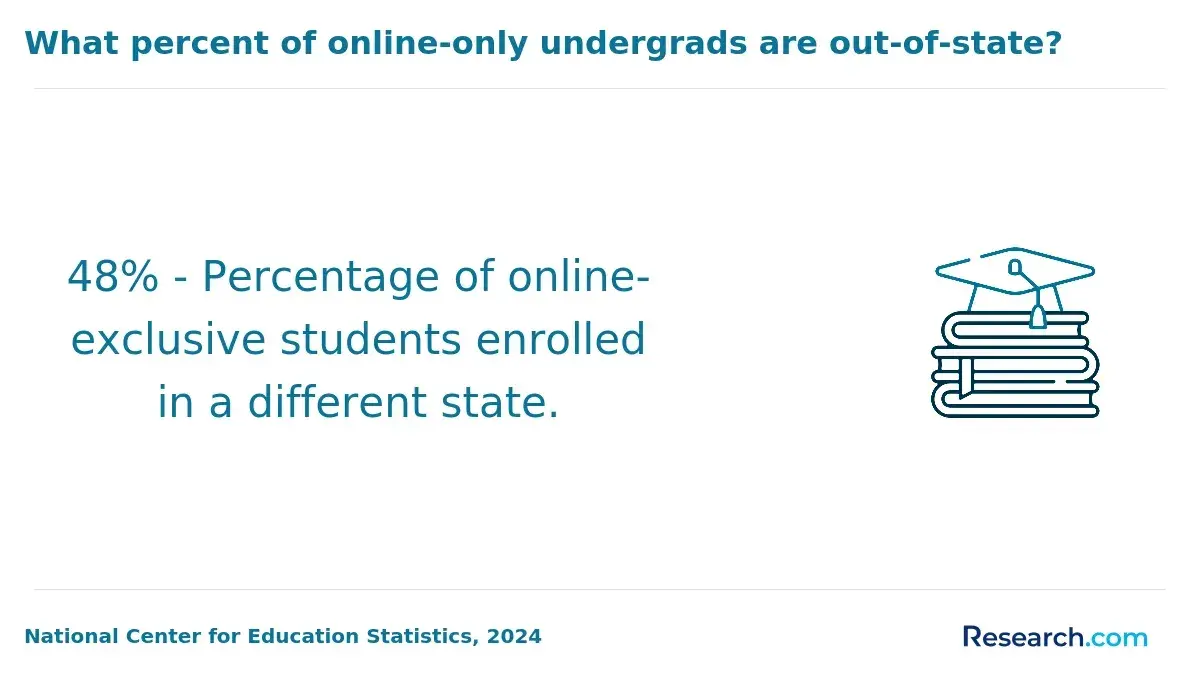
For coding, IT, or other credential-oriented work, ask whether an exam is optional, employer-preferred, or required for the role you want - and whether it is included in tuition. Obtain written guidance from the school and verify regulated-occupation requirements with the relevant state board before enrolling, particularly if you live outside the college's state.
What Do You Study in an Online Associate Degree Program?
Most programs combine general education with courses in a major. An AA or AS may prioritize courses intended for bachelor's transfer, while an AAS often emphasizes occupation-specific skills; the letters alone do not prove how credits will apply elsewhere. Depending on the field, major coursework might cover accounting and spreadsheets, networking labs, medical terminology, patient care, or introductory psychology. Internships, labs, practicums, and clinicals may be required even when lectures are online.
If licensed counseling or psychology practice is your ultimate goal, map the full education pathway before choosing associate courses. Even a comparison of the cheapest doctorate degree options cannot replace checking which bachelor's and graduate credentials your intended profession and state actually require.
How Do You Choose a Reputable Online Associate Degree Program?
Begin with a target occupation and compare programs against its real entry requirements. Then request a degree audit, complete cost estimate, and written explanation of online and in-person obligations. These checks help you avoid three costly mistakes: assuming "online" means no scheduled or local work, assuming accreditation guarantees transfer, and treating an occupational median wage as a graduate salary.
Use these questions when speaking with admissions and program staff:
- Which requirements must I complete on campus, at a clinical site, or at scheduled times?
- Which of my existing credits will satisfy specific degree requirements, and which required courses remain?
- What will I pay in tuition, mandatory fees, equipment, travel, and required exams?
- Does this program meet the education requirements for my intended credential and state, and how can I verify that independently?
Flexibility also depends on deadlines and course availability, not just recorded lectures. If independent scheduling is essential, compare the actual pacing rules with those described in a self paced bachelor's degree pathway before committing to either option. Choose the program whose requirements you can complete and whose credits or skills move you toward a specific next step.
Other Things You Should Know About
Some programs allow online completion of academic coursework. Nursing and other hands-on fields generally require in-person clinical or practical work. Confirm every required component with the college.
The best choice matches entry-level openings you can qualify for locally. IT support, health information, and business operations are worth comparing, but required skills and credentials differ by employer.
Employers can value a degree from an appropriately accredited college, but they also evaluate relevant skills and experience. Check whether the program includes the practice or credentials your target role requires.
Choose based on where the credits lead. AA and AS programs often support transfer; AAS programs often focus on workforce preparation. Verify the specific curriculum and any transfer agreement before deciding.
References
- Cost of Attendance (Budget) | 2026-2027 Federal Student Aid Handbook https://fsapartners.ed.gov/knowledge-center/fsa-handbook/2026-2027/vol3/ch2-cost-attendance-budget
- Get a Professional Certification or License | Georgia.gov https://georgia.gov/get-professional-certification-or-license
- Our Online Campus | CHCP https://www.chcp.edu/locations/online-school/
- Articulation Agreements | Metro State University https://www.metrostate.edu/apply/pathways/articulation-agreements
- The Overlooked Value of Certificates and Associate's Degrees | georgetown.edu https://cew.georgetown.edu/cew-reports/subba/
- What Is an Accredited University? Understanding Accreditation | National University https://www.nu.edu/blog/what-is-an-accredited-university/
- Out of State Licensure and Certification | Virginia Peninsula Community College https://www.vpcc.edu/about/oap/policy/out-of-state-licensure-and-certification/
- Degree Audit and Transfer Credit - Registration and Records https://registrar.ncsu.edu/operations/degree-audit-and-transfer-credit/
- Why Is Accreditation Important? | ACE Blog https://ace.edu/blog/why-is-accreditation-important/
- Complying with Professional Licensure Requirements | wiche.edu https://wcetsan.wiche.edu/resources/complying-professional-licensure-requirements-beginners-checklist


