
2027 Best Online Associate Degree Programs for Flexible Careers

Co-Founder and Chief Data Scientist
Choosing an online associate degree is not just about finding classes you can take from home. You need a program whose schedule fits your life and whose credential fits your career goal. Cost matters, too: the College Board reported average published tuition and fees of $4,050 for public two-year, in-district students in 2024-25, before books and other expenses.
This guide compares six fields, explains where "online" may still mean in-person work, and shows working adults and other busy students what to check before enrolling.
Key Things You Should Know
- For schedule flexibility, business and many information technology programs are strong starting points; nursing usually requires scheduled, in-person clinical training.
- Many associate degrees require about 60 credits, but part-time enrollment, course sequencing, and accepted transfer credit change the time to completion.
- A degree does not guarantee remote work or licensure. Check the program's delivery requirements, state eligibility, and the qualifications for your target job before applying.
Top 10 Best Online Associate Degree Programs for Flexible Careers - Top 10 Programs
Business Programs
Online business administration and accounting associate degrees can suit students who need asynchronous coursework and want options in office operations, customer support, or bookkeeping. An Associate of Arts (AA) or Associate of Science (AS) may emphasize transfer to a bachelor's program; an Associate of Applied Science (AAS) may emphasize job-ready software and processes. Neither automatically qualifies a graduate for management. Compare required group projects, live meetings, spreadsheet training, and whether courses count toward a planned bachelor's degree.
Healthcare Programs
Health information technology, medical coding, and healthcare administration support can offer more online coursework than patient-facing clinical majors. Work may involve records systems, insurance processes, and privacy rules; some roles permit remote work after training, but employers set their own requirements. Check whether internships, certification preparation, or local placements are required. If your goal is direct patient care, verify the exact clinical program instead of assuming a general healthcare associate degree qualifies you.
Information Technology Programs
IT support, networking, and cybersecurity associate programs often pair online classes with virtual labs. They can prepare students to seek entry-level support roles, while security and advanced infrastructure jobs commonly require experience or additional credentials. Ask whether labs need particular equipment, scheduled access, or proctored exams. An AAS may focus on employment; an AS with a transfer agreement may be better if you plan to pursue a bachelor's degree. Some IT jobs are remote, but many support roles require on-site work.
Nursing / Pre-Nursing Programs
An online pre-nursing associate pathway may deliver general education and science theory online, but laboratory requirements can limit flexibility. An associate degree in nursing (ADN) typically combines coursework with supervised, in-person clinical rotations; admission may be selective even at an open-admission college. Graduates must meet state requirements and pass the NCLEX-RN to become registered nurses. Confirm clinical-site arrangements, shift schedules, state eligibility, and nursing-program approval before treating any ADN as a workable online option.
Criminal Justice Programs
Online criminal justice associate degrees cover courts, corrections, and public safety systems and can suit students seeking a transfer pathway or an entry-level administrative role. They do not by themselves qualify someone to become a police officer; agencies may require academy training, screening, and other qualifications. Public safety work is often location-dependent and scheduled by shifts, so online study should not be mistaken for a flexible future job. Check whether electives match the agency or bachelor's program you have in mind.
Psychology / Counseling Programs
An online psychology associate degree generally provides a transfer foundation, not a license to practice counseling or psychology. It can be useful if you plan to continue toward a bachelor's and, for many clinical careers, graduate education. Some entry-level human-services support jobs may be accessible with an associate degree, depending on the employer and state. Compare transfer agreements carefully: a convenient AAS may leave more bachelor's requirements unmet than an AA or AS designed for transfer.
What are the best online associate degrees for flexible careers?
There is no single best field for everyone. For students prioritizing control over study hours, business, IT, and nonclinical healthcare are sensible first comparisons. Nursing can lead to a defined licensed occupation but offers less control over clinical schedules. Psychology is usually a better fit for someone committed to further study than someone seeking an immediate counseling role.
This comparison separates coursework flexibility from career flexibility. Individual schools may impose different attendance rules within the same field.
| Field | Potential schedule advantage | Trade-off to investigate |
| Business | Many subjects can be taught asynchronously | Some courses require live teamwork; management usually requires experience |
| Nonclinical healthcare | Records and administrative coursework may be online | Internship and certification requirements vary |
| IT | Virtual labs can support study outside work hours | Equipment, exams, and eventual jobs may require on-site time |
| Nursing or pre-nursing | Some theory courses may be online | Labs and clinical rotations have fixed, in-person requirements |
| Criminal justice | Academic coursework may be asynchronous | Many target occupations require separate training and shift work |
| Psychology | Transfer-focused coursework may fit part-time study | Licensed counseling requires substantially more education |
Start with the job you want, then choose the credential that moves you toward it. If you are still comparing fields, an overview of the best college majors can help you frame the broader decision - but verify associate-level entry routes separately.
How do you choose an accredited online associate degree program?
Choose a program by checking accreditation, actual attendance requirements, and fit with your next step - not by relying on its "online" label. Institutional accreditation matters for educational quality, federal financial aid eligibility, and transfer review. Program-specific approval or accreditation may also matter in nursing and some allied-health fields; confirm requirements with the relevant state board or credentialing body.
Use these checks when comparing schools so that a convenient schedule does not hide a barrier to graduation or employment:
- Confirm the institution's current accreditation and, where relevant, the major's program approval or accreditation.
- Request a term-by-term course plan showing live sessions, exam rules, labs, placements, and any campus visits.
- If you intend to transfer, ask the destination college which credits satisfy requirements in your intended major, not merely which credits it accepts.
- Ask when required courses run, whether part-time students can stay on sequence, and what online advising and tutoring hours are available.
A red flag is a promise that a degree will qualify you for licensure without identifying the applicable state requirements.
How long do online associate degrees take and how much do they cost?
Many associate programs require roughly 60 semester credits and can take about two years with full-time enrollment. Part-time study commonly takes longer; prerequisites, limited course offerings, and clinical placement availability can extend the timeline. Shorter course terms do not necessarily shorten the entire degree. Previously earned credit can reduce remaining requirements only after the school evaluates it.
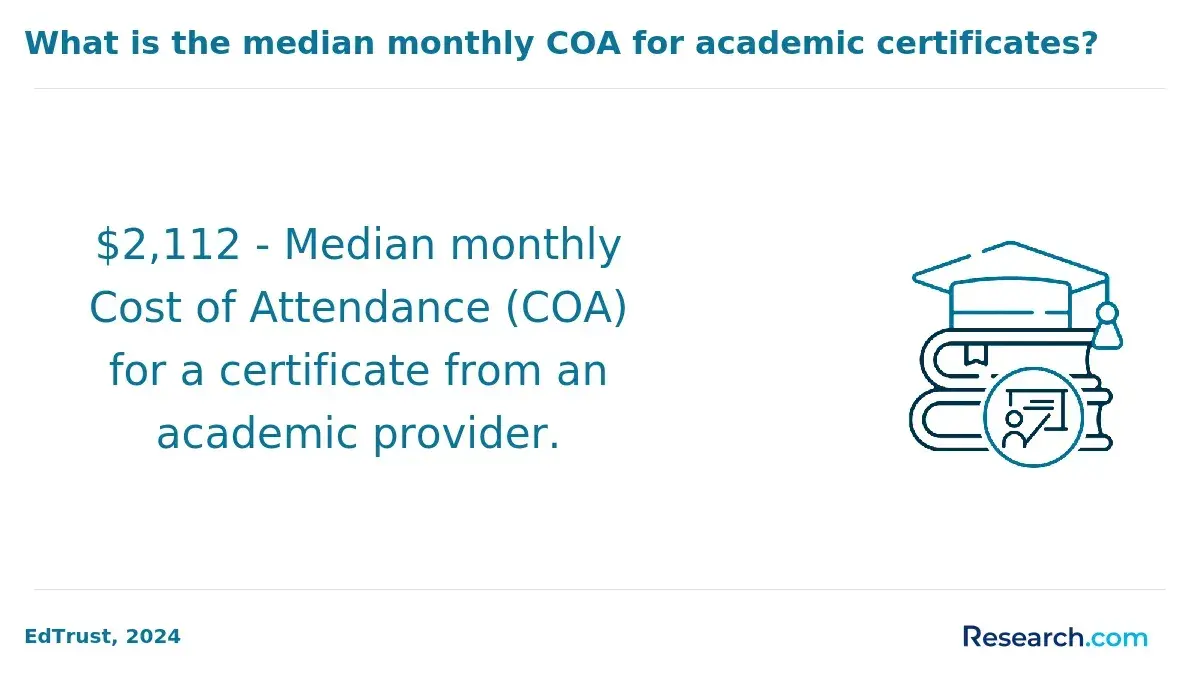
The College Board's 2024-25 average of $4,050 in published annual tuition and fees for public two-year, in-district students is a price benchmark, not a program quote. Out-of-district or private tuition, books, technology charges, lab supplies, travel to placements, and additional terms can change the total substantially. Ask each college for a cost estimate based on your residency, course load, and remaining credits. Complete the FAFSA to determine potential eligibility for federal aid, and ask about state grants, scholarships, employer assistance, and payment plans.
If you are asking what are the cheapest online colleges, compare estimated total completion cost alongside tuition. A lower per-credit price is not a bargain if required courses are hard to schedule or travel costs are high.
What admission requirements apply to online associate degree programs?
Applicants typically need a high school diploma or equivalent and must submit an application and prior transcripts. Colleges may use placement measures or previous coursework to determine starting classes; requirements for standardized tests vary. Transfer applicants should request a credit evaluation before assuming earlier courses will count toward the major.
Admission to the college is not always admission to the major. Nursing and other clinical programs may require prerequisite sciences, a minimum GPA, an entrance assessment, background checks, or proof of immunizations. Ask whether these are requirements to apply or conditions to complete a placement. Application fees are another cost to compare; a free online college application can lower the cost of exploring options, but it does not establish that a program meets your career requirements.
What coursework do online associate degree programs typically include?
Associate degrees usually combine general education - such as writing, math, and communication - with courses in a major. An AA or AS often includes coursework intended for transfer, while an AAS often emphasizes occupational skills. Those labels are useful clues, not guarantees: review the actual catalog and transfer agreement.
Business students may study accounting and spreadsheets; IT students may use virtual networking labs; healthcare students may study records systems or anatomy. Nursing adds science prerequisites and supervised clinical practice. Ask for a sample term-by-term plan, particularly if a required class is offered only at certain times or a lab, internship, or practicum must be completed locally. That plan is more useful for judging flexibility than a list of courses alone.
How do online associate degrees compare with campus-based programs?
Online and campus-based associate degrees can cover comparable academic material, but they place different demands on a student's week. Asynchronous courses allow students to access lessons at different times while still meeting deadlines. Synchronous courses require attendance at scheduled times. Hybrid programs combine online work with in-person activities.
For a working student, the deciding factor is often control over attendance time, not simply where lectures appear. Compare the formats against your work hours and access to equipment.
| Format | Potential advantage | Constraint |
| Asynchronous online | Choice of when to study between deadlines | Requires self-management; exams or placements may still be scheduled |
| Scheduled online | Real-time access to instructors and classmates | Live meetings may conflict with work or caregiving |
| Hybrid | Remote coursework plus hands-on instruction | Travel and placement times must fit your schedule |
| Campus-based | In-person access to labs and support | Commuting and fixed class times may reduce flexibility |
Neither format guarantees a better job outcome. Choose the one in which you can reliably complete every required component, especially if your field involves hands-on training.
What careers can you pursue with an online associate degree?
Career options depend on the specific major and employer requirements. Business graduates might seek office or bookkeeping support work; IT graduates might seek help-desk roles; health information graduates might pursue medical records work. An ADN can lead toward registered nursing only after the graduate satisfies state licensure requirements. Criminal justice and psychology associate degrees can support entry-level administrative or human-services roles, but many intended professional positions require further training or education.
Match job postings in your area to program coursework before enrolling. Note which positions require a bachelor's degree, certification, experience, or on-site work. If your goal is a licensed counseling career or a senior cybersecurity role, treat the associate degree as one stage of a longer pathway rather than the final qualification.
What salaries and job outlooks can graduates expect?
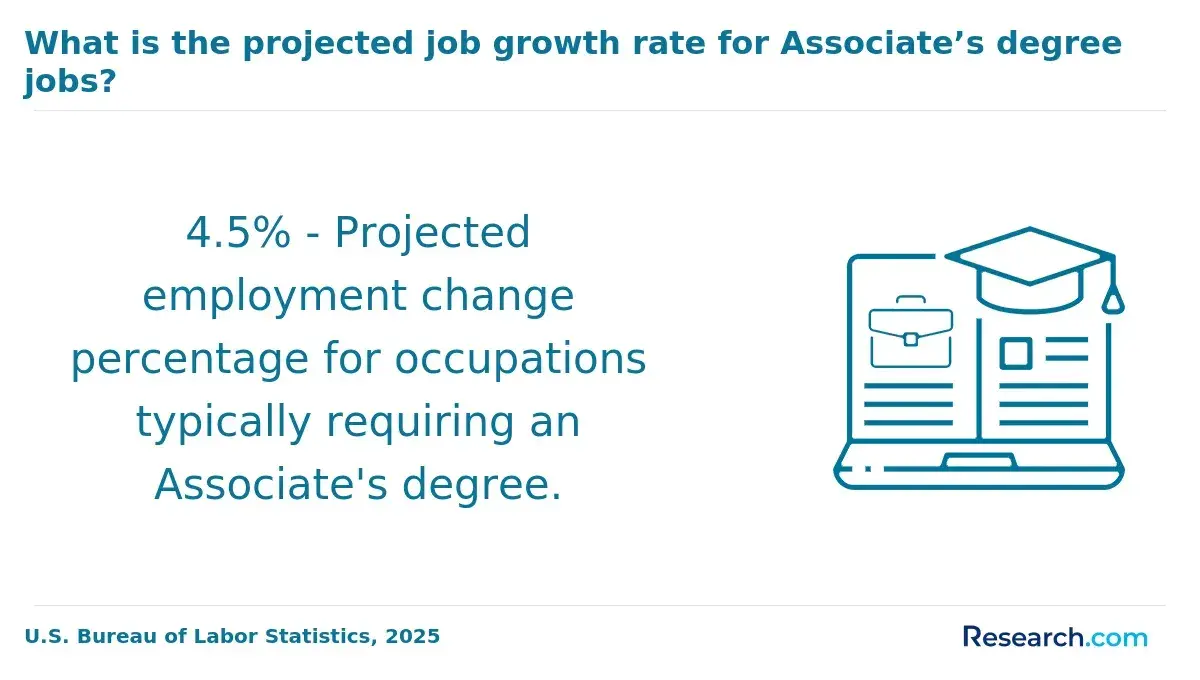
Use occupational wages as context, not a forecast of what associate degree graduates will earn. The U.S. Bureau of Labor Statistics reported a median annual wage of $93,600 for registered nurses in May 2024 and projected 5% employment growth for the occupation from 2024 to 2034. Those figures cover registered nurses across education and experience levels; an ADN alone does not authorize practice without licensure.
Pay and hiring prospects for business support, IT, healthcare administration, public safety, and human-services jobs differ by occupation and location. Automation may change routine tasks, while employers may favor applicants with relevant software skills, credentials, or experience. Compare the BLS outlook for the exact job title you want, then read local postings. Lists of the most profitable majors can broaden your research, but they should not be treated as salary estimates for associate degree holders.
Which certifications or licenses may careers require after graduation?
Graduation and professional eligibility are separate milestones. Registered nurses must meet state board requirements and pass the NCLEX-RN. Some health information or coding jobs may prefer or require a particular certification, depending on the employer. IT certifications can help document specific skills, but their value depends on the role. Police agencies set hiring and academy requirements that a criminal justice degree does not replace. Licensed counselors and psychologists generally need graduate education and state licensure.
Before paying for a program or exam, identify your target occupation's requirements in the state where you plan to work. Ask the college whether its curriculum meets them and what additional steps graduates must complete. This is especially important for online students who live outside the college's state.
Other Things You Should Know About
Some programs allow all academic coursework online. Others require campus labs, local placements, clinical rotations, or scheduled exams. Check the requirements for the specific major.
Asynchronous business, IT, and some nonclinical healthcare programs are worth comparing first. The best fit depends on required meeting times, course availability, and your career goal.
It may, but acceptance of credits does not mean they will fulfill your intended major's requirements. Get a course-level transfer plan from the destination college.
It can be if the program fits your schedule and its total cost, credential, and career or transfer pathway meet your goal. Verify those points before committing, particularly for licensed occupations.
References
- Understanding College Costs | Federal Student Aid https://studentaid.gov/resources/prepare-for-college/students/choosing-schools/consider-costs
- Transfer pathways | Minnesota MyHigherEd https://myhighered.mn.gov/transfer-students/transfer-pathways
- Industry-Recognized Credentials Guide | Ohio Department of Education and Workforce https://education.ohio.gov/Topics/Ohio-s-Graduation-Requirements/Contacts-and-Resources/Industry-Recognized-Credentials/Industry-Recognized-Credentials-Guide
- Cost of Attendance (Budget) | 2025-2026 Federal Student Aid Handbook https://fsapartners.ed.gov/knowledge-center/fsa-handbook/2025-2026/vol3/ch2-cost-attendance-budget
- Transfer Degrees | Colorado Department of Higher Education Home https://cdhe.colorado.gov/transfer-degrees
- Will I need a license or certification for my job?: Career Outlook | bls.gov https://www.bls.gov/careeroutlook/2016/article/will-i-need-a-license-or-certification.htm
- Health Profession Student Clinical Training Standards - Oregon.gov https://www.oregon.gov/oha/hpa/hp/pages/sct.aspx
- Clinical Information - Nursing Students - UW-Madison https://students.nursing.wisc.edu/clinical-information/
- How Long Does It Take to Finish an Online Degree? | NMSU Global Campus https://global.nmsu.edu/blog/general/how-long-does-it-take-to-finish-an-online-degree/
- Understanding Internships, Practicums, and Clinicals | FNU https://www.fnu.edu/internships-practicums-clinicals-explained/


