2027 Best Doctoral Programs for Work-Life Balance

Co-Founder and Chief Data Scientist
A doctorate can advance your work, but the wrong schedule can overwhelm it. For working professionals, parents, and caregivers, the best doctoral program is one whose coursework, research, and required placements fit a sustainable weekly routine. The stakes are substantial: the U.S. Bureau of Labor Statistics reports median annual pay of $140,910 for computer and information research scientists in 2024, yet a doctorate is not required for every position in that occupation.
This guide compares doctoral fields by their likely scheduling pressures and shows you what to verify before committing time or money.
Key Things You Should Know
- For many employed applicants, a part-time, practice-oriented DBA, EdD, or DPA may be easier to integrate with work than a laboratory-based PhD - but only if the specific program permits that schedule.
- Online coursework does not eliminate fixed deadlines, live meetings, residencies, clinical placements, or dissertation and project work; verify the complete degree requirements.
- Compare total cost and funding, not tuition alone: a funded PhD and a self-funded professional doctorate can create very different financial and time pressures.
Top 10 Best Doctoral Programs for Work-Life Balance
Business / DBA Programs
A Doctor of Business Administration (DBA) typically centers on applied organizational problems, making it worth exploring if you can connect a doctoral project to your management work. Confirm that your employer permits use of workplace data and that the program offers an enrollment pace you can maintain. An MBA may be sufficient if you primarily want broader management skills. A research-focused business PhD generally calls for a different commitment: sustained original research, close faculty collaboration, and often substantial teaching or research responsibilities. Neither degree automatically leads to an executive position.
Education / EdD Programs
A Doctor of Education (EdD) can suit an educator who wants to investigate a problem in their school, district, or organization. Workplace relevance may ease data access, but approval to study students or colleagues can complicate the timeline. Ask whether required classes meet during teaching hours and whether a dissertation or applied project is required. Choose an education PhD instead if original research and scholarly training are central to your goal. Neither credential automatically changes state educator-licensure or administrator-certification status.
Educational Leadership Programs
Educational leadership doctorates may award an EdD or PhD; the credential and curriculum matter more than the program label. Leaders should check whether cohort meetings, school-based fieldwork, and project milestones clash with the academic calendar's busiest periods. An applied EdD may fit a practicing administrator, while a PhD may better serve someone pursuing sustained research. Before enrolling, confirm state certification rules for your intended role and ask whether existing graduate coursework reduces degree requirements rather than merely satisfying admission prerequisites.
Psychology Programs
Psychology is a difficult field in which to assume scheduling flexibility. A clinical or counseling PsyD or PhD may require supervised practica, internship, and licensure-related preparation that cannot be arranged around any work shift. A nonclinical psychology PhD has different research and adviser demands and does not, by itself, qualify someone for clinical practice. If licensure is your goal, check the program's accreditation, your state board's rules, and placement expectations. For a nonclinical career goal, ask whether a master's degree would suffice.
Nursing / DNP Programs
A Doctor of Nursing Practice (DNP) emphasizes advanced nursing practice, systems improvement, or leadership; a nursing PhD emphasizes research. A DNP may be workable alongside employment if the program permits a manageable course load and your clinical schedule accommodates required practice hours and a scholarly project. "Online" does not mean those hours disappear. Entry pathways differ for bachelor's- and master's-prepared nurses. Confirm your state's licensure requirements and whether a doctorate is needed for your intended position before choosing a pathway.
Public Health Programs
A Doctor of Public Health (DrPH) often focuses on public health leadership and applied inquiry; a public health PhD generally emphasizes original research. Working professionals should examine whether fieldwork, data collection, and scheduled collaborative work fit their jobs. A project tied to an employer may help, provided the employer and program approve it. Neither doctorate is necessary for every public health role. Compare the degree with a Master of Public Health if your goal is a position that does not call for doctoral-level research or leadership preparation.
Computer Science Programs
A computer science PhD can offer intellectual autonomy, but research deadlines, adviser meetings, lab access, and publication expectations may make it a poor match for an unpredictable full-time job. Some departments expect full-time study or restrict outside employment when funding a student; verify the policy rather than assuming part-time enrollment exists. A practice-oriented doctorate, where available, serves a different purpose and still requires close review of its schedule. For many software or technical management goals, experience or a master's degree may be a better fit.
Cybersecurity Programs
Cybersecurity doctorates may emphasize original technical research, policy, or applied organizational problems. The most sustainable option depends on whether you need laboratory access, protected data, an adviser's research schedule, or permission to study your workplace. Ask how the program handles confidential employer information before proposing a job-based project. A doctorate may be appropriate for specialized research or advanced inquiry, but it is not a standard prerequisite for most cybersecurity jobs; experience, a relevant master's degree, or a professional certification may offer a shorter route.
Social Work / Human Services Programs
A Doctor of Social Work (DSW) commonly emphasizes advanced practice, organizational leadership, or applied scholarship; a social work PhD typically prepares students for original research. For employed practitioners, the key questions concern cohort meeting times, field-based inquiry, and whether client-related data can be used ethically. A doctorate does not replace state social work licensure or supervised-practice requirements. If your goal is entry to clinical practice, first check whether the required master's-level education and licensure pathway - not a doctorate - meets it.
Public Administration / Public Policy Programs
A Doctor of Public Administration (DPA) may let an experienced public servant investigate an agency problem; a public policy PhD more often prioritizes original research and methodological depth. Either can involve scheduled seminars and substantial independent work. Ask about part-time enrollment, access to agency data, and restrictions on publishing sensitive findings. If advancement depends chiefly on management experience rather than doctoral research, compare the doctorate with a public administration or policy master's degree before taking on years of study.
What doctoral programs offer the best work-life balance for working professionals?
There is no universally best field or verified school ranking for work-life balance. For someone continuing full-time employment, a program that officially permits part-time study, provides a predictable course sequence, and supports a feasible research or practice project is generally a stronger candidate than one described only as "online." These program-family comparisons are starting points, not claims about every institution.
The table shows the main scheduling pressure to investigate in each broad pathway. Use it to narrow your search, then check actual program handbooks and course schedules.
| Pathway | Potential advantage for an employed student | Requirement to verify |
| Applied DBA, EdD, or DPA | A workplace-related research question may connect study to existing responsibilities. | Official part-time option, meeting times, and project approvals. |
| DNP or DrPH | Practice-focused work may align with a current professional role. | Practice hours, fieldwork, and placement schedules. |
| Research PhD | Funding may reduce tuition and employment pressures. | Full-time expectations, outside-work rules, and adviser availability. |
| Clinical psychology doctorate | Provides a pathway toward specialized clinical preparation. | Practicum, internship, accreditation, and state licensing requirements. |
Prioritize the pathway that supports your actual career goal. A convenient schedule is not a good trade if the credential does not prepare you for the work you intend to do.
Online delivery can remove a commute and let you study away from campus. Asynchronous courses may give you control over when you watch lectures, but assignments can still have fixed deadlines. Live seminars, research meetings, examinations, residencies, defenses, and local clinical or field placements can also shape your week.
Ask for a sample term schedule and a complete list of in-person requirements, including those that arise after coursework. Confirm whether part-time enrollment is officially available throughout the doctorate, not just during the first year. An online program with predictable meetings may suit you better than one with nominally asynchronous classes but unpredictable project supervision.
Verify that the institution holds recognized institutional accreditation and that the specific credential and program appear in its official catalog. For a regulated goal, also check the relevant programmatic accreditation and your state licensing board's education rules. Institutional accreditation alone does not establish eligibility for a clinical license or specialist certification.
Request the doctoral handbook before applying. It should clarify enrollment status, course rotation, examinations, research supervision, culminating work, leaves of absence, and time limits. A red flag is a school that promotes flexibility but cannot explain required campus attendance or how students secure clinical placements and advisers.
Choose by the work you want to do, not by the breadth of the degree's title. A DBA, EdD, DPA, or DrPH may connect applied inquiry to roles across organizations, while a research PhD develops methods and original research skills useful in academic, government, nonprofit, or industry settings. Neither route guarantees a leadership role or faculty appointment; employers also weigh experience and other qualifications.
If you do not need doctoral-level preparation for your goal, compare the time commitment with best bachelors degrees, a relevant master's degree, or additional professional experience. The flexible choice is the shortest credible path to the responsibilities you actually want - not necessarily the highest credential.
Doctoral study commonly combines advanced field courses, research methods, and a substantial culminating requirement. A PhD generally involves original research and a dissertation, often after examinations and advancement to candidacy. Professional doctorates may require a dissertation, applied doctoral project, clinical project, or another scholarly product. A different project name does not mean the work is brief or free of research.
Before enrolling, ask when the proposal is approved, who supervises the work, whether you must collect new data, and what happens if approval or access is delayed. If avoiding a traditional dissertation matters to you, compare the published degree requirements directly; a discussion of PhD no dissertation options is no substitute for confirming a program's current culminating requirement.
Applicants generally need at least a bachelor's degree, while many professional doctorates require relevant graduate education, professional experience, or licensure. Programs may request transcripts, a statement of purpose, recommendations, writing samples, an interview, or evidence of research preparation. Research PhD applicants should check whether they must identify or contact potential faculty advisers before applying.
Requirements differ even among programs awarding the same credential. Check the doctoral program's own page for its current test and GPA policies; do not infer them from undergraduate admissions rules. If you already hold a master's degree, ask whether specific graduate courses apply toward this doctorate. Admission with a master's degree does not automatically shorten the curriculum.
There is no reliable universal completion time or price. Entry pathway, enrollment load, course rotation, research approval, clinical hours, and dissertation or project progress can all extend study after classes end. Compare each program's published time limits and completion guidance with what its current students report; ask what happens financially if the project takes another term.
Calculate tuition for the remaining required credits or terms, then add mandatory fees, travel, placements, research expenses, and potential lost earnings. For a PhD, request the written funding terms: tuition remission, stipend, assistantship duties, covered years, and fees you still owe. For a self-funded professional doctorate, check employer assistance and aid eligibility. Lists of most affordable online colleges can provide cost context, but undergraduate prices do not establish what a doctorate will cost.
Outcomes depend on the occupation, not the credential alone. BLS reported median annual pay of $140,910 for computer and information research scientists in 2024; that is an occupational figure, not a computer science PhD graduate salary. Entry to the occupation typically requires at least a master's degree, and employers may value particular research skills or experience. Clinical practice, meanwhile, can require licensure and supervised training beyond the degree.
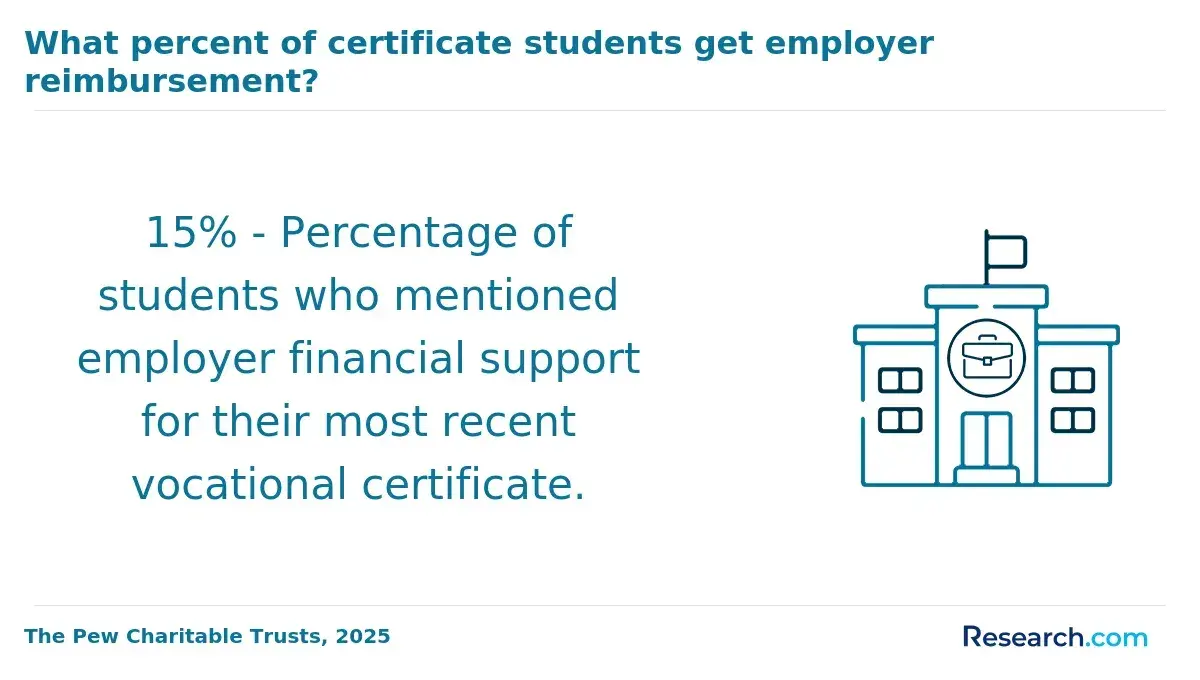
Before projecting a return on investment, compare roles you could realistically pursue now with roles that require or reward the doctorate. If your desired work does not require doctoral training, experience or short certificate programs that pay well may be less disruptive alternatives. Check the qualifications in actual job postings rather than assuming a doctorate causes a promotion or salary increase.
How can you choose a doctoral program that fits your lifestyle?
Start with a weekly time budget that includes paid work, care responsibilities, and protected study time. Then compare programs on the commitments most likely to strain that budget, not on marketing claims about convenience.
Use these checks when speaking with program staff and potential advisers:
- Confirm the credential fits your goal and whether a master's degree, licensure, certification, or experience would suffice.
- Request the official part-time policy, sample course sequence, meeting schedule, and every residency, clinical, and examination requirement.
- Ask how students obtain advisers, project approval, workplace-data permission, and support when research stalls.
- Compare written total-cost estimates and funding conditions under both an expected and a delayed completion scenario.
Avoid selecting a program solely for low advertised tuition, online classes, or a promised completion timeline. The better fit is one whose requirements remain workable during your busiest ordinary month.
Other Things You Should Know About
Possibly. Verify that the program permits part-time enrollment and that required meetings, research, and placements fit your work schedule. Some funded PhD programs expect full-time study or restrict outside employment.
An EdD focused on an approved workplace problem may align better with an educator's job, but its deadlines and culminating project can still be demanding. Compare specific programs rather than assuming one credential is easier.
It may. Check the official requirements for residencies, orientations, examinations, defenses, and any local clinical or fieldwork components before applying.
Choose it if its applied project and career purpose fit your goals - not solely because the culminating work has a different name. Verify the project's scope, supervision, and approval process.
- Survey of Earned Doctorates (SED) 2024 - NCSES - NSF https://ncses.nsf.gov/surveys/earned-doctorates/2024
- Occupational profile and work tasks of Canadian PhDs | Government of Canada, Statistics Canada https://www150.statcan.gc.ca/n1/pub/36-28-0001/2022012/article/00002-eng.htm
- The Nature and Evolution of the Mentoring Relationship in Academic Health Centers - PMC https://pmc.ncbi.nlm.nih.gov/articles/PMC9243938/
- Federal Pell Grants | studentaid.gov https://studentaid.gov/understand-aid/types/grants/pell
- Information on the Family and Medical Leave Act | dol.gov https://www.dol.gov/agencies/whd/fmla/family-caregiver
- Work-life balance in higher education: A review based on bibliographic coupling analysis - ScienceDirect https://www.sciencedirect.com/science/article/pii/S0001691825008807
- Work-life balance and well-being of graduate students | sagepub.com https://journals.sagepub.com/doi/10.1080/15236803.2020.1771990
- 7.1.1 General Funding Guidelines and Definitions: Policy | Graduate Academic Policies and Procedures https://gap.stanford.edu/handbooks/gap-handbook/chapter-7/subchapter-1/page-7-1-1
- Introduction to mentoring: A guide for mentors and mentees | apa.org https://www.apa.org/education-career/grad/mentoring
- Achieving Work-Life Balance as a PhD Student*: Studying | rochester.edu https://www.rochester.edu/college/learningcenter/studying/blog/2024-10-18-achieving-work-life-balance-as-a-phd-student.html





























![2027 Best Advanced Standing Online MSW Programs [CSWE Accredited] thumbnail](/uploads/Online_Advanced_Standing_MSW_301dbd5368.jpg)