
2027 Best Accredited Online Screenwriting Master's Programs With Asynchronous Classes: No Set Class Times

Co-Founder and Chief Data Scientist
An online screenwriting master's can fit a full-time job only if "asynchronous" truly means no required live instruction. This distinction matters because a graduate degree still involves intensive drafting, feedback, and revision. The U.S. Bureau of Labor Statistics projects 4% employment growth for writers and authors from 2023 to 2033, a competitive but evolving field shaped by streaming, independent production, and AI tools.
This guide helps prospective writers compare accredited programs, verify flexibility, estimate workload, and choose a format that supports both a portfolio and a realistic schedule.
Key Things You Should Know
- For a credible online screenwriting master's, verify that the institution holds accreditation recognized by the U.S. Department of Education or CHEA; screenwriting itself typically does not have a separate required programmatic accreditor.
- "No set class times" usually means recorded instruction and flexible log-in times, not unlimited pacing: most programs still use weekly discussion, workshop, and submission deadlines.
- Career value depends more on the scripts, revisions, faculty feedback, professional network, and production knowledge you gain than on the degree title alone; BLS projects 4% growth for writers and authors from 2023 to 2033.
What Does "Asynchronous" Mean in an Online Screenwriting Master's Program?
An asynchronous online screenwriting master's program lets students access lectures, readings, script examples, feedback prompts, and learning-platform activities without attending a class at one fixed hour. In a genuinely asynchronous course, students may watch lectures when convenient, post critiques within a specified window, and submit screenplay pages by a deadline.
It is important not to confuse asynchronous learning with self-paced learning. Most accredited graduate programs are term-based: everyone follows the same sequence of modules and meets the same due dates, even though students choose when to complete their work during each week.
The distinctions below affect whether a program fits a shift-based job, caregiving responsibilities, travel, or a preferred learning style:
| Format | Typical scheduling | Best fit | Main trade-off |
| Fully asynchronous | No required live classes; deadlines remain | Students with unpredictable schedules | Requires strong self-management and proactive networking |
| Partially synchronous | Recorded coursework plus occasional live workshops or critiques | Students who want flexibility and real-time feedback | May create conflicts across time zones or work shifts |
| Fully synchronous online | Live video meetings at scheduled times | Students who learn best through immediate discussion | Least adaptable to changing schedules |
| Self-paced online | Broad completion window, sometimes rolling progress | Independent learners with irregular availability | Less common for workshop-intensive accredited master's degrees |
A program can be 100% online but still require live classes. Likewise, a school may advertise asynchronous coursework while requiring a synchronous orientation, guest session, residency, final presentation, or group meeting. Read the format description at the course level rather than relying on a broad marketing label.
How Can Students Verify Accreditation for an Asynchronous Online Screenwriting Master's Program?
Start with institutional accreditation, not the delivery format. A legitimate online degree should be awarded by a college or university whose accreditor is recognized by the U.S. Department of Education or the Council for Higher Education Accreditation. Confirm the school, accreditor, accreditation status, and any probationary notice through the official accreditation directories, then compare that result with the university's own disclosures.
Screenwriting and creative-writing master's programs generally do not need a specialized programmatic accreditor in the way some clinical, engineering, or business programs may. That means institutional accreditation, faculty qualifications, curriculum quality, and transparent academic policies are the central checks.
Use this sequence before paying an application fee. It separates a valid graduate credential from a program with vague or incomplete claims.
- Find the exact degree-awarding institution, not only the name of an online platform or extension unit.
- Check the institution in a federal or CHEA-recognized accreditor directory and confirm that the listed name matches the school.
- Review the graduate catalog for the degree title, total credits, residency requirements, grading standards, and faculty roster.
- Ask whether the online degree appears on the transcript exactly as the campus-based version does and whether the program is eligible for federal financial aid.
- Request written confirmation of all required live sessions, travel, workshops, and assessment conditions before enrolling.
Do not treat "licensed," "registered," "approved," or "internationally accredited" as substitutes for recognized institutional accreditation. Those terms can describe legal authorization or membership rather than academic quality review. If doctoral study is a long-term goal, compare the credential with admissions expectations for 1 year PhD programs online free and verify directly whether prospective doctoral departments accept the master's degree and its transcript format.
How Can Students Tell If an Online Screenwriting Master's Program Truly Has No Set Class Times?
The most reliable evidence is a recent syllabus or course schedule. Ask admissions staff to distinguish between "online," "asynchronous," and "no required live attendance," then request the answer in writing. A program may have no weekly lecture time but still schedule pitch sessions, peer workshops, virtual office hours, thesis defenses, or proctored exams.
Before committing, ask targeted questions that expose restrictions hidden behind flexible language.
- Are any live class meetings, workshops, orientations, guest lectures, or cohort events mandatory?
- Do any courses require students to meet with a group at a mutually agreed time?
- Are live sessions recorded, and can an equivalent assignment replace attendance?
- Are there required campus residencies, festival visits, internships, or in-person presentations?
- Do examinations use appointment windows, remote proctoring, or a specific start time?
- Does "asynchronous" apply to every required course, including capstone and thesis courses?
A useful red flag is language such as "primarily asynchronous," "flexible online format," or "live sessions may be required." Those phrases do not necessarily make a program unsuitable, but they require a calendar-level review. Students who need complete schedule control should favor programs that explicitly state that no synchronous participation is required and identify any exceptions.
How Flexible Are Asynchronous Online Screenwriting Master's Programs for Working Professionals?
Asynchronous study can be practical for working professionals because the writing itself can happen early in the morning, at night, or on days off. It is most suitable for students who can reserve recurring blocks for drafting and peer critique. Flexibility changes when work happens; it does not reduce the intellectual or creative work expected in a graduate workshop.
Graduate writing courses commonly require reading scripts, viewing assigned media, drafting pages, revising from notes, and giving substantive feedback to peers. A part-time route is often the safer choice for students with full-time employment, while an accelerated format can work for someone with a predictable schedule and a completed writing sample already in progress.
This comparison can help applicants choose a pace based on available time rather than an optimistic completion target:
| Enrollment approach | Typical practical advantage | Primary risk | Who should consider it |
| Part-time, term-based | More time for drafts, feedback, and work obligations | Longer time to graduation | Full-time employees and caregivers |
| Full-time, term-based | Faster momentum and cohort continuity | High weekly workload can crowd out paid work | Students with reliable time and financial support |
| Accelerated asynchronous | Shorter completion timeline | Compressed revision cycles may limit reflection | Experienced writers with strong time-management systems |
| Partially synchronous online | Immediate workshop interaction | Fixed meetings reduce schedule freedom | Students who value live accountability |
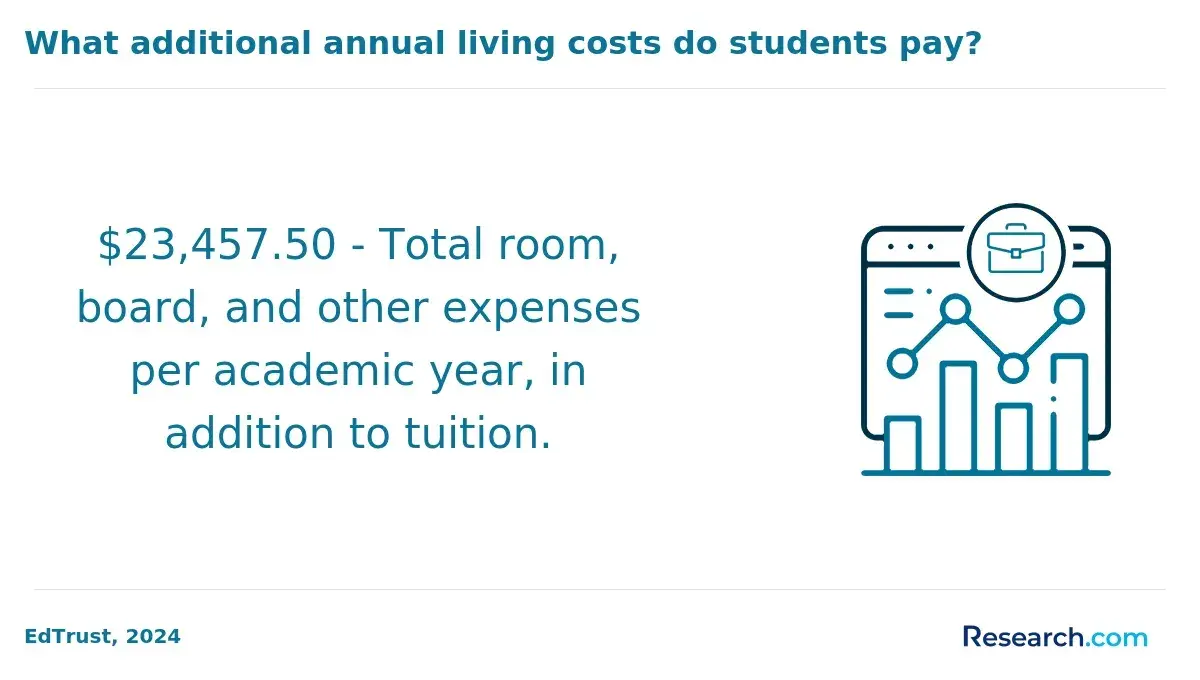
Cost should be considered alongside pace. College Board reported average published tuition and fees for graduate students in 2024-25 of $12,596 at public institutions and $29,931 at private nonprofit institutions. These are broad averages, not screenwriting-program prices, and they exclude living expenses and many school-specific fees. Compare the full program cost, expected enrollment length, employer tuition assistance, federal aid eligibility, and whether part-time study changes the per-credit rate.
Professionals changing fields should also evaluate whether their transferable communication, teaching, management, or research skills strengthen their screenwriting goals. For an example of how a structured transition can be evaluated in another field, see this guide for moving from teacher to SLP.
How Do Asynchronous Online Screenwriting Master's Programs Handle Faculty Interaction and Group Work?
Strong asynchronous programs replace live classroom contact with a deliberate feedback system. Faculty may provide annotated scripts, recorded critiques, discussion-board replies, one-to-one video appointments, written development notes, and rubric-based evaluations. The quality question is not simply whether faculty are available live; it is whether students receive specific, timely, usable guidance on story, character, structure, dialogue, and revision.
Peer workshop is especially important in screenwriting because writers need to see how readers interpret a script. In an asynchronous class, students may exchange pages in a learning platform, give written coverage, record feedback, or use scheduled optional meetings. Group work can still introduce scheduling pressure when collaborators must coordinate a table read or presentation.
Applicants should review the feedback design before they enroll. The following indicators show whether a program has built meaningful interaction into an asynchronous format.
- Faculty biographies identify working writers, producers, scholars, or experienced creative-writing educators with relevant expertise.
- The syllabus states how quickly instructors return notes and how many rounds of revision each major script receives.
- Workshop rules explain the expected length, quality, and timing of peer critiques.
- Office hours are optional or offer appointment alternatives across time zones.
- Capstone advising includes defined milestones and individual supervision.
- Career support includes portfolio reviews, pitching practice, alumni access, or industry-facing events without overstating placement outcomes.
Students who want spontaneous discussion, live table reads, and immediate creative debate may prefer a hybrid or synchronous workshop. Students who process feedback best in writing and need schedule control may find asynchronous critique more productive, provided they are comfortable initiating contact rather than waiting for it.
How Do Course Deadlines and Pacing Affect an Asynchronous Online Screenwriting Master's Degree?
Deadlines are the operating system of an asynchronous degree. A typical course may have weekly reading and discussion deadlines, periodic page submissions, peer-review windows, and a final screenplay or series-bible project. Missing one workshop deadline can affect classmates as well as the student, so flexible access does not always permit late work.
Term-based programs use a fixed academic calendar, while self-paced programs allow more individualized progress. For screenwriting, term-based pacing often has an advantage: structured deadlines create recurring feedback cycles and help writers finish material rather than revise indefinitely. The trade-off is less freedom during demanding work periods.
Review a sample calendar and calculate your real weekly capacity. These steps help prevent the common mistake of assuming that asynchronous delivery means you can catch up at the end of a term.
- Map every weekly due date, major workshop, final project, and any live requirement against your work and family calendar.
- Estimate separate time for drafting, revising, assigned reading or viewing, and peer feedback; do not count only writing pages.
- Ask whether late work is accepted and whether extensions are available for documented emergencies.
- Confirm whether courses run in standard semesters, shorter sessions, or an accelerated sequence.
- Choose part-time enrollment if your schedule has recurring peak periods that could disrupt workshop participation.
Programs that offer several start dates or shorter terms may look more flexible, but compressed sessions can create more—not fewer—weekly obligations. The same trade-off appears in other accelerated professional programs, including a 2 year construction management degree online: faster completion is valuable only when the pace leaves enough time to learn and produce quality work.
How Do Exams, Projects, and Technology Requirements Work in an Asynchronous Online Screenwriting Master's Program?
Screenwriting master's assessments are usually project-centered rather than based on traditional timed exams. Students may develop short scripts, feature screenplays, television pilots, adaptations, treatments, pitch decks, critical analyses, and a capstone portfolio. Some programs include quizzes on dramatic theory, copyright, media history, or production practices, but applicants should not assume that assessments are free of scheduling rules.
Ask whether final presentations, table reads, thesis defenses, or portfolio reviews require live attendance. Also ask whether remote proctoring is used for any exam. A proctored assessment may be online but still require a reserved appointment, identification checks, a webcam, and a quiet testing environment.
Technology needs should be modest but reliable. Students generally need a current computer, stable broadband, a webcam and microphone for occasional meetings, cloud storage, and access to screenplay-formatting software specified by the school. Confirm whether the program supplies licenses, offers technical support outside business hours, and requires particular operating systems.
AI is another current consideration. Generative tools can assist with brainstorming, transcription, or administrative tasks, but they can raise authorship, privacy, plagiarism, and intellectual-property concerns. Request the written AI policy and learn whether workshop scripts may be uploaded to third-party tools. A program should teach ethical judgment and original craft rather than imply that software can replace a writer's voice or revision process.
How Rigorous Are Asynchronous Online Screenwriting Master's Programs Compared With Campus-Based Programs?
An accredited asynchronous master's degree should have comparable learning outcomes, credit expectations, grading standards, and faculty oversight to an institution's campus offerings. The format changes the mode of participation, not the expected level of analysis, drafting, research, or revision. A rigorous program requires students to defend creative choices, apply narrative theory, respond constructively to critique, and produce substantial original work.
Campus-based programs may offer easier access to spontaneous collaboration, physical production resources, and local events. Online programs can offer a geographically diverse peer group and allow students to build a writing practice without relocating. Neither setting is automatically superior; the better choice depends on whether you need in-person production access and live community or can create momentum through online workshops.
Look for evidence of rigor in the published curriculum. An MFA is often a practice-intensive terminal degree centered on a creative portfolio, while an MA may place relatively more emphasis on critical study, media theory, research, or a thesis. An MS is less common in screenwriting but may appear in media, entertainment, or digital-storytelling programs. A non-thesis capstone can be ideal for writers focused on a polished portfolio, while a research thesis may better suit students considering doctoral study or scholarship.
Do not equate a lighter calendar with lighter academic standards. The red flags are unclear credit totals, absent faculty information, no sample curriculum, minimal revision expectations, and promises of rapid industry success. Conversely, a demanding program is not automatically the best investment if its workload, feedback model, or required activities do not fit your goals.
What Career Value Does an Asynchronous Online Screenwriting Master's Degree Provide?
An asynchronous screenwriting master's degree can provide structured practice, editorial feedback, a disciplined portfolio process, and professional relationships. It may be useful for aspiring film and television writers, playwrights moving into screen media, script readers, development assistants, content creators, educators, and writers pursuing independent production. It is not a required credential for most screenwriting jobs, and it does not guarantee representation, a sale, staffing work, or employment in a highly competitive creative market.
The closest broad federal occupation category is writers and authors. The U.S. Bureau of Labor Statistics reports a May 2024 median annual wage of $72,270 for writers and authors. This figure covers a wide range of writing work rather than screenwriters alone, and pay can vary sharply by location, freelance status, credits, union coverage, employer, and project availability. Use it as labor-market context, not as a forecast of post-degree earnings.
Career return is strongest when the degree advances a specific objective: finishing a market-ready sample, shifting from another writing form, learning television-room conventions, developing an original feature, building a teaching portfolio, or preparing for further study. A program with faculty who provide detailed script notes may be worth more to one writer than a lower-priced option with limited mentorship; for another writer, minimizing debt and maintaining a current job may be the better decision.
Students interested in the business side of creative work may also benefit from studying contracts, budgeting, pitching, intellectual property, and project development. Broader management training, such as an online business administration degree, can be relevant for producers or creative entrepreneurs, but it is not a substitute for advanced screenwriting practice.
How Should Students Compare the Best Asynchronous Online Screenwriting Master's Programs?
The best program is the one that meets your nonnegotiables: recognized institutional accreditation, documented asynchronous delivery, a curriculum aligned with your writing goals, a manageable financial commitment, and feedback that helps you complete better scripts. Avoid choosing solely by a school's reputation, a low per-credit figure, or the phrase "100% online."
Compare each finalist using the same evidence. This matrix identifies the decision factors that matter most for an accredited online screenwriting master's:
| Comparison factor | What to verify | Why it matters |
| Accreditation | Recognized institutional accreditor and current status | Supports degree legitimacy, transfer evaluation, and aid eligibility |
| Scheduling | Required live sessions, residencies, proctored exams, and group meetings | Determines whether "no set class times" is accurate for your situation |
| Degree structure | MA, MFA, or related master's; credits; thesis or capstone; full- and part-time options | Shows whether the program supports professional practice, research, or both |
| Curriculum | Feature, television, short-form, adaptation, rewriting, pitching, and industry courses | Connects coursework to the kind of scripts you want to write |
| Feedback model | Faculty response time, workshop size, revision rounds, and advising | Determines the practical value of instruction |
| Total cost | Tuition, mandatory fees, software, books, travel, and likely time to completion | Prevents misleading comparisons based on per-credit price alone |
| Career support | Portfolio review, alumni network, internships, events, and transparent outcomes | Shows how the school supports next steps without promising placement |
After narrowing the list, contact each program with the same questions, save the responses, and compare the actual commitments rather than promotional language. Ask to see a current syllabus, speak with a faculty member or current student if possible, and confirm all exceptions to asynchronous scheduling before making a deposit.
Finally, evaluate the degree against alternatives. A lower-cost certificate, independent workshop, writers' group, or portfolio-building plan may be enough for a writer who needs targeted feedback. A master's can make more sense for someone seeking sustained mentorship, a structured body of work, academic credentials, or an interdisciplinary pathway. Legal and research-adjacent work also has different credential needs; for example, a paralegal certificate serves a distinct professional purpose from a creative-writing graduate degree.
Other Things You Should Know About Screenwriting
No. Screenwriting is primarily portfolio-driven, and writers enter through many routes. A master's can provide deadlines, mentoring, peer feedback, and a concentrated period to develop scripts, but a strong original sample and professional persistence remain central.
Requirements vary, but schools often request a screenplay excerpt, short script, pilot, treatment, creative-writing sample, statement of purpose, résumé, transcripts, and recommendation letters. Follow the exact page limits and formatting rules; submitting polished work that represents your voice is usually more valuable than submitting a longer but unfinished draft.
Choose an MFA if you want an intensive practice-based degree centered on a substantial creative portfolio. Choose an MA if you want a blend of writing, critical study, theory, research, or media analysis. Review the capstone requirements and faculty specialties because degree labels alone do not define the experience.
Copyright generally protects an original script once it is fixed in a tangible form, but it does not protect a general premise or idea. Keep dated drafts, understand your school's workshop privacy policies, and seek qualified legal advice for contracts, collaboration agreements, or specific intellectual-property concerns.
References
- Master of Humanities in Creative Writing Online | Tiffin University https://go.tiffin.edu/masters-programs/master-of-humanities/creative-writing/
- Master of Fine Arts in TV & Screenwriting - Stephens College https://stephens.edu/program/master-of-fine-arts-in-tv-screenwriting/
- Master of Fine Arts in Screenwriting (MFA) | Houston Christian University https://hc.edu/school-of-fine-arts/degrees/screenwriting-mfa/
- Online Master of Arts in Screenwriting for Alternative Media https://www.nyfa.edu/ma/online-ma-screenwriting-alternative-media/
- 2025 Most Affordable Master's in Creative Writing Online https://www.onlineu.com/most-affordable-colleges/creative-writing-masters-degrees
- Best Academic Screenwriting Programs & Film School Degrees https://www.movieoutline.com/best-graduate-screenwriting-programs-and-film-school-mfa-degrees-in-script-writing.html
- Good part time programs in film directing, screenwriting, tv writing etc https://www.filmschool.org/threads/good-part-time-programs-in-film-directing-screenwriting-tv-writing-etc.27825/
- Screenwriting: Core Elements https://collab.sundance.org/catalog/Screenwriting-Core-Elements-Self-paced
- Industry Writing Programs https://www.wga.org/the-guild/advocacy/inclusion-and-equity/industry-writing-programs
- Screenwriting - MA or MFA in Creative Writing https://western.edu/graduate/screenwriting/


