2027 Accredited Online Social Media Marketing Degree Programs With No GRE or GMAT Requirements

Co-Founder and Chief Data Scientist
Choosing an online social media marketing degree is harder when schools advertise "no GRE" or "no GMAT" but still vary widely in cost, selectivity, and outcomes. The U. S. Bureau of Labor Statistics reports a May 2024 median wage of $76,950 for market research analysts and marketing specialists, showing why digital marketing skills remain valuable.
This guide is for working adults, career changers, and recent graduates comparing accredited online programs. You will learn which no-test pathways exist, what admissions teams evaluate instead, and how to judge quality before applying.
Key Things You Should Know
- Most online social media marketing degree programs with no GRE or GMAT are either bachelor's programs, which generally do not use graduate entrance exams, or master's programs in marketing, digital marketing, communications, or integrated marketing that use test-free, test-optional, or waiver-based admissions.
- No-test admissions can save applicants the current GRE fee of about $220 or the GMAT exam fee often listed at about $275 before preparation costs, but it does not remove the need for a strong GPA, résumé, writing sample, recommendations, or relevant work experience.
- Accreditation matters more than the test policy: a regionally accredited institution is the baseline standard, while business-focused programs may also hold AACSB, ACBSP, or IACBE accreditation depending on the school and degree level.
Which Accredited Online Social Media Marketing Degree Programs Do Not Require the GRE or GMAT?
Accredited online social media marketing options usually appear under several degree names: social media marketing, digital marketing, marketing analytics, integrated marketing communications, strategic communication, or marketing with a social media concentration. The GRE or GMAT question matters most at the graduate level because bachelor's programs normally do not require those exams.
The table below summarizes common accredited online pathways that are often relevant to social media marketing students. Admissions policies can change, so use this as a comparison framework and verify the current catalog or admissions page before applying.
| Program pathway | Typical degree level | How social media marketing is covered | GRE or GMAT status commonly seen | Best fit |
| Online bachelor's in marketing with a social media or digital marketing concentration | Bachelor's | Brand strategy, content planning, paid social, consumer behavior, analytics, and campaign management | GRE and GMAT not applicable | Students seeking an entry-level marketing credential or completing a first degree |
| Online bachelor's in digital marketing | Bachelor's | SEO, social platforms, email, digital advertising, marketing analytics, and web strategy | GRE and GMAT not applicable | Students who want a broad digital marketing foundation rather than a traditional business major |
| Online master's in marketing with digital or social media coursework | Master's | Marketing strategy, consumer insights, analytics, digital campaigns, and brand management | Often test-optional, test-free, or waiver-based | Working professionals pursuing advancement into strategy, analytics, or management roles |
| Online master's in digital marketing | Master's | Paid media, social media strategy, attribution, conversion optimization, analytics, and marketing technology | Frequently no GRE or GMAT, though some schools may request scores from applicants with weak academic records | Applicants who already have business, communications, or marketing experience |
| Online master's in integrated marketing communications or strategic communication | Master's | Brand storytelling, public relations, social content, audience research, campaign planning, and reputation management | Often no GRE, test-optional, or waiver-based | Students interested in social media roles tied to communications, PR, or brand reputation |
Several accredited universities now publish no-GRE or no-GMAT admissions policies for online marketing-related graduate programs, while many online bachelor's programs do not use these tests at all. The most reliable shortlist includes schools with regional accreditation, transparent curriculum pages, clear tuition information, and coursework that goes beyond posting content to include analytics, paid media, audience segmentation, and marketing ethics.
Applicants should also understand the difference between the three most common test policies. A test-free program does not review GRE or GMAT scores. A test-optional program lets applicants choose whether to submit scores. A test-waiver program may require applicants to meet conditions such as a minimum GPA, prior graduate coursework, professional experience, or a business-related undergraduate degree.
Why Have Accredited Online Social Media Marketing Degree Programs Eliminated GRE and GMAT Requirements?
Many accredited online social media marketing degree programs have removed GRE and GMAT requirements because the skills needed in the field are not measured well by standardized graduate tests. Social media marketing depends heavily on writing, audience analysis, platform fluency, campaign planning, performance measurement, creative judgment, and ethical decision-making.
Schools also use no-test policies to reduce barriers for working adults. Removing the exam can shorten the application timeline, lower upfront costs, and make graduate study more realistic for applicants who have been out of school for several years.
Another factor is the growth of skills-based admissions. Marketing programs can evaluate stronger evidence of readiness through a résumé, professional portfolio, undergraduate performance, analytics coursework, employer recommendations, and a statement of purpose. For a student with experience managing campaigns, building content calendars, or using Google Analytics or Meta Ads Manager, those materials may be more relevant than a quantitative test score.
This does not mean standards have disappeared. It means the evidence has shifted. Instead of asking, "Can this applicant score well on a standardized test?" many programs now ask, "Can this applicant complete graduate-level work and apply marketing concepts in real business settings?"
What Admissions Criteria Matter Most Without GRE or GMAT Scores?
Without GRE or GMAT scores, admissions committees usually place more weight on academic history, professional experience, communication skills, and program fit. This is especially true in social media marketing, where persuasive writing and strategic thinking matter as much as quantitative ability.
The table below shows which admissions factors tend to carry the most weight when standardized tests are not required. It can help applicants decide where to strengthen their application before submitting.
| Admissions factor | Why it matters without test scores | What a strong applicant can show |
| Undergraduate GPA | It signals academic readiness and consistency | A solid cumulative GPA, upward grade trend, or strong grades in writing, statistics, business, or communications courses |
| Résumé or work history | It shows whether the applicant understands workplace expectations | Marketing internships, content work, sales experience, communications roles, analytics projects, or leadership responsibilities |
| Statement of purpose | It helps the school assess motivation and fit | A clear career goal, reasons for choosing the program, and examples of relevant skills or projects |
| Recommendations | They provide outside evidence of readiness | Letters from supervisors, faculty, or clients who can discuss writing ability, reliability, teamwork, and analytical judgment |
| Portfolio or writing sample | It demonstrates applied communication ability | Campaign briefs, social media calendars, blog posts, analytics reports, brand audits, or case studies |
| Prerequisite coursework | It reduces the risk of struggling in graduate-level marketing courses | Prior coursework in statistics, marketing, business, communications, or research methods |
Applicants with limited marketing experience should not assume they are unqualified. They can often compensate by highlighting transferable experience from customer service, sales, journalism, entrepreneurship, nonprofit work, design, or analytics.
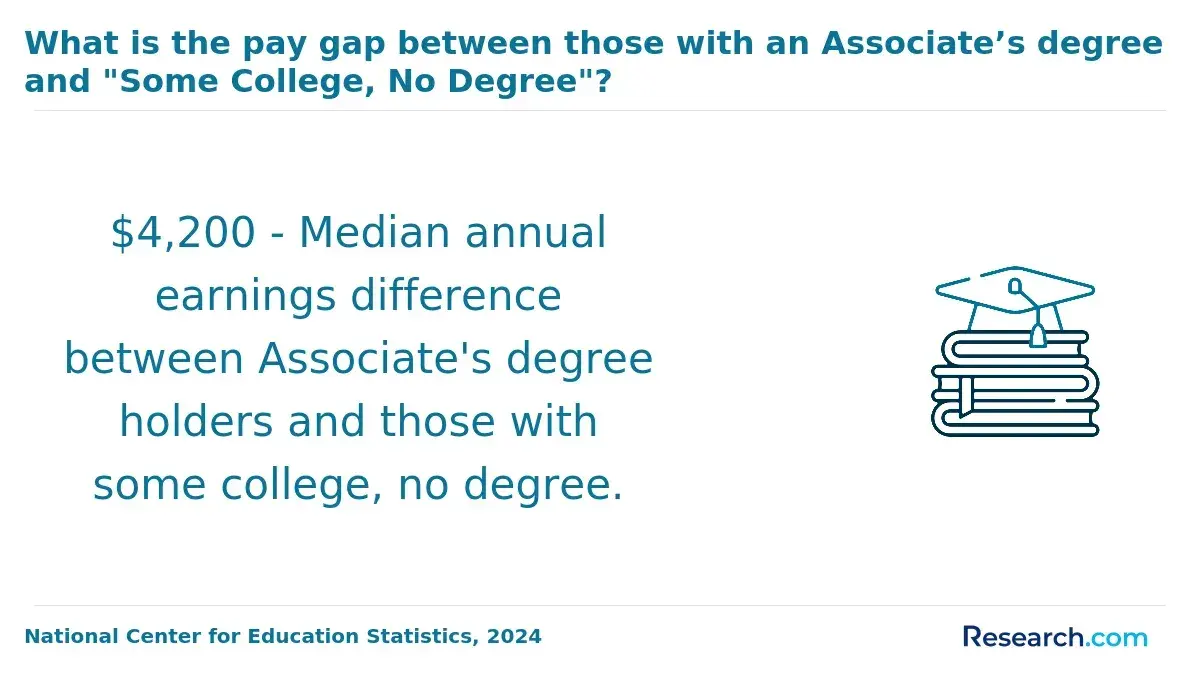
If a student is missing college credits entirely, starting with an associate-level pathway may be more realistic; comparing the easiest 2-year degree to get can help clarify whether a shorter first credential makes sense before moving into a bachelor's program.
Students applying to test-optional graduate programs should submit GRE or GMAT scores only when the scores clearly strengthen the file. Scores may help if the applicant has a low GPA, lacks quantitative coursework, or wants to demonstrate readiness for analytics-heavy courses. They are less useful when a program states that scores are not reviewed or when the applicant already has strong academic and professional evidence.
Are No-GRE or No-GMAT Online Social Media Marketing Degree Programs Easier to Get Into?
No-GRE or no-GMAT online social media marketing programs are not automatically easier to get into. They are easier to apply to because applicants can avoid exam registration, test preparation, and score reporting, but admissions standards may remain selective.
The main difference is where the school looks for evidence. A test-required program uses standardized scores as one signal. A no-test program usually relies more heavily on GPA, résumé strength, recommendations, and writing quality. For some applicants, that is an advantage. For others, it can make the application more demanding because every written component must be polished.
Use the comparison below to understand how admissions difficulty changes by policy type.
| Admissions model | What it means | When it helps the applicant | Possible drawback |
| Test-required | GRE or GMAT scores must be submitted | The applicant has strong test scores that offset a weaker GPA or limited work experience | Higher upfront cost and longer preparation timeline |
| Test-optional | Scores may be submitted but are not required | The applicant can choose the strongest version of the application | Applicants may be unsure whether withholding scores creates a disadvantage |
| Test-waiver | Scores are waived if the applicant meets specific conditions | The applicant has strong grades, relevant work experience, or prior graduate credit | Waiver rules may be strict or reviewed case by case |
| Test-free | Scores are not required and usually not considered | The applicant can focus on academic record, experience, and writing | Weaknesses in GPA or experience cannot be balanced by a high test score |
A no-test program may still require a minimum GPA, prerequisite coursework, professional experience, or a portfolio. Some programs also use rolling admissions, which can make timing important. Applying early may improve access to preferred start dates, advising, and financial aid processing, even when the program is not highly selective.
Does Skipping the GRE or GMAT Affect Academic Quality or Accreditation?
Skipping the GRE or GMAT does not reduce academic quality by itself. Accreditation, curriculum rigor, faculty qualifications, student support, assessment methods, and employer relevance are much better indicators of quality than whether a school requires a standardized test.
The most important baseline is institutional accreditation, especially regional accreditation from a recognized accreditor. For business schools, specialized accreditation such as AACSB, ACBSP, or IACBE can add another layer of quality review, though not every strong marketing or communications program will hold business-specific accreditation.
Social media marketing does not usually lead to state licensure, which makes accreditation different from fields with strict licensing boards. For comparison, students evaluating regulated graduate pathways such as accredited BCBA programs online often need to verify both accreditation and licensure-related coursework. Marketing students should focus more on institutional legitimacy, employer recognition, curriculum relevance, and measurable career support.
A quality online social media marketing degree should include more than platform tutorials. Strong programs teach strategy, consumer behavior, campaign measurement, content governance, brand safety, social listening, digital advertising, privacy-aware analytics, and ethical use of AI tools. Because platforms change quickly, the best programs emphasize adaptable marketing principles rather than training students only on one app or dashboard.
Which Students Benefit Most From Online Social Media Marketing Degree Programs Without GRE or GMAT Requirements?
No-GRE or no-GMAT online social media marketing degrees are especially useful for students whose strongest qualifications are practical, creative, or professional rather than test-based. They can also benefit applicants who need to apply quickly because of job changes, tuition deadlines, or employer reimbursement schedules.
These programs tend to fit several student profiles particularly well. Reviewing the list can help readers decide whether a no-test pathway matches their situation.
- Working marketing professionals who already manage campaigns, content, email, SEO, paid ads, or analytics and want a formal credential for promotion.
- Career changers from sales, customer service, journalism, public relations, graphic design, entrepreneurship, or nonprofit communications who can show transferable audience and messaging skills.
- Recent bachelor's graduates with strong grades, internships, campus media experience, or freelance content work but little interest in spending months preparing for a graduate exam.
- Adult learners who have been out of school for several years and would rather demonstrate readiness through professional achievements, recommendations, and writing samples.
- Students balancing work, caregiving, or military responsibilities who need an online format with asynchronous coursework or multiple start dates.
Some students should be more cautious. If a program is no-test but expensive, weakly transparent about outcomes, or vague about accreditation, the convenience may not justify the cost. Students comparing creative professional paths should also note that marketing is generally more flexible than licensure-oriented fields; a path such as an online bachelor of architecture may involve different accreditation and professional practice considerations.
How Do Tuition and Financial Aid Compare for No-GRE Online Social Media Marketing Degree Programs?
Tuition for no-GRE online social media marketing programs is not automatically lower or higher than tuition for test-required programs. The test policy affects application cost and convenience, while tuition depends on the institution, credit requirements, residency rules, transfer credits, fees, and whether the program is undergraduate or graduate.
College Board's 2024 Trends in College Pricing report lists average published tuition and fees at $11,610 for in-state students at public four-year institutions and $43,350 at private nonprofit four-year institutions for the 2024-25 academic year. Online students should use those figures only as context because many online programs charge per credit, apply separate technology fees, or use flat-rate tuition.
When comparing costs, look beyond the advertised per-credit rate. A program with a lower per-credit price may cost more overall if it requires more credits, does not accept transfer credit, or adds substantial fees.
- Calculate total tuition by multiplying required credits by the per-credit rate, then add technology, graduation, course material, and residency fees if applicable.
- Ask whether online students pay in-state tuition, out-of-state tuition, or a separate online rate.
- Check how many transfer credits, prior graduate credits, military credits, or portfolio-based credits may apply.
- Compare federal aid eligibility, scholarships, employer tuition assistance, military benefits, and payment plans.
- Estimate opportunity cost, including time away from work, unpaid internships, or reduced course loads.
For graduate students deciding between a specialized marketing degree and a broader business credential, cost comparisons can be especially important. Some students may find that specialized marketing programs provide the right focus, while others may prefer broader management training through options such as online MBA programs under 30k.
What Career Outcomes Can Graduates Expect From No-GRE Online Social Media Marketing Degree Programs?
Graduates of online social media marketing degree programs may pursue roles in social media strategy, content marketing, digital advertising, brand management, marketing analytics, influencer marketing, community management, public relations, and ecommerce marketing. Outcomes depend on prior experience, portfolio quality, location, industry, and the strength of the degree program.
BLS data for May 2024 reports a median annual wage of $161,030 for marketing managers. That figure should not be interpreted as an entry-level expectation; it reflects a management occupation that often requires experience, leadership responsibility, and measurable campaign results.
For many graduates, the first realistic step is not a manager title but a specialist or coordinator role. Over time, professionals may move into strategy or leadership by building evidence of performance, such as campaign ROI, audience growth quality, conversion improvements, lower acquisition costs, or stronger engagement among target segments.
Current hiring trends also make analytics and AI literacy more important. Employers increasingly expect marketers to understand dashboards, attribution limits, content testing, generative AI workflows, brand safety, and privacy-aware targeting. A strong degree program should help students use tools responsibly instead of relying on automated content production alone.
Career value is strongest when the degree is paired with a portfolio. Students should graduate with work samples such as campaign plans, paid social mockups, analytics reports, audience personas, content calendars, social listening briefs, and brand audits. These artifacts help employers evaluate applied ability more directly than a transcript alone.
What Common Application Mistakes Reduce Admission Chances to No-GRE Online Social Media Marketing Degree Programs?
The most common mistake is choosing a program only because it does not require the GRE or GMAT. Admissions convenience matters, but it should not outweigh accreditation, curriculum quality, affordability, and career fit.
Applicants can improve their chances by avoiding these recurring errors. Each one can weaken an application even when the school advertises flexible admissions.
- Assuming "no GRE" means open admission, even though the program may still review GPA, prerequisites, writing ability, and work history closely.
- Submitting a generic statement of purpose that does not explain why social media marketing, why this program, and why now.
- Ignoring the résumé, even though work experience often becomes more important when test scores are absent.
- Failing to show measurable results, such as campaign performance, audience research, content production volume, or analytics experience.
- Overlooking accreditation or confusing short bootcamps and certificates with accredited degree programs.
- Applying without checking whether the program is test-free, test-optional, or waiver-based.
- Focusing on per-credit tuition while ignoring total credits, fees, transfer policies, and time to completion.
- Using AI-generated application materials that sound polished but lack personal detail, evidence, and authentic goals.
A stronger application tells a coherent story. It connects past experience, current skills, academic readiness, and future goals. Even applicants with modest GPAs can improve their file by explaining growth, providing strong recommendations, and submitting a focused writing sample or portfolio when the program allows it.
How Should Students Compare Accredited Online Social Media Marketing Degree Programs Without GRE or GMAT Requirements?
Students should compare no-GRE and no-GMAT online social media marketing programs using a balanced scorecard rather than a single factor. The best choice is usually the program that combines accreditation, relevant coursework, reasonable total cost, flexible scheduling, and credible career support.
Use the following steps to narrow your options before applying. This process helps separate convenient programs from programs that are likely to support your academic and career goals.
- Confirm institutional accreditation through the school's accreditor and make sure the institution is eligible for federal financial aid if you plan to use it.
- Identify the exact test policy and determine whether the program is test-free, test-optional, or waiver-based.
- Review the curriculum for social media strategy, analytics, paid media, content marketing, consumer behavior, ethics, and AI-related marketing practice.
- Compare total program cost, not just per-credit tuition, and ask about fees, transfer credit, scholarships, and employer reimbursement compatibility.
- Check online format details, including asynchronous courses, live sessions, start dates, course load expectations, and internship or capstone requirements.
- Ask admissions counselors what successful applicants usually submit when they do not provide GRE or GMAT scores.
- Evaluate career services, portfolio development, employer partnerships, internship support, alumni outcomes, and access to marketing tools or software.
- Choose the program that fits your career target, not simply the one with the shortest application or fastest start date.
Affordability comparisons are useful across many online degree fields. The same total-cost approach used to evaluate most affordable online counseling degrees can help marketing students avoid underestimating fees, credits, and long-term repayment obligations.
The right program should make you more employable, not just more credentialed. If the curriculum is outdated, the portfolio support is weak, or the cost requires unreasonable debt for your target role, a different online marketing program, certificate, or broader business degree may be a better fit.
Other Things You Should Know About Social Media Marketing
A certificate can be enough for tool-specific or entry-level skills, especially if you already have a degree or work experience. A degree is usually stronger for students who need a broader credential in marketing strategy, analytics, consumer behavior, and business communication.
A useful portfolio can include content calendars, campaign briefs, analytics summaries, audience personas, paid ad mockups, social listening reports, writing samples, and before-and-after performance explanations. Employers want to see your thinking, not just finished posts.
Most social media marketing roles do not require coding. However, basic familiarity with web analytics, tracking links, landing pages, SEO concepts, spreadsheets, and marketing automation tools can make a candidate more competitive.
An online bachelor's degree often takes about four years for first-time students, but transfer credits can shorten the timeline. Online master's programs commonly take one to two years, depending on credit load, course format, and whether the student enrolls part time or full time.
References
- Most Affordable Online Master’s Degrees in Marketing in 2025 https://www.onlinemastersdegrees.org/most-affordable/marketing-programs/
- Best Online MBA Programs https://www.princetonreview.com/business-school-rankings
- Best Online MBA Programs No GMAT Required (2026) - Edubrain https://edubrain.ai/blog/best-online-mba-programs-no-gmat/
- Online Master’s in Marketing Programs in 2026 https://www.mastersincommunications.org/online-marketing/
- Average Cost of Online College [2025]: Yearly Tuition + Fees https://educationdata.org/average-cost-of-online-college
- 2025 Most Affordable Online Marketing Degrees https://www.onlineu.com/most-affordable-colleges/marketing-degrees
- Online MBA Programs in Digital Marketing and Social Media https://www.bschools.org/concentrations/mba-in-digital-marketing
- Top 50 Online Master’s in Marketing Management Degree Programs - Top Management Degrees https://www.topmanagementdegrees.com/rankings/best-online-masters-marketing-degrees/
- List of 50+ Online MBA Programs with No GMAT + AACSB Accredited Programs | OnlineMBAPage.com https://onlinembapage.com/online-mba-without-gmat/
- Online Master’s in Marketing Programs No GRE or GMAT Required (GRE Waiver) https://www.mastersincommunications.com/faqs/online-masters-in-marketing-gre-gmat-requirements