15 Consecutive Years as Princeton Review Best in the West, 86% Placement, 99% Financial Aid Recipients: How Menlo College's Silicon Valley Location Delivers Category-Defining Small Business College Outcomes

Co-Founder and Chief Data Scientist
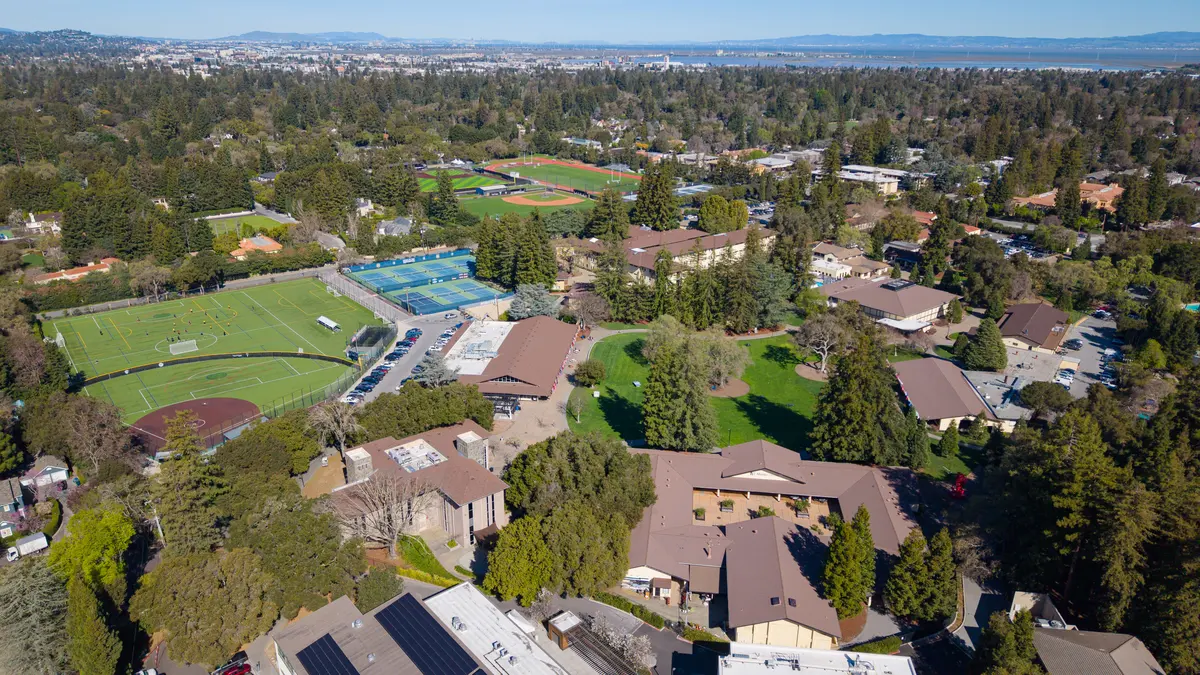
For business students, choosing a college often comes down to choosing a future professional network. Located in Atherton, California, Menlo College sits directly inside the footprint of Silicon Valley. For prospective students and their parents, this location presents a clear financial and logistical reality: families must weigh a higher regional cost of living against the advantage of studying every day alongside a massive concentration of technology, venture capital, and enterprise firms. Menlo College approaches this geography as a core part of its academic model, designing its programs to help students understand the corporate environment operating directly around them and develop the skills to create value within it.
For 15 consecutive years, Menlo College has been recognized by The Princeton Review as a "Best in the West" institution. This sustained regional benchmarking is largely tied to the college’s structure. Unlike comprehensive universities that divide resources across dozens of liberal arts and STEM disciplines, Menlo centers its academic offerings on business and psychology. This focused approach allows the college to direct its faculty and campus resources toward enterprise, analytics, and organizational behavior.

The Business Core: Building a Standardized Baseline
Regardless of their specific major, every business student at Menlo must complete a standardized 39-unit Business Core. This ensures that a student studying marketing still understands financial accounting, and a finance student understands organizational behavior. The core establishes a firm baseline in macro and microeconomics, statistics, ethics, and supply chain operations.
To prevent this foundation from becoming purely theoretical, the college integrates experiential coursework early on. The first-year MGT 101 and MGT 102 sequence (Entrepreneurship & Management in Action) requires students to work in teams to conceptualize and manage a real-world venture. The sequence culminates in a Student Business Showcase where students defend their operational decisions before faculty and regional professionals. This entire academic progression is eventually capped off in the senior year with MGT 400: Strategic Management, requiring students to synthesize everything they have learned into a final, comprehensive structural analysis.
The Academic Portfolio: Pathways Within the Regional Economy
Building on that standardized core, the college offers undergraduate majors tailored to the realities of a globalized digital market. The available pathways reflect the sectors that heavily drive the regional economy:
- Data & Technology: Degrees in AI & Analytics train students to extract insights from structured and unstructured data, moving beyond basic IT into applied business intelligence.
- Capital & Markets: Programs in Accounting, Finance, and Real Estate prepare students for the quantitative demands of venture capital, commercial brokerage, and corporate financial planning. This offers a targeted academic pathway for students trying to decide between broad business administration and specialized finance outcomes.
- Human Operations: Majors in Marketing, Sports Management, International Business, and Psychology focus on the behavioral side of enterprise, from global market shifts to internal organizational health.
- Venture Creation: The Entrepreneurship degree program serves as a direct pipeline to the startup ecosystem, teaching students how to evaluate risk, secure funding, and scale operations in a competitive environment.
Menlo also offers graduate programs in Information Systems, Financial Technology, and Sport and Performance Psychology, extending its career-focused approach to students pursuing advanced study.

The Silicon Valley Immersion (SVI) Requirement
For students in programs like Marketing, International Business, and Entrepreneurship, the curriculum includes the Silicon Valley Immersion (SVI) course. Rather than passively listening to lectures about industry trends, students are expected to engage practically with the mechanics of the local ecosystem.
The value of the SVI requirement lies in its focus on applied problem-solving. For example, instead of simply learning how to run a statistical analysis, students are challenged to look at raw business data and extract the specific narratives that an executive would need to make a hiring or expansion decision. They examine how a shift in global economics might disrupt a local supply chain, or how a startup scales its technology to meet a sudden spike in demand. By working through these practical scenarios, students bridge the gap between academic business administration and the actual quantitative critical thinking required on the job, while learning how to add value in real-world settings.
The Financial Reality: Navigating the Cost of Attendance
Studying in Atherton places students in one of the most expensive zip codes in the United States. For prospective families, understanding the financial logistics of Menlo College requires looking past the initial sticker price. For the 2026-2027 academic year, direct tuition and fees are set at $59,140. For students choosing to live on campus, food and housing add an estimated $20,874, bringing the total direct cost of attendance to $80,014. By any metric, this represents a significant financial investment.
However, evaluating the college strictly by this top-line number ignores its actual tuition structure. Menlo operates as a high-cost, high-aid institution where historically nearly 100% of incoming students receive some form of institutional scholarship or grant. To bridge the gap between the sticker price and what families actually pay, students must actively engage with the college's financial aid framework to identify the funding tier they qualify for.
Structured Merit Scholarships
Rather than requiring a separate, complex application process for baseline aid, the college automatically assesses all applicants for renewable merit scholarships at the time of admission. These funds are designed specifically to offset tuition costs and include targeted programs based on geography and academic performance:
- California Residents: In-state students are assessed for tier-based funding, including the Aspire Award ($22,000 annually), the Scholars Award ($24,000), and the Innovation & Impact Award ($26,000).
- Local Community: The San Mateo County Commitment Scholarship provides highly localized support, offering up to $46,000 annually through a combination of merit and need-based aid.
- Out-of-State & International: Non-residents can qualify for the Hawaii Opportunity or California-Bound Scholarships (both $32,000 annually), while global applicants are considered for the International Scholars Award ($28,000).
- Targeted Demographic Funds: The college also maintains specific funds to support students from diverse backgrounds, such as the Osher Scholarship (up to $6,000 for students returning from an educational gap) and the Phi Theta Kappa Scholarship (up to $4,000 for qualified incoming transfer students).
Need-Based Grants and State Support
While merit scholarships are awarded based on academic performance, Menlo also offers need-based grants and participates in federal and state financial aid programs to help make a Menlo education more affordable. Depending on eligibility, students may be able to combine institutional, state, and federal aid to reduce their remaining educational costs.
For students with significant financial need, several sources of assistance may be available:
- The California Opportunity Grant: Eligible in-state students who qualify for both Federal Pell and Cal Grants can potentially attend with $0 out-of-pocket costs for tuition and on-campus housing.
- Institutional & Federal Grants: Menlo offers institutional grants, including the President’s Grant, which may be combined with federal grants such as the Federal Supplemental Educational Opportunity Grant (FSEOG), depending on a student's financial need and eligibility.
- Work-Study & Veteran Benefits: Menlo participates in the Federal Work-Study program, allowing eligible students to earn money toward their educational expenses through part-time employment. Veterans and eligible family members may also be able to use Post-9/11 GI Bill® benefits, including Yellow Ribbon benefits, toward their Menlo education.
Evaluating the ROI: Historical Career Outcomes
When evaluating a business program, the primary metric for prospective students is the transition from the classroom to the workforce. While no institution can guarantee employment, looking at historical cohort data provides a structural benchmark for how the local market receives a college's graduates.
According to institutional outcome data, 86% of Menlo College graduates are either employed or enrolled in graduate school within six months of completing their degree. This metric should not be viewed as an automatic promise, but rather as a downstream effect of the college’s location and academic structure. Because students engage heavily in experiential learning, they typically graduate with a portfolio of applied project management and data analysis experience. For hiring managers in the regional tech and enterprise sectors—where the U.S. Bureau of Labor Statistics projects continued steady demand for business and financial operations roles—this functional experience reduces the onboarding time compared to graduates who have only studied business theory.
Is a Menlo College Business Degree the Right Investment?
Analyzing Menlo College requires looking squarely at the trade-offs of studying in a major economic hub. The college is not designed for students seeking a sprawling, traditional liberal arts experience. Instead, it is a highly specialized, intensive environment built specifically for those pursuing careers in enterprise, analytics, and organizational management.
The high regional cost of living and substantial sticker price require families to carefully navigate the institution's robust financial aid framework. However, for students who secure the appropriate grant or scholarship funding, the college provides a distinct structural advantage by providing immediate access to the Silicon Valley economy. By requiring students to move beyond theory and build tangible competencies early in their academic careers, Menlo establishes a practical, heavily integrated pathway into the modern workforce.