2027 MSW Integrated Practice vs Specialized Practice Tracks: Comparing Learning Goals
Audited and Verified:
Our Editorial and Data Verification Process
Research.com uses government datasets, official education statistics and primary institutional information to support its career and degree guides. Our review process checks factual accuracy, occupational definitions, source dates and the requirements associated with the credentials discussed.
How This Article Was Fact-Checked
Our editorial team verifies salary estimates, employment projections, education requirements and program information against original data providers and official organizations. Salary figures are checked against the relevant occupational definitions and reporting periods. Information about licensure, accreditation and required in-person training is reviewed separately.
Fact-checked and verified on:

Co-Founder and Chief Data Scientist
Choosing an MSW track means choosing what you will practice most intensively, not simply picking a label for your résumé. An integrated practice track may connect direct service with community and organizational change, while a specialized track may concentrate learning in clinical, school, policy, or another area.
For prospective and current MSW students, the distinction matters when selecting courses and field placements that support a target role. This comparison explains the learning goals behind each approach and shows what to verify before committing, especially if licensing or a particular job is your goal.
Key Things You Should Know
- Integrated practice emphasizes using direct-practice and systems-level methods together; specialized practice concentrates advanced learning in a defined function, population, or setting. Neither label guarantees a particular skill set, compare actual learning outcomes.
- Field assignments and observed performance matter as much as course titles. An MSW concentration does not itself grant a state license or replace post-degree clinical supervision.
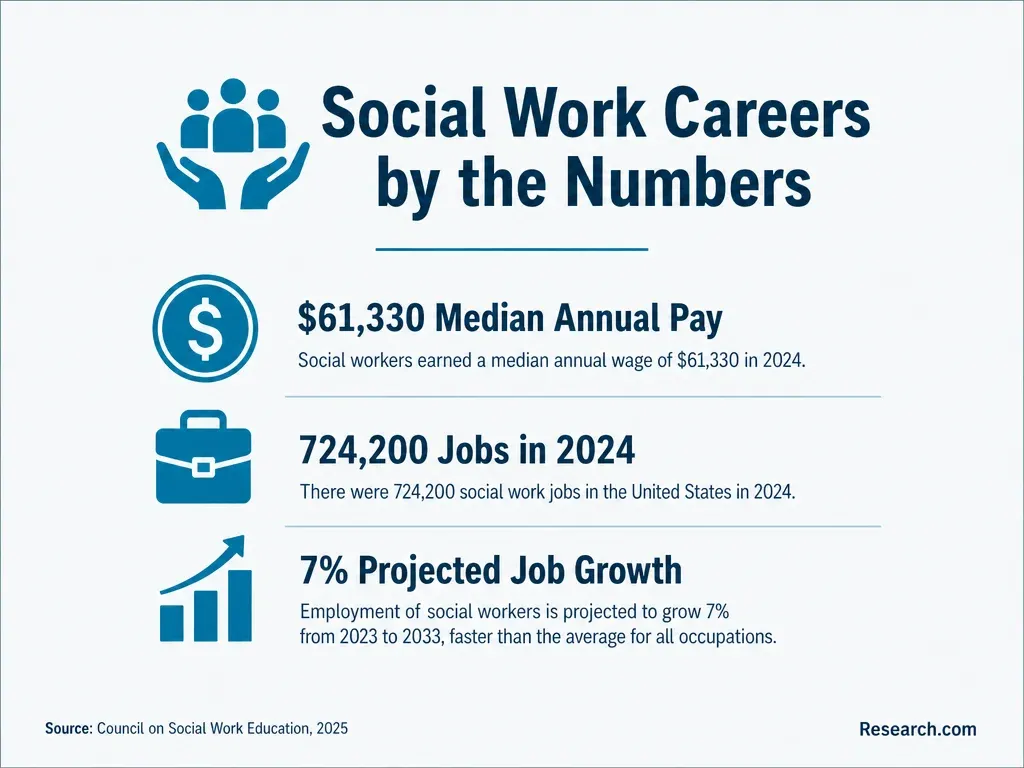
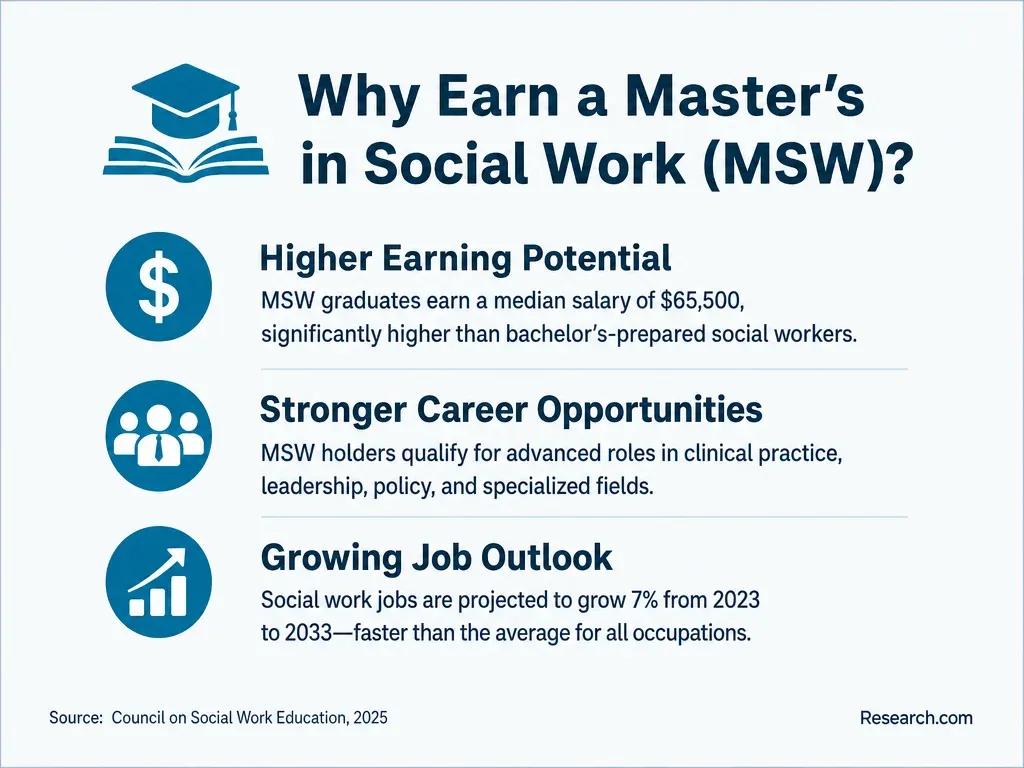
- The U.S. Bureau of Labor Statistics reports a May 2025 median annual wage of $61,780 for social workers overall and projects 6% employment growth from 2025 to 2035; neither figure predicts the return from a particular track.
What is the difference between integrated and specialized practice MSW tracks?
Integrated practice teaches students to connect work with individuals and families to groups, organizations, communities, and policy. A student might learn to coordinate a person's access to housing while also examining the agency procedures and local policies that create barriers. It is not necessarily introductory or less rigorous than a specialization; its advanced goal is to move thoughtfully among levels of practice.
Specialized practice develops greater depth in an identified area, such as clinical intervention, school social work, healthcare, community organizing, or policy analysis. "Specialized" does not always mean clinical, and a specialization rarely excludes every other level of practice.
Schools define these tracks differently, so compare the stated competencies and required experiences rather than relying on the names alone. The distinction is separate from choosing between two MSW study pathways: traditional and advanced-standing sequences describe entry routes, not whether advanced study is integrated or specialized.
How do learning goals and competencies differ between MSW tracks?
Both tracks should develop ethical judgment, engagement, assessment, intervention, evaluation, research literacy, and attention to structural inequities. The meaningful difference is the level of depth and combination expected in advanced assignments.
This comparison illustrates questions to ask about a program's published learning outcomes; it is not a universal curriculum.
| Learning goal | Integrated practice emphasis | Specialized practice emphasis |
| Assessment | Connects a person's circumstances with service systems and community conditions | Applies assessment methods suited to a named role or setting |
| Intervention | Coordinates direct service, organizational responses, and advocacy | Practices interventions or strategies central to the specialty |
| Evaluation | Examines outcomes across clients, programs, or systems | Measures outcomes relevant to the chosen practice area |
A useful test is to read each track's advanced competency statements and sample assignments: will you demonstrate the work you hope to do after graduation, or mainly study it? Students still choosing undergraduate preparation can examine BSW program selection for prospective students; BSW generalist learning is the foundation on which MSW tracks build.
How do coursework and field placements differ between the tracks?
An integrated sequence may pair advanced direct-practice courses with policy, organizational change, and program evaluation. A specialized sequence may devote more electives and skills training to its focus—for example, clinical assessment and intervention or community organizing and policy implementation. Inspect required courses, not just elective menus: an appealing elective might be offered infrequently or conflict with field hours.
Field education should give students supervised opportunities to demonstrate the track's goals. An integrated placement might combine service coordination with an approved agency-improvement project; a specialized placement might emphasize supervised tasks in the relevant setting. Neither assignment guarantees competence in every function at that agency.
Ask the field office which tasks, qualified instructors, and sites are available locally, and how learning is evaluated. Field education is curricular learning, not automatically credit toward post-degree clinical-license supervision. For students balancing employment with placement, online MSW timelines for working students offer a starting point, but the school must confirm its actual field schedule.
Integrated practice can fit roles that cross service levels: care coordination, community-based program development, nonprofit leadership, or public-agency work combining direct service and systems improvement. A specialization may align more closely with a defined role, such as behavioral health clinician, school social worker, healthcare social worker, or policy analyst. These are possible directions, not jobs conferred by a track.
Match the work you want to perform to actual job postings: note required degree, license, school-specific qualification, experience, and duties. A clinical specialization may help you seek supervised clinical employment, but independent psychotherapy requires the applicable state authorization.
Conversely, a policy or management job may value relevant projects and experience more than a clinical course sequence. For a wider view of exploring roles for master's-prepared social workers, compare job requirements with the evidence you could produce through coursework and field learning.
The track name generally does not determine licensure on its own. State boards decide whether an applicant's education meets the rules for a particular license category, along with any examination, application, and supervised-experience requirements.
Some jurisdictions or intended roles may have specific coursework or training conditions, so a prospective clinical or school-focused student should check those conditions before choosing electives and placements.
Start with the board in the state where you intend to practice, identify the license category you need, and ask the program how its curriculum maps to that board's current requirements. Keep academic field education distinct from any qualifying post-degree supervised experience.
An MSW, clinical concentration, completed exam, or license in another state does not automatically authorize independent practice in your target state. Use MSW licensure alignment before enrollment as a comparison aid, then confirm eligibility directly with the responsible board.
Check the Council on Social Work Education's program directory for the exact MSW program, its status, and the status relevant to your expected enrollment and graduation dates.
Institutional accreditation and a school's statement that it follows CSWE standards are not substitutes for confirming programmatic status. Then compare what each school can document about the track you would actually enter.
These checks turn similarly named tracks into a usable comparison:
- Request the advanced curriculum map, competency statements, course rotation, and sample field-learning objectives for each track.
- Ask the field office which placements can support those objectives in your location and who is responsible for finding and approving a site.
- Ask for available completion and licensing-exam outcomes, including cohort and year, without treating aggregate results as a prediction of your own outcome.
- Confirm accreditation and state licensing questions with the relevant accreditor and board rather than relying solely on admissions materials.
Use social work program comparisons for future students to build a shortlist, then obtain written answers for your entry term and intended track.
Delivery format does not define practice emphasis: either track can include online coursework, campus instruction, or a hybrid sequence. The consequential differences are access to live skills practice, the placement network near you, and whether required activities fit your schedule.
An online integrated track may need group projects and agency-based systems work; an online specialized track may require synchronous practice labs or particular placement settings.
Ask for a sample weekly schedule showing live sessions, group work, field days, and any campus visits. Also confirm whether the school can enroll and place students in your state. Asynchronous lectures do not make agency hours asynchronous. If schedule control is decisive, compare the advertised flexibility of flexible-paced social work master's programs against their actual skills and field requirements.
A traditional or foundation MSW route can admit applicants whose bachelor's degree is outside social work, subject to the school's admissions and prerequisite rules. Advanced standing typically requires a qualifying BSW from a CSWE-accredited program or another credential the school specifically recognizes.
Relevant work experience or a psychology degree alone does not establish eligibility. Schools may also set BSW recency, grade, and field-performance conditions.
Admission to the MSW and entry into a particular concentration may be separate decisions. Ask when students declare a track, whether selection is competitive, and what happens if a required course or placement is unavailable. Applicants comparing MSW programs with accessible admissions should assess track and field eligibility as carefully as the initial acceptance criteria.
Entry route, credit requirements, enrollment pace, and field sequencing usually affect total time and expense more than the words "integrated" or "specialized." Advanced standing may remove foundation coursework for eligible BSW graduates; it does not eliminate advanced coursework or field education.
A specialization can add cost or time if required courses or suitable placements are offered less often, while an integrated track can do the same if its cross-level requirements are extensive.
Compare each school's total required credits multiplied by its applicable tuition rate, then add mandatory fees, books, placement travel, screening, and any required campus visits. Include reduced paid work hours during field education when calculating household cost.
Request a term-by-term plan and written total-cost estimate for your entry route. MSW program affordability comparisons can help narrow options, but advertised tuition alone cannot establish which track costs less for you.
What are the salary expectations and job outlook for MSW graduates?
Track-specific salary data are not established by broad occupation statistics. As context, the U.S. Bureau of Labor Statistics reports May 2025 median annual wages of $59,550 for child, family, and school social workers, $67,880 for healthcare social workers, and $60,280 for mental health and substance abuse social workers. It projects employment growth from 2025 to 2035 of 4%, 8%, and 10%, respectively, for those occupations.
Those categories describe workers with varying degrees, licenses, experience, employers, and locations, not the earnings or job-placement rates of graduates from either MSW track. Use the category closest to your target duties, then check local postings and public-sector pay scales. Social worker earnings and location considerations can provide additional context, but the stronger financial test is whether a track's required learning and credentials align with jobs you can realistically pursue.
Other Things You Should Know About Social Work Programs
Possibly. Ask the program for a written degree audit first: completed courses may not meet the new track's requirements, and a different field placement could delay graduation.
Often, if the program permits them and seats are available. Check whether the electives build enough depth for your goal; taking a course is not the same as completing a concentration.
Only if the MSW program approves the arrangement. It may require distinct learning tasks, appropriate field instruction, and a plan separating educational evaluation from ordinary employment supervision.
That depends on the school. The concentration may appear on a transcript rather than the diploma, so be ready to explain relevant courses, field tasks, and demonstrated skills accurately.
- Assessing Student Performance in Field Education | Applied Learning in Social Work Education Journal https://alswe.simmons.edu/article/assessing-student-performance-in-field-education/
- Master of Social Work | MSW Program | Fordham Graduate School of Education https://www.fordham.edu/graduate-school-of-social-service/academics/master-of-social-work/
- Masters of Social Work Field Manual | East Texas A&M University, ETAMU https://www.etamu.edu/masters-of-social-work/field-manual/
- Your MSSW Pathway - Columbia School of Social Work https://socialwork.columbia.edu/content/your-mssw-pathway
- MSW Program | Master's of Social Work | Aurora University https://aurora.edu/academics/graduate/social-work/index.html
- Methods - Silberman School of Social Work at Hunter College https://sssw.hunter.cuny.edu/programs/methods/
- MSW Core Competencies - Department of Social Work | Graduate Program (MSW) https://socialwork.appstate.edu/academic-programs/graduate-program-msw/msw-core-competencies
- Goals and Competencies | Social Work - University of Arkansas https://socialwork.uark.edu/graduate/goals-and-competencies.php
- Field education guide - VCU School of Social Work https://socialwork.vcu.edu/information-for/current-students/field-education-guide/
- Educational Policy and Accreditation Standards | Norfolk State University https://www.nsu.edu/social-work/Educational-Policy-and-Accreditation-Standards.aspx