2027 Expressive Arts Approaches in Social Work: Training, Collaboration, and Professional Boundaries
Audited and Verified:
Our Editorial and Data Verification Process
Research.com uses government datasets, official education statistics and primary institutional information to support its career and degree guides. Our review process checks factual accuracy, occupational definitions, source dates and the requirements associated with the credentials discussed.
How This Article Was Fact-Checked
Our editorial team verifies salary estimates, employment projections, education requirements and program information against original data providers and official organizations. Salary figures are checked against the relevant occupational definitions and reporting periods. Information about licensure, accreditation and required in-person training is reviewed separately.
Fact-checked and verified on:

Co-Founder and Chief Data Scientist
Creative activities can help people communicate and participate in social services, but using art in practice is not the same as providing art therapy. For social work students and practitioners, the important decision is which activities fit their role, training, and supervision - and when to involve a credentialed specialist.
This guide compares education and credential paths, explains practical boundaries and collaboration, and shows how to evaluate programs, training costs, and relevant jobs without assuming that an expressive arts course grants clinical authority.
Key Things You Should Know
- Social workers may use appropriately supervised creative activities for engagement or reflection; they should not represent those activities as art therapy without the qualifications and authority required for that service.
- A CSWE-accredited BSW or MSW builds social work competencies, while specialty competence depends on relevant training, observed practice, supervision, and the intended task. A degree alone does not grant a license.
- Choose training by the role you want: a brief workshop may support a bounded activity, but psychotherapy or a creative arts therapist role may require a distinct degree, supervised experience, and state-specific credentials.
What are expressive arts approaches in social work, and how do they differ from art therapy?
Expressive arts approaches use activities such as drawing, movement, music, storytelling, or collage to support a social work purpose. A worker might offer an optional drawing activity to help participants identify community strengths, then discuss what participants choose to share. The activity does not, by itself, establish a diagnosis or constitute psychotherapy.
Art therapy is a specialized mental health profession with its own educational and credentialing pathways. In some jurisdictions, its professional title and practice are regulated. Expressive arts therapy may also refer to a distinct multimodal specialty; the phrase "expressive arts" is not proof of a particular qualification.
The useful distinction is the service being delivered, not whether paint, music, or images are present. An art therapist may use drawing as part of a clinical treatment plan. A social worker may use drawing to make a support group more accessible. Conversely, a licensed clinical social worker who incorporates creative methods into psychotherapy still needs competence in those methods and must stay within their license, consent, documentation, and employer requirements.
For someone beginning planning undergraduate study in social work, generalist social work preparation is a starting point - not a substitute for specialized creative arts therapy education.
Which social work degrees prepare you to use expressive arts approaches?
The right degree depends on whether your goal is generalist service, clinical social work, or a creative arts therapist position. Program titles and electives vary, so compare the actual curriculum and field opportunities rather than assuming a concentration teaches a particular technique.
| Path | Relevant preparation | Important limit |
| BSW | Generalist engagement, ethics, assessment, and supervised field learning | Does not independently qualify a graduate to provide psychotherapy or art therapy |
| Traditional or foundation MSW | Graduate social work preparation for applicants with a qualifying bachelor's degree in another field, followed by specialized study | Clinical coursework and field education do not themselves grant independent clinical authority |
| Advanced-standing MSW | A program-specific route for eligible graduates of qualifying BSW programs | Prior creative experience or a non-BSW bachelor's degree does not ordinarily replace its BSW entry requirement |
| Creative arts therapy degree or specialty training | Discipline-specific methods and supervised practice, depending on the profession and program | A social work credential does not automatically satisfy another profession's requirements |
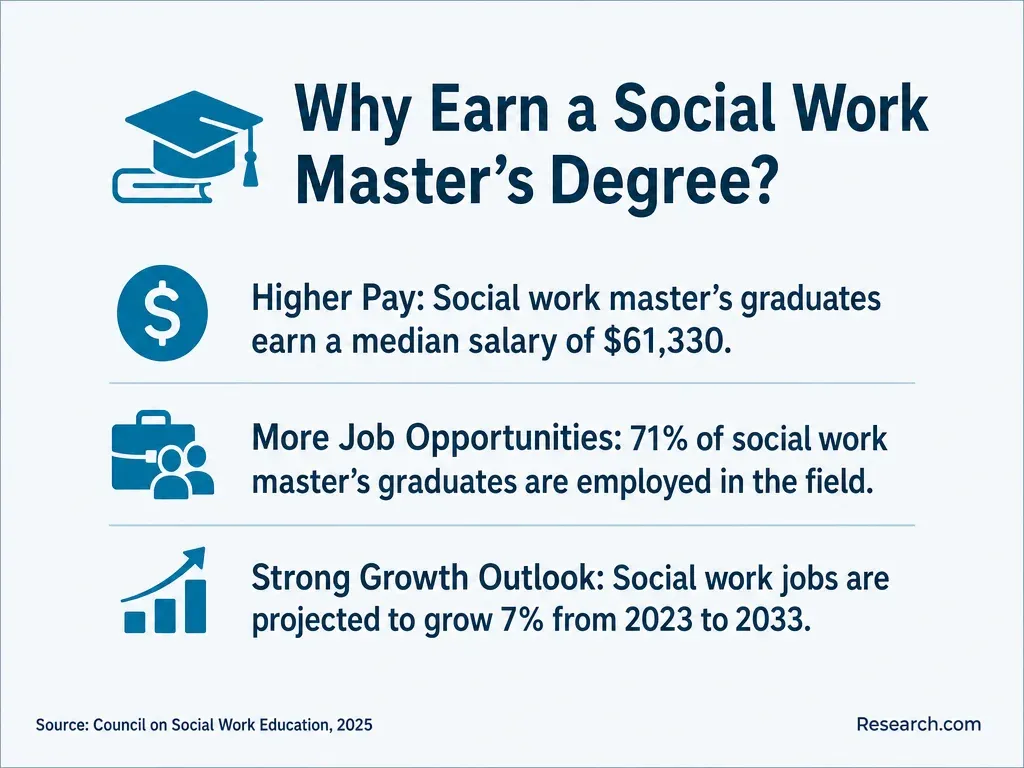
A DSW or PhD is generally not the most direct way to learn a creative intervention: these degrees typically emphasize advanced practice and leadership or research, respectively, according to the program. If you already have an eligible BSW and want an MSW for broader social work goals, planning a shorter MSW pathway may be worthwhile. Confirm that its pace still allows time for skills practice and an appropriate placement.
What licenses or creative arts therapy credentials might you need?
Requirements follow the activity, title, setting, and jurisdiction. An agency-approved, nonclinical creative exercise may not require a specialty credential, although the worker still needs appropriate competence and supervision. Providing psychotherapy as a social worker requires the authority allowed by the applicable state license; an MSW alone is not independent clinical licensure.
If the intended job is art therapist, music therapist, or another regulated creative arts therapy role, check that profession's current state rules and the relevant credentialing body's education and supervised-experience requirements. Voluntary certification, a continuing education certificate, social work licensure, and a state-issued creative arts therapy license are different things. A credential in one profession does not automatically authorize a protected title in another.
Before enrolling, compare the program's written professional licensure disclosures with the board requirements in the state where you plan to work. MSW professional licensure disclosure comparisons can help organize that check, but the board determines eligibility and permitted practice.
Collaboration works best when each professional's contribution is explicit. The social worker may identify service barriers, coordinate referrals, address family or systems concerns, and help align an intervention with the person's goals. The creative arts therapist may assess and deliver discipline-specific services within their own qualifications. Neither role automatically supervises or replaces the other.
Before a joint group or referral, agree on the referral question, each provider's responsibilities, client consent for information sharing, documentation, and what happens if a participant needs support beyond the group's scope. Share only information permitted by law and agency policy. A case conference can then evaluate whether the service is accessible and useful without treating participation or an artwork as proof of improvement.
Interprofessional experience can be valuable when graduate social work career planning includes behavioral health, schools, hospitals, or community programs. Look for placements where collaboration is supervised and routine, not merely listed in a course description.
Start by confirming the exact BSW or MSW program and its accreditation status through CSWE, including any status relevant to your intended enrollment. Then examine course descriptions, faculty interests, field partners, and the school's placement approval process. CSWE accreditation concerns social work education; it does not certify a program as art therapy training or guarantee a particular placement.
Ask the program for concrete answers before committing. These questions distinguish a workable learning opportunity from an appealing elective title:
- Which courses teach creative methods, and do students practice them with feedback or only read about them?
- Can the field office identify approved sites where creative activities are used, and who provides qualified social work field instruction?
- What tasks can a student perform there, and how are consent, documentation, accessibility, and referral boundaries taught?
- If the preferred site is unavailable, what alternative placement still meets the degree's competencies?
Applicants should also check the school's entry route and application requirements separately from its specialty offerings. If references are an obstacle, MSW application options with no letters of recommendation may help identify programs to investigate; verify each program's current requirements and field suitability before applying.
There is no single expressive arts training timeline or price. A short continuing education workshop, a multi-course certificate, an MSW elective, and a qualifying creative arts therapy degree serve different purposes. Compare them by the competence and credential you need, not by the number of course hours advertised. A workshop may be enough to introduce a bounded group activity; it does not replace the education and supervised practice required for a regulated therapy role.
Request a written total-cost estimate covering tuition or registration, fees, supplies, travel, required live sessions, supervision, and time away from paid work. For a degree, include the cost and scheduling effects of field education. For a certificate, ask whether training carries continuing education credit accepted by your licensing board and whether the employer recognizes it. Neither acceptance is automatic.
If an MSW is necessary for your broader career goal, planning the cost of an online MSW can help frame comparisons. If you already hold the degree and need only an employer-approved skill, a targeted course plus supervision may cost less and address the gap more directly.
What are the salaries and job prospects for social workers in relevant settings?
There is no standard "expressive arts social worker" wage category. The closest U.S. Bureau of Labor Statistics figures are organized by social work occupation, not by creative technique. The following May 2025 median annual wages and projected 2025-2035 employment changes provide context for settings in which a social worker might use these approaches.
| BLS occupation | Median annual wage, May 2025 | Projected employment change, 2025-2035 |
| Child, family, and school social workers | $59,550 | +4% |
| Healthcare social workers | $67,880 | +8% |
| Mental health and substance abuse social workers | $60,280 | +10% |
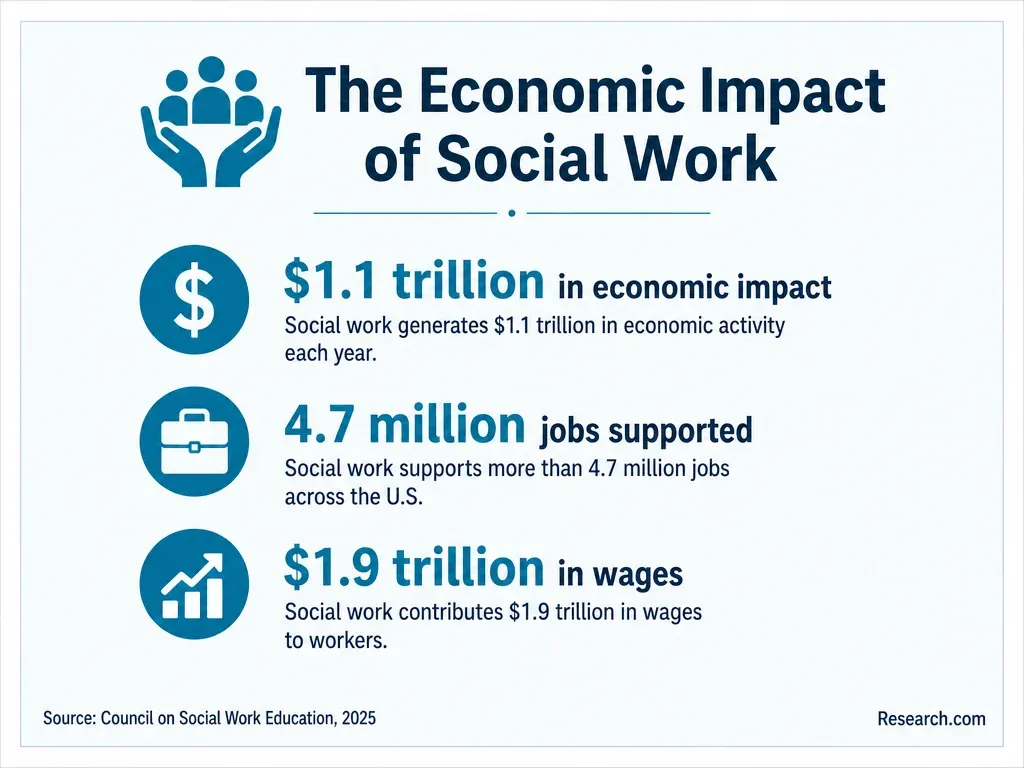
These are occupation-wide U.S. medians and projections, not starting salaries, local job forecasts, or evidence that expressive arts training raises pay. Compare actual postings by location, license requirement, employer, and duties. MSW salary comparisons by state can provide additional geographic context, but the relevant offer and cost of living should drive a personal decision.
Other Things You Should Know About Social Work
Respect the choice and offer an appropriate alternative. Participation should not be treated as a test of cooperation or motivation.
Do not assume a general service consent covers publication. Check the specific authorization, privacy law, agency rules, and risks of identification before sharing anything.
Ask participants about accessibility and relevance, and compare feedback with the group's stated goals. Avoid interpreting the artwork itself as a clinical outcome measure.
Do not upload identifiable client material to an unapproved tool. Confirm agency authorization, privacy protections, consent where required, and whether the tool has any valid role in the service.
- Levels and Eligibility Requirements | North Carolina Social Work Certification and Licensure Board https://www.ncswboard.gov/levels-and-eligibility-requirements/
- Interprofessional collaboration between social workers... - PMC https://pmc.ncbi.nlm.nih.gov/articles/PMC10675993/
- Culturally Responsive Evaluation and Treatment Planning | nih.gov https://www.ncbi.nlm.nih.gov/books/NBK248423/
- NASW Standards for Social Work Case Management | nycourts.gov https://www.nycourts.gov/reporter/webdocs/nasw_standards_socialwork_casemgt.htm
- Beyond Talk Therapy: How Licensed Therapists Use Art, Music, and Movement to Help Teens Manage Anxiety https://www.ndnu.edu/articles/how-licensed-therapists-use-art-music-and-movement-to-help-teens-manage-anxiety.html
- Clinical Social Worker vs Therapist | Palo Alto University https://paloaltou.edu/resources/blog/clinical-social-worker-vs-therapist
- Active Visual Art Therapy and Health Outcomes | jamanetwork.com https://jamanetwork.com/journals/jamanetworkopen/fullarticle/2823638
- Best Practice Standards in Social Work Supervision | socialworkers.org https://www.socialworkers.org/Practice/NASW-Practice-Standards-Guidelines/Best-Practice-Standards-in-Social-Work-Supervision