Most Affordable Welding Schools & Training - Budget-Friendly Welding Trade Programs in Wichita for 2026

Co-Founder and Chief Data Scientist
Choosing the right welder trade school in Wichita can feel overwhelming, but it doesn’t have to be. This article introduces a carefully crafted welder trade school programs ranking developed by the Research.com team of data scientists to guide you toward the best options available in 2026.
By exploring this ranking, you’ll discover affordable programs that fit your goals and budget. Earning a welder diploma or certification opens doors to rewarding career opportunities and skill growth. Take the first step toward your future with confidence and clarity.
Key benefits of finishing welder trade school in Wichita
- Graduates from welder trade schools in Wichita can expect starting wages around $21.97 per hour, with experienced welders earning up to $52,502 annually, reflecting strong earning potential in the local market.
- A graduate from a popular Wichita trade school often finds diverse career paths, including structural welding, arc welding, or specialized fabrication, offering flexibility and growth in various industries.
- Completing a welder trade school online provides convenience and faster entry into the workforce, as seen with online graduates who balance learning with personal commitments while gaining valuable skills without the cost of a traditional degree.
- Most Affordable Welding Schools & Training - Budget-Friendly Welding Trade Programs in Wichita for 2026
- What can I expect from welder trade schools in Wichita?
- Where can I work after finishing welder trade schools in Wichita?
What can I expect from welder trade schools in Wichita?
Students enrolling in welder trade school programs in Wichita can expect a hands-on, practical learning experience. For instance, graduates from Heartland Welding Academy describe spending about five hours daily welding in labs, paired with focused classroom theory, allowing them to build confidence with real equipment under expert guidance. The student-to-instructor ratio of 16:1 ensures personalized attention, helping learners quickly overcome challenges on the job.
Training covers essential welding methods like MIG, TIG, Stick, and Flux Core, alongside cutting techniques such as oxy-acetylene. Students also gain skills in blueprint reading, materials science, and safety practices, which graduates say make them feel prepared and safe when entering work sites. Programs at WSU Tech emphasize industry certifications, providing chances to earn multiple AWS qualifications and OSHA 10 safety credentials-certifications valued by local employers.
Certificate programs typically last around 24 weeks, while associate degrees may take up to two years. Classes often run during the day, with some evening options to fit various schedules. New students can start almost monthly, making enrollment flexible for working adults.
Where can I work after finishing welder trade schools in Wichita?
Graduates of welder trade school programs in Wichita often find themselves quickly employed in the city's strong manufacturing sector. Many secure roles as welders or fabricators, working hands-on with metals to build or repair machinery and structural components. For example, graduates from popular local schools report starting jobs in manufacturing firms where entry pay ranges from $18.30 to $22 per hour, providing immediate financial stability.
Construction companies also actively hire welding graduates to assist in erecting metal frameworks and assembling building parts. This means students can move directly into on-site roles that are both physically engaging and well-compensated. Staffing agencies like LSI Staffing connect graduates to full-time and temporary positions, often with overtime and benefits, helping welders grow their careers fast.
Some graduates find rewarding paths in specialized fields such as custom jewelry welding or become instructors at local community colleges, passing skills on to new students. These real-life outcomes show how Wichita's trade schools open doors to diverse, fulfilling welding careers.
After finishing a welder trade school program in Wichita, many graduates find entry-level roles offering an average salary around $45,779 annually. This aligns well with what recent grads from popular programs in the area report, helping them confidently start their careers and support themselves. For example, a typical Welder I position pays between $40,678 and $52,586, giving new welders a solid income as they gain hands-on experience.
Specializing can boost earnings quickly. Graduates who focus on arc welding often see salaries near $52,502 per year, or about $25 per hour. This matches stories from local trade school alumni who pursued certifications and secured higher-paying roles right out of school.
General welders in Wichita earn roughly $26.65 hourly, with wages ranging from $20.87 to $30.53. Structural welders start around $19.91 per hour, but those who advance into specialist positions can earn up to $192,236 annually. This progression keeps many graduates motivated to grow their skills and enjoy long-term financial rewards in Wichita's welcoming welding community.
- Admission is generally straightforward with minimal prerequisites, and classes start monthly at schools like Heartland Welding Academy and WSU Tech.
- Programs emphasize hands-on training, with up to 90% practical instruction in various welding techniques including MIG, TIG, Stick, and pipe welding.
- Program lengths range from 12 weeks for certificates to up to two years for associate degrees, with costs from $3,500 to $18,000 depending on the program.
- Financial aid options such as scholarships, grants, federal loans, and VA benefits are widely available to help cover tuition costs.
- Entry-level welders in Wichita earn about $37,000 to $45,000 annually, with experienced welders making $50,000 or more depending on certifications and specialization.
Completing a welder trade school program in Wichita typically takes between six months and one year, depending on the course intensity and schedule. Many students appreciate the flexibility offered by popular schools like Wichita Area Technical College, where full-time students often finish in about nine months, while part-time options can extend the timeline but allow working adults to balance commitments.
Graduates frequently share how the hands-on training and focused curriculum made the time fly by, turning their initial nervousness into confidence behind the welding torch. For example, one graduate described starting with no experience and within months feeling prepared to join a local fabrication shop, highlighting how practical the programs are.
The shorter duration compared to four-year degrees appeals to those eager to enter the workforce quickly. The immersive environment in Wichita's trade schools helps students build skills rapidly, supported by instructors who understand the local industry demands.
On-campus welder trade school programs in Wichita focus heavily on hands-on training, which is crucial for mastering welding skills. Graduates from well-known schools often recall spending most of their time in workshops, using real welding equipment under expert supervision. This practical experience builds confidence and ensures they are job-ready, as physical skill and safety are non-negotiable in welding careers.
In contrast, online programs mainly cover the theory side-like blueprint reading, metallurgy, and safety rules-through video lectures and readings. However, because welding is a tactile skill, most online options in Wichita are hybrid. Students study theory remotely but must attend in-person labs or workshops to practice welding techniques.
Many graduates appreciate this blend, as it offers flexibility for balancing work or family while still gaining essential hands-on experience. Trade schools in Wichita ensure that even online learners get enough in-person practice to meet certification standards, making the programs practical and accessible.
The average cost of welder trade school programs in Wichita varies depending on the school and program length, but prospective students often find options that fit different budgets. For example, graduates of Heartland Welding Academy's 12-week Structural Code Welding Certification program pay around $9,450 in tuition for a full 360-hour course. Many students appreciate the program's focus on essential welding processes like GMAW, FCAW, and SMAW, paired with professional development and safety training.
At WSU Tech, the tuition fees for welding programs reflect different training depths. The Welding Technical Certificate Training Program, popular among local students, costs approximately $5,233 for in-state residents, which includes tuition, registration, and supplies for 45 hours of instruction. Out-of-state students experience higher fees, around $19,115, but many find the thorough hands-on training worthwhile for advancing their careers.
The Welding Associate of Applied Science (AAS) Training Program at WSU Tech offers more extensive 60-hour instruction with in-state costs near $5,417 just for tuition and total program costs of about $11,134, including supplies and fees. Graduates often mention the program's depth and strong industry connections as crucial for their job placement. It's important to consider additional expenses like books and materials, which can add significant costs but are essential to the learning experience.
When estimating the average cost of welder trade school in Wichita, students should factor in these tuition fees, plus extra expenses, and explore financial aid opportunities. Many find it useful to understand what is the difference between a trade and a vocation to select the best educational pathway for their goals.

Welder trade school students in Wichita can access several financial aid options to ease the burden of tuition costs. Many graduates from Heartland Welding Academy share how Federal Student Aid, including Pell Grants and Direct Loans, played a crucial role in their ability to enroll and complete training. Applying through FAFSA is essential and determines eligibility based on citizenship, enrollment status, and academic progress.
Veterans and their families often benefit from VA Education Benefits like the GI Bill®, which many Wichita schools, including Heartland Welding Academy, accept. This has helped veterans transition smoothly into welding careers with significant tuition assistance.
State and local grants also support those facing unemployment or underemployment. For example, the Workforce Alliance of South Central Kansas offers grants that have empowered several students to pursue welding training without financial stress.
Scholarships targeted at welding students provide additional relief, often based on merit or need. Graduates frequently recommend checking directly with schools and local organizations to find these opportunities.
To enroll in a welder trade school program in Wichita, applicants typically need to meet a few straightforward prerequisites designed to set them up for success. Most schools require a high school diploma or GED as a basic foundation, ensuring students have essential math and reading skills critical for understanding welding techniques and safety protocols.
Graduates from popular Wichita trade schools often share that having some hands-on experience or exposure to welding tools, even through a high school shop class or a summer job, boosts confidence and readiness.
Other common prerequisites include:
- Passing a basic aptitude test focused on math and mechanical reasoning to gauge problem-solving abilities.
- Being physically capable of handling welding equipment and standing for extended periods, which is vital in real-world welding tasks.
- Submitting proof of immunizations or passing a health screening to comply with safety standards.
These requirements are practical steps to ensure students thrive in Wichita's hands-on training environment. Graduates often recall that meeting these prerequisites helped them dive right into learning without feeling overwhelmed, making their journey both rewarding and manageable.
Welding trade school programs in Wichita cover essential courses that prepare students for real-world welding jobs. Graduates from programs like Heartland Welding Academy emphasize hands-on practice with the four key welding processes: Shielded Metal Arc Welding (SMAW or Stick), Gas Metal Arc Welding (GMAW or MIG), Gas Tungsten Arc Welding (GTAW or TIG), and Flux Cored Arc Welding (FCAW). These courses build confidence through lab work on different metals and joint types, making learning practical and engaging.
Safety training is a core focus, with classes on welding safety procedures, OSHA 10 certification, and proper equipment use. This ensures students understand how to protect themselves and coworkers in demanding environments.
Students also master:
- Blueprint reading and welding symbols to accurately follow fabrication plans
- Metal fabrication, layout, and cutting techniques including oxy-acetylene and plasma arc cutting
- Welding metallurgy, inspection, and testing procedures, especially at WSU Tech
Many Wichita programs offer advanced courses in pipe and structural welding, plus exposure to automated welding systems. Graduates often feel well-prepared and excited entering the local workforce, knowing their skills meet industry standards and AWS certifications.
Welder trade school programs in Wichita offer specialized training in key welding processes, ensuring graduates are prepared for a variety of careers. Students can expect to develop skills in Gas Metal Arc Welding (GMAW), Gas Tungsten Arc Welding (GTAW), Shielded Metal Arc Welding (SMAW), and Flux Cored Arc Welding (FCAW). For instance, graduates from Heartland Welding Academy often highlight how mastering Structural Code Welding certification helped them confidently enter industries such as manufacturing, shipbuilding, and aerospace.
Programs like those at WSU Tech emphasize not only welding techniques but also essential skills such as blueprint reading, metallurgy, and safety standards, making the training comprehensive and practical. Flint Hills Technical College focuses on interactive, hands-on welding and automated welding, appealing to students eager to gain real-world experience.
Popular programs in Wichita often include:
- Oxy-Acetylene Cutting and Welding basics
- Safety protocols and industry standards
- Machine adjustments and rod selection
These specialized tracks provide clear pathways for those ready to start quick-to-learn trade jobs that lead to well-paying careers in welding within the region's thriving industries.
Start by verifying program accreditation and certifications accepted by local employers in Wichita, such as those recognized by the American Welding Society. Graduates from WSU Tech and Heartland Welding Academy often praise the hands-on focus, with some reporting up to 90% practical welding from day one, which builds confidence and real skills quickly. This is essential when comparing welding programs in Wichita, as employers value readiness to work on-site immediately.
Look closely at curriculum coverage; the best welding schools in Wichita include courses on MIG, TIG, SMAW, and FCAW techniques plus safety and blueprint reading. Programs offering OSHA 10 and AWS certifications give you a competitive edge and can lead to better job placements. Flexibility is key-some students prefer shorter certificate programs for fast entry, while others choose longer associate degrees for depth and transfer options.
Tuition and financial aid options vary widely. Many students find value in schools that support scholarships, federal aid, or VA benefits, enabling them to focus on learning without financial stress. Exploring options like the most affordable online maintenance technician trade programs can also help manage costs while gaining essential skills.
Finally, pick a school with strong local industry connections and job placement support to maximize your chances of employment in Wichita's welding market. Graduates often highlight how these relationships open doors and provide networking opportunities that accelerate their careers.

Welder trade school graduates in Wichita find a variety of rewarding career paths thanks to strong local demand. Many start as skilled welders, fabricator/welders, production welders, or pipefitters, working at manufacturing firms or construction companies known in the region. Popular trade schools in Wichita prepare students in real-world skills like MIG, GMAW, and GTAW welding techniques, enabling them to thrive in hands-on environments requiring blueprint reading and metal layout tasks.
Graduates often move into specialized roles such as lead welder or maintenance welder, where they handle repairs and safety compliance in industrial or transportation settings.
- Many find positions at companies like RedGuard or Anchor Fabrication Kansas, earning competitive hourly wages ranging approximately from $17.50 to $26.50.
- Some seek advancement by gaining skills in robotic welding, valued at firms like Koch-Glitsch.
- Others pursue semi-trailer mechanic roles, blending welding expertise with mechanical repair work.
Students training in Wichita's welder trade programs often share positive experiences about quickly securing full-time work with benefits. These programs highlight not only technical skill-building but also practical career readiness. For those wondering what skills are needed to become a welder, career paths in welding careers in Wichita KS serve as a clear example of strong local opportunity grounded in skilled training.
The job market for welder trade school graduates in Wichita is active and promising. Graduates from popular local programs often find between 70 and 100 openings for welding jobs in Wichita KS at any time, spanning roles like Welder, Fabricator, and Welding Instructor. Many employers seek candidates skilled in processes such as GMAW (MIG) and GTAW (TIG) welding, with the ability to read blueprints and maintain workplace safety.
Starting welder salary in Wichita Kansas typically ranges from $17.50 to $26.50 per hour depending on experience and job specifics, with additional benefits including shift premiums, insurance, and retirement plans. Graduates who have completed hands-on training and obtained certifications from reputable programs, commonly offered at trade schools in the area, report smooth transitions into fabrication shops and construction companies.
Successful students highlight the value of practical experience gained through welding apprenticeships and emphasize that employers like Koch Industries and RedGuard look for trained welders ready to contribute immediately. For those weighing career options, checking out high paying trade school jobs provides useful context on potential earnings beyond entry level.
Most Affordable Welding Schools & Training - Budget-Friendly Welding Trade Programs in Wichita for 2026
# 1 position
Wichita State University-Campus of Applied Sciences and Technology - Welding Technology/Welder.
associateThe Welding Technology/Welder program at Wichita State University-Campus of Applied Sciences and Technology offers a hybrid format with some distance-education options. It prepares students with skills in arc welding, resistance welding, brazing, cutting, welding metallurgy, and safety. Annual in-state tuition is $6,018. Graduates have median earnings of $30,515 one year after completion. The program is accredited by the Higher Learning Commission.
# 2 position
Wichita State University-Campus of Applied Sciences and Technology - Welding Technology/Welder.
certificate or diplomaThe Welding Technology/Welder program at Wichita State University-Campus of Applied Sciences and Technology offers a hybrid format with some distance education options. It prepares students to join or cut metal surfaces using various welding techniques, including arc welding, resistance welding, and brazing. The curriculum covers welding metallurgy, safety, structural design, and applicable codes. Annual in-state tuition is $6,018, and median earnings one year after completion reach $30,515. The program is accredited by the Higher Learning Commission.
Frequently Asked Questions about welder
After completing a welder trade school in Wichita, preparing for the job market involves several key steps. First, obtaining industry-recognized certifications, such as those from the American Welding Society (AWS), significantly improves employment prospects. Many local employers seek welders with certified skills.
Next, building a professional resume that highlights hands-on training and any completed apprenticeships is crucial. Networking through local trade unions and job fairs in Wichita can connect graduates to employers actively hiring in manufacturing and construction sectors.
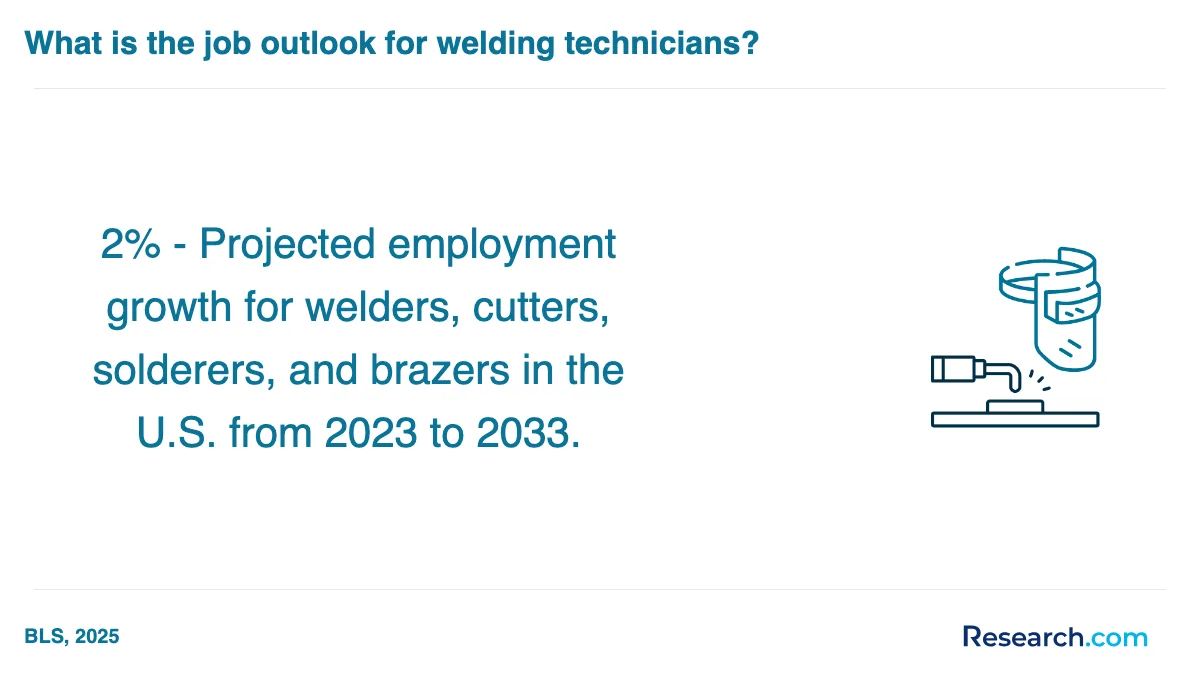
According to the U.S. Bureau of Labor Statistics, welding jobs in Kansas are projected to grow by about 5% through 2030, reflecting steady demand.
Employers in Wichita highly value welder trade school graduates who demonstrate strong technical skills and practical experience. Key abilities include proficiency in various welding techniques such as MIG, TIG, and stick welding. According to the U.S. Bureau of Labor Statistics and local industry reports, knowledge of blueprint reading and welding symbols is essential for accuracy and quality.
Attention to safety protocols is critical, given the hazardous nature of welding work. Employers also seek graduates with good problem-solving skills and the ability to work independently or in teams. Strong physical stamina and hand-eye coordination remain important for meeting job demands in Wichita's manufacturing and construction sectors.
Finding internships relevant to welder trade school programs in Wichita involves multiple strategies. Start by contacting local trade schools and community colleges, which often have partnerships with manufacturing companies and construction firms. The Kansas Department of Labor provides resources and listings for skilled trade internships in Wichita, including welding positions.
Networking is essential-attend local job fairs hosted by Wichita Area Technical College or the Greater Wichita Partnership. According to the U.S. Bureau of Labor Statistics, internships in welding can increase employment prospects by up to 20% in Kansas.
Additionally, explore online platforms like Indeed and local union websites, such as the International Brotherhood of Boilermakers Local 60, for apprenticeship and internship opportunities.
In Wichita, earning a diploma from a welder trade school significantly enhances career mobility and advancement opportunities. According to the Bureau of Labor Statistics, welders in the Wichita metropolitan area earn a median annual wage of approximately $44,000, with certified welders often commanding higher salaries. A diploma signals to employers that the candidate has received formal training in welding techniques, safety protocols, and industry standards, which is crucial for job competitiveness.
Trade schools also provide access to industry certifications such as the American Welding Society (AWS) credentials, highly valued in local manufacturing and aerospace sectors. These certifications can lead to promotions and specialized roles.
Furthermore, Wichita's economy, with its strong manufacturing base, offers numerous pathways for skilled welders to advance into supervisory or inspection positions, especially when backed by formal training credentials.
Students enrolled in welder trade schools in Wichita can benefit from part-time jobs that provide hands-on experience and industry connections. Positions such as welding apprenticeships or assistant welder roles in local manufacturing plants, construction companies, or repair shops offer practical skills alongside education.
Wichita's strong manufacturing sector, including aerospace and machinery firms, often hires part-time welders. According to the U.S. Bureau of Labor Statistics, the Wichita metro area employed over 1,800 welders in 2023, reflecting steady demand. These jobs typically pay between $15 and $22 per hour, giving students valuable income while improving their craftsmanship.
Other complementary roles include metal fabrication assistants and maintenance technicians, which help students understand related trades, broadening their expertise and employability in the region's diverse industrial landscape.
To find the most affordable welder degree program near Wichita, KS, consider checking local community colleges and vocational schools that offer welding courses, as these institutions often provide cost-effective education. Additionally, searching for welding programs specifically near me might reveal nearby options that suit your budget and career goals. Resources like Research.com can assist in comparing the costs and offerings of different welding programs to find the best fit for you.
- fabrication welder Salary in Wichita, Kansas | Salary.com https://www.salary.com/research/salary/posting/fabrication-welder-salary/wichita-ks
- Specialist Welder in Wichita, KS Salary - August 2025 https://www.comparably.com/salaries/salaries-for-specialist-welder-in-wichita-ks
- Urgent! Welder jobs in Wichita, KS - August 2025 (with Salaries!) - Jooble https://jooble.org/jobs-welder/Wichita%2C-KS
- Welding training - Warsaw, Kraków, Wrocław, Łódź, Poznań https://kurso.eu/en/training-and-courses/welding-courses/welding/
- Welding Trade School | Summit College https://summitcollege.edu/programs/trade-technical/welding/
- Welding | ontariocolleges.ca https://www.ontariocolleges.ca/en/programs/professions-and-trades/welding
- Welder https://www.sait.ca/apprenticeships-and-trades/programs/welder
- Welding Technology | Clover Park Technical College https://www.cptc.edu/programs/welding
- Best Welding Schools - Elite Welding Academy https://eliteweldingacademy.com/
- Combination Welding Technology Program & Trade School | Apex https://apexschool.com/programs/combination-welding-technology/