Most Affordable Welding Schools & Training - Budget-Friendly Welding Trade Programs in Paterson for 2026

Co-Founder and Chief Data Scientist
Looking to start a rewarding career as a welder in Paterson? Choosing the right trade school is a crucial step toward success, and this article is here to guide you.
The Research.com team of data scientists has created a welder trade school programs ranking designed to help you make an informed choice about which programs truly stand out.
By exploring this ranking, you’ll discover affordable options that can lead to valuable diplomas or certifications, opening doors to steady jobs and skill growth.
Your future in welding starts with the right education-and we’re here to help you find it.
Key benefits of finishing welder trade school in Paterson
- Graduates from welder trade schools in Paterson can expect to earn around $27.11 per hour, with specialized roles like Arc Welders reaching up to $30 per hour or $62,086 annually, offering strong financial opportunities.
- Career paths for trade school graduates are diverse, including positions as Welder Fabricators or Heavy Equipment Welders, allowing you to find a role that fits your skills and interests.
- Completing a welder trade school online provides flexibility and faster entry into the workforce, as shown by many Paterson graduates who balance work and study while gaining valuable certifications.
- Most Affordable Welding Schools & Training - Budget-Friendly Welding Trade Programs in Paterson for 2026
- What can I expect from welder trade schools in Paterson?
- Where can I work after finishing welder trade schools in Paterson?
What can I expect from welder trade schools in Paterson?
Students enrolling in a welder trade school program in Paterson can expect an immersive, hands-on learning environment that mirrors real-world welding shops. Graduates from popular schools like Eastwick College and the nearby Universal Technical Institute in Bloomfield often describe gaining confidence through small class sizes and personalized instruction, allowing them to master techniques such as Gas Metal Arc Welding and pipe welding. The curriculum balances theory with practical labs, ensuring students understand metal properties, blueprint reading, and safety protocols while working with industry-standard equipment like Lincoln Electric machines.
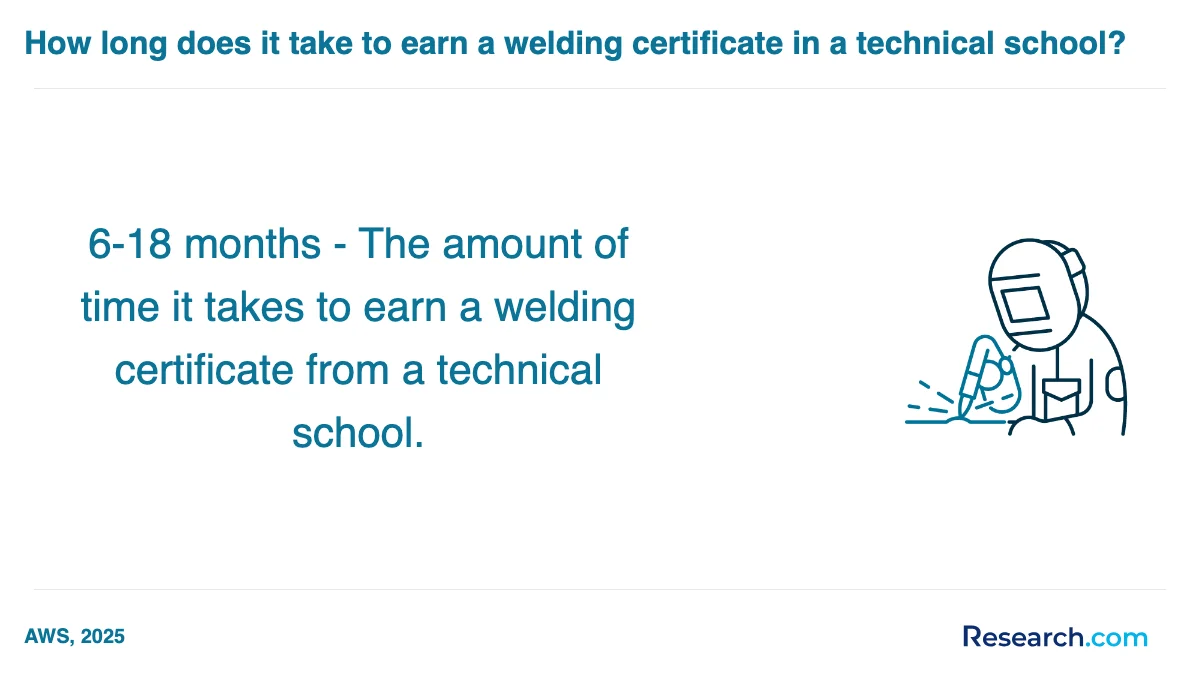
Programs typically range from six months to around 36 weeks, accommodating both full-time learners and those balancing work with evening classes. Many students appreciate the focused nature of these courses, which prepare them for certifications like the AWS Structural Standards (D1.1). Career support through externships and job placement services is another highlight, helping graduates transition smoothly into sectors like manufacturing and construction where demand for welders remains strong.
Where can I work after finishing welder trade schools in Paterson?
Graduates from welder trade schools in Paterson often find a wealth of job opportunities across diverse industries. Many start as junior welders or weld technicians, gaining hands-on experience in settings like manufacturing plants or metal fabrication shops. For instance, several alumni from well-known local programs have secured positions at companies such as Wastequip Manufacturing and Bradken Ltd., where they work on assembly lines or engage in custom equipment repair.
Others find fulfilling roles in specialized sectors like plumbing and heating services or public agencies maintaining municipal infrastructure. These positions offer daily challenges that keep work engaging and provide clear pathways for skill advancement.
Entry-level welders appreciate the supportive environments in these workplaces, often collaborating closely with seasoned professionals. Over time, graduates progress to lead fabricator or welding inspector roles, reflecting both their growing expertise and leadership abilities.
Because Paterson's welding job market extends to neighboring cities within a 25-mile radius, graduates enjoy flexibility in choosing roles that suit their career goals. This strong demand and variety of positions help graduates feel confident and motivated as they launch their welding careers.
After finishing a welder trade school program in Paterson, graduates typically earn between $24 and $30 per hour, depending on their role and experience. Many new welders start with an annual salary close to $49,143, while others report earnings ranging from $41,525 to $61,706. These figures come from local data, reflecting realistic pay in Paterson's job market.
Graduates from well-known Paterson trade schools often share how this wage range allowed them to cover living expenses comfortably while gaining hands-on experience. For example, a typical graduate working entry-level positions noted an average hourly wage around $27.11, according to recent Indeed job postings.
More specialized welders, such as fabricators or arc welders, can see higher pay-up to roughly $30 per hour or an annual salary above $60,000. One graduate pursuing arc welding certifications described the satisfaction of quickly advancing to these higher wage brackets, especially in union jobs or specialized industries.
While starting wages are promising, many welders emphasize that consistent skill development and certifications greatly enhance earning potential, making the career rewarding both financially and professionally in Paterson's competitive market.
- Welder trade school programs in Paterson typically take 6 to 9 months to complete and include hands-on training with modern equipment.
- No prior experience is needed to enroll, and students learn various welding techniques like arc, TIG, MIG, and plasma arc cutting.
- Graduates can earn certifications such as the American Welding Society (AWS) Structural Standards (D1.1), which improve job prospects.
- Program costs range from $10,000 to $22,000 depending on the length and comprehensiveness of the course.
- The average annual wage for welders in the New Jersey area is about $51,160, with higher pay possible through certifications and experience.
- Flexible scheduling and open enrollment allow quick start times, and many schools offer job placement assistance.
Completing a welder trade school program in Paterson typically takes between six months and one year, depending on the school and course intensity. Many graduates from popular Paterson trade schools share that the accelerated programs, often around six to eight months, allowed them to quickly enter the workforce without sacrificing essential skills. For example, students found that focused, hands-on training in welding techniques, safety protocols, and blueprint reading made the condensed timeline feel manageable and rewarding.
Others who opted for longer programs, closer to a year, appreciated the extra time to gain deeper experience with advanced welding processes and certifications. This additional duration often builds confidence and better prepares them for specialized welding careers. Trade schools in Paterson frequently balance classroom instruction with real-world practice, making the completion time feel productive rather than rushed.
Graduates often describe the journey as challenging but exciting, emphasizing how the structured timeframe helped them stay motivated and focused on their career goals while building strong peer support networks.
The core difference between online and on-campus welder trade school programs in Paterson lies in how students engage with the material and practice their skills. Graduates from popular Paterson trade schools often share how on-campus programs immersed them in a workshop environment, spending up to 80% of their time welding under expert supervision. This hands-on approach helped build confidence quickly, making safety and technique second nature.
Conversely, online students appreciate the flexibility to study theory from home, balancing jobs or family needs, especially when attending schools in Paterson where commuting isn't feasible. Many describe the convenience of accessing lectures anytime, but also emphasize the importance of scheduled in-person labs to hone practical skills-without which, welding proficiency is hard to achieve.
For instance, a graduate from a well-known Paterson program recalled juggling online coursework during evenings, then attending weekend labs to apply lessons physically. This hybrid rhythm kept motivation high and made learning feel manageable yet rigorous.
Determining the average cost of welder trade schools in Paterson NJ requires looking closely at local program fees and experiences shared by recent graduates. For instance, the William Paterson University of New Jersey, near Paterson, offers a Welding Technician program with tuition priced at $2,599 for a 4 to 6 months self-paced course. Graduates often praise the program's flexibility, allowing them to balance work and study without financial strain. While exact tuition fees at HoHoKus School of Trade & Technical Sciences remain undisclosed, students there report positive hands-on experiences within their 6-to-12 month welding tracks, suggesting value beyond just the costs.
Tuition fees for welding programs in Paterson NJ vary widely but generally fall within a reasonable range considering program length and depth. Universal Technical Institute's 36-week program, located nearby in Bloomfield, combines professional instruction with extensive lab practice. Though its tuition detail isn't public, students highlight significant career preparation, justifying the investment. One graduate expressed enthusiasm over gaining practical skills that led to immediate job opportunities, a promising outcome for many considering the average cost of welder trade schools in Paterson NJ.
Costs often exclude supplies and materials, which students factor into their budgets. Prospective welders are encouraged to explore various options and financial aid possibilities, as well as the reputations of programs, to find balance between cost and quality. For learners looking for budget-conscious pathways, considering cheap online maintenance technician trade school programs alongside local welding courses might provide useful alternatives.
Welder trade school students in Paterson can access a variety of financial aid options that significantly ease the burden of tuition and supplies. Federal aid, such as Pell Grants, provides non-repayable funds ranging from $767 to $7,395 annually, which many welding students have found crucial for covering basic costs. Completing the FAFSA is the essential first step for these benefits.
State aid through New Jersey's Tuition Aid Grant (TAG) offers further relief, especially for those who have been residents for at least a year and enroll full-time. Graduates from Paterson's Passaic County Community College (PCCC) often mention how institutional aid combined with a $650 tool allowance helped them acquire necessary welding equipment without extra financial stress.
Similarly, students at HoHoKus School of Trade & Technical Sciences benefit from scholarships and flexible payment plans that allow manageable tuition installments. Many recall the positive impact of industry scholarships from organizations like the American Welding Society, which reward merit and need, making the path to certification feel more attainable and less overwhelming.
Enrolling in a welder trade school program in Paterson typically requires a few straightforward prerequisites, designed to ensure students are ready to succeed in this hands-on field. Most programs expect applicants to have a high school diploma or a GED, which lays a foundation in essential skills like math and reading-critical for understanding welding blueprints and safety protocols.
Graduates from well-known Paterson trade schools often mention the importance of basic physical fitness and good hand-eye coordination, vital for handling welding equipment confidently and safely. Some schools also require a placement test or an interview to assess motivation and readiness.
Common prerequisites include:
- Proof of high school completion or equivalent
- Basic math skills, often demonstrated through placement tests
- Physical ability to perform welding tasks safely
- Personal motivation, sometimes evaluated through interviews or essays
For example, graduates recall that meeting these requirements helped them feel prepared and excited, easing their transition into the rigorous but rewarding environment at Paterson's top welding trade schools. This readiness often boosts confidence, which many say made the intense training feel achievable and even enjoyable.

Welder trade school programs in Paterson typically include a blend of foundational and advanced courses designed to prepare students for real-world welding careers. Graduates from local schools like Eastwick College often describe starting with core classes such as Principles of Welding, where they learn to read blueprints and apply welding theory to practical projects, building confidence early on.
Many students appreciate beginning with introductory courses that cover welding safety, processes, and career pathways, as seen at Universal Technical Institute's nearby Bloomfield campus. This approach ensures they grasp essential workplace safety before moving to hands-on training.
Programs usually include comprehensive instruction in multiple welding methods, including:
- Gas Metal Arc Welding (GMAW/MIG)
- Shielded Metal Arc Welding (SMAW/Stick)
- Flux-Cored Arc Welding (FCAW)
- Gas Tungsten Arc Welding (GTAW/TIG)
- Pipe Welding
Advanced courses focus on engineering techniques and materials like mild steel or aluminum, often involving extensive lab time with industry-standard equipment. Students report feeling well-prepared for certification exams thanks to training aligned with American Welding Society (AWS) standards.
Additional classes in metal theory, blueprint reading, project planning, and cutting techniques like oxy-fuel and plasma arc cutting round out the curriculum, making graduates confident and job-ready in Paterson's competitive welding market.
Welding trade school programs in Paterson cover a range of specializations aimed at equipping students with practical, industry-ready skills. Graduates from popular schools like Eastwick College and the HoHoKus School of Trade & Technical Sciences consistently highlight their hands-on training in techniques such as Shielded Metal Arc Welding (SMAW) and Gas Tungsten Arc Welding (GTAW). These programs often integrate metal theory and oxy-fuel cutting to deepen understanding of welding applications.
Typical specializations include:
- SMAW, important for construction and repair jobs where strong welds are critical
- GTAW, favored for precision work in industries like aerospace and automotive
- Metal Inert Gas (MIG) welding, often used in manufacturing
- Oxy-fuel practices and plasma arc cutting, for versatile metal shaping and joining
Students frequently describe their experiences at institutions in Paterson as energizing, especially due to the balance of theory and practical work. These well-rounded programs prepare them to confidently enter welding professions.
For those evaluating vocation vs trade programs in the area, Paterson's schools offer a variety of focused paths that meet current industry standards and demands.
Choosing from the best welder trade schools in Paterson requires a focus on accredited programs that offer hands-on training with modern equipment. Graduates from Eastwick College's welding diploma program often highlight the benefit of flexible day and evening classes that fit around their work schedules, creating a positive and practical learning environment. This approach not only builds confidence but also prepares students for real-world challenges.
Many affordable welding programs in Paterson NJ ensure their curriculum covers essential welding methods like SMAW, GTAW, and GMAW, crucial for skill versatility. Graduates frequently mention that the strong industry connections and career services helped them secure externships and jobs quickly after completing their studies. Proximity to campus, as seen with Eastwick College's Paterson location, reduces commute stress, allowing students to focus more on mastering trades.
When deciding, consider also the program's ability to prepare you for certifications and explore resources like how to be a certified welder for a clearer career pathway.

Graduates of welder trade school programs in Paterson typically find a variety of rewarding job options that align with their training and interests. Real-world experience from popular trade schools in the area often prepares them well for entry-level roles such as MIG Welder, TIG Welder/Technician, Sheet Metal Welder, and Spot Welder. These positions provide hands-on work in manufacturing, construction, and transportation sectors, fulfilling demand in local industries.
Beyond standard welding jobs in Paterson NJ, graduates often move into specialized roles, including fabricator jobs for stainless steel food service equipment or weld technician positions in high-tech manufacturing firms. Some also combine welding expertise with mechanical skills, facilitating crucial repairs in hospitals and industrial plants, which offers dependable employment and a sense of pride in maintaining vital infrastructure.
- Entry-level welding roles with clear skill applications
- Fabricator and weld technician positions in niche industries
- Supervisory and quality control opportunities after gaining experience
- Maintenance roles in public utilities and hospitals
Those seeking career advancement find opportunities in blueprint reading, layout design, and precision measurement, which are core to supervisory and quality control tasks. Local employers such as Ferguson Fire & Fabrication encourage this growth, rewarding welders with benefits and promotion paths.
With over 310 welding-related jobs reported in Paterson in 2025, the market supports both new and experienced welders aiming for career stability. Some graduates expand their horizons by joining public agencies like NJ Transit or municipal maintenance teams, reflecting diverse welding career opportunities in Paterson NJ. For those exploring which trades to pursue, consulting resources on the best paying easy to learn trades can provide valuable guidance.
The welder job opportunities in Paterson NJ currently reflect a robust local industry backed by steady demand across manufacturing, construction, and repair sectors. Graduates from popular trade schools such as Eastwick College in Paterson often share positive experiences about their readiness for roles like fabricator, TIG welder, or welding technician. Many employers value these programs for emphasizing not only core skills but also safety protocols and industry-recognized certifications, which enhance employability.
Key factors shaping the welding industry demand in Paterson NJ include:
- Entry-level welders can expect hourly wages between $20 and $27, aligning well with national data.
- Local industries actively seek welders skilled in blueprint reading, TIG/MIG welding, and spot welding-skills taught thoroughly in Paterson trade schools.
- Full-time positions with benefits, sometimes including union representation, offer added job stability.
Many graduates report entering the job market with confidence, quickly finding roles in metal fabrication shops and contractor firms. Over time, career advancement to inspector or project manager roles is possible with additional certifications.
For those exploring these career paths, understanding the top trades in demand helps highlight welding's viability locally and nationwide.
Most Affordable Welding Schools & Training - Budget-Friendly Welding Trade Programs in Paterson for 2026
# 1 position
Passaic County Community College - Welding Technology/Welder.
certificate or diplomaPassaic County Community College offers a Welding Technology/Welder program in a hybrid format that includes some distance education. The program prepares students to apply technical skills in various welding methods such as arc welding, resistance welding, brazing, soldering, and high-energy beam welding. It also covers welding metallurgy, safety, structural design, and applicable codes. Annual in-state tuition is $5,580. The program is accredited by the Middle States Commission on Higher Education.
# 2 position
Hohokus School of Trade and Technical Sciences - Welding Technology/Welder.
certificate or diplomaThe Welding Technology/Welder program at Hohokus School of Trade and Technical Sciences offers a hybrid format with some distance-education options. It prepares students with skills in various welding techniques, including arc welding, brazing, and cutting. The curriculum covers welding metallurgy, safety, and industry standards. Graduates have median earnings of $26,736 one year after completion. The program is accredited by the Accrediting Commission of Career Schools and Colleges.
Frequently Asked Questions about welder
After completing a welder trade school in Paterson, preparing for the job market involves several key steps. First, obtaining industry-recognized certifications such as those from the American Welding Society (AWS) can significantly boost employability. Employers in New Jersey often prefer candidates with specific certifications matching job requirements.
Networking is also important. Engage with local unions, employers, and job fairs in the Paterson area to connect with potential workplaces. The New Jersey Department of Labor reports steady demand for welders, with an expected 5% job growth over the next decade.
Additionally, building a strong resume that highlights practical skills and completed projects can help graduates stand out. Many trade schools offer job placement assistance, which can provide valuable leads in the local market.
Employers in Paterson prioritize several key skills when hiring graduates from welder trade schools. Technical proficiency with welding equipment, including MIG, TIG, and stick welding, ranks highest. According to the U.S. Bureau of Labor Statistics, strong manual dexterity and hand-eye coordination are essential for precision and safety in welding tasks.
Beyond technical skills, employers value knowledge of reading blueprints and welding symbols, which ensures accurate project execution. Familiarity with safety protocols, such as OSHA standards, is critical to maintain workplace safety and reduce accidents.
Additionally, good communication skills and the ability to work in teams are frequently requested by local employers, reflecting the collaborative nature of many welding jobs in Paterson's manufacturing sector.
Finding internships relevant to welder trade school programs in Paterson involves several practical steps. Start by contacting local welding schools and community colleges, as they often have partnerships with nearby manufacturers and construction firms. The New Jersey Department of Labor and Workforce Development provides resources and listings for apprenticeship and internship opportunities in skilled trades, including welding.
Networking with local metal fabrication shops and construction companies can also be effective. Many businesses in Paterson seek interns to support ongoing projects, especially those funded through state infrastructure programs. According to the U.S. Bureau of Labor Statistics, welding-related internships have grown by 5% annually in New Jersey, reflecting rising industry demand.
Additionally, online job platforms focused on trade apprenticeships, such as Apprenticeship.gov, list openings specifically in Paterson. Checking with trade unions like the International Brotherhood of Boilermakers or the United Association can provide further leads on paid internships supporting welder training programs.
Obtaining a welder trade school diploma in Paterson significantly enhances career mobility and advancement opportunities. According to the U.S. Bureau of Labor Statistics, welders with formal training typically earn 15-25% more than those without certification. In Paterson's manufacturing and construction sectors, employers prefer candidates with accredited diplomas, which often lead to faster job placement and promotions.
Trade schools provide hands-on skills and industry-recognized certifications, such as AWS (American Welding Society) credentials, valued locally. This formal education also improves access to specialized roles like pipe welding or underwater welding, increasing earning potential.
Moreover, a diploma can facilitate transitions to supervisory or inspection positions, which are in demand in Paterson's growing industrial market.
Students enrolled in welder trade schools in Paterson can benefit from several part-time job opportunities that reinforce their technical skills and provide valuable work experience. Local manufacturing plants and fabrication shops often seek entry-level welding assistants, offering hands-on practice with equipment and materials commonly used in the field. According to the U.S. Bureau of Labor Statistics, New Jersey's welding employment is expected to grow moderately, highlighting ongoing demand in the region.
Additionally, construction sites in Paterson sometimes hire part-time helpers for metalwork and structural support tasks, which complement classroom learning. These roles help students understand real-world project timelines and safety protocols.
Some students find work in auto repair shops, where welding is essential for vehicle frame repairs. These positions can enhance practical expertise and increase job readiness after graduation.
To find the most affordable Welder degree program near me and near Paterson, NJ, you can start by checking local community colleges and trade schools, as they often offer competitive tuition rates. Focus on in-state tuition prices and financial aid opportunities to ensure affordability and compare the total cost of completion across different programs. Research.com can be a helpful resource for identifying and comparing options to determine which program offers the best value for your situation.
- Welding School & Program Near Paterson, NJ | UTI https://www.uti.edu/locations/new-jersey/paterson/welding-school
- Welding Technician Program at William Paterson of New Jersey https://wpconnect.wpunj.edu/continuing-education/programs/Welding-Technician/39071/
- Trade & Technical School Bergen County NJ | Eastwick College https://eastwick.edu/hohokus-school-of-trades/
- Welding and Manufacturing Technology Program | Training | My Career NJ https://mycareer.nj.gov/training/31377
- Welding Training at PCCC - PCCC https://pccc.edu/welding-training-at-pccc/
- Welding Trade Schools: Ignite Your Future With Hands-On Training https://www.trade-schools.net/trades/welding
- Paterson NJ Trade Schools & Vocational Schools https://www.best-trade-schools.net/locations/new-jersey/paterson/
- Paterson, New Jersey Welding Programs https://www.trade-school.com/programs/Welding/NJ/Paterson
- Online Welder Technician from Passaic County Community College https://careertraining.pccc.edu/training-programs/welding-technician/
- The Benefits of a Part-Time Job While in Welding School | Tulsa Welding School https://www.tws.edu/blog/welding/the-benefits-of-a-part-time-job-while-in-welding-school/