
Most Affordable Welding Schools & Training - Budget-Friendly Welding Trade Programs in Montana for 2026

Co-Founder and Chief Data Scientist
Choosing the right welder trade school in Montana can feel overwhelming, but this article is here to help. We present a welder trade school programs ranking developed by the Research.com team of data scientists, designed to guide you toward the best options for 2026.
By exploring this ranking, you’ll discover schools that offer quality training at affordable prices. Earning a welding diploma or certification opens doors to rewarding careers with strong job prospects and good pay.
Take this step confidently toward a skilled trade that fits your goals and lifestyle.
Key benefits of finishing welder trade school in Montana
- Graduates of welder trade schools in Montana can expect starting salaries around $31,200 per year, with opportunities to earn up to $62,520 annually as they gain experience and certifications.
- A typical graduate from a popular Montana trade school can pursue careers in various fields such as construction, manufacturing, or pipeline welding, offering diverse job options and steady employment.
- Completing a welder trade school online provides flexibility and convenience, allowing students to balance work and study while gaining practical skills, as seen in successful online graduates from well-known Montana programs.
- Most Affordable Welding Schools & Training - Budget-Friendly Welding Trade Programs in Montana for 2026
- What can I expect from welder trade schools in Montana?
- Where can I work after finishing welder trade schools in Montana?
What can I expect from welder trade schools in Montana?
Students enrolling in a welder trade school program in Montana can expect a hands-on curriculum combining classroom learning with extensive practical lab work. Graduates from institutions like Great Falls College and Montana Tech often describe spending hours in fully equipped welding booths mastering shielded metal arc welding (SMAW), gas metal arc welding (GMAW), and other core processes. They quickly build confidence by working on real projects that require reading blueprints and adhering to strict industry safety standards.
Many Montana programs, including MSU Northern and MSU Billings, emphasize preparation for American Welding Society (AWS) certifications, which students find crucial for enhancing job prospects. Small class sizes allow for personalized instruction, with instructors providing tailored support that graduates say makes a real difference in skill acquisition.
Students should also anticipate investing in their own welding tools and budgeting for additional fees beyond tuition. Graduates often appreciate the strong job placement assistance and industry connections, which help them transition smoothly into careers in construction, manufacturing, or energy sectors statewide.
Where can I work after finishing welder trade schools in Montana?
After completing a welder trade school program in Montana, graduates often find rewarding employment opportunities across diverse industries. Popular trade schools in the state prepare students with practical skills that align with the needs of manufacturing, construction, and energy sectors. Many graduates report securing jobs in manufacturing and fabrication shops, where they apply welding techniques for assembly and custom metalwork.
Construction companies in Montana also actively seek skilled welders for infrastructure and pipeline projects, providing steady work and the chance to contribute to significant state developments. Graduates frequently mention hands-on experiences gained during training at Montana's leading trade schools as crucial for confidently stepping into roles like Welder, Fabricator, or Welding Specialist.
Additionally, the energy sector, including oil and gas operations, and mining offer specialized welding positions that appeal to graduates looking for diverse career paths. Public sector roles, such as those with the U.S. National Park Service, offer competitive wages and the opportunity to work in scenic locations like West Glacier, making the profession both financially and personally fulfilling.
After completing a welder trade school program in Montana, graduates can expect starting salaries around $31,200 per year, with many quickly moving toward the state average annual wage of approximately $46,640. For example, graduates from popular Montana trade schools often share how landing a full-time welding job at this level brings a strong sense of pride and financial stability early in their careers.
Certified welders typically earn about $21.66 per hour, translating to nearly $45,000 annually. This hourly wage varies between $18.75 and $24.47 depending on skill and employer, which many graduates find encouraging, as it reflects clear opportunities for growth with additional experience and certification.
Specializations like pipeline welding offer even higher earnings, with average salaries near $65,711 and top earners making over $80,000 annually. Graduates who pursue these advanced paths often describe the increased pay as a rewarding payoff for extra training.
In urban areas such as Billings, welders report wages between $29.17 and $30.23 per hour, highlighting how location within Montana can positively impact income and career satisfaction for newcomers.
- Most welding programs in Montana require a high school diploma or GED, with options for dual enrollment to earn college credit while in high school.
- Program lengths range from a few months to two years, offering certificates or associate degrees focused on hands-on training and AWS certification preparation.
- Welding certification from the Montana Department of Labor and Industry is required to work, involving a performance test and training in multiple welding methods like stick, MIG, TIG, and oxy-acetylene.
- Tuition for welding programs typically costs between $3,000 and $8,000 for in-state students, excluding tools and safety gear, with financial aid and scholarships available.
- Entry-level welders in Montana earn around $40,000 per year, while experienced welders can make over $60,000 annually, with strong demand in construction, manufacturing, oil and gas, and shipbuilding industries.
Completing a welder trade school program in Montana typically takes between six months and one year, depending on the specific curriculum and pace of study. Many students at popular Montana trade schools find that an intensive six-month program offers hands-on training and certification preparation that equips them to enter the workforce quickly. Graduates often express satisfaction with this timeframe, as it balances thorough skill development with a relatively short commitment.
For those attending programs that extend to a full year, the additional months allow for advanced welding techniques and specialized certifications, which can lead to higher starting wages. Graduates from these longer programs frequently share how the extra time gave them confidence and mastery in multiple welding processes, making them more competitive in Montana's job market.
In practical terms, students imagine themselves welding steel beams on a construction site or fabricating parts for Montana's energy sector shortly after graduation. This tangible connection between training duration and career readiness motivates many to choose programs that fit their personal timelines and goals.
The primary difference between online and on-campus welder trade school programs in Montana lies in the delivery of instruction and hands-on experience. Graduates from on-campus programs at institutions like Montana Tech and MSU Billings emphasize the value of direct, in-person training. They recall working side-by-side with instructors in welding labs, mastering techniques such as shielded metal arc welding and oxy-acetylene cutting using industry-standard equipment. This immediate, practical feedback builds confidence and skills essential for entering the workforce.
Conversely, online programs at places like the University of Montana - Western offer flexibility by teaching theory through virtual labs and self-paced modules. Graduates appreciate being able to study from anywhere, especially with courses like Bitterroot College's Welder Technician program that includes virtual fire safety and welding simulations. However, many online students seek optional externships to gain real-world welding experience, recognizing that virtual training alone does not fully replicate the tactile learning of on-campus labs.
This contrast highlights how Montana's welder programs cater to different student needs, balancing convenience with hands-on mastery.
The average cost of welder trade school programs in Montana varies notably depending on the institution and residency status. For example, graduates from Montana Technological University in Butte typically face annual tuition fees around $7,390 if they are in-state students, while out-of-state students pay closer to $22,540. These figures reflect tuition fees for welding programs in Montana that range widely but generally stay within the $5,700 to $9,000 range at community colleges such as Great Falls College-Montana State University.
Welding students often recall the balance of managing tuition alongside practical costs. Beyond tuition, books and materials add roughly $500 to $1,000, and equipment costs range from $1,000 to $5,000 depending on program requirements. Living expenses, such as rent and transportation, can add an extra $1,000 to $2,000, which students budgeting carefully know to factor in early. These real-world expenses demonstrate why understanding the average cost of welder trade school programs in Montana is crucial for planning.
Many Montana welding students find encouragement through available financial aid, including scholarships like the Montana STEM Scholarship and Montana Access Scholarship, each offering up to $1,000 to assist certificate or associate degree seekers.
Welding students aiming to maximize their career potential also explore the highest paying trades, often using information about skill demand and salary to justify these investments in their training.

Welder trade school students in Montana benefit from a range of financial aid options that make their education more accessible and affordable. Scholarships are a primary source of support, with the American Welding Society (AWS) Idaho/Montana Section offering District Scholarships typically between $1,000 and $2,500. These awards, combined with national AWS scholarships reaching $5,000 or more, have helped many graduates at schools like Montana State University-Northern reduce their tuition burden significantly.
Local scholarships add further support. For instance, the United Way's Workforce Development Scholarship provides two $500 awards targeting tuition and essential trade tools for students in counties including Flathead and Lincoln. Meanwhile, the Montana Wood Products Association Trades Scholarship offers at least $1,000 to those pursuing welding certification, often easing the financial strain on students attending vocational colleges in Billings or Missoula.
Grant programs such as the Workforce Innovation and Opportunity Act (WIOA) can supply up to $10,000 or more for career training in welding, recognized as a high-demand field. Graduates frequently share how combining these funds with school-specific scholarships has made completing their welding programs both feasible and rewarding.
Enrolling in a welder trade school program in Montana typically requires meeting several key prerequisites that ensure candidates are prepared for the hands-on, technical training ahead. Most programs expect applicants to have a high school diploma or GED, reflecting the foundational knowledge needed for success. Graduates from popular Montana trade schools often highlight how solid math skills, especially in geometry and measurement, helped them grasp welding concepts more quickly.
Applicants should also be physically capable of handling the demands of welding, such as standing for long periods and working in various positions. Schools like those in Billings and Missoula stress the importance of physical fitness and safety awareness from day one.
Additional prerequisites often include:
- Passing a basic welding aptitude or skills test to demonstrate manual dexterity and attention to detail
- Providing proof of immunizations or health screenings for safety compliance
- Having reliable transportation, as some Montana schools require on-site attendance without extensive remote options
Many graduates recall feeling confident and motivated once these entry requirements were met, enabling them to focus fully on mastering welding techniques in a supportive, practical environment. These prerequisites create a pathway that balances preparedness with enthusiasm, ideal for Montana's growing welding industry.
Welder trade school programs in Montana typically begin with essential safety and professional skills courses, ensuring students understand industry safety standards and proper use of protective equipment. Graduates often recall how these foundational lessons made them confident to handle high-temperature welding tasks safely.
Core technical skills courses focus on key welding processes, including:
- Oxy-acetylene welding and cutting
- Gas metal arc welding (GMAW/MIG)
- Shielded metal arc welding (SMAW/Stick)
- Gas tungsten arc welding (GTAW/TIG)
- Flux core arc welding (FCAW)
- Plasma arc cutting (PAC)
Hands-on practice in trade schools like those popular in Montana offers real-world experience with industry-standard tools, helping students build confidence and precision. Many students highlight how mastering these techniques in welding booths prepared them for diverse job environments.
Additional courses cover metal preparation, fabrication techniques, blueprint reading, and trade-relevant math skills-key for producing quality welds and understanding complex projects. Graduates often mention how these skills helped them interpret welding symbols and assess weld quality on the job.
Advanced classes may include pipe welding, structural steel fabrication, aluminum welding, and CNC plasma table operation. Montana programs emphasize communication and professionalism, helping students navigate workplace challenges effectively.
Welder trade school specializations in Montana typically include core welding processes such as Shielded Metal Arc Welding (SMAW), Gas Metal Arc Welding (GMAW), Gas Tungsten Arc Welding (GTAW), Flux Cored Arc Welding (FCAW), Submerged Arc Welding (SAW), and Oxyacetylene Welding (OAW). Programs at prominent schools like the University of Montana's Missoula College integrate these technical skills with supportive courses in blueprint reading, metallurgy, and computer-aided design, helping graduates confidently enter diverse welding fields.
Montana welding program specializations also emphasize practical applications to prepare students for real-world scenarios. Highlands College at Montana Tech offers specialized training in pipe, structural, and aluminum welding-skills highly valued in construction and manufacturing industries. Meanwhile, Gallatin College at Montana State University focuses on hands-on experience and blueprint interpretation, which graduates say greatly enhanced their job readiness in steel fabrication and pipeline work.
Those pursuing welding careers in Montana benefit from comprehensive curricula addressing industry demands, enabling graduates to thrive in sectors like aerospace, automotive, and pipeline construction. For detailed insights on career progression and salary expectations, students often explore resources on how to be a welder.
Choosing the best welder trade school program in Montana requires evaluating accreditation and program reputation critically. Graduates from the University of Montana highlight how its AWS accreditation elevates their certifications, making them confident in entering the workforce. Selecting a program with a strong curriculum and hands-on training is equally vital. For instance, students from Great Falls College-Montana State University appreciate the broad coverage of welding processes like SMAW and GTAW, which builds their practical skills and job readiness.
Considering tuition costs and financial aid availability is also key, especially when some programs offer scholarships such as the Montana STEM Scholarship. Location and accessibility can influence your experience significantly; Montana Technological University's flexible schedules help working students maintain balance. Job placement rates and industry connections are often decisive factors - graduates report that Great Falls College's career-focused approach empowers them to launch welding and fabrication businesses successfully.
Finally, assess facilities and equipment quality to ensure hands-on learning with modern technology, as noted by students at Dawson Community College. Carefully compare these aspects and consider the trade certificate program vs vocational program options to find the best fit for your goals.

Graduates of welder trade school programs in Montana have access to diverse career paths that align with the state's industrial landscape and demand. Common roles include welder, fabricator, machinist, and combination welder, with opportunities found in construction, manufacturing, and energy sectors. Those completing training in cities like Billings or Missoula often secure positions involving metal structure fabrication and blueprint interpretation, skills emphasized at Montana's popular trade schools.
Employment options frequently highlight:
- Fabrication and pipe welding
- Industrial maintenance roles
- Equipment operation combined with welding tasks
Many graduates share that the hands-on experience gained prepares them well for versatile job functions. In addition, specialized career avenues such as pipefitting and fabrication management provide further growth. Montana's welding career paths often include positions with benefits and advancement potential, reflecting steady demand.
For students interested in blending technical skills with business, roles in industrial sales and support at welding supply companies are viable alternatives. Montana welders also find a range of full-time and part-time work offers, underscoring the flexibility of the field.
Those exploring welder job opportunities in Montana may also consider accessible accredited online certificate programs to enhance qualifications and broaden prospects.
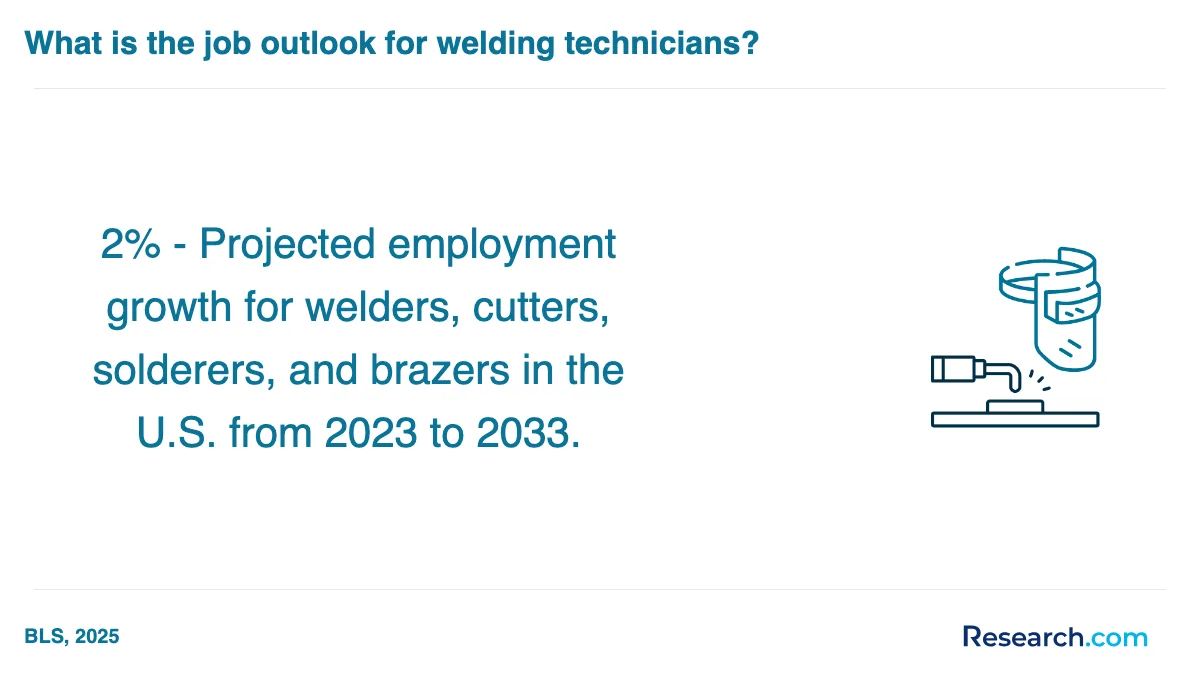
The welding job outlook in Montana remains strong with steady growth expected over the next decade. Recent data from the Montana Department of Labor and Industry show about 1,640 welding jobs in 2022, projected to increase to 1,860 by 2032, reflecting a 13% growth rate. This aligns well with the welder employment projections Montana graduates can rely on when planning their careers after trade school. Graduates from popular Montana trade schools often report smooth transitions into roles within manufacturing, construction, and energy sectors.
Students share that advancing skills during their training opens doors to competitive wages, with average hourly rates around $25.95 and specialized roles like pipeline welding earning higher pay. Job openings arise both from new positions and retirements, keeping the market active but not oversaturated.
Graduates also benefit from exploring most affordable online maintenance technician training options to complement welding skills, enhancing their employability in Montana's evolving job market.
Most Affordable Welding Schools & Training - Budget-Friendly Welding Trade Programs in Montana for 2026
# 1 position
Flathead Valley Community College - Welding Technology/Welder.
associateFlathead Valley Community College offers a hybrid Welding Technology/Welder program that prepares students to apply technical skills in various welding methods, including arc welding, resistance welding, and brazing. The curriculum covers welding metallurgy, safety, structural design, and applicable codes. Annual in-state tuition is $4,748. Graduates earn a median salary of $43,711 one year after completing the program. The program is accredited by the Northwest Commission on Colleges and Universities.
# 2 position
Flathead Valley Community College - Welding Technology/Welder.
certificate or diplomaFlathead Valley Community College offers a Hybrid Welding Technology/Welder program that prepares students to apply technical skills in welding and cutting metal surfaces. The curriculum covers arc welding, resistance welding, brazing, soldering, and high-energy beam techniques, as well as welding metallurgy, safety, and applicable codes. The annual in-state tuition is $4,748, and median earnings one year after completion are $43,711. The program is accredited by the Northwest Commission on Colleges and Universities.
# 3 position
Helena College University of Montana - Welding Technology/Welder.
associateHelena College University of Montana offers a Hybrid Welding Technology/Welder program that teaches arc welding, resistance welding, brazing, soldering, and cutting techniques. The curriculum covers welding metallurgy, structural design, safety, and applicable codes. Annual in-state tuition is $3,975. Graduates have median earnings of $29,416 one year after completion. The program is accredited by the Northwest Commission on Colleges and Universities.
# 4 position
Helena College University of Montana - Welding Technology/Welder.
certificate or diplomaHelena College University of Montana offers a Welding Technology/Welder program with a hybrid format, including some distance-education options. The program prepares students with technical skills in various welding processes such as arc, resistance, brazing, soldering, and high-energy beam welding. Tuition for in-state students is $3,975 annually. Graduates earn a median income of $29,416 one year after completion. The program is accredited by the Northwest Commission on Colleges and Universities.
# 5 position
Montana State University Billings - Welding Technology/Welder.
associateThe Welding Technology/Welder program at Montana State University Billings offers a hybrid format with some distance education options. The program trains students in various welding methods, including arc welding, resistance welding, brazing, and cutting. Topics covered include welding metallurgy, safety, structural design, and applicable codes. Annual in-state tuition is $6,706. Graduates have median earnings of $41,875 one year after completion. The program is accredited by the Northwest Commission on Colleges and Universities.
# 6 position
Fort Peck Community College - Welding Technology/Welder.
certificate or diplomaFort Peck Community College offers a Welding Technology/Welder program designed to prepare students to apply technical knowledge and skills in metal joining and cutting. The hybrid program includes instruction in various welding techniques, materials, safety, and relevant codes. Annual in-state tuition is $2,250. The program is accredited by the Northwest Commission on Colleges and Universities.
# 7 position
Dawson Community College - Welding Technology/Welder.
associateDawson Community College offers a Welding Technology/Welder program with a hybrid format that includes some distance education. The curriculum covers arc welding, resistance welding, brazing, soldering, cutting, and high-energy beam welding, along with welding metallurgy, safety, structural design, and relevant codes. The annual in-state tuition is $4,485. The program is accredited by the Northwest Commission on Colleges and Universities.
# 8 position
Dawson Community College - Welding Technology/Welder.
certificate or diplomaDawson Community College offers a Welding Technology/Welder program with a hybrid format that includes some distance education. The curriculum covers arc welding, resistance welding, brazing, soldering, cutting, and welding metallurgy. Students learn about ferrous and non-ferrous materials, structural design, safety, and applicable codes. The program is accredited by the Northwest Commission on Colleges and Universities. Annual in-state tuition is $4,485.
# 9 position
Aaniiih Nakoda College - Welding Technology/Welder.
associateThe Welding Technology/Welder program at Aaniiih Nakoda College offers hybrid learning options, combining in-person and distance education. The program prepares students to apply technical skills in various welding methods, including arc welding, brazing, and solid-state welding. Tuition for in-state students is $3,600 annually. The curriculum covers welding metallurgy, safety, structural design, and relevant codes. The program is accredited by the Northwest Commission on Colleges and Universities.
# 10 position
Aaniiih Nakoda College - Welding Technology/Welder.
certificate or diplomaAaniiih Nakoda College offers a Welding Technology/Welder program with a hybrid format, including some distance-education options. The curriculum covers arc welding, resistance welding, brazing, soldering, cutting, high-energy beam welding, and solid state welding. Students learn about materials, welding metallurgy, safety, structural design, and applicable codes and standards. The program's annual in-state tuition is $3,600. It is accredited by the Northwest Commission on Colleges and Universities.
Frequently Asked Questions about welder
After completing a welder trade school in Montana, preparing for the job market involves several strategic steps. First, graduates should obtain industry-recognized certifications, such as those from the American Welding Society (AWS), which are highly valued by Montana employers. According to the Montana Department of Labor & Industry, welders with certifications earn on average 15% more than uncertified workers.
Building a strong resume that highlights practical skills and any hands-on training from the trade school is essential. Networking through local unions and trade associations can open doors to job opportunities in Montana's growing construction and manufacturing sectors. Additionally, staying updated on safety standards and emerging welding technologies improves employability in this competitive field.
Employers in Montana seek welder trade school graduates with strong technical skills and practical experience. Precision in welding techniques such as MIG, TIG, and Stick welding is highly valued. According to the Montana Department of Labor & Industry, proficiency in reading blueprints and welding symbols is essential for many local employers.
Safety awareness is another critical skill, as welders must follow strict Occupational Safety and Health Administration (OSHA) regulations. Communication and teamwork abilities also play a key role, especially on construction and manufacturing sites.
Technical knowledge combined with hands-on training increases job placement rates, making these skills vital for success in Montana's welding job market.
Finding internships relevant to welder trade school programs in Montana involves several practical steps. First, students should contact their school's career services or internship coordinators, as many Montana trade schools maintain partnerships with local welding companies. These connections often lead to internship opportunities designed to complement classroom learning.
Additionally, students can explore resources like Montana's Department of Labor & Industry, which lists apprenticeship and internship openings in skilled trades, including welding. According to the department, Montana had over 200 active welding apprenticeships in 2023, indicating a solid market for hands-on training.
Networking with local unions, such as the International Brotherhood of Boilermakers or the Pipefitters Union, can also help students access industry contacts and internship leads. Finally, online job boards focused on Montana's construction and manufacturing sectors may list paid internships suitable for welding students.
Obtaining a welder trade school diploma in Montana significantly enhances career mobility and advancement opportunities. According to the Montana Department of Labor & Industry, welders with formal training often earn 15-25% higher wages compared to uncertified workers. This diploma validates essential skills and certifications, making graduates eligible for specialized welding roles in industries like construction, manufacturing, and energy.
Trade school programs also prepare students for industry-recognized certifications such as the American Welding Society (AWS) credentials, which are highly valued by Montana employers. These certifications can lead to promotions, higher pay, and job security.
Additionally, Montana's growing infrastructure and energy sectors continue to demand skilled welders, creating pathways for diploma holders to access diverse job markets locally and regionally. This credential helps open doors to apprenticeships and supervisory positions, promoting long-term career growth.
Students enrolled in welder trade schools in Montana can benefit from several part-time job opportunities that enhance their practical skills. Common roles include welding apprenticeships, assistant welder positions, and metal fabrication shop helpers. These jobs provide hands-on experience with tools and materials similar to those used in training programs.
According to the U.S. Bureau of Labor Statistics, Montana had approximately 1,000 welding-related jobs in 2023, with a projected growth rate of 6% through 2030, indicating steady demand. Part-time work in construction sites or manufacturing plants can offer valuable exposure to industry standards and safety protocols.
Additionally, working in related fields like machine operation or equipment maintenance supports skill development and networking within Montana's industrial sectors.
To choose the most affordable welder degree program near me in Montana, start by researching community colleges and technical schools that offer welding programs, as they tend to have lower tuition rates compared to larger universities. Consider contacting schools directly to inquire about financial aid options and scholarships that can further reduce costs. Additionally, consulting with local industry professionals and using resources like Research.com can provide insight into reputable and affordable programs near Montana.
- Most Affordable Welding Schools & Training - Budget-Friendly Welding Trade Programs in Idaho for 2026
- Most Affordable Welding Schools & Training - Budget-Friendly Welding Trade Programs in Wyoming for 2026
- Most Affordable Welding Schools & Training - Budget-Friendly Welding Trade Programs in North Dakota for 2026
- Most Affordable Welding Schools & Training - Budget-Friendly Welding Trade Programs in South Dakota for 2026
- Most Affordable Welding Schools & Training - Budget-Friendly Welding Trade Programs in Utah for 2026
- Most Affordable Welding Schools & Training - Budget-Friendly Welding Trade Programs in Nebraska for 2026
- Most Affordable Welding Schools & Training - Budget-Friendly Welding Trade Programs in Minnesota for 2026
- Most Affordable Welding Schools & Training - Budget-Friendly Welding Trade Programs in Colorado for 2026
- Most Affordable Welding Schools & Training - Budget-Friendly Welding Trade Programs in Nevada for 2026
- Most Affordable Welding Schools & Training - Budget-Friendly Welding Trade Programs in Iowa for 2026
- Welding Certificate, Associate Degree Programs Montana | University of Montana https://www.umt.edu/academics/programs/welding-technology/
- Welding Technology CAS | MSU Northern https://www.msun.edu/academics/cots/program-Welding.aspx
- Welding Technology Program - Gallatin College | Gallatin College https://gallatin.montana.edu/programs/welding.html
- Welding Technology, A.A.S. - Montana Tech - Montana's Premier STEM University https://www.mtech.edu/welding/
- Top Welding Schools in Montana | Learn How to Become a Welder https://toptradeschools.com/near-you/welder/montana/
- Welding Technology & Fabrication - Great Falls College https://www.gfcmsu.edu/academic-program/welding-technology-fabrication/
- Welding Technology https://www.dawson.edu/future-students/welding.html
- Welding Technology - Helena College https://helenacollege.edu/academics/programs/welding/default.aspx
- Welding (CTS, CAS, AAS) - Flathead Valley Community College https://www.fvcc.edu/program/welding
- How to Become a Welder in Montana | Dreambound https://dreambound.com/blog/how-to-become-a-welder-in-montana


