2027 Online Social & Behavioral Sciences Degrees With Strong Behavioral Support Training

Co-Founder and Chief Data Scientist
Professionals aiming to enter or advance in social & behavioral sciences increasingly face the challenge of acquiring robust behavioral support skills without sacrificing employment or family obligations. With 45% of adult learners opting for online programs in 2024 according to NCES, demand for flexible, accessible options that integrate practical training grows sharply. Yet inconsistent curricula and variable experiential learning components complicate decisions on credible degrees that truly enhance workplace readiness.
Navigating this landscape requires careful evaluation of program design, employer recognition, and skill applicability. This article identifies online social & behavioral sciences degrees offering strong behavioral support training to streamline informed, strategic educational choices in this evolving sector.
Key Things You Should Know
- The median wage for behavioral science analysts rose 7.4% since 2022 per U.S. Bureau of Labor Statistics, pressuring candidates to prioritize programs with strong practical behavioral training over purely theoretical curricula.
- Employers in health, education, and policy sectors report >65% preference for candidates with integrated behavioral analytics and intervention skills, intensifying the market value of programs emphasizing applied behavioral frameworks.
- Programs with embedded behavioral support training typically add 15-20% more tuition and extend completion timelines by 6+ months, creating a tradeoff between cost, time-to-degree, and enhanced employment outcomes per recent NCES data.
What are online social and behavioral sciences degrees with behavioral support training?
Online social and behavioral sciences degrees with behavioral support training prioritize applied intervention skills alongside foundational theory, giving graduates practical tools to modify behavior in settings like schools, clinics, or community agencies. For example, professionals trained through behavioral support training programs in social and behavioral sciences degrees often translate behavioral data into tailored programs addressing mental health or developmental disabilities, a critical capability as employers value data-driven case management in remote and hybrid environments.
The U.S. Bureau of Labor Statistics projects 9% growth in community and social service roles from 2022 to 2032, indicating increased demand for workers who can integrate evidence-based behavioral approaches with social science concepts. These degrees usually require balancing asynchronous online coursework with supervised practicum experiences, a demanding structure that necessitates strong time management and self-discipline from students.
Certification pathways such as eligibility for Board Certified Assistant Behavior Analyst status significantly affect employability and career mobility. Choosing programs that embed rigorous applied behavioral analysis, ethical standards, and comprehensive data assessment prepares graduates to meet employer expectations in a competitive labor market.
Students considering these degrees should also explore related fully funded DSW programs as alternative avenues for advanced social and behavioral sciences expertise with financial support opportunities.
How do online social and behavioral sciences degrees compare to campus-based programs?
Deciding between online social and behavioral sciences degrees versus campus programs requires weighing the critical distinction in behavioral support training and employer readiness. Campus programs typically integrate supervised field placements and in-person practicum experiences, which remain indispensable for mastering applied behavioral skills demanded by employers. In contrast, online programs offer flexibility crucial for working professionals but rely heavily on students' ability to independently secure local internships or practicum opportunities that align with employer expectations.
Employers increasingly emphasize practical behavioral support competencies, with Mercer's National Survey of Employer-Sponsored Health Plans showing a rise from 68% to 77% in U.S. companies offering mental-health and behavioral support benefits between 2022 and 2023. This shift privileges graduates whose education includes hands-on experience embedded in program structures.
For professionals seeking rapid transitions into community mental health or school-based roles, campus programs' embedded fieldwork and on-site mentorship streamline credentialing and job readiness. Meanwhile, online students must carefully evaluate program offerings for integrated practicum components or partnerships that facilitate supervised experience near their residence. Choosing a degree without such infrastructure may pose long-term employability challenges, making it vital to assess alignment with local internship opportunities.
Prospective students can review NASP accredited programs to identify online pathways that address these practical training requirements.
Are online social and behavioral sciences degrees accredited and widely respected by employers?
Employers evaluating online social and behavioral sciences degrees accreditation focus sharply on whether programs incorporate rigorous, regionally accredited academic standards alongside applied behavioral support training. For many roles-especially in mental health and substance abuse counseling-a degree lacking supervised clinical experiences or updated evidence-based intervention training often signals insufficient preparation. Graduates from programs that do not offer practical practicums aligned with licensure requirements may face delayed workforce entry despite holding a diploma.
Consider a candidate with an online degree that includes real-world internships supervised by licensed professionals. This individual typically outperforms peers restricted to theoretical coursework in employer assessments focused on behavioral science online degrees recognition. Many states mandate specific supervised hours for certification or licensure, and students must verify that their online program meets these to avoid gaps that hinder career momentum.
The labor market for behavioral health counselors is growing robustly, with an 18% projected increase by 2032, creating roughly 71,500 annual job openings. Employers prioritize applicants whose accredited degrees also demonstrate verified behavioral support competencies proven to enhance client outcomes. Prospective students should weigh the practical value of each program's pathways to licensure and supervisor access.
For those exploring cost-sensitive options, reviewing cheap psychology degree online programs can be a strategic step toward securing a credential that balances affordability with recognized employability standards.
What behavioral support skills and coursework are typically included in these programs?
Behavioral support skills in social and behavioral sciences degrees prioritize practical competencies crucial for supervisory and frontline roles that require targeted intervention strategies. A distinct reality for students is balancing theoretical foundations with hands-on challenges, such as adapting behavioral plans in nonprofit versus clinical settings or managing clients resistant to intervention. Core coursework for behavioral support training in online social and behavioral sciences programs typically covers:
- Foundations of behavioral psychology focusing on cognitive and emotional drivers
- Ethical frameworks addressing client confidentiality, autonomy, and crisis management
- Evidence-based intervention design combining theory with applied practice
- Data collection and analysis to refine behavioral plans
- Case management and interdisciplinary collaboration to navigate complex service systems
Online formats frequently incorporate practicum experiences or virtual simulations to bridge the gap between theory and unpredictable real-world client interactions, including telehealth and remote monitoring scenarios. Graduates equipped with these skills commonly pursue supervisory roles, reflected in labor market data where social and community service managers command a median wage of $78,180, with top earners exceeding $126,790. This spectrum highlights the significance of integrating leadership with behavioral expertise for meaningful workforce impact.
For those assessing career pathways requiring behavioral support expertise, it is advisable to explore broader options including online masters programs in human resource management, which may complement or expand leadership opportunities within human services.
What admission requirements and prior education are needed for these online degrees?
Admission into online social & behavioral sciences programs demands more than a diploma-applicants must demonstrate relevant academic and professional preparation to handle rigorous behavioral coursework and applied practice. For bachelor's degrees, a high school diploma or equivalent is standard, but graduate tracks require a completed undergraduate degree with foundational coursework in psychology, sociology, or related disciplines. Programs often set GPA minimums around 2.5 to 3.0 to ensure candidates can sustain advanced study demands.
Graduate applicants frequently need documented experience or prior coursework in behavioral health or human services. For example, a master's student targeting clinical behavior analysis should have completed courses in statistics, research methods, and introductory psychology to engage effectively with data-driven interventions.
Many accredited programs have moved away from mandatory GRE testing, emphasizing letters of recommendation and personal statements that foreground applicants' applied experience and career objectives. This shift reflects employer preferences for practical skills over standardized test scores, which aligns with workforce demands for competent, immediately productive professionals.
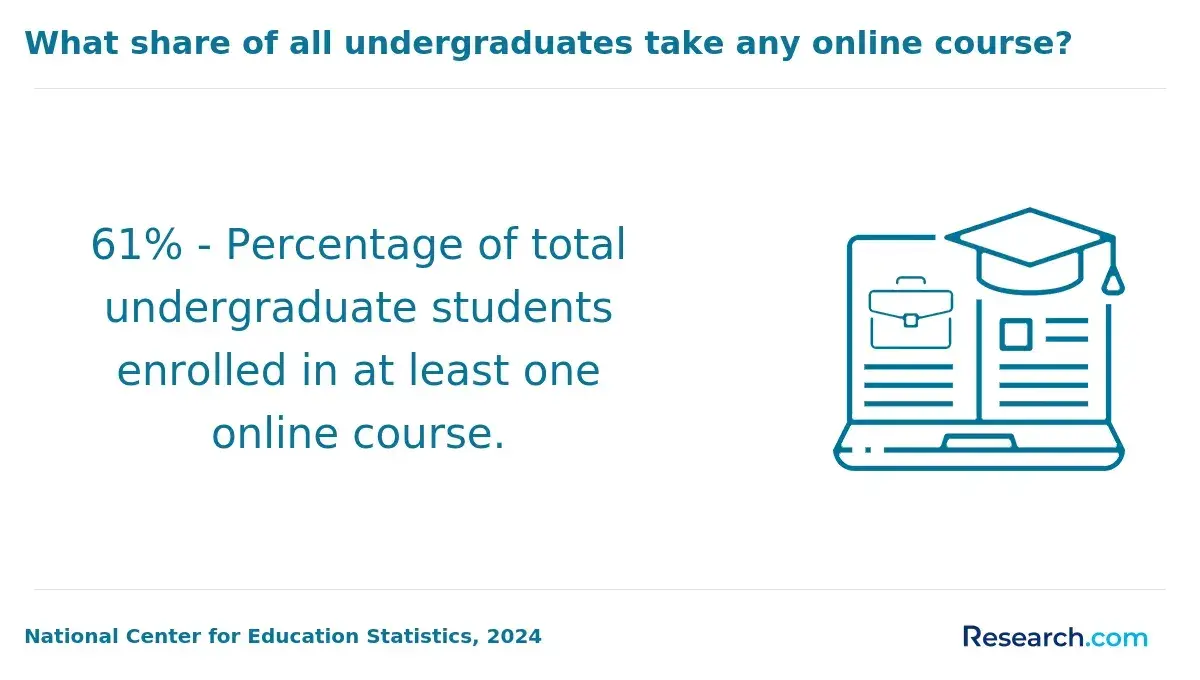
By 2024, over half of U.S. undergraduates had enrolled in at least one online course, with nearly a quarter studying entirely online, according to the National Center for Education Statistics. This surge expands educational access but intensifies competition, requiring applicants to clearly document readiness in behavioral sciences to stand out to both programs and future employers.
How long do online social and behavioral sciences degrees take and what do they cost?
Choosing an online social and behavioral sciences degree involves weighing time investment against financial and professional tradeoffs. Associate degrees typically conclude in two years, while bachelor's degrees usually require four, though some accelerated or part-time paths can compress or extend this timeline. Students aiming for comprehensive behavioral support training should plan for at least 24 months of study.
Costs vary significantly: public universities charge in-state online tuition between $9,000 and $15,000 annually, whereas private options often range from $20,000 to $35,000 per year. Programs billing by credit hour ($300-$700) can accumulate to roughly $48,000 for a 120-credit bachelor's degree before additional fees. Hidden expenses such as technology, proctoring, and materials may increase total costs by 10-15%.
From an employer standpoint, proficiency in applied behavioral support is critical. For example, Deloitte's 2024 Mental Health at Work report notes $50 billion global spending on workplace mental health programs, growing yearly by 9%, indicating strong demand in healthcare, corporate wellness, education, and public service sectors. Balancing full-time study's faster credentialing with possible income loss versus part-time study's extended duration but sustained earnings is a key strategic decision for working professionals. Accreditation and verified behavioral support expertise often outweigh cost considerations in hiring decisions.
What careers can graduates pursue in behavioral support and related fields?
Choosing an online degree in social & behavioral sciences with strong behavioral support training positions graduates for roles requiring both direct client interaction and programmatic oversight. Career trajectories typically begin in operational positions-such as community health workers engaging in outreach or behavioral health technicians supporting treatment protocols-that offer limited decision-making autonomy but build essential applied skills.
Employment growth of 7% over the next decade for health education specialists and community health workers reflects sustained demand, yet job seekers must manage the tradeoff between immediate availability and long-term advancement. Advancement often depends on obtaining certifications like Certified Health Education Specialist (CHES) and accruing field experience.
Employers focus more on candidates' ability to implement evidence-based interventions, collect outcome data, and coordinate across multidisciplinary teams than on theoretical knowledge alone. For example, health education specialists design and manage programs in government, nonprofit, or healthcare settings, requiring cultural competence and operational oversight.
- Graduates benefit from training that emphasizes measurable impact over theory.
- Credentialing can unlock supervisory or specialist roles beyond entry-level scope.
- Data management skills enhance employability amid evolving public health demands.
Understanding these practical workforce requirements helps students select programs aligned with real-world expectations rather than abstract academic metrics.
What salary ranges and earning potential exist in behavioral support roles?
Salary ranges for behavioral support roles in online social & behavioral sciences degree pathways vary widely, typically from $45,000 to $90,000 annually, shaped by specialization, geographic region, and employer sector. Entry-level positions such as behavioral health technicians usually start near the lower end, while experienced professionals-behavioral analysts or program coordinators-may earn above $80,000, especially in healthcare and corporate HR environments.
Employment projections from the U.S. Bureau of Labor Statistics estimate a 6% growth rate for training and development specialists from 2022 to 2032, with roughly 35,600 yearly openings. This sustained demand reflects the critical role of behavioral science in driving employee learning, performance optimization, and organizational change.
Real-world tradeoffs are common: nonprofit or education sector roles often pay less but offer mission-driven work, whereas private industry jobs deliver higher salaries-frequently exceeding $75,000 in corporate training-but require ongoing skill updates and strong ROI focus. For instance, a corporate training specialist uses behavioral data to design incentive systems, balancing compensation with performance pressures. Community mental health workers typically see $50,000 to $60,000 but face funding volatility and fewer profit metrics.
Maximizing earning potential involves obtaining certifications in applied behavior analysis or organizational development and targeting industries with expanded behavioral applications such as healthcare, corporate training, and human resources. Geographic location impacts opportunities: urban centers command higher pay but entail greater living expenses, while rural areas usually mean lower wages and fewer openings.
What licensing or certification may be required for behavioral support careers?
Credentialing requirements in behavioral support fields impose significant constraints on career trajectories, especially when balancing national certifications with varying state licensure mandates. For instance, direct-care roles often demand certifications like Registered Behavior Technician (RBT) or Board Certified Assistant Behavior Analyst (BCaBA), which integrate coursework and supervised experience to meet employer and regulatory thresholds. However, advancing to independent clinical practice generally requires Board Certified Behavior Analyst (BCBA) status, which entails a master's degree, extensive supervised hours, and a national exam-without which clinical influence and employability in regulated environments diminish considerably.
States such as California and New York enforce licensure beyond national certification, affecting provider eligibility in Medicaid reimbursement structures and limiting service delivery without formal state approval. This patchwork regulatory landscape dictates that professionals carefully navigate both credentialing and state-specific licensure to ensure uninterrupted employment and compliance.
Employers heavily weigh certifications that align with federal and state regulations given their impact on contracts and program funding. Social and behavioral sciences online degree programs that embed these credential requirements often provide a more cost-effective route, with net tuition typically around 11% lower than on-campus alternatives-a nontrivial factor for working adults managing both finances and time.
- Certification and licensure have nuanced, location-dependent impacts on job eligibility and scope of practice.
- BCBA certification remains indispensable for clinical leadership roles, though difficult to attain without graduate-level education.
- Online programs can reduce financial barriers but must be carefully assessed for alignment with licensing requirements.
How can students evaluate and choose a reputable online behavioral sciences program?
Accreditation recognized by the U.S. Department of Education or the Council for Higher Education Accreditation remains a critical threshold for social & behavioral sciences programs aimed at managerial roles. Without this, credits often lack transferability and diplomas may carry limited weight with employers. For those targeting supervisory positions, programs must explicitly develop leadership and organizational behavior skills aligned with job descriptions in community and social service sectors.
The roughly 55% median salary increase-from $53,220 at entry-level to $78,180 for managers-demonstrates the tangible value of advanced behavioral training in progressing beyond front-line roles (U.S. Bureau of Labor Statistics, May 2024). However, practical experience embedded in the curriculum, such as supervised practicum or partnerships with behavioral health agencies, significantly influences graduate readiness and employability. Programs lacking clinical or field components risk producing candidates less prepared for employer scrutiny despite theoretical coverage.
Faculty expertise with active research or policymaking ties in social and behavioral sciences directly affects curriculum relevance amid evolving workforce demands. Additionally, specialized career advising and networking opportunities tailored to behavioral health sectors materially impact job placement outcomes.
- Accreditation status verified by recognized bodies
- Clear curricular focus on applied skills and leadership
- Integration of fieldwork or practicum components
- Faculty with current professional or research engagement
- Student support services targeting social & behavioral sciences markets
Other Things You Should Know About Social & Behavioral Sciences
Bachelor's degrees with behavioral support training often serve as entry points rather than qualifications for advanced roles. Employers usually expect a master's degree or specialized certifications for senior or clinical positions. If career advancement matters, selecting an online program that offers clear pathways to graduate study or stackable credentials is essential.
Theory-heavy programs build foundational knowledge but may not prepare students adequately for practical workplace challenges. Applied programs train specific skills like behavior analysis or intervention planning, which employers seek. Candidates should weigh their immediate career goals: prioritize applied training for direct service roles, but lean on theory-focused curricula if aiming for research or policy positions.
Employer acceptance depends on program reputation and demonstrated competencies, not just delivery mode. Online degrees from established, regionally accredited institutions are generally respected, provided graduates can show relevant skills and experience. However, some employers in highly clinical settings may prefer candidates with in-person training due to concerns about client interaction readiness.
References
- The Emerging Field of Behavioral Health Paraprofessionals https://www.nga.org/publications/the-emerging-field-of-behavioral-health-paraprofessionals/
- State-by-State Guide to Applied Behavior Analyst Licensing and Certification Requirements https://www.appliedbehavioranalysisedu.org/state-by-state-guide-to-aba-licensing/
- Understanding Certification and Licensure in Behavior Analysis Practice https://www.abatechnologies.com/blog/understanding-certification-and-licensure-in-behavior-analysis-practice
- Behavioral Therapist Salary and Career Outlook - Able Stars https://ablestarsaba.com/blog/behavioral-therapist-salary/
- Behavioral Health Career Descriptions | SAMHSA https://www.samhsa.gov/about/careers/behavioral-health-workforce/careers-by-state/descriptions
- Online Behavioral Science Degree Programs | University of Phoenix https://www.phoenix.edu/online-behavioral-sciences-degrees.html
- Behavioral Therapist Salary: Pay, Growth & Outlook | Admire https://www.admireabatherapy.com/blog/behavioral-therapist-salary/
- Social and Behavioral Health https://www.publichealthdegrees.org/specializations/social-behavioral-science/
- Behavioral Supports for Students: Training Modules https://intensiveintervention.org/training/course-content/behavior-support-intensive-intervention
- How Employers View Online Degrees in Counseling and Psychology https://www.counselingpsychology.org/how-employers-view-online-degrees-in-counseling-and-psychology/