2027 Real Estate Specializations for Real Estate Finance Careers

Co-Founder and Chief Data Scientist
Facing a volatile market with shifting capital availability, professionals pursuing careers in real estate finance confront the challenge of identifying specializations that balance immediate employability with long-term advancement. The National Center for Education Statistics reports a 15% surge in enrollment among adult learners in business-related online programs since 2023, signaling growing demand for flexible, career-oriented education tailored to working adults.
This trend reshapes how candidates must evaluate specialization options, prioritizing adaptability and relevance to evolving lender, developer, and investor needs. This article breaks down the most strategic real estate finance specializations to help readers make informed decisions aligned with market realities and career mobility.
Key Things You Should Know
- Specializing in commercial real estate finance yields 17% higher entry salaries on average but demands mastery of complex financial instruments, creating a steep initial learning curve compared to residential niches.
- Employers increasingly prefer candidates with cross-disciplinary expertise in environmental, social, and governance (ESG) criteria; 62% of finance job listings now list ESG knowledge as required, shaping workforce development priorities.
- Programs integrating advanced data analytics require 25% more time and 40% higher tuition costs yet deliver a 30% greater likelihood of promotion within five years, introducing a clear timing and cost tradeoff.
What are real estate specializations in finance careers?
Choosing a specialization within real estate finance careers requires assessing tradeoffs between technical demands and market volatility. Commercial real estate finance roles command higher salaries-with median US wages ranging from $101,309 to $232,000-and anticipate a 9% job growth rate through 2033. This specialization prioritizes advanced financial modeling and complex due diligence for income-generating properties such as office buildings and multifamily housing but entails a steeper learning curve and greater deal complexity.
Conversely, residential mortgage finance focuses on consumer credit and underwriting with less emphasis on intricate deal structuring, often presenting a more accessible entry point but more constrained salary ceilings. Specializing in real estate investment trusts (REITs) offers exposure to publicly traded securities management, requiring market analysis and compliance skills rather than direct property underwriting.
Development finance involves navigating variable project risks-including cost modeling, phased funding, zoning, and fluctuating interest rates-demanding agility and risk tolerance. For professionals analyzing types of real estate finance jobs, aligning specialization choice with quantitative aptitude, risk appetite, and career goals is critical to avoiding misaligned expectations and stalled progress.
Aspiring candidates should also weigh educational pathways pragmatically-for example, exploring the cheapest online business management degree options can limit upfront costs while offering foundational knowledge useful across these specializations.
Which real estate degree best fits finance careers?
Employers hiring for finance careers in real estate prioritize candidates with specialized real estate finance or real estate investment degrees that emphasize financial modeling, asset valuation, capital markets, and risk management within property contexts. A general finance degree without real estate concentration typically requires additional certifications or experience to remain competitive. For example, a commercial real estate asset manager must analyze property cash flows, debt structures, and equity returns-skills best developed in targeted real estate finance programs.
Tradeoffs surface between program specialization and breadth. Early specialization accelerates readiness for real estate finance roles but narrows exposure to broader finance disciplines, whereas multidisciplinary programs spanning real estate and finance increase flexibility at the cost of longer duration and higher expense. This decision impacts the ability to pivot within or beyond real estate finance.
Graduates in combined finance, insurance, and real estate fields earn an average annual salary of $112,350 with a workforce exceeding 10 million, reflecting strong employment prospects. To excel immediately, candidates must also develop quantitative skills and industry knowledge via internships, certifications, or advanced training. Those seeking accelerated paths might explore a construction management online degree to complement their real estate finance expertise. These considerations are essential in evaluating real estate finance degree programs for finance careers united states professionals.
Do real estate programs need accreditation?
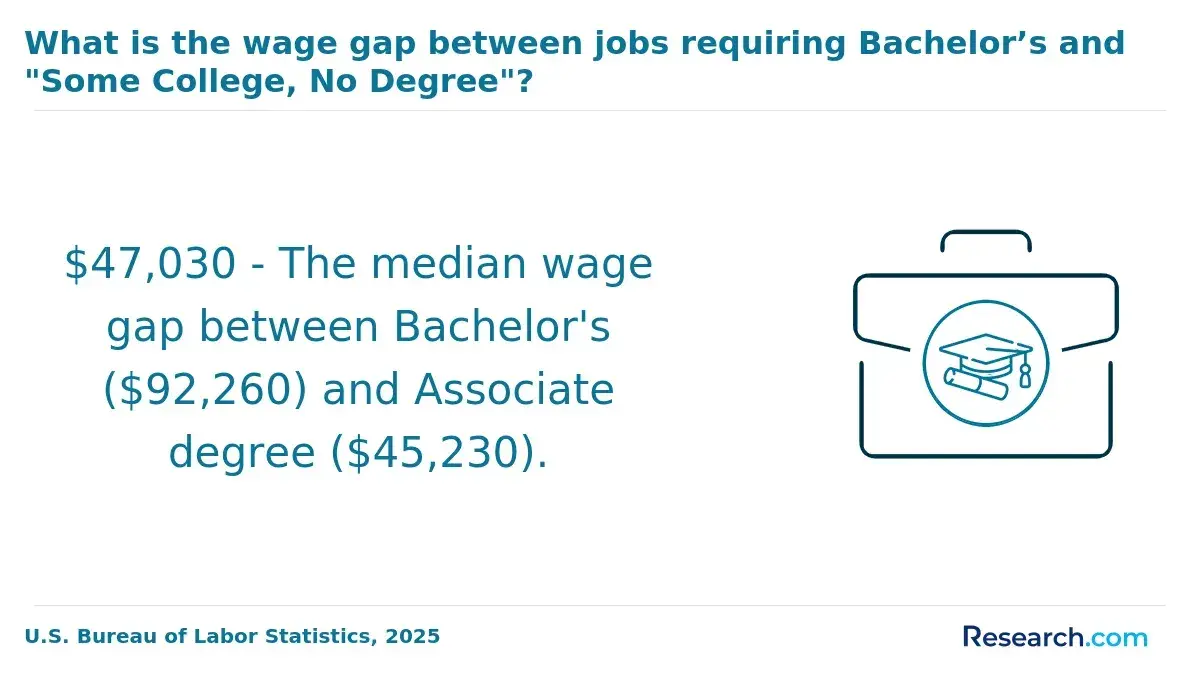
Accreditation for real estate finance programs in the US serves as a practical filter for employers prioritizing candidates who meet rigorous industry standards. Without accreditation, graduates often encounter hurdles in credential recognition, state licensing, and attracting competitive job offers. For instance, MBA graduates concentrating in real estate finance from accredited institutions typically command higher starting salaries-around $56,000-that can scale into six-figure incomes mid-career, reflecting employer confidence in validated expertise.
The commercial real estate sector supports approximately 1.7 million U.S. jobs and contributes roughly $234.9 billion to the economy, intensifying demand for professionals with accredited qualifications. Hiring managers frequently use accreditation as a proxy to mitigate hiring risk in this competitive market.
Conversely, unaccredited programs may attract individuals seeking foundational knowledge or entrepreneurial routes without immediate licensure goals but require additional credentials or networking to compensate for weaker market signals. Licensing boards, particularly for brokerage or appraisal roles, mandate completion of accredited coursework, limiting upward mobility for those without it.
Decision-makers should weigh accreditation's importance alongside state licensing alignment and career objectives. Specialized paths might accept less formal education but must prepare for delayed advancement or supplemental qualifications. Those interested in healthcare management fields could explore an MBA healthcare management as a comparative example of accreditation impact across finance-focused fields.
Should you choose online, hybrid, or campus programs?
Choosing between online, hybrid, or campus real estate finance programs requires weighing how each format aligns with professional demands and market realities. Online real estate finance programs benefits include lower cost and flexible scheduling, which accommodate active brokers or agents juggling client commitments. Yet, such programs typically lack direct networking, a key limitation given the role of relationships in deal-making.
Hybrid versus campus real estate education options present distinct practical tradeoffs. Hybrid formats blend asynchronous online study with in-person sessions, fitting early-career professionals seeking foundational theory complemented by real-time interaction and case-based learning without fully pausing employment. Campus programs, meanwhile, deliver structured immersion with direct access to internships, mentorships, and local industry ties-essential for those pivoting full-time and aiming at roles demanding soft skills and community engagement.
The U.S. Bureau of Labor Statistics projects approximately 46,300 openings annually for real estate brokers and sales agents through 2034; median wages differ significantly between these roles, reinforcing how program choice impacts employability and earnings. Campus-based training commonly correlates with stronger employer engagement and higher initial placement, albeit with greater time and financial investment.
For professionals balancing immediate work obligations with skill development needs, programs offering a strategic compromise prove valuable. Those targeting accelerated pathways may also evaluate accelerated MBA programs online as a complementary credential to broaden leadership and finance competencies beyond real estate specifics.
What courses are in real estate finance programs?
Success in real estate finance education hinges on mastering technical rigor alongside practical application, a balance often underemphasized in many programs. Core coursework usually encompasses financial accounting, econometrics, and cash flow modeling, providing quantitative tools essential to complex deal analysis and asset valuation. However, without scenario-driven projects and internships, graduates risk entering a labor market dominated by employers who demand fluency in negotiation, regulatory compliance, and dynamic capital markets.
Real-world training frequently involves dissecting financing structures for commercial versus residential assets, revealing how leverage and risk profiles shift by property type and investor class. This nuanced understanding distinguishes candidates aligned with development finance or private equity roles from those limited to entry-level analytics.
Given projections of 942,500 openings in business and financial sectors by 2034, embedding financial modeling software skills alongside regulatory knowledge is strategic. Yet electives like urban economics or sustainable finance, while attractive for environmental risk roles, must not detract from core competencies.
Students and professionals should critically assess programs for hands-on learning intensity and employer-relevant tools, since graduating without robust experiential components can impede integration into high-stakes negotiations and due diligence processes vital for career viability in real estate finance.
What admission requirements do these programs usually have?
Quantitative aptitude and relevant background weigh heavily in admissions for real estate finance specializations, with programs typically requiring a bachelor's degree in fields like finance or economics and a minimum 3.0 GPA. Applicants often submit GMAT or GRE scores in the 50th to 70th percentile range, reflecting program rigor. For mid-career professionals, especially those pivoting laterally, admissions panels may prioritize two to five years of work experience in real estate, financial analysis, or asset management to offset gaps in academic preparation.
Programs expect candidates to demonstrate hands-on skills in financial modeling and a grasp of market dynamics. Those lacking aligned undergraduate coursework may face prerequisite requirements in accounting or corporate finance. Letters of recommendation should highlight analytical maturity and communication skills, aligning with employer expectations in investment and capital markets roles.
In sectors like investment pools and funds employing about 8.72% of professionals in commercial real estate finance, advanced quantitative competencies and fund-structuring knowledge are essential. Without such skills, candidates risk limited entry or the need for bridge certifications. Personal statements focused on clear sector-specific objectives help signal strategic alignment with market demands.
For international students, verified English proficiency through TOEFL or IELTS acts as an additional filter, complicating access. Overall, the admissions process filters not only academic metrics but also practical readiness and targeted career intent, directly influencing employability and sector fit.
How long do real estate finance programs take?
Real estate finance education varies widely in duration and depth, influencing both the immediacy of employment and long-term career trajectory. Certificate programs lasting 6 to 12 months are often sufficient for entry-level appraisal roles but provide limited scope for advancement without supplemental field experience, typically requiring 150 to 200 education hours plus supervised mentorship over 1 to 2 years for licensing. Associate degrees and diplomas expanding into real estate law and quantitative methods generally span 1 to 2 years, targeting underwriting and analyst positions with broader responsibilities.
Employers increasingly weigh formal education alongside documented practical experience, especially in commercial brokerage or investment analysis. Candidates aiming for these roles benefit from bachelor's or master's degrees taking 3 to 4 years, which balance theoretical rigor with market expectations.
Consider these operational factors before committing:
- Short certificates accelerate entry but may restrict upward mobility without additional hands-on training.
- Licensing requirements introduce unavoidable timelines beyond classroom study affecting time-to-employment.
- Longer degrees demand sustained investment but align better with roles emphasizing portfolio management and complex financial analysis.
This strategic perspective helps applicants balance accelerated online options and traditional programs against labor market demand and their targeted position within the real estate industry's projected 5.8% growth. Realistic workforce planning requires integrating academic choices with licensing pathways and experience accumulation.
What do real estate finance careers pay?
Median salaries for real estate consultants hover around $61,000, a figure that reflects the market premium placed on analytical and financial modeling expertise in combination with sector knowledge. Employers prioritize candidates skilled in underwriting commercial loans or assessing development feasibility over purely transactional competencies, with those transactional roles often starting below this median.
The salary landscape shifts notably by sector: consultants at institutional investor firms or large commercial entities typically earn above $61,000 including bonuses, while those in smaller regional brokerages or public sector roles frequently fall short of this benchmark. Advancing to leadership or portfolio management roles can push compensation well beyond $85,000, but such progression usually demands additional credentials and proven experience managing capital and complex projects.
Prospective real estate finance professionals should consider several pragmatic factors when evaluating educational investments and career trajectories:
- Initial salaries must be balanced against student debt burdens and time required for promotions.
- Geographic markets influence earnings and living costs, with high-activity regions offering higher pay but intensifying financial pressures.
- Building quantitative and advisory skills through internships or certifications is essential to access median or higher salary tiers.
Without focused skill development and relevant experience, upward mobility is limited, often resulting in stagnant compensation and constrained job options. This workforce reality underscores the importance of targeted education and strategic credentialing in establishing a sustainable real estate finance career.
What jobs can you get with this specialization?
Specializing in real estate finance steers candidates toward roles that require a blend of financial acumen and sector-specific expertise such as asset management, mortgage banking, and portfolio analysis. For example, a real estate finance specialist at a commercial firm monitors multiple property metrics to maximize investor returns, demanding proficiency in financial modeling and market dynamics.
Opportunities extend beyond traditional roles into real estate development finance, where structuring project funding and assessing land acquisition feasibility requires understanding complex debt and equity instruments. Graduates frequently join mortgage-backed securities teams, tasked with analyzing asset quality and balancing risk and yield through loan pool structuring.
Practical realities include initial restrictions on upward mobility owing to limited experience, making early exposure to market data analysis and client interaction critical. Candidates should anticipate detailed forecasting and valuation duties, often requiring coordination across departments.
The 2023 Graduate Status report from Cal Poly's Orfalea College of Business cites a $70,000 median base salary for entry-level real estate finance graduates, reflective of employer preference for integrated financial and regulatory competencies. Navigating this path effectively demands both technical skill mastery and strategic role selection among diverse niches such as institutional asset management and residential mortgage finance.
Which certifications help real estate finance graduates?
Professional certifications in real estate finance distinctly shape career pathways by aligning skills with specialized employer demands. The Certified Commercial Investment Member (CCIM) credential boosts prospects in commercial investment roles through its focus on market and investment analysis, thus enabling faster integration into private equity or investment trust settings. Conversely, the Certified Property Manager (CPM) designation appeals to employers seeking operational proficiency for large portfolio management, favoring candidates aiming at property management or institutional investment firms.
Financial analysts pivoting into this sector often turn to the Chartered Financial Analyst (CFA) credential for its rigorous emphasis on valuation and portfolio management-a valuable match in REITs or wealth management. Yet, the CFA's extensive time commitment forces candidates to deliberate carefully on balancing credential acquisition with hands-on real estate experience to preserve competitiveness.
The Certified Mortgage Banker (CMB) certification targets professionals pursuing roles in lending or mortgage finance, equipping them with knowledge of regulatory frameworks and secondary market practices crucial for those seeking commercial or non-bank lending positions.
Salary data from the U.S. Bureau of Labor Statistics confirms real estate as a lucrative domain, with personal financial advisors earning around $130,430 annually when specialized. Candidates must weigh breadth versus depth in credentialing to navigate tradeoffs affecting the speed and direction of career progression effectively.
Other Things You Should Know About Real Estate
Employers in real estate finance look for specializations tied to current market demands such as valuation, asset management, or development finance. Choosing a specialization with broad applicability-like investment analysis-typically leads to more job opportunities compared to niche areas like sustainability finance, which are less established. Candidates should prioritize areas where employer hiring trends show sustained growth and demand for technical proficiency.
Certifications like CFA or FRM supplement real estate finance knowledge but carry significant time and cost investments. Their value depends on the targeted career path; for example, investment roles may demand these certifications, while development or asset management may prioritize sector-specific experience. Candidates should weigh certification benefits against practical work experience, as employers often favor demonstrable skills over credentials alone.
Intensive full-time real estate finance programs deliver faster entry into specialized roles but may be impractical for professionals balancing jobs or family. Part-time or executive formats reduce workload pressure but extend time to completion, potentially delaying career pivots. Professionals must consider employer support, flexibility, and personal capacity when selecting a program format to avoid burnout and ensure sustainable progress.
References
- REALTOR® Designations https://www.prar.com/realtor-designations/
- Designations & Certifications Information https://www.fayetterealtors.com/Designations---Certifications-Information-6-43.html
- Job Specialization https://www.aihr.com/hr-glossary/job-specialization/
- Hybrid Programs- Which Students Want Them? https://encoura.org/resources/wake-up-call/hybrid-programs-which-students-want-them
- Real Estate Designations and Certifications https://www.nar.realtor/education/designations-and-certifications
- Online vs Hybrid vs Campus Learning in Healthcare: Which Is Right for You? https://www.edumed.org/articles/online-vs-hybrid-vs-campus/
- Master’s Degree in Real Estate Finance – Explore Masters in Real Estate Finance, Masters in Finance and Real Estate at UT San Antonio https://future.utsa.edu/programs/master/finance-real-estate/
- What Is the Difference Between a Hybrid Class and an Online Class at a Vocational School? | Hunter Business School https://hunterbusinessschool.edu/what-is-the-difference-between-a-hybrid-class-and-an-online-class-at-a-vocational-school/
- Careers in real estate overview - Real Estate Balance https://realestatebalance.org/careers-in-real-estate-overview/
- Real Estate Designations & Certifications | Champions School https://www.championsschool.com/real-estate/designations/