2027 Nurse Practitioner Skills Employers Value Most

Co-Founder and Chief Data Scientist
Facing demanding clinical environments and rapidly evolving healthcare needs, many nurse practitioner candidates struggle to identify which skills will most influence employer hiring decisions and long-term career stability. With flexible online education models growing 30% between 2022 and 2024, according to the National Center for Education Statistics, adult learners increasingly prioritize programs that align with both immediate workforce demand and schedule constraints. This shift underscores the need to differentiate programs by tangible outcomes rather than simply accreditation or cost. This article examines the specific nurse practitioner skills employers prioritize today, equipping prospective students to align their training choices with practical hiring realities.
Key Things You Should Know
- Employers now prioritize advanced pharmacology competence in nurse practitioners, with 67% of healthcare organizations reporting increased clinical demands per the 2024 National Healthcare Workforce Survey, pressing candidates toward longer, costlier training that delays workforce entry.
- Analysis of 2024 BLS data shows that NPs with acute care specialization experience 18% faster placement but face narrower job markets, forcing candidates to weigh broader employability against sector-specific wage premiums.
- The 2024 AACN report correlates shorter NP program durations with lower employer confidence in leadership readiness, prompting organizations to prefer candidates from lengthier tracks despite higher education costs and delayed career progression.
What core clinical and diagnostic skills do nurse practitioner employers value most today?
Employers of nurse practitioners prioritize advanced clinical judgment and diagnostic reasoning as essential skills for independent practice. Nurse practitioners in the United States accounted for 25.8% of all primary care visits in 2024, managing diagnostic and treatment decisions autonomously in many settings. This imposes a clear demand for essential clinical competencies for nurse practitioners in the United States, emphasizing rapid synthesis of patient history, physical exams, and diagnostic testing-particularly in environments where physician oversight is limited or delayed.
In rural clinics, for instance, an NP must confidently distinguish urgent conditions such as sepsis from less acute viral infections to initiate timely treatment without specialist input. Such direct patient management requires strong critical thinking and evidence-based decision-making. Employers also expect proficiency in interpreting lab results and imaging studies to reduce unnecessary referrals and enhance patient throughput.
Practical skills in procedures like suturing, incision and drainage, and EKG administration influence hiring decisions, especially in emergency and outpatient care. Candidates must demonstrate an ability to balance autonomy with legal compliance and established protocols, ensuring patient safety. Communication with patients and interdisciplinary teams, alongside electronic health record proficiency, forms an integral part of diagnostic workflows impacting care continuity.
Because these demands need targeted training, nurse practitioner programs focused on measurable, real-world skills help reduce supervision periods and improve workforce integration. For those deciding between educational options, shorter pathways that concentrate clinical training effectively-such as a 1 year post master's FNP online program-may provide a strategic balance of efficiency and practical competence.
Which patient communication and counseling abilities are most critical for nurse practitioners?
Clear and efficient patient communication directly influences healthcare outcomes and operational efficiency in nurse practitioner roles. In primary care, for example, adapting counseling to the patient's literacy and cultural background is essential, especially for managing chronic diseases such as diabetes. This skill affects medication adherence and reduces costly errors. Effective patient communication techniques for nurse practitioners must extend beyond information delivery to include active listening that uncovers unvoiced concerns, creating a foundation of trust in fast-paced outpatient or urgent care settings.
Key counseling skills nurse practitioners use in clinical settings also involve cultural competence to bridge linguistic and cultural barriers, thereby reducing health disparities and enhancing patient satisfaction. Employers place significant emphasis on these competencies when evaluating performance and readiness to handle diverse patient populations.
Given these demands, nurse practitioners must continuously update their communication skills through structured continuing education and clinical practice hours mandated by certification bodies, preventing stagnation in a rapidly evolving field. Juggling documentation, patient education, and throughput requires concise techniques such as teach-back methods and targeted behavioral counseling to maintain both quality and efficiency.
For those assessing educational pathways, considering programs like online DNP programs without clinicals provides a practical alternative to traditional clinical requirements, appealing to working professionals seeking flexibility without compromising essential skills.
What evidence-based practice and clinical decision-making skills must nurse practitioners demonstrate?
Employers expect nurse practitioners to integrate advanced evidence-based clinical decision-making skills for nurse practitioners with the ability to navigate complex patient scenarios pragmatically. This means critically evaluating emerging research, synthesizing it with clinical guidelines, and adapting approaches to varied patient populations. Leveraging diagnostic reasoning alongside validated risk assessment tools helps reduce unnecessary testing and optimizes resource allocation.
Essential clinical judgment and evidence-based practice competencies for nurse practitioners also encompass patient education as a strategic care component. For example, a 2024 Agency for Healthcare Research and Quality analysis found nurse practitioner-led visits deliver 11-13% higher documented patient education rates compared to physician-led visits, which can enhance adherence and self-management outcomes in practice.
Operating under competing demands such as time limitations and complex comorbidities, nurse practitioners must prioritize interventions using clinical decision support systems while contextualizing treatment plans with social determinants of health. Mastery of health informatics and quality improvement methodologies is critical for ongoing outcome tracking and timely plan adjustments based on new evidence or patient response.
Those evaluating accelerated nurse practitioner programs should consider how these integrated clinical-educational skills directly impact employability and program effectiveness in meeting healthcare system needs. Prospective students weighing educational pathways need an informed perspective on how developing these competencies intersects with workforce expectations and long-term clinical responsibilities.
More detailed information on accelerated nurse practitioner programs can be found at accelerated nurse practitioner programs.
Which advanced assessment and procedural skills are emphasized in nurse practitioner programs?
Advanced nurse practitioner assessment skills in US np programs emphasize integrating comprehensive physical evaluations with precise diagnostic reasoning. Mastery in differential diagnosis is critical because nurse practitioners must navigate overlapping symptoms across family practice, acute care, and mental health settings. Procedural competencies like venipuncture, suturing, incision and drainage, joint injections, and airway management reflect employer demands for clinicians who minimize referrals and streamline patient care.
Employers in underserved urban or rural contexts particularly value NPs who can independently manage diverse procedures under resource constraints. For instance, an NP in a rural clinic is expected to competently perform wound care and EKG interpretation without specialist backup. In contrast, suburban or specialty environments may emphasize advanced diagnostic judgment over routine procedural skills, creating a tradeoff programs must address through flexible curricula.
Since over 40% of nurse practitioners serve communities primarily composed of racial and ethnic minorities, cultural competence-woven into advanced assessments-is essential to reduce diagnostic errors and improve patient adherence. Programs that insufficiently expose students to hands-on procedural volume risk graduates entering practice underprepared, particularly in interdisciplinary teams leveraging electronic health record systems for diagnostic integration.
Prospective students considering NP Programs should carefully evaluate how their chosen nurse practitioner school addresses these clinical skill sets and practical readiness, recognizing that profound gaps can limit employability and long-term performance.
In this context, understanding nurse practitioner school options that balance clinical access with program affordability can guide strategic educational investments.
How do NP programs build competency in interprofessional collaboration and care coordination?
NP programs foreground the operational realities of interprofessional collaboration by embedding direct teamwork exercises with physicians, social workers, pharmacists, and case managers. This goes beyond theory, emphasizing communication protocols that reduce errors and care duplication through structured handoffs and shared decision-making. For instance, in managing chronic illnesses like diabetes, students must coordinate medication regimens with pharmacists while integrating the expertise of dietitians and behavioral health providers, reflecting typical multidisciplinary care settings.
This approach aligns with employer expectations that graduates can navigate complex workflows involving multiple providers, which is critical to reducing care fragmentation and improving patient outcomes.
Programs increasingly incorporate telehealth simulations to reflect the sector's pivot toward virtual care-over 44% of nurse practitioners now provide telehealth services, with NPs responsible for about one-third of non-physician telehealth primary care visits. This experience sharpens skills in remote team management and digital patient data handling, which employers prioritize amid expanding technology-driven care models.
Practical challenges include securing varied clinical placements and preceptors, necessitating partnerships across healthcare environments to ensure broad exposure. The net effect is a curriculum designed not simply for clinical competence but for fluency in dynamic, multi-provider contexts that characterize contemporary healthcare delivery.
What technology, telehealth, and electronic health record skills are employers expecting from NPs?
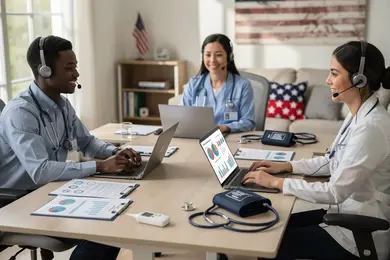
Nurse practitioners entering the workforce in 2026 must possess specific technical proficiencies to meet employer expectations and maintain clinical efficiency. Mastery of electronic health record (EHR) systems like Epic, Cerner, or Meditech is no longer optional; it is critical for accurate documentation and interdepartmental coordination. For instance, NPs in rural outpatient settings rely on integrated telehealth platforms to conduct virtual patient visits, requiring seamless navigation of video conferencing tools alongside EHR documentation in real time.
Over 70% of NPs now engage routinely in quality improvement or leadership committees, illustrating a shift toward data-driven decision-making in healthcare roles. Competency in interpreting clinical decision support outputs and quality metrics directly influences an NP's ability to lead interdisciplinary teams and close care gaps.
Key technology skills employers expect include:
- Customization of EHR templates tailored to specialty needs.
- Use of HIPAA-compliant telehealth solutions.
- Application of clinical decision support within digital records to minimize errors.
- Data literacy for analyzing electronic dashboards and quality reports.
Failure to integrate these proficiencies risks delayed workflow efficiency and diminished leadership opportunities. Nurse practitioners lacking these competencies confront barriers in value-based care environments that increasingly demand both clinical expertise and informatics fluency.
Which leadership, quality improvement, and healthcare management skills help NPs advance their careers?
Leadership and business skills distinctly separate nurse practitioners (NPs) positioned for expanded roles from those confined to clinical duties. For example, approximately 15% of NP-led practices were owned or co-owned by NPs, with ownership more than twice as likely in full practice authority states, per AANP workforce data. Success in these roles depends heavily on mastering budgeting, billing, staffing, and navigating complex regulatory landscapes-areas often underemphasized in NP Programs lacking real-world financial or leadership practicums.
In a busy community clinic setting, an NP must effectively coordinate interdisciplinary team efforts and optimize electronic health record (EHR) use, balancing clinical priorities alongside operational demands. Skills in quality improvement and outcome measurement directly impact the clinic's cost efficiency and patient satisfaction, critical metrics in value-based care environments.
Strategic planning capabilities-such as resource allocation, forecasting patient volumes, and negotiating payer contracts-are essential for those targeting administrative management or independent practice ownership. Employers increasingly seek NPs with transparent project leadership records and practical expertise in quality metrics to ensure compliance and minimize risk.
Students choosing NP Programs should carefully evaluate curricula for actionable leadership training and financial literacy components, as gaps in these areas limit career mobility and the ability to assume ownership or leadership roles within healthcare systems.
What cultural competence and health equity skills are essential for modern nurse practitioners?
Advanced cultural competence and health equity skills are fundamental for nurse practitioners seeking positions in increasingly diverse healthcare settings. Employers demand more than basic clinical proficiency; they expect systematic assessment of social determinants of health-such as housing, income, and language barriers-and the integration of these factors into personalized care.
For instance, psychiatric-mental health nurse practitioners, facing 46% employment growth by 2033 according to the U.S. Bureau of Labor Statistics data summarized by Johns Hopkins School of Nursing, must adapt therapeutic approaches to overcome cultural stigma and improve treatment adherence.
The role requires proficiency with equity-focused screening tools and navigating implicit biases through ongoing self-assessment. Additionally, nurse practitioners must coordinate multidisciplinary teams and advocate for equitable resource distribution, all while managing time constraints inherent in high-demand specialties. Technical skills in electronic health record systems that document social and cultural variables are increasingly crucial.
Educational pathways that emphasize both theoretical frameworks and community-based practice fare better in preparing candidates for these challenges.
Graduates without such integrated skills risk diminished employability and limited upward mobility. In real-world terms, this means selecting NP programs that balance cultural competence training with hands-on exposure to diverse patient populations, thus aligning learning outcomes with employer expectations and workforce realities.
How do online and campus NP programs differ in developing key employer-valued skills?
Employer preferences in nurse practitioner education often hinge on the balance between immersive clinical experience and flexibility in skill development. Campus NP programs provide intensive, supervised clinical practicums, equipping students with critical hands-on skills such as rapid decision-making, team communication, and situational awareness.
These competencies align well with demands in acute care environments, where patient scenarios are unpredictable and team coordination is essential. The U.S. Bureau of Labor Statistics projects a 40.1% growth in NP employment from 2024 to 2034, emphasizing the value of these capabilities in high-pressure healthcare settings.
In contrast, online NP programs emphasize virtual simulations and remote preceptorships, promoting adaptability and digital literacy. Such traits are increasingly vital in telehealth and community health contexts, though these programs may limit exposure to real-time clinical unpredictability and complicate securing high-quality clinical placements.
Graduates from online routes often face greater challenges in establishing mentorship ties, a gap campus programs typically address through institutional networks.
Prospective students should consider these tradeoffs strategically:
- Campus programs favor immersive, hands-on skill acquisition suited to fast-paced, team-based care roles.
- Online programs offer flexible learning conducive to telehealth and self-directed practice but require proactive clinical placement efforts.
Aligning program choice with specific employer expectations and targeted specialty areas is critical in navigating the expanding NP workforce landscape.
Which certifications, specializations, and continuing education best strengthen NP skill portfolios?
Certification choice directly shapes an NP's employability by aligning expertise with employer priorities and patient populations. For example, high-acuity hospital settings prioritize Acute Care Nurse Practitioner (ACNP) credentials due to immediate critical needs, while outpatient practices lean heavily on Family Nurse Practitioner (FNP) certification targeting broad primary care. Certification from recognized bodies like the American Nurses Credentialing Center (ANCC) or American Association of Nurse Practitioners (AANP) remains a baseline expectation for both licensure and workforce entry.
Specializations in growth areas such as gerontology or emergency care carry workforce demand premiums but can reduce flexibility if local market needs differ. Effective decision-making balances the cost and renewal logistics of certification with regional employment realities.
State-mandated continuing education (CE) requirements-typically 20-45 hours per licensing cycle including 5-25 in pharmacology-must be strategically met through accredited providers offering specialty-relevant pharmacology content. Prioritizing CE that enhances practical decision-making and pharmacological knowledge ensures licensure validity and clinical relevance.
For example, an NP in rural primary care benefits most from family practice certification combined with CE focused on chronic disease management and pharmacology updates. In contrast, an NP in a metropolitan trauma center should maintain acute care certification while emphasizing emergency pharmacology CE. Aligning certifications and CE with specific clinical environments streamlines professional growth and meets employer expectations without unnecessary coursework.
Other Things You Should Know About NP Programs
In 2027, employers value nurse practitioners who excel in telehealth proficiency, as virtual care continues to expand. Strong clinical judgment, adaptability in dynamic healthcare environments, and a comprehensive understanding of healthcare technology are also highly regarded, reflecting the evolving landscape of patient care.
Full-time programs accelerate entry into the workforce but increase workload intensity, which can limit time for clinical reflection and skill consolidation. Part-time tracks offer flexibility and are better for working professionals but extend program duration and delay potential salary increases. Students prioritizing rapid career advancement should opt for full-time when possible, while those needing to balance work, family, or financial constraints should consider part-time tracks despite longer completion times.
Many NP programs focus heavily on clinical knowledge yet provide limited hands-on training in real-world documentation and administrative duties, which constitute a significant portion of NP work. Graduates often face a steep learning curve managing electronic health records and compliance requirements, impacting productivity early in their careers. Choosing programs that incorporate extensive EHR practice and administrative scenarios can improve readiness and reduce early-career adjustment stress.
Programs connected to reputable health systems offer advantages beyond clinical training, including networking opportunities, potential employment pipelines, and exposure to system-based workflows. This affiliation can ease transitions into competitive job markets and support advancement through leadership or specialty roles. Prospective students aiming for strategic career advancement should prioritize programs with strong healthcare system partnerships to maximize long-term employability and professional growth.
References
- Standards of Practice for Nurse Practitioners https://www.aanp.org/advocacy/advocacy-resource/position-statements/standards-of-practice-for-nurse-practitioners
- 2026 Best Online Nurse Practitioner (NP) Programs and Schools - Nurse Practitioner Degrees https://npdegrees.org/degrees/online-np-masters-degrees/online-nurse-practitioner-programs/
- Continuing Education for NPs: Boost Your Career & Salary https://opportunityhealthcare.com/blog/nurse-practitioner-continuing-education-career-growth
- 10 Essential Nurse Practitioner Skills | Rockhurst University https://onlinedegrees.rockhurst.edu/blog/10-essential-nurse-practitioner-skills
- Barkley & Associates, Inc. https://www.npcourses.com/
- ONC - Office of the National Coordinator for Health Information Technology https://healthit.gov/
- Cultural Competency for Nurse Practitioners https://www.qualityinteractions.com/blog/cultural-competency-for-nurse-practitioners
- Evidence-based clinical decision-making: combining experience with data https://online.qmu.ac.uk/blogs/evidence-based-clinical-decision-making-combining-experience-with-data/
- Interprofessional Collaboration https://cna-aiic.ca/en/nursing/nursing-tools-and-resources/interprofessional-collaboration
- Nurse Practitioner Degree vs MSN: What to Choose ? https://learntastic.com/blog/earn-an-msn-or-np-degree-which-is-right-for-you