2027 Online Marketing Degrees With Marketing Analytics Coursework

Co-Founder and Chief Data Scientist
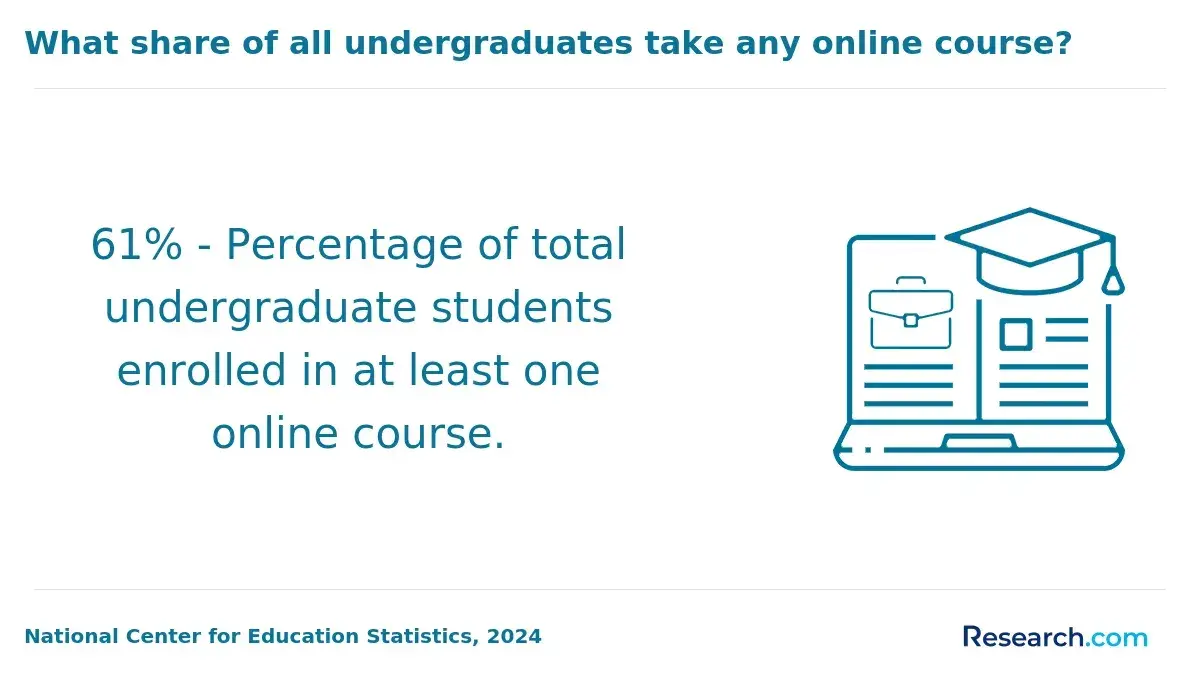
Marketing professionals face a growing divide between traditional skill sets and data-driven decision-making demanded by employers. Nearly 60% of today's adult learners select online programs seeking flexible schedules, per the National Center for Education Statistics, revealing a shift toward balancing career advancement and ongoing work commitments. This suggests an urgent need for programs that integrate marketing analytics without sacrificing accessibility. As businesses increasingly rely on data to optimize campaigns, professionals must access coursework that bridges theory with practical tools while accommodating diverse schedules. This article evaluates online marketing degrees with marketing analytics coursework, guiding candidates to navigate accessibility, curriculum rigor, and career relevance to make informed educational choices.
Key Things You Should Know
- Only 45% of 2024 U.S. online marketing degrees include dedicated marketing analytics coursework, limiting direct applicability for data-driven roles despite 23% faster industry growth reported by BLS in analytics demand.
- Employers emphasize proficiency in advanced tools like Python and SQL alongside marketing concepts; degrees lacking this integration see 15% lower median starting salaries in marketing analyst roles per Emsi data.
- Programs extending beyond two years or requiring hefty additional certification fees impose a 30% opportunity cost in foregone income for mid-career pivots, disproportionately impacting working professionals.
What is an online marketing degree with a marketing analytics focus, and who is it best for?
Online marketing degree programs with marketing analytics focus serve candidates who must combine traditional marketing savvy with quantitative rigor to make data-driven decisions under real-world constraints. For instance, a digital marketing manager in retail allocates ad spend by interpreting real-time performance metrics, a daily process that prioritizes predictive modeling over creative pitching.
Hiring managers increasingly expect applicants to translate complex data sets into actionable insights that directly affect budget allocation and campaign ROI, not just conceptual strategy.
This degree fits best candidates for online marketing analytics degree programs who possess or are willing to develop technical skills in SQL, Python, and data visualization, as these competencies underpin effective customer segmentation and measurement of campaign impact. Those without foundational statistics background face operational challenges balancing prerequisite learning alongside professional responsibilities.
Career pivots toward roles like marketing analyst or customer insights manager hinge on demonstrating fluency in both marketing principles and analytics platforms, a duality essential in growth sectors like tech and finance.
Tuition investment requires careful cost-benefit analysis. Penn State's online Master's in Marketing Analytics and Insights, for example, charges 30 credits at $1,078 per credit (rising to $1,089 per credit), implying roughly $13,000 per semester for full-time enrollment. Students should assess whether this financial outlay aligns with a realistic pathway to higher-paying, data-intensive roles or increased managerial responsibility.
Prospective students facing intensity in online study alongside work obligations may also compare alternative accelerated programs such as a 2 year construction management degree online to weigh opportunity costs.
How do online marketing degrees with analytics coursework compare to traditional on-campus programs?
Online marketing degrees with analytics coursework offer distinct operational advantages over traditional on-campus formats, primarily due to their asynchronous delivery. This allows working professionals to apply practical skills like predictive modeling and customer segmentation in real time, speeding the transition from learning to workplace impact. Employers increasingly prioritize demonstrable analytics proficiency and portfolio outcomes rather than the credential's delivery mode, shifting hiring dynamics toward applied competence.
A focused comparison of on-campus and online marketing analytics courses reveals tradeoffs beyond scheduling flexibility. On-campus programs afford richer networking experiences and localized industry connections, which can be crucial for entry-level candidates building client-facing portfolios.
Conversely, online formats demand greater self-motivation and digital literacy but offer accelerated pacing that can reduce debt and enable faster reskilling, especially for professionals transitioning into sectors like retail or finance where data-centric skills are immediately applicable.
Cost considerations significantly influence program selection. For example, Western Governors University charges $4,805 per six-month term for its online master's in marketing analytics, using a term-based tuition structure that rewards accelerated completion. This contrasts sharply with fixed-credit, semester-based models typical in traditional programs, which often prolong completion time and increase overall tuition.
Prospective students interested in a streamlined approach should review options such as those detailed in the online marketing degree analysis.
Ultimately, career goals and industry context shape the best educational path. Sectors relying on strong personal client relationships, like luxury brand marketing, may still value in-person credentials paired with internships, whereas data-centric roles reward rapid skill acquisition through online models.
What accreditation and quality standards should online marketing analytics degree programs meet?
Accredited online marketing analytics degree programs are essential to ensure students acquire rigorous, quantifiable skills that align with current workforce demands. Regional accreditation from bodies like the Higher Learning Commission guarantees that credits transfer properly and credentials hold employer value, while specialized accreditation from ACBSP or AACSB confirms adherence to quality assurance standards for marketing analytics degrees that emphasize data analysis, technology applications, and consumer insights.
These distinctions matter because employers often prioritize applicants trained under formal data methodologies and ethical analytics, which directly impact sectors such as retail, finance, and healthcare.
For example, a healthcare marketing professional skilled in data segmentation can significantly enhance patient engagement strategies, a capability less common in candidates from non-accredited or general business programs lacking targeted analytics coursework. Evaluating program outcomes through graduation rates, job placement metrics, and salary gains is critical; Western Governors University reports an average salary increase of $11,813 post-completion, illustrating tangible economic benefits of such education.
Without this vetting, students risk investing in degrees that do not translate to meaningful career progression or access to specialized certifications.
Prospective learners should also weigh program flexibility, access to analytics tools, and opportunities for applied projects or internships, which are often part of accreditation standards and necessary for translating theory into workplace impact. Consider exploring options such as the cheapest online business degree as part of a pragmatic approach to minimize debt while maximizing value from accredited online marketing analytics degree programs.
What marketing analytics courses and skills are typically included in these online degree programs?
Marketing analytics course curriculum in 2026 online degree programs focus on developing quantitative skills tightly linked with real-world business applications. This includes extensive training in data manipulation using Excel, SQL, and Python, combined with statistical approaches to interpret consumer behavior. Students gain capabilities essential for optimizing digital advertising budgets or segmenting customers effectively in e-commerce settings.
Emphasizing practical outcomes, students often engage in project-based modules tailored toward scenarios like maximizing campaign ROI for retail brands or predicting sales trends in fast-moving consumer goods.
Employers prioritize candidates who can transform large datasets into actionable strategies, with 72% of marketing roles requiring analytics software proficiency, a trend underscored by 2024 U.S. Bureau of Labor Statistics data. Core coursework includes advanced techniques such as predictive modeling, A/B testing design, and marketing mix modeling, crucial for understanding cross-channel promotional impacts.
Ethical training on compliance with GDPR and CCPA is standard, reflecting growing regulatory demands on data privacy.
For professionals weighing educational options, the tradeoff between comprehensive degree programs and faster certificate completions matters; for example, LSU's online B.S. in Marketing with a concentration in marketing analytics charges $445 per credit hour, totaling $53,400, illustrating the cost of depth versus speed.
Those seeking condensed skills might consider certificate paths, but should note these often limit eligibility for senior analytical roles and long-term advancement. To explore complementary pathways in related fields, see construction management courses, which also prioritize practical skills development.
What are the admission requirements and application materials for online marketing analytics degrees?
Programs in online marketing analytics typically require a bachelor's degree with a focus on business, economics, IT, or related disciplines. While a minimum GPA of around 3.0 is common, some institutions accept lower GPAs if accompanied by substantial professional experience. Standardized test scores (GRE/GMAT) are often requested but frequently waived for applicants demonstrating relevant work history or advanced degrees, reflecting employer preferences for demonstrable skills over exam results.
Applicants must also submit a personal statement that clearly connects their professional goals to marketing analytics, alongside two recommendation letters, ideally from supervisors or faculty acquainted with their quantitative abilities. This evaluative process weeds out candidates lacking a nuanced grasp of data-driven decision-making.
Many programs mandate prerequisite coursework in statistics, data analysis, or marketing fundamentals, which is particularly critical for professionals transitioning into analytics from non-technical roles. Foundational knowledge in tools like Python or R is often required upfront to avoid falling behind on complex analytics software and modeling techniques essential in market research and consumer insights careers.
International candidates face additional hurdles, such as proving English proficiency through TOEFL or IELTS scores and navigating visa-related delays that can impact enrollment timing.
- Minimum GPA usually around 3.0 or compensatory experience
- GRE/GMAT often waived for relevant work or advanced degrees
- Two recommendation letters focused on quantitative skills
- Prerequisites in statistics or programming typically mandatory
- Tuition example: $556.75 per credit at Southern Illinois University Edwardsville
Cost remains a decisive factor. For example, Southern Illinois University Edwardsville charges $556.75 per credit, culminating in approximately $16,700 for the degree.
Prospective students pursuing the best online business degree must weigh this against anticipated salary increments driven by advanced data competencies, as employer demand now heavily favors analysts with validated quantitative expertise.
How long do online marketing degrees with analytics coursework take, and how are they structured?
Bachelor's programs combining marketing with analytics typically demand 3 to 4 years of full-time study, balancing core marketing principles with technical data skills. Employers increasingly expect graduates who can not only interpret data but also apply predictive modeling and digital marketing strategies in context.
Most curricula span 120 to 130 credit hours, with 15 to 20 focused on analytics-related coursework, including SQL, Python, and data visualization. This allocation enables students to develop both broad marketing knowledge and the specific competencies needed to analyze and act on complex datasets.
For professionals juggling work, part-time or accelerated formats extend completion to 4 to 6 years, trading time for flexibility. Full-time enrollment expedites entry into the workforce but requires managing a demanding academic load that may affect earnings during study.
The financial impact directly correlates with credit requirements and per-credit pricing. For example, Indiana Wesleyan University charges $455 per credit for 48 credits concentrated on marketing analytics, representing a significant but workforce-aligned investment.
Students targeting data-centric marketing roles should prioritize programs with depth in analytics tools and hands-on projects like case studies or internships, which demonstrate real-world application across sectors such as retail, finance, or healthcare. Conversely, a more generalized marketing curriculum fits those aiming for broad-based roles with less technical specialization.
How much do online marketing analytics degrees cost, and what financial aid options are available?
Paying for an online marketing analytics degree involves navigating a range of variable costs and funding strategies that affect both recent graduates and mid-career professionals differently. The average tuition is about $16,647 per year for bachelor's programs, excluding additional fees, books, and technology expenses which can add 10% to 20% more. Working professionals often enroll part-time to manage cash flow, but this stretches financial commitment over a longer timeframe without reducing the total cost.
Federal financial aid through FAFSA remains a critical resource. Pell Grants offer non-repayable support for eligible undergraduates, while subsidized and unsubsidized federal loans provide additional but debt-creating options. Employer tuition reimbursement programs can offset expenses but usually require stable employment and commitment to the same company throughout and after the program.
Marketing analytics-specific scholarships and state or institutional grants often demand early application and strong academic records, which online learners should prioritize since campus-based aid can be less accessible.
For example, a digital marketing analyst switching focus to data strategy may strategically use a mix of employer benefits and federal loans, accepting manageable debt balanced against anticipated salary gains. Conversely, a recent high school graduate without employer support must lean heavily on scholarships and grants to avoid debt accumulation.
What careers can you pursue with an online marketing degree that emphasizes analytics?
Data fluency defines the emerging value proposition of an online marketing degree focused on analytics, particularly where actionable intelligence drives campaign design and customer engagement. Marketing analysts in retail often leverage purchase data to optimize inventory, while customer insights managers in financial sectors apply predictive models to customize product offerings. These real-world applications underscore the need for skills beyond theory.
Employers prioritize proficiency in data visualization, SQL, and platforms like Google Analytics, alongside business intelligence literacy. The translation of complex datasets into precise marketing tactics remains a critical capability. Projected growth of 10% in market research analyst jobs by 2032 reflects the rising demand for these skills amid expanding digital advertising and automation.
- Strong quantitative and marketing skill integration is essential for long-term employability.
- Practical experience with analytics tools is indispensable for competitive positioning.
- Understanding sector-specific data privacy considerations affects strategy development.
Students should weigh program costs against curriculum relevance; for example, Florida Atlantic University offers an online Bachelor of Business Administration in Marketing at $4,879 per academic year for in-state students, integrating essential analytics coursework. However, graduates confront ongoing challenges such as continuous technical upskilling and navigating evolving privacy regulations that constrain data sources.
What salary ranges and job outlook can marketing analytics graduates expect in the U.S.?
Starting salaries for marketing analytics graduates in the U.S. typically fall between $55,000 and $75,000, heavily influenced by geographic region and industry sector. However, entry-level credentials alone rarely secure roles beyond junior analyst positions in competitive urban markets. Mid-career professionals with three to five years of experience in technology or finance sectors often command $85,000 to $110,000, while senior roles with expertise in predictive modeling or big data can surpass $130,000 annually.
The demand for marketing analytics skills grows fastest in data-intensive environments such as healthcare, e-commerce, and digital advertising. The U.S. Bureau of Labor Statistics projects an 8% growth rate for market research analysts through 2033, driven by escalating corporate investment in data infrastructure and analytics-driven strategy.
Employers prioritize candidates who combine quantitative proficiency with strategic communication and real-world project experience. Without exposure to multiple analytics platforms, programming languages, and business intelligence tools, candidates often struggle to progress.
Strategic choices in education, notably selecting programs offering internships or cooperative placements, directly affect employment success and salary trajectories.
- Competitive urban markets raise hiring standards, emphasizing technical breadth and applied skills.
- Aligning coursework with practical experience mitigates early-career entry barriers.
- Growth sectors include healthcare analytics, digital marketing, and e-commerce data strategy.
Prospective students must critically evaluate the practical tradeoffs between time, cost, and real-world return on investment, considering both program design and industry engagement. This analysis should guide program selection to meet evolving workforce demands and personal career goals in marketing analytics.
How can prospective students choose the best online marketing analytics program for their goals?
Programs integrating advanced analytics techniques such as machine learning, AI, marketing mix models, and A/B testing align closely with employer expectations for data-driven marketing roles. Graduates skilled in these areas demonstrate approximately 25% higher job placement rates in digital marketing and consumer insights, according to a 2024 U.S. Department of Labor report. This skill alignment is crucial for professionals targeting sectors like fintech, where predictive analytics and compliance knowledge directly influence hiring decisions.
Choosing the right program requires weighing format and networking opportunities against flexibility. Fully asynchronous programs suit working professionals but often limit access to live case projects and employer connections, which hybrid models better facilitate. Major industry surveys from 2024 emphasize that applied project experience correlates with improved career pivot success.
Cost is another pivotal factor: programs exceeding $30,000 must provide transparent evidence of alumni salary growth or promotion via independent data, as high price alone doesn't guarantee job readiness. Cheaper programs without specialized analytics training risk producing graduates ill-prepared for AI-driven marketing demands.
- Graduate employment rates by industry sector provide a realistic job outlook;
- Hybrid formats improve practical skill development compared to asynchronous delivery;
- Salary growth metrics validate program return on investment;
- Integration of advanced analytics tools enhances market relevance.
Accreditation and partnerships with analytics software providers like Python, Tableau, or SAS reflect curricular rigor. Employers increasingly prioritize candidates trained on these platforms for immediate applicability and adaptability in evolving roles.
Other Things You Should Know About Marketing
Many programs require students to use Excel, Google Analytics 4, Tableau, and SQL for data querying and visualization. Some courses also introduce Python or R for statistical analysis, along with CRM platforms such as Salesforce to practice reporting, segmentation, and campaign tracking.
In marketing analytics education, prioritizing programs with real-world projects provides a decisive advantage in employability and skill retention. Employers demand graduates who can manipulate data sets, generate actionable insights, and explain findings in business terms, which theoretical knowledge alone does not ensure. Practical coursework-such as case studies, internships, or capstone projects using actual marketing data-bridges this gap and develops market-ready competencies. Though theoretical frameworks are essential for context, practical exposure should weigh more heavily in program selection.
Employers increasingly require marketing analytics graduates to possess a combination of technical proficiency and strategic thinking. Programs that focus narrowly on software tools without emphasizing decision-making risks producing graduates who can run analyses but cannot translate them into clear marketing strategies. Programs aligned with employer needs teach database management, predictive modeling, and visualization, accompanied by communication and cross-functional collaboration skills. Candidates missing this balance face challenges in interviews and job performance, so students should assess curricula for both skill sets.
References
- Marketing Analytics Salary | Job Demand, Career Outlook https://www.mastersofbusinessanalytics.com/careers/marketing-analytics-salary-outlook/
- The 5 best Digital Marketing Analytics courses https://xd-i.com/en/digital-marketing-en/digital-marketing-analytics/
- CourseCareers https://coursecareers.com/blog-posts/how-to-choose-the-best-digital-marketing-course
- Data Analytics vs Digital Marketing: Career Paths https://nowskills.co.uk/data-analytics-vs-digital-marketing-career-paths/
- Best Online Marketing Analytics Courses and Programs | edX https://www.edx.org/learn/marketing-analytics
- What’s the Difference Between Online vs. On-Campus Digital Marketing Master’s Programs? | Digital Marketing Institute https://digitalmarketinginstitute.com/blog/whats-the-difference-between-online-vs-on-campus-digital-marketing-masters-programs
- MSc in Digital Marketing and Data Analytics - GEM https://www.grenoble-em.com/en/programs/msc-digital-marketing-and-data-analytics/
- Master in Digital Marketing Analytics - English Program - EN - Westfield Business School https://westfield.edu/master-in-digital-marketing-analytics-en/
- Digital Marketing Analytics https://www.uwec.edu/academics/programs/undergraduate/digital-marketing-analytics
- Online Master’s in Marketing Analytics Programs (2026 Update) https://www.mastersincommunications.com/related-degrees/masters-in-marketing-analytics