2027 MIS Careers That Reward Strong Data Skills

Co-Founder and Chief Data Scientist
Facing rapid data proliferation, many aspiring MIS professionals struggle to find roles that fully leverage strong data skills amid shifting employer demands. Recent U. S. Labor Department projections indicate that data-oriented MIS roles will grow 15% faster than the overall tech sector through 2031, reflecting a pivot toward analytics-driven decision-making in organizations.
Yet, a separate National Center for Education Statistics report shows only 40% of adult learners enrolling in MIS programs prioritize flexible online pathways, limiting timely career transitions. Understanding how program formats and data skill applications align with evolving job market realities becomes essential for strategic career moves.
This article examines the most rewarding MIS careers tied to robust data expertise, offering targeted insights to navigate educational and employment decisions that bridge persistent skill gaps and workforce expectations.
Key Things You Should Know
- Data-intensive MIS roles grew 22% between 2022-2025 per the U.S. Bureau of Labor Statistics, pressuring candidates to specialize in advanced analytics rather than broader IT skills, which narrows entry pathways but raises value.
- Employers now prioritize candidates with real project experience in cloud-based MIS platforms, driving a 43% premium on hires who demonstrate hands-on competencies versus purely theoretical credentials.
- Increasing costs for MIS certifications relative to traditional degrees create timing tradeoffs, as mid-career pivots face 15% longer job placement times, according to the National Center for Education Statistics 2024 data.
What is Management Information Systems and how do MIS careers use data skills?
Data skills critically shape career paths within management information systems roles, where professionals must navigate the complexity of diverse data sources and dynamic business contexts. For example, operations research analysts applying predictive models in supply chain management directly influence operational costs and delivery efficiency, demonstrating the tangible impact of advanced analytics on competitiveness.
Success in these roles depends on more than technical proficiency. Interpreting data trends and risks requires fluency in SQL, data visualization, and statistical analysis, as well as the ability to translate findings for non-technical stakeholders. MIS career paths involving data analysis therefore demand a blend of deep analytical capability and clear communication to drive data-informed decisions across sectors like healthcare, finance, and manufacturing.
Realistic challenges include ensuring data quality and aligning complex information systems with evolving business goals. An MIS analyst in financial services, for instance, might deploy dashboards that track compliance metrics in real time, substantially shortening audit cycles and reducing penalties. This practical integration of data systems has real labor market value.
Employment for roles such as operations research analysts is projected to grow 23% from 2022 to 2032, underscoring rising industry demand. For those evaluating academic options, programs like the best online CAHIIM accredited health information management degree programs provide targeted credentials correlated with such workforce outcomes.
Which MIS careers most heavily reward strong data and analytics skills?
Roles centered on management information systems data analyst responsibilities emphasize practical expertise over theoretical coursework, with demand driven by proficiency in business intelligence and analytics development. A business intelligence analyst in financial services, for example, must integrate complex datasets to forecast risks and optimize investment portfolios, illustrating the tangible impact of these competencies.
Growth projections exceeding 30% through 2030 highlight the priority employers place on skills such as data modeling, dashboard creation, and query optimization within business intelligence and analytics roles. Candidates lacking real-world experience in large dataset management and cloud environments often experience slower career progression, underscoring that advanced analytics skills in management information systems carry notable workforce implications.
Mid-level professionals focusing on careers in management information systems with advanced analytics skills will find that practical abilities in SQL, Python, and BI platforms like Power BI or Tableau remain essential. While adjacent roles like data engineering or data science require deeper programming and machine learning knowledge, MIS-related analyst positions offer a pragmatic pivot with clearer alignment to employer demand and compensation trends.
Deciding whether to pursue formal education or self-directed training often involves balancing costs against employability outcomes. Candidates researching the financial investment in these pathways may consult resources such as computer science cost guides to benchmark options realistically.
What degrees or training do you need to qualify for data-focused MIS jobs?
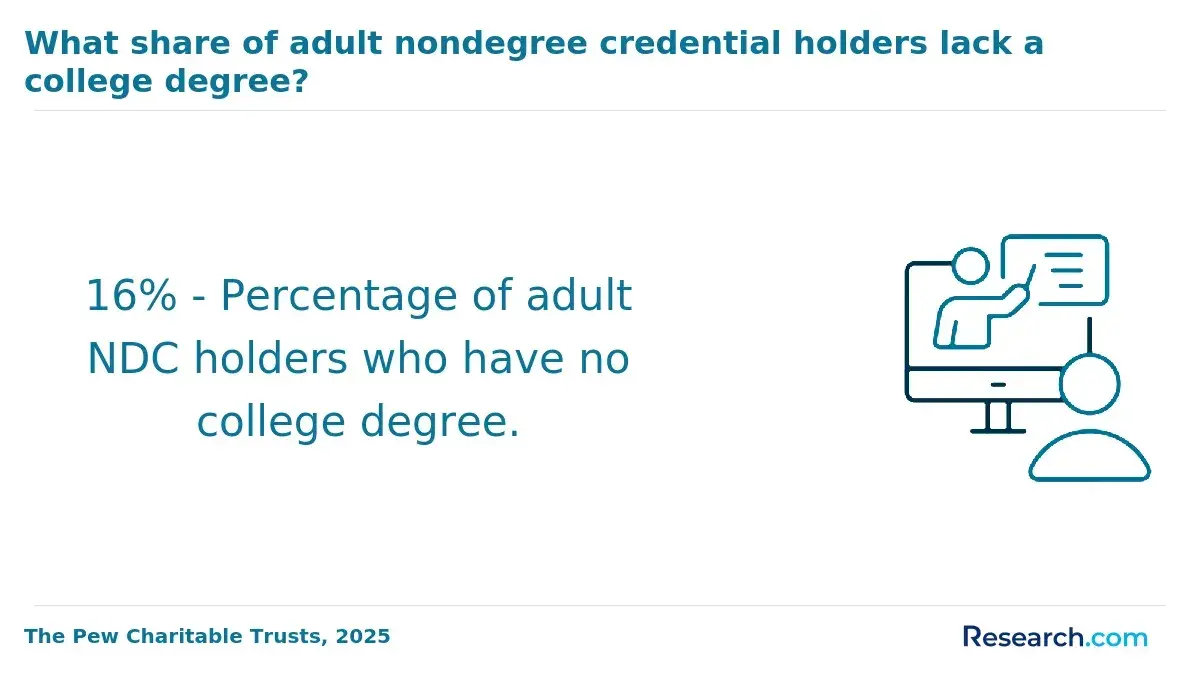
Data-focused management information systems roles require a pragmatic blend of technical proficiency and business insight, with a bachelor's degree in management information systems, computer science, or data science as the foundational credential.
These degrees cover essential areas like database design, programming languages such as Python and SQL, and systems analysis, aligning academic preparation closely with employer expectations. In sectors like healthcare or finance, regulatory constraints heighten the premium on candidates able to integrate analytic skills with operational realities.
Supplemental certifications, such as Certified Data Management Professional (CDMP) or cloud-specific credentials, accelerate readiness for roles where practical experience matters most. Employers increasingly value demonstrated expertise with ETL pipelines and real-time data processing, often gained through targeted internships or project work.
This emphasis on hands-on skills reflects the pronounced 35% projected growth in data engineering jobs between 2024 and 2030, driven by demand for modern data stack and cloud platform mastery.
Given these dynamics, prospective students should carefully weigh traditional data analytics degrees for Management Information Systems careers against accelerated paths to ensure time and financial investments translate into job-market relevance. For those balancing work and study, exploring a business administration degree online might complement MIS training through a broader operational lens.
Ultimately, choosing the right educational approach involves balancing formal credentialing, practical tool fluency, and sector-specific requirements, especially as online training programs for data-focused MIS roles evolve to meet shifting employer demands.
How do online MIS programs compare with campus-based options for data skill development?
Online management information systems programs provide foundational data skills comparable to campus-based options but often fall short in practical immersion and employer-recognized networking. This distinction matters for roles like data scientist, where program graduates are expected not only to master programming and data analytics but also to navigate complex, real-world datasets within collaborative environments.
Campus-based training frequently includes embedded internships and hands-on lab access, which reinforce employability, whereas online learners must independently secure equivalent experience.
The projected 25% growth in data scientist positions from 2024 to 2030, with median salaries over $150,000, intensifies the need for workforce-ready competencies. Students assessing campus-based vs online management information systems data training should consider how direct employer engagement on campus contrasts with the flexibility online programs offer, especially for working adults aiming to upskill without disrupting employment.
For example, those targeting healthcare analytics benefit significantly from campus connections to hospital systems for applied projects, a resource less available remotely. Online learners must proactively build portfolios and identify experiential opportunities to remain competitive. Choosing between modalities depends on individual circumstances including access to industry networks, project acquisition capability, and regional demand dynamics.
Those interested in related IT skill development might also explore the best online cyber security courses to complement their data focus.
What core MIS courses and technical skills best prepare you for data-driven careers?
Core MIS courses must equip students with technical skills directly applicable in data-centric roles rather than mere theoretical knowledge. Strong database management instruction, focusing on optimized data storage and retrieval, is essential for sectors like finance and healthcare where data scale and integrity matter.
Data analytics and visualization coursework sharpens competencies in SQL, Python, and Tableau, technologies employers prioritize for extracting actionable insights from complex data.
The demand for cybersecurity expertise in MIS is becoming unavoidable: the U.S. Bureau of Labor Statistics projects a 32% growth for information security analysts through 2032, signaling that data protection abilities are integral for compliance and risk management across industries.
Consider the financial analyst who relies on SQL and scripting to accurately prepare and analyze transactional data for fraud detection. Meanwhile, healthcare MIS professionals must continuously navigate stringent regulatory requirements like HIPAA, relying heavily on data governance and cybersecurity knowledge to protect patient privacy. Choosing programs with hands-on labs and industry-relevant tools reduces onboarding friction and enhances job performance.
It's important to weigh technical specialization against business applicability: advanced data science skills may be less practical in smaller firms lacking complex infrastructures, whereas balanced MIS programs develop versatile expertise adaptable to various organizational contexts.
What are the typical salaries for MIS professionals in data-focused roles?
Salaries for MIS professionals specializing in data roles reveal a clear tradeoff between rapid skill acquisition and higher earning potential. Data product managers have seen job growth exceed 40% since 2020, with median U.S. salaries from $140,000 to $160,000. This surge ties closely to the need for AI integration and data-driven features across sectors like healthcare, finance, and technology, where regulatory demands or startup equity options affect compensation variance.
Entry-level data analysts typically earn $60,000 to $80,000 annually, while mid-level roles such as data engineers or business intelligence analysts command $90,000 to $120,000. Senior roles that blend technical and strategic responsibility, such as data architects or analytics managers, usually surpass $130,000.
Employers consistently seek candidates proficient in data modeling, SQL, cloud platforms, and AI tools, rewarding those who can convert complex datasets into actionable business strategies.
For MIS students or professionals pivoting into data-focused careers, the key challenge is balancing time-intensive skill development against immediate earnings. Those concentrating solely on specialized data capabilities face steep technology learning curves but gain access to premium salaries. Investing in advanced certifications or data science coursework often influences salary trajectories markedly.
Ultimately, industry context shapes compensation. For example, data product managers in healthcare generally earn near the upper salary range due to compliance complexity, while tech startup positions may offer lower base pay offset by equity stakes.
What is the job outlook for MIS careers that specialize in data and analytics?
Demand for MIS professionals specializing in data and analytics is concentrated where quantitative rigor intersects with industry-specific challenges. Finance roles like quantitative analysts face an estimated 20% growth through 2030, driven by algorithmic trading and data-driven risk management. Yet, employers also seek candidates who navigate complexities beyond coding and statistics, such as integrating regulatory requirements into analytic frameworks.
For example, healthcare MIS analysts must embed HIPAA compliance into predictive modeling, balancing privacy with actionable insights. This regulatory overlay differentiates data-focused MIS roles from traditional IT positions and requires broader knowledge beyond typical technical skills.
Applicants should assess programs that combine foundational MIS curriculum with applied data science and real-world enterprise projects to develop critical cross-functional capabilities. Additionally, gaining credentials in statistical programming, data governance, and industry-specific analytics increases job market currency.
Across sectors, healthcare, retail, manufacturing, the fusion of advanced data skills and domain expertise shapes MIS candidates who can optimize operations, personalize services, and improve outcomes. However, students should weigh the additional friction of mastering compliance and evolving technology landscapes when planning their educational trajectory.
How can industry certifications strengthen your data credentials in MIS career paths?
Certifications in management information systems function as practical validators of skills employers demand, particularly within data-focused roles. They confirm competencies in key technologies like SQL and Python and demonstrate familiarity with industry-approved analytics platforms. This ready validation is often preferable to on-the-job retraining, especially in fields such as data analysis and business intelligence.
For example, roles in marketing analytics and customer insights are projected to grow over 25% within six years, reflecting strong market demand for professionals who combine certifications with platform-specific expertise. This combination enables more rapid hiring decisions and can justify higher compensation tied to measurable business outcomes.
However, candidates must consider several tradeoffs: the cost of certification, renewal cycles, especially in fast-evolving cloud analytics domains, and the necessity of relevant work experience. Employers typically favor certifications reinforced by demonstrable project results, such as automating reporting dashboards or optimizing inventory systems, emphasizing applied skills over theoretical knowledge.
In workforce planning, certifications reduce hiring risk by standardizing candidate evaluation but are not standalone guarantees of readiness. Strategic credential choices aligned with targeted MIS subfields and effective integration with practical experience maximize long-term employability and adaptability as technology trends shift.
How do you evaluate and choose an accredited MIS program with strong data training?
Choosing an accredited management information systems program demands scrutiny of accreditation bodies such as AACSB or ABET, as these credentials correlate directly with employer recognition and graduate marketability. Programs that fail to demonstrate current industry standards risk graduates being underprepared for a labor market that anticipates over 30% growth in AI operations, MLOps, and automation engineering roles by 2030, as outlined in the 2026 Data Career Guide.
Course content should extend beyond theoretical frameworks to emphasize applied skills in data pipeline automation or AI model management-real-world scenarios prevalent in sectors like finance and healthcare IT. Critical competencies include practical experience with tools such as Kubernetes and TensorFlow, which employers now consider foundational in data-driven MIS roles.
A realistic assessment includes examining graduate employment metrics, partnerships with employers, and salary benchmarks in related fields. For professionals reskilling, hybrid or part-time formats must still guarantee sufficient hands-on training to master relevant workflows without diluting rigor.
Tradeoffs arise between programs focused heavily on theory versus those emphasizing operational expertise. The former may delay entry into the workforce while the latter requires ensuring depth to avoid superficial understanding of core algorithmic or governance challenges.
Transparency about internship availability and industry collaboration remains essential since these factors substantially impact employability in a highly competitive and rapidly expanding field.
What early career steps help transition from general MIS roles into advanced data positions?
Success in transitioning from general management information systems into advanced data roles depends heavily on early acquisition of specific technical skills and real-world project experience.
For example, candidates targeting mid-level analyst positions across industries such as finance and healthcare must demonstrate proficiency in SQL, Python, and visualization tools like Tableau or Power BI. Job listings consistently require these competencies, making formal certifications in data analytics or data science more strategic than purely theoretical programs.
Entry-level roles emphasizing database management and automation provide essential hands-on exposure. Consider a systems analyst role responsible for automated reporting pipelines: this experience creates a tangible differentiator by merging technical expertise with business-oriented outcomes.
According to Mintly's 2024 data, total compensation ranges from $90,000-$130,000+ for mid-level MIS/data analysts, increasing to $140,000-$220,000+ at managerial levels. This reflects growing employer expectations for not only technical skills but also leadership and strategic integration of data-driven insights.
Developing early competency in data governance and privacy compliance is increasingly crucial in sectors with strict regulations, such as healthcare and finance. Such expertise is often a determining factor in advancing to senior analytic or managerial roles. Maintaining a portfolio that documents measurable improvements driven by data initiatives notably improves prospects, as employers favor demonstrable impact over routine MIS tasks.
Other Things You Should Know About Management Information Systems
Graduates often find the pace of technology adoption and business process changes in MIS roles faster than academic programs reflect. This gap means new hires may need to quickly master specific tools or platforms not fully covered during their studies. Employers expect immediate problem-solving capabilities alongside data skills, often pressuring graduates to contribute to workflow optimization and decision support. Prioritizing internships or co-ops that expose candidates to current industry tools reduces this onboarding friction.
For practical career growth, it is advisable to build a broad foundation before pursuing deep specialization. MIS professionals who combine versatile systems knowledge with selective technical expertise-such as advanced SQL or data visualization platforms-better align with evolving employer demands. Early extreme specialization can limit flexibility, while a broad base allows faster adaptation when project priorities shift. Strategic specialization should follow proven workplace exposure rather than purely academic focus.
Employer-requested certifications include Microsoft Certified: Power BI Data Analyst, AWS Certified Data Analytics – Specialty, and Google Data Analytics Professional Certificate. These credentials help prove dashboarding, SQL, and reporting skills, which are common in MIS roles that use data to support business decisions.
In 2027, the choice between a graduate degree and specialized certifications for data-focused MIS careers depends largely on individual career goals. A graduate degree offers a broad, theoretical foundation, while certifications provide targeted, practical skills. Employers may weigh these differently, so aligning education with desired job roles is key.
References
- Data Science Course vs. University – Which path is better in 2026? https://www.wbscodingschool.com/blog/data-science-course-vs-university/
- Data Manager Role and Salary Expectations | Walbrook https://www.walbrook.ac.uk/subjects/data-science/data-manager-roles-and-salary/
- Online vs. On-Campus: Which Mode of Learning Is Best for You? https://www.onlinemastersdegrees.org/student-resources/which-mode-of-learning-is-best/
- How to Choose Online Masters Programs - MIA Digital University https://miauniversity.com/how-to-choose-online-masters-programs/
- How An Online Masters In Management Information Systems Can Advance Your Career - ReviewNPrep https://reviewnprep.com/blog/how-an-online-masters-in-management-information-systems-can-advance-your-career/
- Careers in data analytics: a comprehensive guide https://www.bcs.org/articles-opinion-and-research/careers-in-data-analytics-a-comprehensive-guide/