2027 Online Legal Studies Degrees With Contract Management Concentrations

Co-Founder and Chief Data Scientist
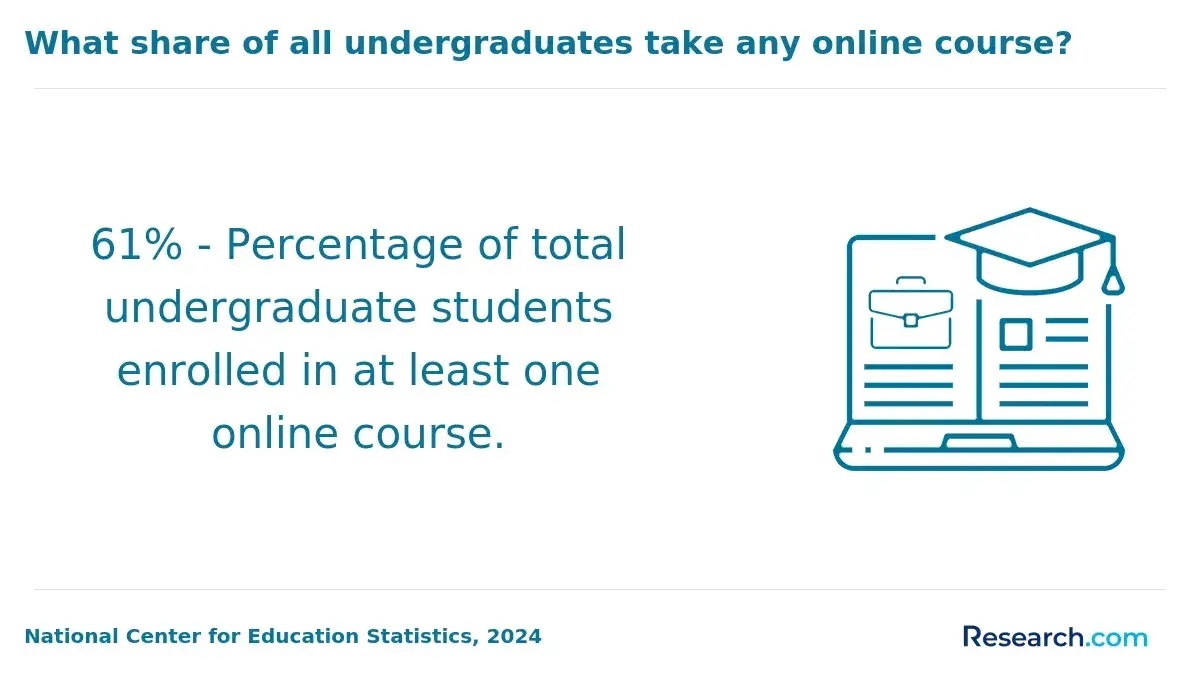
Legal professionals aiming to specialize in contract management often encounter a critical obstacle: balancing rigorous career demands with the need for flexible, targeted education. According to the National Center for Education Statistics, over 40% of postsecondary students now pursue higher education fully online, reflecting a shift in accessibility that accommodates working adults and nontraditional learners.
This trend matters because contract management requires up-to-date knowledge of evolving regulations and negotiation strategies that traditional programs may not deliver on a schedule compatible with full-time employment. This article examines online legal studies degrees with contract management concentrations that offer practical scheduling, curriculum relevance, and career mobility to address these challenges effectively.
Key Things You Should Know
- Online legal studies degrees with contract management concentrations show a 17% wage premium over general legal studies roles but incur 20-30% higher program costs, pressuring candidates to weigh ROI versus specialization benefits.
- Employer surveys from the National Association of Legal Professionals reveal 62% favor contract-focused graduates for paralegal advancement, aligning hiring with precise industry skill demands over broader legal training.
- Completion timelines extend 6-8 months longer on average for contract management tracks due to mandatory practicum components, impacting mid-career learners balancing employment and credentialing deadlines.
What is an online legal studies degree with a contract management concentration?
The practical value of an online legal studies degree with contract management concentration lies in its direct alignment with workplace demands, especially for professionals navigating complex contractual environments. For instance, contract managers in healthcare must reconcile stringent federal rules with vendor agreements, while those in technology address intellectual property and service terms.
This specialization equips students with applied skills in contract drafting, negotiation, risk evaluation, and compliance that have immediate operational relevance rather than abstract legal theory. Employers increasingly seek candidates who demonstrate competency in managing contract lifecycles and resolving disputes within business contexts.
Graduates gain proficiency in balancing legal accuracy with organizational objectives, a nuanced skillset that supports both risk mitigation and business strategy. However, given variability in program quality, assessing accreditation and employer recognition remains essential before committing to a program. Access through flexible online programs meets the needs of working professionals, often integrating capstone projects or simulated internships to reflect real-world contract management challenges.
In 2024, median salaries are recorded at around $83,522 for graduates, emphasizing demand for expertise in contract-centered legal roles. Students evaluating contract management specialization in legal studies programs should weigh continuous learning requirements, as contract law and technology tools evolve rapidly. Options also include exploring cheap online interdisciplinary studies degree options that may intersect with legal studies but involve different tradeoffs in focus and marketability.
Are online legal studies programs with contract management concentrations accredited and respected?
A critical consideration for prospective students evaluating accredited online legal studies programs with contract management concentrations in the United States is the alignment of program credentials with both academic standards and employer expectations. Accreditation recognized by the U.S. Department of Education or the Council for Higher Education Accreditation signals rigorous oversight but does not guarantee practical relevance.
Employers hiring contract management specialists prioritize candidates with demonstrated competencies in contract law, risk assessment, and lifecycle management over theoretical pedigree. Graduates from programs incorporating simulations or hands-on drafting exercises prove more immediately effective in real-world settings, such as managing vendor agreements in manufacturing or supporting compliance in healthcare administration.
The expanding contract lifecycle management market-projected to grow from $2.2 billion in 2024 to $5.6 billion by 2030 at a 14.3% CAGR-intensifies demand for professionals combining legal expertise with operational skills. Students must therefore scrutinize whether online programs offer recognized certifications or partnerships with industry groups like the National Contract Management Association (NCMA) to ensure alignment with professional standards.
Lack of accreditation or practical coursework risks limited employer recognition and reduced eligibility for advanced credentials. For those considering educational pathways that include a legal studies contract management specialization, it is beneficial to compare offerings with related fields.
For example, examining a criminal justice associate degree online may reveal insights on curriculum structure, accreditation rigor, and career applicability relevant to their decision-making process.
How do online legal studies degrees compare to campus programs for contract management?
Employers filling contract management positions prioritize demonstrated competence above whether a candidate's degree was earned online or on campus, making the choice between educational formats a matter of strategic alignment rather than inherent value. Online legal studies degrees vs campus programs contract management concentrations provide equivalent foundational knowledge but differ in delivery dynamics that impact experiential learning and networking.
Online programs enable working professionals to maintain employment while gaining targeted contract law expertise through flexible schedules and interactive case studies replicating real-world negotiation scenarios. This structure suits mid-career transitions, such as procurement specialists shifting into manufacturing contract management, by minimizing opportunity cost and accelerating applied learning.
Campus-based programs, conversely, afford immersive environments conducive to direct mentorship, in-person collaboration, and access to on-site internships-critical advantages for recent graduates aiming at law firms or government agencies where recruitment pipelines and professional connections matter most.
Students must weigh their career focus, time availability, and employer expectations when choosing their path. Both pathways produce eligible candidates for contract specialist and administrator roles, yet success hinges on leveraging program-specific strengths in experiential learning and networking.
The 28% enrollment growth in master's-level legal programs in 2024 highlights rising demand for flexible, specialized graduate education beyond JD tracks. For those exploring broader legal education options, an online criminal justice degree offers another flexible route aligned with workforce needs in related fields.
What courses and skills are taught in contract management-focused legal studies programs?
Contract management courses in online legal studies programs build targeted skills that align closely with employer needs in sectors such as healthcare, construction, and government procurement. Graduates are expected to navigate complex contract lifecycles-drafting, review, enforcement-while mitigating risks that arise from vague or noncompliant terms. These programs focus on key skills taught in contract management concentrations, including risk assessment, negotiation tactics, and procurement ethics.
The curriculum's emphasis on regulatory compliance addresses both federal and state standards, preparing students for industries with stringent protocols like defense and infrastructure. Practical components often simulate supply chain disruption management or term renegotiations during volatile market conditions, mirroring real workforce challenges where adaptability and legal precision must coexist.
Additionally, technical fluency in contract management software and legal research tools reflects a critical marketplace expectation-automation proficiency that reduces administrative bottlenecks. American University's online Master of Legal Studies, offering contract management as one of 11 concentrations, echoes this demand for specialization within broader legal education frameworks, signaling a strategic advantage for those balancing theory with applied contract execution.
For those assessing cost against return in legal studies, comparing this path with alternatives such as master's in marketing can highlight different market trajectories and financial implications.
What admission requirements do online legal studies programs in contract management typically have?
Admission into online legal studies programs with contract management focuses on verifying candidates' ability to handle complex legal frameworks that govern contracts and compliance. Programs typically require a bachelor's degree from an accredited institution or relevant professional experience to compensate for formal qualifications. Applicants must submit transcripts demonstrating collegiate-level skills in English composition and critical thinking, often maintaining a minimum GPA between 2.5 and 3.0 to ensure academic readiness.
Working professionals pivoting careers may face additional demands such as letters of recommendation or evidence of contract negotiation experience. A targeted statement of purpose explaining career objectives in contract administration is frequently requested to gauge fit and intent. This can be particularly critical for accelerated or advanced standing tracks designed for those with prior industry exposure.
Placement assessments in quantitative reasoning or legal writing sometimes serve as gatekeepers for those lacking foundational undergraduate coursework. International applicants must also provide TOEFL or IELTS scores to meet language proficiency standards aligned with U.S. employer communication expectations.
Tuition disparities from $16,020 at California University of Pennsylvania to $36,570 at Northeastern University introduce a financial dimension to admissions that institutions reconcile by screening candidates for potential return on investment. Since employers expect contract analysts to possess skills in risk management, compliance, and negotiation precision, programs calibrate admissions to balance inclusivity with the imperative of producing competent professionals across healthcare, construction, and technology sectors.
How long do online legal studies degrees with contract management concentrations take, and what do they cost?
Online legal studies degrees with contract management emphases demand a careful balance between time investment and practical outcomes. Full-time accelerated programs can conclude within 18 months, ideal for early-career individuals prioritizing rapid workforce entry and higher starting salaries. Part-time options, typically spanning 2.5 to 3 years, suit professionals maintaining employment while upskilling, though extended durations may delay financial returns.
Tuition varies broadly, from approximately $15,000 at cost-effective public or online institutions to over $35,000 at private or research-intensive universities. Higher-priced programs often provide richer curricula and stronger career support, which can influence hiring prospects but require upfront financial commitment. Ancillary costs like materials and technology fees also contribute to total expenses.
Labor-market data shows contracts managers averaging $112,500 annually, contrasting with contract compliance specialists earning near $69,900, illustrating the tangible earnings premium of advanced credentials. Candidates transitioning from unrelated fields benefit from pacing that balances income continuity with educational advancement, whereas those targeting mid-level roles swiftly might accept higher cost and intensity for faster credentialing.
Choosing between accelerated and extended pathways requires weighing the tradeoff between quicker employment access versus sustained income during study. Delivery mode and program accreditation critically affect employability; prioritizing outcome-verified programs outweighs cost alone.
What careers can graduates of legal studies degrees with contract management concentrations pursue?
Contract management roles for legal studies graduates demand agility in navigating complex regulatory environments, particularly within federal contracting, where awards rose to about $765 billion in FY 2024, compared to $694 billion four years prior. A contract specialist in the Department of Defense, for instance, must manage intricate federal acquisition rules and coordinate multiple stakeholders to prevent costly disputes or bid protests. This necessity reflects a high-stakes environment where legal precision and operational timing converge.
Beyond government agencies, corporate procurement roles in sectors like construction, healthcare, and IT require candidates to blend legal insight with technical proficiency in contract lifecycle management software. These jobs emphasize vendor agreement oversight and delivery compliance, impacting both legal exposure and operational flow.
Private sector contract managers frequently contend with narrower profit margins and accelerated deadlines. This context demands balancing risk management with business agility. Compliance officers often need specialized knowledge of industry-specific regulatory frameworks such as the Federal Acquisition Regulation (FAR) or healthcare contract mandates, underscoring the layered complexity.
The practical realities for graduates include handling detailed documentation, managing cross-functional communication, and working under deadline pressures. Prospective professionals should weigh federal contract stability against private sector pace and diversity, ensuring their skillsets align with evolving market demands.
What salary ranges and earning potential exist in contract management and related legal roles?
Contract management salaries vary widely based on industry, experience, and location, typically ranging from $60,000 to $120,000 annually. Entry-level roles often start between $60,000 and $75,000, yet sectors like technology or government contracting reward specialized skills with salaries exceeding $100,000. For example, contract managers with over five years of experience, particularly those managing complex legal frameworks, can expect compensation near $110,000 to $120,000.
Higher wages usually correlate with demanding industries involving large-scale procurement or regulatory compliance, where credentials such as Certified Professional Contract Manager (CPCM) can be essential. Federal defense contractors, for instance, report median pay around $115,000, contrasting with smaller firms offering closer to $70,000. This underscores that advanced negotiation, risk assessment, and contract interpretation skills are decisive for top-tier compensation.
Working adults pursuing Online legal studies face notable tradeoffs. While flexible programs accommodate ongoing employment, pacing may slow salary progression compared to full-time tracks. Those without legal backgrounds should anticipate entry-level salaries at first, as employers prioritize direct contract management expertise over prior unrelated experience.
Practical experience and targeted certifications generally have greater impact on earnings than degrees alone. Given the increasing volume of online legal studies students, competitive differentiation depends on demonstrable competence and relevant credentials rather than academic credentials in isolation.
What certifications or professional credentials are relevant for contract management specialists?
Contract management credentials distinctly impact employability, especially when aligned with sector-specific demands. The Certified Professional Contract Manager (CPCM) and Certified Federal Contracts Manager (CFCM) represent recognized benchmarks, yet their practical application diverges. Employers in government and defense mandate CFCM certification due to its strict adherence to the Federal Acquisition Regulation (FAR), while CPCM remains applicable across private and public industries with broader contract scopes.
Those focusing exclusively on commercial contracts benefit from the Certified Commercial Contracts Manager (CCCM) credential, which emphasizes nuances absent in federal contracting frameworks. As over 40 ABA-approved law schools have introduced online or hybrid non-JD graduate Legal Studies programs, candidates without Juris Doctor degrees face a strategic opportunity. These programs, verified by ABA legal education standards, equip professionals with tangible, compliance-focused skills preferred by hiring managers.
Effective contract management increasingly intersects with compliance and risk mitigation disciplines. Certifications such as Project Management Professional (PMP) or Certified Supply Chain Professional (CSCP) provide vital competencies in project-driven environments-particularly in sectors like construction and manufacturing where contract deliverables and schedules intertwine tightly.
Many employers require ongoing certification maintenance via continuing education to ensure current knowledge of shifting regulations and ethical standards. Without these credentials, contract specialists risk stagnated progression, especially in highly regulated industries where legal expertise is non-negotiable.
- Choosing credentials aligned with ABA-accredited Legal Studies pathways can accelerate readiness for demanding roles
- Balancing sector relevance and compliance acumen remains critical for long-term viability
How can students choose a reputable online legal studies program in contract management?
Choosing an online legal studies program with a contract management focus demands careful scrutiny beyond accreditation to include curriculum relevance and real-world applicability. Accreditation from bodies like the American Bar Association ensures a baseline academic quality, but employers increasingly seek graduates proficient in contract lifecycle management (CLM) tools, compliance nuances, and digital procurement workflows.
This skill set answers a documented 40% increase in contract management job postings in 2024, indicating clear workforce demand. Practical preparation varies considerably by sector. For example, those targeting government contracts must master FAR regulations, whereas private-sector roles prioritize familiarity with platforms like Icertis or SAP Ariba.
Programs lacking simulation or case-study integration risk leaving graduates ill-equipped for negotiation, risk assessment, and compliance monitoring tasks that define contract management roles across industries. Assessing graduate employment outcomes and employer engagement offers insight into a program's practical value. Schools with advisory boards embedded in contract management fields or transparent placement data provide tangible evidence of student employability.
Format flexibility and robust support services are vital for working professionals balancing ongoing responsibilities with education. Tuition cost should be weighed against curriculum rigor and technological integration. Lower-priced degrees that omit focused contract management modules may underdeliver on essential skills, limiting long-term ROI in a market where verifiable expertise is paramount.
Other Things You Should Know About Legal Studies
Online legal studies programs often offer asynchronous coursework, allowing students to manage their schedules around full-time jobs. However, the intensity of contract management concentrations demands consistent engagement with complex case studies and document analysis, which can quickly consume time beyond recorded lectures. Working professionals should prioritize programs with clear time expectations and robust support services to avoid overextending themselves and risking academic performance.
Online contract management coursework often uses learning management systems such as Canvas or Blackboard, plus contract lifecycle management platforms like Agiloft, DocuSign CLM, or Ironclad. Students may also use Microsoft Word with track changes, PDF tools, and legal citation software for drafting, review, and version control.
Contract law involves nuanced interpretation of case law, statutory language, and varied jurisdictional applications that can be difficult to grasp without direct interaction. Online programs may limit spontaneous discussion and immediate clarification, which are critical for understanding complex contract clauses. Students should seek programs with active discussion forums or live sessions and allocate extra time for self-study to achieve mastery.
Choosing a specialized contract management concentration narrows your skill set, which benefits roles strictly within contract negotiation or administration but may limit adaptability to other legal fields. Broader legal studies degrees provide versatility across multiple legal disciplines but might require additional training for contract-specific positions. Candidates must assess their long-term career goals: prioritize specialization if aiming for contract management roles or flexibility if uncertain about career direction.
References
- Best Online Master's Degrees in Legal Studies for 2025 https://www.onlinemastersdegrees.org/best-programs/legal-studies/
- Certified Contract Management Professional (CCMP) - AIBM US https://aibm.us/certified-contract-management-professional-ccmp/
- What Can You Do With a Master of Legal Studies? https://onlinemls.law.umkc.edu/articles/what-can-you-do-master-legal-studies/
- What Can You Do with a Master’s in Legal Studies? https://onlinemasteroflegalstudies.com/career-guides/mls/
- Contract Law and Management Training Program https://zoetalentsolutions.com/course/contract-law-and-management-certification-program/
- The ultimate guide to contract management courses in 2025 - LawVu https://lawvu.com/articles/the-ultimate-guide-to-contract-management-courses-in-2025/
- NCMA Woodlawn Chapter - Certifications https://ncmawoodlawnchapter.org/Certifications
- BA in Legal Studies https://www.umassglobal.edu/academic-programs/ba-legal-studies
- 5 Highest Paid Types of Lawyers | What Lawyers Make the Most Money? https://www.collegesoflaw.edu/blog/2024/02/19/lawyer-types-highest-paid-career-paths/
- Certified Contract Manager - FCL Fidic https://fcl.fidic.org/our-programmes/contract-managers/