2027 Online Kinesiology Degrees With Strong Strength and Conditioning Training

Co-Founder and Chief Data Scientist
Credential seekers aiming to specialize in strength and conditioning often struggle to balance rigorous hands-on practice with flexible learning schedules. The Bureau of Labor Statistics reports a 13% growth in exercise physiologists and related roles through 2032, driving increased demand for educational programs that adapt to working adults' lives without sacrificing applied skill development.
Online kinesiology degrees with focused strength and conditioning training attempt to address this by blending remote coursework with practical training requirements. Yet, program variability in curriculum depth, access to certifications, and employer recognition complicates informed choices.
This article evaluates current online kinesiology programs emphasizing strength and conditioning, helping prospective students identify options that align with industry standards and career acceleration goals.
Key Things You Should Know
- Online kinesiology degrees with strength and conditioning training show 15% higher job placement within six months, per the 2024 National Center for Education Statistics, but lack of hands-on practicum risks skill gaps valued by employers.
- Employers prioritize candidates with certifications and in-person internship experience; solely online-only programs yield 22% lower internship completion rates, impacting advancement opportunities in competitive sports science roles.
- Tuition for hybrid proficiency programs averages 30% less than traditional degrees but extends time-to-degree by one semester on average, requiring candidates to balance cost savings against delayed labor market entry.
What is an online kinesiology degree with a strength and conditioning focus?
Online kinesiology degree programs with strength and conditioning specialization deliver a focused blend of core scientific knowledge and practical training tailored to workforce demands in athletic and rehabilitation settings. Graduates from these programs typically gain expertise in anatomy, biomechanics, exercise physiology, and sports nutrition, coupled with strength and conditioning training in accredited kinesiology online courses designed for real-world application.
One operational challenge is that remote programs cannot fully replicate the direct hands-on experience essential for certain clinical or athletic roles. This often forces students to independently secure local internships, complicating logistics and potentially delaying alignment with employer certification expectations.
For example, professionals engaged remotely with collegiate sports teams rely heavily on analyzing athlete data and modifying training plans without physical presence, emphasizing the need for robust digital competencies alongside applied knowledge.
The integration of scientific rigor with applied strength and conditioning expertise distinguishes these specialized online degrees from more generalized kinesiology offerings and corresponds with tangible career outcomes. In 2026, graduates from Oregon State University's online Bachelor of Science in Kinesiology reported a median salary of $60,964, placing them in the upper quartile nationally.
This suggests stable employer demand for candidates with such dual strengths. Interested students may want to consult resources for comparative pathways by reviewing this online sports science degree analysis.
How do online kinesiology programs compare to campus programs for strength and conditioning?
Online kinesiology degrees with strength and conditioning focus often deliver comparable theoretical foundations to campus-based programs but create significant divergences in applied skill development. Strength and conditioning positions demand practical proficiency in client interaction, movement techniques, and safety protocols—areas better cultivated through in-person labs and internships.
Campus programs typically provide supervised access to training facilities and direct mentorship, which align more closely with employer expectations in sports teams, rehabilitation centers, and fitness organizations.
A comparison of online vs. campus kinesiology strength training programs reveals that online options often depend on virtual simulations or recorded materials that fail to replicate real-time feedback and hands-on skill acquisition. This limitation can hinder graduates' readiness for roles requiring immediate application of complex tactile skills.
Additionally, securing quality practicum or fieldwork hours remotely is challenging, demanding proactive local networking to fulfill certification and employment prerequisites.
The labor market outlook for exercise trainers projects a 13% employment growth from 2022 to 2032, emphasizing the importance of demonstrated applied expertise alongside academic knowledge. Employers expect candidates capable of dynamically leading physical training sessions, a benchmark usually validated through in-person program components.
Prospective students, especially working professionals or those in remote locations, should consider hybrid models combining online coursework with scheduled on-site intensives or local partnerships. This approach balances practical skill acquisition with theoretical instruction, better positioning graduates for strength and conditioning careers.
Meanwhile, individuals exploring related accelerated educational tracks might compare these pathways with options like 12-month accelerated nursing programs online for non nurses when evaluating time and workforce entry points.
What accreditation and program quality standards should these online kinesiology degrees meet?
Online kinesiology degree accreditation standards in the United States emphasize measurable outcomes and relevance to employer expectations, especially for programs with a strength and conditioning focus.
Accreditation from recognized bodies like CHEA or the U.S. Department of Education is foundational, but alignment with quality criteria for kinesiology programs with a strength and conditioning focus—including standards by organizations such as CAAHEP—is what sets programs apart. This ensures curricula emphasize applied biomechanics, exercise science, and nutrition integrated with the latest strength protocols rather than outdated theory.
Graduates without certification-oriented competencies, particularly those tied to credentials like the National Strength and Conditioning Association's Certified Strength and Conditioning Specialist (CSCS), risk lower employability. In practical terms, strength and conditioning professionals in the U.S. earn average salaries around $44,985, with personal trainers closer to $62,000 and top-tier experts exceeding six figures, according to PTPioneer's 2026 review.
Programs lacking hands-on training, such as supervised internships at athletic or rehabilitation centers, often produce graduates who struggle to meet real-world performance standards.
Prospective students should evaluate programs that provide transparent graduation and job placement rates along with national exam pass data. These metrics often reveal program effectiveness better than accreditation alone. Flexible pacing with these quality assurances supports working professionals balancing career demands and skill development.
For those comparing pathways, the fastest online master's in healthcare administration offers an example of alternative career advancement timelines outside kinesiology's traditional routes.
What courses and practical training are included in strength and conditioning-focused kinesiology curricula?
Strength and conditioning training in online kinesiology programs demands a strong integration of scientific coursework and applied experience to meet industry rigor. Core subjects typically include exercise physiology, biomechanics, motor learning, anatomy, and nutrition, forming the empirical foundation necessary for constructing effective, evidence-based fitness programs.
More focused courses emphasize strength training techniques, program periodization, injury prevention, and sports psychology, equipping graduates with skills aligned to employer expectations for advanced client assessment and individualized workout designs.
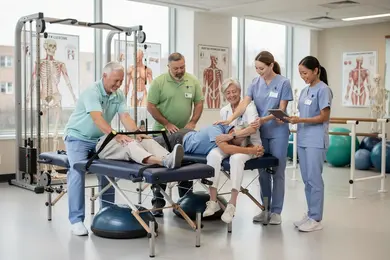
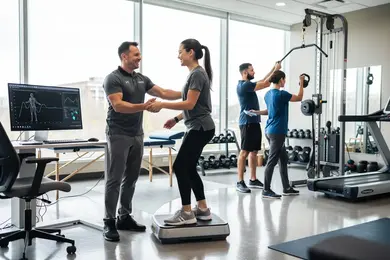
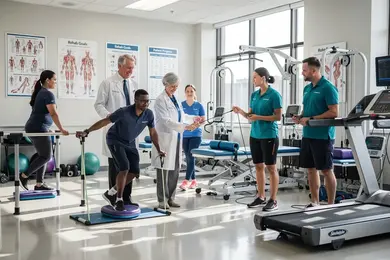
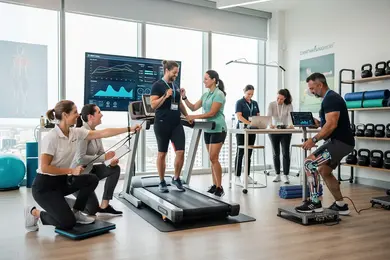
Practical coursework for strength development in kinesiology degrees commonly requires supervised internships and laboratory work involving real athletes or clients. For instance, an intern embedded within a collegiate athletic program will translate classroom concepts into adjusting training loads and recovery strategies to mitigate risks such as overtraining while maintaining peak performance across a competitive season.
These authentic, hands-on experiences address employer preferences for candidates who can immediately operationalize theoretical knowledge in dynamic sports environments.
The job outlook supports prioritizing these practical skills, with projections showing over 45,000 new positions for fitness trainers and instructors and 25,300 additional roles for coaches and scouts from 2022 to 2032. However, students face notable challenges: securing quality field placements, managing extensive labs alongside coursework, and ensuring their curriculum aligns with certification prerequisites, which remain critical for employer hiring.
Prospective candidates should assess programs offering early internships and mentorship from certified specialists to ease these points of friction. For those considering related health fields, exploring the cheapest BSN to MSN online options can offer alternate pathways to healthcare careers connected to physical performance and rehabilitation.
What are the typical admission requirements for online kinesiology strength and conditioning programs?
Admission criteria for online kinesiology strength and conditioning programs reflect a balance between foundational knowledge and practical readiness. Most require a high school diploma or equivalent and often impose minimum GPA thresholds between 2.5 and 3.0.
While some programs still request standardized test scores like the SAT or ACT, increasingly, professional experience or prior college coursework substitutes for these, recognizing diverse applicant backgrounds. Prerequisite coursework-biology, chemistry, anatomy, physiology, or exercise science-is frequently mandatory to ensure students are prepared for advanced content.
Programs also weigh workforce relevance: applicants with certifications or documented experience in fitness, athletic training, or rehabilitation often strengthen their applications. Interview and recommendation letters remain common, particularly when program demand exceeds capacity.
Transfer students must provide transcripts, and some programs apply fees or limited on-campus clinical hours, posing logistical challenges for remote learners.
Tuition must be contextualized with expected outcomes. For instance, an online exercise science program with an annual tuition around $9,480 produces graduates earning a median salary near $50,706, revealing a salary premium exceeding $40,000 above educational costs.
This suggests that prioritizing program quality and employer connections can outweigh brand recognition or simply opting for the lowest-cost options.
How long do these online kinesiology degrees take and what do they cost?
Completing an online kinesiology degree focused on strength and conditioning involves balancing time, cost, and workforce expectations, a challenge often underestimated by prospective students. Most programs demand about 36 credit hours, typically spanning two to three years depending on full-time or part-time enrollment and whether practical components like synchronous practicums are included.
These hands-on requirements, while extending program length, significantly enhance employability in demanding sectors such as collegiate athletic training and clinical rehabilitation.
Financially, tuition alone can approach $63,000, averaging $1,750 per credit, with ancillary costs for materials and certification pushing expenses 10-15% higher. For working professionals, stretching the program over three years reduces immediate financial strain but delays career income gains.
Conversely, a two-year accelerated path demands heavier course loads that may compromise retention and practical skill development, vital for meeting employer standards.
Career objectives dictate program structure choices: those targeting NCAA strength coaching often prioritize expedited credentialing and cost efficiency, while clinical or research careers require more rigorous, time-intensive training to satisfy credentialing authorities. Confirming whether programs include internships or applied practicums is essential, as these components materially impact total time and cost.
What careers can you pursue with an online kinesiology degree in strength and conditioning?
Graduates of an online kinesiology degree focused on strength and conditioning must strategically navigate employer expectations that prioritize hands-on experience and recognized certifications. Although academic knowledge provides the foundation, roles in athletic training, rehabilitation, or exercise physiology demand practical application through internships, practicum, or credentialing like the CSCS (Certified Strength and Conditioning Specialist).
In applied settings—such as professional sports programs or outpatient clinics—strength and conditioning coaches develop and monitor individualized regimens aimed at injury prevention and performance enhancement. Online programs that include supervised practicum help bridge the gap between theory and employer requirements by offering remote video assessments and real-time client progress tracking.
Military and public safety sectors differ by emphasizing operational readiness, requiring candidates to demonstrate measurable outcomes with diverse populations and maintain certifications post-degree. The larger market, exemplified by institutions like Arizona State University Online with tens of thousands of enrollees, intensifies competition and compels students to supplement their degree with targeted internships and specialized training.
What salaries and advancement opportunities exist in strength and conditioning and related fields?
Strength and conditioning roles frequently present a tradeoff between certification level, employer type, and geographic access, directly influencing earning potential and career trajectory.
Entry-level positions in high schools typically pay $35,000 to $50,000 annually, but progression into NCAA Division I programs or professional teams can yield six-figure salaries, reflective of the sector's credential premium and competitive landscape. These dynamics require kinesiology graduates to build measurable outcomes and integrate evidence-based training to stand out.
Beyond salary, the limited number of full-time roles in elite sports pushes many professionals toward varied environments such as military, corporate wellness, or private training facilities, where income and job stability fluctuate. Success often hinges on networks within athletic departments and grant-funded positions, adding layers of unpredictability.
Looking at regional labor markets, CSP Global's report of 910 annual openings in Minnesota for coaches and scouts through 2030 indicates localized demand but also intensifying competition. Practical advancement depends on pursuing credentials like CSCS and diversifying skill sets into sports science or athlete management to mitigate seasonal employment risks.
Which certifications matter most for strength and conditioning professionals after a kinesiology degree?
Certification selection after a kinesiology degree critically shapes professional opportunities and earning potential in strength and conditioning fields. For those targeting collegiate or professional sports, the Certified Strength and Conditioning Specialist (CSCS) and the Certified Strength and Conditioning Coach (SCCC) credentials are essential credentials, widely preferred by employers for their validation of applied programming and athlete assessment skills.
Focusing exclusively on these certifications aligns candidates with mainstream athletic settings but narrows pathways for roles outside that scope. Those aiming for tactical strength training or clinical populations should evaluate alternatives such as the Certified Exercise Physiologist (CEP) from the American College of Sports Medicine (ACSM), which supports careers in rehabilitation and health-focused exercise prescription.
Practical implications include navigating credential requirements that differ by sector. For instance, securing a strength coaching role with a professional sports team typically demands CSCS certification coupled with documented internship experience, reinforcing its industry-standard status.
In contrast, clinical exercise physiologist positions often require ACSM certifications and sometimes graduate education, affecting time and financial investment.
Salary data illustrate how specialization influences market value: exercise physiologists hold a median U.S. salary near $54,860 with a projected job growth of 10.3%, while coaches and scouts average $45,910 with 9.2% growth, revealing a tangible tradeoff between clinical and athletic concentration.
How can you choose the best online kinesiology strength and conditioning program for your goals?
Selecting an online kinesiology strength and conditioning program demands scrutiny of how well it balances rigorous, evidence-based coursework with hands-on skill development aligned to workforce expectations. Employers prioritize graduates holding certifications like NSCA or ACSM, so program accreditation and clear certification pathways are essential.
Programs offering hybrid or in-person labs provide critical client-assessment experience often missing from purely theoretical online models.
Graduates' job placement within a year is a key metric. Concordia University Chicago references 2024 U.S. Bureau of Labor Statistics data showing a $60,000 median annual salary and a 13% job outlook for personal trainers, illustrating tangible demand and pay in related fields. Applied internships and performance facility partnerships significantly enhance employability compared to purely academic programs.
Flexibility matters but should be weighed against career goals and learning preferences. For instance, a working adult targeting collegiate strength coaching needs a program with mandatory internships at sports facilities to access hiring networks—a requirement unlikely met by asynchronous certificates. State authorization is also crucial when licensure or clinical hours are mandated locally.
Cost and duration are secondary to practical skill validation and credible job placement data. Avoid programs that lack transparent outcomes or hands-on components, as these diminish return on investment in a competitive kinesiology labor market.
Other Things You Should Know About Kinesiology
Online kinesiology degrees often rely heavily on virtual simulations and theoretical coursework, which can limit direct hands-on experience critical for strength and conditioning roles. Employers typically expect graduates to demonstrate practical application through internships or certifications alongside their degree. Prioritizing programs that require or facilitate in-person practicum components is essential to bridge this gap and meet workforce expectations effectively.
Exclusive online kinesiology paths may not align perfectly with certification bodies' practical hour requirements or test preparation formats, potentially delaying certification eligibility. Some specialty certifications mandate documented supervised training hours that purely virtual programs struggle to provide. Prospective students should prioritize hybrid or blended programs that integrate fieldwork opportunities to maximize certification success and reduce additional training costs.
Choosing a broad kinesiology degree allows flexibility for career pivoting and covers foundational biomechanics, anatomy, and physiology beyond strength and conditioning. However, narrowly specialized programs can accelerate expertise and improve immediate employability in strength and conditioning roles by focusing tightly on relevant skills and certifications. For students certain about a strength and conditioning career path, a specialized program offers clear efficiency, while those seeking diverse job options should prioritize broader curricula.
References
- Strength and Conditioning Coach Salary: What You Need to Know in 2026 - Create https://create.fit/strength-and-conditioning-coach-salary/
- Online Bachelor of Science in Kinesiology https://calbaptist.edu/academics/programs/online-bachelor-of-science-kinesiology/
- Five Online Degrees For Students With A Passion For Fitness https://www.academicinfo.net/blog/2023-02-16-five-online-degrees-for-students-with-a-passion-for-fitness/
- Quality Standards and Accreditation of Distance Education Programs in a Pandemic - OJDLA https://ojdla.com/articles/quality-standards-and-accreditation-of-distance-education-programs-in-a-pandemic
- Kinesiology https://www.gordon.edu/science/programs/kinesiology
- Online Kinesiology Degree Programs: Review Top Schools https://www.edumed.org/online-schools/kinesiology-degrees/
- The 4 Best Strength and Conditioning Certifications https://fitnesstrainer.com/fitness-blog/best-strength-and-conditioning-certifications
- Best strength and conditioning certification guide (Updated) https://www.ptpioneer.com/personal-training/certifications/strength-and-conditioning-certifications/
- Guide To Strength and Conditioning Coach Jobs and Careers | The Fitness Group https://www.thefitnessgrp.co.uk/strength-and-conditioning-jobs/
- Kinesiologist vs Strength Coach vs Personal Trainer vs… - Vital Performance Care https://vitalperformancecare.com/trainer-vs-strength-coach/