2027 Online Kinesiology Degrees With Service-Oriented Health Career Alignment

Co-Founder and Chief Data Scientist
Mid-career professionals aiming to transition into health- and service-oriented kinesiology roles face a distinct challenge: balancing full-time work with the rigorous demands of degree programs that rarely offer flexible scheduling. Recent data from the National Center for Education Statistics reveals a 27% rise in online undergraduate enrollments for health sciences since 2022, signaling a growing preference for asynchronous learning to accommodate adult learners' unpredictable schedules.
This shift reflects persistent barriers in traditional program structures that fail to align with workforce realities, especially for those seeking swift career mobility without compromising current employment. This article evaluates current online kinesiology degrees tailored to service-driven health careers, providing clear guidance to navigate program selection and timing for optimal professional outcomes.
Key Things You Should Know
- Employment data from the Bureau of Labor Statistics shows a 9% growth in allied health roles requiring Kinesiology knowledge by 2030, intensifying demand for service-oriented skills aligned with patient outcomes.
- Programs emphasizing clinical internships see 25% higher employer preference, framing hands-on service exposure as essential, yet this narrows accessibility for students unable to secure local practicum sites.
- Median tuition for online kinesiology degrees surged 18% since 2022 per NCES, forcing candidates to weigh accelerated completion costs against opportunity cost of delayed workforce entry.
What is an online kinesiology degree and how does it prepare you for service-oriented health careers?
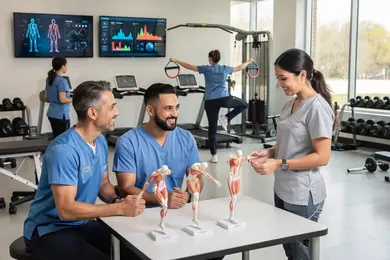
An online kinesiology degree programs for health service careers deliver technical expertise essential for roles like physical therapy assisting, occupational therapy support, and wellness coaching. These programs emphasize applied knowledge and remote learning tools including virtual labs, interactive case studies, and client assessment simulations, equipping graduates to meet employer expectations for evidence-based, client-centered care.
Graduates are expected to navigate diverse service environments; for instance, outpatient physical therapy professionals customize exercise regimens to enhance patient mobility, while those in corporate wellness design interventions to reduce workplace injury risks. This adaptability reflects kinesiology's real-world value beyond academic theory, highlighting its integration into rehabilitation, injury prevention, and health promotion contexts.
Completion of online programs often hinges on synchronous clinical practicums or internships, which must align with accreditation and licensure requirements. Students need to confirm access to local healthcare facilities for these essential hands-on experiences. The practical reality is that the degree's utility depends heavily on recognized experiential components that satisfy state-specific certification prerequisites.
In consideration of workforce outcomes, earnings start with a median near $45,000 early in the career and can exceed $70,000 mid-career according to Concordia University Chicago's ROI analysis. This trajectory outpaces many non-STEM fields, making kinesiology a strategic choice for those aiming to pivot into or advance within health-focused service roles that demand technical and interpersonal skills.
For those exploring adjacent or multidimensional career paths, understanding how to become a high school athletic director involves related knowledge and offers an alternative service-oriented role within sports and education sectors. how to become a high school athletic director
How do online kinesiology programs compare with on-campus options for hands-on, patient-facing training?
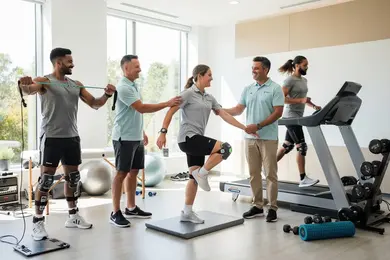
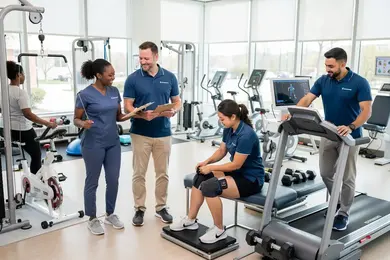
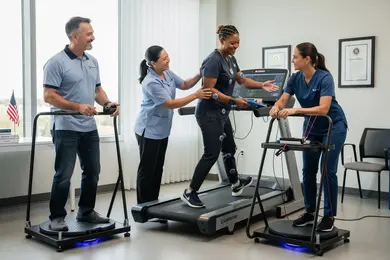
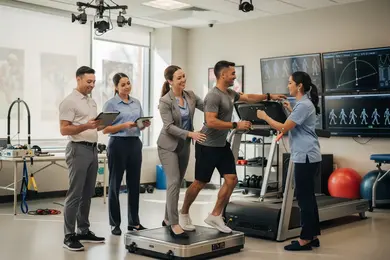
Online kinesiology programs with hands-on clinical training face a critical challenge: replicating the depth of patient care experience inherent to on-campus formats. Practical skills such as biomechanical assessments and manual therapy develop through supervised, face-to-face interaction-a requirement that online curriculums typically cannot fulfill without external clinical placements. Students pursuing fully online routes must arrange their own clinical hours, creating administrative complexity and potential gaps in experiential learning compared to programs with integrated patient care components.
This distinction has immediate workforce implications. Employers in physical therapy clinics and rehabilitation centers prioritize observed clinical competence alongside academic credentials. Graduates lacking structured practicum experience often encounter hiring disadvantages and limited career mobility in these settings. The comparison of on-campus versus online kinesiology patient care experience reveals that subtle clinical techniques and patient communication skills emerge predominantly through hands-on environments, crucial for roles demanding direct client interaction.
Given the 14% projected employment growth in fitness trainers and instructors from 2023 to 2033, surpassing the general U.S. job growth rate, students must critically evaluate program support for practical training. Key considerations include:
- Availability of accredited clinical placement support to streamline externship completion.
- Access to local partnerships with gyms, hospitals, or rehab centers for supervised practice.
- The additional time and travel required to meet hands-on training mandates.
- Employer preferences favoring in-person skill demonstration, impacting hiring and specialization.
Prospective students exploring an online kinesiology path should also examine how such training aligns with broader healthcare education options, including a health administration degree online, which may complement or enhance career flexibility within health services.
What types of online kinesiology degrees are available and which best align with health service careers?
Choosing an online kinesiology degree program for health service careers requires careful consideration of the degree's practical applicability and workforce relevance. Degrees fall mainly into three categories: BS in Kinesiology, BS in Exercise Science, and BS in Health and Human Performance-each with distinct professional trajectories. For example, a BS in Kinesiology with clinical emphasis aligns with roles such as physical therapy assistants, where hands-on practicum and state licensure are often mandatory. Conversely, Exercise Science prepares graduates for fitness and rehabilitation roles that focus on assessment and programming, while Health and Human Performance suits those pursuing health coaching or public health positions.
Employers in regulated healthcare sectors prioritize graduates from programs offering accredited clinical practicums and clear licensure pathways. Without these, employability can be significantly limited despite the degree's nominal relevance. Oregon State University's online BS in Kinesiology exemplifies a balance between theory and applied skills, with graduates earning median salaries near $61,000, illustrating market demand for clinically trained candidates. Students aiming for administrative or wellness management roles might consider best online kinesiology degrees aligned with healthcare professions but should weigh how workplace requirements differ by focus area.
In evaluating educational options, prospective students should analyze internship support, employer recognition, and state certification alignment. This analysis impacts not only initial job placement but also long-term adaptability amid evolving healthcare labor demands. Those seeking career pivots may also explore alternatives like a fastest online master's in healthcare administration for broader organizational roles beyond direct patient care.
How can you verify accreditation and program quality for an online kinesiology degree in the U.S.?
Accreditation remains the foundational filter when assessing online kinesiology degree accreditation in the U.S. Regional recognition by bodies like the Higher Learning Commission or Middle States Commission delivers institutional credibility and eases credit transfer. Yet, specialized accreditation-such as from CAAHEP or CAPTE-often dictates whether graduates qualify for critical clinical roles. Without these, graduates may face barriers to licensure or employment in allied health settings.
Evaluating program quality for U.S. online kinesiology degrees extends beyond accreditation. Programs must demonstrate measurable outcomes, including graduation rates and job placement within clinical, rehabilitation, or wellness sectors. A kinesiology program partnered with hospitals or physical therapy clinics typically offers practical skills training crucial for service-oriented jobs. Conversely, programs emphasizing theoretical content risk leaving graduates underprepared for hands-on health environments.
Cost structures reveal significant tradeoffs: on-campus bachelor's degrees average around $50,000 total tuition, whereas two-year online associate programs come in under $2,500, with online bachelor's programs roughly $2,000 less per year. However, lower tuition online may lack the mandatory internships or clinical practicum components vital for professional certification and workforce readiness.
For those seeking cost-effective nursing pathways, examining options like BSN to MSN online programs further illustrates how practical experiential components distinguish credible health education from academic-only curricula.
What core courses and specializations in online kinesiology support service-focused health career paths?
Online kinesiology programs targeting service-focused health careers must balance theoretical depth with hands-on applicability, especially given significant constraints in fully virtual clinical practicum availability. Core courses emphasize applied anatomy, exercise physiology, biomechanics, and motor control to equip students for clinical and rehabilitative roles, yet the lack of in-person patient contact can delay credentialing and employment in certain states.
Specializations such as rehabilitation science and athletic training align curriculum to practical roles in physiotherapy clinics and community health organizations. For instance, rehabilitation science coursework involves patient assessment protocols and therapeutic exercise design-skills essential for allied health technicians. However, students must evaluate whether program structures include hybrid or local clinical placements to mitigate exposure gaps.
Beyond technical knowledge, programs incorporating interprofessional collaboration and health communication prepare graduates for multidisciplinary healthcare settings, where the ability to coordinate patient care and navigate referral systems is increasingly valued. This combination enhances readiness for advanced career paths like physician assistant or physical therapy assistant.
Labor market data from Concordia University Chicago's 2025 ROI report confirms steady demand for kinesiology graduates entering allied health, with 10-14% job growth and unemployment rates near 3%. These outcomes underscore the importance of selecting coursework targeted not only at foundational science but also employment-relevant competencies.
What are typical admission requirements, program length, and scheduling formats for online kinesiology degrees?
Admission to online kinesiology programs demands more than basic academic qualifications; applicants often face prerequisite courses in biology or chemistry, reflecting the discipline's science-intensive nature. Minimum GPAs near 2.5 to 3.0 and official transcripts are standard, with test scores becoming less frequently required. For those with college credits in related fields, transfer options can reduce time and financial commitments.
Program durations vary notably: associate degrees can be completed in about two years, suitable for those aiming at entry-level roles, while bachelor's degrees generally require four years and provide a broader foundation. Advanced clinical careers, including physical therapy doctoral programs, extend study by approximately three years post-bachelor, emphasizing licensure and specialized skills essential for patient care roles.
Flexibility is common, with asynchronous courses catering to working adults; however, clinical practicums and labs often necessitate in-person attendance, adding complexity to scheduling. Employers value candidates who balance academic rigor with practical experience, especially as finding clinical placements may delay graduation.
How do online kinesiology programs handle labs, practicums, and community-based clinical experiences?
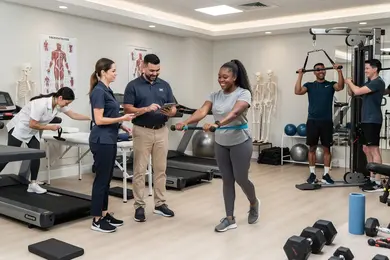
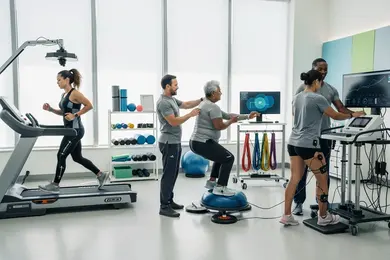
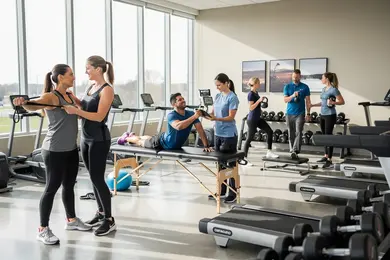
Successfully completing online kinesiology programs requires balancing the necessity of hands-on skill development with remote learning flexibility. Most programs structure in-person labs and clinical practicums through hybrid models that leverage local partnerships with healthcare facilities, rehabilitation centers, and community organizations. This arrangement allows students to meet essential licensure requirements without relocating, but depends heavily on the availability of qualified supervisors and suitable sites.
For example, a student pursuing a physical therapy assistant role must secure practicum hours aligned with state licensing criteria, often negotiated with outpatient clinics near their residence. Programs that lack established clinical networks or demand frequent campus visits disproportionately challenge working professionals and out-of-state learners, potentially delaying credentialing and job entry.
Employers in kinesiology-related occupations typically prefer candidates with documented supervised clinical experience over those with purely theoretical backgrounds. Concordia University Chicago's 2025 report places median salaries near $71,000 within kinesiology roles that emphasize applied preventive health skills.
Choosing a program without clear clinical scaffolding risks prolonging time-to-employment and limits practical readiness in movement analysis and rehabilitation techniques, key competencies employers demand.
Which service-oriented health careers can you pursue with an online kinesiology degree?
Choosing an online kinesiology degree demands careful weighing of practical workforce requirements against educational delivery methods. Graduates typically pursue roles such as physical therapy assistants, occupational therapy aides, rehabilitation specialists, and exercise physiologists, all involving direct patient engagement and tailored care plans. However, these jobs often require hands-on experience that purely online programs struggle to provide without integrated labs or local internships.
For instance, a student may need to coordinate clinical hours with healthcare providers near their residence to meet licensure prerequisites, which vary by state and profession. Employers expect not only academic proficiency in biomechanics and anatomy but also real-world application skills, which are vital in fields responding to chronic disease management and an aging population.
Service roles also extend to community health and wellness coaching, demanding communication skills alongside technical knowledge. Certification beyond the bachelor's-such as becoming a certified exercise physiologist-is frequently necessary, impacting immediate employability.
Data show metropolitan areas like San Antonio, TX, and Bloomington, IN, concentrate kinesiology graduates, reflecting regional healthcare infrastructure strengths. This clustering influences job availability and should factor into program selection and career planning.
What salary ranges and job outlook can graduates expect in kinesiology-related health service roles?
Salary outcomes for graduates with online kinesiology degrees vary widely depending on role, state, and employer, with median earnings from $45,000 to $75,000. For instance, certified exercise physiologists in outpatient care centers often start near $50,000 annually, while those moving into physical therapy assistant or occupational therapy support roles may reach $65,000 to $75,000. The U.S. Bureau of Labor Statistics projects a 10% job growth rate in these related fields through 2032, reflecting growing demand driven by demographic shifts and preventive care priorities.
Cost considerations directly influence return on investment. UniversityHQ's 2026 data indicates public online kinesiology bachelor's degrees average $16,800 annually, roughly half the expense of private programs at $31,000. Working students may gain more net lifetime earnings from lower debt burdens by choosing less costly options, especially when practical credentials and certifications are required beyond the degree to meet employer expectations.
Employment trajectories typically require blending academic credentials with certifications or hands-on experience. For example:
- Professionals targeting outpatient cardiac rehabilitation roles often benefit from certification plus a bachelor's degree, starting around $48,000.
- Health promotion policy positions in community organizations may begin near $50,000 but tend to require advanced degrees for advancement.
- Corporate wellness program entrants generally earn closer to $55,000 initially, with salary growth reliant on proven outcomes and networking.
Optimizing career pathways demands careful assessment of program affordability, licensure needs, and real-world work experience since graduates lacking clinical hours or certifications face longer timelines and extra costs to meet employer standards.
How should prospective students choose the best-fit online kinesiology program for their goals and budget?
Choosing a kinesiology program requires weighing credential relevance and labor market outcomes over institutional branding. For candidates targeting clinical or athletic training, prioritizing programs that prepare for certifications like the Certified Strength and Conditioning Specialist (CSCS) can translate to a 15-25% increase in first-year earnings, according to Concordia University Chicago's 2025 ROI report. This credential-driven approach is essential for measurable salary growth rather than generic degree completion.
Key evaluation points include:
- Accreditation status influencing employer acceptance and licensure eligibility.
- Curriculum rigor covering biomechanics, physiology, and evidence-based practice aligned with healthcare trends.
- Access to practicums or internships, which remain indispensable even if organized remotely.
- Total cost considerations factoring tuition, fees, and certification preparation versus expected return on investment.
- Employment and salary rates derived from official workforce data to validate program effectiveness.
Working professionals should select flexible, part-time programs that facilitate incremental credential acquisition without interrupting income streams. Conversely, those aiming at sports performance roles must confirm that programs explicitly integrate strength conditioning and allied health content, as lack of specialization risks stagnant wages and limited market responsiveness.
Programs without transparent links to certifiable skills or hands-on training seldom justify their cost. Decision-making anchored in verifiable employment metrics and return on investment ensures alignment with actual workforce demands beyond promotional claims.
Other Things You Should Know About Kinesiology
Many service-oriented health careers linked to kinesiology demand specific licenses or certifications not granted through degree completion alone. Online kinesiology programs typically provide foundational knowledge but may not fulfill hands-on clinical hours or supervised practice crucial for licensure in fields like physical therapy or occupational therapy. Prospective students should prioritize programs explicitly designed to meet these professional requirements if licensure is essential for their target career.
Employers recognize the legitimacy of accredited online kinesiology degrees, but they often weigh practical experience and internships more heavily than delivery format. Candidates without substantial clinical or community-based experience may face challenges competing against traditionally educated peers. Students should select online programs with integrated practicum options to align better with employer expectations in health service sectors.
Online kinesiology degrees in 2027 emphasize interdisciplinary coursework and experiential learning, aligning with service-oriented health careers. Programs often include specialized tracks in healthcare administration and community health promotion, ensuring graduates are prepared to meet the diverse needs of health professions focused on service and care.
Continuing education is often necessary to secure higher-level health service roles or specialize within kinesiology fields. Graduates should evaluate whether their program offers clear pathways or partnerships for certifications and advanced training. Prioritizing programs that provide access to continuing education resources or professional networks enhances long-term career flexibility and employer appeal.
References
- Kinesiology and Exercise Science Salaries https://teach.com/online-ed/healthcare-degrees/online-bachelors-kinesiology-exercise-science/how-much-do-kinesiologists-make/
- Why trust GlobalHealth Education? https://globalhealtheducation.com/au/resources/online-vs-on-campus-courses
- What Can You Do With a Kinesiology Major? | USAHS https://www.usa.edu/blog/what-can-you-do-with-a-kinesiology-major/
- Bachelor's in Kinesiology Program Online | Montreat College https://www.montreat.edu/online/kinesiology/
- Online Kinesiology Degree Programs: Review Top Schools https://www.edumed.org/online-schools/kinesiology-degrees/
- Community-Based Model of Clinical Education https://www.pacificu.edu/speech-language-pathology-ms/curriculum/community-based-model-clinical-education
- Browse Databases and Directories | Council for Higher Education Accreditation https://www.chea.org/search-institutions
- Community-Based Practicum https://skhs.queensu.ca/community-based-practicum
- Is Your Online Degree Legitimate? How to Verify Private University Approval https://matchtocollege.com/blog/verify-private-university-online-degree-approval
- How Long to Get a Kinesiology Degree? | ValidGrad https://validgrad.com/blog/kinesiology-degree-duration/