2027 Online Kinesiology Degrees for Human Performance Roles

Co-Founder and Chief Data Scientist
Professionals aiming to transition into human performance roles often confront the challenge of balancing rigorous work schedules with acquiring relevant credentials. The National Center for Education Statistics reports a 12% year-over-year surge in online enrollment among adult learners since 2023, signaling a shift toward flexible education models driven by career demands and personal obligations. This trend highlights the necessity of programs that accommodate nontraditional students without compromising academic rigor or applied skill development.
Understanding variations in curriculum focus, clinical requirements, and delivery format is critical for those seeking timely, cost-effective pathways. This article evaluates current online kinesiology degree options tailored to optimizing career mobility and practical proficiency in human performance fields.
Key Things You Should Know
- Accelerated online kinesiology programs average 20% lower tuition but often omit in-person lab components, raising credential validity concerns among 48% of employers surveyed by the National Strength and Conditioning Association in 2024.
- According to the Bureau of Labor Statistics 2024, 32% of kinesiology-related roles now require advanced certifications, pressuring online degree holders to invest in costly, separate credentialing beyond the degree for competitive employability.
- Data from the National Center for Education Statistics shows 60% of online kinesiology students take 25% longer to complete degrees, extending opportunity costs and delaying entry into a labor market with expanding demand but shifting skill requirements.
What is an online kinesiology degree and how does it prepare you for human performance careers?
The value of online kinesiology degree programs for human performance careers hinges on their ability to balance theoretical rigor with practical application, a critical factor in meeting employer expectations. Coursework typically covers biomechanics, anatomy, physiology, and exercise prescription combined with digital tools and remote research methods.
Yet, graduates must supplement this with in-person clinical or internship experiences to fulfill certification prerequisites and develop essential communication and coaching skills. For example, aspiring fitness trainers benefit from direct client interaction alongside online coursework to enhance real-world readiness.
Employment projections from the U.S. Bureau of Labor Statistics show a 13% growth rate for fitness trainers and instructors from 2024 to 2034, outpacing the 5% average for all occupations, indicating robust demand but also heightened competition. This dynamic makes it imperative for candidates pursuing an online kinesiology degree to critically assess whether the curriculum aligns with professional certifications such as CSCS or NSCA that require specific training elements beyond remote study.
Balancing remote coursework with externally arranged clinical hours introduces logistical challenges that must be planned carefully. The flexibility of online study supports working professionals aiming for career shifts into sports science, rehabilitation technology, or physical therapy assistance, but success relies on active engagement with practical placements.
For those evaluating options, the comparative analysis of programs incorporating virtual labs and case-based learning against those emphasizing hands-on internships is essential for informed decision-making.
To explore program options that align with these criteria and support informed choices about an exercise science online degree, prospective students should prioritize outcomes and workforce relevance early in their research.
How do online kinesiology programs compare with on-campus options for human performance roles?
Online kinesiology degrees vs. on-campus programs for human performance reveal a crucial tradeoff: theoretical knowledge is comparable, but online pathways often lack the hands-on clinical experience vital for immediate employability. Roles in sports science and rehabilitation demand fluency in biomechanical assessments and direct client interaction—skills difficult to master without supervised, in-person instruction.
For instance, clinical exercise physiologists must conduct precise physical assessments and interpret live data, competencies best developed through face-to-face practicums or internships. This creates a logistical challenge for fully remote students who must secure local partnerships to fulfill practical components.
Flexibility and outcomes of online kinesiology programs in human performance roles do broaden access for working adults and geographically remote learners, expanding the candidate pool. However, graduates who succeed typically combine online coursework with proactive engagement in regionally available clinical opportunities, balancing convenience against experiential gaps. Employers tend to prioritize verified skills and hands-on competence over academic completion alone.
The U.S. Bureau of Labor Statistics indicates exercise physiologists earn a median wage near $63,000 annually, with job growth projected at 10% over the coming decade. These dynamics emphasize the need for students to evaluate programs critically, ensuring clinical access aligns with their professional goals to avoid delays in certification or employment.
For those exploring healthcare administration pathways, a healthcare administration bachelor's degree online can offer distinct strategic advantages in allied domains.
What types of kinesiology degrees support human performance careers, and which level do you need?
The choice of degree level in online kinesiology degree programs for human performance careers reflects distinct workforce realities rather than a simple credential hierarchy. Entry-level roles such as fitness coach or rehabilitation assistant often require only a bachelor's degree, offering cost-effective access to employment. However, positions demanding clinical exercise physiology expertise or specialized athletic training usually necessitate a master's degree to meet employer standards and practical skill expectations.
For example, a physical therapy-related job frequently combines a master's kinesiology degree with specific certifications, emphasizing applied knowledge and practical experience. Meanwhile, sports performance analysts in professional athletics prioritize candidates with advanced, focused graduate training. Doctoral degrees remain relevant predominantly in research or academic leadership contexts rather than general practice.
Students must weigh tuition costs—ranging from about $22,200 (in-state) to over $87,000 (out-of-state) for a bachelor's at comparable public institutions—against potential ROI and career ambitions. Many fully online programs lack mandated clinical or research practicums, making hybrid formats necessary for certain advanced roles. Prospective candidates should confirm practical requirements and employer recognition to avoid misaligned investments.
A useful resource for comparing financial aspects of graduate healthcare programs, including kinesiology-related fields, is available at masters of health administration. Ultimately, the best degree levels in kinesiology for performance roles depend on targeted job functions, professional certifications, and readiness to balance upfront cost with expanded occupational scope.
How can you verify accreditation and program quality for online kinesiology degrees?
Employers increasingly demand rigorous validation of credentials in kinesiology roles, particularly where clinical licensure or certification is involved. Programs requiring careful steps to verify accreditation standards for online kinesiology programs are not just regulatory formalities—they directly affect eligibility for federal aid and the professional legitimacy of your degree.
Accreditation from recognized bodies like the Higher Learning Commission ensures employers and certification boards accept your credential, reducing risks of investing in substandard or diploma mill programs.
Evaluating program quality for online kinesiology degrees in human performance means prioritizing curriculum that integrates applied coursework—such as biomechanical analysis or clinical exercise physiology—with supervised internships.
Practical field experience remains a differentiator for employment in competitive athletic training and sports science careers, where the U.S. Bureau of Labor Statistics forecasts a 14% demand growth in athletic trainers over the next decade, well above average.
Avoid programs lacking support for state licensure preparation or certification exams like the National Athletic Trainers' Association Board of Certification, as this omission narrows clinical job prospects. Transparent graduate outcomes data—retention, job placement, and employer reputation—help gauge return on educational investment. Engaging with program advisors on laboratory access and industry partnerships can clarify real-world training quality.
For those considering professional pivots, understanding tradeoffs in program rigor and access is crucial. Comparing kinesiology degrees with related pathways, such as online direct entry MSN programs, may reveal different timelines and employment ceilings worth weighing.
What courses and specializations are common in online kinesiology programs focused on human performance?
Programs in kinesiology aligned with human performance emphasize targeted expertise demanded by employers in clinical, athletic, and workplace contexts. For example, students pursuing physical therapy careers must focus on advanced anatomy and therapeutic modalities, satisfying stringent regulatory and patient care standards. Prioritizing these specialized courses supports compliance with evolving healthcare protocols and enhances job readiness.
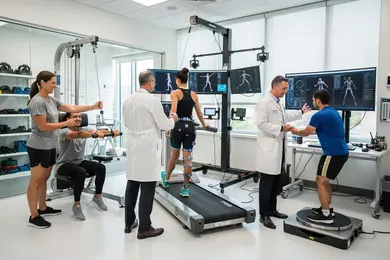
The core curriculum integrates practical skills in data analytics and performance assessment, which are increasingly valued in hospitals and sports medicine clinics where measurable outcomes drive treatment strategies. Proficiency in technologies like motion capture and wearable sensor analysis improves a graduate's attractiveness to employers, influencing both hiring and career progression.
Injury prevention and motor control coursework equips graduates for ergonomics roles, particularly in industrial settings where understanding musculoskeletal risks is vital for worker safety evaluations. These units blend quantitative assessment with communication and collaboration skills essential to multidisciplinary environments.
The Bureau of Labor Statistics projects 15% job growth for physical therapists through 2034, signaling consistent demand for kinesiology-trained professionals capable of bridging clinical and athletic rehabilitation. Curricular alignment with these expanding sectors ensures practical relevance amid shifting industry standards.
What are the typical admission requirements for online kinesiology degrees in the U.S.?
Admission to online kinesiology degrees shifts significantly depending on the student's background and career goals. Candidates with only a high school diploma face basic requirements like transcripts and potentially standardized test scores, though many programs now waive these due to test-optional policies.
For transfer students or professionals, prerequisite coursework in biology, chemistry, or anatomy is often non-negotiable, with college transcripts acting as proof. Applicants aiming to enter human performance or rehabilitation roles must often demonstrate relevant experience or certifications, given the field's emphasis on applied skills.
Letters of recommendation remain a common requirement but can pose logistical challenges for remote or working applicants. Additionally, criminal background checks and immunization records are often mandatory when supervised clinical internships are part of the curriculum, particularly where vulnerable populations are involved.
Financially, tuition disparities are steep; undergraduate costs range from roughly $129 to more than $750 per credit hour, leading to potentially $60,000+ differences in total program investment. This cost gap necessitates thorough evaluation: affordability and post-degree employability often outweigh program prestige in decision-making.
Applicants should begin gathering documentation early and seek programs offering flexible admissions that accommodate adult learners' complex schedules. Navigating these criteria effectively impacts not only admission chances but also timely degree completion and access to financial aid.
How long do online kinesiology programs take and what do they typically cost?
The timeline to complete an online kinesiology bachelor's degree typically spans 3 to 4 years, but this duration can extend notably for part-time students balancing work or family. Accelerated paths demand full-time commitment, which may not align with employed professionals' schedules, potentially affecting continuous skill acquisition employers expect in human performance roles. Choosing pacing strategies requires weighing the benefit of timely graduation against the risk of superficial learning or burnout.
Costs vary significantly with institution type and residency. Public universities charge roughly $150 to $400 per credit out-of-state, leading to total tuition between $20,000 and $50,000, while private schools often surpass $500 per credit, pushing expenses beyond $60,000.
Additional fees, technology requirements, textbooks, and on-site practicum components further increase the financial outlay. These extra costs and lost wages from reducing work hours represent critical opportunity costs to factor in.
Employment prospects for kinesiology graduates concentrate in clinical exercise physiology, corporate wellness, and related human performance sectors. Research shows over 60% of online health program graduates secure relevant jobs within a year, but this success hinges on sustained academic progress combined with practical experience.
Prospective students should consider how program structure, pacing, and cost align with their career timelines and financial realities to optimize return on investment.
What jobs can you get with an online kinesiology degree in human performance?
An online kinesiology degree often positions graduates for technician-level roles such as exercise physiologist or wellness coordinator, which tend to offer modest salaries and limited upward mobility. Employers in applied human performance increasingly favor candidates with advanced education and specialized certifications, especially in strength and conditioning positions within collegiate or professional sports.
For instance, a bachelor's graduate aiming to join a university athletic staff may find themselves at a competitive disadvantage without a master's degree or national certification.
The path toward licensed clinical roles—occupational or physical therapy—requires further graduate education but leads to higher median wages, typically above $85,000, and stronger job security, with projected growth rates between 15% and 18% from 2024 to 2034.
This creates a practical dilemma: whether to use the kinesiology degree as an endpoint for entry-level roles or as a stepping stone to graduate programs that demand prerequisite coursework and clinical experience.
Students must weigh tradeoffs, including the time, cost, and effort of postgraduate training against the labor market realities. Without advanced credentials, kinesiology graduates generally face restricted access to rehabilitation roles due to licensure requirements and limited demand for bachelor's-level skills. In community health or corporate wellness, additional certifications and experience remain critical for advancement beyond junior roles.
What are the salary expectations and job outlook for human performance professionals with kinesiology training?
Graduates in kinesiology face a workforce landscape where data fluency increasingly defines opportunity scope and earning potential. Traditional programs deliver foundational biomechanical and physiological knowledge, but employers now seek professionals who can analyze real-time sensor outputs and apply predictive analytics, particularly in sports science and rehabilitation technology sectors.
Entry-level salaries typically range from $45,000 to $60,000 annually, with mid-career professionals earning $65,000 to $85,000 depending on industry and geography. Specialized roles in corporate wellness or high-performance sports, informed by technical proficiency, can exceed six figures.
Students should weigh the tradeoff between a standalone kinesiology degree and adding complementary credentials—such as data science, biomechanics, or applied software skills—to enhance employability. This multidisciplinary combination aligns with the projected 20% annual growth in global sports analytics through 2030, driven by expanding use of performance tracking technologies.
Practical workforce demands favor those who can integrate kinesiology principles with quantitative analysis to solve injury prevention and performance optimization challenges.
Failure to integrate these competencies can limit advancement, leaving graduates underprepared in a market valuing demonstrated impact on outcomes over traditional academic credentials alone.
How do certifications and state requirements affect kinesiology and human performance career paths?
Licensure and certification are decisive filters shaping employment options for kinesiology graduates, particularly for roles involving clinical or regulated responsibilities. For example, aspiring physical therapy assistants must complete state-approved certification programs and pass national examinations to legally practice; without these credentials, job opportunities become confined to assistant or coaching roles without clinical authority or upward mobility.
State-specific variations in certification maintenance—including continuing education and renewal cycles—create ongoing professional demands and complicate geographic mobility. Transferring licensure across states may require additional testing or documentation, delaying job transitions and restricting flexibility for kinesiology-trained workers pursuing regional positions.
Employers weigh certifications that demonstrate verifiable skills in areas like exercise physiology or strength conditioning when selecting human performance specialists, reflecting market preferences for credentials aligned to measurable standards.
Kinesiology graduates must balance investing time and resources in credentials that meet state and employer expectations against the risk of limiting job prospects or delaying workforce entry by pursuing unrelated certifications.
Other Things You Should Know About Kinesiology
Employers in human performance value practical skills and evidence of applied knowledge more than program delivery format. However, online kinesiology degrees from regionally accredited institutions with strong practicum or internship components hold equivalent weight as traditional degrees. Candidates without hands-on experience or exposure to real-world human performance settings through their program may struggle to demonstrate readiness despite holding the degree.
Online kinesiology programs often substitute in-person labs with virtual simulations or local partnerships for practical requirements. This can limit immediate tactile skill development essential for some roles, such as biomechanical assessments or exercise testing. Prospective students should prioritize programs that document robust fieldwork or lab collaborations to mitigate technology-only instruction and ensure exposure to physical assessment skills valued by employers.
Online kinesiology degrees demand consistent engagement with coursework and practical placements, which compounding with part-time study can extend program duration significantly. Students managing full-time work or personal responsibilities must realistically assess time for skill acquisition, internships, and knowledge application. Prioritizing programs with flexible clinical scheduling and accessible faculty support improves completion feasibility and preserves learning quality.
While an initial kinesiology degree provides foundational knowledge essential for entry-level roles, continuing education and certifications offer specialized skills and updated industry insights vital for career advancement in human performance fields. These pathways complement each other, ensuring professionals remain competitive and effective in evolving industry landscapes.
References
- How Long to Get a Kinesiology Degree? | ValidGrad https://validgrad.com/blog/kinesiology-degree-duration/
- Kinesiology and Human Performance AS https://flcc.edu/academics/programs/kinesiology-and-human-performance-as/
- Online Bachelor’s in Kinesiology and Exercise Science Programs https://teach.com/online-ed/healthcare-degrees/online-bachelors-kinesiology-exercise-science/
- Kinesiology Program Provides Options in Health and Human Performance | Florida College https://floridacollege.edu/news/kinesiology-program-options/
- Kinesiology and Human Performance AS https://www.flcc.edu/academics/programs/kinesiology-and-human-performance-as/
- What Can You Do with a Kinesiology Degree? https://www.nec.edu/news/what-can-you-do-with-kinesiology-degree
- Bachelor's Degree in Human Performance https://www.utpb.edu/academics/programs/human-performance/bs-human-performance
- Online Kinesiology Degree Programs: Review Top Schools https://www.edumed.org/online-schools/kinesiology-degrees/
- Kinesiology of Human Performance - EMUNI https://emuni.si/khp/
- Kinesiology Program Quality Indicators | Washburn University https://www.washburn.edu/academics/college-schools/arts-sciences/kinesiology/quality-indicators.html