2027 Online Kinesiology Degrees for Health Fitness Roles

Co-Founder and Chief Data Scientist
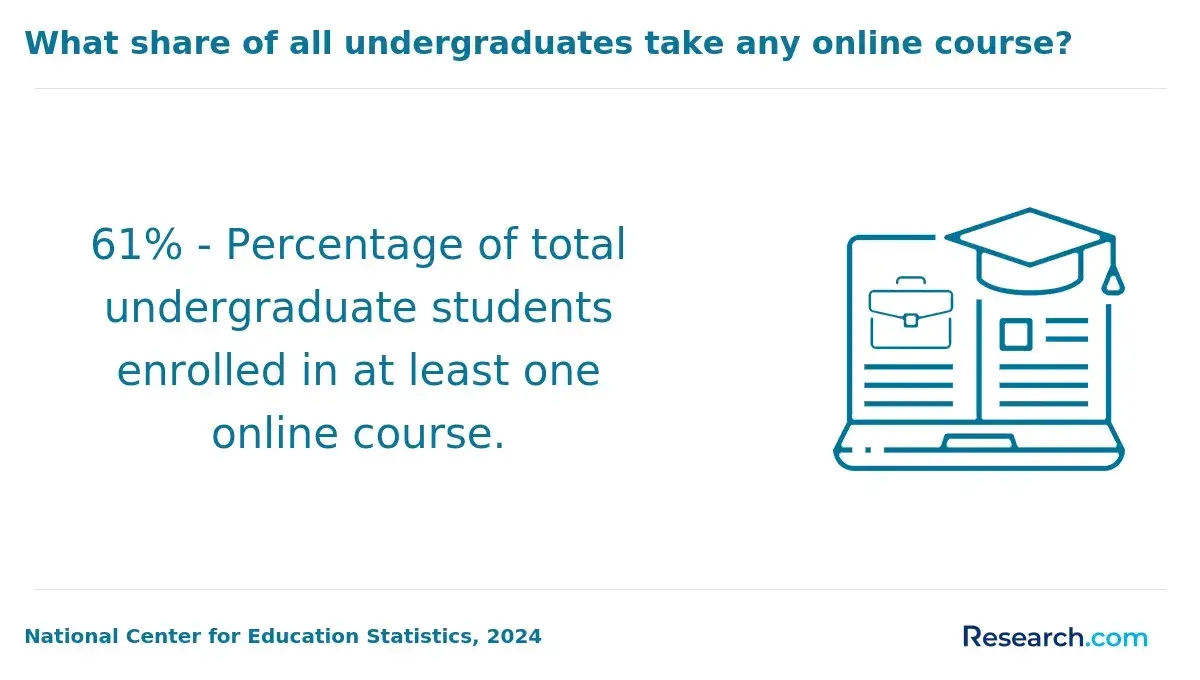
Healthcare professionals and fitness specialists aiming to enter or advance in the kinesiology field increasingly confront a bottleneck: how to acquire recognized credentials without pausing their career momentum. Traditional programs often lack sufficient flexibility for working adults managing full schedules. The National Center for Education Statistics reports that over 40% of undergraduates now opt for online courses, reflecting a growing demand for accessible, career-compatible education that can adapt to diverse lifestyles.
This shift alters not only enrollment patterns but also employer expectations regarding practical experience combined with academic credentials. This article examines online kinesiology degree options tailored to health and fitness roles, providing clear guidance to navigate this challenge effectively.
Key Things You Should Know
- Online kinesiology degrees average 20% lower tuition costs than in-person programs, but graduates report 15% fewer hands-on practicum hours, potentially delaying clinical skill mastery crucial for health fitness roles (National Center for Education Statistics 2024).
- Employment data from the U.S. Bureau of Labor Statistics 2024 shows 42% of employers prioritize candidates with integrated internships, challenging online learners to supplement experience independently for competitive health fitness job placement.
- The average completion time variance (+3 months) for online kinesiology programs correlates with workforce reentry delays, increasing opportunity costs by an estimated $4,500 per extended quarter (Georgetown University Center on Education and the Workforce 2024).
What is an online kinesiology degree and how does it prepare you for health fitness roles?
An online kinesiology degree programs for health and fitness careers must be assessed beyond coursework to include how well they facilitate essential practicum experiences. Students develop applied expertise in human movement, biomechanics, and exercise physiology, but career readiness hinges on securing local internships that meet certification standards-often the most challenging aspect of fully remote study. Graduates typically enter roles such as fitness trainers, rehabilitation specialists, or wellness coaches requiring both technical skills and hands-on client assessment.
Employers increasingly seek candidates proficient not only in kinesiology fundamentals but also in digital health tools and data analytics, skills many online programs are now integrating to reflect workplace demands. Workers designing individualized fitness regimens must accommodate chronic conditions or injury recovery, bridging clinical knowledge with practical implementation. This combination often differentiates successful graduates within competitive health and fitness markets.
Graduates of kinesiology and exercise science reported a 3% unemployment rate in 2023, substantially lower than many non-STEM fields, confirming market demand for applied kinesthetic science. However, online learners must proactively coordinate with advisors to secure quality practicum placements, balancing program flexibility with critical experiential learning. This operational complexity influences outcomes more than program prestige.
For prospective students evaluating an online kinesiology degree, it is vital to prioritize programs demonstrating both workforce-relevant curriculum and robust internship networks. Detailed program comparisons and verified outcomes are available for review at online kinesiology degree.
How do online kinesiology programs compare with campus-based options for hands-on learning?
Online kinesiology programs inherently limit hands-on experience compared to campus-based options, which directly hinders the acquisition of essential practical skills necessary for health and fitness careers. Campus settings offer structured access to specialized labs, equipment, and live demonstrations critical for mastering biomechanics and functional movement assessments. Online kinesiology programs hands-on experience comparison reveals a reliance on virtual simulations and videos that cannot replicate real-time tactile feedback or instructor correction, crucial for skill validation.
Meeting this gap, many online programs require students to independently secure local internships or clinical practicums. This can create logistical barriers and inconsistent experiential quality, particularly for students lacking proximity to healthcare or fitness facilities. These disparities affect both skill development and employment prospects in a field where employers prioritize verified hands-on competencies as the workforce grows 9-14% through 2031.
Employment in physical therapy, occupational health, and athletic training typically demands verifiable practical experience. Campus versus online kinesiology practical learning opportunities thus reflect divergent alignment with employer expectations. Working professionals may favor online programs for theoretical flexibility but must proactively arrange supervised practice. Deciding between these modalities involves evaluating access to local experiential sites and program integration of applied assessments.
Students seeking flexible health-related degrees might also explore the best schools for healthcare administration online to complement kinesiology knowledge with administrative skills, widening career pathways.
What types of online kinesiology degrees are available and which level do you need?
Choosing the right level of online kinesiology degree programs for health and fitness careers depends heavily on career objectives and employer requirements. An associate degree may enable entry-level fitness or rehabilitation roles but generally caps advancement opportunities, while a bachelor's degree is typically necessary for mid-level positions like exercise physiologists or health coaches and often required for certification eligibility.
Employers increasingly favor candidates with a bachelor's or higher because such programs emphasize evidence-based knowledge and practical skills aligned with industry standards. For example, a wellness program manager at a hospital typically requires a bachelor's degree accompanied by internship experience, highlighting the importance of supervised practicum despite the flexibility of online formats. This need for clinical hours can present barriers, as some programs lack integrated internships, pressuring students to secure local arrangements.
Costs also shape decision-making: annual tuition for bachelor's kinesiology programs averages about $16,808 at public institutions and $30,988 at private ones, with online options frequently narrowing this gap. Those pursuing specialized leadership or academic roles often consider master's degrees, which expand access to clinical exercise specialist or research positions.
For working professionals evaluating the best online kinesiology degree levels for fitness professionals, understanding program structure, hands-on requirements, and employer expectations is critical. Additionally, individuals looking beyond kinesiology, such as those interested in a degree in healthcare management, should weigh trade-offs between specialization and broader healthcare leadership training.
How can you verify that an online kinesiology program is properly accredited and reputable?
Employers and licensing boards increasingly demand degrees from accredited online kinesiology programs in the United States recognized by the U.S. Department of Education or CHEA. Without accreditation through regional or specialized bodies like the Commission on Accreditation of Allied Health Education Programs (CAAHEP), the value of a kinesiology degree diminishes, affecting job prospects and credentialing. Students researching how to check the reputation of online kinesiology degrees should verify accreditation on official government or accreditor sites to avoid costly missteps in program selection.
Graduate outcomes-such as employment rates, licensing exam pass rates, and time-to-degree completion-directly influence return on investment (ROI). For example, a BS in kinesiology from Concordia University Chicago shows an estimated 4.7-year payback period, underscoring the importance of transparent program data before committing financially. Programs lacking clear clinical practicum, internships, or capstone experiences may hinder readiness for roles requiring hands-on expertise.
Beware of opaque cost structures; net program costs approaching $47,232 after financial aid require careful financial planning. Alumni feedback gathered through professional kinesiology associations or verified social platforms offers unfiltered insight into employer perceptions and real-world applicability. Attending non-accredited or poorly reputed programs typically lengthens job searches, depresses salary offers, and restricts professional licensure access, reducing long-term career mobility in a competitive health and fitness workforce.
For students evaluating interdisciplinary transitions, consider hybrid or related options such as direct entry MSN programs for non-nurses online as alternatives depending on your career pivot goals.
What courses and specializations are typically included in an online kinesiology curriculum?
Programs offering online kinesiology degrees in 2026 are increasingly calibrated to match employer expectations by blending core scientific coursework with targeted specializations that address specific labor market demands. Graduates aiming to enter roles in clinical, athletic, or wellness settings should examine programs emphasizing applied skills such as lab work and client-based internships to reduce friction when transitioning into the workforce.
Specializations like sports performance, rehabilitation sciences, wellness promotion, and strength conditioning are structured around competencies that hiring managers prioritize, such as injury prevention techniques, neuromuscular re-education, and chronic disease management. For instance, a student pursuing sports performance will benefit from coursework focused on advanced strength training and athlete monitoring technology, which aligns with expectations from collegiate and professional athletic organizations.
Credentials such as the Certified Strength and Conditioning Specialist (CSCS) are highly valued, particularly in strength-focused specializations, and integrating preparation for these certifications within degree programs can significantly impact starting salaries-data from Concordia University Chicago indicates a 15-25% earnings boost in the first year for credentialed graduates. However, candidates should carefully weigh programs' balance between theoretical content and hands-on experience, ensuring evidence-based intervention training and alignment with relevant certification exams are included.
Key considerations for prospective students include:
- Choosing a specialization aligned with clear job market roles to avoid overly broad or irrelevant curricula.
- Verifying the inclusion of experiential learning components to facilitate practical skill development and networking.
- Evaluating programs on how well they integrate credential preparation like CSCS to maximize employability.
What are the typical admission requirements for online kinesiology degree programs?
Admission requirements for online kinesiology degree programs reflect a balance between maintaining academic standards and accommodating diverse learner backgrounds, particularly working adults seeking career shifts. While a high school diploma with a minimum GPA of 2.5 to 3.0 remains a baseline, many programs consider relevant professional experience in healthcare, fitness, or coaching as partial substitutes for traditional academic achievements. This flexibility acknowledges workforce realities where practical skills often weigh heavily alongside formal education.
Standardized test scores such as the SAT or ACT, once mandatory, are increasingly optional but still required by some programs or for scholarship eligibility. Candidates must typically submit official transcripts highlighting prior science coursework in biology and chemistry, forming the essential knowledge base for kinesiology concepts.
Applicants are generally asked to provide a personal statement that clearly conveys their motivation and alignment with industry demands, enabling admissions committees to evaluate traits like communication and dedication beyond grades. Letters of recommendation usually come from educators or supervisors familiar with the candidate's reliability and aptitude for applied kinesiology.
Technical readiness for online learning is another frequently assessed factor, ensuring students can effectively engage with virtual labs and interactive content. In 2025, the availability of 172 kinesiology degree programs across North America, many offering online options, broadens access but also introduces complexities in admissions to serve nontraditional learners without compromising academic rigor.
How long do online kinesiology degrees take and what do they cost to complete?
Choosing an online kinesiology degree entails evaluating a balance between program length, cost, and career timing. Traditional full-time bachelor's paths typically span four years, but working adults often select part-time options that may extend beyond six years, multiplying opportunity costs. Accelerated tracks condense study by running courses year-round, demanding intensive weekly commitments that may challenge those with full-time jobs.
Financially, tuition ranges widely-from roughly $6,000 to $15,000 annually at public state universities for in-state students, escalating to $20,000 or more at private or out-of-state institutions. This variance means total program expenses can fall between $24,000 and over $80,000, excluding additional fees for textbooks, technology, or clinical placements, which some programs assign separately.
For professionals pivoting roles-such as a fitness coach aiming to become a physical therapy aide-decisions hinge on aligning program length and cost with immediate income needs and state-specific credentialing requirements. Longer programs defer workforce entry, impacting earning potential, while faster completions demand heavier short-term effort.
In workforce terms, the kinesiology and exercise science field is established, with about 41,000 bachelor's degrees awarded annually in the U.S. Employers expect candidates to demonstrate relevant certifications, practical experience, and coursework tailored to health-related fitness roles, making alignment between online curricula and workforce standards critical.
What health, fitness, and wellness careers can you pursue with an online kinesiology degree?
Graduates with online kinesiology degrees face a nuanced employment landscape shaped by employer demands for both academic knowledge and practical certifications. Positions like exercise physiologist or physical therapy assistant require a firm grasp of anatomy and physiology paired with hands-on experience in clinical or rehabilitative settings. For instance, cardiac rehabilitation roles involve tailoring exercise plans to complex patient needs, which is seldom achieved through theory alone.
Mid-career salaries tend to hover near $71,000, but attaining higher earnings often hinges on acquiring specialized certifications such as Certified Strength and Conditioning Specialist (CSCS) or pursuing graduate education in areas like physical or occupational therapy. This demonstrates a common tradeoff: a bachelor's degree provides foundational expertise, but advancement typically requires additional credentialing or licensure.
Online kinesiology programs must therefore integrate robust practical training or guarantee clinical affiliations to offset the limited in-person exposure inherent in distance learning. Without this, graduates risk credential gaps that can restrict employability in competitive fields. Professionals pivoting mid-career should rigorously verify alignment with credentialing boards and state licensure standards before enrollment, as regional regulations vary widely.
What salaries and job outlook can kinesiology graduates expect in health fitness fields?
Kinesiology graduates targeting health fitness roles face a salary range influenced heavily by employment context and credentialing specificity. Starting salaries typically fall between $45,000 and $65,000, with more experienced professionals earning $70,000 to $90,000, though corporate wellness coordinators in large firms may exceed this due to bonuses. Telehealth and digital fitness platforms often offer lower initial pay but potential for accelerated growth linked to technological fluency and adaptation.
Employment growth projections of 10% to 14% over the next decade reflect significant demand driven by preventive care shifts and digital health integration. For instance, corporate wellness specialists focus on tailored programs to reduce healthcare expenses and boost productivity, while telehealth exercise specialists must navigate varied time zones and technology usage, underscoring the need for flexibility and technical skills.
Credential requirements vary markedly by role and state, with clinical rehabilitation positions demanding different certifications than digital coaching jobs. Practical experience, particularly through internships in both traditional and telehealth environments, markedly improves competitiveness in specialized subfields.
Overall, those entering kinesiology-related health fitness careers should prioritize aligning educational choices and credentialing efforts with evolving market demands, recognizing tradeoffs between salary potential, job setting, and required expertise.
Which certifications or licenses might you need after earning an online kinesiology degree?
Licensing and certification requirements for online kinesiology graduates are non-negotiable factors influencing job eligibility and career trajectory, varying widely by state and specialization. For many fitness and athletic training roles, certifications such as Certified Strength and Conditioning Specialist (CSCS) or Certified Personal Trainer (CPT) from the National Strength and Conditioning Association serve as baseline validations of competency, often required by employers to ensure safety and skill proficiency.
Clinical roles present a distinctly different barrier: state-mandated licenses like Physical Therapy Assistant (PTA) or Occupational Therapy Assistant (OTA) require passing rigorous board exams, limiting entry without these credentials. Specialized certifications-Corrective Exercise Specialist (CES) or Functional Movement Screen (FMS)-add employability value but do not substitute legal licensure. In research or educational tracks, credentials like the Exercise Physiologist (EP-C) enhance professional credibility but are supplementary to practical qualifications.
Financially, entry salaries range roughly from $40,000 in rural areas to $55,000 in urban centers, with mid-career professionals often exceeding $70,000, but these figures hinge on holding recognized certifications and licenses. Without them, candidates face diminished marketability and restricted patient or client interaction, particularly in healthcare settings where insurance reimbursement depends on credential compliance.
Prospective graduates must proactively research state-specific licensing mandates aligned with their target roles. Missing required credentials can halt direct service delivery and quickly destabilize employment prospects, forcing detours into roles with limited growth or unrelated fields. Deliberate certification planning at degree completion is essential to navigate regulatory complexity and secure sustainable workforce integration.
Other Things You Should Know About Kinesiology
Yes, even well-designed online kinesiology programs face challenges providing hands-on practical experiences. Many programs require in-person internships or lab work at approved local sites, which can complicate scheduling and increase overall time to completion. When choosing a program, prioritize those with structured partnerships for field placements to ensure you gain the applied skills employers demand without significant delays.
Online kinesiology degrees emphasize a combination of theoretical knowledge and virtual lab experiences, providing students a comprehensive understanding of human movement. Partnerships with local gyms and clinics are often encouraged for practical experience, ensuring a well-rounded education that equips graduates for health and fitness roles.
Accelerated online kinesiology programs compress coursework into shorter time frames, increasing weekly study demands and reducing flexibility. This intensity can limit the ability to work or gain concurrent professional experience, which are important for this applied field. If maintaining employment or engaging in practical experiences is a priority, standard-paced programs may provide a better balance, though they extend total completion time.
Most online kinesiology degrees deliver foundational knowledge relevant to certifications, but pass rates often depend on supplementary exam-focused preparation. Programs lacking dedicated test prep or alignment with certification bodies may leave graduates underprepared. Students should choose programs with explicit exam support or plan to invest additional time in independent study to meet credential requirements effectively.
References
- Bachelor's in Kinesiology Program Online | Montreat College https://www.montreat.edu/online/kinesiology/
- What Can You Do with a Kinesiology Degree? https://www.nec.edu/news/what-can-you-do-with-kinesiology-degree
- What Is College Accreditation? How to Check If a School Is Legit https://abound.college/finishcollege/advice/accreditation-why-is-it-so-important/
- Careers - Vault https://vault.com/professions/kinesiologists/requirements
- Top 10 Affordable Online Bachelor's in Kinesiology Degree Programs 2026 https://www.collegevaluesonline.com/rankings/online-kinesiology-degree/
- Is Your Online Degree Legitimate? How to Verify Private University Approval https://matchtocollege.com/blog/verify-private-university-online-degree-approval
- Online Kinesiology Degree Programs: Review Top Schools https://www.edumed.org/online-schools/kinesiology-degrees/
- What Can You Do With a Kinesiology Major? | USAHS https://www.usa.edu/blog/what-can-you-do-with-a-kinesiology-major/
- How to Become a Kinesiologist - Education & Certification https://www.medicaltechnologyschools.com/kinesiologist/how-to-become-a-kinesiologist
- Online Degree vs. Traditional: Choosing the Right Path https://beal.edu/online-degree-vs-traditional/