2027 Employers That Hire Kinesiology Graduates Most Often

Co-Founder and Chief Data Scientist
Landing a job in the kinesiology sector often hinges on more than just academic credentials-employers increasingly prioritize practical skills and proven adaptability. With over 40% of adult learners enrolling in flexible online or hybrid programs for health sciences by 2024, according to the National Center for Education Statistics, the landscape has shifted to favor candidates who balance rigorous study with applied experiences.
This trend reflects evolving employer expectations that blend educational accessibility with workforce readiness, affecting when and how prospective kinesiology graduates should position themselves. This article identifies the employers that most frequently hire kinesiology graduates, providing actionable insights to help navigate career entry and advancement effectively.
Key Things You Should Know
- Healthcare providers constitute 48% of employers hiring kinesiology graduates in 2026, driven by growing demand for rehabilitation specialists amid an aging US population accelerating musculoskeletal disorders, pressuring job placement timelines.
- Sports performance agencies prioritize candidates with integrated biomechanics and data analysis skills, reflecting a workforce shift toward interdisciplinary expertise; this requires graduates to invest in supplemental certifications, increasing time and cost before qualifying.
- Public sector employers, including educational institutions and military programs, offer volume hiring but at 15-25% lower average entry salaries, indicating a tradeoff between stable employment prospects and long-term earning potential in kinesiology careers.
Which employers hire kinesiology graduates most often?
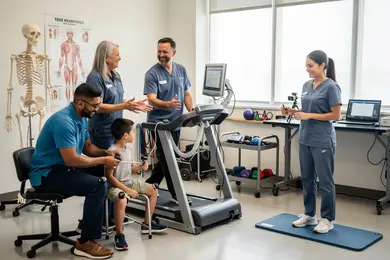
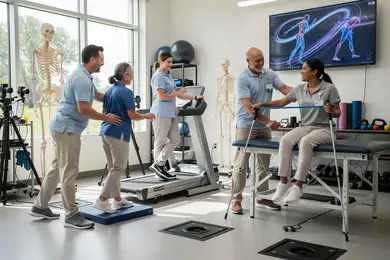
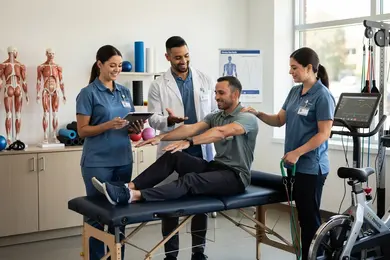
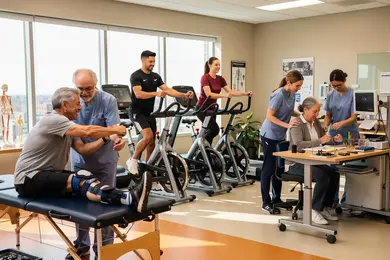
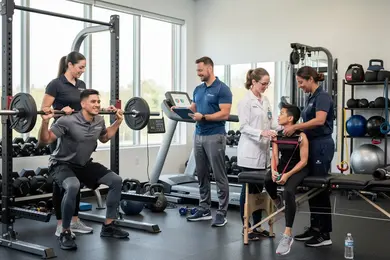
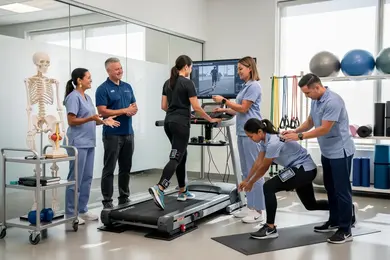
Employment demand for kinesiology graduates in the United States concentrates heavily within healthcare providers and rehabilitation centers, where roles like exercise physiologists and physical therapy assistants are most prevalent. Clinical rehabilitation environments prioritize candidates with practical experience and applied clinical skills, including patient assessment and therapeutic exercise plan development. These settings offer clearer, financially viable paths; for instance, exercise physiologists earned a median wage of $58,160 in 2024, reflecting stable opportunities for kinesiology degree holders.
Outside clinical rehab, the labor market becomes more fragmented. Corporate wellness programs and sports performance organizations also recruit kinesiology graduates, but success often hinges on additional certifications beyond the degree, such as strength and conditioning credentials. Transitioning into fields like sports coaching or fitness training generally requires further industry-specific qualifications and networking, which can extend job searches and delay income. Public health agencies and community programs, though occasional employers, usually demand interdisciplinary knowledge or graduate-level education.
For students prioritizing immediate employability, strategic internships or practicum experiences within healthcare institutions improve placement rates by aligning academic foundations with direct patient care demands. Employers hiring kinesiology graduates in the United States emphasize anatomy mastery and evidence-based exercise methodologies, while those lacking hands-on experience typically face entry barriers.
Students must weigh these realities when aiming for top companies recruiting kinesiology degree holders and consider credentialing options carefully. Career paths to advanced roles, including athletic director jobs, reflect this need for practical experience and certifications in addition to degree credentials.
What jobs can kinesiology graduates get?
Kinesiology graduates face a critical choice between immediate workforce entry and extended professional schooling, particularly in physical therapy. Physical therapists earn a median annual wage of $99,710 with a projected 14% employment growth through 2033, reflecting robust demand in metropolitan healthcare and rehabilitation settings. However, this career path requires additional licensure and graduate education, delaying full earning potential. Interim roles like physical therapy assistants offer valuable experience but average closer to $50,000 annually and depend on rigorous certification.
The job market for kinesiology graduates in Canada and the U.S. includes diverse roles such as athletic trainers, sports coaches, occupational therapy assistants, and rehabilitation counselors. These positions often demand specialized certifications and deliver median salaries around $65,000, with variability linked to employer type, contract stability, and geographic location.
Those entering exercise physiology or fitness training must leverage biomechanics and physiology expertise to design effective protocols, often navigating less predictable income tied to certification status and employer settings ranging from hospitals to corporate wellness programs. Employment clusters favor candidates with advanced degrees and clinical internships, but early-career flexibility exists in sports and fitness sectors.
Real-world decision-making for kinesiology graduates involves assessing tradeoffs between income, certification requirements, and long-term career stability. For individuals exploring further specialization, investigating credible pathways such as online MSN PMHNP programs can complement kinesiology foundations.
Do kinesiology degrees need accreditation?
Employers requiring accreditation for kinesiology degrees reflects a critical checkpoint for candidates aiming to enter specialized roles, particularly in clinical exercise physiology. Graduates from non-accredited programs often face barriers securing essential certifications such as the Certified Clinical Exercise Physiologist (CEP), which many healthcare employers mandate. This restriction constrains eligibility for positions in hospital rehabilitation settings and limits reimbursement opportunities in clinical practice.
A practical example involves candidates applying to clinical exercise physiology roles within medical facilities: lacking accreditation effectively disqualifies them from consideration, unlike those from programs accredited by bodies like the Commission on Accreditation of Allied Health Education Programs (CAAHEP) or regionally accredited universities. Conversely, sports performance and wellness centers may apply less stringent accreditation filters but still tend to favor graduates from recognized programs as a baseline for foundational competence.
Beyond certification implications, kinesiology program accreditation in hiring decisions often signals curriculum rigor, covering anatomy, biomechanics, and physiology-core knowledge areas essential for rehabilitation plan development and patient evaluation. Students must carefully validate both institutional and program-specific accreditation aligned with their intended career sectors.
Ignoring these accreditation nuances risks prolonged job searches, restricted salary growth, and obstacles to advanced credentials. Prospective learners should balance labor market demands and certification pathways accordingly. For individuals exploring educational pivots or advancement, considering a masters degree in healthcare management could complement kinesiology expertise, enhancing leadership potential in evolving healthcare contexts.
Should you choose online or campus kinesiology programs?
Choosing between online kinesiology degree programs vs campus programs requires weighing the necessity of hands-on clinical experience against flexibility. Athletic training roles, which offer a median annual wage of $60,250 according to U.S. Bureau of Labor Statistics 2024 data, demand supervised practical work for licensure and employment-advantages campus programs deliver more directly through embedded internships and labs. Online kinesiology education benefits those balancing work and family but often necessitates securing local fieldwork independently, potentially delaying credentialing and limiting access to hospital or rehab employer pipelines.
For example, students targeting sports medicine positions in metropolitan hospital systems must fulfill rigorous in-person training requirements aligned with accreditation, which campus programs integrate systematically. In contrast, careers in fitness coaching or wellness consulting may allow leveraging online programs to enhance theoretical knowledge without pausing professional commitments.
Campus-based kinesiology education pathways typically lead to licensure-dependent roles with higher remuneration due to guaranteed experiential learning. Online pathways offer targeted professional development but demand proactive planning to meet practical requirements. Prioritizing programs with strong employer connections and clinical access improves long-term employability in kinesiology careers. Prospective students seeking structured, accelerated degree progressions might also explore accelerated BSN programs for non nurses California as a comparative model of balancing flexibility with practical training commitments.
What classes are in a kinesiology degree?
Pursuing a kinesiology degree requires strategic course selection to align with specific career objectives, balancing the scientific foundation with practical clinical or fitness applications. Graduates targeting physical therapy assistant roles must engage deeply with therapeutic exercise, orthopedics, and neuromuscular rehabilitation courses, which are prerequisites for healthcare employers and closely linked to higher median wages. Conversely, those aiming for personal training careers should prioritize exercise prescription and health promotion, acknowledging that median earnings are significantly lower-$46,180 annually per U.S. Bureau of Labor Statistics data-reflecting divergent economic outcomes within kinesiology pathways.
Employers expect graduates to demonstrate a combination of theoretical expertise and applied skills gained through labs and internships, essential for adapting interventions across varied populations. Without these practical experiences, candidates often struggle with certification requirements and job placement in competitive healthcare sectors. Additionally, students targeting advanced clinical credentials must incorporate prerequisite sciences such as chemistry and biology, which extend beyond standard kinesiology curricula.
Key decision factors include:
- Tradeoffs between clinical credibility and fitness sector flexibility
- Certification and time investments versus anticipated salary returns
- Sector-specific coursework influencing employability and role specialization
Careful evaluation of these dimensions ensures that kinesiology education effectively supports realistic workforce integration rather than merely fulfilling academic requirements.
What are kinesiology admission requirements?
Admission to kinesiology programs hinges on demonstrated academic competence in core sciences and mathematics, with most U.S. schools setting minimum GPA requirements near 2.5 to 3.0 and expecting foundational coursework in anatomy, physiology, and sometimes psychology. While many bachelor's programs still request SAT or ACT scores, a growing number accept test-optional applications, shifting emphasis towards robust science grades that align with employer and graduate program expectations.
This academic threshold is not merely bureaucratic; for example, entry-level corporate wellness coordinators typically earn around $40,000 annually, underscoring the necessity of strong educational credentials to avoid costly career stagnation. Candidates should also consider that some kinesiology specializations, such as rehabilitation or athletic training, impose additional requirements like physical fitness tests or background checks.
Internships often factor heavily in admissions and accreditation, serving as essential gateways to practical skills and professional networking. Prospective students must verify the availability and relevance of these experiential components to ensure alignment with their career objectives in health promotion or therapeutic fields.
In summary, potential kinesiology students face critical tradeoffs balancing academic entry hurdles, program quality, and employer expectations. Early strategic evaluation reduces risks of remedial coursework or misaligned training, protecting both time and financial investment.
How long does a kinesiology degree take?
Completing a kinesiology bachelor's degree in four years with about 120 to 130 semester credits remains the baseline for entering relevant occupational fields, but part-time study often extends this timeline beyond five years. This delay can impair timely workforce entry and reduce competitiveness for roles that prioritize foundational expertise in anatomy, biomechanics, and workplace safety.
Entry-level positions in occupational health and ergonomics typically range between $55,000 and $75,000 annually, contingent on candidates holding either a completed bachelor's degree or verified experiential learning aligned with academic credit. Unlike regulated health professions, kinesiology does not mandate additional licensure, which means the length and rigor of the program directly affect when graduates become employable.
Consider a manual laborer shifting to ergonomics consulting: maintaining full-time study compresses the path to higher salaries but requires sacrificing current income, whereas part-time study preserves immediate earnings at the cost of career momentum. Clinical placements and internships often extend program duration, necessitating careful scheduling. Further certification or graduate education is frequently essential for roles in rehabilitation or sports science, adding to total time and financial investment.
Prospective students must evaluate these operational tradeoffs and the tangible impact of program structure on readiness to meet labor market expectations in specialized kinesiology sectors.
How much do kinesiology graduates earn?
Graduates with kinesiology degrees in the U.S. face a clear earnings spectrum shaped by job sector, experience, and credentials. Entry-level roles in clinical rehabilitation or fitness testing start near $42,000, while those advancing into specialized fields such as occupational therapy assistant roles or corporate wellness programs often exceed $55,000 within five years. This trajectory reflects not only wage growth tied to experience but also the value employers place on targeted skills and certification.
Employment outcomes reinforce this financial gradient. For example, McMaster University reports a 98% employment rate two years after graduation for kinesiology alumni, yet reaching higher income brackets frequently demands additional credentials and specialization.
- Positions in healthcare and rehabilitation generally offer more stability and higher salary growth than fitness or wellness center roles.
- Advanced certifications or graduate degrees are essential for earnings above $70,000 in fields like physical therapy or exercise physiology.
- Geographic location is a significant determinant; metropolitan markets with larger healthcare systems provide higher pay, offset by increased living expenses.
This landscape means professionals seeking advancement or career pivots should prioritize integrating skills such as patient management, data analysis, and program evaluation into their kinesiology foundation to align with employer requirements in sports medicine and corporate wellness sectors, directly impacting long-term earning potential.
What is the job outlook for kinesiology graduates?
The employability of kinesiology graduates depends heavily on clear strategic choices regarding certification, specialization, and geographic flexibility. While entry-level roles often require only a bachelor's degree and offer salaries averaging around $42,500 annually, advancing beyond these positions typically demands targeted credentials such as Certified Strength and Conditioning Specialist or Physical Therapy Assistant licensure. For example, a graduate in a metropolitan healthcare system might earn more but must navigate stringent credential requirements and a competitive hiring environment, unlike those entering smaller fitness centers where barriers to entry are lower but compensation is reduced.
Key practical considerations include:
- Specialization in biomechanics, exercise prescription, and client assessment significantly enhances employability in clinical and rehabilitation settings.
- Without additional certifications, graduates often plateau in wellness or fitness technician roles with limited salary growth.
- Internships and volunteer experiences are critical to differentiate candidates in healthcare-oriented positions.
Decision-makers should weigh immediate workforce entry against the time and financial investment in advanced certifications, as salary increases are modest without them. Geographic relocation often correlates with better pay but increases personal and professional complexity. Understanding these tradeoffs is essential for those pursuing kinesiology as a strategic pivot or career path.
What certifications help kinesiology graduates get hired?
Certification choices for kinesiology graduates must be grounded in clear career objectives, as employer demand varies sharply by role and setting. The Certified Strength and Conditioning Specialist (CSCS) is a prerequisite for positions in athletic training and performance coaching, representing a large segment of kinesiology job openings reported by LinkedIn in the United States. This certification demands a bachelor's degree and ongoing recertification, aligning tightly with roles in professional sports and collegiate fitness.
The Licensed Athletic Trainer (LAT) credential is distinct in its clinical focus, essential for practitioners in hospitals and outpatient therapy centers. It requires passing a state-mandated exam plus supervised clinical hours, imposing a significant time investment but enabling expanded patient care responsibilities and access to regulated healthcare environments.
For those targeting wellness or preventive health sectors, the American College of Sports Medicine's Certified Exercise Physiologist (CEP) validates specialized competence in chronic disease management and cardiac rehabilitation-areas less served by general personal trainer credentials. While personal trainer certifications are widely recognized in fitness facilities, they offer limited mobility into clinical or rehabilitative roles.
Employers increasingly prioritize certifications that blend evidence-based expertise with regulatory compliance, underscoring the importance of evaluating both the financial and temporal costs of preparation against targeted job markets. Selecting a credential without matching the intended employment context risks marginalizing a graduate's competitiveness in a field characterized by diverse and specialized employer expectations.
Other Things You Should Know About Kinesiology
A bachelor's degree in kinesiology opens entry-level doors but often does not meet employer expectations for specialized roles. Many positions, especially in clinical or rehabilitation settings, require graduate degrees or certifications in physical therapy, occupational therapy, or exercise physiology. Prioritizing graduate studies or professional certifications improves job prospects and potential for advancement more than relying solely on a bachelor's degree.
Practical experience distinguishes candidates significantly in this field because employers value applied skills over theoretical knowledge. Internships embedded within kinesiology programs provide direct exposure to sports, rehabilitation, or fitness settings that classroom learning alone cannot replicate. Students should prioritize programs with strong internship or cooperative education components to build a competitive edge in the job market.
In 2027, top employers hiring kinesiology graduates include major health and fitness chains, such as Equinox and 24 Hour Fitness, sports organizations like the NBA and NFL, hospital systems like Mayo Clinic, and corporate wellness programs within tech companies such as Google and Apple.
Kinesiology programs rarely emphasize management, so graduates often lack formal training in leadership, budgeting, or team coordination. Employers expect managerial candidates to demonstrate these skills beyond technical expertise. To advance into leadership roles, kinesiology graduates should seek supplemental education or experience in business administration or organizational leadership to meet workplace demands effectively.
References
- American Kinesiology Association | Careers in Kinesiology https://americankinesiology.org/careers-in-kinesiology/
- Kinesiology - Admissions - University of Victoria https://www.uvic.ca/undergraduate/programs/undergraduate-programs/pages/kinesiology.php
- What is the Career Outlook in Kinesiology? https://www.sports-management-degrees.com/faq/what-is-the-career-outlook-in-kinesiology/
- How to Apply for Accreditation https://aik.org.au/how-to-apply-for-accreditation/
- What Can You Do With a Kinesiology Major? | USAHS https://www.usa.edu/blog/what-can-you-do-with-a-kinesiology-major/
- Kinesiology and Exercise Science Salaries https://teach.com/online-ed/healthcare-degrees/online-bachelors-kinesiology-exercise-science/how-much-do-kinesiologists-make/
- Kinesiology Accreditation https://www.ccupeka.org/accreditation/kinesiology/
- Accredited Programs https://akta.org/employment-opportunities/education/accredited-programs
- Bachelor's Degree in Kinesiology | University of Nevada, Reno https://www.unr.edu/degrees/majors/kinesiology