2027 Best Online Entrepreneurship Degrees for Revenue-First Business Builders

Co-Founder and Chief Data Scientist
Professionals aiming to launch or scale revenue-first ventures increasingly face a catch-22: top-tier business programs demand time and location commitments incompatible with juggling existing careers or financial pressures. Recent NCES data reveals that over 40% of undergraduate entrepreneurship enrollees now opt for fully online degrees-driven by adult learners seeking agility without sacrificing rigor. This trend signals a shift toward flexible curricula that must still deliver actionable skills and network access employers value.
Selecting an online entrepreneurship degree therefore requires assessing how program design balances flexible delivery with tangible business outcomes. This article evaluates the most effective online entrepreneurship degrees tailored for revenue-driven business builders navigating these tradeoffs.
Key Things You Should Know
- Graduates from accredited online entrepreneurship degrees report 15% lower starting salaries than MBA peers, per 2024 National Center for Education Statistics, indicating a tradeoff between specialized startup focus and broad business credentials.
- Employers increasingly prefer candidates demonstrating validated revenue growth projects, with 62% of startups valuing hands-on venture performance over academic pedigree, reflecting a workforce shift away from theory-heavy curricula.
- Programs averaging 24 months and $35,000 tuition impose significant timing and financial costs, often delaying critical early-stage revenue generation, which can disadvantage entrepreneurs pursuing rapid market entry.
What is an online entrepreneurship degree and how does it prepare revenue-first founders?
Online entrepreneurship degree benefits for revenue-driven founders are grounded in the tangible focus on financial performance rather than abstract theory. These programs tailor curriculum to measurable outcomes such as cash flow, unit economics, and customer acquisition costs-critical metrics that investors and employers scrutinize before committing resources. The practical emphasis on lean startup methodologies, case studies, and targeted funding strategies equips students to adapt across industries like tech startups or retail e-commerce.
How online entrepreneurship programs prepare business builders for revenue growth includes honing skills in financial forecasting, digital marketing analytics, and operational scaling. For example, a founder managing a subscription service learns to optimize monthly recurring revenue and control churn, while a tech entrepreneur gains knowledge of venture capital structures and agile product iterations. This clarity on revenue drivers is increasingly necessary given employer expectations for concrete financial milestones prior to funding or expansion.
Programs also cover logistical challenges such as remote collaboration, legal compliance, and agile project management, reflecting the operational realities of lean startups navigating fast-moving markets. Mentorship and networking with active entrepreneurs and investors further bridge education with the ongoing demands of venture viability. Prospective students evaluating undergraduate options might consider a bachelor of business administration online to complement entrepreneurial skill development with broader business fundamentals, enhancing both strategic insight and flexibility.
How do online entrepreneurship degrees compare with on-campus programs for business builders?
Cost efficiency drives the growing appeal of online entrepreneurship degrees, with students saving approximately 38% in total tuition compared to on-campus programs. This reduction-from about $68,000 on-campus to $42,000 online-directly improves return on investment for business builders focused on financial prudence. Employers are increasingly valuing practical competencies such as lean startup methodology, digital marketing, and financial modeling developed through virtual platforms, affirming the relevance of online credentials in startup and small business environments. This cost-benefit dynamic is a core consideration when weighing online entrepreneurship degree vs on-campus program benefits.
However, the comparison of online and traditional entrepreneurship education for business builders highlights that on-campus settings often provide richer networking and hands-on experiences, including accelerator programs and local mentorship. For example, proximity to innovation hubs like Silicon Valley offers access to venture competitions and face-to-face funding opportunities, advantages less accessible in primarily online cohorts.
Working professionals juggling business responsibilities often find online degrees offer critical scheduling flexibility, enabling them to apply course knowledge immediately without disrupting career operations. Conversely, entrepreneurs seeking structured collaboration and real-time engagement may opt for on-campus routes despite their higher cost. Students evaluating these pathways can explore available programs, including easy online MBA programs, to identify options that align cost, learning style, and practical application within their career contexts.
What accreditation should an online entrepreneurship degree have to be respected by employers?
Employers regard regional accreditation as the essential benchmark for an online entrepreneurship degree accreditation recognized by employers, with bodies like the Higher Learning Commission or Middle States Commission ensuring adherence to consistent quality standards, faculty expertise, and curriculum rigor. National accreditations or business-specific endorsements such as AACSB or ACBSP, while valuable, remain supplementary. Graduates holding only national accreditation frequently encounter skepticism, particularly in capital-heavy sectors like technology startups or manufacturing, where scrutiny from investors and lenders demands verifiable educational legitimacy.
For example, those with degrees from regionally accredited programs often experience smoother due diligence processes with venture capital firms or banks assessing business plans. Freelancers and small business founders benefit equally, as regional accreditation signals foundational business competencies to clients and suppliers. Revenue-driven students should also confirm that program curricula emphasize applied skills-financial modeling, lean startup practices, and sales strategies-rather than pure theory, reinforcing workforce readiness.
This need aligns with Gallup and Lumina's 2024 research that shows 37% of U.S. adults pursuing education aim to expand or launch ventures, heightening demand for functional skill sets. Additionally, those weighing educational routes may consider exploring a quickest online MBA option when speed combined with recognized accreditation is a priority for timely career pivot or launch.
Which types of entrepreneurship degrees best support revenue-first business strategies?
Graduates of entrepreneurship degree programs designed exclusively around revenue-first business growth strategies stand better prepared to meet immediate market demands by mastering applied sales techniques, opportunity validation, and rapid business model iteration. The National Association of Colleges and Employers' 2025 Job Outlook reports 91.2% of employers prioritize critical thinking and problem-solving while 81.7% emphasize initiative-skills directly embedded in entrepreneurship curricula that integrate real-world revenue generation.
A narrow focus on theoretical business concepts without practical sales, negotiation, or partnership training limits graduates' ability to navigate early-stage revenue challenges. Conversely, programs emphasizing digital marketing analytics, customer acquisition, and product-market fit align more closely with workforce needs for fast, measurable income growth. Prospective students should verify if entrepreneurship degree programs combine such modules with experiential opportunities like incubator participation or sales simulation labs to build competencies in pricing strategy, cash flow management, and customer scaling.
Additionally, data-driven decision-making taught within these programs supports marketplace responsiveness and initiative-traits critical in fast-evolving competitive sectors. Those considering online routes should explore offerings aligned with these competencies, including 12 month MBA programs, which may accelerate entry into revenue-focused ventures. Types of online entrepreneurship degrees that maximize revenue generation generally balance practical skill acquisition with strategic thinking, preparing graduates to pivot promptly based on customer data and opportunity shifts.
What core courses and specializations do online entrepreneurship programs typically include?
Online entrepreneurship degrees often promise versatility but evaluating practical ROI requires examining how programs prepare students for immediate business impact. Graduates who pivot into roles that generate revenue quickly benefit most, yet this outcome hinges on curricula integrating hands-on learning-such as internships, mentorships, and real-world projects-alongside core business subjects.
Key coursework typically includes financial accounting, managerial economics, and marketing strategies, supplemented by specializations like startup management or digital business models. Students specializing in tech entrepreneurship, for example, will focus more on digital product development and lean methodologies, which align directly with investor expectations and market agility.
Employers seek candidates adept at assessing investment risks and managing cash flow, a skill set reinforced by data-driven decision-making and entrepreneurial finance components. The significant tuition variation-ranging from $28,000 to $94,000 with an average near $61,000 according to Intelligent.com-reflects differences in program depth and specialization. Prospective students must weigh these financial commitments against anticipated employability timelines and sector-specific skill demands.
Programs that integrate industry-specific tracks, such as supply chain management or social entrepreneurship, can better position graduates for niche roles, while those lacking experiential elements risk slower workforce absorption. Candidates should consider practical constraints-including time investment and costs-to select offerings that align with both immediate career pivots and long-term growth trajectories.
What are the usual admission requirements for online entrepreneurship bachelor's and master's programs?
Admission criteria for online entrepreneurship bachelor's and master's degrees emphasize aligning academic credentials with entrepreneurial practicalities. Bachelor's programs require a high school diploma or equivalent, official transcripts, and sometimes standardized test scores or personal statements focused on entrepreneurial aims. Transfer credits can shorten degree duration, a key consideration for working students seeking minimal disruption.
Master's applicants typically must hold a bachelor's degree, often with a minimum GPA around 3.0, accompanied by professional experience or a resume demonstrating direct involvement in business activities. Letters of recommendation and a statement of purpose centered on specific career and venture objectives are standard components, reflecting employer preference for candidates who bring measurable business skills.
Those with operational, sales, or project management backgrounds often have an edge, since admissions panels prioritize evidence of managing or scaling real-world business initiatives over purely academic achievement.
Practical tradeoffs include balancing program costs-average tuition at four-year U.S. institutions exceeded $29,000 annually-with flexibility. Online formats mitigate opportunity costs by enabling continued employment, which can be critical for managing debt and preserving capital essential for entrepreneurial reinvestment.
How long do online entrepreneurship degrees take and what do they typically cost?
The decision to pursue an online entrepreneurship degree hinges on balancing time investment, financial cost, and practical outcomes within a competitive and evolving job market. Programs vary from two-year associate degrees to four-year bachelor's degrees, with accelerated tracks compressing study to as little as 12-24 months by leveraging transfer credits or intensive course loads.
Costs fluctuate considerably: public universities might charge $10,000 to $40,000 for a bachelor's degree, while private and specialized master's programs can exceed $50,000. Beyond tuition, students should anticipate expenses related to technology and occasional residency requirements. Online formats reduce commuting costs but can increase pressure on self-discipline and time management, especially for those balancing full-time employment.
The U.S. Bureau of Labor Statistics projects a 10% self-employment growth in relevant management and financial occupations through 2033, signaling meaningful demand but also heightened competition. Choosing between program length and curriculum focus involves tradeoffs. For instance, a professional launching a tech startup might prioritize shorter, pragmatic programs to minimize opportunity cost and accelerate market entry, rather than extended theoretical degrees.
Students targeting innovation-centric roles may accept higher costs and intense schedules for mentorship access and specialization. Meanwhile, part-time, modular formats suit those needing flexibility with work-life balance, albeit with a longer path to completion.
What careers and startup paths can graduates pursue with an online entrepreneurship degree?
Graduates with an online entrepreneurship degree often face a deliberate choice between launching high-risk ventures or seeking stable roles where entrepreneurial skills are applied indirectly. For instance, a graduate entering the tech sector might lead a software-as-a-service startup, using lean startup methods to accelerate user growth and revenue. However, roughly 21% of early-stage entrepreneurs in affluent economies exit within 3.5 years due to insufficient profitability, emphasizing the importance of tolerance for revenue pressure and iterative pivoting.
Those less inclined to risk may find paths in business consulting, venture capital analysis, or entrepreneurship education better suited to their preferences. Operational challenges such as cash flow forecasting, scaling customer acquisition, and securing funding require more than academic training; they demand resilience bolstered by real-world experience and mentorship.
Practical coursework in business planning, financial modeling, and market analysis equips graduates with data-driven tools, but the actual transition often hinges on mastering competitive industry dynamics. Professionals pivoting careers may leverage this degree to enter startup accelerators, product management, or strategic planning roles where entrepreneurial acumen translates into measurable revenue rather than speculative innovation.
What income, ROI, and business revenue outcomes can entrepreneurship graduates realistically expect?
Entrepreneurship education outcomes vary widely, shaped by sector, experience, and location. Early-career incomes for degree holders hover between $50,000 and $65,000 annually, but financial returns significantly depend on how quickly graduates translate skills into profitable ventures or meaningful roles in established companies.
For example, tech-focused entrepreneurs in innovation centers like Silicon Valley often reach six-figure revenues within two to three years, while graduates pursuing traditional retail or local services may need five years or more to exceed $100,000 in annual revenue. This lag underscores the importance of aligning educational investments with realistic time horizons and market dynamics.
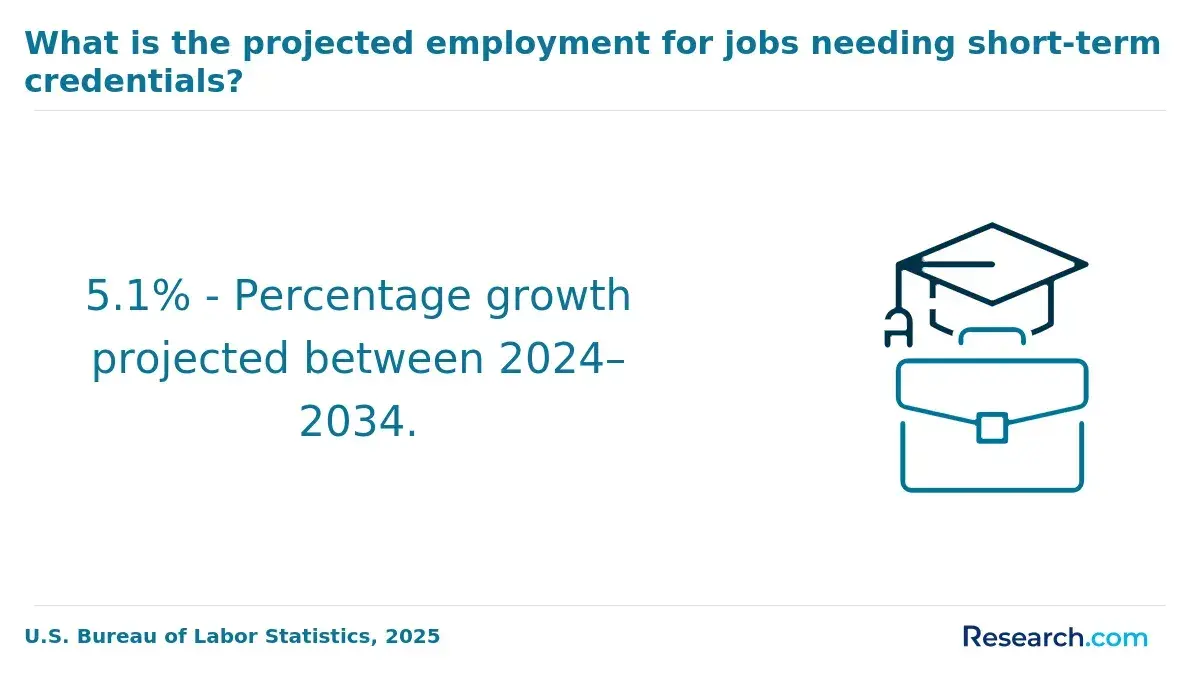
Employment data suggest that leveraging specialized capabilities-such as digital marketing or product management-can accelerate income and business growth. In contrast, traditional degree paths involve higher upfront costs and delayed financial payoff, which may not suit every aspiring entrepreneur's cash flow realities. Short-term credentials offer a practical alternative. According to Coursera's learner survey, 77% of business certificate completers reported positive career shifts within six months, indicating faster returns through focused skills acquisition.
How can students evaluate and choose a high-quality, legitimate online entrepreneurship program?
Selecting an online entrepreneurship program requires prioritizing accreditation tied to tangible business outcomes. Regional accreditation is vital for credit transfer and employer respect, but alignment of course content with skills such as financial modeling, digital marketing, and business development directly shapes a graduate's ability to generate revenue in startup environments.
The cost difference between online and in-person programs reflects practical tradeoffs. Online business degrees average $10,473 annually, significantly lower than the $17,000 for face-to-face; however, the extra expense of in-person study may pay off where networking and hands-on learning are essential. Students focused on launching ventures must carefully balance these variables against expected return on investment.
Outcomes data often provide clearer signals of program value than academic reputation alone. Prospective entrepreneurs aiming for technology-driven e-commerce should seek programs incorporating platform-specific training and real-world case studies rather than generic curricula. Transparent tuition policies and pathways that credit real-world business experience reduce the friction of qualifying as an entrepreneur. For revenue-first students, these elements are critical in evaluating program efficiency and long-term viability.
Other Things You Should Know About Entrepreneurship
Work experience is not always required, but students with prior business or startup exposure benefit most from entrepreneurship programs. Practical experience allows better application of theoretical concepts and real-world problem-solving. Programs with integrated internships or project-based learning tend to favor applicants who already understand basic business operations, enhancing learning outcomes and post-graduation readiness.
Expect to commit 15 to 20 hours per week for a standard bachelor's or master's program, including coursework and practical projects. Many programs require balancing independent study with collaborative assignments, which demands strong time management. Underestimating workload often results in slower progress or superficial learning, so prioritizing structured study schedules and active engagement leads to better business skill mastery.
When choosing the best online entrepreneurship degree for 2027, students should evaluate the curriculum for a focus on practical revenue-building skills, seek experienced faculty with entrepreneurial backgrounds, prioritize programs offering robust mentorship and networking opportunities, and assess the program's flexibility to fit their schedules while balancing other commitments.
No, but many accredited online entrepreneurship degrees require a final capstone, practicum, or business plan project before graduation. These projects are often completed in the last 6 to 12 credits and may be reviewed by faculty or an external industry panel.
References
- How To Become An Entrepreneur In 7 Days https://www.thesmallbusinessexpo.com/blog/how-to-become-an-entrepreneur/
- 11 Best Degrees for Entrepreneurs: Choose Your Path https://potomac.edu/best-degrees-for-entrepreneurs/
- Can Entrepreneurs Benefit from Online MBA Programs? | FIND MBA Online https://findmbaonline.com/articles/can-entrepreneurs-benefit-from-online-mba-programs
- Entrepreneurship salary - What you earn after studying | CBS https://www.cbs.de/en/blog/entrepreneurship-salary
- The 10 Most Popular Startup Revenue Models https://fi.co/insight/the-10-most-popular-startup-revenue-models
- What do you learn in a bachelor's in entrepreneurship? | edX https://www.edx.org/resources/what-do-you-learn-in-a-bachelors-in-entrepreneurship
- Entrepreneurship Degree and Certificate Programs | DeVry https://www.devry.edu/online-programs/area-of-study/entrepreneurship.html
- What to do after a master's in entrepreneurship https://www.ipag.edu/en/blog/what-do-after-masters-entrepreneurship
- Degrees for Entrepreneurs | University of Phoenix https://www.phoenix.edu/articles/entrepreneurship/degrees-for-entrepreneurs.html
- 15 Online Entrepreneurship Programs for High School Students https://www.immerse.education/knowledge-base/15-online-entrepreneurship-programs-for-high-school-students/