2027 Best Online Bachelor's in Architecture With Strong Student Support

Co-Founder and Chief Data Scientist
Choosing an online architecture bachelor's is high-stakes because the wrong program may not support licensure, studio learning, or portfolio development. The U.S. Bureau of Labor Statistics reports a May 2024 median architect salary of $96,690, but most licensed roles require a professional path.
This guide is for future designers, working adults, transfer students, and career changers who want flexibility without losing academic support. You will learn how to compare programs, verify accreditation, estimate cost, and choose a degree that fits your career goal.
Key Things You Should Know
- For licensure, the safest academic route is usually a NAAB-accredited professional B.Arch or M.Arch; many online bachelor's options are pre-professional or architecture-adjacent and may require a graduate degree later.
- College Board's 2024 pricing data lists average published tuition and fees of $11,610 for in-state public four-year colleges and $43,350 for private nonprofit four-year colleges, so transfer credit and residency rules can strongly affect total cost.
- The BLS projects architect employment to grow 8% from 2023 to 2033, but entry-level outcomes vary because many online bachelor's graduates first work in drafting, BIM, design support, construction, planning, or pursue a professional M.Arch.
What are the best online bachelor's in architecture programs with strong student support?
The best online bachelor's in architecture programs are not always the same for every student. A licensure-focused student should prioritize professional accreditation and studio rigor, while a working adult may need part-time pacing, transfer-friendly policies, online tutoring, and responsive advising.
Because fully online professional architecture pathways are limited in the U.S., the strongest choices usually fall into three groups: online professional architecture programs, online pre-professional architecture degrees, and online built-environment degrees that can lead to graduate study or design-related work. If you are comparing an architecture degree online, use the table below to match program type with your intended outcome.
This comparison highlights well-known online or online-accessible options and the type of student each may fit. Always confirm current delivery format, accreditation status, state authorization, studio requirements, and licensure alignment directly with the school before applying.
| Program or pathway | Best fit | Student support strengths to look for | Licensure note |
| Academy of Art University online architecture pathway | Students seeking an online studio-heavy architecture experience with portfolio development | Online critiques, portfolio instruction, academic advising, digital design support, and remote studio participation | Confirm current NAAB status, format, and whether the specific degree plan meets your state's education requirement |
| Boston Architectural College online architecture pathway | Working adults who want a practice-oriented architecture education with flexible study options | Practice-based learning support, career advising, design review culture, and pathways into professional study | Confirm whether the online bachelor's option is pre-professional or professional and what additional degree may be required |
| Arizona State University Online architectural studies or design pathway | Students who want a large public university online experience and may later pursue an M.Arch | Success coaching, online library access, academic advising, career services, and structured digital coursework | Typically best understood as a pre-professional route; verify graduate-school preparation and licensure implications |
| University of Arizona Online built-environment pathway | Students interested in sustainability, urban environments, planning, and design-adjacent careers | Online student services, advising, transfer support, and sustainability-focused academic guidance | Architecture-adjacent rather than a direct professional architecture degree; may require an M.Arch for licensure |
| Local community college transfer plus online bachelor's completion | Cost-conscious students who can complete general education or drafting courses before transferring | Transfer advising, lower-division course planning, tutoring, and portfolio preparation | Useful for reducing cost, but transfer credits must align with the receiving architecture program |
The best choice depends on your end goal. If you want to become a licensed architect, do not choose only by convenience or brand name; verify whether the degree is professional, whether studios are accepted in your intended pathway, and whether your state board recognizes the education route. If you want design, visualization, sustainability, construction, or BIM roles, a pre-professional or built-environment bachelor's may be a practical and flexible option.
How do online bachelor's degrees in architecture work and what can you study?
An online bachelor's in architecture teaches the design, technical, historical, and communication skills used to shape buildings and built environments. In online formats, lectures, readings, software demonstrations, pin-ups, discussions, and critiques often happen through a learning platform, video meetings, uploaded studio work, and digital collaboration tools.
Programs vary widely, so the degree title matters. A Bachelor of Architecture, often called a B.Arch, is usually a professional undergraduate degree when it is NAAB-accredited. A Bachelor of Science or Bachelor of Arts in Architecture is often pre-professional, meaning it may prepare you for design-related work or graduate professional study rather than licensure by itself.
Most online architecture-related bachelor's programs include a mix of studio work and technical coursework. These are the main academic components you should expect to compare when reviewing curricula:
- Design studios where students develop spatial concepts, drawings, models, diagrams, and final presentations.
- Architectural history and theory courses that explain design movements, cultural context, precedent analysis, and the social role of buildings.
- Building technology courses covering structures, materials, environmental systems, codes, sustainability, and construction methods.
- Digital representation courses using CAD, BIM, 3D modeling, rendering, visual communication, and portfolio software.
- Professional practice courses introducing contracts, ethics, project delivery, client communication, documentation, and teamwork.
Online architecture study works best for students who are self-directed and comfortable with iterative feedback. Studio projects rarely have one correct answer; you will revise repeatedly based on critique, site analysis, technical constraints, and design intent.

Can an online bachelor's in architecture qualify you to become a licensed architect?
An online bachelor's in architecture can help you move toward licensure, but only some bachelor's pathways directly satisfy the education requirement for becoming a licensed architect. In most U.S. jurisdictions, the clearest route is to complete a NAAB-accredited professional degree, gain documented experience through the Architectural Experience Program, pass the Architect Registration Examination, and meet state-specific rules.
The key distinction is professional versus pre-professional education. A NAAB-accredited B.Arch is designed as a professional degree. A pre-professional online bachelor's can still be valuable, but many students who choose that route later complete a NAAB-accredited M.Arch.
Use this table to understand how common online bachelor's options typically fit into the licensure pathway. It is a planning guide, not a substitute for checking your state board's current rules.
| Degree type | Typical purpose | Can it support licensure? | What to verify |
| NAAB-accredited B.Arch | Professional architecture education at the undergraduate level | Often the most direct undergraduate academic route | Current NAAB status, online delivery approval, required residencies, and state board acceptance |
| Pre-professional BS or BA in Architecture | Foundation in design, history, technology, and studio practice | Usually not sufficient alone for standard licensure pathways | Whether graduates qualify for advanced standing in a NAAB-accredited M.Arch |
| Architectural studies or design degree | Design foundation with architecture-related coursework | Usually indirect | Graduate admission preparation, portfolio expectations, and course prerequisites |
| Built environment, sustainability, or construction-focused bachelor's | Design-adjacent preparation for planning, sustainability, construction, or facilities roles | Usually not a direct architecture licensure degree | Whether the curriculum includes enough design studio work for M.Arch applications |
The common mistake is assuming that any degree with "architecture" in the title leads to licensure. Before enrolling, ask the program to state in writing whether the degree is NAAB-accredited, whether it is professional or pre-professional, and what graduates typically do next if they want to become licensed architects.
How does student support work in online architecture programs, and what services can you expect?
Student support is especially important in online architecture because design education depends on feedback, iteration, software troubleshooting, and portfolio development. A strong program should not simply post lectures online; it should create a structured studio environment where students can receive critique, meet deadlines, and build professional-quality work.
Look for services that support both online learning and architecture-specific success. The following support features are worth asking about before you apply:
- Dedicated academic advising that helps you sequence studios, prerequisites, transfer credits, and general education requirements.
- Live or recorded design critiques where faculty and peers review drawings, models, diagrams, and presentation boards.
- Portfolio coaching that helps students prepare for internships, graduate school, or entry-level design roles.
- Software and technology support for CAD, BIM, rendering, file submission, cloud storage, and hardware recommendations.
- Online tutoring and writing support for technical courses, design narratives, research papers, and professional communication.
- Career services with resume reviews, internship search support, employer events, and guidance on architecture-related job titles.
- Accessibility, veteran, transfer, and financial aid support for students balancing school with work, family, or military obligations.
Support quality can matter as much as course content. Students comparing veteran services across fields may find useful benchmarks in guides to the best military friendly online cybersecurity degrees, because the same questions about transfer credit, benefits processing, advising responsiveness, and career support also apply to online architecture students.
Red flags include programs that cannot explain how online critiques work, do not provide portfolio guidance, require expensive software without support, or assign online students to generic advising with no understanding of studio sequencing. If possible, ask to speak with a current student or recent graduate before committing.
What admission requirements and portfolios do online architecture bachelor's programs typically expect?
Admissions requirements for online architecture bachelor's programs vary by institution and degree type. Some programs admit first-year students with standard undergraduate materials, while studio-intensive or professional pathways may ask for a portfolio, design statement, or previous college coursework.
Most applicants should prepare for a combination of academic and creative review. These are the common materials schools may request and why they matter:
- High school transcript or college transcript showing readiness for college-level writing, math, science, and design coursework.
- Transfer credit evaluation for students who have completed general education, drafting, art, construction, or community college courses.
- Portfolio of drawings, models, photographs, digital work, design projects, or creative problem-solving samples.
- Personal statement explaining your interest in architecture, design goals, work experience, and reasons for choosing online study.
- Letters of recommendation, especially for selective programs or students applying with prior design or professional experience.
- Technology readiness, including access to a capable computer, reliable internet, and required software or cloud-based tools.
A portfolio does not always need to look like professional architecture work. Many undergraduate programs want evidence of curiosity, visual thinking, craft, persistence, and the ability to explain design decisions. If you are missing architecture samples, include observational drawings, photography, sculpture, digital media, maker projects, drafting work, or design process sketches.
Students who need a faster enrollment timeline should still avoid rushing the accreditation and support checks. If timing is a major concern, compare flexible calendars and admissions cycles through resources on online colleges starting soon, then confirm whether architecture studios follow the same start-date flexibility as general online courses.
How do online architecture degrees compare with campus-based programs for studios and hands-on learning?
Online architecture programs can offer real design learning, but they are not identical to campus-based studio culture. The best online formats intentionally recreate critique, collaboration, and iterative design review through live sessions, asynchronous feedback, digital pin-ups, and project-based submissions.
The right format depends on how you learn and what career outcome you want. This table summarizes the main trade-offs students should compare before choosing online or campus-based architecture study.
| Factor | Online architecture bachelor's | Campus-based architecture bachelor's | Decision point |
| Studio interaction | Often through video critiques, uploaded boards, recorded feedback, and discussion platforms | Frequent in-person desk critiques, pin-ups, reviews, and peer observation | Choose online only if the program has structured critique, not just self-paced assignments |
| Schedule flexibility | Better for working adults, parents, military students, and students far from campus | Usually more fixed, with studio blocks and in-person lab access | Online may be stronger if flexibility determines whether you can persist |
| Hands-on making | May rely on home model-making, digital fabrication files, mailed materials, or limited residencies | Often easier access to shops, labs, printers, fabrication tools, and materials | Ask how physical model-making and fabrication are supported remotely |
| Peer network | Can be strong if cohorts, group reviews, and live sessions are built in | Often easier to build informal peer connections and studio community | Look for cohort models, peer critique, and student design organizations online |
| Licensure alignment | Depends heavily on degree type and accreditation | More professional B.Arch options are traditionally campus-based | Licensure-focused students should verify NAAB status first |
Online can be the better choice when you need geographic flexibility, already work in construction or design, or have transfer credits that make completion realistic. Campus may be better if you want daily studio immersion, extensive fabrication access, or a broader choice of NAAB-accredited professional B.Arch programs.
What core courses, design studios, and technical skills are taught in online architecture majors?
Online architecture majors combine creative design with technical problem-solving. The strongest programs teach students how to move from a concept to a documented proposal using drawings, models, building systems knowledge, and persuasive communication.
Core courses typically fall into several skill areas. Understanding these areas helps you judge whether a curriculum is broad enough for your goals:
- Design foundations, including composition, form, space, scale, precedent, visual ordering, and conceptual thinking.
- Architectural design studios focused on housing, public buildings, adaptive reuse, site response, community needs, and integrated design.
- Representation courses in drawing, drafting, digital modeling, rendering, diagramming, animation, and portfolio layout.
- Building systems courses in structures, materials, assemblies, lighting, acoustics, environmental controls, energy performance, and life safety.
- History and theory courses covering global architecture, modern design, urbanism, cultural context, and ethical responsibility.
- Professional practice courses covering documentation, collaboration, project delivery, contracts, codes, client communication, and sustainability standards.
Technology is changing what entry-level design workers are expected to know. BIM, parametric modeling, visualization, energy analysis, and AI-assisted workflows are increasingly relevant, but they do not replace design judgment, code awareness, or client communication. Students interested in how AI skills can complement design and modeling careers may also compare an applied artificial intelligence bachelor as a parallel or alternative technology-focused path.
When reviewing a curriculum, do not stop at course titles. Ask whether students produce a portfolio, whether work is critiqued by faculty, whether software training is embedded in studios, and whether the program teaches both conceptual design and construction-aware documentation.
How long do online architecture bachelor's programs take, and what do they cost?
Most architecture bachelor's programs take four to five years for first-time full-time students, depending on whether the degree is a pre-professional bachelor's or a professional B.Arch. Part-time online students may take longer, while transfer students with accepted credits may finish faster.
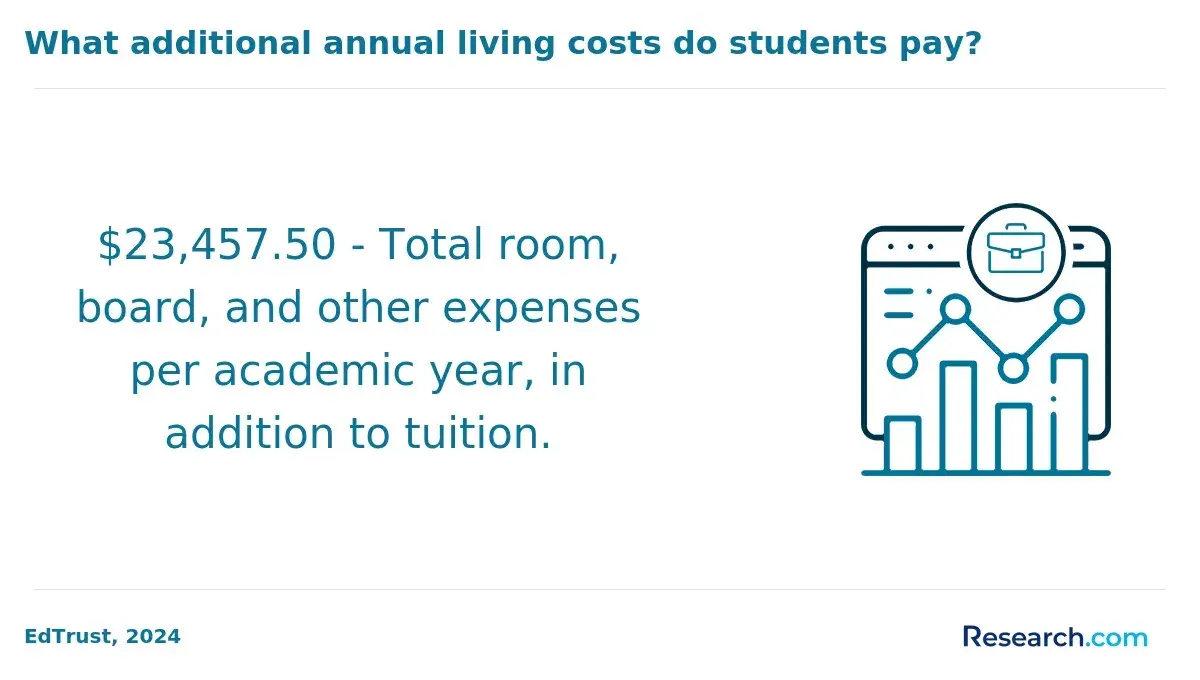
Cost varies by school type, residency, transfer credit, technology requirements, and whether the program charges special studio or software fees. College Board's 2024 data lists average published tuition and fees of $11,610 for in-state public four-year colleges and $43,350 for private nonprofit four-year colleges, which means the same degree goal can carry very different sticker prices depending on where and how you enroll.
This table summarizes the main time and cost variables to compare. Use it to estimate total cost of attendance, not just tuition per credit.
| Cost or time factor | Why it matters | Question to ask the school |
| Program length | Professional B.Arch programs may require more credits than standard bachelor's degrees | How many total credits and studio semesters are required for graduation? |
| Transfer credit | Accepted credits can reduce both time and tuition, but studio credits may be harder to transfer | Will design, drafting, art, or general education credits apply to the major? |
| Residency tuition | Public universities may charge different rates for in-state and out-of-state students | Does the online program use a separate online tuition rate? |
| Software and hardware | Architecture students often need a capable computer and design software access | Which software is required, and are student licenses included? |
| Materials and fabrication | Model-making, printing, supplies, and possible residencies can add costs | Are there studio, materials, printing, lab, or residency fees? |
| Financial aid and scholarships | Grants, scholarships, employer aid, military benefits, and federal aid can change net price | What is the average net price for online architecture students after aid? |
To reduce cost, start by maximizing transferable general education credits, comparing net price instead of sticker price, and asking whether studio courses must be taken in a fixed sequence. A low tuition rate may not be the best deal if the program extends your timeline, does not accept transfer credits, or requires you to complete a professional graduate degree afterward.
What architecture and design careers can you pursue with an online bachelor's degree?
An online bachelor's in architecture can lead to several design and built-environment careers, but the exact roles depend on whether the degree is professional, pre-professional, or architecture-adjacent. Licensed architect roles typically require additional steps beyond the bachelor's unless the degree is a qualifying professional program.
Many graduates begin in support, visualization, documentation, or coordination roles while building experience and deciding whether to pursue licensure. The table below shows common career directions and how they relate to architecture education.
| Career path | Typical responsibilities | How the bachelor's helps | Additional preparation often needed |
| Architectural designer or intern-level design staff | Support design concepts, drawings, models, presentations, and documentation under supervision | Builds studio, representation, and building systems knowledge | Professional degree, AXP experience, and ARE exams for licensure |
| BIM modeler or coordinator | Create and manage digital building models, coordinate drawings, and support project documentation | Develops software, spatial, and construction documentation skills | Advanced BIM training and project experience |
| Architectural drafter | Prepare technical drawings, construction documents, and design revisions | Provides drafting, CAD, detailing, and building technology knowledge | CAD/BIM proficiency and familiarity with codes and standards |
| Urban or planning assistant | Support site analysis, maps, community research, reports, and visual materials | Builds spatial analysis, sustainability, and design communication skills | Planning coursework or graduate study may be needed for advancement |
| Construction project coordinator | Assist with schedules, documentation, submittals, field coordination, and communication | Provides building systems and project documentation background | Construction management experience or credentials may help |
| Visualization or rendering specialist | Create images, animations, diagrams, and presentation materials for design projects | Develops digital modeling, rendering, and visual storytelling skills | Strong portfolio and advanced visualization software skills |
| Sustainability or building performance assistant | Support energy analysis, materials research, rating documentation, and environmental strategies | Connects design with climate, systems, and performance concepts | Sustainability credentials or graduate study may improve options |
This degree is a strong fit if you enjoy design problems, visual communication, buildings, cities, sustainability, and iterative feedback. It may be a weaker fit if you want a quick credential, dislike open-ended studio work, or need a program that directly leads to licensure but are considering a nonprofessional degree.
What salaries, job outlook, and industry demand can architecture graduates expect in the U.S.?
Architecture-related salaries depend on role, licensure status, region, employer type, portfolio strength, and experience. The BLS reported a May 2024 median annual wage of $96,690 for architects, excluding landscape and naval architects. That figure is useful for understanding the licensed profession, but it should not be treated as an expected starting salary for every online bachelor's graduate.
The labor market outlook is positive but competitive. The BLS projects 8% employment growth for architects from 2023 to 2033, which is faster than the average for all occupations. For students, this suggests continued demand, but also reinforces the value of licensure planning, software fluency, sustainability knowledge, and a strong portfolio.
Several trends are shaping architecture hiring and education. Firms increasingly expect entry-level employees to understand BIM workflows, collaborate across disciplines, communicate visually, and contribute to sustainable design goals. AI and automation can speed up early visualization, code research, and design iteration, but employers still need people who can make judgment calls, coordinate with consultants, understand client needs, and translate ideas into buildable documents.
Use salary data carefully. A pre-professional bachelor's may lead first to design assistant, drafter, BIM, or visualization roles, while a professional degree plus experience and exams can support the licensed architect path. Your best ROI calculation should include total program cost, time to completion, likelihood of needing graduate school, local job opportunities, and whether the program helps you produce a competitive portfolio.
Other Things You Should Know About Architecture
It can be worth it if the program matches your goal. For licensure, prioritize a NAAB-accredited professional path or a clear route into a NAAB-accredited M.Arch. For design support, BIM, sustainability, or construction roles, a pre-professional or built-environment bachelor's may be practical.
Before enrolling in an online architecture program, verify the program's accreditation, assess its student support services, check for hands-on learning opportunities, and confirm the state licensure requirements. Also, explore the flexibility of the curriculum to ensure it fits your schedule and professional goals.
Some programs require a portfolio for admission, while others use portfolios for placement, scholarships, or later studio review. Even when it is optional, building a portfolio early is important because internships, graduate programs, and design employers often review creative work.
References
- Online Bachelor of Science in Architecture https://the-bac.edu/academic-programs/online-bachelor-of-science-in-architecture
- Support For Architecture Students https://architecturesocial.com/knowledgebase/how-to-get-support-guidance-for-architecture-students/
- Part-Time Jobs for Architecture Students: Money or Experience? — archistudentnotes https://archistudentnotes.com/notebook/part-time-jobs-as-an-architecture-student-money-or-experience
- Where to Study | Top Schools Based on Your Interest https://www.studyarchitecture.com/where-to-study/
- Architecture Degree Online Program - Dunwoody College https://dunwoody.edu/design/architecture-online/
- U.S. Architecture Industry Statistics & Trends 2026 https://archlaunch.com/architecture-industry-statistics
- What Is Architecture School Like And What To Expect - ArchiMash.com https://archimash.com/practice-study/what-is-architecture-school-like/
- How to Become an Architect: What You Need to Know https://academy2.youngarchitect.com/becoming-an-architect/
- Learn architecture online | Courses and degrees | edX https://www.edx.org/learn/architecture
- Architecture Jobs Outlook: Here's What To Expect In Coming Years - Subcontractors USA https://subcusa.com/architecture-jobs-outlook-heres-what-to-expect-in-coming-years/