
2027 Online Reading & Literacy Doctorate Programs with No Dissertation Requirement

Co-Founder and Chief Data Scientist
Choosing an online reading and literacy doctorate without a dissertation is really a decision about fit: applied leadership work or traditional research training. The need is urgent, as the 2024 NAEP Reading results showed 40% of U.S. fourth graders performed below the Basic level.
This guide is for teachers, literacy coaches, curriculum leaders, and administrators who want a doctoral credential but prefer a practice-based final project. You will learn which formats to compare, what replaces the dissertation, how to verify quality, and when a no-dissertation pathway is worth the investment.
Key Things You Should Know
- Some online reading and literacy EdD pathways use a capstone, applied doctoral project, doctoral study, or dissertation-in-practice instead of a traditional five-chapter dissertation, but students should verify the final requirement in the current catalog before applying.
- A no-dissertation doctorate is not "no research." It usually requires data analysis, literature review, intervention design, professional writing, and an applied solution to a literacy problem in a school, district, nonprofit, or education organization.
- NCES data published in 2024 reported average graduate tuition and required fees of $12,596 at public institutions and $29,931 at private nonprofit institutions for 2022-23, before program fees, books, residencies, and lost work time.
Which Online Reading & Literacy Doctorate Programs Do Not Require a Dissertation?
The short answer is that fully online reading and literacy doctorates with no traditional dissertation are available, but they are less common than dissertation-based EdD or PhD programs.
Most are professional Doctor of Education programs in curriculum and instruction, literacy, reading specialist preparation, or educational leadership with a literacy-focused concentration or project.
Because schools change catalogs, students should not rely on the phrase "no dissertation" alone. The table below summarizes the kinds of online programs most likely to meet the search intent and what to confirm before enrolling.
| Program type to look for | Typical literacy focus | Common final requirement | What to verify |
| Online EdD in Curriculum and Instruction with a reading or literacy concentration | Literacy instruction, assessment, intervention, curriculum design, teacher leadership | Capstone, applied research project, or dissertation-in-practice | Whether the catalog says capstone instead of dissertation and whether the concentration is active online |
| Online EdD in Reading, Literacy, or Literacy Leadership | Reading development, literacy coaching, evidence-based intervention, language and literacy systems | Doctoral study, capstone portfolio, or applied project | Whether the degree is literacy-specific or a broader education doctorate with literacy electives |
| Online EdD in Educational Leadership with literacy project options | District literacy improvement, instructional leadership, assessment systems, professional development | Problem-of-practice project or dissertation-in-practice | Whether faculty will supervise a literacy-focused project and whether local data access is required |
| Online professional doctorate with individualized education concentration | Student-designed literacy emphasis through electives and applied research | Capstone, action research project, or improvement science project | Whether the transcript, concentration, or project title clearly signals reading and literacy expertise |
When comparing named schools, read the program handbook, course sequence, and final-project policy rather than only the marketing page. A program may advertise "no dissertation" but still require a multi-term doctoral research project that is similar in workload to a dissertation. Be sure to look into accredited EDS to EdD programs as well, choosing only programs with national recognition from prestige agencies.
Common red flags include vague final-project language, no accessible academic catalog, unclear accreditation, and admissions staff who cannot explain the difference between a dissertation, capstone, and doctoral study. A legitimate program should be able to show exactly how doctoral work is assessed.
What Replaces the Dissertation in an Online Reading & Literacy Doctorate?
In a dissertation-free reading and literacy doctorate, the traditional dissertation is usually replaced by a practice-based scholarly project. Instead of producing original research mainly for academic audiences, students investigate a real literacy problem and design, evaluate, or improve a practical solution.
The table below explains the most common alternatives and how they differ. This matters because "no dissertation" can mean very different things from one university to another.
| Completion requirement | Main purpose | Typical student work | Best fit |
| Capstone project | Solve or improve a defined professional problem | Needs assessment, literature review, intervention plan, implementation evidence, final report | Teachers, coaches, and administrators who want applied leadership work |
| Dissertation-in-practice | Use scholarly inquiry to address a problem of practice | Problem framing, data collection, improvement cycle, stakeholder analysis, findings | School and district leaders focused on systems change |
| Doctoral study | Apply research methods to a professional education issue | Research question, literature synthesis, methodology, analysis, practical recommendations | Students who want structure similar to a dissertation but with applied outcomes |
| Portfolio or publication-based project | Demonstrate doctoral-level competence through multiple artifacts | Policy briefs, curriculum products, research summaries, leadership reflections, presentation | Working professionals with varied evidence of advanced practice |
| Action research project | Test and refine an intervention in a real setting | Baseline data, intervention, observation, reflection, revised implementation plan | Educators with access to classrooms, schools, or literacy programs |
For reading and literacy students, final projects often focus on issues such as early reading intervention, multilingual literacy support, dyslexia screening systems, teacher professional development, adolescent reading comprehension, or districtwide assessment practices. These projects can be highly valuable if your career goal is to improve practice rather than enter a research-intensive faculty role.
Before choosing a program, ask what evidence you must produce at the end. Strong alternatives usually include the following components:
- A clearly defined literacy problem connected to a real professional setting
- A review of peer-reviewed research and evidence-based literacy practices
- A defensible method for collecting or analyzing data
- A practical product, intervention, model, policy recommendation, or improvement plan
- A formal written report and presentation evaluated by doctoral faculty
The key difference is audience. A traditional dissertation is often written for scholars and future researchers, while a capstone or applied project is usually written for practitioners, school leaders, boards, agencies, or organizations that can use the findings.
Are Online Reading & Literacy Doctorate Programs Without Dissertations Legitimate and Accredited?
A no-dissertation online reading and literacy doctorate can be legitimate if it is offered by an institution with recognized accreditation and clear doctoral-level academic standards. The absence of a traditional dissertation does not automatically make a program weaker, but unclear accreditation or a poorly defined final project should be treated as a serious warning sign.
Students should evaluate legitimacy at three levels: the institution, the education unit, and the specific program. Institutional accreditation is the baseline requirement for federal financial aid eligibility and broad employer recognition. Education-specific accreditation, when available, may add another layer of quality assurance, especially for programs connected to educator preparation.
Use the following checks before submitting an application or deposit:
- Confirm institutional accreditation through the U.S. Department of Education's recognized accreditor database or the school's official accreditation page.
- Check whether the education school or educator preparation unit holds relevant professional accreditation, if that matters for your goal.
- Read the academic catalog to confirm the exact final requirement, not just the admissions page.
- Ask whether the program is designed for licensure, endorsement, leadership advancement, or non-licensure professional development.
- Verify whether online students have the same faculty access, library access, research support, and graduation requirements as campus students.
Licensure deserves special attention. A doctorate in reading and literacy may support career advancement, but reading specialist, literacy coach, administrator, and supervisor credentials are governed by state rules. Some doctoral programs are non-licensure by design, meaning they may deepen expertise without qualifying you for a new state credential.
A practical rule is to separate three questions: Is the university accredited? Is the doctoral program academically rigorous? Does the degree meet the specific professional requirement you care about? A program can be legitimate and still not satisfy your state's endorsement or administrative licensure pathway.
Are No-Dissertation Online Reading & Literacy Doctorate Programs Easier to Complete?
No-dissertation programs are often more structured and professionally relevant, but they are not necessarily easier. The main advantage is that the final project is usually tied to a real literacy problem, which can feel more manageable for working educators than designing an original academic dissertation from scratch.
The workload still includes doctoral reading, research methods, data interpretation, scholarly writing, and multiple rounds of faculty feedback. In many programs, the capstone is embedded across several courses, which can reduce the risk of getting stuck after coursework but does not remove the need for sustained independent work.
The table below compares the practical difficulty of common doctoral formats so students can avoid assuming that "no dissertation" means "less demanding."
| Doctoral format | Where students often struggle | Why it may feel easier | Why it may still be demanding |
| Traditional dissertation | Original research design, committee revisions, independent timeline management | Best for students who want deep research specialization | Can extend beyond coursework if the study design, data, or committee feedback changes |
| Capstone | Connecting theory to practice, documenting impact, producing a polished final deliverable | Often more structured and tied to the student's workplace | Requires strong project management and evidence-based decision-making |
| Dissertation-in-practice | Defining a feasible problem of practice and collecting usable data | Usually focused on applied improvement rather than theory generation | Still requires rigorous inquiry, analysis, and scholarly defense |
| Doctoral portfolio | Building coherent evidence across multiple artifacts | Allows students to demonstrate growth over time | Requires consistent documentation and high-quality reflective writing |
Students who are organized, already work in literacy-focused settings, and have access to data or professional problems often benefit from the no-dissertation format. Students who dislike writing, research, or feedback may still find the program challenging because doctoral-level work remains writing-intensive.
The most common mistake is choosing a no-dissertation doctorate to avoid research entirely. A better reason is choosing it because your goal is to lead literacy improvement, evaluate interventions, design curriculum systems, or solve applied instructional problems.
How Long Does It Take to Complete an Online Reading & Literacy Doctorate Without a Dissertation?
Most online no-dissertation EdD programs in reading, literacy, curriculum, or educational leadership are designed for completion in about three to four years of part-time study. Some accelerated formats may be shorter, while programs with residencies, sequential cohorts, or extensive applied research requirements may take longer.
Completion time depends less on the phrase "no dissertation" and more on credit load, course pacing, transfer policy, and how early the capstone begins. A dissertation-free structure can help students finish on time if the final project is integrated into the curriculum rather than delayed until after coursework.
The table below shows common timeline patterns for working professionals comparing doctoral options.
| Pathway | Common pacing | Typical timeline pattern | Main delay risk |
| Online EdD with embedded capstone | Part time, year-round courses | Often planned around three years if the student follows the sequence | Project approval, workplace access, or data availability |
| Online EdD with dissertation-in-practice | Cohort-based or sequential courses | Often three to four years depending on project milestones | Problem scope becoming too broad |
| Online EdD with separate final project phase | Coursework first, project later | Can extend if the student pauses after coursework | Lack of momentum after comprehensive exams or proposal approval |
| Traditional online PhD or EdD with dissertation | Coursework plus independent dissertation | Often more variable because research completion depends on proposal, data, and committee approval | Data collection problems or repeated dissertation revisions |
Students can improve their odds of finishing on schedule by entering with a realistic project idea, securing workplace support early, and choosing a program that teaches research methods before the final project begins. If your job is unstable or you may lose access to school data, ask whether the program allows public datasets, simulated cases, community-based projects, or policy analysis as alternatives.
How Much Do Online Reading & Literacy Doctorate Programs Without Dissertations Cost?
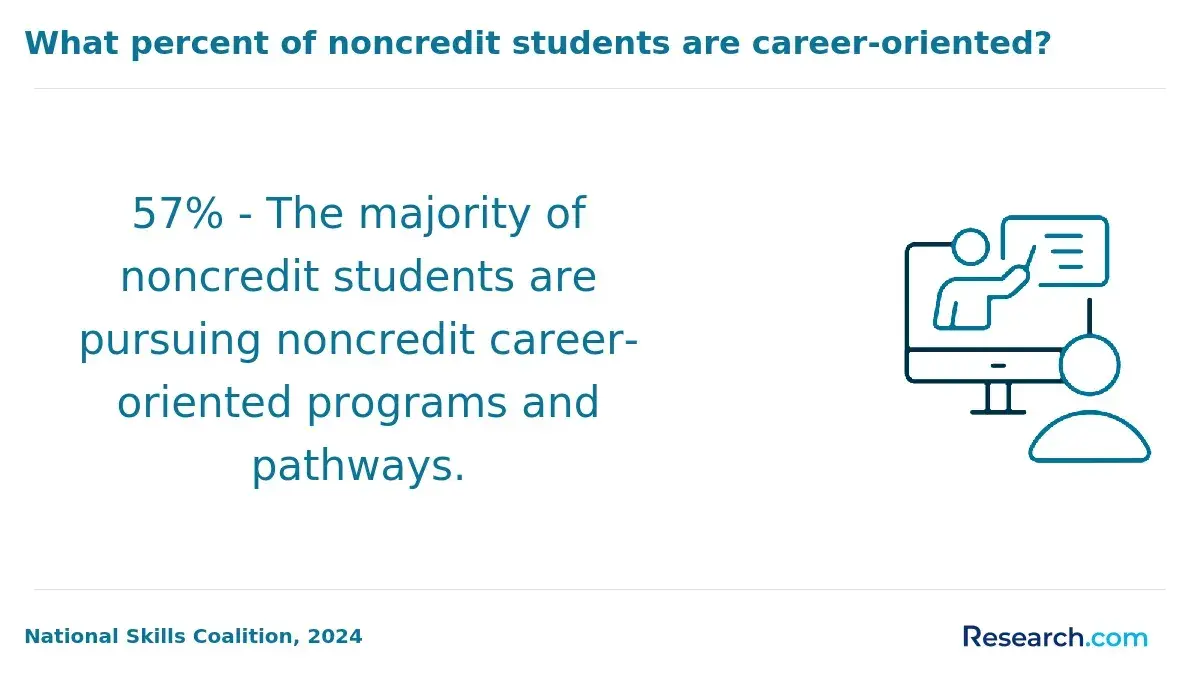
Costs vary by institution, credit requirement, residency expectations, technology fees, and whether tuition is charged per credit, per term, or through a subscription model. A no-dissertation format may reduce time-to-completion risk for some students, but it does not automatically make the degree cheaper.
NCES data published in 2024 reported that average graduate tuition and required fees for 2022-23 were $12,596 at public institutions and $29,931 at private nonprofit institutions. Those figures are broad averages, so doctoral students should use them as a benchmark rather than a program-specific estimate.
When building a cost comparison, include all charges that affect the total price, not only advertised tuition. The most important cost categories usually include:
- Per-credit or per-term tuition for all required doctoral credits
- Program, technology, library, graduation, and academic service fees
- Residency, intensive, or in-person travel costs if required
- Books, software, research tools, assessment materials, and transcription services
- Capstone or project-related expenses such as data tools, printing, presentation costs, or background checks
- Interest costs if using federal or private loans
The table below shows how to compare pricing in a practical way. It is more useful than comparing tuition rates alone because two programs with similar per-credit prices can have different total costs.
| Cost factor | Why it matters | Question to ask |
| Required credits | A lower tuition rate can still cost more if the program requires more credits | How many credits are required after my master's degree? |
| Transfer credits | Accepted credits may reduce both cost and time | Can graduate credits, specialist credits, or prior doctoral credits transfer? |
| Residency requirement | Travel can add meaningful costs for online students | Are any campus visits, conferences, or synchronous intensives required? |
| Final project structure | Extended project terms can increase tuition and fees | What happens financially if my capstone takes longer than planned? |
| Employer support | District tuition assistance may improve ROI | Does my employer reimburse doctoral coursework or require a service commitment? |
For ROI, compare the total cost against realistic career outcomes, not the prestige of the word "doctorate" alone. A district literacy leader, curriculum director, or higher education instructor may see different value from the same degree depending on local salary schedules, promotion rules, and employer recognition. Consider exploring the cheapest online doctorate in educational leadership for budget-friendly options.
Who Benefits Most From an Online Reading & Literacy Doctorate Without a Dissertation?
A no-dissertation online reading and literacy doctorate is usually best for experienced educators who want to apply research to improve literacy practice. It is often a strong fit for working professionals who already hold a master's degree and want a doctoral credential without pursuing a research professor track.
This format tends to benefit people in roles where applied expertise matters more than producing original theory. Examples include literacy coaches, reading specialists, curriculum coordinators, school administrators, district instructional leaders, professional development designers, education consultants, and nonprofit literacy program leaders.
The strongest candidates usually share several characteristics:
- They have access to a real literacy problem, school system, classroom network, district initiative, or education organization for applied work.
- They want to lead instruction, assessment, intervention, coaching, or curriculum improvement rather than conduct full-time academic research.
- They are comfortable writing scholarly papers but prefer a practical final project over a traditional dissertation.
- They need online flexibility because they plan to keep working while studying.
- They can connect doctoral work to a specific career goal, such as leadership advancement, consulting, curriculum design, or postsecondary teaching in practice-oriented settings.
A dissertation-free doctorate may be less appropriate for students who want tenure-track research faculty roles, plan to publish extensively in academic journals, or need intensive preparation in advanced research design. Those students may be better served by a traditional PhD or dissertation-based EdD with strong research mentorship.
The decision is not about prestige alone. It is about whether the final doctoral product helps you build the evidence, portfolio, and expertise your target employers actually value.
How Does a No-Dissertation Online Reading & Literacy Doctorate Affect Career Opportunities?
A no-dissertation doctorate can support career growth in reading and literacy when it is accredited, clearly aligned with the student's professional goals, and understood by the employer. It may be especially useful for roles focused on instructional leadership, literacy systems, curriculum improvement, adult learning, and evidence-based intervention.
The U.S. Bureau of Labor Statistics reported a May 2024 median annual wage of $74,720 for instructional coordinators. That figure does not isolate reading and literacy doctorate holders, but it provides a useful labor-market reference for roles involving curriculum, instruction, assessment, and teacher support.
Career value depends on the role. Some employers care most about state licensure and years of experience, while others value doctoral-level leadership, research literacy, and the ability to evaluate programs. The table below shows common paths and how a dissertation-free doctorate may fit.
| Career direction | How the doctorate may help | Important limitation |
| Literacy coach or reading specialist leader | Builds advanced expertise in assessment, intervention, coaching, and literacy systems | State endorsement or district requirements may matter more than the doctorate itself |
| Curriculum or instructional coordinator | Supports leadership in curriculum evaluation, teacher development, and program improvement | Experience and district leadership record remain important |
| School or district administrator | Strengthens capacity to lead literacy initiatives and analyze achievement data | Administrative licensure may be required separately |
| Education consultant | Provides credibility for literacy intervention, professional development, and program evaluation work | Client results, specialization, and network often drive opportunities |
| Postsecondary instructor or professor of practice | May qualify candidates for practice-oriented teaching roles in teacher education or literacy programs | Research universities may prefer or require dissertation-based doctorates and publication records |
Technology is also changing literacy careers. AI-supported assessment tools, adaptive reading platforms, and data dashboards are increasingly part of instructional decision-making. Doctorate of education students should look for programs that teach ethical data use, evidence-based intervention selection, and critical evaluation of educational technology rather than treating technology as a substitute for professional judgment.
The degree has the most career value when your capstone becomes proof of expertise. A strong applied project can show that you identified a literacy problem, reviewed evidence, engaged stakeholders, evaluated data, and built a practical improvement plan.
How Do No-Dissertation Online Reading & Literacy Doctorates Compare With Traditional Doctorates?
The best choice depends on your goal. A no-dissertation EdD is usually designed for applied education leadership, while a traditional dissertation-based doctorate is usually better for students who want deeper research training or academic research careers.
The comparison below can help you decide which structure fits your preferred type of doctoral work.
| Factor | No-dissertation online EdD pathway | Traditional dissertation-based doctorate |
| Primary purpose | Apply research to solve literacy problems in practice | Generate original research and contribute to scholarship |
| Final product | Capstone, doctoral study, dissertation-in-practice, portfolio, or applied project | Formal dissertation with original study and committee defense |
| Best professional fit | Literacy leadership, curriculum improvement, coaching, consulting, school or district leadership | Research faculty roles, policy research, scholarly publishing, advanced methodology work |
| Online flexibility | Often designed for working professionals with structured milestones | May be flexible online, but independent research can be less predictable |
| Research depth | Applied and practice-oriented | Typically deeper in theory, methodology, and original scholarship |
| Completion risk | Can be lower if the project is embedded in coursework | Can be higher if dissertation progress stalls after coursework |
A no-dissertation doctorate may be the better option if you want to keep working, apply evidence directly to literacy practice, and finish with a usable professional product. A traditional doctorate may be the better option if you want to conduct independent research, teach in research-intensive higher education, or build a publication-focused academic profile.
Employer perception varies. Many K-12 employers focus on accreditation, licensure, salary schedule rules, leadership experience, and whether the doctorate relates to your job. Some higher education employers, especially research universities, may scrutinize the dissertation or publication record more closely. Looking into related programs, such as an MLIS degree, can also provide additional insight.
How Should Students Choose an Online Reading & Literacy Doctorate Without a Dissertation?
Students should choose a program by matching the doctoral structure to their career goal, not by searching only for the fastest or easiest option. The strongest no-dissertation programs are transparent about accreditation, curriculum, faculty expertise, research expectations, and final-project requirements.
Use this step-by-step process to evaluate programs before applying:
- Define your career goal first, such as literacy coach leadership, district curriculum administration, consultant work, postsecondary teaching, or nonprofit program leadership.
- Confirm that the degree type matches that goal; an EdD is usually more applied, while a PhD is usually more research-focused.
- Verify institutional accreditation and any education-specific accreditation or approval relevant to your state or employer.
- Read the catalog language for the final requirement and look for words such as capstone, doctoral study, dissertation-in-practice, action research, or portfolio.
- Ask for sample project titles or anonymized capstone examples to see whether literacy-focused work is actually supported.
- Compare total cost, required credits, transfer policy, residency expectations, and what happens if the final project takes extra terms.
- Ask whether the program is licensure, endorsement, or non-licensure, and verify requirements with your state agency if credentials matter.
- Evaluate faculty expertise in reading science, literacy assessment, multilingual literacy, dyslexia, curriculum, or instructional leadership.
- Check whether online students receive research support, writing support, library access, advisor feedback, and career services.
- Talk with your employer about recognition, salary schedule movement, promotion rules, and tuition assistance before committing.
Admissions advisors can be helpful, but students should ask precise questions. Good questions include: "What exactly replaces the dissertation?" "How many terms does the final project take?" "Can my project focus on literacy intervention or reading assessment?" "Are there synchronous meetings or residencies?" "What happens if I change jobs during the capstone?"
Avoid programs that overpromise speed, minimize doctoral writing, or cannot explain how applied research is assessed. The right program should make the doctorate more relevant to your professional practice, not less rigorous.
Other Things You Should Know About Reading & Literacy Programs
Usually, the diploma lists the degree awarded, not the delivery format or final-project type. However, transcript details vary by institution, so ask the registrar if you need exact wording for employer review.
Not always. Many programs accept applicants with a master's degree in education, curriculum, leadership, special education, or a related field, but prerequisite coursework or professional experience in literacy may strengthen an application.
Sometimes. Transfer policies vary widely, and doctoral programs often limit the number, age, and type of credits accepted. Ask for a formal transfer evaluation before estimating cost or completion time.
Yes, depending on the curriculum and your experience. Graduates may apply literacy expertise in higher education, adult education, publishing, edtech, nonprofit literacy programs, assessment organizations, and professional development consulting.
References
- 25 Best Online EdD Programs of 2025 https://www.eddprograms.org/schools/best-online-doctor-of-education-programs/
- 2025 Most Affordable Online Doctorates in Education https://www.onlineu.com/most-affordable-colleges/education-doctoral-degrees
- Reasons to Get a Reading, Language, and Literacy Doctorate - Graduate Programs for Educators https://www.graduateprogram.org/blog/reasons-to-get-a-reading-language-and-literacy-doctorate/
- A Comprehensive Guide to Ed.D. Dissertations | ACE Blog https://ace.edu/blog/a-comprehensive-guide-to-ed-d-dissertations/
- 1-2 Year Doctoral Programs Online: Top Schools & More https://www.phds.me/online-programs/one-year-doctoral-programs
- Explore Doctorates In Reading And Literacy Online (2024) https://www.gradschoolhub.com/affordable/online/doctorate/reading-literacy/
- Do All Doctoral Programs Require a Dissertation? UK Guide https://www.researchprospect.com/do-all-doctoral-programs-require-a-dissertation/
- Earn Your Doctorate Without A Dissertation | CIU https://caluniversity.edu/blog/online-dba-no-dissertation/