2027 Online Nurse Midwifery Doctorate Programs with Practicum, Internship, Clinical, or Fieldwork Requirements

Co-Founder and Chief Data Scientist
Choosing an online nurse midwifery doctorate is not just about coursework; it is about whether you can complete required hands-on clinical training where you live and work. The decision matters because the U.S. Bureau of Labor Statistics reports 2024 median pay of $132,050 for nurse anesthetists, nurse midwives, and nurse practitioners, with strong projected demand for advanced practice nurses.
This guide is for RNs, CNMs, and aspiring doctoral students who need to compare program formats, placement expectations, costs, accreditation, and licensure fit before enrolling.
Key Things You Should Know
- Most online nurse midwifery doctorates are not fully remote: BSN-to-DNP and post-master's DNP pathways typically require supervised clinical, practicum, immersion, or doctoral project hours in approved healthcare settings.
- Accredited DNP programs generally require at least 1,000 post-baccalaureate practice hours, so students should verify how prior graduate clinical hours count before estimating time and cost.
- Clinical placement policies vary widely: some schools help secure sites, while others require students to identify preceptors, which can affect travel, work schedules, graduation timing, and total out-of-pocket costs.
Which Online Nurse Midwifery Doctorate Programs Require Practicum, Internship, Clinical, or Fieldwork Experience?
Online nurse midwifery doctorate programs with a clinical practice focus almost always include in-person experiential requirements. The main question is not whether hands-on training is required, but how much is required, who arranges it, and whether it aligns with certification, state authorization, and your local site options.
The table below summarizes the main types of online or hybrid doctoral pathways prospective nurse midwifery students may encounter. Use it to understand which degree structure is most likely to require direct patient care, doctoral practicum, or field-based project work.
| Program type | Who it is usually for | Experiential requirement | Best fit |
| BSN-to-DNP Nurse-Midwifery | RNs with a BSN seeking CNM preparation and a practice doctorate | Substantial nurse-midwifery clinical hours plus DNP practice hours | Students who want entry into nurse-midwifery practice through a doctoral pathway |
| Post-master's DNP for Certified Nurse-Midwives | Practicing CNMs with an MSN or equivalent graduate preparation | Doctoral practicum, leadership immersion, quality improvement, or scholarly project hours | CNMs seeking leadership, systems improvement, teaching, or advanced practice development |
| Dual-specialty DNP Nurse-Midwifery/Women's Health | RNs seeking preparation in nurse-midwifery and women's health across the lifespan | Broader clinical placements across obstetric, gynecologic, primary care, and reproductive health settings | Students who want a wider clinical scope and can manage a more complex placement plan |
| PhD in Nursing with maternal health or midwifery research focus | Nurses preparing for research, academic, or policy roles | Research residency, dissertation, or field-based research may be required; direct CNM clinical preparation is usually not the purpose | Students focused on research rather than clinical certification or practice leadership |
Examples of schools that have offered online or hybrid nurse-midwifery doctoral pathways or doctoral options for midwives include Frontier Nursing University, Baylor University, University of Cincinnati, Stony Brook University, and selected state university systems with hybrid DNP tracks. Program format, state authorization, campus visits, and clinical placement rules can change, so applicants should confirm the current catalog, accreditation status, and clinical policies directly before applying.
Students who are still comparing APRN routes may also want to review broader online nurse practitioner programs, especially if they are weighing nurse-midwifery against family, women's health, adult-gerontology, or psychiatric-mental health practice.
What Are the Practicum, Internship, Clinical, and Fieldwork Requirements for Online Nurse Midwifery Doctorates?
Schools often use experiential terms differently, which can confuse applicants. In nurse midwifery doctorates, "clinical" usually means supervised patient care, while "practicum" or "fieldwork" may refer to leadership, quality improvement, population health, or doctoral project implementation.
The table below explains the common requirement types and how they usually affect an online student's schedule. The exact terminology and hours depend on the school, specialty track, prior graduate coursework, and accreditation requirements.
| Requirement type | What it usually means | Common setting | Why it matters |
| Clinical placement | Supervised direct care with patients across prenatal, intrapartum, postpartum, newborn, gynecologic, and primary reproductive health experiences | Hospitals, birth centers, OB-GYN practices, community clinics, federally qualified health centers | Usually central to nurse-midwifery certification preparation and competency development |
| Practicum | Applied doctoral work tied to advanced practice, leadership, education, quality improvement, or systems change | Healthcare organizations, academic-practice partnerships, public health agencies, clinical departments | Helps meet DNP practice-hour expectations and connects coursework to measurable practice outcomes |
| Internship or immersion | Concentrated supervised experience near the end of a program | Approved clinical or organizational site | May require schedule blocks, reduced work hours, or more intensive time on site |
| Fieldwork | Community-based or organizational work supporting a project, population health goal, or leadership objective | Public health programs, maternal health initiatives, rural health systems, employer sites | Can be more flexible than direct clinical care but still needs faculty approval and qualified supervision |
| Doctoral project hours | Practice-based project planning, implementation, evaluation, and dissemination | Clinical unit, health system, community organization, academic-practice setting | Often determines whether a post-master's DNP can be completed on time |
A common mistake is assuming that a program with fewer "clinical" hours is automatically easier. A post-master's DNP may have fewer direct patient care hours than a BSN-to-DNP nurse-midwifery track, but the student may still need a complex doctoral project site, organizational approval, data access, and a qualified mentor.
Before enrolling, ask admissions staff to separate the requirements into categories: direct patient care hours, indirect practice hours, project hours, campus intensives, simulation, and any required on-call birth attendance. This prevents surprises after you have already committed tuition and time.
How Do Online Nurse Midwifery Doctorate Programs Arrange Practicum and Clinical Placements?
Placement models vary from highly coordinated to student-driven. This is one of the most important differences between online nurse midwifery doctorate programs because clinical site availability can determine whether the degree is realistic for your location.
Most programs use one of the following placement models. Understanding the model early helps you evaluate risk before submitting an application or deposit.
| Placement model | How it works | Student risk level | Questions to ask |
| School-arranged placement | The program identifies or formally coordinates approved clinical sites and preceptors | Lower, but not risk-free | Is placement guaranteed in my state, and what happens if a site cancels? |
| Collaborative placement | The student searches locally while the school approves sites, contracts, and preceptors | Moderate | How many approved sites already exist near my ZIP code? |
| Student-identified placement | The student is primarily responsible for locating a site and preceptor | Higher | What support is available if local preceptors are unavailable? |
| Employer-based placement | The student completes practicum or project work at a current workplace if approved | Variable | Can my supervisor, department, or employer serve as an approved site? |
Students should verify placement logistics before choosing a program, not after admission. A practical placement review should include these steps:
- Ask whether the school has active clinical contracts in your state and region.
- Request written clarification on whether the school, student, or both are responsible for finding preceptors.
- Confirm whether the program allows placements in birth centers, hospitals, private practices, public clinics, telehealth-supported settings, or employer sites.
- Ask how long site approval takes and whether background checks, immunizations, drug screening, malpractice coverage, or onboarding fees are required.
- Find out what happens if a preceptor leaves, a birth volume is too low, or a site withdraws before you complete hours.
The biggest red flag is vague language such as "students may complete clinicals locally" without a clear explanation of site approval, preceptor qualifications, state authorization, and backup placement support. Local completion is valuable only if the school can legally and operationally support it.
Many students can complete fieldwork near home, but it is never automatic. Whether local placement is possible depends on state authorization, site contracts, preceptor availability, clinical case volume, specialty requirements, and whether the school has approval to place students in your state.
The table below highlights the factors that most often determine whether "online" really means locally accessible. Applicants should review each factor with admissions and clinical placement staff before enrolling.
| Local placement factor | Why it matters | What to verify |
| State authorization | Schools may not be authorized to deliver online education or clinical placements in every state | Whether the program accepts students and places clinical learners in your state |
| Preceptor supply | Nurse-midwifery preceptors can be limited in rural, highly competitive, or underserved markets | Whether the school has recent successful placements near your area |
| Birth volume and patient mix | Students may need exposure to specific prenatal, birth, postpartum, newborn, and gynecologic experiences | Whether a site can support the required competencies within the academic term |
| Employer policies | Some employers restrict students from completing clinical hours in their own unit or reporting chain | Whether your workplace allows student roles, precepting, data access, and project implementation |
| Travel radius | "Local" may still mean commuting to another city or temporarily traveling for a specialty experience | The typical maximum commute students in your region have faced |
Working nurses should be especially cautious about assuming their current job can satisfy fieldwork requirements. A site may be convenient but still unacceptable if the supervisor lacks required credentials, the student cannot separate employee duties from student learning, or the organization will not sign an affiliation agreement.
A good rule is to build a placement map before enrollment. Identify likely hospitals, birth centers, CNM practices, women's health clinics, community health centers, and maternal health programs within a realistic commute, then ask the school which of those sites are already approved or eligible for approval.
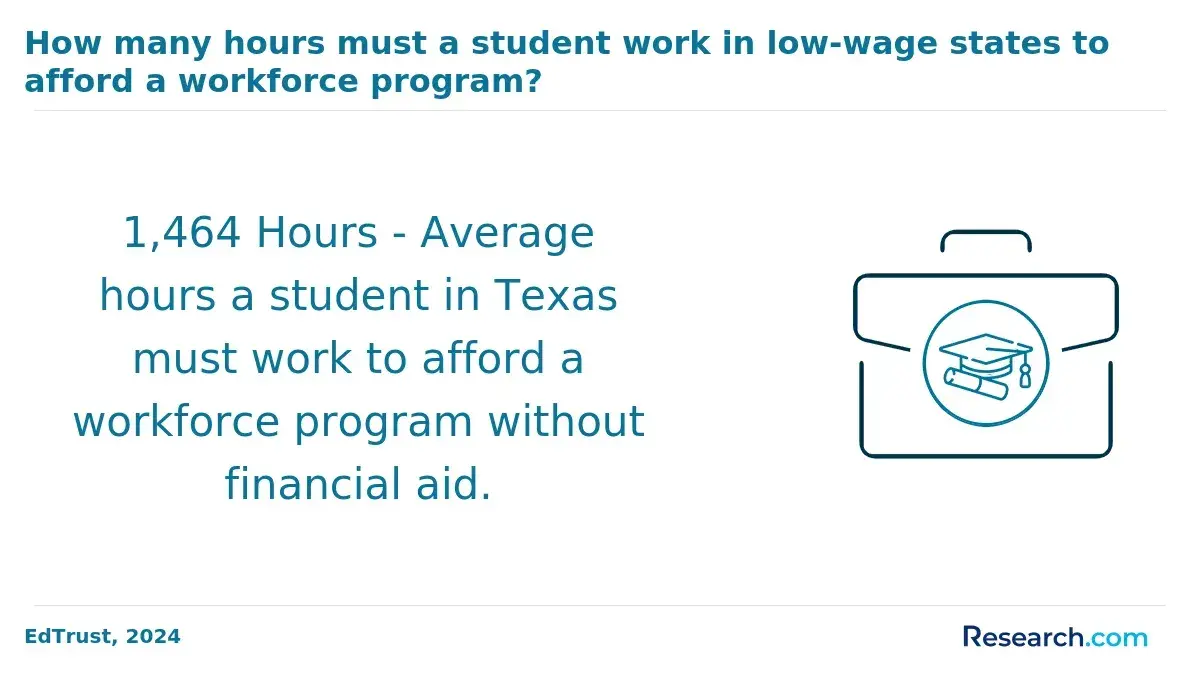
Clinical and fieldwork requirements can increase the real cost of an online doctorate even when tuition looks affordable. Students often budget for credits but underestimate travel, onboarding, unpaid clinical time, reduced work hours, parking, housing for intensives, and delays caused by site approval.
Federal student loan limits also matter. Graduate and professional students can generally borrow up to $20,500 per academic year through Direct Unsubsidized Loans, so a longer or delayed clinical sequence may require additional funding sources, employer tuition support, savings, scholarships, or Grad PLUS borrowing.
The table below shows common cost and timeline variables that are easy to miss when comparing online nurse midwifery doctorate programs. These items are not always included in advertised tuition.
| Cost or timeline factor | How it affects students | What to ask before enrolling |
| Clinical onboarding fees | Background checks, health records, drug screening, badges, training modules, and compliance systems may create extra costs | Which fees are paid to the school, site, or third-party compliance vendor? |
| Unpaid clinical time | Students may need to reduce work hours during intensive clinical terms or birth-call periods | How many hours per week are typical during the heaviest clinical term? |
| Travel and lodging | Campus intensives, simulation sessions, or distant clinical sites can add transportation and housing costs | How many required in-person visits are built into the program plan? |
| Placement delays | Late contracts, preceptor changes, or unavailable sites can extend graduation | What is the program's backup process if placement is delayed? |
| Prior graduate hours | Post-master's students may reduce remaining DNP practice-hour requirements if prior hours are accepted | How does the school audit and document prior clinical hours? |
Timeline expectations also differ by pathway. BSN-to-DNP nurse-midwifery programs commonly take longer because they combine advanced practice preparation, doctoral coursework, and extensive clinical training. Post-master's DNP programs for already-certified CNMs may be shorter, but the doctoral project and practicum can still create scheduling pressure.
If cost is the primary concern and the student's goal is research, policy, or academic scholarship rather than advanced clinical practice, comparing DNP options with the cheapest online nursing PhD programs may be useful. The key is matching the degree type to the career goal rather than choosing the lowest tuition alone.
Online coursework can be flexible, but clinical and practicum requirements are usually less flexible because they depend on patient care schedules, preceptor availability, site policies, faculty approval, and competency documentation. This is where many working nurses discover that an "online" program still requires careful calendar planning.
Flexibility usually varies across three dimensions: when you complete hours, where you complete them, and how quickly you can progress. Students should evaluate all three before deciding whether the program fits their job and family responsibilities.
- Schedule flexibility: Some practicum hours can be arranged around work, but birth attendance, hospital shifts, simulation intensives, and preceptor availability may require nights, weekends, weekdays, or on-call time.
- Location flexibility: Programs may allow local sites, but only if the site meets clinical competency, affiliation agreement, state authorization, and preceptor credential requirements.
- Pace flexibility: Part-time plans can help working nurses, but clinical courses may have lockstep sequencing that limits how slowly or quickly students can move.
- Project flexibility: Doctoral projects may be tailored to maternal health, quality improvement, health equity, telehealth workflows, patient safety, or access to care, but the site must support data collection and implementation.
Students who need maximum flexibility should ask for a term-by-term plan showing the heaviest clinical periods. It is also wise to ask current students how many hours they worked while completing practicum or clinical courses, because catalog language may not reflect the weekly reality of travel, documentation, and preceptor coordination.
Current trends are making flexibility more important. Telehealth, remote patient monitoring, electronic health record analytics, and AI-supported documentation tools are changing maternal healthcare workflows, but they do not eliminate the need for supervised hands-on competencies in nurse-midwifery education.
Experiential requirements are not optional extras; they are central to program quality, accreditation, certification eligibility, and licensure planning. For nurse-midwifery, students should pay close attention to both nursing doctorate accreditation and nurse-midwifery professional accreditation.
The most important distinction is between a doctorate that supports advanced clinical practice and a doctorate that supports research or leadership without preparing students for CNM certification. If the student is not already a certified nurse-midwife, the program must provide the right clinical preparation for certification eligibility.
The table below outlines the main accreditation and credentialing checks. Requirements can vary by state and by the student's prior education, so applicants should verify all items with the program and the relevant board before enrolling.
| Credentialing area | Why it matters | What students should confirm |
| Institutional accreditation | Supports federal financial aid eligibility, transfer review, and general academic credibility | The university is accredited by a recognized institutional accreditor |
| Nursing program accreditation | Many employers, doctoral programs, and boards look for recognized nursing accreditation | The DNP program is accredited or holds appropriate accreditation status |
| Nurse-midwifery accreditation | Essential for students seeking CNM or CM certification pathways | The nurse-midwifery track is accredited by the appropriate midwifery education accreditor |
| Certification eligibility | Graduates may need to meet national certification requirements before state APRN licensure | The curriculum and clinical experiences align with the certification exam pathway |
| State licensure rules | APRN scope, prescriptive authority, collaborative practice rules, and clinical approval vary by state | The program meets or supports requirements in the state where the student plans to practice |
One common mistake is assuming that fieldwork hours automatically satisfy licensure requirements in every state. State boards may evaluate program approval, clinical documentation, certification, RN licensure, background checks, prescriptive authority requirements, and population-focus preparation differently.
Before committing, students should contact the state nursing board or review board-published guidance for the state where they intend to practice. They should also ask the school for written licensure disclosures, especially if they plan to move during the program or complete clinical hours across state lines.
Strong support can make the difference between a manageable online doctorate and a frustrating placement experience. Support should begin before the first practicum term and continue through site approval, preceptor onboarding, documentation, evaluation, and project completion.
When comparing programs, look beyond marketing language and ask what support actually includes. The most useful support services are specific, documented, and tied to deadlines.
- Clinical placement advising: Guidance on eligible sites, preceptor qualifications, state authorization, and affiliation agreements.
- Compliance coordination: Help with immunizations, background checks, health records, malpractice coverage, drug screening, and site onboarding requirements.
- Faculty supervision: Regular evaluation of competencies, logs, reflective work, patient encounters, and doctoral project milestones.
- Preceptor resources: Orientation materials, evaluation forms, communication channels, and clear expectations for supervising students.
- Project mentoring: Support for quality improvement design, data access, ethics review when needed, implementation, outcomes measurement, and dissemination.
- Technical support: Assistance with learning platforms, electronic portfolios, simulation tools, teleconference supervision, and documentation systems.
A practical way to evaluate support is to ask for the clinical placement handbook before enrolling. If the school cannot explain timelines, responsibilities, escalation steps, and site approval criteria in writing, students should treat that as a warning sign.
Prospective students should also ask whether the school tracks placement outcomes by region. A program may have excellent support in states where it has long-standing partnerships but limited options in newer or highly competitive markets.
Clinical and practicum experiences can strengthen career readiness by helping students build documented competencies, professional networks, project outcomes, and confidence in complex maternal health settings. They do not guarantee employment or salary, but they can make the degree more relevant to advanced practice, leadership, education, and systems improvement roles.
For nurse midwifery doctorate students, the value of experiential learning depends on career goal. A student preparing for first-time CNM practice needs robust direct clinical preparation. A practicing CNM pursuing a post-master's DNP may benefit more from leadership practicum, maternal safety projects, health equity initiatives, or practice transformation work.
The table below connects experiential requirements to possible career value. Use it to identify whether a program's hands-on expectations match the roles you want after graduation.
| Experiential focus | Career relevance | Potential roles supported |
| Direct nurse-midwifery clinical care | Builds competency in antepartum, intrapartum, postpartum, newborn, gynecologic, and reproductive health care | Certified nurse-midwife, birth center clinician, hospital-based CNM, women's health provider |
| Quality improvement practicum | Develops skills in maternal safety, care pathways, patient outcomes, and process improvement | DNP-prepared clinician, quality lead, maternal health program coordinator |
| Leadership or systems practicum | Builds experience in team leadership, policy implementation, access improvement, and interprofessional collaboration | Clinical director, practice manager, service-line leader, health system consultant |
| Education-focused fieldwork | Supports teaching, simulation, preceptor development, and curriculum-related work | Clinical faculty, preceptor coordinator, nurse educator, academic-practice liaison |
| Population health or community project | Connects maternal health practice to public health, equity, rural access, or community-based care | Public health nurse leader, maternal health advocate, program evaluator |
Salary comparisons should be interpreted carefully because compensation depends on specialty, region, employer type, certification, call requirements, and experience. Students comparing APRN career paths may find it useful to review specialty-specific compensation resources such as psychiatric nurse practitioner salary data when deciding whether nurse-midwifery, psychiatric-mental health, family practice, or another APRN route best fits their goals.
Hands-on requirements are most worth the added commitment when they create usable evidence of readiness: a strong clinical log, preceptor references, a completed DNP project, measurable quality outcomes, and experience in the population or setting where the student wants to work.
How Should Students Choose an Online Nurse Midwifery Doctorate With Experiential Requirements?
The best online nurse midwifery doctorate is the one you can realistically complete and that prepares you for the credential, role, and state where you plan to practice. A low tuition rate or convenient asynchronous format is not enough if clinical placements are unavailable or poorly supported.
Use the following process to evaluate programs before applying. It is designed to reveal hidden placement, cost, licensure, and scheduling issues early.
- Define your goal first: first-time CNM preparation, post-master's DNP advancement, leadership, teaching, research, or a different APRN specialty.
- Confirm the degree pathway: BSN-to-DNP, MSN-to-DNP, post-graduate certificate plus DNP, dual specialty, or research-focused PhD.
- Verify accreditation for the institution, nursing program, and nurse-midwifery track if certification preparation is part of your plan.
- Ask for the exact number of direct clinical, indirect practicum, project, simulation, residency, and campus visit hours.
- Request a placement policy in writing, including who finds sites, who approves preceptors, and what happens if a site falls through.
- Confirm state authorization and licensure disclosures for the state where you live, complete clinicals, and intend to practice.
- Build a total cost estimate that includes tuition, fees, travel, unpaid clinical time, compliance costs, supplies, technology, and possible delayed graduation.
- Ask current students or recent graduates how placement worked in your region and whether they had to travel farther than expected.
- Compare flexibility honestly against your work schedule, family responsibilities, commute, and ability to take time off for clinical intensives.
- Choose the program only if the placement plan, accreditation status, timeline, and financing strategy all make sense together.
Students should avoid programs that cannot clearly answer placement questions, minimize in-person requirements, or rely on broad promises without written policies. A transparent program will explain both the advantages and the limits of online learning in a clinical doctorate.
If your main priority is entering an APRN role faster and you are still open to specialties outside nurse-midwifery, comparing accelerated nurse practitioner programs may help you understand alternate timelines. However, faster is not always better if the program does not match your desired scope of practice or licensure path.
Other Things You Should Know About Nurse Midwifery
No. Certified nurse-midwives provide a broad range of care that may include prenatal care, labor and birth support, postpartum care, newborn care, contraception counseling, gynecologic care, reproductive health services, and primary care for many patients across the lifespan.
In most CNM pathways, yes. Certified nurse-midwives are advanced practice registered nurses, so students typically need RN licensure and a nursing degree before entering graduate-level nurse-midwifery preparation. Applicants should check each program's prerequisites because bridge and direct-entry structures can differ.
A DNP is not universally required for nurse-midwifery practice. Many CNMs entered practice with a master's degree. However, some students choose a DNP for leadership, clinical systems improvement, teaching, policy, or employer preference reasons.
Nurse midwives may work in hospitals, birth centers, OB-GYN practices, community clinics, academic medical centers, public health settings, and rural or underserved care environments. Scope of practice and practice authority depend on state law, employer policy, certification, and experience.
- How to Become a Nurse Midwife (Steps & Career Overview) https://www.allnursingschools.com/nurse-midwife/
- Become a Certified Nurse-Midwife (CNM) - Education & Licensure https://www.healthcaredegree.com/physical/nurse-midwife
- Top Online Nurse-Midwifery Programs | 2026 CNM Rankings https://www.npschools.com/rankings/all-online-nurse-midwifery-programs
- | NRR | Dove Medical Press https://www.dovepress.com/internship-challenges-encountered-by-nursing-students-a-qualitative-st-peer-reviewed-fulltext-article-NRR
- How to Become a Midwife - Canadian Association of Midwives https://canadianmidwives.org/becoming-a-midwife/
- Certified Nurse-Midwife (CNM) https://nursinglicensemap.com/advanced-practice-nursing/certified-nurse-midwife-cnm/
- Part-Time CNM Programs: Flexible Paths to Midwifery 2026 https://www.midwifeschooling.com/blog/part-time-cnm-programs/
- School of Nursing https://www.ohsu.edu/school-of-nursing/nurse-midwifery-program-classes-and-requirements
- Nurse-Midwifery https://www.kumc.edu/school-of-nursing/academics/doctor-of-nursing-practice/nurse-midwifery.html
- Online Midwifery Programs https://teach.com/online-ed/healthcare-degrees/online-midwifery-programs/