
2027 Online Ministry Leadership Doctorate Programs with No Dissertation Requirement

Co-Founder and Chief Data Scientist
Choosing an online Ministry Leadership doctorate without a dissertation is really a decision about how you want to do doctoral work: original academic research or applied ministry problem-solving. The option matters because NCES data released in 2024 shows more than one-quarter of U.S. postsecondary students enrolled exclusively online, making flexible doctoral study more common.
This guide is for pastors, nonprofit leaders, chaplains, and ministry executives comparing dissertation-free pathways. You will learn which programs use alternatives, how to judge quality, what they cost, and when this format is worth it.
Key Things You Should Know
- You can earn an online Ministry Leadership doctorate without a traditional dissertation, but legitimate programs usually replace it with a doctoral ministry project, applied capstone, portfolio, or publishable research project.
- Dissertation-free does not mean research-free. Accredited Doctor of Ministry programs commonly require advanced theological reflection, field-based research, implementation, evaluation, and a written final project.
- NCES data published in 2024 shows average annual graduate tuition and required fees were roughly $12,600 at public institutions and $29,900 at private nonprofit institutions, before program-specific fees, travel, and books.
Which Online Ministry Leadership Doctorate Programs Do Not Require a Dissertation?
Several online or mostly online ministry doctorates do not use a traditional PhD-style dissertation. Most are Doctor of Ministry programs, often abbreviated DMin, because the DMin is a professional doctorate designed for experienced ministry practitioners rather than students preparing primarily for academic research careers.
The table below summarizes examples of programs that commonly use an applied doctoral project instead of a traditional dissertation. Program structures, residency rules, and catalog language can change, so students should verify the current degree plan before applying.
| School | Relevant online doctorate | Typical dissertation alternative | Format notes | Best fit |
| Liberty University | Doctor of Ministry with leadership-related options | Thesis-style or applied ministry project sequence rather than a conventional dissertation | Online coursework with ministry-focused doctoral project requirements | Pastors and ministry leaders who want a structured Christian university format |
| Regent University | Doctor of Ministry | Ministry project or doctoral project | Online coursework with applied ministry emphasis | Church leaders seeking practical ministry leadership development |
| George Fox University, Portland Seminary | Doctor of Ministry in leadership-oriented tracks | Doctoral project connected to ministry context | Hybrid or online-centered format may include advances or intensives | Leaders who want cohort-based theological reflection and applied leadership work |
| Asbury Theological Seminary | Doctor of Ministry | Final ministry research project | Online and hybrid elements vary by cohort and concentration | Experienced ministry professionals seeking Wesleyan theological formation |
| Fuller Theological Seminary | Doctor of Ministry | Doctoral project focused on a ministry challenge | Online or low-residency options may vary by track | Pastors, chaplains, and mission leaders who want applied theological research |
| Kairos University | Doctor of Ministry | Contextualized project or portfolio-based demonstration of outcomes | Mentor-based and context-based delivery model | Self-directed ministry leaders who want flexible, competency-oriented study |
A key point is terminology. Some schools say "no dissertation" but still require a substantial final doctoral document. Others use words like "thesis," "project," "portfolio," or "capstone." Before treating a program as dissertation-free, ask whether the final requirement includes original research, a formal proposal, institutional review board review, field implementation, oral defense, or publishable writing.
What Replaces the Dissertation in an Online Ministry Leadership Doctorate?
In an online Ministry Leadership doctorate, the dissertation is usually replaced by an applied project that addresses a real ministry problem. Instead of producing a book-length study meant mainly for academic scholarship, students often design, implement, and evaluate an intervention in a church, nonprofit, chaplaincy setting, mission organization, or faith-based institution.
The comparison below shows how common doctoral completion models differ. This matters because "no dissertation" can still involve rigorous research, writing, and faculty review.
| Completion model | Primary purpose | Typical work involved | Research intensity | Career alignment |
| Traditional dissertation | Contribute original scholarship to the field | Literature review, research design, data collection, analysis, chapters, and defense | High | Best for academic, research, and faculty-track goals |
| Doctoral ministry project | Solve a ministry problem in a real context | Needs assessment, theological framework, intervention, evaluation, and written report | Moderate to high | Best for pastors, ministry executives, chaplains, and nonprofit leaders |
| Applied capstone | Demonstrate advanced professional competence | Strategic plan, leadership initiative, program design, assessment, and presentation | Moderate | Best for practice-oriented leadership roles |
| Portfolio or competency project | Document mastery of doctoral outcomes | Artifacts, reflective essays, project evidence, mentor review, and final synthesis | Varies by program | Best for experienced leaders with an existing ministry context |
A strong dissertation alternative should include a defined problem, a theological or leadership framework, evidence-based methodology, measurable outcomes, and faculty evaluation. If a program has no substantial final research, writing, or assessment requirement at all, that is a red flag rather than an advantage.
Are Online Ministry Leadership Doctorate Programs Without Dissertations Legitimate and Accredited?
Online Ministry Leadership doctorates without dissertations can be legitimate when they are offered by properly accredited institutions and maintain doctoral-level academic standards. The absence of a dissertation is not the issue; the real question is whether the degree is accredited, appropriately designed, and transparent about its final project requirements.
For ministry doctorates, students should look at both institutional accreditation and, when relevant, theological accreditation. Many seminaries are accredited by the Commission on Accrediting of the Association of Theological Schools, while universities may also hold institutional accreditation from a U.S. Department of Education-recognized accreditor.
Use this verification sequence before enrolling, especially if the program advertises speed, convenience, or "no dissertation" as its main selling point.
- Confirm the institution's current institutional accreditation through the accreditor's official directory or the U.S. Department of Education database.
- Check whether the seminary or theology school has specialized theological accreditation if that matters for your denomination, employer, or ordination pathway.
- Read the current catalog, not only the marketing page, to identify the exact doctoral completion requirement.
- Ask whether the final project requires a proposal, faculty committee, research ethics approval, implementation, written report, or oral presentation.
- Verify whether the degree title, concentration, and delivery format appear on the transcript or only in marketing materials.
Legitimate programs are usually clear about learning outcomes, faculty credentials, library access, academic writing expectations, and student support. Be cautious with schools that avoid accreditation questions, promise unusually fast completion with minimal work, or imply that "no dissertation" means no doctoral research.
Are No-Dissertation Online Ministry Leadership Doctorate Programs Easier to Complete?
No-dissertation online Ministry Leadership doctorate programs are often more practical for working professionals, but they are not automatically easier. The work changes shape: instead of spending years narrowing a research gap for a dissertation, students may spend months diagnosing a real ministry problem, leading an intervention, evaluating outcomes, and writing a formal project report.
The biggest mistake is assuming a capstone is just a long paper. In many programs, the applied project requires more professional coordination than a dissertation because students must work with stakeholders, collect feedback, manage timelines, and demonstrate measurable ministry impact.
Students should watch for these common misunderstandings before choosing a dissertation-free doctorate.
- Assuming "no dissertation" means no major writing requirement, when many DMin projects still produce a substantial final manuscript.
- Confusing a capstone with a casual reflection paper instead of a supervised doctoral project with research and assessment.
- Choosing the shortest advertised timeline without checking whether the workload fits a full-time ministry schedule.
- Ignoring residency, intensives, project fees, or travel costs because the coursework is labeled online.
- Selecting a professional doctorate for an academic career that may prefer or require a PhD-style dissertation.
A dissertation-free format may feel more manageable because the work is connected to your own ministry setting. However, it still demands advanced reading, research literacy, theological reflection, leadership analysis, and disciplined writing.
How Long Does It Take to Complete an Online Ministry Leadership Doctorate Without a Dissertation?
Most online Ministry Leadership doctorates without dissertations take about three to five years, although the timeline depends on transfer credits, course load, cohort structure, residency requirements, and how quickly the student completes the applied project.
Professional doctorates can move more predictably than dissertation-based degrees because the final project is often embedded into the curriculum.
The table below compares typical completion timelines by doctoral pathway. Use it as a planning tool, not a guarantee, because schools set their own pace and extension policies.
| Doctoral pathway | Typical completion range | Why the timeline varies | Main delay risk |
| Online DMin with applied ministry project | About 3 to 5 years | Project design, implementation calendar, cohort pace, and ministry-site access | Waiting too long to define a feasible project |
| Online leadership doctorate with capstone | About 3 to 4 years | Credit load, accelerated terms, and capstone integration | Underestimating writing and data collection |
| Traditional PhD or ThD with dissertation | Often 4 to 7 years or more | Language requirements, comprehensive exams, dissertation approval, and research scope | Dissertation topic drift or committee delays |
| Portfolio or competency-based ministry doctorate | Varies widely | Prior experience, mentor pace, evidence quality, and assessment cycles | Lack of structure for self-directed students |
Students who want the fastest responsible path should choose a program where the final project begins early, milestones are clearly sequenced, and faculty feedback is built into each stage. A "fast" program is not helpful if the final project requirements are vague until the end.
How Much Do Online Ministry Leadership Doctorate Programs Without Dissertations Cost?
Costs for online Ministry Leadership doctorates without dissertations vary by school, credit requirement, tuition model, residency expectations, and fees. NCES data published in 2024 reported average annual graduate tuition and required fees of roughly $12,600 at public institutions and $29,900 at private nonprofit institutions, which gives students a useful benchmark but does not replace a program-level cost estimate.
For planning purposes, compare published tuition with the total cost of completion. The most relevant price points usually include tuition, fees, travel, books, technology, and project expenses.
- Per-credit tuition commonly published by seminaries and Christian universities: about $450 to more than $1,000 per credit.
- Estimated tuition for a 30-credit doctorate at $600 per credit: $18,000 before fees and travel.
- Estimated tuition for a 36-credit doctorate at $900 per credit: $32,400 before fees and travel.
- Possible added costs: application fees, graduation fees, online course fees, research software, books, residencies, lodging, and transportation.
The table below shows the cost categories students should compare when reviewing programs. The goal is to identify the total cost to finish, not just the lowest advertised tuition rate.
| Cost factor | Why it matters | Question to ask |
| Credit requirement | A lower tuition rate may still cost more if the program requires more credits | How many credits are required after transfer or advanced standing? |
| Residency or intensive fees | Online programs may still require campus visits, retreats, or cohort intensives | Are travel, lodging, meals, or event fees required? |
| Project costs | Applied projects may require surveys, software, printing, program materials, or local implementation expenses | Who pays for project implementation and assessment tools? |
| Time to completion | Extra semesters can add fees and delay the career value of the degree | What fees apply if the project extends beyond the standard timeline? |
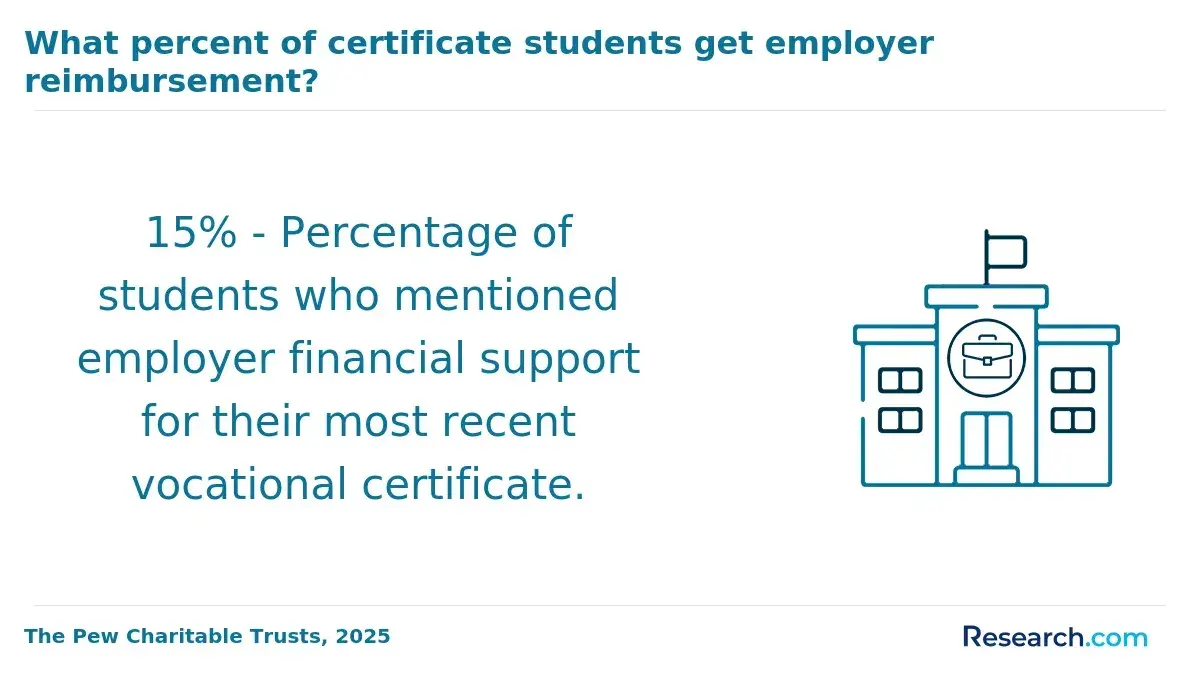
| Financial aid eligibility | Accreditation affects access to federal aid and some employer tuition benefits | Is the program eligible for federal student aid or employer reimbursement? |
A dissertation-free doctorate can be worth the cost when it strengthens leadership capacity, supports advancement, and produces a project you can use in your ministry context. It is harder to justify if the degree is poorly accredited, unrelated to your career path, or chosen mainly because it appears easier.
Who Benefits Most From an Online Ministry Leadership Doctorate Without a Dissertation?
A no-dissertation online Ministry Leadership doctorate is usually best for experienced practitioners who want advanced formation, leadership credibility, and a structured way to solve problems in their own ministry or faith-based organization. It is less ideal for students whose primary goal is to become a full-time research professor in theology, biblical studies, or religious studies.
This pathway often fits people in roles where applied leadership matters more than academic publication. Examples include senior pastors, executive pastors, denominational leaders, chaplains, Christian school administrators, nonprofit executives, missions directors, and ministry consultants.
Students often benefit most when they already have access to a ministry setting where they can test and evaluate a project. If your goal is broader organizational leadership outside church settings, comparing ministry doctorates with leadership-focused master's options such as the best organizational development master's programs online can help clarify whether you need a doctorate at all.
A dissertation-free doctorate may be a strong fit if you want to improve leadership systems, build discipleship models, evaluate community outreach, develop pastoral care processes, or lead change in a faith-based organization. It may be a weaker fit if you need a credential for research-intensive faculty roles, state-licensed clinical practice, or a denomination that requires a specific seminary pathway.
How Does a No-Dissertation Online Ministry Leadership Doctorate Affect Career Opportunities?
A no-dissertation online Ministry Leadership doctorate can support career advancement, but its value depends on the employer, denomination, role, and how clearly the degree connects to your responsibilities. In many church and nonprofit settings, a DMin is valued as a professional doctorate that signals advanced ministry preparation, leadership maturity, and applied problem-solving ability.
Career outcomes should be evaluated realistically. The U.S. Bureau of Labor Statistics May 2024 wage data places the median annual wage for clergy at about $61,000, but compensation in ministry varies widely by congregation size, region, denomination, housing benefits, and nonprofit funding.
That means the degree should be judged not only by salary potential but also by leadership scope, vocational calling, institutional needs, and long-term professional credibility.
Common roles connected to Ministry Leadership doctoral study include senior pastor, executive pastor, chaplain supervisor, ministry director, denominational executive, nonprofit leader, pastoral care director, Christian education leader, and adjunct instructor. Some students also use the degree to expand consulting, coaching, writing, or leadership training work.
Students interested in pastoral counseling should be especially careful. A ministry doctorate can strengthen pastoral care skills, but it does not automatically qualify someone for state-licensed counseling roles; those usually require counseling-specific graduate education, supervised clinical hours, and exams. If that is your goal, compare ministry doctoral study with online masters programs for counseling before committing.
Technology is also changing ministry leadership. Many churches and nonprofits now expect leaders to understand livestreaming, digital discipleship, data-informed outreach, donor systems, online education, and AI-assisted administration. A strong applied doctoral project can help students use these tools ethically and strategically rather than treating technology as a side issue.
How Do No-Dissertation Online Ministry Leadership Doctorates Compare With Traditional Doctorates?
No-dissertation online Ministry Leadership doctorates are not simply shorter versions of traditional research doctorates. They are different kinds of doctorates with different purposes. A professional doctorate is usually designed to improve practice, while a PhD or ThD is usually designed to develop scholars who contribute original research to an academic discipline.
The table below compares the two broad pathways. The right choice depends on whether your future work is primarily ministry leadership, academic research, teaching, counseling, or institutional administration.
| Factor | No-dissertation ministry doctorate | Traditional dissertation-based doctorate |
| Main degree type | Usually DMin or applied leadership doctorate | Often PhD or ThD |
| Primary goal | Improve ministry practice and leadership effectiveness | Produce original scholarly research |
| Final requirement | Applied project, capstone, portfolio, or ministry research project | Formal dissertation with original contribution to scholarship |
| Best audience | Working pastors, chaplains, ministry executives, and nonprofit leaders | Future professors, researchers, and academic theologians |
| Typical research style | Contextual, practical, evaluative, and ministry-based | Theoretical, historical, textual, empirical, or discipline-based |
| Career trade-off | Strong practice alignment but may be less competitive for research-focused faculty roles | Stronger academic research preparation but often longer and less practice-centered |
Students whose work overlaps with pastoral counseling, family ministry, or care ministries should separate ministry leadership credentials from clinical credentials. Reviewing the different types of counseling degrees can help you avoid choosing a ministry doctorate for a role that actually requires a license-eligible counseling degree.
A traditional dissertation-based doctorate makes more sense if you want tenure-track teaching, academic publishing, advanced biblical or theological research, or doctoral supervision roles.
A dissertation-free ministry doctorate makes more sense if you want to lead better, evaluate ministry programs, and apply research directly to communities you already serve.
How Should Students Choose an Online Ministry Leadership Doctorate Without a Dissertation?
Choosing an online Ministry Leadership doctorate without a dissertation should start with your end goal, not the promise of avoiding a dissertation. The best program is the one whose accreditation, final project, faculty expertise, schedule, theology, and cost fit your calling and career plan.
Use the following steps to compare programs in a disciplined way. They will help you distinguish a legitimate applied doctorate from a weak program that simply markets itself as easy.
- Define your career goal first: ministry advancement, denominational leadership, chaplaincy leadership, nonprofit executive work, consulting, teaching, or pastoral care specialization.
- Identify the exact degree type and concentration, then confirm whether the transcript will say DMin, PhD, leadership doctorate, or another title.
- Verify institutional and theological accreditation before discussing tuition discounts or start dates.
- Ask for the current degree plan and locate the final project courses, proposal process, writing expectations, and defense or presentation requirements.
- Compare the delivery format, including synchronous classes, asynchronous work, residencies, intensives, cohort meetings, and project-site expectations.
- Estimate the total cost to finish, including tuition, fees, books, travel, software, project expenses, and continuation fees.
- Review faculty expertise to see whether professors understand your ministry area, such as church leadership, discipleship, chaplaincy, counseling ministries, missions, or nonprofit administration.
- Ask admissions advisors for recent completion timelines and reasons students commonly extend beyond the standard plan.
- Check whether the degree meets denominational, employer, chaplaincy, or professional requirements that apply to your role.
- Compare alternatives if your goal is better served by a master's degree, certificate, licensure program, or traditional research doctorate.
If your ministry interests include marriage, family, and relational care, remember that a DMin can deepen pastoral practice but usually does not replace clinical preparation. Students seeking license-eligible family therapy training should compare ministry pathways with the best online MFT programs before deciding.
The smartest questions to ask a school are direct:
- What exactly replaces the dissertation?
- How is the project evaluated?
- Who supervises it?
- What happens if my ministry site changes?
- Are there required campus visits?
- What support is available for research design and academic writing?
Clear answers are a good sign; vague answers are a warning.
Other Things You Should Know About Ministry Leadership Programs
In many professional and ministry settings, doctoral graduates may use the title, but expectations vary by institution, denomination, employer, and context. Use the title accurately and avoid implying that a professional ministry doctorate is a medical, clinical, or research PhD credential.
Many DMin programs prefer or require an MDiv or its equivalent, but some accept related theological master's degrees with additional ministry experience or prerequisite coursework. Always check the admissions policy for equivalency rules.
It may help for practice-oriented ministry, leadership, or pastoral courses, especially at faith-based institutions. However, full-time faculty roles and research-focused teaching positions may prefer a PhD, ThD, or dissertation-based doctorate.
Many professional ministry doctorates do not require GRE scores, especially when they emphasize prior graduate theological study and ministry experience. Admissions commonly focus on transcripts, references, ministry background, writing samples, and a statement of purpose.
References
- US Distance Learning Ph.D. Programs in Leadership, Ministry, Bible, and Theology https://www.calebkaltenbach.com/post/distance-learning-ph-d-programs-in-the-united-states
- What Is a Non-Dissertation Doctorate, and Is It Right for You? https://www.snu.edu/blog/what-is-a-non-dissertation-doctorate-and-is-it-right-for-you
- Strategies for a Successful Capstone Project - Graduate Programs for Educators https://www.graduateprogram.org/blog/strategies-for-a-successful-capstone-project/
- Christian Leadership Degree Careers: What Can You Do in Ministry or the Marketplace? https://anchoru.com/christian-leadership-degree-careers-what-can-you-do-in-ministry-or-the-marketplace/
- Capstone Options in Master's in Communication Programs (Thesis vs Project) https://www.mastersincommunications.com/features/guide-to-graduate-communication-capstone-options
- Doctoral Degree Financial Aid - Lancaster Bible College https://www.lbc.edu/admissions/doctoral-admissions/financial-aid/
- Scholarships & Financial Aid https://www.garrett.edu/admissions/scholarships-financial-aids/
- Doctorate Programs - Faith Leads University https://flu.education/doctorate-programs/