2027 Online Data Science Master's Options for Professionals in Albany, New York

Co-Founder and Chief Data Scientist
Albany professionals can choose from online data science master's programs based in New York and elsewhere without treating distance from campus as the deciding factor. The more important questions are whether a program teaches the skills you need, fits around your work schedule, and justifies its full cost. This guide compares credible options with the possibility of studying on campus near Albany, then shows what to verify before applying.
Key Things You Should Know
- Albany residents can consider online options such as CUNY School of Professional Studies, Syracuse University, the University of Texas at Austin, and the University of Colorado Boulder; confirm New York enrollment eligibility and any required live sessions before applying.
- Compare the complete degree cost and curriculum - not tuition per credit or the word "online" alone - and ask whether projects can use problems relevant to your current Albany-area employer.
- The U.S. median annual wage for data scientists was $120,230 in May 2025; it is a national occupation figure, not an Albany salary estimate or a predicted return on a degree.
What is an online data science master's degree, and who is it for?
An online data science master's combines statistical reasoning, programming, data management, and applied modeling in graduate-level study delivered primarily online. It is most useful to an Albany professional who needs deeper technical preparation for analytical work but cannot routinely leave a job to attend daytime classes.
The degree title is not a reliable measure of fit. Someone who wants to build predictive models should inspect statistics, machine learning, and software coursework; someone focused on reporting and decision support may find that comparing graduate data analytics degrees reveals a better match. A master's is also not automatically necessary for an experienced analyst whose immediate gap can be addressed through a specific course and work-based projects.
Which accredited online data science master's programs serve Albany professionals?
The following universities offer online programs that Albany applicants can investigate. The table distinguishes their advertised degree focus; it does not establish current New York enrollment authorization, tuition, course schedules, or individual-program accreditation. Verify institutional accreditation and the precise delivery requirements with each university before committing.
| University and online degree | Distinctive point to investigate | Best initial fit |
| CUNY School of Professional Studies - M.S. in Data Science | New York public-university option; check current residency-based charges and access to student services | Applicants prioritizing a New York-based online program |
| Syracuse University - M.S. in Applied Data Science | Applied emphasis; check live-class expectations, projects, and total fees | Working professionals seeking structured interaction |
| University of Texas at Austin - online M.S. in Data Science | Technical curriculum; check mathematical prerequisites and course availability | Applicants seeking substantial quantitative study |
| University of Colorado Boulder - online M.S. in Data Science | Online course-based pathway; check current admissions route and sequencing | Applicants who value flexibility in how they begin |
These are examples, not a ranking or an exhaustive list. National programs need not have an Albany campus to be viable. If machine learning is your main goal rather than a broader data science curriculum, machine learning master's programs within a $20,000 budget provide a useful alternative set to compare; verify each program's current total before relying on a published price.
How do online data science programs compare with campus-based options in Albany?
For an Albany resident, online study can eliminate routine commuting and widen the selection of specialized courses. A campus-based program can make it easier to meet faculty and classmates in person, use facilities, and build connections with nearby employers. Neither format inherently provides a stronger credential or better employment outcome.
Start by checking current graduate offerings at the University at Albany and other institutions within a realistic commute. Compare the specific degree and schedule with online options rather than assuming that a nearby computing or analytics program is an equivalent data science master's. Ask whether evening classes, research access, or employer-facing projects would be available to you. For online programs, ask how students meet peers and mentors; review AI master's programs by alumni community for additional questions to apply when evaluating networking claims, while keeping the degree comparison focused on data science.
Choose online study if its curriculum and schedule outweigh the value of regular campus access. Choose a nearby campus option if in-person collaboration or a particular local faculty relationship is central to your plan. An Albany address alone should not decide between them.
What courses are included in an online data science master's curriculum?
Expect some combination of probability and statistics, Python or another programming language, databases, data preparation, machine learning, visualization, and a culminating project. Course names and depth vary: an introductory machine learning survey is not equivalent to advanced modeling coursework with substantial independent projects.
Match the syllabus to work you want to do in Albany. Public-sector or healthcare-oriented applicants, for example, should look for opportunities to handle messy data, explain uncertainty to nontechnical stakeholders, and address privacy and responsible use. If deploying models matters, check for software engineering, cloud, or production-oriented work rather than assuming it is covered by a modeling course. Applicants specifically concerned with responsible AI can use program comparisons for AI ethics master's tracks to frame questions about whether ethics is a dedicated course, an elective, or a brief topic within another class.
What are the admission requirements for online data science master's programs?
Requirements differ by school and entry pathway. Review each program's current policy for a bachelor's degree, transcripts, mathematics and programming preparation, recommendations, statements, tests, and English-language requirements where applicable. Professional experience may strengthen an application, but it does not necessarily replace a formal prerequisite.
Before paying an application fee, compare your transcript and work samples with the published prerequisites. If you have used SQL extensively but have little probability or linear algebra, ask admissions which courses formally satisfy the gap; self-study may help you succeed without counting toward an admissions requirement. Also confirm whether the program accepts applicants residing in New York and whether any campus visit is compulsory. A common mistake is treating a flexible application pathway as proof that the subsequent technical courses require little preparation.
How long does an online data science master's take, and what does it cost?
Completion time depends on required credits, course sequencing, how often classes run, and how many courses you can take while working. Published "fastest" timelines may assume continuous enrollment or a heavier load than your job permits. The data science master's time-to-completion guide offers a starting point, but your own schedule needs to be checked against each school's current course calendar.
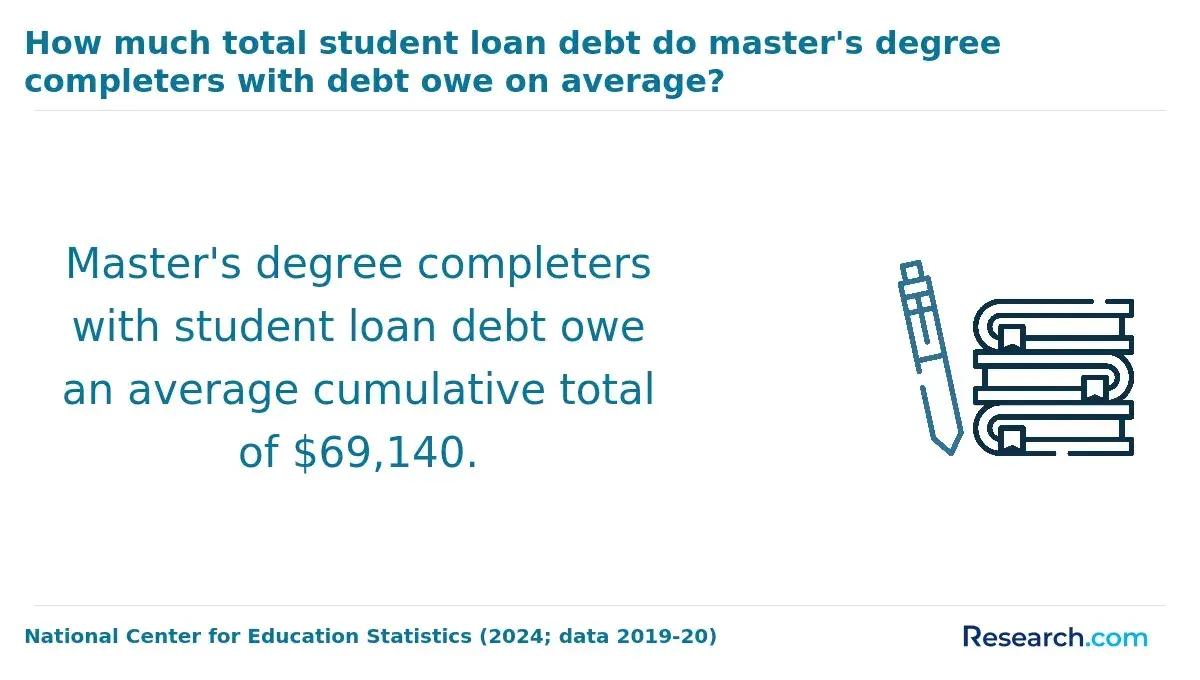
Current, comparable total prices for the programs above cannot be established here without each university's applicable tuition and fee schedule. Request a written estimate for your residency and intended pace that includes tuition, mandatory fees, technology or materials charges, and any travel. Then ask about employer tuition assistance, aid eligibility, and what happens financially if you pause enrollment. Comparing one school's tuition-only figure with another's all-in estimate is a costly mistake.
What data science careers can Albany graduates pursue after earning a master's degree?
Possible directions include data scientist, machine learning practitioner, analytics engineer, and more advanced analyst roles. The realistic next step depends on prior experience: an Albany professional who already understands government operations, healthcare workflows, or an employer's systems may be better positioned for a data-focused role in that domain than for an unrelated senior machine learning position.
Use program projects to demonstrate a specific capability: define a relevant problem, document data cleaning, compare methods against a baseline, explain limitations, and present a decision a stakeholder could use. Obtain permission before using employer data. A degree can strengthen this evidence, but it does not substitute for experience or guarantee a particular job title.
How much do data scientists and related professionals earn in Albany?
A reliable current Albany-specific data scientist wage figure is not established here. The Bureau of Labor Statistics reports a $120,230 national median annual wage for data scientists in May 2025. That figure describes workers across the United States and all experience levels; it should not be treated as an Albany offer, an entry-level salary, or a pay increase caused by a master's degree.
For a personal financial decision, compare current Albany-area job postings for the roles you could credibly seek with your present compensation and the degree's full cost. Keep data scientist, analyst, and engineering roles separate: their responsibilities and pay can differ substantially even when postings mention similar tools.
What is the job outlook for data science professionals in New York?
The Bureau of Labor Statistics projects 35% U.S. employment growth for data scientists from 2025 to 2035. This signals strong national demand for the occupation, but it is not a New York projection and does not measure openings in Albany. It also says nothing about how competitive an individual graduate's job search will be.
To test local fit, track Albany-area postings over several months and note whether the work calls for statistical modeling, reporting, data engineering, or domain expertise. Include remote roles only when they explicitly permit employment from New York. This is more useful for selecting electives than assuming national growth means every local employer is hiring data scientists.
Which certifications and skills strengthen an online data science degree?
Prioritize demonstrable skills over collecting certificates. SQL, reproducible Python workflows, statistical evaluation, clear communication, and responsible handling of sensitive data can strengthen a graduate project and an interview. Cloud-platform or analytics-tool certifications may help when the specific roles you want repeatedly request those tools; they are not substitutes for modeling judgment.
Choose a certification only after reviewing target job descriptions. If the same platform appears consistently, ask whether your master's projects already give you credible evidence of proficiency before paying for another credential. If not, a focused certification paired with a documented project may be more useful than an unrelated credential with a recognizable name.
Other Things You Should Know About Data Science
Diploma wording is an institutional policy, not something to assume from the delivery format. Ask the registrar for the exact diploma and transcript designation before enrolling if this matters to you.
Only with the necessary employer permission and in compliance with program rules, confidentiality obligations, and applicable privacy requirements. If approval is uncertain, plan a project using appropriately licensed public or synthetic data.
No general relocation requirement applies to data science. Internship location and remote-work eligibility depend on the employer, so check individual postings and ask a prospective program what career support its online students can access.
Data scientist is not itself a New York licensed profession. If you intend to work in a separately regulated occupation, check that occupation's requirements rather than assuming a data science degree meets them.
References
- Off-Campus Instruction | New York State Education Department https://www.nysed.gov/college-university-evaluation/campus-instruction
- Online Graduate Programs | University at Albany https://www.albany.edu/online/graduate-programs
- Syracuse Online Master's in Applied Data Science https://onlinegrad.syracuse.edu/information-science/applied-data-science/
- Tuition and College Costs - The City University of New York https://www.cuny.edu/financial-aid/tuition-and-college-costs/
- How Many Years Does a Master's Degree Take to Complete? | SCU https://www.scu.edu/business/blog/admissions/master-degree-years/
- Cost of Attendance | nyu.edu https://www.nyu.edu/admissions/financial-aid-and-scholarships/cost-of-attendance.html
- Master's in Data Science: Admissions Requirements | nyu.edu https://cds.nyu.edu/admissions/masters-in-data-science-admissions-req/admissions-requirements/
- Curriculum - MS in Data Science - Pace University Online https://online.pace.edu/graduate-programs/ms-in-data-science/curriculum/
- Data Science B.S. | Manhattan University https://manhattan.edu/academics/programs/data-science