2027 Online Data Science Master's for Social Researchers: A Career Transition Guide

Co-Founder and Chief Data Scientist
Social researchers already know how to frame questions, evaluate evidence, and explain findings. Moving into data science usually means adding stronger programming, statistical modeling, and data-engineering skills - not abandoning that experience.
This guide helps survey researchers, policy analysts, and other social scientists decide whether an online master's is the right bridge, which programs fit their goals, and what evidence they will need to make the transition.
Key Things You Should Know
- Choose a program that builds on research design while teaching the Python or R, SQL, modeling, and reproducible workflows required by your target role.
- A master's is not always necessary: a focused portfolio and targeted coursework may be enough for an adjacent analyst role, while a degree can provide a more structured route into technically demanding work.
- The U.S. Bureau of Labor Statistics projects 35% growth in data scientist employment from 2025 to 2035; that occupation-wide outlook does not predict an individual graduate's job prospects.
What is an online data science master's degree for social researchers?
It is a graduate degree in data science completed primarily online, not necessarily a degree designed specifically for social scientists. The useful question is whether its curriculum lets you pair social-research judgment with technical practice. A researcher who understands sampling bias, measurement, causal inference, or interview data may bring valuable context to a project - but still need to write reliable code and work with data beyond a familiar survey file.
Program titles alone reveal little about that fit. A data science degree may emphasize computing and machine learning; a statistics, applied analytics, or computational social science degree may be a better match for policy evaluation or social research. Compare required courses and project opportunities against the work you want to do, rather than choosing by title.
How can social researchers transition into data science through an online master's program?
Start with an adjacent role, then identify the skills it demands. A survey researcher might target research data scientist or product insights positions; a policy evaluator might target program-evaluation analytics. For either path, the strongest application combines domain expertise with code, documented methods, and a result someone can assess.
Use this sequence to test whether a degree will close a meaningful gap before committing to one:
- Collect job descriptions for one or two target roles and note recurring requirements in programming, SQL, statistics, machine learning, and communication.
- Build a small project using appropriately licensed or de-identified data; show cleaning, analysis, uncertainty, and limitations in a reproducible repository or report.
- Compare what you could learn through targeted courses and work projects with what a master's adds: structured depth, feedback, advanced electives, and access to substantial projects.
- If you choose a degree, select projects that extend your research expertise while demonstrating the technical requirements of your target role.
A common mistake is to present a sophisticated research report without showing how its data and code can be checked. Another is to treat any machine-learning credential as a substitute for statistical judgment. If model development is your main goal, compare the required mathematics and computing in data science degrees with machine learning master's programs within a $20,000 budget; a narrower program is useful only if it teaches the skills your intended job requires.
What are the admission requirements for online data science master's programs?
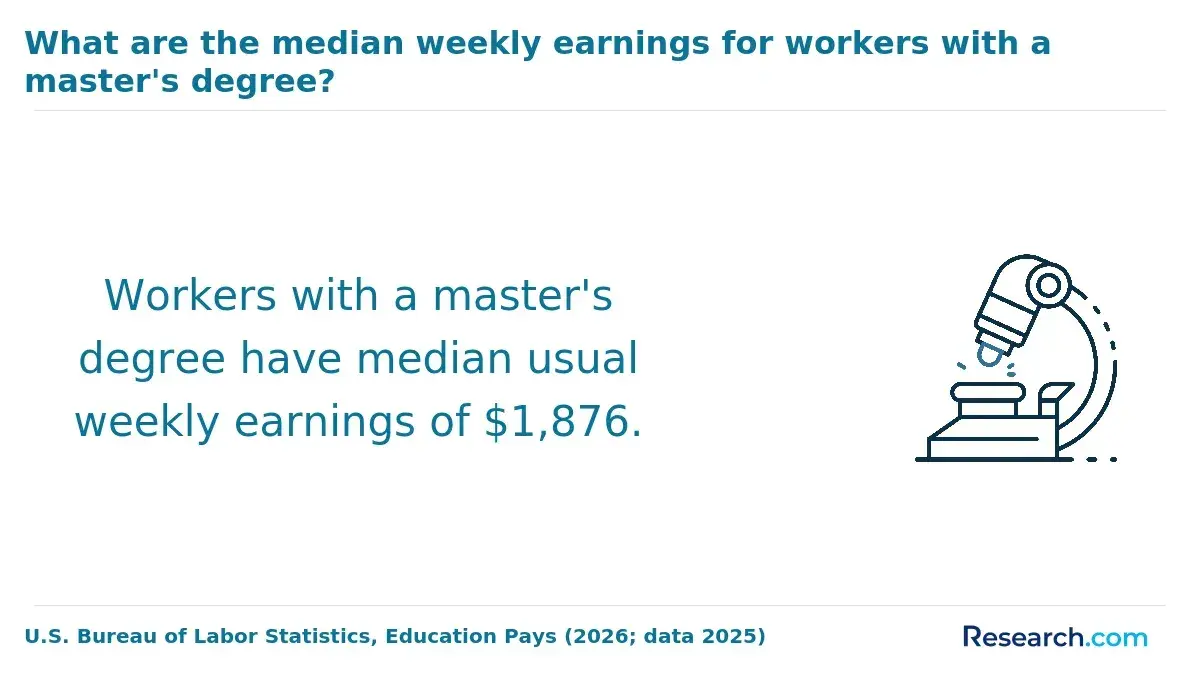
Requirements vary by institution. Programs may ask for a bachelor's degree, transcripts, a statement of purpose, recommendations, and evidence of preparation in calculus, linear algebra, statistics, or programming. Some specify prerequisite courses; others assess equivalent experience or offer preparatory study. A social science degree neither automatically qualifies nor disqualifies an applicant.
Before applying, distinguish admission eligibility from readiness to succeed. Quantitative research experience may demonstrate statistical reasoning, but it may not satisfy a formal calculus prerequisite. Ask admissions staff whether your coursework or experience meets each stated requirement, whether missing courses can be completed before enrollment, and whether self-study counts as preparation rather than formal credit.
How do online data science master's programs compare with campus-based degrees?
Neither format is inherently stronger for a career change. Online study can let a working researcher apply new methods at their current job; campus study may make in-person collaboration or access to local recruiting easier. The consequential differences are the program's actual schedule, support, projects, and employer connections - not the delivery label alone.
Check whether online classes are live or self-paced, when group meetings occur, how projects receive feedback, and whether any campus visits are required. Compare those conditions with the time you can reliably protect each week. Data science master's programs suited to professional schedules are particularly worth investigating if leaving a research job would increase the cost of changing careers.
What courses do online data science master's programs include?
For a social researcher, the most useful curriculum typically connects statistical inference with programming, databases, data management, machine learning, and clear communication of results. Check syllabi or course descriptions for the depth of each topic. A course that briefly introduces Python is different from one requiring students to build, test, and document an analysis in it.
Look closely at how courses handle causal claims, missing data, sampling, model evaluation, and reproducibility - areas where research training can be an advantage. If you expect to work with people's records or automated decisions, also examine privacy, fairness, and governance requirements. AI governance and ethics graduate study options offer a comparison when those responsibilities are central to your intended career rather than a minor elective interest.
A substantial capstone can connect the curriculum to your transition. Before enrolling, confirm whether students can propose a social-research question, obtain suitable data, receive technical supervision, and produce work they are allowed to show employers.
How much do online data science master's programs cost and how long do they take?
Tuition and completion time depend on the institution, required credits, enrollment pace, and fees. Do not compare one program's per-credit tuition with another's advertised total. Request a current estimate covering all required courses and fees, then check whether tuition may change before you finish. Budget separately for software or equipment, any required travel, and interest if you borrow.
Time has a cost, too. Part-time study may preserve income but extend the period in which you are balancing coursework and employment. When comparing inexpensive online master's degrees in data science, check the required curriculum and realistic completion pace alongside the advertised price. A cheaper degree is not necessarily better value if it leaves your principal skill gap untouched.
How can social researchers choose an accredited data science master's program?
Verify the institution's current accreditation through an official accreditor or U.S. Department of Education resource, and confirm that it applies to the institution awarding the degree. Institutional accreditation is not the same as a guarantee of data science curriculum quality. Also ask whether the program can enroll students in your state and whether any required activities can be completed where you live.
Then compare finalists on the evidence that matters to your transition: required technical courses, prerequisite policy, project supervision, schedule, total estimated cost, and support for career changers. Ask for the methodology behind any published employment or salary outcomes; a figure without the population and response rate is difficult to interpret. If financing affects your shortlist, explore financial aid for graduate data science degrees and verify eligibility, employer benefits, and borrowing terms with the relevant provider before accepting an offer.
What careers can social researchers pursue with a data science master's degree?
Adjacent roles often offer a clearer transition than applying indiscriminately to positions titled "data scientist." The distinctions below help connect existing research work to the additional evidence an employer may seek.
| Target role | Relevant research background | Technical evidence to develop |
| Research or product analyst | Survey design, experiments, stakeholder reporting | SQL, reproducible analysis, clear visualizations |
| Policy or program-evaluation analyst | Impact questions, measurement, causal reasoning | Documented statistical workflows and careful treatment of uncertainty |
| Data scientist | Problem framing, data limitations, interpretation | Programming, model evaluation, and work with larger or less structured datasets |
These are possible paths, not guaranteed outcomes or uniform job requirements. The BLS projects about 24,800 data scientist openings annually, on average, over 2025-2035. That indicates occupation-wide opportunities, including replacement openings, but does not show how many will suit career changers or require a master's.
What salaries can graduates with data science master's degrees expect?
The BLS reports a median annual wage of $120,230 for U.S. data scientists in May 2025. That is a benchmark for people employed in the occupation - not a starting salary, a master's-graduate salary, or a forecast of what a social researcher will earn after changing jobs.
Compare compensation for the specific roles and locations you are considering, especially if an analyst position is a more realistic first move. To judge whether a degree is financially worthwhile, compare its full cost and any income you would forgo with plausible job options both with and without the degree. Treat school-reported graduate salaries cautiously unless the school explains who responded, when they graduated, and how much experience they had beforehand.
What certifications and professional standards apply to data science careers?
Data scientist is not generally a licensed U.S. occupation, and there is no single certification required across employers. A certificate in a particular tool may help demonstrate familiarity, but it does not replace evidence that you can formulate a question, manage data responsibly, evaluate a method, and explain the result.
For researchers, professional practice also means honoring consent and data-use restrictions, protecting identifiable information, documenting analytical decisions, and avoiding claims stronger than the evidence supports. Requirements for human-subjects review, data security, or regulated work depend on the institution, employer, project, and applicable rules. Confirm those requirements before using research data in coursework or a public portfolio.
Other Things You Should Know About Data Science
Policies vary. Ask the university for its diploma and transcript wording rather than assuming the delivery format will - or will not - appear.
Possibly, but graduate transfer limits and course-equivalency rules are program-specific. Request a written review of eligible courses before counting on a shorter path.
Only when the consent terms, institutional approvals, and data-use rules permit it. If they do not, use an approved de-identified or public dataset instead.
No. Those professions have separate education and licensing requirements that must be checked with the relevant state board.
References
- Cost of Attendance (Budget) | 2025-2026 Federal Student Aid Handbook https://fsapartners.ed.gov/knowledge-center/fsa-handbook/2025-2026/vol3/ch2-cost-attendance-budget
- HIPAA and Research | hhs.gov https://www.hhs.gov/hipaa/for-professionals/special-topics/research/index.html
- Congressional Research Service Careers | loc.gov https://www.loc.gov/offices/congressional-research-service-careers/
- In-Person Program - UChicago Data Science Institute https://datascience.uchicago.edu/education/masters-programs/in-person-program/
- What preparations do I need for graduate education? | Statistics & Data Science Graduate Interdisciplinary Program https://stat.arizona.edu/what-preparations-do-i-need-graduate-education
- What is Research? | Hampshire College https://www.hampshire.edu/offices/office-dean-faculty/irb-research-human-subjects/irb-general-information/what-research
- Program: Statistics and Data Science, MS - UH Publications https://publications.uh.edu/preview_program.php
- Cost of Attendance - Financial Aid and Scholarships | The University of Utah https://financialaid.utah.edu/tuition-and-fees/cost-of-attendance.php
- UC Berkeley iSchool Online Master's in Data Science (MIDS) https://ischoolonline.berkeley.edu/data-science/
- Master of Science in Applied Data Science | USC Online https://online.usc.edu/programs/master-of-science-in-applied-data-science/