2027 Online Data Science Master's After a Bachelor's in Accounting: Prerequisites and Program Fit

Co-Founder and Chief Data Scientist
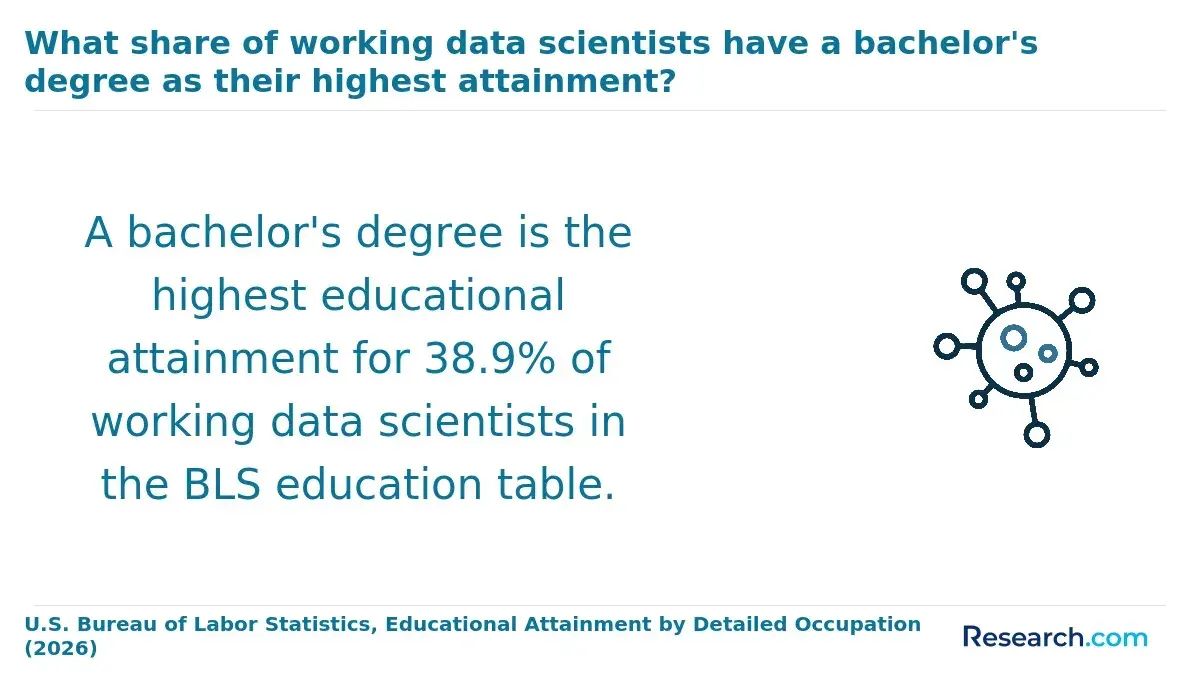
An accounting bachelor's can be a strong starting point for an online data science master's, but it does not establish readiness for every program. Your coursework may have developed statistical, analytical, and business skills; the likely questions are whether you can program, work with more advanced mathematics, and meet a school's specific prerequisites.
This guide helps accounting graduates identify those gaps, compare program designs, and decide whether a data science master's fits their intended career move.
Key Things You Should Know
- An accounting degree does not automatically qualify or disqualify you; compare your transcript with each program's requirements for calculus, linear algebra, statistics, and programming.
- Favor a program whose technical depth matches your goal: analytics-oriented coursework may suit an accounting-adjacent move, while data scientist roles generally call for stronger computing and mathematical preparation.
- Weigh cost against the role you realistically expect to pursue, not a promised salary: the U.S. Bureau of Labor Statistics reports a $120,230 median annual wage for data scientists in May 2025, not an entry-level or graduate outcome.
Can you earn an online data science master's after accounting?
Yes. The relevant question is whether a particular program accepts applicants without a computing degree and whether you can demonstrate its required preparation.
Accounting graduates may already be comfortable reconciling inconsistent records, interpreting financial measures, testing assumptions, and explaining findings to decision-makers. Those are useful starting skills, not substitutes for writing code or studying mathematical methods.
Program fit depends partly on the job you want. If you hope to improve forecasting, risk analysis, or audit analytics, a program that combines rigorous data methods with applied business projects may make sense.
If you want to build machine-learning systems or compete for highly technical data scientist positions, examine the depth of the computing and mathematics curriculum rather than relying on the degree title.
If your primary interest is building AI systems rather than analyzing organizational data, compare AI master's program fit for non-CS applicants before assuming a data science degree is the closest match.
What prerequisites do accounting graduates need for a data science master's?
Requirements vary by program. Review your transcript course by course: an accounting degree may include statistics, information systems, and quantitative business courses, but their titles alone may not establish the calculus, linear algebra, or programming preparation a school requires.
The comparison below separates potentially transferable knowledge from gaps worth checking:
| Area | Possible preparation from accounting | What to verify for data science |
| Statistics | Business statistics, sampling, or analytical testing | Required level and coverage of probability and statistical inference |
| Mathematics | Quantitative business coursework | Whether the program requires calculus or linear algebra and accepts your specific courses |
| Programming | Spreadsheet automation or information-systems work | Required proficiency in a programming language and whether experience counts in place of coursework |
| Data work | Financial reporting, reconciliation, or database exposure | Expected experience with databases, querying, and reproducible analysis |
To close a gap, seek a graded course when a school specifies prerequisite credit. A project, professional experience, or self-study can demonstrate readiness, but it does not automatically fulfill a formal course requirement.
Send admissions staff your course descriptions and ask which requirements remain unmet, whether a prerequisite can be completed before enrollment, and whether a proposed course will be accepted.
How do you choose an accredited online data science master's program?
Start by verifying the institution's recognized accreditation and confirming that it can enroll students where you live. Then inspect the actual curriculum. For an accounting graduate, a strong fit provides a credible route from your current preparation to the technical work required by your target role, rather than assuming all entrants have the same background.
Compare programs on the same questions: Which prerequisites must be finished before admission? Do core courses teach programming, statistical modeling, and data management in enough depth for your goal? Can you complete a substantial project, and is academic support available when you reach unfamiliar technical material? Check whether online students can access the courses and electives you are counting on.
A common mistake is choosing by a ranking or an attractive concentration name without checking required courses. If your goal is specifically AI, compare the curriculum and total expected expense with lower-cost online AI programs; a cheaper or more specialized alternative is useful only if it teaches the skills your intended role needs.
What do you study in an online data science master's program?
Curricula differ, but the subjects most relevant to this transition are programming, probability and statistics, data management, machine learning, and communicating results.
Accounting experience can help you define meaningful questions and recognize unreliable inputs. Graduate study should extend that judgment to datasets and methods that go beyond spreadsheet-based reporting.
Look past course titles to assignments and descriptions. A useful progression might move from cleaning and querying data to fitting models, evaluating errors, and explaining whether a result can support a business decision.
For an accounting-adjacent project, that could mean investigating unusual transactions or forecasting a financial measure while addressing data quality, privacy, and the consequences of false alarms.
Choose an applied curriculum if you want to bring stronger analytics into finance or assurance. Prefer greater mathematical and computing depth if your goal is a technical data scientist role. Neither path is inherently better; the risk is paying for a program whose projects do not demonstrate the work you want to do afterward.
What are the admission requirements for online data science master's programs?
Expect each school to define its own degree, transcript, prerequisite, and application-material requirements. Some programs may consider applicants from varied majors; others may expect specified technical coursework before admission. Do not interpret "no computer science degree required" as "no programming or mathematics required."
Build an application that makes your preparation easy to assess. Identify relevant courses by topic, describe any coding or database work accurately, and use a project to show how you framed a question, checked data, selected a method, and explained the result. If a prerequisite is missing, ask whether the school permits conditional admission or pre-enrollment completion; neither option should be assumed.
Avoid presenting spreadsheet proficiency as equivalent to programming unless the program explicitly accepts it. Your accounting experience is most persuasive when paired with concrete evidence that you can learn and apply the technical material.
How long does an online data science master's take and cost?
There is no reliable single price or completion time for these programs. Both depend on required credits, course availability, enrollment pace, prerequisites, and whether the school charges additional online or program fees. An accounting graduate who needs preparatory coursework should account for its time and cost separately from the master's itself.
Request a written estimate using the pace you can sustain. Compare tuition and mandatory fees for the full degree, then add any required preparatory courses, materials, technology, and financing costs. Ask whether your planned course sequence works online and what happens to the estimate if you study part time or repeat a course. A low advertised tuition figure is not necessarily the lowest total cost.
If speed matters, examine shorter-duration master's degrees in data science alongside their prerequisite and scheduling demands. A compressed program is a poor bargain if its pace prevents you from building the technical foundation you need.
Is an online or campus data science master's better for accounting graduates?
Online study may be the better fit if you need to remain employed and can learn independently with the program's available support. Campus study may be more suitable if you benefit from regular in-person instruction, local research opportunities, or face-to-face collaboration. Delivery mode matters less than access to the courses, feedback, and projects needed to close your particular gaps.
Before choosing online, confirm whether classes are live or self-paced, when group work occurs, how technical help is provided, and whether any campus attendance is required.
If programming and mathematics are new to you, ask how instructors support students who enter from non-computing fields. Do not assume that "online" means you can complete every activity whenever you want.
What careers can accounting graduates pursue with a data science master's?
Accounting domain knowledge can be valuable in financial analytics, audit or fraud analytics, risk modeling, and business intelligence. A broader data scientist position is also possible, but its fit depends on your technical skills, project evidence, and the employer's requirements - not the master's title alone.
A move into an analytics-focused role within your current field may be more direct than an immediate switch to an unrelated technical specialty.
The U.S. Bureau of Labor Statistics projects data scientist employment to grow 35% from 2025 to 2035. That indicates demand across the occupation, not a forecast of openings for accounting graduates or a guarantee that a degree will secure a job.
Use target job descriptions to work backward: identify the tools and methods that recur, then check whether your courses and projects will let you demonstrate them.
For a closer look at how curricula connect with roles, compare online data science programs and employment pathways. A master's is more compelling when it addresses skills you cannot reasonably build through narrower coursework and relevant work experience.
How much can data science professionals earn after graduate school?
The U.S. Bureau of Labor Statistics reports that the median annual wage for data scientists was $120,230 in May 2025. That is an occupation-wide figure, not the starting salary for a new graduate, a measure of what accounting graduates earn, or evidence that a master's caused a pay increase.
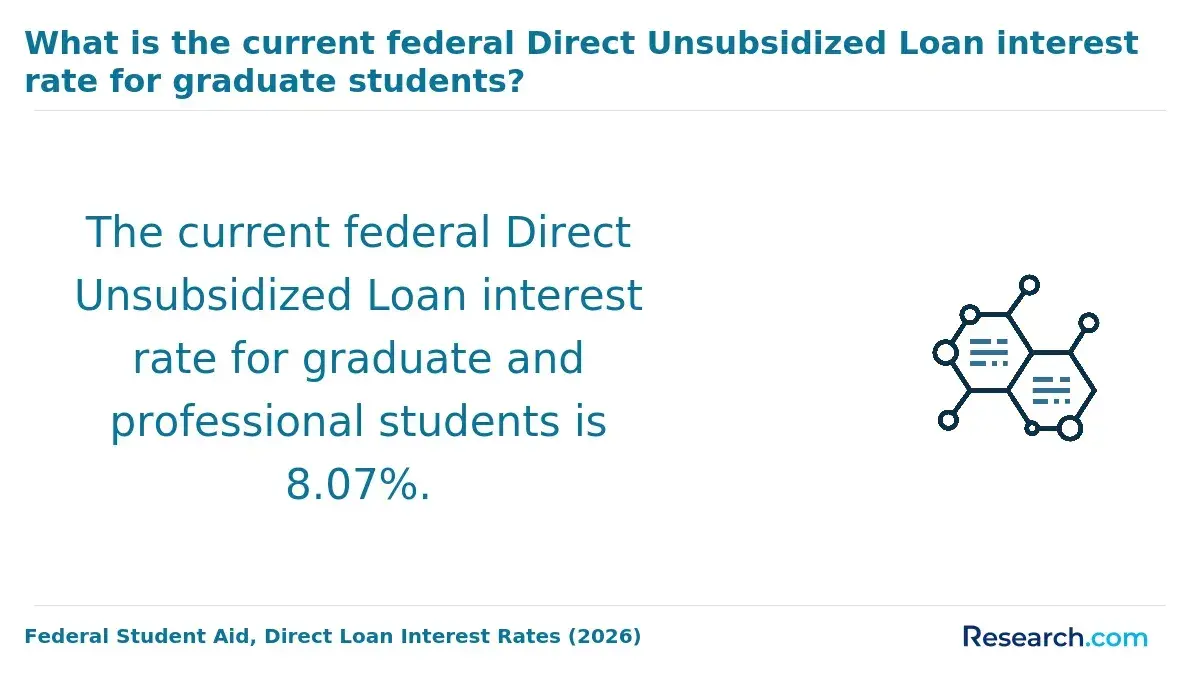
For a personal financial decision, compare the program's full cost and any reduced earnings while studying with the pay of roles you could realistically pursue afterward. Prior experience, location, employer, and the type of role all affect compensation. Ask about employer tuition support and review understanding aid for data science graduate programs before deciding how much to borrow.
Do data science careers require certifications or professional licenses?
Data scientist roles generally do not have a universal professional-license requirement comparable to the licensing rules that govern certain accounting services. Employers may value demonstrated skills or particular certifications, but requirements vary by role. A certificate should complement, not replace, evidence that you can work with data and explain your methods.
If you intend to retain a CPA credential or perform regulated accounting work, check the applicable state board's rules separately. A data science degree does not by itself satisfy CPA licensing or continuing-education requirements, and an accounting credential does not establish technical qualification for a data science job.
Other Things You Should Know About Data Science
Not without appropriate permission and safeguards. Ask your employer and program about data-use rules; a public, synthetic, or properly authorized dataset is often a safer project choice.
The school housing the degree does not establish its technical depth. Compare required mathematics, computing, and project work with the roles you want.
Requirements depend on the program's software and whether it provides remote computing resources. Check published technology specifications before buying equipment.
Possibly, but rules vary by state and course. Confirm eligibility with your licensing board before relying on a data science course for continuing-education credit.
References
- College Accreditation - U.S. Department of Education https://www.ed.gov/laws-and-policy/higher-education-laws-and-policy/college-accreditation
- Employment Outcomes of Bachelor's Degree Holders - COE https://nces.ed.gov/programs/coe/indicator/sbc/bachelor-degree-holder-outcomes
- Cost of Attendance (Budget) | 2025-2026 Federal Student Aid Handbook https://fsapartners.ed.gov/knowledge-center/fsa-handbook/2025-2026/vol3/ch2-cost-attendance-budget
- Eligibility | The City College of New York - CUNY https://www.ccny.cuny.edu/cybersecurity/admissions
- Prerequisite Key Topics - UVA School of Data Science https://datascience.virginia.edu/pages/prerequisite-key-topics
- Master of Applied Science in Data Science | iit.edu https://catalog.iit.edu/graduate/colleges/computing/computer-science/master-data-science/
- Tuition in Detail - One Stop Student Services https://onestop.utk.edu/billing-payments/tuition-detail/
- Tuition & cost of attendance | UC Admissions https://admission.universityofcalifornia.edu/tuition-financial-aid/tuition-cost-of-attendance/
- Data Science | Academic Catalog | The University of Chicago http://collegecatalog.uchicago.edu/thecollege/datascience/