
2027 MLIS Programs for Classification and Discovery Systems

Co-Founder and Chief Data Scientist
Choosing an MLIS for classification and discovery work means looking beyond a program's title: the useful evidence is in its courses, projects, and access to the systems you hope to manage. This guide is for prospective students interested in cataloging, metadata, taxonomies, and library search tools.
The U.S. Bureau of Labor Statistics projects 2.6% employment growth for librarians and media collections specialists from 2025 to 2035, so preparation for a specific role matters more than assuming the degree alone will secure one. You'll learn how to assess programs, costs, credentials, and career paths.
Key Things You Should Know
- Look for an ALA-accredited master's program with documented metadata or knowledge-organization coursework; a relevant elective is not necessarily a formal concentration.
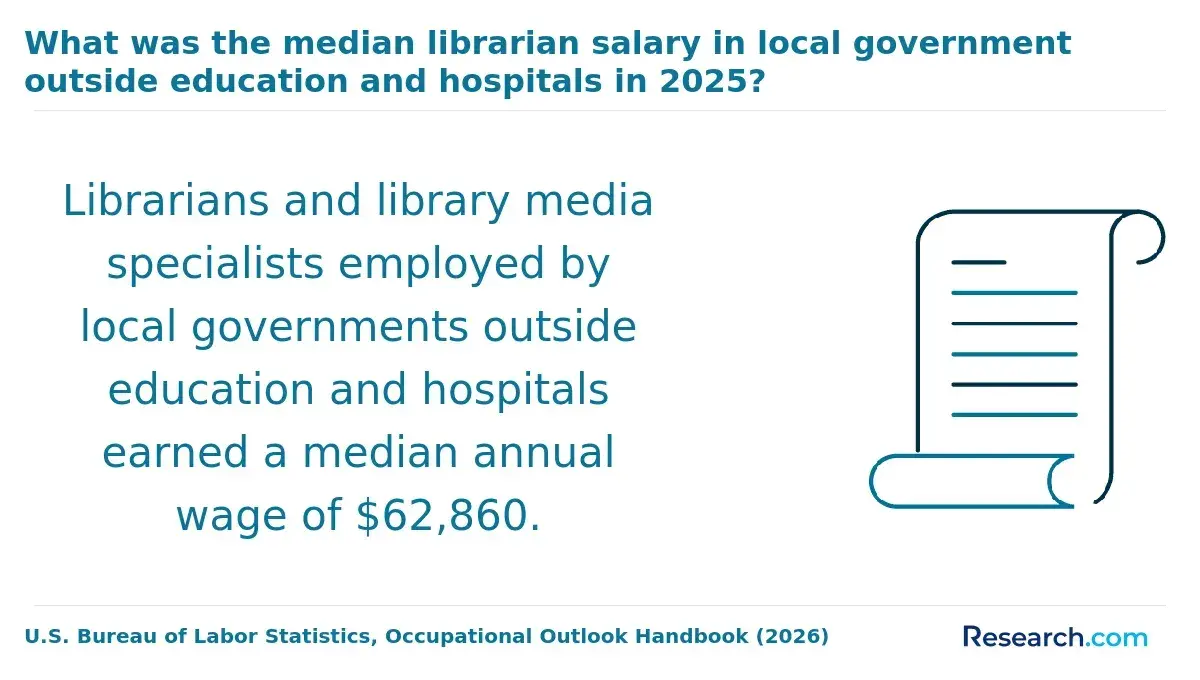
- Prioritize hands-on work with records, vocabularies, or search interfaces that you can explain to employers. The May 2025 median annual salary for librarians and media collections specialists was $68,270, not a graduate starting-salary estimate.
- Compare required credits, fees, elective scheduling, and access to applied projects before choosing an online or campus-based program.
What are MLIS programs for classification and discovery systems?
These are library and information science master's programs that prepare students to organize resources and help people find them. Classification places materials within a structured scheme; discovery encompasses the catalog records, indexes, search interfaces, and workflows that make those materials findable. A specialist might describe a new digital collection, improve subject access, or investigate why relevant items do not appear in search results.
MLIS, MLS, Master of Science in Library Science, and Master of Information are degree titles used by different institutions. The title alone does not establish what a student can study. A program may offer a formally named track, relevant electives without a track, or only broad introductory coverage. Explore library science concentration options, then check each institution's current catalog to determine which of those evidence levels applies.
Which accreditation should classification and discovery systems MLIS programs have?
For a U.S. student pursuing professional librarian positions, accreditation by the American Library Association (ALA) is a strong screening criterion because many employers request an ALA-accredited master's degree. Check the specific master's program in ALA's current directory, including its status and degree title. Institutional accreditation addresses the university, not whether its LIS master's program is ALA-accredited.
ALA accreditation evaluates a program; it does not certify a classification concentration, promise that a particular elective will run, or establish eligibility for school librarian licensure. If a job target names another qualification, compare its stated requirements before treating ALA accreditation as sufficient.
What careers can classification and discovery systems MLIS graduates pursue?
Job titles overlap, and the same title can describe substantially different work. This table distinguishes common responsibilities and where an MLIS may fit; individual postings remain the best guide to required qualifications.
| Role | Typical work and setting | Qualification considerations |
| Cataloging or metadata librarian | Creates and improves resource descriptions in academic, public, or special libraries. | Professional librarian posts commonly seek an MLIS or equivalent LIS master's. |
| Discovery or systems librarian | Maintains search tools, tests access, and coordinates fixes with vendors or IT staff. | Often combines an LIS qualification with systems experience. |
| Metadata or taxonomy specialist | Designs descriptive fields and vocabularies for digital collections, repositories, or other information products. | Employers may accept an MLIS, another relevant degree, or demonstrated technical experience. |
| Library technician | Supports cataloging and collection workflows under local procedures. | A professional master's is not universally required. |
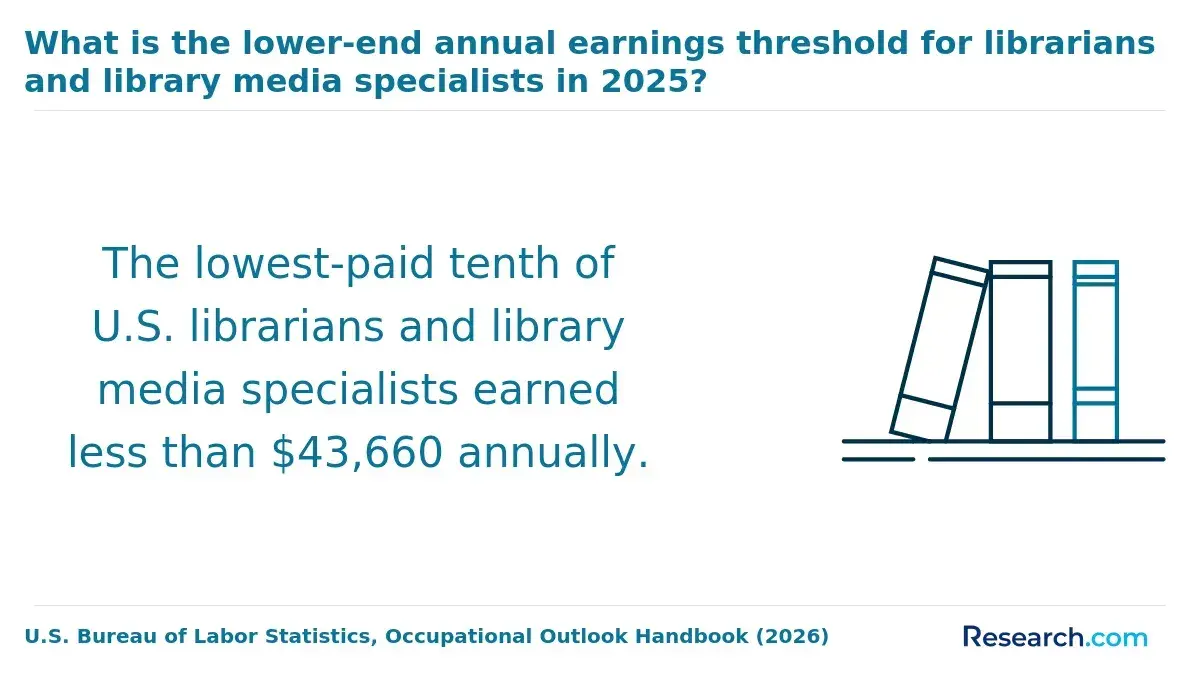
The BLS librarian-and-media-collections-specialist category is broader than classification jobs, so its pay and growth figures cannot predict outcomes for this specialty. If your goal is specifically taxonomy design outside libraries, compare MLIS curricula with information science or UX-focused alternatives and examine actual job postings before committing to a degree.
What coursework do MLIS programs offer in classification and discovery systems?
A suitable curriculum usually starts with information organization and adds deeper work in cataloging, metadata, information retrieval, or systems. Course names differ. In a catalog, look for learning outcomes that connect standards to decisions about how users will find and understand resources.
For library cataloging, useful subjects include MARC records, Resource Description and Access (RDA), subject headings, classification schemes, and authority control - the practice of keeping names and topics consistent across records. Digital-collection work may instead emphasize Dublin Core, schema mapping, and metadata quality. Courses on linked data or BIBFRAME can be valuable when they include practical exercises rather than only conceptual introductions.
Ask whether the most relevant courses are required or elective, when they are next scheduled, and whether prerequisites affect your sequence. A catalog listing proves that a course exists; it does not guarantee a seat or that the course runs during your enrollment. An internship, capstone, or independent project is especially useful when it produces a documented record set, metadata audit, or discovery-usability assessment.
Are online or campus-based MLIS programs better for information organization?
Neither format is inherently better. Online study may suit a working student who can obtain system access and supervised projects locally. Campus study may make it easier to use institutional collections or meet project collaborators in person. The decisive question is whether you can complete the relevant courses and applied work on a workable schedule.
Before choosing, confirm whether classes are asynchronous or scheduled live, whether technical labs require particular software or remote access, and whether a practicum can be completed near home. An online course does not automatically mean flexible deadlines or a remote internship. If speed matters, map the library science program start to finish using the institution's actual course rotation, not its shortest advertised timeline.
What are the admission requirements for classification-focused MLIS programs?
Applicants generally need a bachelor's degree and must submit materials specified by the individual graduate program, which may include transcripts, a statement of purpose, recommendations, and a résumé. Do not assume prior cataloging experience or a library job is mandatory. A strong statement can instead connect your interests to particular courses and explain what kind of classification or discovery problem you want to learn to solve.
If you already hold graduate credits, ask about eligibility, grade thresholds, maximum credits, and whether transferred work replaces a relevant course or only an elective. Policies differ; guidance on how many credits transfer to an MLIS is a starting point, not a substitute for a written evaluation from the program. Applicants with unusual transcripts or substantial professional experience should request an individual admissions review rather than assume an exception.
How long do MLIS programs take and what do they cost?
Full-time MLIS study commonly takes about two years, while part-time study can take longer. The meaningful timeline is the one produced by your course sequence: an infrequently offered metadata elective, a prerequisite, or a required practicum may extend enrollment. Request a term-by-term plan for your intended specialty before relying on a published minimum completion time.
No single tuition figure represents all MLIS programs or even all students in one program. Compare an online library degree with low tuition against other options only after applying the same cost categories. The following checklist separates the published price from expenses that may affect what you pay.
- Calculate tuition using the required credit total and the rate that applies to your residency and delivery format.
- Add mandatory program and university fees, books, equipment, and any travel or practicum expenses.
- Ask whether scholarships, assistantships, or employer support apply to your enrollment; distinguish the gross cost from your out-of-pocket cost and any amount borrowed.
For borrowing, check current federal-aid eligibility and loan terms with the school's financial aid office for your enrollment period. Compare likely career requirements and your existing earnings with the full cost; a broad occupational median is not a reliable personal payback calculation.
What skills and technologies do discovery systems specialists learn?
Specialists need to understand both structured data and the person searching it. They may clean inconsistent records, map fields between systems, manage controlled vocabularies, test search results, and explain problems to catalogers, vendors, developers, and service staff. Useful technical experience can include a library management system, a discovery interface, spreadsheets for data review, and introductory scripting or query skills.
Current work also requires judgment about accessibility, privacy, and AI-assisted description or search. A generated subject term still needs review for accuracy and bias; a technically successful search can still fail if its labels exclude the language patrons use. For a portfolio, document the problem, your metadata or interface changes, how you tested them, and what remains unresolved. That evidence is more informative than a list of software names alone.
Do classification and discovery careers require licensing or certification?
Cataloging, metadata, and discovery positions do not have one universal U.S. occupational license. Employers set qualifications for their openings; a professional librarian post may request an ALA-accredited master's, while a technical or adjacent information-management post may accept another background. Optional training in a platform or standard can demonstrate skills, but it should not be mistaken for a legal requirement.
School librarian positions are different: state education authorities set certification, licensure, or endorsement requirements, which an MLIS alone may not satisfy. If school libraries are a possible destination, check the rules where you intend to work; Illinois librarian education requirements illustrate why location and role must be considered separately. Confirm eligibility with the appropriate state authority before enrolling, especially in an online program based elsewhere.
How do you choose a reputable MLIS program for classification systems?
Start with your target job rather than a specialization label. Collect a few representative job descriptions, note whether they emphasize cataloging standards, digital metadata, taxonomy work, or discovery technology, and compare programs against those skills. An ALA-accredited program with consistently available relevant electives and an achievable applied project may fit better than a named track whose courses do not match your goal.
When speaking with program staff, ask for the current degree requirements, the recent and planned schedule of relevant electives, prerequisites, and examples of projects students can actually undertake. Then confirm who arranges placements, what system access remote students receive, and the total cost under your enrollment plan. Choose the option whose documented curriculum and opportunities match your intended work and budget - not one based on an assumed concentration, unverified internship, or advertised minimum tuition.
Other Things You Should Know About Library Science
Classification assigns an item a place in an organized scheme, often represented by a call number. Subject indexing identifies the topics an item covers, potentially using several terms. Both can help a patron find it.
A controlled vocabulary uses selected terms consistently across records. A keyword is a word a searcher enters or that appears in a record. Search systems often need to connect everyday keywords with the vocabulary used in descriptions.
Libraries can create and share bibliographic records rather than describing every item from scratch. Staff still review shared records for accuracy and adapt them to local collections and policies when needed.
Facets are filters, such as format, date, or subject, that narrow a results list. Their usefulness depends on consistent underlying metadata: missing or inconsistent descriptions can make a relevant item difficult to find through a filter.
References
- Cataloging and Metadata Librarian | sc.gov https://www.statelibrary.sc.gov/jobs/cataloging-and-metadata-librarian
- Types of Financial Aid: Grants, Work-Study, and Loans | studentaid.gov https://studentaid.gov/understand-aid/types
- Master of Library & Information Science (MLIS) | UCLA School of Education & Information Studies https://seis.ucla.edu/academics/department-of-information-studies/master-of-library-information-science-mlis/
- Library and Information Science, MLIS (Online) | Southern Connecticut State University https://www.southernct.edu/academics/programs/library-and-information-science-mlis
- Master of Arts in Library & Information Science | University of Arizona College of Information Science https://infosci.arizona.edu/ma-library-information-science
- Full article: Musings on Faceted Search, Metadata, and Library Discovery Interfaces | tandfonline.com https://www.tandfonline.com/doi/full/10.1080/01639374.2023.2222120
- knowledge organization (KO) | isko.org https://www.isko.org/cyclo/knowledge_organization
- 1. Knowledge Organization Systems: An Overview | CLIR https://www.clir.org/pubs/reports/pub91/1knowledge/
- ALA-Accredited Programs https://www.ala.org/educationcareers/accreditedprograms/directory


