
2027 Manufacturing Defect Detection Capstones: What to Look for in a Data Science Master's

Co-Founder and Chief Data Scientist
A manufacturing defect detection capstone can be compelling evidence of applied data science - but only if the project addresses a realistic inspection problem rather than simply achieving a high score on a clean image dataset. For prospective master's students interested in industrial computer vision or quality analytics, the decision is whether a program provides the coursework, data access, supervision, and implementation support needed to produce credible work. This guide explains what a strong capstone looks like and how to assess a program before enrolling.
Key Things You Should Know
- Look for a capstone that defines the defect, inspection conditions, and cost of missed defects; reports performance on held-out production-like data; and documents its limitations.
- Ask whether students can obtain usable images or sensor data, domain feedback, and permission to show a portfolio version. A capstone requirement alone does not establish that this topic is feasible.
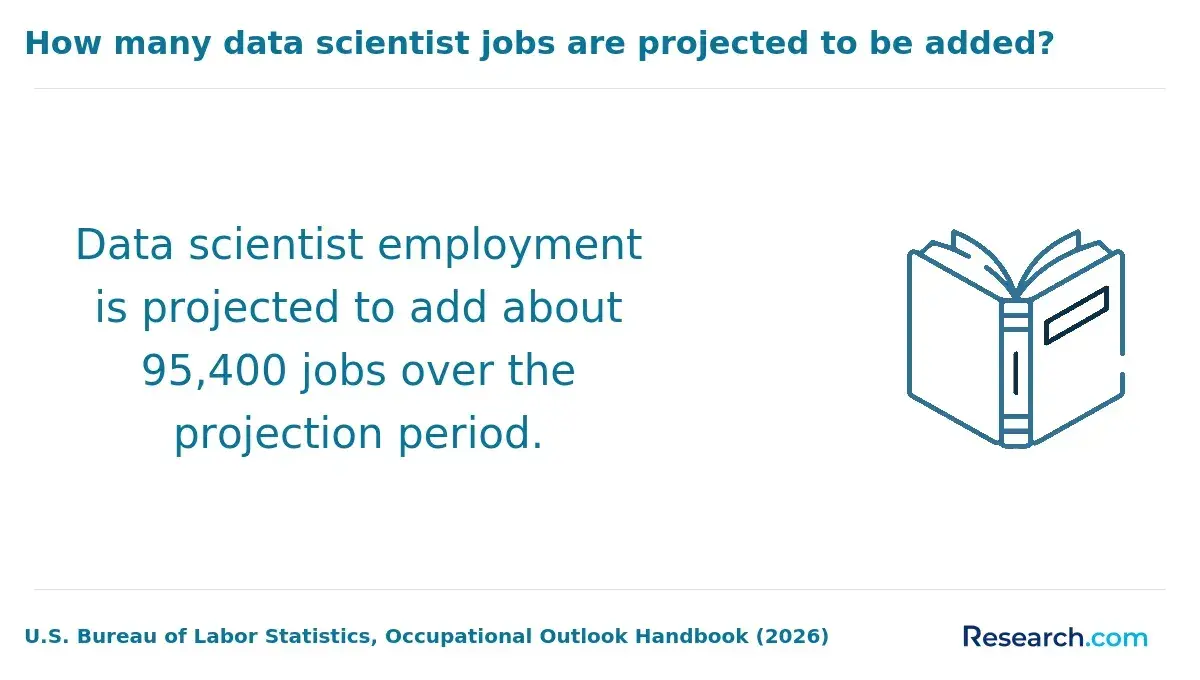
- The U.S. Bureau of Labor Statistics projects 35% growth in data scientist employment from 2025 to 2035, but that occupation-wide forecast does not predict demand for manufacturing inspection specialists.
What is a manufacturing defect detection capstone in a data science master's program?
It is a graduate project that uses production-related data to identify products or process outputs that fail a defined quality standard. A student might analyze surface images, machine signals, or both. The strongest projects connect a model's predictions to an inspection decision: which item should be reviewed, rejected, or investigated, and what happens when the model is wrong?
These common project designs differ in the evidence they can provide. The comparison helps you judge whether a proposed topic fits the data a program can actually help you access.
| Project design | Typical data | Central challenge |
| Visual inspection | Images of parts or surfaces | Recognizing defects despite changes in lighting, position, or product variant |
| Sensor-based detection | Time-series readings from equipment or tests | Separating defect signals from normal process variation |
| Combined inspection | Images plus sensor or production records | Matching records correctly without leaking future information into predictions |
A capstone need not have a factory sponsor to be worthwhile. Public or simulated data can support a rigorous project if its limitations are stated. Conversely, a sponsor does not make a project strong if students cannot establish reliable labels or evaluate how a model would work on new production runs.
What skills should a defect detection capstone demonstrate in data science?
A strong capstone demonstrates more than model training. It starts with a precise defect definition, checks how examples were labeled, establishes a simple baseline, and tests a more complex approach only when it adds value. Relevant methods may include image classification, object detection, segmentation, anomaly detection, or statistical analysis of sensor data. The method should follow the inspection task - not the other way around.
Evaluation is the clearest test of quality. Accuracy alone may obscure missed defects when defective items are rare. Students should report measures that reflect both missed defects and unnecessary flags, explain the operating threshold, and test performance across relevant shifts, machines, or product types where data permits. Splitting near-duplicate images of the same part across training and test sets is a red flag: it can make results look stronger than performance on genuinely new parts.
The finished work should also be reproducible, with documented data preparation, code or a clear methods record, and an explanation of labeling uncertainty. Where deployment is in scope, a prototype can show how predictions reach a human inspector and how errors would be monitored. For students more interested in process reporting and quality metrics than visual modeling, a guide to data analytics master's programs provides a useful comparison of degree emphasis.
How do data science master's programs use machine learning for quality inspection?
Programs may teach quality inspection through computer vision coursework, applied machine learning assignments, industry projects, or a general capstone that students can adapt to manufacturing. These are not equivalent opportunities. A course demonstration might use a prepared dataset; an independent capstone should require students to justify the problem, examine data quality, compare approaches, and defend results to an advisor or stakeholder.
Current AI tools can speed up experimentation, but a pretrained model is not proof of inspection readiness. A student still needs to test whether it handles the actual defect definition and production conditions. Ask programs for recent project descriptions and whether faculty can supervise image-based, sensor-based, or multimodal work. If the broader goal is choosing coursework for data occupations, online degree preparation for data-focused occupations offers a wider career-oriented lens; for this decision, prioritize evidence of hands-on inspection projects.
What coursework prepares students for manufacturing defect detection projects?
Look for a foundation in Python, statistics, machine learning, and experimental design, followed by relevant depth in computer vision, deep learning, time-series analysis, or data engineering. Coursework in databases and software engineering matters when inspection records must be joined, versioned, and delivered in a usable system. Manufacturing or quality-engineering electives are valuable when they help students understand how defects are defined and acted on.
Course titles alone do not show depth. A passing lecture on convolutional networks is different from a course with substantial image projects, and both differ from supervised capstone work using imperfect inspection data. Request syllabi or sample assignments, then check whether students practice avoiding data leakage, handling class imbalance, and explaining error costs.
Applicants without a computer science degree should distinguish skills needed to succeed from formal entry requirements. The non-CS background options for an AI master's can help frame alternative preparation routes, but only the individual program can confirm which prior courses satisfy its admissions rules.
How do online and campus data science programs support capstone projects?
Either format can support a strong defect detection capstone. What matters is whether a student can get regular technical feedback, access suitable data and computing resources, collaborate with a sponsor if needed, and complete required presentations or group work on a workable schedule. Campus access may help when a project depends on physical equipment or an inspection lab; online access may be sufficient for an approved dataset and remote sponsor.
Working students should verify when meetings occur, whether projects can draw on employer data, and what happens if a proposed sponsor withdraws. They should also check whether their employer permits data use and portfolio publication before treating a workplace project as the plan. A comparison of online data science master's programs for working professionals can help narrow format options, but capstone supervision and data permissions still need program-specific confirmation.
What admission requirements apply to data science master's programs?
Requirements vary by institution. Programs may ask for evidence of quantitative preparation, programming experience, transcripts, recommendations, a statement of purpose, or other application materials. Do not assume manufacturing experience substitutes for a stated mathematics prerequisite - or that a nontechnical job title rules out admission.
For a defect detection goal, an applicant can make a more informative case by describing prior work with quality records, production systems, imaging, statistics, or software, then identifying gaps to address before the capstone. Check the current admissions page for each program and ask whether preparatory courses are recommended for readiness or required for eligibility.
How long do data science master's programs take and what do they cost?
Completion time and cost depend on the program's credit requirements, enrollment pace, tuition schedule, and fees. Without a named school and current tuition schedule, a reliable total or standard completion time cannot be given. For this particular goal, also budget for any required travel, computing, software, or project-related expenses - and confirm whether the institution or sponsor covers them.
Compare programs using the same assumptions: credits required, tuition and mandatory fees for your enrollment status, your planned pace, and any capstone-specific costs. A lower tuition figure is less useful if the program cannot support the project you want. Employer tuition assistance may improve affordability, but eligibility and reimbursement terms must be checked with the employer; neither a capstone nor a degree guarantees a salary increase.
How can students verify accreditation and capstone quality?
Confirm an institution's current accreditation through the institution and its accreditor rather than relying on a program directory. Accreditation establishes an important institutional check; it does not establish that a data science program offers manufacturing projects, industry datasets, or particular career outcomes. For online study, also verify that the institution can enroll students in your state.
Capstone quality requires a separate check. Ask a program representative or capstone director the following questions, and request examples rather than general assurances:
- Can students propose a defect detection topic, and who decides whether the data and scope are adequate?
- What recent capstones used images, sensor readings, or manufacturing data, and what faculty expertise supported them?
- What alternatives exist if a sponsor, dataset, or computing resource becomes unavailable?
- What may students publish or show to employers when project data is confidential?
A program that cannot share confidential work may still describe its project approval process and evaluation standards. Be cautious if "industry capstone" is advertised but staff cannot explain how access, supervision, and publication permissions work.
What careers can manufacturing defect detection capstones support?
A well-documented project may help demonstrate fit for data scientist, machine learning engineer, computer vision, or quality analytics roles, depending on the work performed. An image-modeling project signals different strengths from a sensor-analysis project, and neither replaces the domain knowledge or engineering experience an employer may require. In an interview, the most persuasive account often explains why a model failed under certain conditions and what an inspection team should do about it.
If the target is a broader AI role rather than manufacturing specifically, compare the capstone's technical depth and employer exposure with other routes. AI master's programs with strong graduate networks offer one additional angle for evaluating professional connections; a network is useful only if its opportunities match the roles and employers you intend to pursue.
What salaries and job outlook apply to data scientists in manufacturing?
The U.S. Bureau of Labor Statistics reports a median annual wage of $120,230 for data scientists in May 2025. That is an occupation-wide figure, not a manufacturing-specific wage or an expected salary after this capstone. Pay for a particular role depends on factors including responsibilities, location, employer, and prior experience.
BLS projects strong growth for the occupation overall, but its forecast should not be read as a count of factory inspection openings. Use the capstone to assess career fit more directly: compare local job descriptions with the project's methods, software skills, and manufacturing context before deciding whether the degree's cost and time commitment serve your target role.
Other Things You Should Know About Data Science
Possibly, but obtain written permission before sharing data, images, code, results, or an employer's name. If disclosure is restricted, ask whether you can publish a redacted methods summary or a separate demonstration built with nonconfidential data.
Not always. Computing needs depend on image size, dataset size, and model choice. A sensor-analysis project or a smaller image baseline may be practical with modest resources; confirm available computing before committing to a large deep-learning project.
Specify the decisions and deliverables you owned, such as label review, data splitting, model evaluation, or the inspection prototype. Distinguish your work from the team's results and get permission before showing shared materials.
No. Detection identifies an item or reading that may fail a quality standard. Root-cause analysis asks why the failure occurred and typically needs additional process evidence. A capstone can address both, but it should not claim to establish a cause from inspection predictions alone.
References
- Using Deep Learning to Detect Defects in Manufacturing - PMC https://pmc.ncbi.nlm.nih.gov/articles/PMC7766692/
- Capstone and Thesis Research Guide: Limitations of the Study | uwsuper.edu https://library.uwsuper.edu/Capstone/Discussion_Limits
- MSDS Capstone Projects - College of Information Science https://infosci.arizona.edu/ms-data-science/capstone-projects
- Capstone Projects | Purdue Polytechnic https://polytechnic.purdue.edu/office-industry-engagement/capstone-projects
- Class imbalance should not throw you off balance | sciencedirect.com https://www.sciencedirect.com/science/article/pii/S1053811923004044
- Master's in Data Science: Capstone Project | NYU CDS https://cds.nyu.edu/masters-in-data-science-capstone/
- Data Science Capstone Experience - Purdue Online https://www.purdue.edu/online/data-science/data-science-capstone-experience/
- Thesis/Capstone for Master's in Data Science | Northwestern University https://sps.northwestern.edu/masters/data-science/thesis-capstone.html
- What is time series sensor data? | Voxel51 https://voxel51.com/glossary/time-series-sensor-data
- Surface Defect Detection Methods for Industrial Products | mdpi.com https://www.mdpi.com/2076-3417/11/16/7657


