
2027 Low-Cost Online Liberal Arts Associate Degree Programs with Financial Aid: FAFSA, Grants, and Scholarships

Co-Founder and Chief Data Scientist
Choosing an online liberal arts associate degree is often a cost decision as much as an academic one. The College Board reported average published tuition and fees of $4,050 for public two-year in-district students in 2024-25, but FAFSA-based grants can reduce that amount sharply for eligible students.
This guide is for learners comparing affordable online AA, AS, or transfer-focused programs. You will learn how FAFSA, grants, scholarships, employer benefits, accreditation, enrollment status, and transfer plans affect the real price you pay.
Key Things You Should Know
- The Federal Pell Grant maximum is $7,395 for the current federal aid year, which can cover a large share of tuition at many public community colleges when the student qualifies.
- FAFSA eligibility depends on the institution and program, not just the online format; a low advertised tuition is less useful if the program does not participate in federal student aid.
- The best-value program is usually the one with the lowest net price after grants, scholarships, fees, transfer credits, and required enrollment rules are counted, not simply the lowest per-credit tuition.
Which Low-Cost Online Liberal Arts Associate Degree Programs Offer Financial Aid?
Low-cost online liberal arts associate degree programs that offer financial aid are usually hosted by accredited community colleges, state colleges, and some nonprofit universities that participate in Title IV federal student aid. The degree may be called Associate of Arts in Liberal Arts, Associate of Science in Liberal Studies, Associate of Arts in General Studies, or Associate of Arts in Humanities, depending on the school.
The most important distinction is whether the program is financial-aid eligible and transfer-oriented. A transfer-focused Associate of Arts or Associate of Science is designed to cover general education courses that may apply toward a bachelor's degree, while an Associate of Applied Science is usually more career-focused and may transfer less smoothly.
The table below shows the main types of online liberal arts associate programs students commonly compare. Use it to identify which options are most likely to combine low tuition, FAFSA eligibility, and strong transfer value.
| Program type | Typical provider | Financial aid potential | Best fit | Cost caution |
| Online Associate of Arts in Liberal Arts | Public community college or state college | Often FAFSA-eligible if the college participates in federal aid | Students planning to transfer into humanities, social science, education, or communication bachelor's programs | Out-of-state online tuition and online course fees can raise the total cost |
| Online Associate of Science in Liberal Studies | Community college or state college | Often FAFSA-eligible when offered as an approved degree program | Students who want a broader general education pathway with more math, science, or technology electives | Some science courses may require proctored exams, lab kits, or campus-based options |
| Online General Studies Associate Degree | Community college, state college, or nonprofit university | Varies by institution and program status | Students with prior college credits who need a flexible completion pathway | Too much flexibility can create transfer problems if courses do not match bachelor's requirements |
| Online Associate of Applied Science with liberal arts electives | Community college or technical college | May be FAFSA-eligible if it is an approved aid-eligible program | Students seeking a faster career-focused credential with some general education coursework | Credits may not transfer as broadly into a bachelor's program |
A low-cost online program is usually strongest when it has regional accreditation, transparent tuition and fee pages, a federal school code, clear transfer agreements, and an online student support system. Admissions requirements are commonly straightforward: a high school diploma or GED, placement information, transcripts, and sometimes a short orientation for online learning.
Students interested in long-term helping-profession careers should compare liberal arts pathways with field-specific options before committing. For example, someone aiming for counseling-related work may eventually need a bachelor's and graduate degree, so comparing an associate pathway with the cheapest online counseling degree options can clarify whether starting broadly or entering a major earlier is more cost-effective.
How Does FAFSA Work for Online Liberal Arts Associate Degree Programs?
FAFSA is the Free Application for Federal Student Aid. For online liberal arts associate degree students, it is the gateway to federal grants, federal work-study, and federal student loans, and many states and colleges also use FAFSA information to award their own aid.
FAFSA does not automatically make a program affordable. It determines whether you may qualify for aid based on factors such as income, household information, dependency status, enrollment level, citizenship or eligible noncitizen status, and satisfactory academic progress. The school then uses that information to create a financial aid offer.
The following steps help students avoid the common mistake of assuming every online associate degree accepts FAFSA. They also make it easier to compare schools on net cost rather than advertised tuition.
- Confirm that the college is accredited by an agency recognized for federal student aid purposes and participates in Title IV aid.
- Search the school's website for a federal school code, financial aid office, net price calculator, and program-level aid eligibility language.
- Complete the FAFSA using the correct school code for every college you are seriously considering.
- Ask whether the specific online liberal arts associate degree is aid-eligible, because some nondegree certificates or continuing education tracks are not.
- Review the financial aid offer for grants, scholarships, loans, work-study, fees, and enrollment assumptions.
- Calculate your expected out-of-pocket cost by subtracting grants and scholarships from tuition, required fees, books, technology costs, and other required expenses.
The Student Aid Index is now used in federal aid calculations instead of the older Expected Family Contribution. For the reader, the practical takeaway is simple: do not estimate aid from tuition alone; wait for each school's offer and compare the net price after gift aid.
Enrollment status matters. Many students qualify for the most aid when they attend full time, but part-time enrollment can be more realistic for working adults. If you change from full time to half time, your grant amount, loan eligibility, completion timeline, and total living costs may all change.
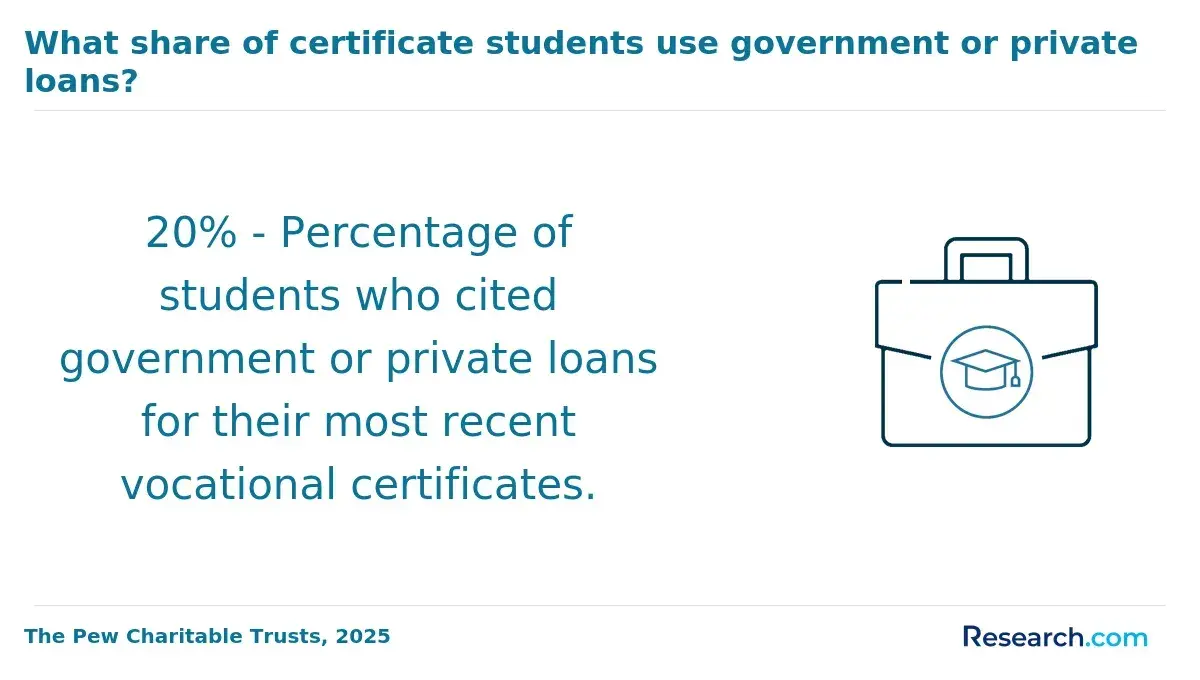
What Grants Can Help Pay for an Online Liberal Arts Associate Degree?
Grants are usually the most valuable form of financial aid because they generally do not need to be repaid if the student remains eligible. For low-cost online liberal arts associate degree students, grants can come from federal, state, institutional, and local sources.
The table below compares common grant categories and the role each can play in lowering the cost of an online associate degree. Availability varies by state, school, enrollment level, and financial need.
| Grant type | Who awards it | Why it matters for online associate students | Key eligibility issue |
| Federal Pell Grant | Federal government | Can cover a substantial portion of tuition at many low-cost public two-year colleges | Based on FAFSA results, enrollment intensity, and lifetime eligibility limits |
| Federal Supplemental Educational Opportunity Grant | Participating colleges using federal funds | May add extra gift aid for students with high financial need | Limited campus funding means early applicants may have an advantage |
| State need-based grant | State higher education agency | Can make an in-state online community college especially affordable | Residency, FAFSA deadlines, and approved-school rules vary by state |
| Institutional grant | College or university | May reduce tuition for adult learners, online students, or transfer-oriented associate students | Renewal rules can depend on GPA, credits earned, or continuous enrollment |
| Local workforce or adult learner grant | County, workforce board, foundation, or nonprofit | Can help with books, fees, technology, or short-term completion costs | Often requires local residency or enrollment in an approved training pathway |
The Federal Pell Grant maximum is $7,395 for the current federal aid year. That does not mean every student receives the maximum, but it shows why FAFSA should be completed even for programs with already-low tuition: the grant can make a public online associate degree far less expensive than the sticker price suggests.
Students should also pay attention to grant timing. Some state grants have priority deadlines, and some college-based grants are limited. Applying late may not eliminate all aid, but it can reduce access to funds that are awarded until budgets run out.
Scholarships can help pay for an online liberal arts associate degree, but students should treat them differently from grants. Grants are often need-based and tied to FAFSA, while scholarships may be based on grades, residency, first-generation status, military affiliation, community service, employer connections, or intended transfer major.
The scholarship categories below are especially relevant for online associate students because they can reduce costs beyond tuition and may help with fees, books, or technology. Always verify whether an award can be used for online enrollment and whether it is renewable.
- Community college foundation scholarships: These are often overlooked, but they may be designed specifically for local residents, adult learners, first-generation students, or students completing an associate degree before transfer.
- State and regional scholarships: State higher education agencies, local foundations, chambers of commerce, and civic organizations may support residents attending accredited in-state colleges, including online students.
- Transfer-pathway scholarships: Some four-year institutions offer scholarships to associate degree graduates who transfer with a minimum GPA or completed transfer agreement.
- Identity- and service-based scholarships: Awards may support veterans, military spouses, single parents, caregivers, first-generation college students, tribal citizens, or students with documented community service.
- Career-interest scholarships: Liberal arts students planning to enter education, social services, public administration, communications, or human services may qualify for awards tied to those broader career goals.
A common mistake is counting a one-time scholarship as if it will reduce costs every semester. Before accepting an offer, ask whether the award renews automatically, requires a new application, demands full-time enrollment, or depends on a minimum GPA.
Students considering social service or counseling careers should also look beyond the associate degree. If the long-term plan involves graduate-level social work, comparing transfer-friendly liberal arts options with the best online MSW programs can help students choose electives and transfer destinations that support future admission requirements.
Financial aid can reduce the cost of an online liberal arts associate degree from "low-cost" to genuinely affordable, but the effect depends on the full cost of attendance. Tuition is only one part of the calculation; fees, books, online course charges, proctoring, software, graduation fees, and lost transfer credits can change the final price.
The table below illustrates how net price can differ across common scenarios. These are not promises of aid; they show the comparison logic students should use when reading financial aid offers.
| Cost factor | Low-tuition public community college | Higher-tuition online college | Why it matters |
| Published tuition and required fees | Often lower for in-district or in-state students | May be higher but sometimes includes online services | Sticker price starts the comparison, but it is not the final price |
| Federal and state grants | Can cover a large share for eligible students | Can still be significant if the school is FAFSA-eligible | A higher-cost school can become competitive if gift aid is stronger |
| Institutional scholarships | May be modest but targeted to local students | May be larger but tied to strict renewal rules | Large awards are less valuable if they are not renewable |
| Transfer credit acceptance | Can reduce credits needed if prior courses apply | Policies vary widely | Accepted credits reduce both tuition and time to completion |
| Online and technology fees | May be charged per course or per credit | May be bundled or separate | Fees can erase some savings from low tuition |
To estimate the real reduction, calculate gift aid first. Subtract grants and scholarships from direct education costs, then decide whether any remaining balance should be paid out of pocket, covered through a payment plan, supported by employer benefits, or financed with loans.
Loans can help students finish, but they do not reduce the cost; they delay payment and add repayment responsibility. A program that can be completed with grants, scholarships, employer support, and limited borrowing usually carries less financial risk than one that requires loans every term.
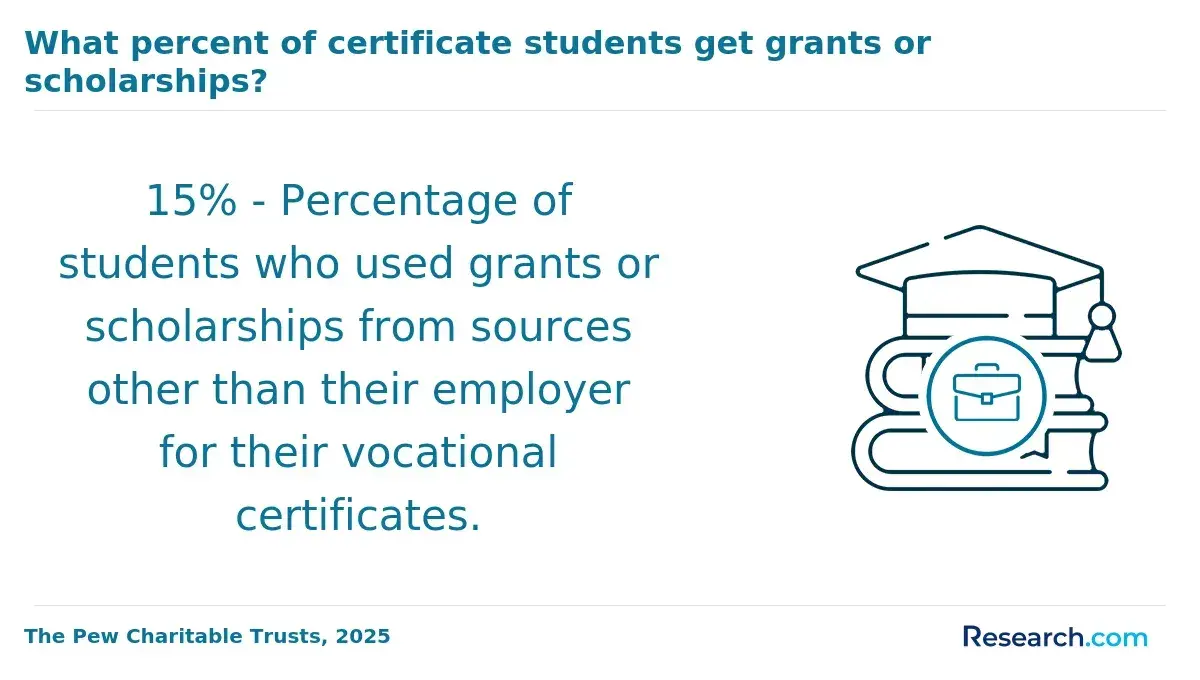
Financial aid packages can look similar on the surface but differ sharply in long-term value. The best comparison separates gift aid from loans, checks enrollment assumptions, and identifies whether aid applies to the full program or only the first term.
When comparing offers, students should read each award letter the same way. The list below highlights the items that most often change the true out-of-pocket price.
- Gift aid versus loans: Grants and scholarships lower the price, while loans must be repaid and should not be treated as a discount.
- Enrollment level: Aid may be calculated for full-time attendance even if the student plans to enroll part time.
- Residency status: In-state, out-of-state, in-district, and out-of-district online tuition can differ even within the same college system.
- Program fees: Online courses may include technology, proctoring, digital textbook, lab, portfolio, or graduation fees that are not obvious in the tuition rate.
- Renewal conditions: Scholarships and institutional grants may require a minimum GPA, completed credits, continuous enrollment, or a new application.
- Transfer outcomes: A cheaper associate degree can become more expensive later if credits do not apply cleanly to a bachelor's degree.
A useful rule is to compare the "net price to finish," not the "aid amount awarded." A school that offers a large package with loans and nonrenewable scholarships may cost more than a lower-tuition community college with a smaller but more stable grant-based package.
Students should ask each financial aid office for a term-by-term estimate based on their expected enrollment plan. This is especially important for working adults who may take six to nine credits per term instead of a full-time schedule.
Employer tuition assistance can make an online liberal arts associate degree more affordable, especially for working adults who need a flexible general education credential for advancement. Some employers reimburse tuition after a course is completed, while others pay the school directly through a tuition benefit platform.
Under current federal tax rules, up to $5,250 in employer-provided educational assistance can generally be excluded from taxable income when the benefit meets program requirements. For students in low-cost associate programs, that amount can cover a meaningful share of annual tuition and fees.
Before relying on employer benefits, students should confirm the details in writing. The following questions help prevent unexpected balances or reimbursement delays.
- Does the employer cover associate degrees, general education programs, and fully online courses?
- Is payment made upfront to the college, or does the student pay first and request reimbursement later?
- Are books, fees, technology charges, or prior learning assessments included?
- Is there a minimum grade requirement for reimbursement?
- Does the employee need to stay with the company for a certain period after receiving the benefit?
- Can employer aid be combined with FAFSA-based grants and scholarships without reducing other aid?
Other benefits may also help. Military education benefits, workforce development funding, union education funds, AmeriCorps education awards, and local nonprofit support can reduce the balance due, but rules vary. Students should coordinate these benefits with the financial aid office so aid is applied in the correct order.
Those who expect to move from liberal arts into human services or social work should map the full education ladder early. A low-cost associate degree may be a smart start, but students with doctoral ambitions should eventually compare advanced options such as DSW programs to understand long-term tuition planning.
Accreditation and enrollment status can determine whether a low-cost online liberal arts associate degree is eligible for federal financial aid. The safest choice is a degree-granting institution accredited by a recognized accreditor, with a program approved for Title IV aid and clear policies for online students.
Accreditation also affects transfer value. Many bachelor's programs prefer or require credits from accredited institutions, and statewide transfer agreements often apply only to approved public colleges. A program that seems inexpensive can become costly if credits fail to transfer and the student must repeat courses later.
The table below summarizes the academic and financial aid checks students should complete before enrolling. These checks are especially important for online programs because marketing pages may not show every eligibility condition.
| Factor to verify | What to ask | Why it affects cost |
| Institutional accreditation | Is the college accredited by an agency recognized for federal aid purposes? | Accreditation supports federal aid eligibility and credit transfer |
| Program aid eligibility | Is this specific online liberal arts associate degree eligible for FAFSA-based aid? | Some programs at an eligible school may not qualify |
| Enrollment intensity | How does aid change at full time, three-quarter time, half time, or less than half time? | Grant and loan amounts may change when credits per term change |
| Satisfactory academic progress | What GPA, completion rate, and maximum timeframe rules apply? | Students can lose aid if they fail to meet progress standards |
| Transfer agreement | Which bachelor's programs accept this degree as a block transfer or pathway? | Strong transfer policies reduce repeated credits and future tuition |
Students should also understand the difference between online format and academic status. A legitimate online degree can be just as aid-eligible as an on-campus degree, but only if it is offered through an eligible institution and approved program. Conversely, a short online course, self-paced continuing education option, or noncredit program may not qualify for FAFSA even if the provider is well known.
A low-cost online liberal arts associate degree with financial aid is most beneficial for students who need a flexible, lower-risk starting point before committing to a bachelor's major. It can be especially useful for adult learners, first-generation students, military-connected students, working parents, and students who want to complete general education credits before choosing a specialized field.
The degree tends to offer the strongest value when the student has a clear next step. That next step may be transfer to a bachelor's program, internal promotion, entry into administrative or support roles, or preparation for fields that require strong writing, communication, research, and critical thinking skills.
The Bureau of Labor Statistics reported a median annual wage of $49,500 for all U.S. occupations in May 2024. Liberal arts associate programs do not point to one guaranteed salary, so students should use this benchmark carefully: the degree's value depends on the role pursued, local labor market, prior work experience, transfer plans, and whether the student continues toward a bachelor's degree.
Students are often a good fit if they fall into one of the categories below. Each category benefits from the combination of lower tuition, broad coursework, and potential grant aid in a different way.
- Transfer planners: Students who want to complete lower-division general education requirements at a lower net price before entering a bachelor's program.
- Undecided majors: Students who need time to explore humanities, social science, communication, education, business, or public service interests without paying four-year tuition immediately.
- Working adults: Students who need an online schedule and may use employer tuition assistance, prior credits, or part-time enrollment.
- Career changers: Adults seeking a recognized college credential that can support entry-level administrative, customer service, nonprofit, or public-sector roles while they plan further education.
- Cost-sensitive students: Learners who may qualify for Pell Grants, state grants, or community college scholarships and want to avoid unnecessary borrowing.
Some students should consider another pathway. If a career goal requires a specialized associate degree, clinical licensure, technical labs, or immediate workforce certification, a broad liberal arts program may not be the fastest route. Likewise, students already certain about counseling, psychology, or social services should compare whether an early major-specific bachelor's pathway or even long-term graduate planning, such as the cheapest online PhD in counseling options, better aligns with licensure expectations.
How Should Students Minimize the Total Cost of an Online Liberal Arts Associate Degree?
Students can minimize the total cost of an online liberal arts associate degree by treating program selection as a net-price comparison, not a tuition search. The goal is to pay for credits that apply to a real academic or career plan, while using grants and scholarships before loans whenever possible.
The following process turns financial aid information into a realistic affordability decision. It is most useful when applied to at least three schools before enrolling.
- Choose a target outcome first, such as transfer to a bachelor's program, promotion eligibility, military education goals, or completion of prior credits.
- Confirm FAFSA eligibility for both the institution and the specific online liberal arts associate degree.
- Use the net price calculator, but also request a financial aid estimate based on your actual enrollment plan.
- List all direct costs, including tuition, online fees, books, software, proctoring, graduation fees, and transcript fees.
- Subtract only grants and scholarships when calculating the discounted price; list loans separately as financing, not savings.
- Ask how aid changes if you enroll part time, stop out for a term, repeat a course, or change programs.
- Check whether prior learning, military credits, AP, CLEP, or previous college credits can reduce the number of credits you must pay for.
- Verify transfer agreements with the bachelor's programs you may want later, including whether the associate degree transfers as a completed block.
- Compare the total cost to finish, expected completion time, and likely next-step value before accepting loans.
Several red flags deserve attention. Be cautious if a school will not clearly state whether the program is FAFSA-eligible, advertises aid without separating grants from loans, hides required online fees, pressures you to enroll before aid is finalized, or cannot explain transfer options in writing.
The strongest low-cost choice is usually the program that lets you complete the right credits with the least debt and the most flexibility. For many students, that means an accredited public community college or state college with online courses, clear transfer pathways, and aid policies that match the student's real enrollment schedule.
Other Things You Should Know About Liberal Arts
Not always. Liberal arts usually emphasizes humanities, social sciences, communication, and broad general education, while general studies may allow a wider mix of electives. Schools use these names differently, so compare course requirements rather than relying only on the title.
Common courses include English composition, literature, history, psychology, sociology, public speaking, math, natural science, humanities, and electives. Many programs are designed to satisfy lower-division general education requirements for transfer.
It can support applications for some remote-friendly entry-level roles that value writing, organization, communication, research, and customer support skills. However, many remote jobs also require experience, software skills, a portfolio, or a bachelor's degree.
Most transfer-oriented liberal arts associate programs do not require internships, but some schools offer optional service learning, capstone projects, or career exploration courses. Students seeking hands-on experience should ask about virtual internships, local placements, or project-based electives.
- How Colleges Figure https://www.collegedata.com/resources/pay-your-way/how-colleges-figure-cost-of-attendance
- Paying for college https://www.commonapp.org/plan/paying-for-college/
- Average Cost of College [2025]: Yearly Tuition + Expenses https://educationdata.org/average-cost-of-college
- Guide to Financial Aid for Online Students https://www.onlineu.com/resources/financial-planning/financial-aid
- Affordable Associate Degrees Online https://www.accreditedschoolsonline.org/online-colleges/affordable-associate-degrees/
- Cost of Attendance — Hildreth https://www.hildrethinstitute.org/costofattendance
- Scholarships for International Students in the US https://www.amerigoeducation.com/news/scholarships-for-international-students-in-the-us
- A comprehensive guide to types of financial aid for college students https://www.citizensbank.com/learning/types-of-federal-financial-aid.aspx
- The Real Cost of a Top-tier Liberal Arts Education https://www.mildlyefficient.com/p/the-real-cost-of-a-top-tier-liberal
- Can You Get Financial Aid for Online College? Finding Out https://beal.edu/can-you-get-financial-aid-for-online-college/


